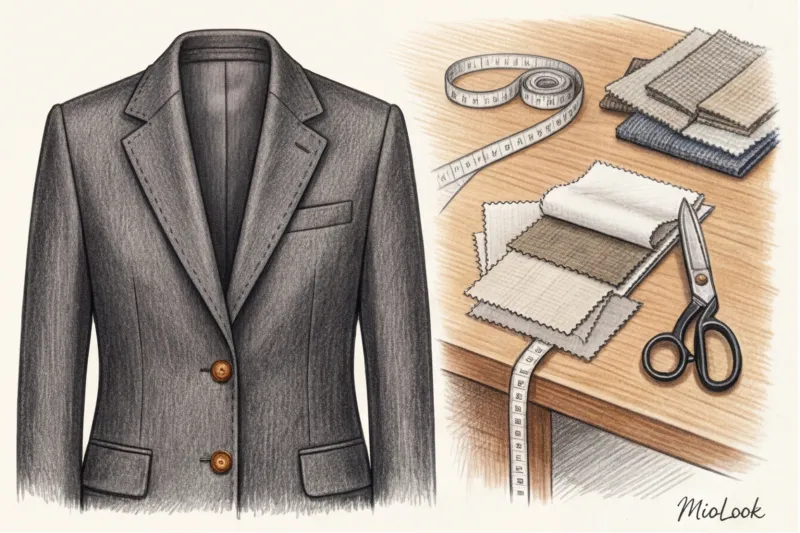
Last week, my client Elena, a partner at a law firm, angrily dumped five pairs of black trousers on her bed. "They all stretched out at the knees or started pilling within a couple of months!" she complained. We sat down to do the math. It turned out that Elena had spent about €300 on these "disposable" mass-market items over the course of a year. Meanwhile, ideal trousers made of fine merino wool from a sustainable brand would have cost her €180 and would have lasted at least five years. When asked, Why are ethical brands expensive? , I always answer: the truly expensive thing is to buy cheap clothes.
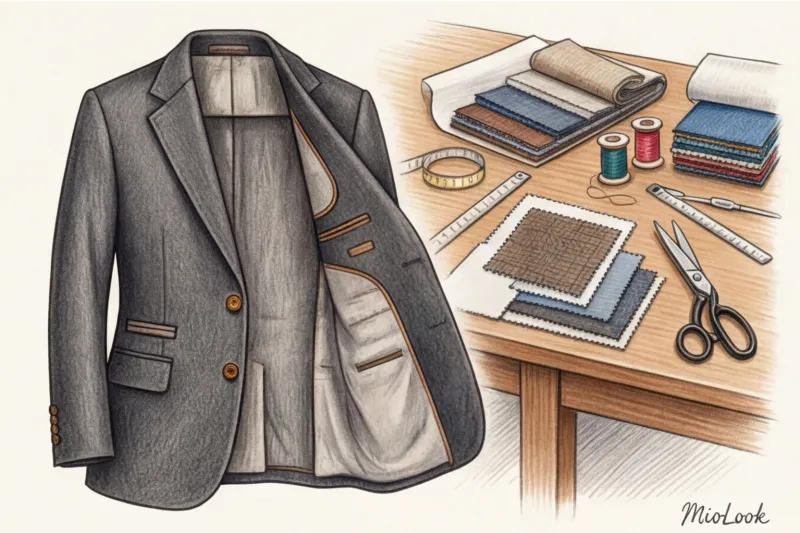
We talked in more detail about how to distinguish real sustainable fashion from marketing gimmicks in our The complete guide to choosing ethical brands without greenwashing Today, we'll put the sentiment aside and get down to some hard financial math. We'll use the Cost Per Wear formula as an investment banking tool for your closet.
The Anatomy of a Price Tag: Why Ethical Brands Are Expensive
The shock of first encountering a price tag is inevitable. Why does a basic white shirt cost €25 at your local mall, but €150 at an ethical brand boutique? The answer lies in the difference between the price tag (the "price") and the actual value (the "value").
Let's look at the numbers. According to a 2023 study by the Clean Clothes Campaign, the seamstress's wages account for less than 1% of the cost of a standard fast-fashion T-shirt. Ethical brands guarantee the so-called living wage (the minimum subsistence level, not just the legal minimum), which immediately increases production costs by 3-5 times.
But the main expense is materials. Mass-market brands buy kilometers of cheap polyester, which becomes staticky, doesn't breathe, and loses its shape after three washes. Sustainable brands invest in certified Tencel Lyocell (produced in a closed-loop process), organic cotton with a weight of at least 180 g/m², or wool blends. Add to this high-quality brass hardware that won't peel after the first rain, and you understand where every hundred euros in your bill comes from.
Access to MioLook for €0.99 — one-time payment
A smart AI stylist will select the perfect look from your quality items.
Get access — €0.99 onceThe illusion of mass-market cheapness
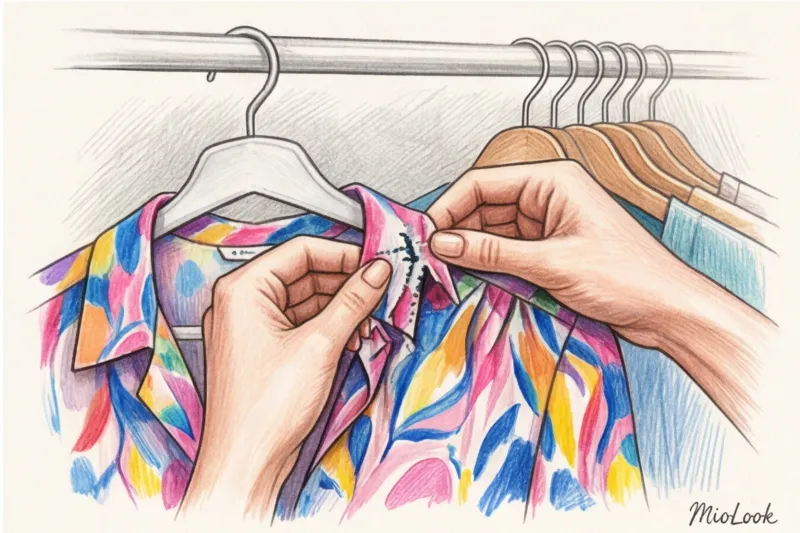
Over 12 years of working as a personal stylist, I've developed a habit: in any store, I first turn the item inside out. The inside never lies. Fast fashion giants skimp on details you can't see. For example, they often cut fabric not along the grain, but "as it fits" on the roll, to save 10-15% of material. The result? After the first wash, the side seams of your T-shirt curl toward your stomach.
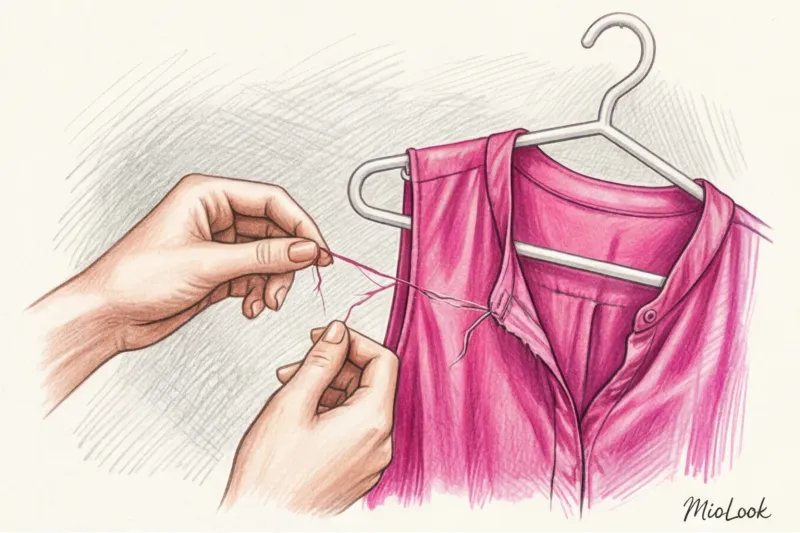
The hidden costs of cheap clothing hurt your image more than you realize. Thin threads, a cheap 3-thread overlock instead of a reliable closed seam, a lack of lining in a jacket—all of these things make you look cheaper. A crooked lapel will betray your frugality at your first business meeting, even if the garment seemed trendy from a distance.
The Mathematics of Style: What is Cost Per Wear (CPW)?
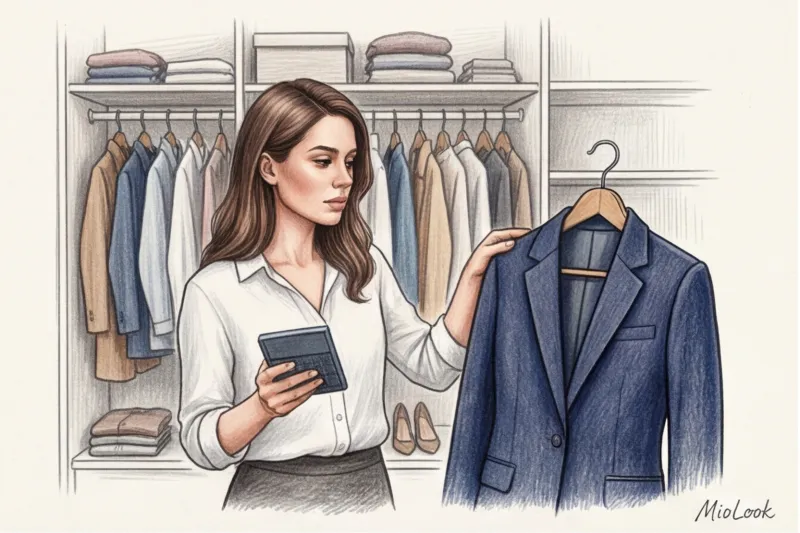
To remove the psychological barrier to buying expensive items, you need to transform shopping from an emotional expense into a business investment. To achieve this, use the Cost Per Wear formula:
CPW = (Item Price + Lifetime Care Cost) / Number of Wears
Let's compare two scenarios. You buy a trendy thin polyester dress for €40. You wear it to a party and once to the office. It gets staticky, you feel hot, and the seams start to come apart. You take it to the dry cleaner (€10), but the wine stain won't come out. Total: €50 / 2 wears = €25 per outing.
Scenario two: You buy the perfect fine wool sheath dress from an ethical brand for €250. You wear it every week in the fall and winter. Over two years, you've worn it 50 times. Dry cleaning once a season costs €30. Total: €280 / 50 times = €5.60 per outing. The expensive item turned out to be five times cheaper!
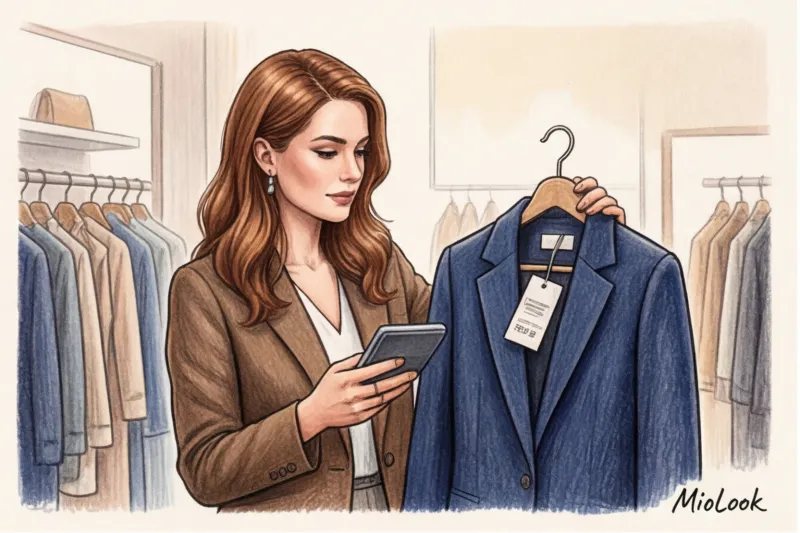
It is incredibly convenient to track the actual frequency of use of things through analytics function in the MioLook app When you visually see which items are truly worth their investment, you'll stop reaching for those flashy, one-off tops on sale.
The Poverty Paradox: Why Fast Fashion Is a Habit of the Rich
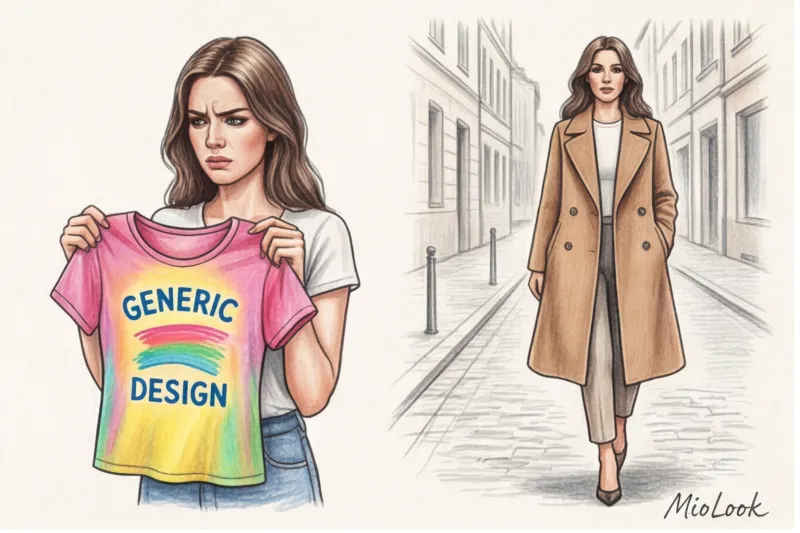
The most common myth I hear from clients is: "I don't have the money to buy ethical brands." My answer is always the same: buying cheap clothes is an unaffordable luxury.
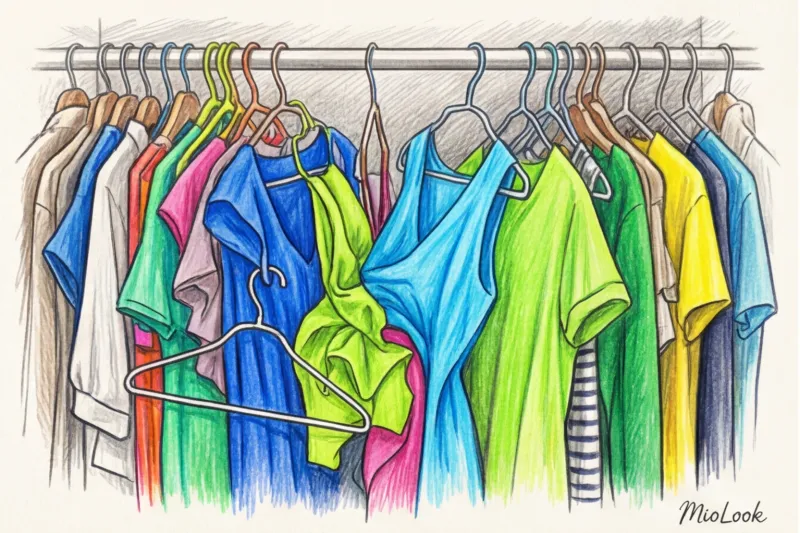
According to the report McKinsey State of Fashion (2024) Today, the average mass-market item is worn only seven times before being thrown away. This means you're stuck in a never-ending cycle: buy, become disappointed, throw away, buy again. You're funding corporations while being left in front of your closet with the classic problem of "nothing to wear and nowhere to hang it."
Your perfect look starts here
Join thousands of users who look flawless every day with MioLook.
Get access — €0.99 onceClothing burnout is a real phenomenon. Imagine: you have an important presentation, and you take out your favorite blouse, only to find it has lost its shape or is covered in pilling after washing. Your stress level skyrockets seconds before you're ready to go out. Only those with a limitless budget can afford to completely replace their worn-out blouse every three months.
Investing in Status: How CPW Works in a Business Wardrobe
In a business setting, the quality of your clothes speaks louder than your words, even before you've even said hello. My favorite approach is the Mediterranean approach to dress code: relaxed confidence built on impeccable tailoring.

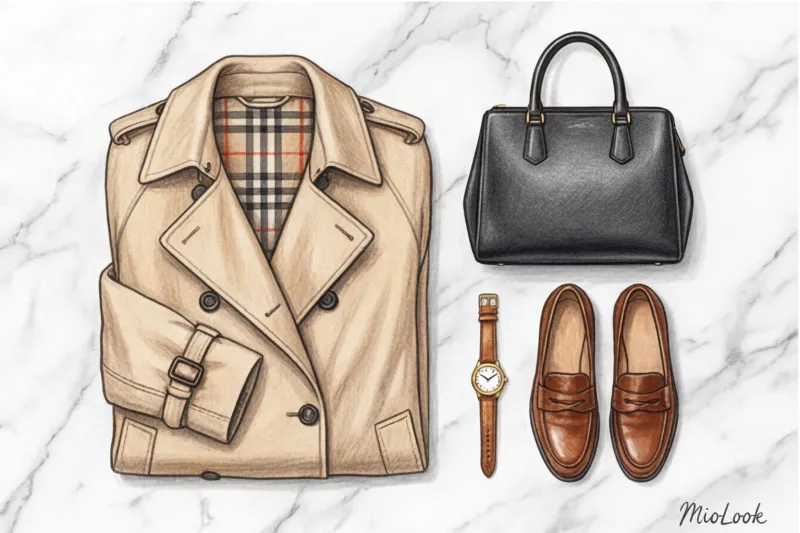
The fastest-paying formula for a status image: Architectural jacket + wool-blend trousers + leather loafers = instant authority If you work in the creative industry, this could be Office Siren aesthetics , but the principle remains the same: the fabric must hold its shape.
The pieces that recoup their investment the fastest are those that form the "framework" of a wardrobe. A perfectly tailored two-piece suit (in the €300-€500 range), a structured leather bag with a crisp shape, a classic straight-cut coat. These are the anchors that will elevate even the simplest white T-shirt to a premium level.
Where can you cheat, and where is absolutely not possible?
My advice doesn't mean every pair of socks in your dresser should cost as much as an airplane wing. It's important to know the fair limits of the CPW rule. My strict stylist rule: never Don't skimp on outerwear, shoes, bags, and jackets. These are the first line of contact.
But when it comes to consumables—tanks, t-shirts, and long-sleeved T-shirts—the "more expensive, the better" rule breaks down. If your budget is tight, you can safely buy basic cotton t-shirts in the mid-price range (€25–€40). The main requirement is that they should be 100% dense cotton, without a loose texture or cheap elastane.
Checklist: How to check an item before an expensive purchase
To understand why ethical brands are expensive and avoid buying a pretty dummy for a fortune, use my professional fitting room checklist.
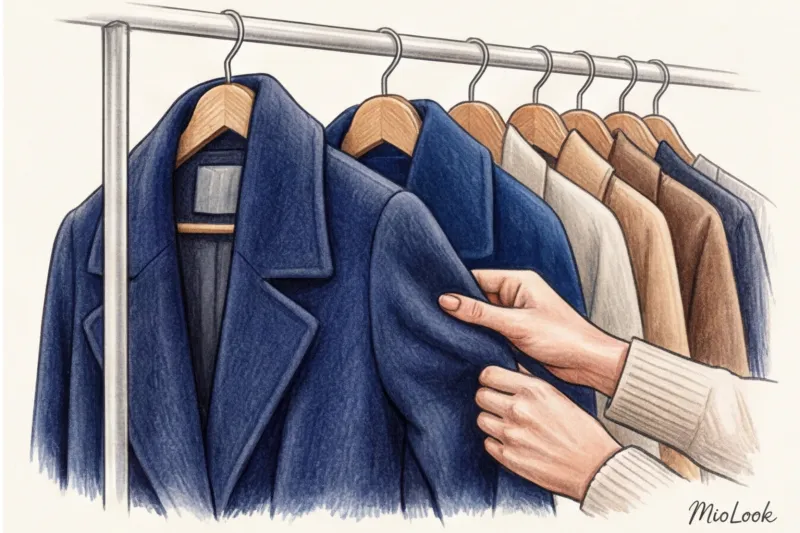
- Crease test: Squeeze the edge of a fabric (like the hem of a dress) in your fist and hold it for 10 seconds. Release. If the fabric remains crumpled, it will look untidy on the way to work. A high-quality wool blend or dense lyocell will straighten out in seconds.
- Checking the seams: Pull the seam apart. If you see any gaps or loose threads, the garment will soon burst. Premium fabrics have a fine stitch pitch (4–5 stitches per centimeter), and the back is finished with a French seam (where the seams are tucked in), not simply overlocked with a cheap serger.
- Hardware assessment: Plastic buttons with a horn-like finish give away their suspiciously light weight. High-quality hardware (natural horn, metal, mother-of-pearl) always adds a pleasant heft to the fabric. Check the zipper—it should slide smoothly, without snagging.
- 30 Image Test: Before you take an item to the checkout, ask yourself, "What in my current wardrobe will this pair with right now?" If you need to buy three more items to wear this one, it's a bad investment.
Ready to get started?
Take photos of your belongings and let the neural network create status images for you every day.
Get access — €0.99 onceEpilogue: Your Wardrobe as Your Personal Fortress
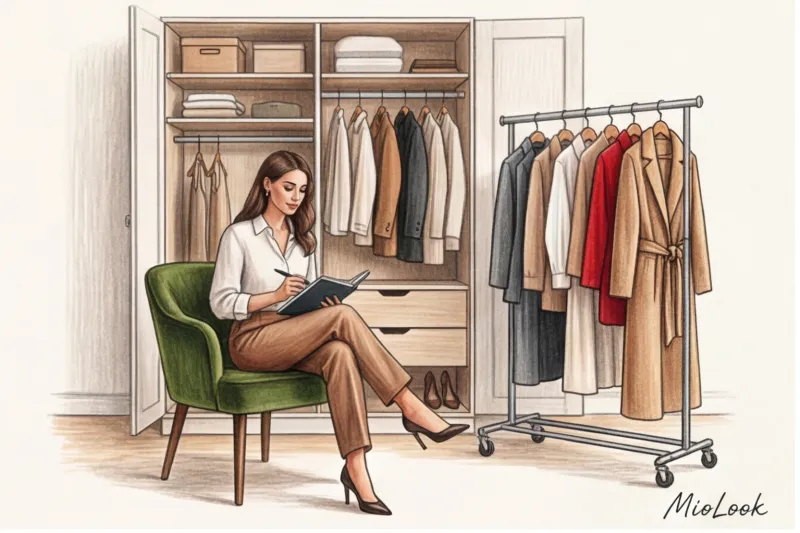
Conscious fashion, in its true sense, isn't about asceticism and restrictions. It's about a deep respect for yourself, your daily work, and the money you earn. When you put on something that fits perfectly, doesn't wrinkle on your stomach, and doesn't give you static shocks, you gain an incredible sense of confidence.
Your wardrobe should be your personal fortress, not a source of daily morning stress. I encourage you to take stock of your closet this weekend. Upload your favorite pieces to MioLook app , calculate their real Cost Per Wear, and let technology show you new stylish combinations. Invest in quality, and you'll see how style will work for you, rather than you working for it.