Paris, 2019. Backstage at the Stella McCartney show, the usual controlled chaos reigns, but one detail catches my attention: the assistants don't use irons at all. Instead, they methodically, millimeter by millimeter, steam the flowing vegan silk dresses with cold and warm steam. At my questioning glance, the head costume designer shrugs: "Hot iron kills the living fiber. We don't just iron, we hydrate the structure."
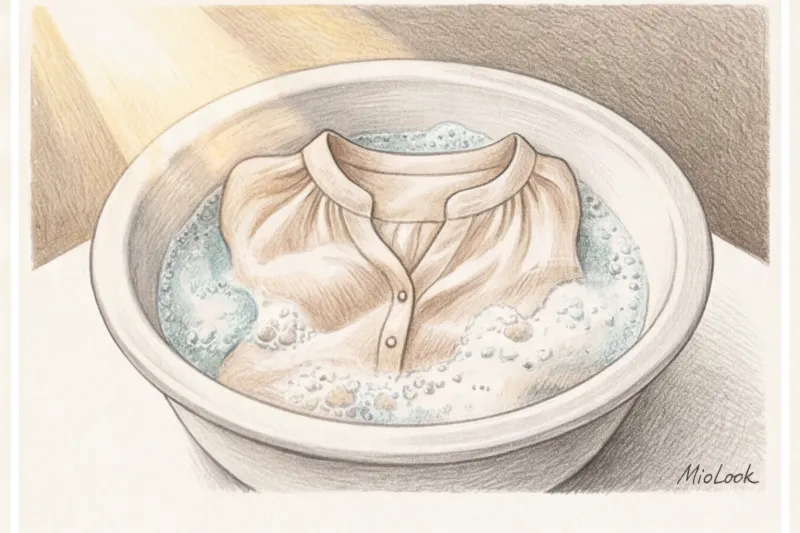
That moment forever changed my approach to my wardrobe. We're used to thinking that sustainable fashion is about choosing the right brand at the purchasing stage. We've already discussed the architecture of an ethical wardrobe in more detail in our The complete guide to choosing ethical brands without greenwashing But the harsh truth is: how we care for our items after the tags are removed is more important than the purchase itself.
Today, a strict eco-friendly wardrobe is not about shapeless linen robes, but rather complex architectural suits, cupro dresses, and Tencel tops. And the question is, How to care for eco-friendly clothing , akin to the work of a museum archivist. One wrong move, and a €300 item becomes a rag. Let's explore the physics of fabrics and understand how to extend the life of your wardrobe investments for decades to come.
Why the question of "how to care for eco-friendly clothing" is more complicated than it seems
The main difference between premium eco-friendly fabric and mass-market options is its "nakedness." To ensure a fast-fashion shirt doesn't wrinkle on a hanger and survives hundreds of washes, it's impregnated with formaldehyde resins and harsh chemical fixatives. Eco-friendly materials lack this toxic armor. They breathe and adjust to body temperature, but remain extremely vulnerable to mechanical stress.
Moreover, care is a huge part of your clothes' carbon footprint. According to Fashion Revolution's 2023 report, up to 25% of a garment's total environmental footprint is generated in our bathrooms. This includes liters of heated water, microplastics washed into the ocean, and the energy expended on drying.
"We buy organic cotton to save the planet, and then wash it with harsh petrochemical detergents at 60 degrees. This is the paradox of modern consumption," notes textile researcher and WGSN author Sarah Jones.
The Anatomy of Washing: How to Prevent Organic Fibers from Killing Your Washing Machine
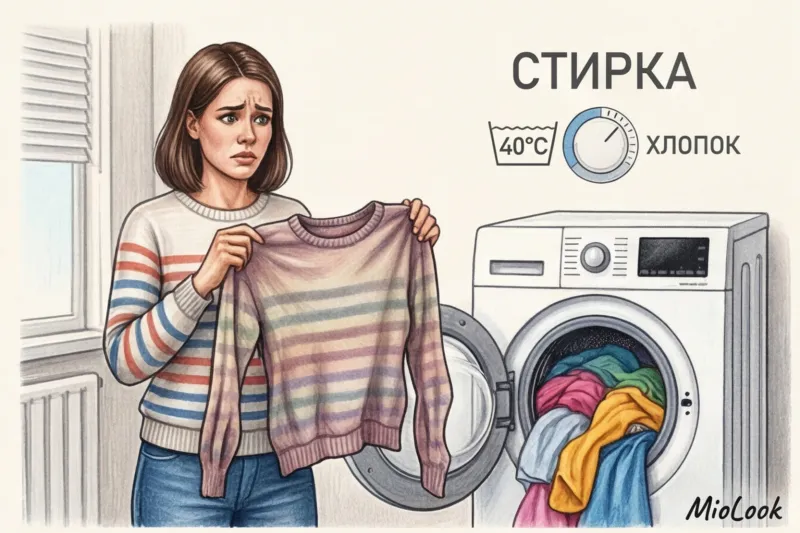
There's a popular myth: "To preserve a garment, wash it in cold water." This is only half the truth. In my experience, 30 degrees Celsius is often insufficient to dissolve human sebum (sebum) on shirt collars. The real killer of eco-friendly fabrics is not temperature, but friction.
Water itself doesn't damage fabric. Fibers are destroyed when they slam against each other and the metal walls of the drum at high speeds. That's why a half-empty drum is your worst enemy. Items literally fly around and slam into the metal with force. The optimal load size is when you can fit the edge of your hand between the laundry and the top of the drum.
If you wear items made from recycled polyester—such as sportswear or fleece—friction releases thousands of microplastic particles. In this case, using special filter bags like Guppyfriend becomes not an option, but a necessity.
Your perfect look starts here
Join thousands of users who look flawless every day with MioLook. This smart assistant will help you organize and care for your belongings.
Get access — €0.99 onceEco-Gels vs. Mass-Market Powders: Reading Ingredients Like a Pro
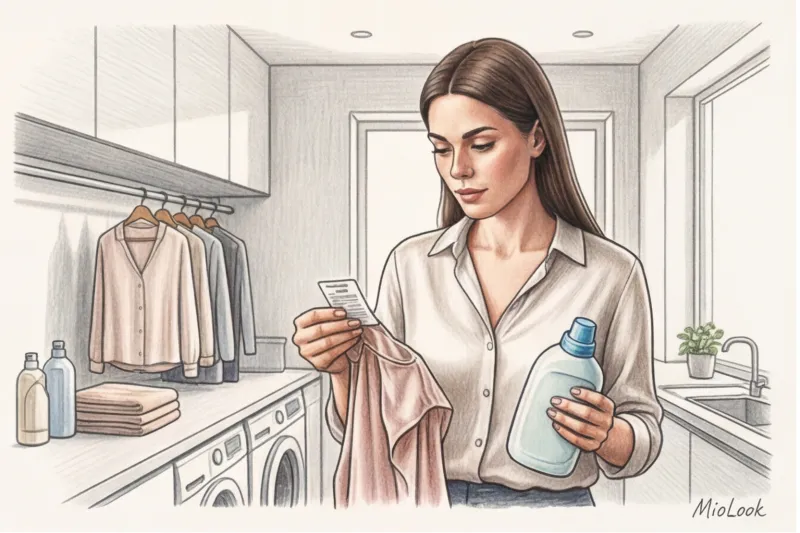
Never use granular laundry detergent on delicate eco-fabrics (Tensel, Modal, Cupro). Before the granules dissolve, they act like microscopic sandpaper, leaving micro-scratches on the delicate surface. This can lead to loss of shine after the first wash. Choose liquid detergents in the €12–€25 price range, paying attention to the ingredients.
What should absolutely not be included in the composition:
- Enzymes (protease and cellulase). These are substances added to combat difficult protein stains (such as blood, grass, or food). The problem is that wool and silk are also proteins. A protease-based product will literally "eat" your expensive cashmere sweater in just a few washes.
- Optical brighteners. They don't make the item cleaner. They are fluorescent dyes that settle on the fabric and reflect blue light, creating the illusion of whiteness. Over time, they destroy the natural pigments of organic fabrics.

Eco-friendly Materials: A Stylist's Guide to Care
Innovative materials require a personalized approach. You wouldn't clean antique porcelain with stovetop cleaner, right? The same goes for modern, ethical fashion.

Tencel, Cupro, and Modal: Preventing Fading and Loss of Shine
A year ago, a client came to me, almost in tears: her stunning olive-green Tencel suit (around €250) had developed a whitish cast after the first wash. It wasn't the dye that had washed out. It was the fibrillation effect. When the wood fibers (from which Tencel is made) get wet, they swell. If you rub them at this point, a microfiber forms on the surface, which refracts light, making the fabric appear faded.
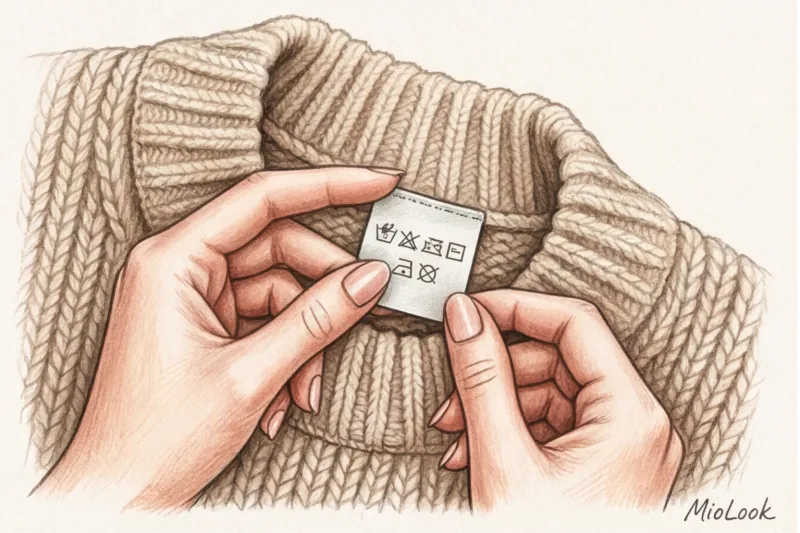
The golden rule for lyocell and tencel products: wash only inside out, only In a mesh bag, at a minimum spin speed (400-600). Iron strictly from the inside out, using a press or, even better, steam.
Organic Wool, Alpaca, and Cashmere: The Power of Self-Cleaning
Wool is nature's most intelligent material. According to research by The Woolmark Company, the natural lanolin found in merino wool has natural antibacterial properties. It repels dirt and does not absorb sweat odors.
Therefore, the main advice for caring for organic wool sounds paradoxical: stop washing it In 90% of cases, a sweater only needs to spend a night in the fresh air on the balcony to become fresh again.

An important point (and there is an exception): this rule only applies to 100% natural yarn. If the yarn contains even 10% acrylic or polyester, the item will begin to accumulate bacterial odor, and airing it won't help.
As for pilling, forget about electric razors for high-end items. They not only remove the matted fluff but also damage the warp thread, thinning the fabric. Professionals use special cashmere combs made of cedar and metal that gently remove excess fluff.
Access to MioLook for €0.99 — one-time payment
A smart AI stylist will select the perfect everyday look and suggest how to integrate eco-friendly items into your existing wardrobe.
Get access — €0.99 onceDry cleaning your business wardrobe: a toxic habit or a necessity?
There's a toxic (literally) habit among corporate clients: dry-cleaning suits once a month. A client of mine, a top IT manager, destroyed a luxurious organic wool jacket in just one season this way.
Traditional dry cleaning uses perchloroethylene (perc), a harsh solvent. It's great at removing grease, but it also strips the fabric of all its natural oils, leaving the fibers as brittle as dry straw. It's also a carcinogen and pollutes groundwater.
How to care for tailored eco-friendly clothing? Look for services marked Wet cleaning or cleaning with liquid CO2. These are modern technologies that do not damage the fabric structure.
For your home routine, you'll need just two things: a natural boar bristle brush and a handheld steamer. After each workday, hang your jacket on a hanger, brush it (to remove urban dust, which can wear away fibers over time), and steam the underarms and elbows. Steam (at around 100°C) instantly kills bacteria, eliminates odors, and restores volume to the fabric. It's an investment of €100–150 that will pay for itself in a couple of months of avoiding dry cleaning.

The art of storage: from microclimate to the right hangers
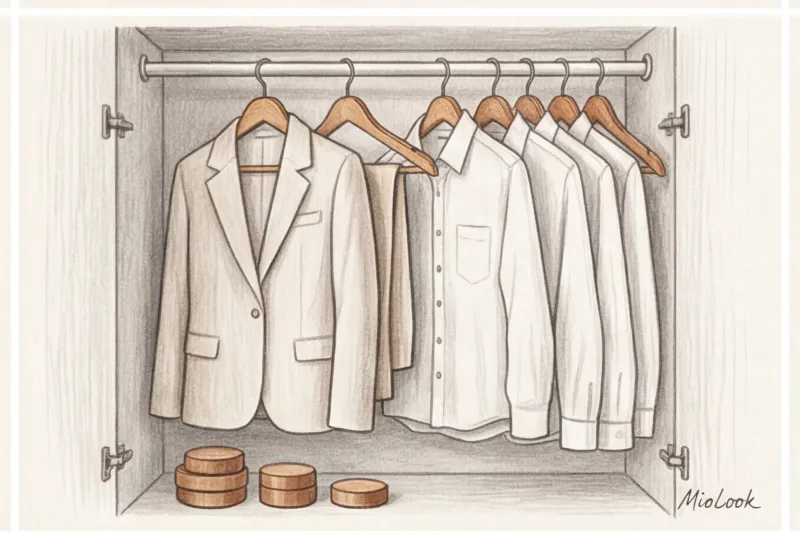
Never, under any circumstances, store items in the plastic bags they come in from the dry cleaner or tailor. Plastic creates a greenhouse effect. Any residual moisture inside the bag reacts with chemical residue or invisible sebum, causing those indelible yellow stains on collars.
If you are collecting business wardrobe capsule It will last a long time only if stored properly. Use cases made of breathable, unbleached cotton or linen.
The design of the hangers is also critical. Thin metal hangers from the dry cleaners distort the shoulder line. Jackets and coats require wide wooden hangers (4 to 6 cm wide at the ends). To protect organic wool from moths, use cedar rings that fit directly onto the hanger hook, or lavender sachets—mothballs have long been considered a faux pas.
Before storing for the season, an item should be washed, even if it's only been worn once. Moths don't feed on wool itself; they're attracted to microscopic particles of skin and sebum on the fabric.
Repair and upcycling: what to do if something is damaged
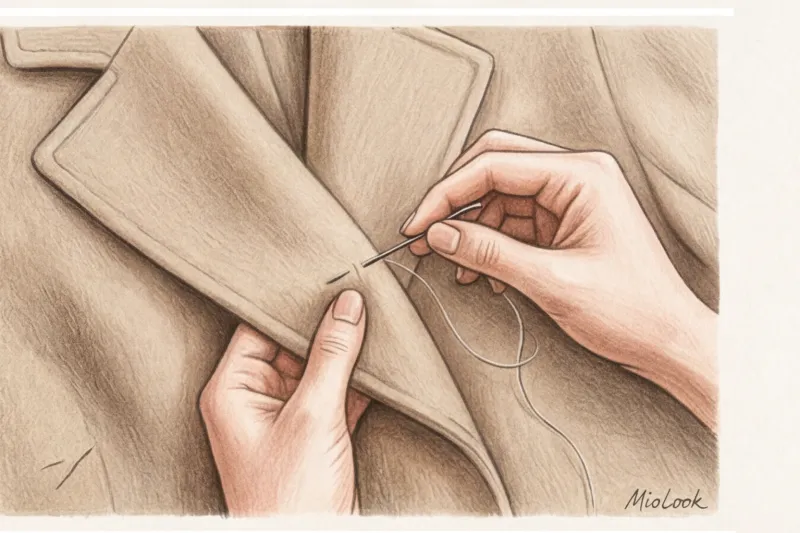
In the world of ethical fashion, there's a philosophy called "repair, don't throw away." Repairing a high-quality, expensive item isn't a sign of a tight budget, but a sign of a responsible approach and a tribute to the aesthetics of wabi-sabi (the beauty of imperfection).
Today, the art of invisible mending is experiencing a resurgence, with artisans literally recreating the weave of threads over a tear or moth-eaten hole. If your organic cotton dress has faded from the sun, don't send it to the countryside—take it to a natural dyeing studio, where madder or indigo will give it a deep, luxurious color.
This is where a brand's true ethical credentials are tested. For example, brands like Patagonia and Nudie Jeans offer lifetime free repairs on their products. We've written about what to do with items that are beyond saving in our guide. Where to recycle old clothes.
Ready to get started?
Try a free plan—no commitments. Upload your wardrobe to MioLook and get smart styling and care tips for every item.
Get access — €0.99 onceChecklist: 5 Steps to a Long-Lasting Eco-Wardrobe
To reinforce what you've read, I've put together a short algorithm. Start using it the next time you do your laundry:
- Sort by texture, not color. Washing heavy jeans with thin modal is a crime. The rough fabric will grind the delicate fabric into dust.
- Assemble a basic care kit: Natural bristle brush (around €30), cashmere comb, enzyme-free eco-friendly gel, hand steamer and mesh bags.
- Reduce the frequency of washing by half. Replace every other wash with spot cleaning, airing or steam treatment.
- Avoid fabric softeners. It's an illusion of softness. Fabric conditioners coat the fibers with a silicone film, which destroys the breathability of eco-friendly fabrics and traps bacteria inside.
- Conduct regular inspections. Once a month, check the thread tension on your buttons, the condition of the lining, and any signs of pilling. Prevention is always cheaper than restoration.
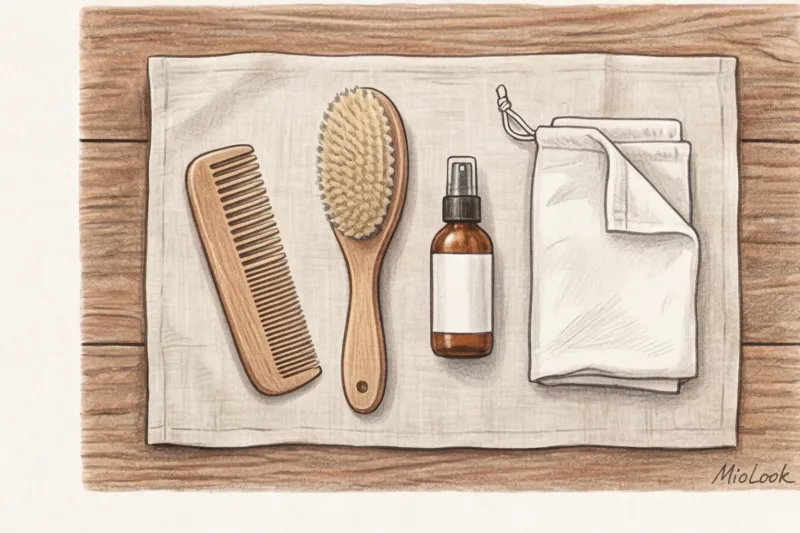
Ultimately, mindful clothing care shifts our very paradigm. When you spend 15 minutes carefully steaming a jacket, combing cashmere, and laying it out to dry on a towel, you stop viewing clothing as disposable items. You become the curator of your own little fashion museum, where every piece has its own story and deserves respect.