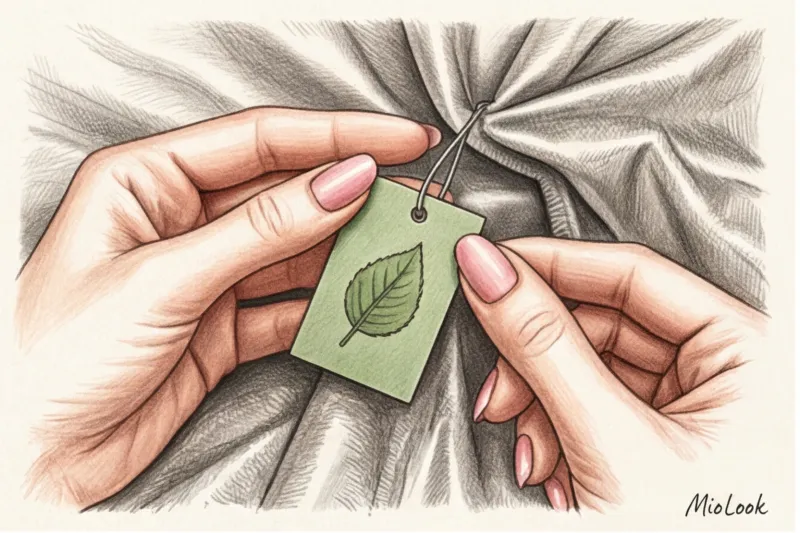
What is greenwashing in fashion and why are "eco-illusions" costing you too much?
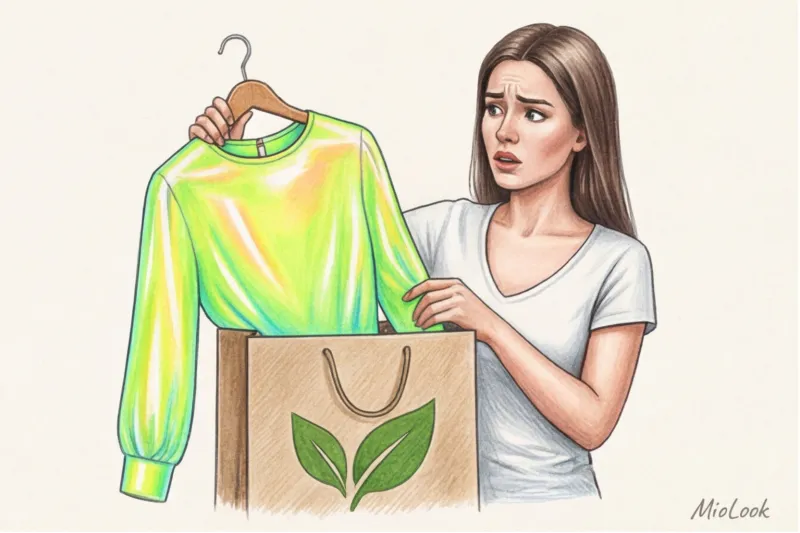
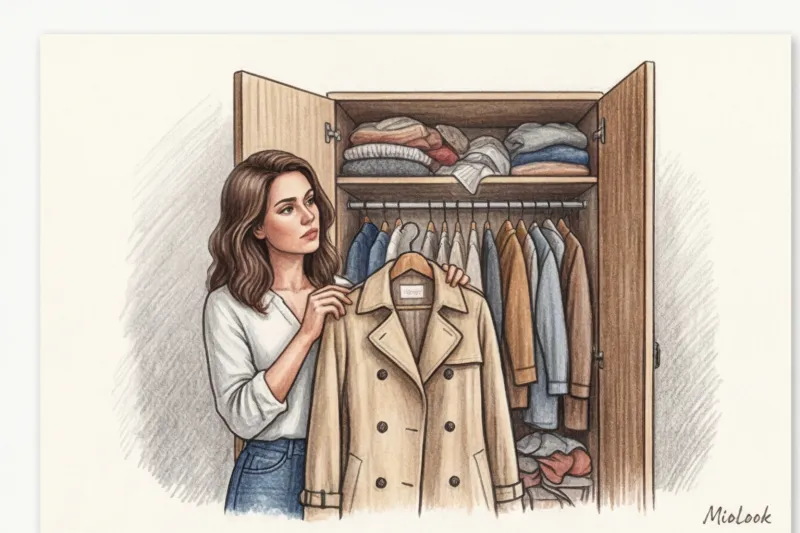
Last month, a client—a senior manager at a major bank—came to me for a wardrobe review. She proudly pulled out a sand-colored trench coat made of "premium vegan leather," for which she'd paid around €850. The brand positioned the garment as saving the planet and the pinnacle of ethical fashion. There was just one problem: after just one season of wear, microcracks had appeared at the elbows, and the material had lost its shape. By comparison, her mother's vintage leather trench coat has been in use for over 20 years, acquiring only a noble patina over the years.
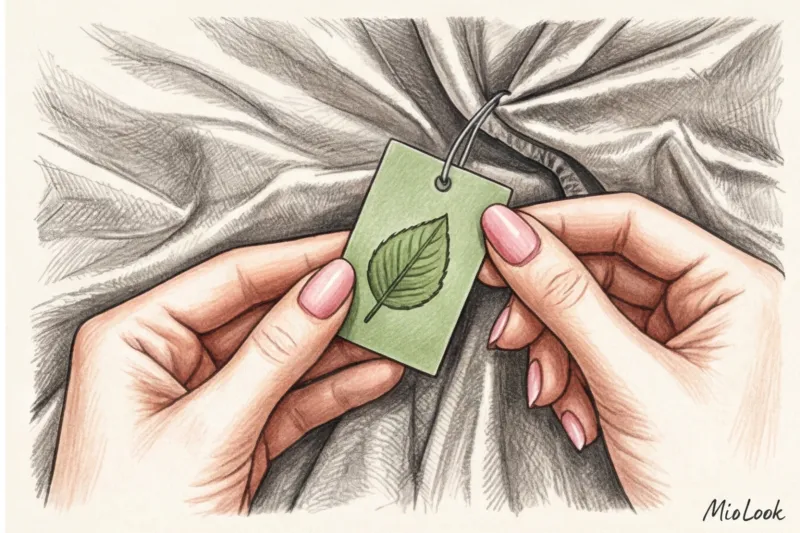
This is where we encounter the main pitfall of modern industry. While you're trying to balance your high status with environmental concerns, marketers are selling you plastic at the price of premium natural materials. This is greenwashing—creating a false impression of the eco-friendliness of a collection or brand in general to justify inflated prices and appease the buyer's conscience.
We discussed the mechanisms of this substitution of concepts in more detail in our The complete guide to choosing ethical brands without being scammed But in terms of numbers, the situation is alarming. According to a major 2022 report by the Changing Markets Foundation, nearly 60% of all sustainability claims made by fashion brands are false or intentionally misleading.
As a stylist with years of experience in the premium segment, I see the same pattern: brands charge a so-called "eco-premium" on items whose cost and quality are objectively lower than the mass-market products of ten years ago. Today, the green label is often just painted cardboard, not a guarantee of ethical production.
Greenwashing in Clothing: How to Spot the 5 Main Brand Tricks
Especially for those who are tired of marketing noise, I have put together a guide. If you want to understand what it is How to recognize greenwashing in clothing To avoid it at the fitting stage and stop sponsoring the production of beautiful garbage, pay attention to the following tricks. This is not only the case with giants like H&M or Zara, but also with many brands in the affordable luxury segment.
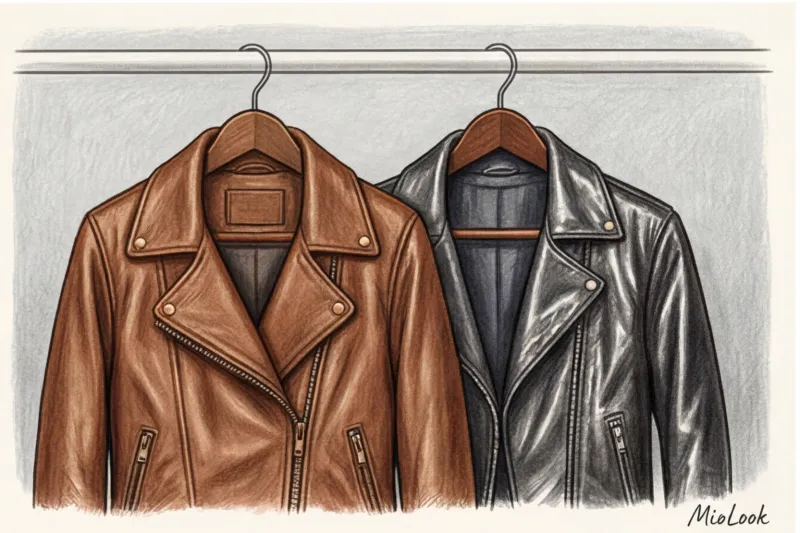
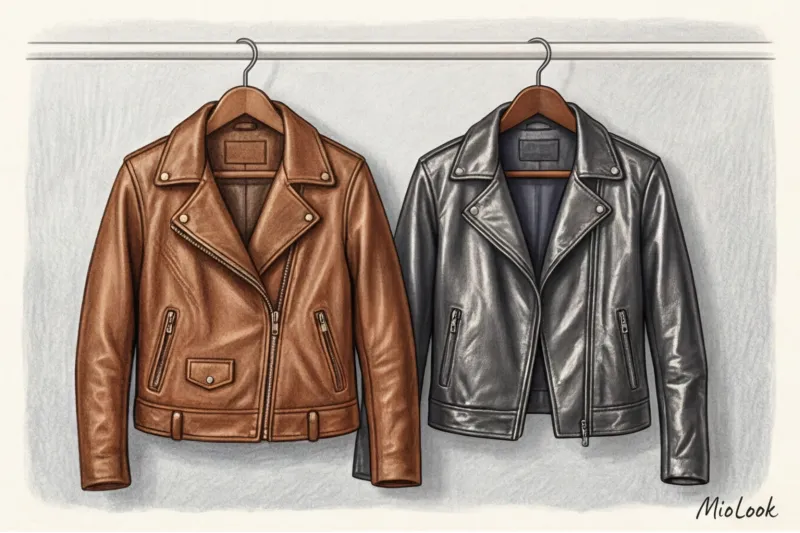
Trick 1: "Vegan Leather" and the Myth of Saving Nature
Let's call a spade a spade. In 90% of cases, when you see "vegan leather" on a price tag in the €150-€400 range, they're trying to sell you polyurethane (PU) or polyvinyl chloride (PVC). These are petroleum products. They don't biodegrade for centuries, aren't breathable (you'll sweat in them), and aren't recyclable.
It's a paradox that's rarely discussed: truly high-quality vegetable-tanned leather with LWG (Leather Working Group) certification is far more ethical and safer for the planet than a "vegan" jacket that will end up in a landfill after a year due to peeling coating.
Are there truly plant-based alternatives? Yes. These include materials like Piñatex (made from pineapple leaves) or Desserto (made from cactus). But even these often contain synthetic resins for strength. If a brand doesn't specify the specific, patented name of the plant-based material, but simply states "eco-leather," it's just plain plastic.
Trick 2: Conscious Capsules and the Recycled Polyester Trap
We've all seen those inspiring advertising campaigns: "This t-shirt is made from 5 recycled plastic bottles!" It sounds like a victory against ocean pollution. In reality, recycled polyester releases up to 700,000 plastic microfibers per wash cycle. These invisible particles aren't filtered by wastewater treatment plants and end up directly in the water we drink.
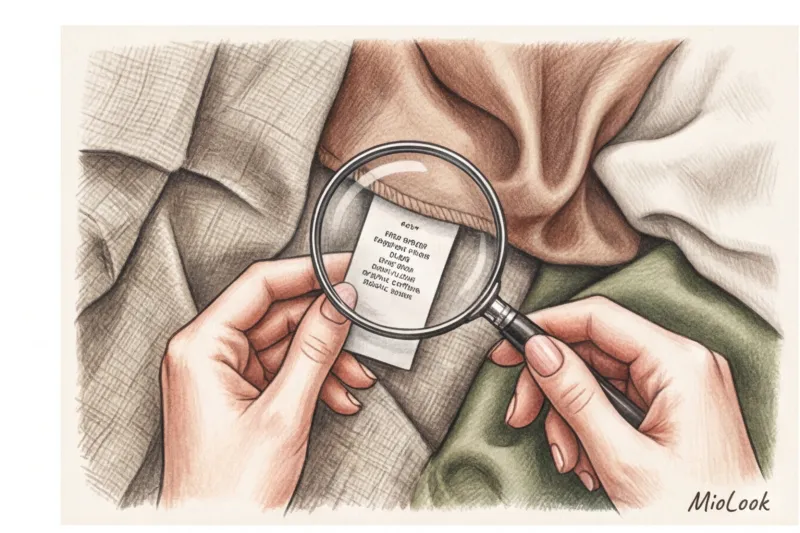
Moreover, the brand frequently mixes materials. If the tag says "50% cotton, 50% recycled polyester," you should know that the item is virtually impossible to recycle. Technologies for separating blended fibers are still too expensive for widespread use. According to Textile Exchange, only about 1% of all clothing produced in the industry is recycled into new clothing. The rest is downcycled or ends up in landfills.
Your perfect look starts here
Join thousands of users who look flawless every day and choose their clothes consciously with MioLook.
Get access — €0.99 onceTrick 3. Vague terms: “Natural,” “Bio,” and “Eco-friendly”
The words "eco," "natural," or "green" are not legally regulated. A brand can label a viscose dress "Eco-friendly" simply because viscose is made from wood pulp. However, they fail to mention that the traditional viscose production process is toxic and requires the use of carbon disulfide, which pollutes water bodies around factories.
The same goes for cotton. Saying "100% natural cotton" doesn't make a product eco-friendly. Traditional cotton cultivation requires colossal amounts of pesticides and water. The only true guarantee is a certified organic cotton label, such as GOTS (Global Organic Textile Standard).
Investing in Quality: How to Read Labels with a Premium Stylist's Eyes
Over 12 years of shopping, I've developed a simple rule: true sustainability isn't about looking for a green label, but about impeccable composition and fit. My personal approach to shopping is radically different from the advice of mass-market bloggers.
How we check an item before purchasing:
- Tissue anatomy: We look for 100% merino wool, heavy cashmere (two- or three-ply), mulberry silk, and heavy linen. No acrylic disguised as "soft wool."
- Transmission test: Always hold the item up to a light source in the boutique. High-quality cotton (at least 180 g/m²) or wool will not show through, revealing the loose weave.
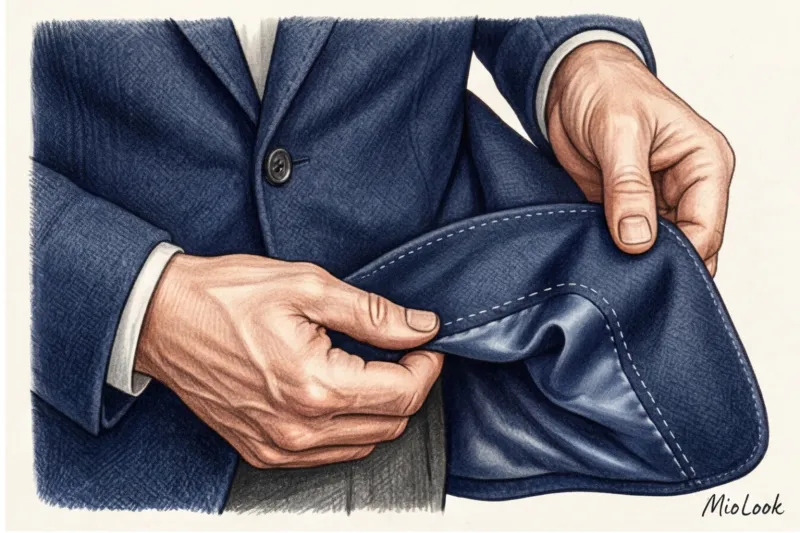
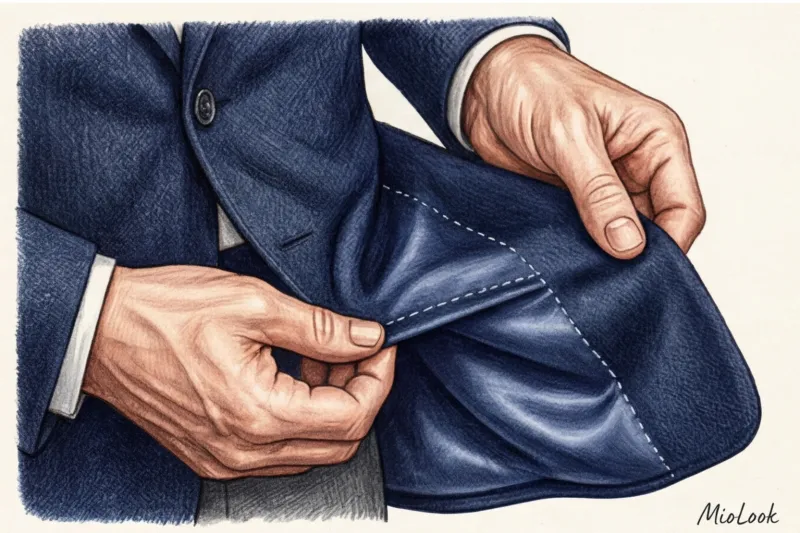
- Back quality: An eco-friendly item is one that won't unravel at the seams. Look for a French seam. Pay attention to the lining: in a high-status jacket, it should be made of cupro (Bemberg) or thick viscose, but not 100% polyester, which will create a greenhouse effect.
The certifications I trust and recommend to my clients are: the aforementioned GOTS, OEKO-TEX Standard 100 (guarantees the absence of harmful chemicals in the finished fabric), and RWS (Responsible Wool Standard – humane treatment of sheep and protection of pastures).
To be fair, I'll point out an important caveat: my advice to invest in premium, dense cashmere isn't for everyone. If your knitwear budget is strictly limited to €40-€50, you'll have a hard time finding impeccable, natural materials in retail. In this case, it's much more eco-friendly to shop at reputable vintage boutiques or resale platforms than to buy an acrylic sweater from H&M that will pill within a week.
Checklist: Check the brand before making an expensive purchase
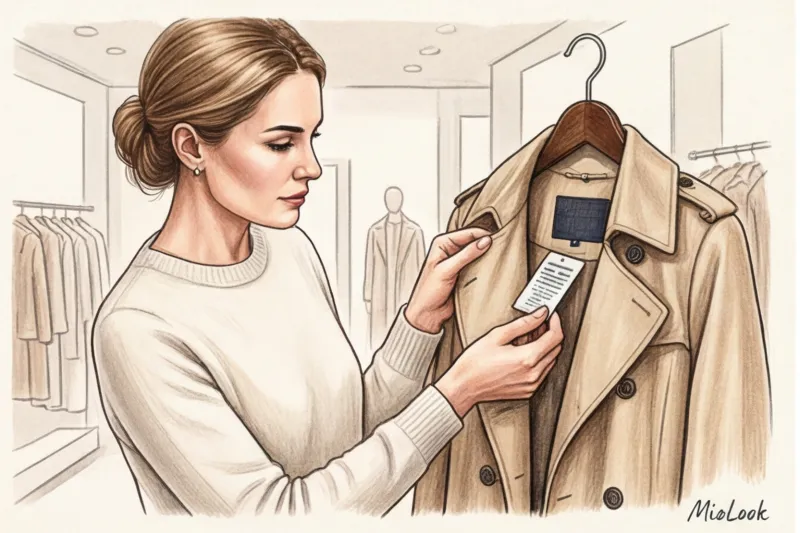
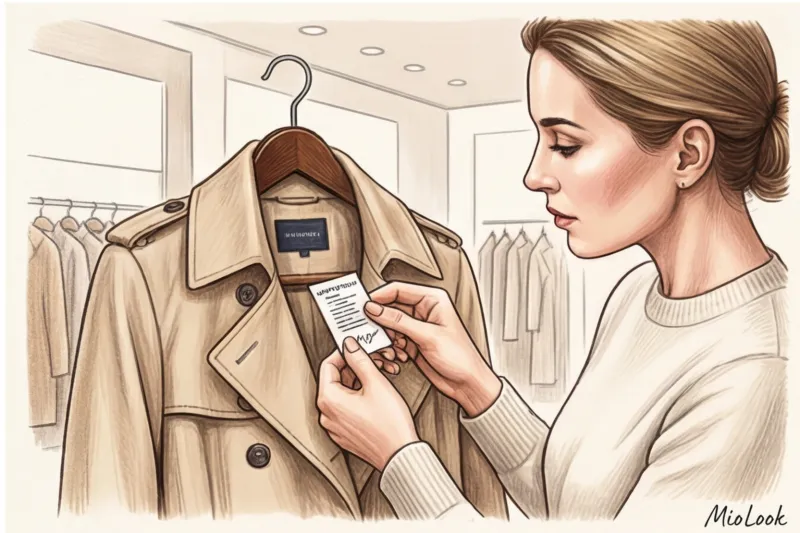
Before you spend €300 or €500 on a piece from the "conscious collection," run the brand through this quick filter. It only takes two minutes right in the fitting room:
- Assortment proportions. If the "eco-line" makes up only 5% of a brand's entire assortment (as is the case with many fast-fashion giants), and the remaining 95% is made from cheap synthetics in the same factories, this is classic greenwashing in clothing.
- Supply chain transparency. Check out the website. Does the brand list the factories where its collection is made? Ethical brands pride themselves on their production in Portugal, Italy, or certified facilities in Asia, publishing photos and labor conditions.
- Availability of repair programs (Repair & Care). A true circular economy looks like this: brands like Brunello Cucinelli or Patagonia are willing to repair your item to extend its life. This is a sign of the highest level of responsibility.
- Independent assessment. Install the Good On You app or check the brand on their website. They aggregate data across three dimensions: attitude toward people, the planet, and animals. If a brand has a "We Avoid" rating, feel free to return the item.
Access to MioLook for €0.99 — one-time payment
Digitize your wardrobe and stop buying duplicates. A smart AI stylist will curate the perfect look from your best pieces.
Get access — €0.99 onceAbandoning illusions in favor of a status capsule wardrobe
When my clients—executives, lawyers, business owners—switch to the concept of a "slow" wardrobe, their lives become simpler and their appearance becomes much more prestigious. smart capsule wardrobe saves you from impulsive purchases of beautiful but useless eco-trends.
Let's calculate Cost-per-wear ( exit price ). Buying one perfectly tailored Super 120s wool jacket for €600 and wearing it for 5 years (approximately 200 wears = €3 per wear) is mathematically and environmentally more cost-effective than buying five "conscious" jackets made from recycled plastic for €120 each, each of which will lose its shape after the first dry cleaning.
To manage your clothing investments, I highly recommend digitizing your closet. You can use MioLook app , which helps you visualize your capsule wardrobe, create new outfits from what you already have, and clearly see what's truly missing. It's sobering before your next trip to the store.

Ethical fashion isn't about shapeless linen bags or T-shirts made from recycled bottles. It's about the highest level of quality, respect for the work of artisans (living wages), and a pragmatic approach to spending your money. Your best defense against greenwashing is your own discernment. Buy less, choose the best, and let every item in your wardrobe reflect your true status and intellect, not someone else's marketing fantasies.