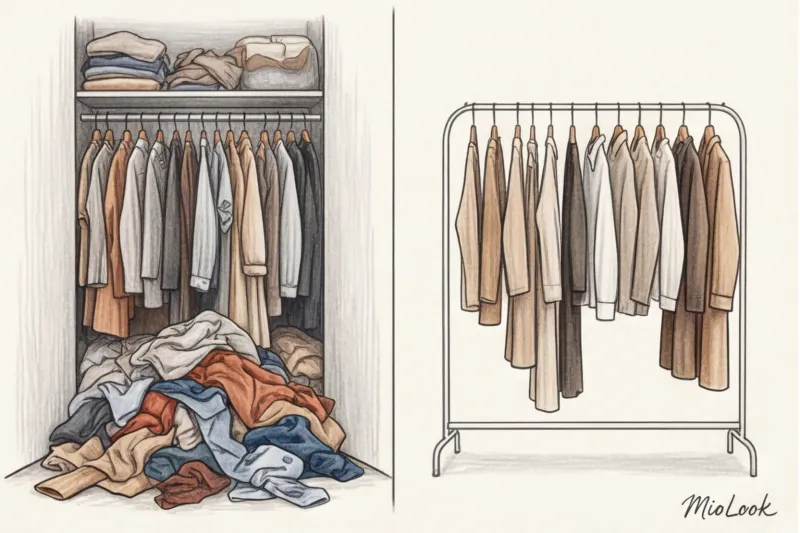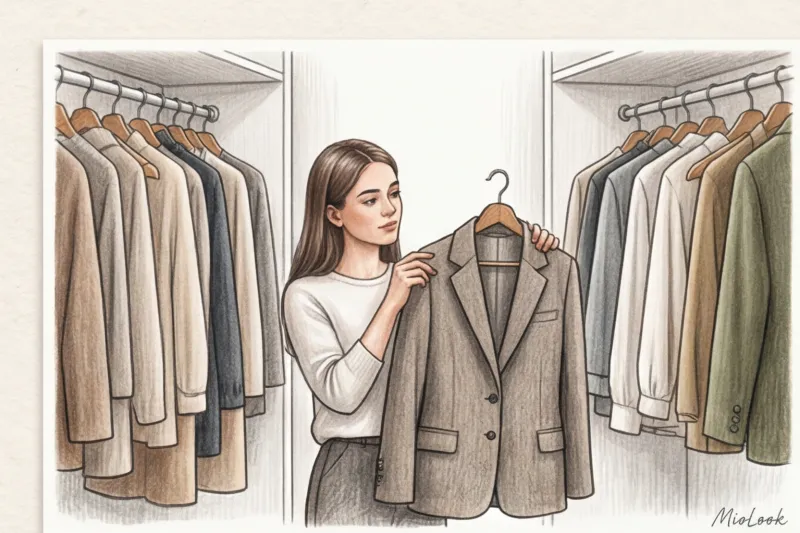
One of my clients, a successful corporate lawyer, proudly pointed to two giant trash bags in the middle of her closet. "I'm throwing out all this toxic mass-market polyester!" she declared. "I'm building a new wardrobe from scratch. Only organic linen, recycled cotton, and luxury eco-brands."
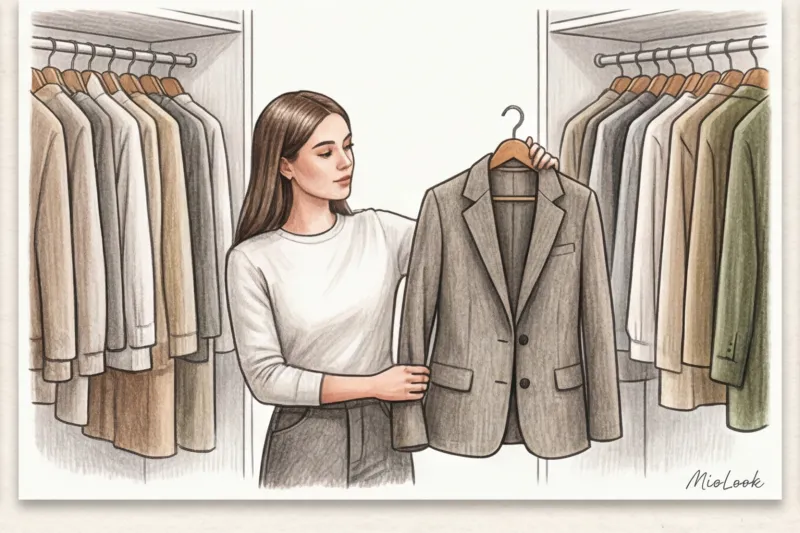
I literally had to stand between her and those bags. Why? Because throwing away functional clothes to buy new "green" ones is the biggest environmental crime you can commit by succumbing to marketing gimmicks. What we now call the term eco-friendly basic wardrobe , doesn't start with shopping. It starts with ruthless math and working with what you already have. We discussed in more detail how brands manipulate our desire to be mindful in our The complete guide to choosing ethical brands without greenwashing Now let's figure out how to build a working capsule without unnecessary expenses and harm to the planet.
An eco-friendly basic wardrobe: why you shouldn't throw out mass-market clothes
The main myth of modern conscious fashion is that to become eco-friendly, you must immediately replace all "bad" items with "good" ones. Brands actively sell us the idea that buying their organic cotton T-shirt will save glaciers. But the numbers say otherwise.
According to the Ellen MacArthur Foundation's 2023 report on the circular economy, extending the life of any item by just nine months reduces its carbon, water, and waste footprint by 20-30%. Yes, even if it's a 100% polyester jacket bought at Zara five years ago. If it fits you perfectly, fits your dress code, and hasn't aged, wearing it for years is much more eco-friendly than sending it to a landfill (where it will take 200 years to decompose) and buying a new one made of eco-linen.
This is where the concept comes into play Cost Per Wear (CPW) or cost per wear. This is the key metric for your wardrobe. The formula is simple: the price of the item plus the care costs, divided by the number of days you wear it.
- A mass-market coat for €150 that you wear every day for three seasons (about 270 days) has a CPW of €0.55.
- A designer eco-trench coat for €600, worn 4 times “on a night out”, has a CPW = €150.
Mindfulness isn't just an "Eco-friendly" label. It's about maximizing the use of an item's resources before it wears out completely.
The #30Wears Formula: How to Digitize Your Closet and Find Blind Spots
Eco-activist and founder of the Eco-Age agency, Livia Firth, introduced the brilliant #30wears rule. Before you take an item to the checkout (or click "Checkout" in your cart), ask yourself one question: "Will I wear this at least 30 times?" If the answer is "no" or "I'm not sure," cancel the purchase.
But how do we know how many times we actually wear our clothes? Human memory plays tricks on us. When I first started tracking my outfits, I was in for an unpleasant surprise. It turned out that I wore a basic €200 silk blouse, which I considered the foundation of my style, exactly four times in a year. But my thick cotton palazzo pants were worn 48 times.

The Pareto principle works flawlessly in our closets: we wear 20% of our clothes 80% of the time. To break this vicious cycle, our wardrobes need to be digitized. Using specialized apps like MioLook , changes consumption patterns. When you see real statistics about your closet on your smartphone, you stop buying a fifth white shirt clone because the app clearly shows that the previous four are just hanging around unused.
Access to MioLook for €0.99 — one-time payment
A smart AI stylist will digitize your wardrobe and show you real statistics on your looks.
Get access — €0.99 onceThe Anatomy of a Sustainable Capsule: Building an Eco-Friendly Basic Wardrobe
A typical capsule collection is built around style and color. An eco-capsule adds a third dimension—multifunctionality and the life cycle of an item. Each piece should work for you like a Swiss army knife.
Investing in a core wardrobe pays off not only environmentally but also productively. According to surveys of my clients, a structured capsule of 25-30 interchangeable items cuts morning preparation time by an average of 15 minutes. You no longer stand in front of a full closet feeling like you have nothing to wear.
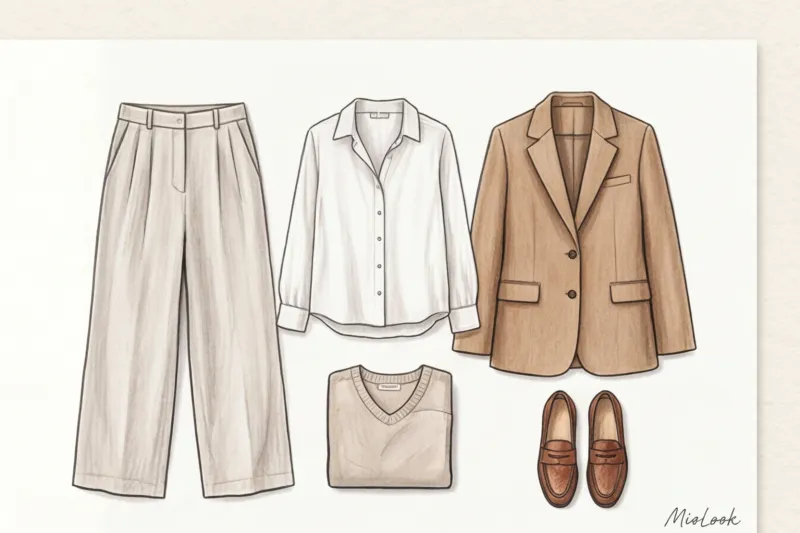
How can you adapt a strict office dress code to eco-friendly standards without losing your status? Focus on the perfect fit and design, not the number of suits. One impeccably tailored blazer in a neutral shade that holds its shape is worth three cheap and shapeless ones.
Eco-friendly materials: a shortlist for the business woman
If you do buy a new item, pay attention to the composition. Here's my professional shortlist of fabrics that look expensive and are less harmful to the environment:
- Tencel (lyocell) and cupra: An ideal and more sustainable alternative to silk for blouses and flowing dresses, these fabrics are made from wood pulp in a closed-loop process (water and solvents are recycled).
- RWS (Responsible Wool Standard) wool: The best choice for high-status business suits. The certificate guarantees ethical animal treatment and respectful pasture management. A suit made from this wool will cost between €200 and €400 but will last for a decade.
A fair disclaimer: recycled polyester isn't always a panacea. Yes, brands like to claim that a top is made from five plastic bottles. But every time you machine wash it, that top releases microplastics into your drains. This solution absolutely does NOT work for basic t-shirts or underwear that you wash after every wear. Save synthetics for outerwear and gear.
The 3 to 1 Rule: The Mathematics of Perfect Match
For a capsule wardrobe to work, apply a strict rule: one bottom (pants or skirt) must pair flawlessly with at least three tops from your closet. If you try on a chic statement pair of pants but need to buy a special blouse and specific shoes to go with them, that's not an eco-friendly basic wardrobe; it's a costly chain reaction.

Create a color palette that never goes out of style. I recommend this formula: three basic neutrals (e.g., graphite, camel, ecru) + two accent colors (deep burgundy, emerald). The mood in this capsule collection isn't driven by extravagant styles, but by quality accessories: a structured leather bag, a silk scarf, or a statement belt.
Your perfect look starts here
Join thousands of users who look flawless every day with MioLook's Smart Wardrobe feature.
Get access — €0.99 onceWardrobe Audit: 4 Steps to Stress-Free Mindfulness
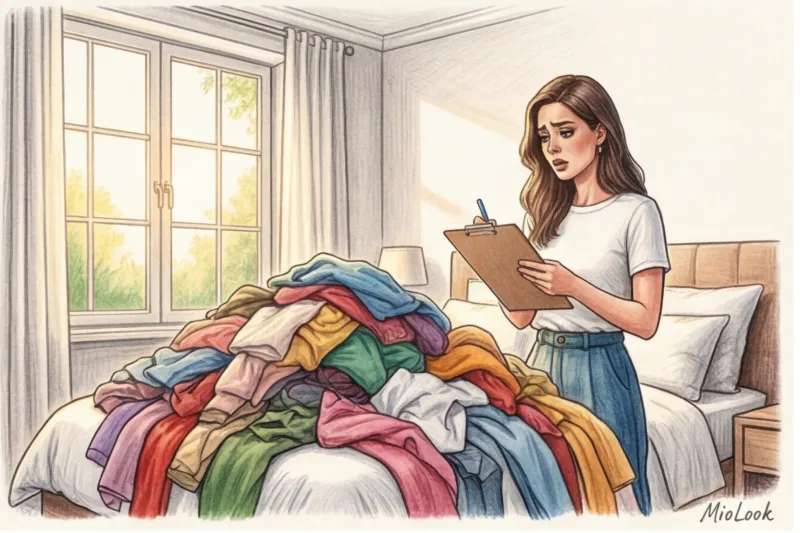
Real style magic happens not in the fitting rooms of shopping malls, but on your bedroom floor during an audit. Here's the process I use with my clients:
Step 1: Inventory. Take out EVERYTHING. Divide each item into 4 categories: Keep, Repair (take to a tailor or dry cleaner), Resale (sell), Recycle (donate to eco-boxes). No "for the dacha" or "when I lose weight" bags.
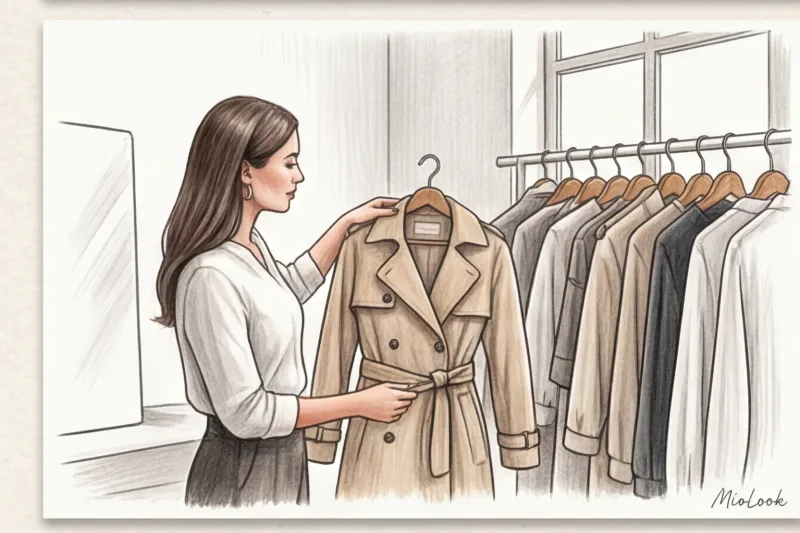
Step 2: Identify idle assets. Those 80% of things you don't wear. Try them on. If it's because you have nothing to wear them with, take a photo and upload it. MioLook To find a pair. If the problem is a poor fit, the item goes to resale.
Step 3: Strict shopping list. After the audit, you'll clearly see your gaps. For example, if you have three great tops, but no matching wide-leg pants, write down: "Dark gray wool wide-leg pants." Go to the store with just a list; no emotional buying.
Step 4: Eco-friendly disposal. Why can't you just throw clothes in the trash? In landfills, fabrics mix with organic matter, releasing methane, a potent greenhouse gas. Torn and hopelessly damaged clothing should be taken only to specialized recycling centers.
Where to Find Pearls: Ethical Brands and Smart Resale
When you do decide to buy a new item, consider the resale market. According to the ThredUp Resale Report (2024), the secondhand market is growing three times faster than the global new clothing market. Resale is the new luxury.
One of my clients (the lawyer from the beginning of this article) assembled her high-status corporate capsule collection exclusively through resale platforms. A vintage YSL wool jacket with a perfect shoulder line cost her €250—less than a new polyester-blend jacket from Massimo Dutti. Yet, its quality of tailoring and fabric are head and shoulders above those of modern mass-market brands. By buying vintage, you don't create demand for new items, minimizing your carbon footprint.
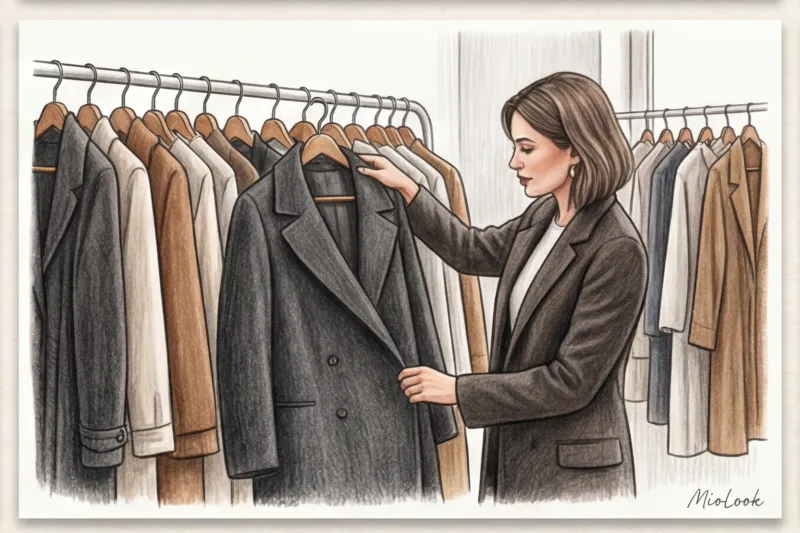
When you buy new items from local brands, you support local production and dramatically reduce your carbon footprint from logistics. Your item isn't flying to you on a cargo plane from the other side of the world.
Caring for Your Clothes as a Key Eco-Habit: Stylist Life Hacks
No eco-friendly fabric will save the planet if you ruin it with improper washing within two months. Care is 50% of the success of an eco-friendly wardrobe.
First, reduce the washing temperature. Research shows that 30 degrees Celsius (86 degrees Fahrenheit) is enough to clean 90% of everyday items. Washing in cold water not only saves energy but also prevents fading and shrinkage.
Secondly, forget about frequent dry cleaning. Chemicals destroy the fibers of wool and silk. Invest in a good handheld steamer (an investment of about €60-€100). Hot steam kills bacteria, refreshes the garment, and smooths out wrinkles without damaging the fabric's structure. Wool suits can simply be aired out on the balcony after wearing.
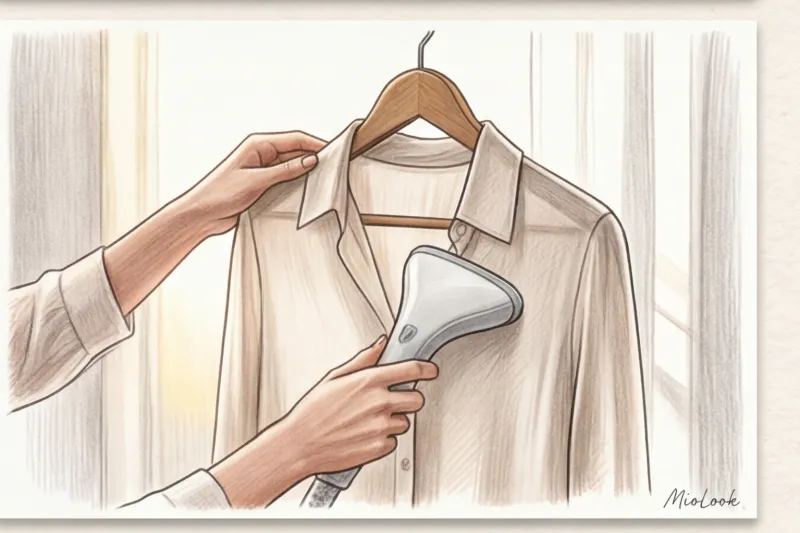
And finally, hangers. In my 12 years as a stylist, I've seen hundreds of expensive, beautiful jackets and cashmere sweaters deformed by thin wire hangers from the dry cleaner. The sharp edges pull the shoulder seams, and the garment is destined for the trash. Invest in wide wooden hangers for outerwear and velvet ones for silk and blouses. And a good €20 pilling machine can bring back to life a sweater you've already mentally buried.
Ready to get started?
Try the MioLook free plan to digitize and manage your new wardrobe—no commitments.
Get access — €0.99 onceYour First Month with an Eco-Capsule: A Beginner's Checklist
The transition to a mindful wardrobe doesn't have to be abrupt. Use this step-by-step plan for the next month:
- Week 1: Shopping Moratorium. Don't buy anything new. Conduct the closet audit we mentioned above. Use the app to create looks using only what you already own.
- Week 2: Test drive 15 things. Select 15 of your favorite and most compatible items (including shoes) and put the rest away. Try living a week with just this mini capsule. You'll be surprised how much faster your morning routine will be.
- Week 3: Restoration. Take your shoes in for maintenance, take your coat to a tailor to have the lining replaced, and de-pilling your sweaters. Repairing your own clothes gives you a wonderful sense of control.
- Week 4: Informed Shopping. If during a test drive you realize you're critically missing one detail (like classic loafers), buy them. But apply the #30wears rule and check resale platforms before hitting the mall.
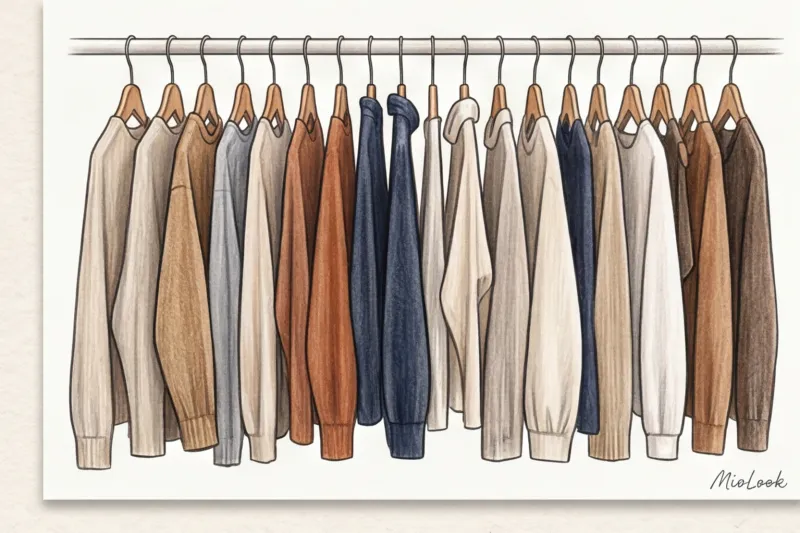
Remember: a truly eco-friendly basic wardrobe isn't one with a green leaf on every tag. It's a wardrobe in which you know every item inside and out, wear it regularly, and care for it so it lasts for years. Conscious fashion isn't about buying the best things. It's about buying less and loving what you buy for much longer.