Remember that annoying feeling? You buy a basic white T-shirt with a proud green "Organic" label, pay €25 for it, and after the first wash at 30 degrees, the side seams twist up onto your stomach. You feel cheated. And rightly so. In 12 years of working as a personal stylist and fabric expert, I've thrown out dozens of these "eco-friendly" items.
To understand what it is organic cotton, the difference from regular cotton and why mass-market marketing labels often lie, we'll have to forget about advertising and remember physics. I've already discussed in more detail how brands manipulate our emotions in our The complete guide to choosing ethical brands without greenwashing Today we will dissect cotton.
Organic cotton: the difference from regular cotton at the anatomical level
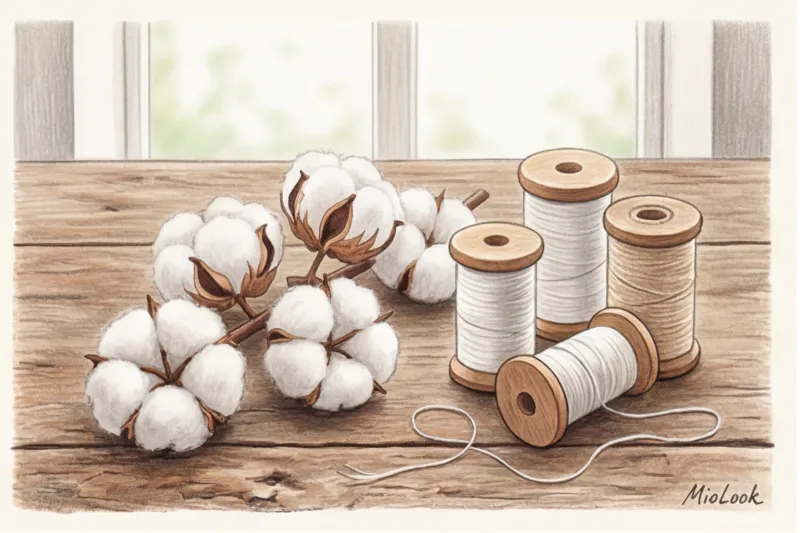
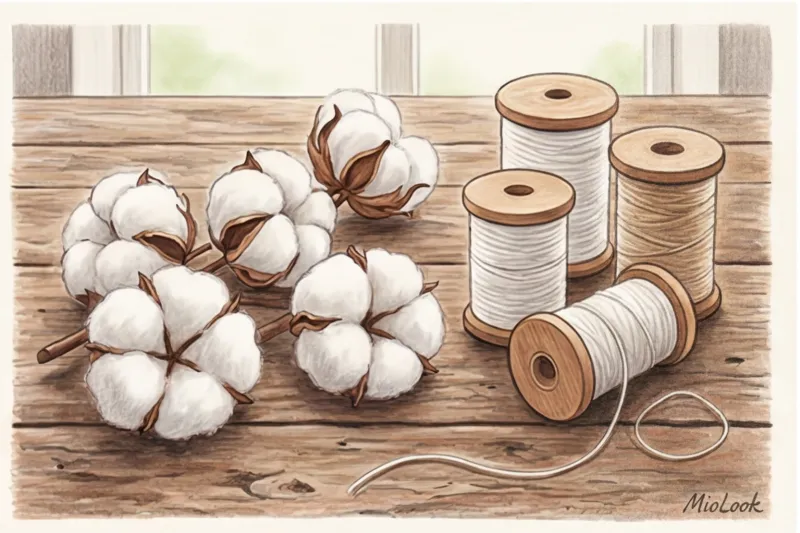
The difference begins at the seed stage. Conventional cotton is often grown from genetically modified seeds to make the plant pest-resistant. Organic cotton always comes from non-GMO seeds. But the real magic of quality, for which we (theoretically) pay, lies in the harvesting method.
According to the Textile Exchange Report 2023, only about 1.4% of all global cotton is grown organically. And it's mostly harvested by hand. Why is this so important for your wardrobe?
- Machine picking of regular cotton: Harvesters pick the bolls harshly, often breaking the fibers themselves and mixing them with leaves and branches. Cleaning this mass requires aggressive chemical and mechanical treatment. The broken fibers become short.
- Manual collection of organic matter: People carefully pick only the ripe bolls. The fiber retains its natural length.
In textile materials science, there is a concept called "staple length" (the length of a single fiber). The longer the staple, the finer, smoother, and stronger the thread can be spun. Long-staple cotton (3–4 cm) garments are virtually free of pilling. Machine-cut cotton (less than 2 cm) garments will begin to pill after just one week of wear, as the short ends of the threads become dislodged from the weave due to friction.
Chemical Footprint: What's Left Behind in Your Basic T-Shirt
Many people think cotton is just a plant. But did you know that growing regular non-organic cotton uses about 16% of all insecticides produced globally? But that's not the worst thing for your skin.
The real chemical attack occurs during the fabric processing stage. Cheap, ordinary cotton is often treated with formaldehyde resins. Have you ever noticed the inscription on shirt labels? Non-Iron or Wrinkle-Free (Doesn't require ironing)? In the budget segment (under €50), this effect is almost always achieved through a toxic coating that doesn't wash out even after five washes. Organic cotton, certified to strict standards, is bleached with oxygen (not chlorine) and dyed with pigments free of heavy metals. This makes it more breathable and less likely to cause contact dermatitis.
Access to MioLook for €0.99 — one-time payment
A smart AI stylist will select the perfect look based on your preferences in fabrics and styles.
Get access — €0.99 onceStylist's Blind Test: How to Recognize High-Quality Eco-Cotton by Touch
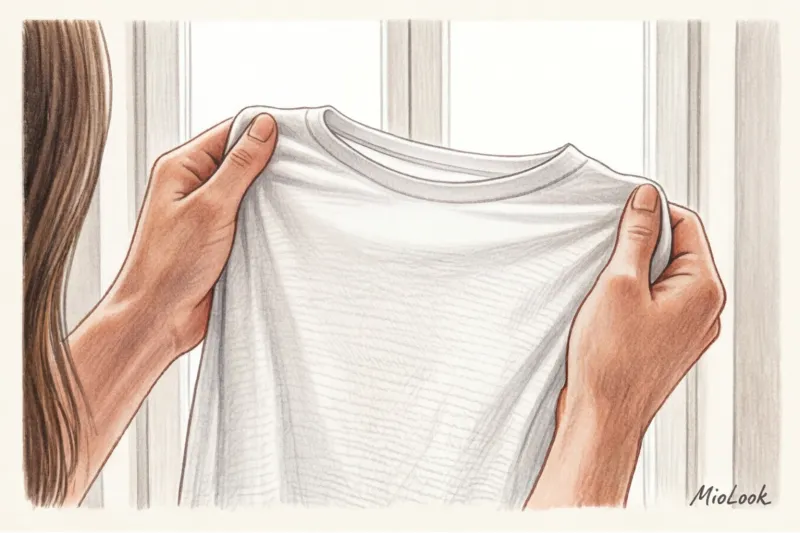
When sorting through wardrobes, I often conduct the same blind test with my clients. I place two white T-shirts on the table: one "organic" from a cheap mass-market store, and the other, a regular one made of premium cotton. I ask them to close their eyes and choose the higher-quality one.
Nine times out of 10, people reach for the more expensive item, even if it's not organic. Why? Fast fashion brands are being clever: they liberally soak cheap, short-staple organic cotton in silicone softeners. In the store, the fabric appears flowing and incredibly soft. But the silicone will wash out during the first machine wash, leaving you with a rag as rough as sandpaper.
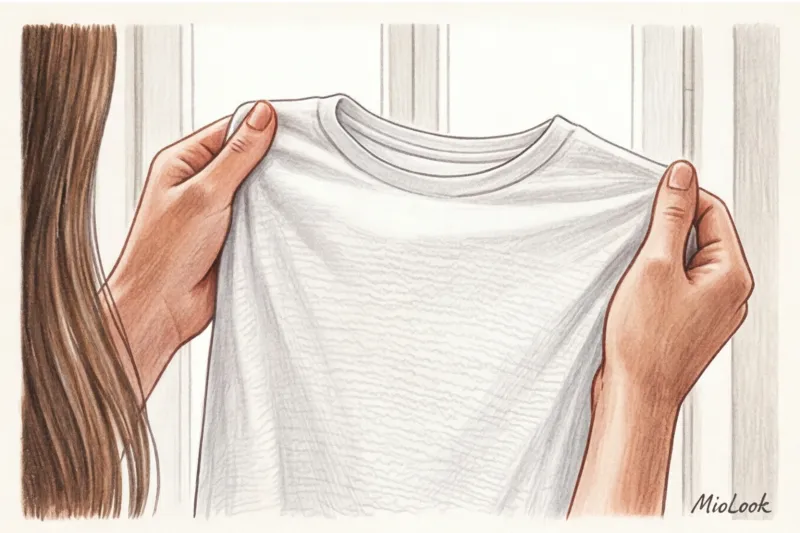
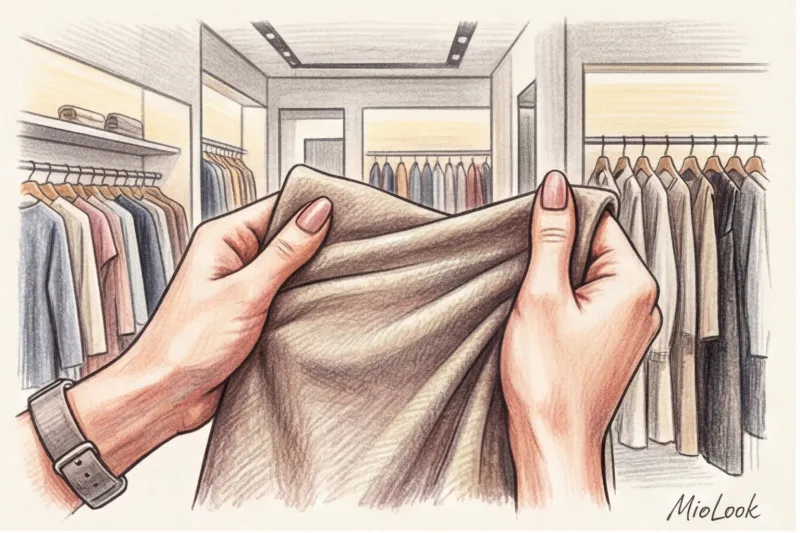
Here are my three personal rules for checking fabric right in the fitting room:
- Translucent test. Hold the fabric up to a lamp. High-quality cotton has a tight, even weave, like a fine mesh. Cheaper cotton will have bald spots and thickened threads—these are the very same chopped fibers that will soon become pilling.
- Smell test. Smell the item. Cheap dyes smell like vinegar, burnt rubber, or a sharp, chemically sweet odor. Properly processed organic cotton smells like... nothing. At most, it smells like cleanliness or a light papery aroma.
- Density check. A good basic cotton T-shirt should have a weight of at least 160–180 g/m². It shouldn't be see-through (unless the designer intended it to be translucent).
The Bitter Truth: When Regular Cotton Is Better Than Organic
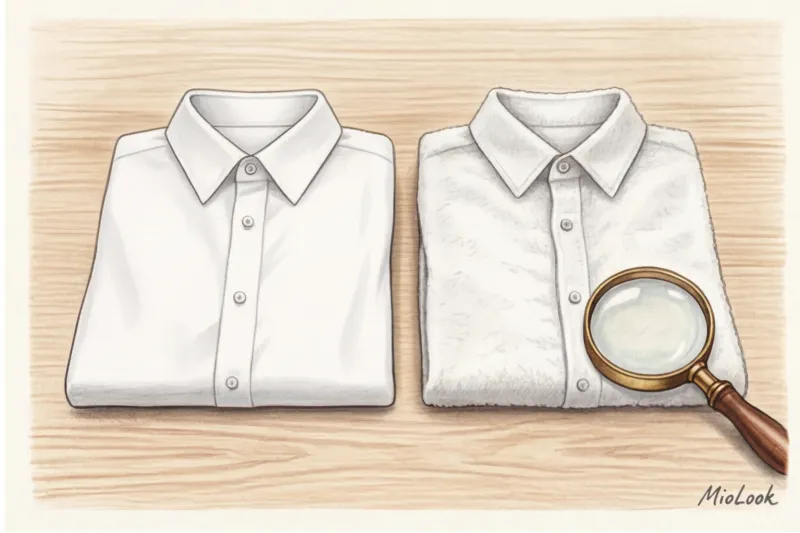
Now let's break the biggest stereotype of eco-marketing: the word "Organic" on the tag of a €10 item is an indulgence for your conscience, but a bad investment in your wardrobe.
The truth is that organic farming is a growing method, not a guarantee of thread quality. Cheap organic cotton grown in India, haphazardly harvested, poorly twisted, and stitched with crooked stitching, will not last as long as high-quality long-staple non-organic cotton (such as Pima or Egyptian).
Egyptian cotton may be grown with fertilizer (and therefore not organic), but thanks to its nearly 4 cm staple length, a shirt made from it will last you 5-7 years. A mass-market T-shirt with a green "Conscious" tag will warp after a month. Which is more environmentally friendly? The answer is obvious: something you won't throw away after a season.
When the organic rule DOESN'T work: If a brand sources organic raw materials but sends them to a factory where the fabric is dyed with cheap dyes containing phthalates and heavy metals, you'll receive a garment that's technically made from "pure" cotton, but its chemical levels are off the charts.
Your ideal image begins Here
Join thousands of users who look flawless every day with MioLook. Digitize your wardrobe in one click.
Get access — €0.99 onceWardrobe math: is it worth overpaying for organics?
Organic cotton costs brands 20-30% more to purchase than regular cotton. Is this premium worth it? As a stylist, I always encourage my clients to consider the cost per wear.
Let's compare:
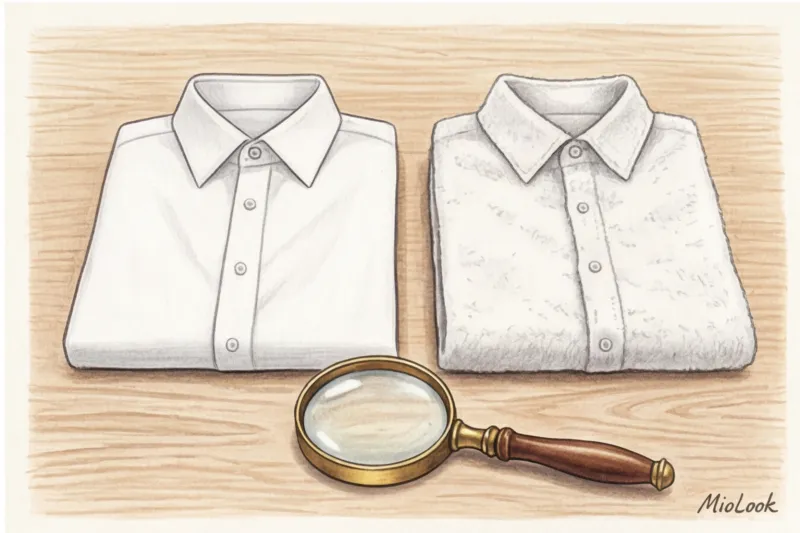
- A budget-friendly organic T-shirt costs €15. It will last 5 washes before losing its shape. Your CPW = €3.
- A premium T-shirt made of dense GOTS-certified cotton costs €50. It will last 50 washes. Your CPW = €1.
Mathematics is inexorable: a quality product is always more profitable. If you want to track your outputs and calculate CPW automatically, I recommend using wardrobe analytics feature in the MioLook app This is very sobering when it comes to impulse shopping.
I recommend distributing your budget like this:
Where to invest (look for certified organic): Underwear, tank tops, T-shirts, bodysuits, pajamas, and children's clothing. Anything that comes into close and prolonged contact with the skin. The absence of toxic dyes and pesticides is critical here.
Where you can save money (choose high-quality regular cotton): Outerwear (trench coats), heavy denim, structured jackets. The density of these fabrics compensates for the fiber length, and they have less direct contact with the skin.
Quality Certificates: How to Read Labels to Avoid Being Scammed
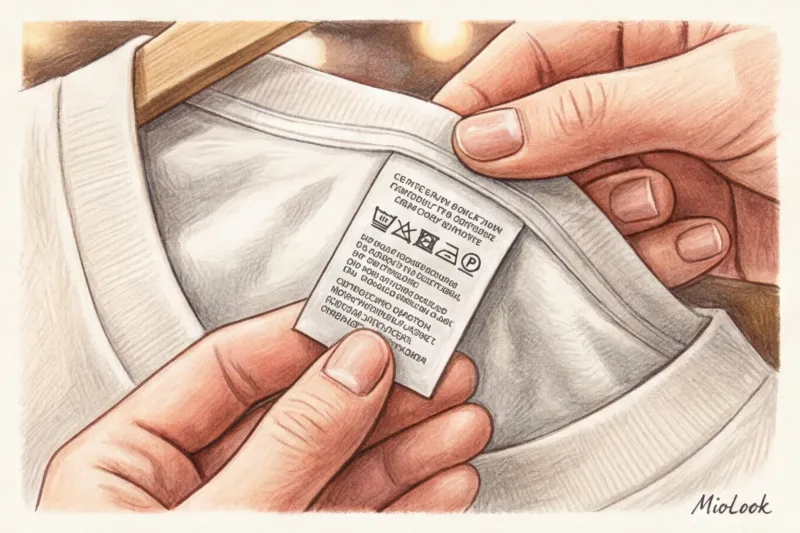
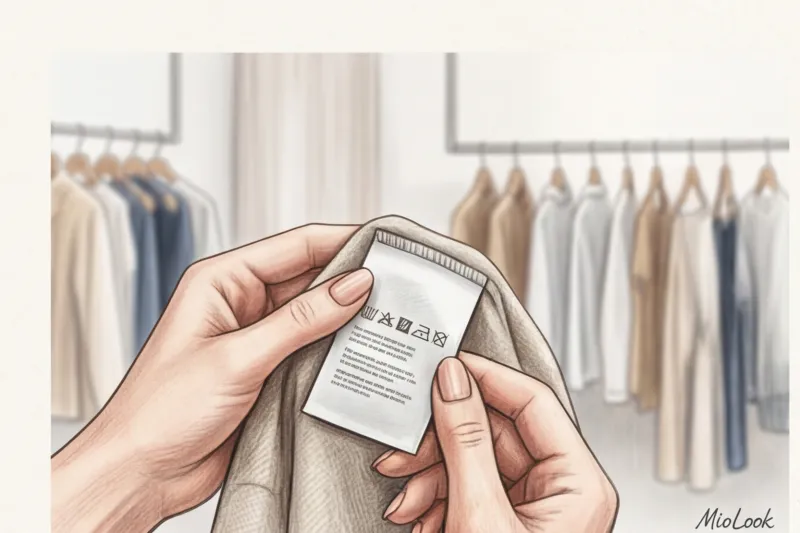
The words "eco," "bio," and "natural" on the tag mean absolutely nothing. It's just marketing. If a brand truly uses high-quality organic cotton, they'll pay for international certification. Look for these symbols on the inside tags (usually sewn into the side seam):
- GOTS (Global Organic Textile Standard) — the industry's gold standard. According to the updated GOTS 7.0 standards, the entire supply chain is verified: from the seed (GMO-free) to the working conditions of the seamstresses and the ban on toxic dyes. If you see this symbol, you can buy with confidence.
- OCS (Organic Content Standard) — a weaker certificate. It only confirms that the fabric contains the stated percentage of organically grown cotton. But it doesn't control what chemicals were used to bleach and dye the fabric.
- OEKO-TEX Standard 100 — a frequent guest on tags. It's important to understand: this icon does not mean , that the cotton is organic. This only guarantees that the final product does not contain levels of toxins hazardous to humans. It's an excellent safety indicator, but it has nothing to do with the ecology of its cultivation.
Ready to get started?
Try the MioLook plan for free—no commitments required. Create your first capsule collection of quality pieces right now.
Get access — €0.99 oncePre-purchase checklist: 5 steps to making an informed choice
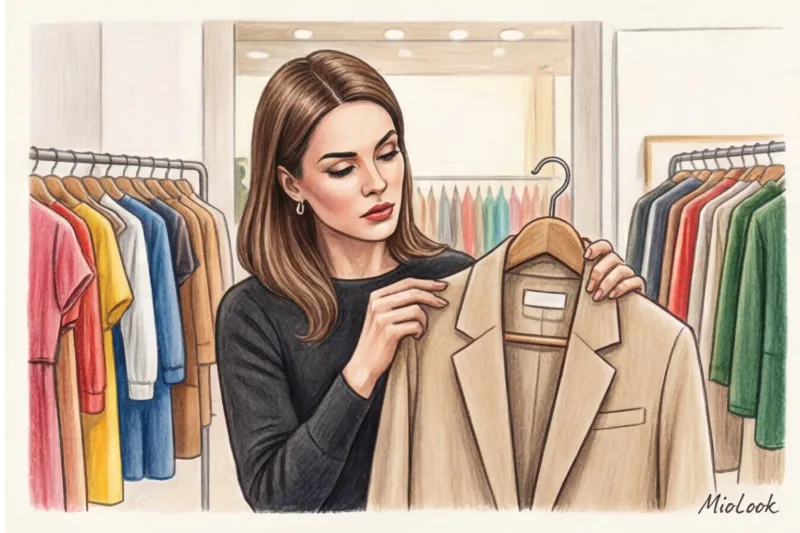
When you go to the store (or unpack your online order), follow this checklist. It will save you from wasting money:
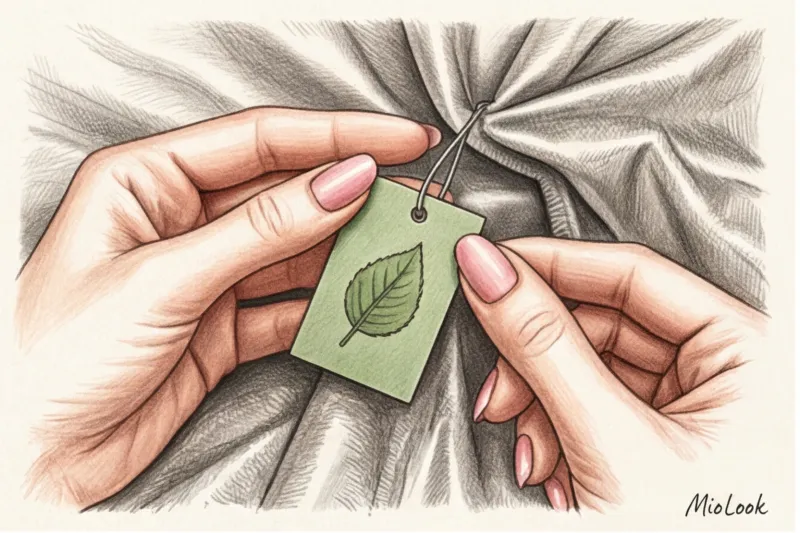
- Check the certificate. Look for the GOTS or OEKO-TEX logo on the inside tag, not just a green cardboard label with a leaf on it.
- Check the seams for skew. Lay the T-shirt flat on the table. If the side seams are pulled forward or back even by a millimeter, the item will spiral after washing. This is a sign of cheap yarn, which "runs away" in the direction of the thread twist.
- Feel the fabric and hold it up to the light. Remember: no thickened threads or bald spots. The fabric should be elastic and return to its shape after being slightly stretched.
- Look at the fittings. Brands that use high-quality organic cotton rarely skimp on buttons. If a €70 shirt has cheap, thin plastic buttons, it's typical greenwashing. Ethical brands use corozo (walnut), shell, or dense, matte recycled plastic.
- Ask yourself about necessity. I write about this in detail in the article about conscious consumption and creating an eco-wardrobe The most eco-friendly thing is the one that's already hanging in your closet.
When choosing between organic and conventional cotton, remember the most important thing: durability is more important than a pretty label. Invest in the density of the fabric, the length of the fiber, and the quality of the cut, and your wardrobe will be truly resilient—both through washing and through changing trends.