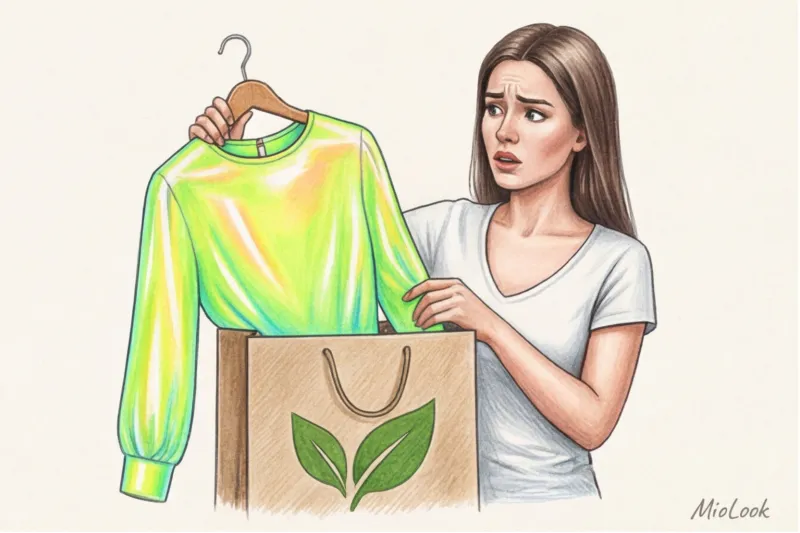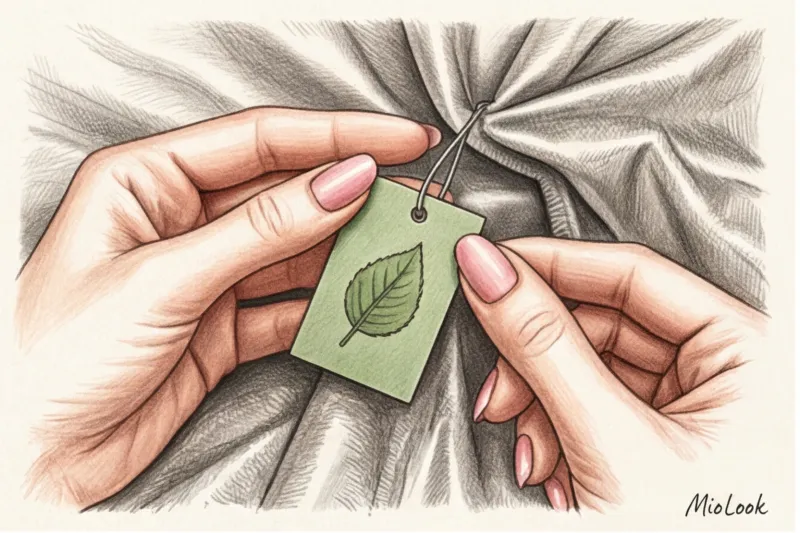
Imagine this: you're standing in the fitting room of a well-known mass-market brand. You're holding a basic white T-shirt. A huge, vibrant green cardboard tag dangles proudly from the chest: Conscious , Eco-friendly or Made with love for the planet You buy it with a sense of accomplishment. But after just three washes, the side seams curl, the fabric starts to pill, and your skin starts to feel slightly irritated. Sound familiar?
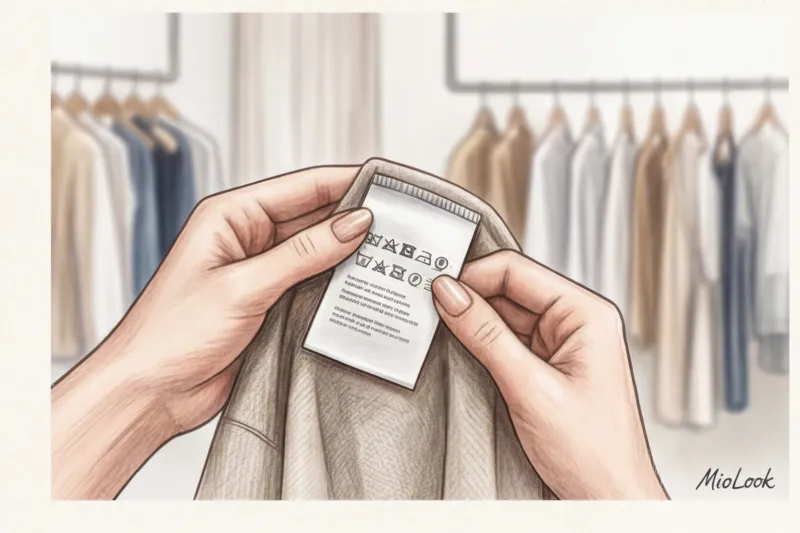
In 14 years of working as a personal stylist, I've realized one important thing: true eco-friendliness is boring. It doesn't scream out loud with designer labels. It hides on tiny, prickly internal tags in the form of incomprehensible abbreviations. The right one eco-labeling of clothing It's not just about caring for polar bears or saving tropical forests. It's, first and foremost, your personal, ironclad filter for finding premium-quality items that will last for years and repay every cent invested.
We talked in more detail about how the fashion industry manipulates our feelings in our The complete guide to choosing ethical clothing brands without greenwashing In this article, I want to give you a practical tool: how to read certificates so you can assemble a truly prestigious and secure capsule.
Green Marketing or Reality: Why Eco-Labeling Clothing Is a Guarantee of Quality
The fashion industry has long understood: we want to be conscious. According to a global McKinsey report The State of Fashion 2024 More than 60% of eco-friendly claims in mass-market products are either exaggerated or outright greenwashing. Brands aren't selling us quality, they're selling us indulgence.
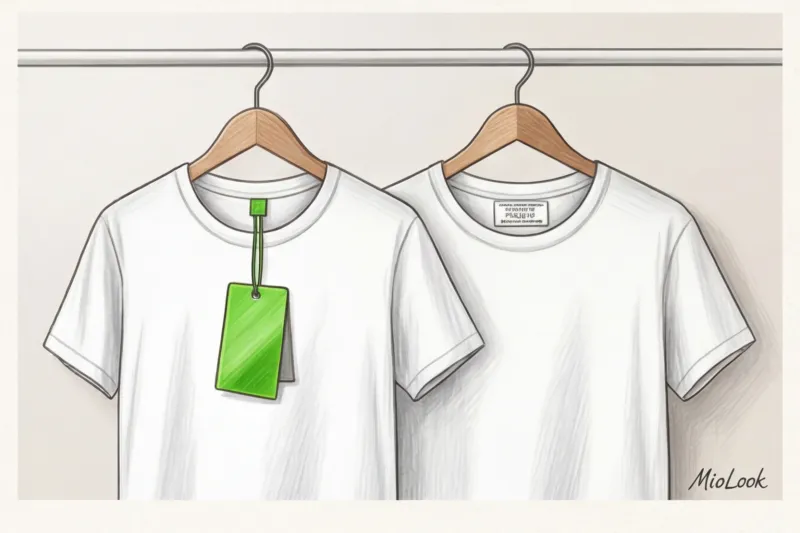
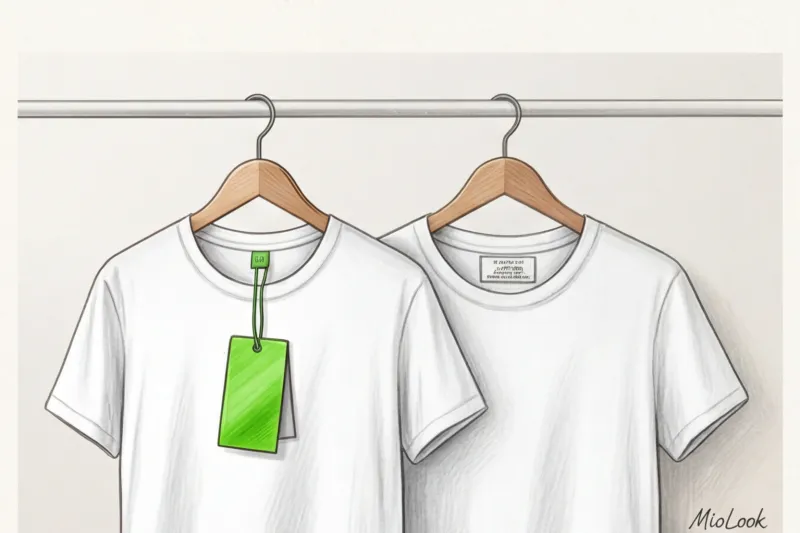
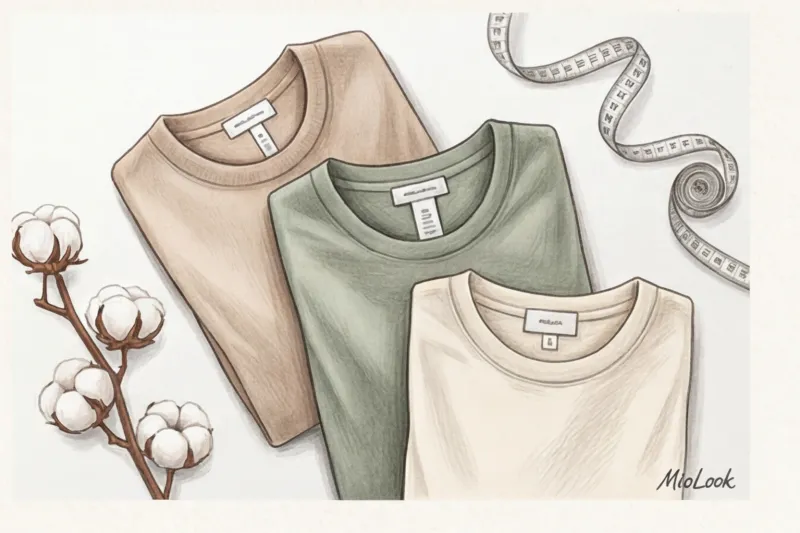
One day, during a shopping trip, a client and I decided to experiment. We picked up two T-shirts: one from a limited-edition "eco-collection" from a popular fast-fashion brand (around €20) and a basic mid-range T-shirt (around €55) with a discreet GOTS logo on the inseam. The difference was dramatic. The first was see-through, and its collar was flimsy. The second held its shape, had a density of at least 180 g/m², and felt like a second skin.
The secret is simple: independent certification forces manufacturers to adhere to the strictest production standards. If a brand has spent thousands of euros auditing its factory to earn the coveted certification, it won't skimp on thread quality or cut fabric off-grain to save a few centimeters of material. The certification is a secondary indicator that the product you're looking at is made with care.
How Brands Sell Us the "Green Illusion" (and How to Spot It)
The main paradox I try to convey to my clients is that a tag with a green leaf on it in a mass-market product is most often a red flag. Words Sustainable or Green Legally, they mean nothing. Any brand can put this on their clothing with impunity.
Take, for example, a favorite trick of many corporations: recycled polyester made from plastic bottles (PET). They sell us a dress for €30 and say it saved the ocean. But what brands don't tell us is that with every wash, this polyester releases thousands of microplastic particles, which still end up in waterways. Moreover, a dress made from 100% plastic, even recycled, is completely non-breathable. You'll sweat in it like you're in a greenhouse. In such cases, I always recommend doing the math. Cost Per Wear (Cost Per Wear): You will wear a cheap synthetic dress twice, but a dress made of high-quality viscose will last you several seasons.
Access to MioLook for €0.99 — one-time payment
Start creating perfect looks with AI and digitize your wardrobe for smart shopping.
Get access — €0.99 onceMy ironclad rule as a stylist: if a brand claims to be eco-friendly, but there's no independent third-party certification on the sewn-in label, you're simply paying for the work of marketers.
The Big Three: Reading Eco-Certificates Like a Pro
There are over 100 different textile markings in the world. It's impossible to remember them all, and there's no need to. In order to collect smart capsule wardrobe , it's enough to learn to recognize the "Big Three." These are the standards trusted by industry professionals.
GOTS (Global Organic Textile Standard): the gold standard for cotton
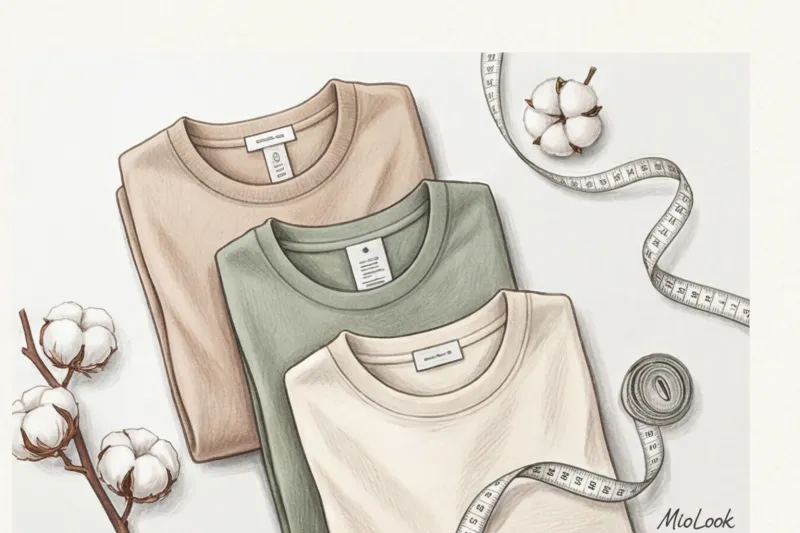
GOTS is the world's most rigorous and authoritative standard for organic fibers. According to the current version of GOTS 7.0, to earn this label, a product must be at least 70% certified organic (and for the GOTS Organic label, a full 95%).
- What is prohibited: toxic pesticides during cultivation, genetically modified seeds, aggressive chlorine during bleaching.
- Why this is important for your wardrobe: Regular cotton undergoes harsh chemical treatments during production, which weakens the fibers. GOTS cotton retains its natural structure. This is why certified T-shirts and shirts last for years, don't fray at the elbows, and remain incredibly soft.
Oeko-Tex Standard 100: Your second skin is safe
While GOTS monitors the process from seed to factory, Oeko-Tex Standard 100 tests the final product. Every component of a garment—from threads and buttons to dyes—is tested for over 100 harmful substances (including heavy metals, phthalates, and carcinogenic azo dyes).
I had a telling case in my practice. A client came to me with chronic contact dermatitis. Dermatologists prescribed ointments, but the rash on her shoulders and back kept returning. We reviewed her wardrobe and threw out all the cheap synthetic tops. I put together a basic base layer for her, exclusively Oeko-Tex certified. We kept our budget at around €200, choosing high-quality basic brands. Within a month, the problem had completely disappeared. This certification is an absolute must-have for underwear, T-shirts, and children's clothing.
Fair Trade: Focus on People and Ethics
Fair Trade ensures that farmers and seamstresses receive fair wages, work in safe conditions, and that children are not involved in production.

Many people ask, "Olena, what does the quality of my shirt have to do with working conditions in Bangladesh?" The connection is straightforward. A seamstress working 14 hours a day in a stuffy basement (sweatshop) for pennies is physically incapable of making a perfect French seam or evenly matching the checkered pattern on a jacket. Fatigue leads to defective garments. Fair Trade certification means standardized working hours and process control. Rested, professional seamstresses create even stitches, properly assemble garments, and ensure a perfect fit.
Recycling: What do the GRS and RCS symbols mean?
In the wake of the circular fashion trend, icons are often seen GRS (Global Recycled Standard) and RCS (Recycled Claim Standard). They confirm that the item actually contains recycled materials.
But I have to be completely honest with you here. According to research by the Ellen MacArthur Foundation, only about 1% of textiles worldwide are recycled into new clothing. The technology is still immature. Most "recycled" items are a mix of pre-consumer waste or recycled plastic.
Is it worth pursuing? My stylist's take: consider the type of fabric. Recycled cashmere (usually leftovers from high-quality yarns from Italian mills) is a great investment. It's cheaper than virgin cashmere (around €120-€180 per sweater instead of €300), but it's just as warm. Recycled acrylic or polyester, however, are best left on the hanger, unless you're choosing a trench coat or jacket where the synthetics are functionally justified.
Ready to get started?
Try the MioLook plan for free—no commitments required. Your pocket stylist is always at your fingertips.
Get access — €0.99 onceA Mindful Shopper's Checklist: How to Check Tags Right in the Fitting Room
To avoid falling victim to marketing scams, make checking tags a healthy habit. It only takes 15 seconds.

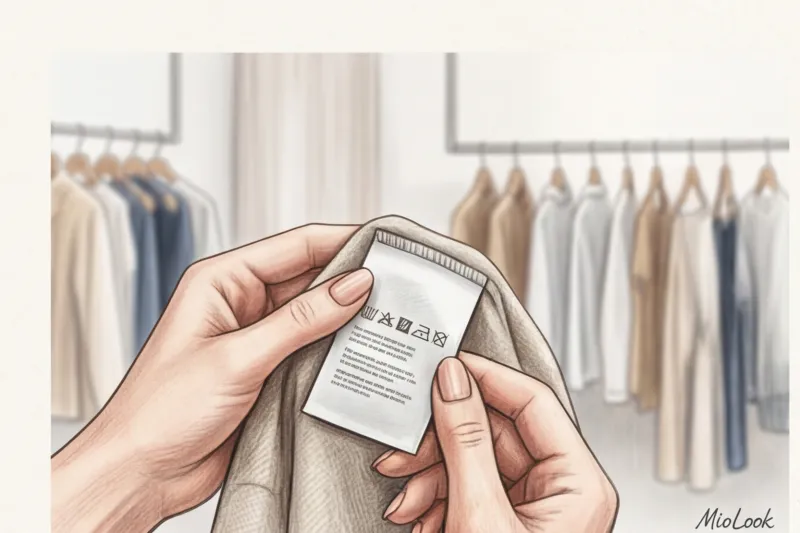
- Ignore the color of the cardboard. Designer tags with loud slogans are thrown straight into the trash. Look for a sewn-in fabric tag on the inside side seam of the garment (usually on the left).
- Look for abbreviations, not words. GOTS, Oeko-Tex, Fair Trade, and GRS labels speak the truth. Words Eco , Natural , Green - an empty sound.
- Check the license number. Serious standards (especially GOTS and Oeko-Tex) always require brands to include the certification tracking number directly under the logo. You can even find this number on their official websites.
- Evaluate the composition sensibly. Eco-labeling of clothing doesn't negate the physics of fabrics. Certified polyester will remain plastic and will generate static electricity. Certified thin viscose will still wrinkle. Assess the item holistically.
If you are unsure about a brand, I recommend using the app. Good On You right in the store - it shows an independent rating of the brands' ethics.
Bottom line: we're putting together an ethical capsule without fanaticism.
The most unsustainable thing you can do after reading this article is to go to your closet, throw out all the "uncertified" items, and run out and buy new ones with the correct tags. The most eco-friendly item is the one already hanging in your closet.
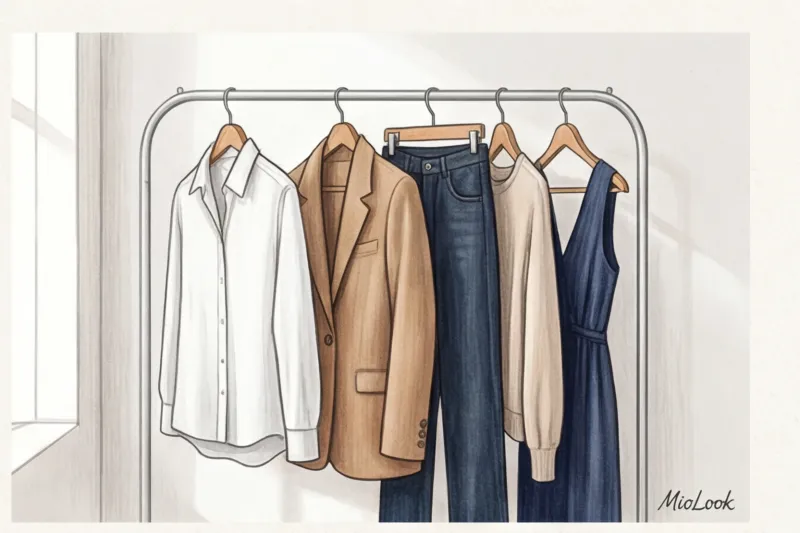
Implement new rules gradually. Start with the base layers that come into direct contact with your skin: underwear, tank tops, t-shirts, and shirts. This is where eco-labels (especially Oeko-Tex and GOTS) will play a key role in your health and comfort.
Think of certificates not as a fashion fad, but as your personal guarantee of quality. In a world where brands try to sell us more and cheaper, learning to read labels is a skill that saves you money, protects your skin, and allows you to create a truly luxurious wardrobe.