Did you know that it takes up to 7,000 liters of water to create a single pair of your basic jeans? That's about as much as an adult drinks in seven years. When I share this data from the Textile Exchange research institute (2023), my clients often rethink their wardrobes. And then the question naturally arises: What is clothing upcycling? What is it and how does it help break the vicious cycle of fast fashion?
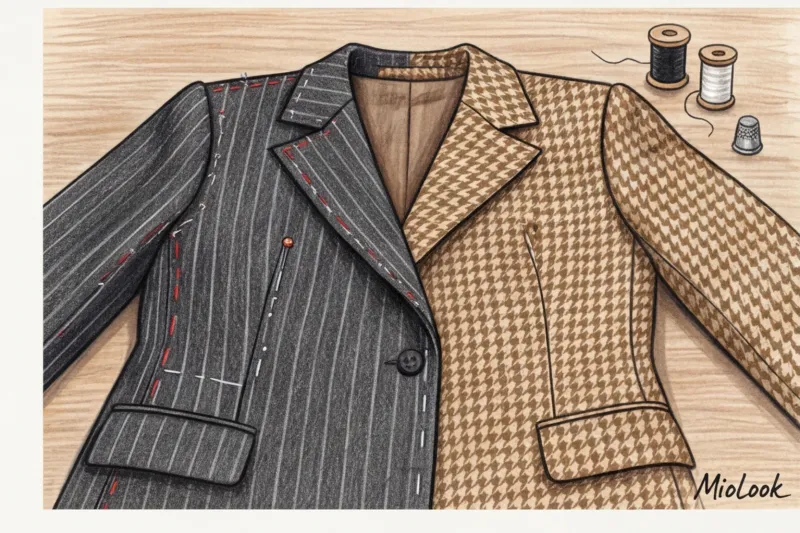
Many people still imagine upcycling as a sloppy, hippie-style patchwork, where old scraps are used to create strange, unsuitable pieces. After 12 years as a stylist, I've realized that this is a huge myth. Today, reimagining vintage is an architectural process involving tailoring and premium fabrics, allowing you to create truly prestigious pieces. We've already explored how brands are using the eco-conscious agenda (and where they're being disingenuous) in our article. The complete guide to choosing ethical brands without greenwashing In this article, I'll show you how to integrate repurposed and vintage pieces into even the most formal business wardrobe, drawing on knowledge of materials science.
Clothing upcycling: What it really is and why it's the new luxury
To understand the phenomenon, you need to listen to the word itself. The prefix "up" Means increasing value. While recycling destroys an old item to turn it into lower-quality raw materials, upcycling takes existing materials and creates a product with higher added value.
Having visited the backstage of Paris Fashion Week, I observed a striking contrast. While mass-market brands are engaging in blatant greenwashing, releasing collections made from recycled plastic (which releases microplastics into the ocean with every wash), true high fashion visionaries are buying up deadstock — dead stock of unsold premium fabrics from past decades.
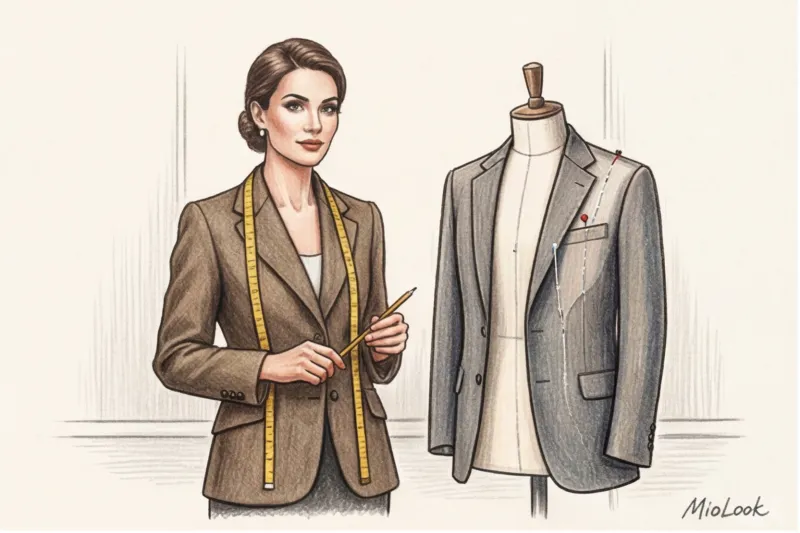
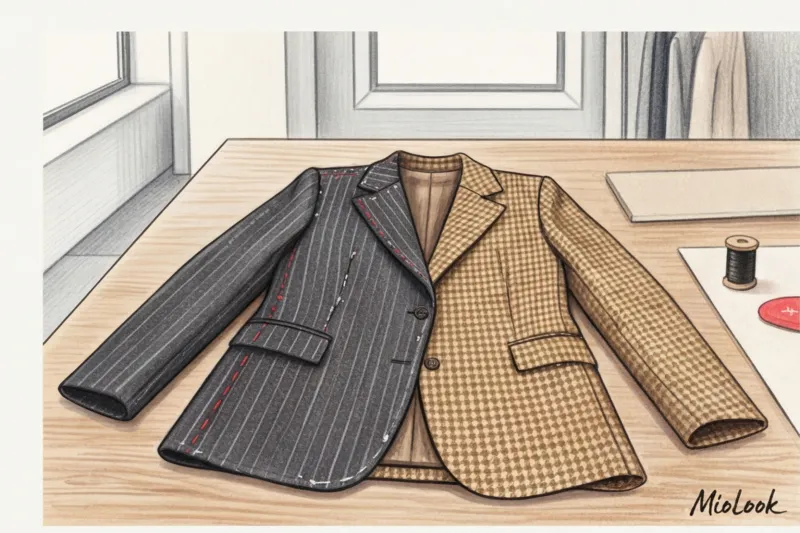
Upcycling is the pinnacle of tailoring today. It involves taking two vintage men's jackets made of thick Italian wool, ripping them open, and constructing one perfect women's jacket with exaggerated shoulders that looks like a runway exclusive.
Customization, Recycling, and Upcycling: A Conscious Buyer's Dictionary
To avoid falling for marketing ploys, let's clearly distinguish between these three concepts:
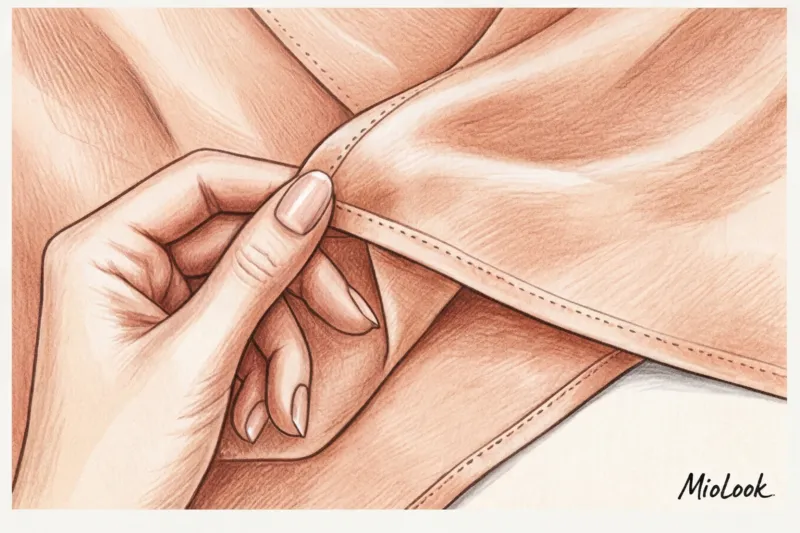
- Recycling: The physical or chemical destruction of an item. Example: melting down PET bottles into polyester fiber for sports leggings.
- Customization: Personalization of a finished item without changing its design. Example: hand-painting the back of a denim jacket or replacing plastic buttons with mother-of-pearl ones.
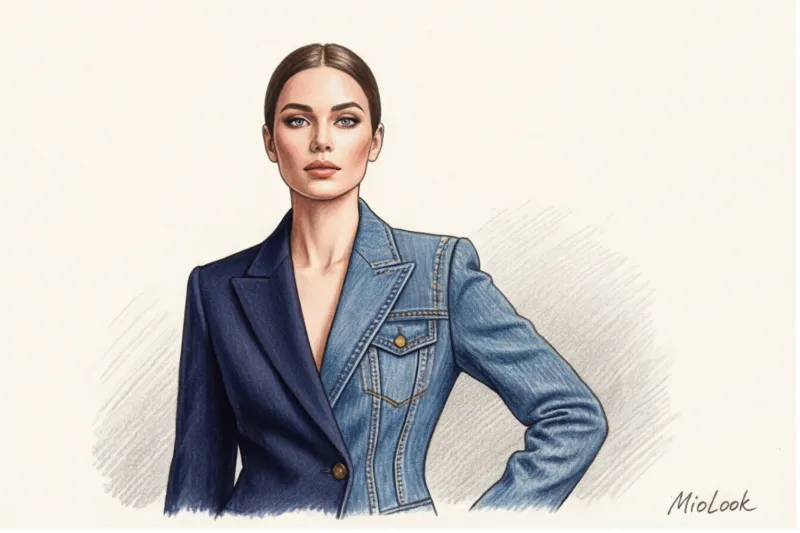
- Upcycling: Changing the form and function of an item, elevating its status. Example: a complex redesign of a vintage trench coat, altering the silhouette, adding asymmetry, or pairing it with denim.
Access to MioLook for €0.99 — one-time payment
A smart AI stylist will select the perfect look based on your current wardrobe and new discoveries.
Get access — €0.99 onceVintage vs. Mass-Market: Why Old Fabrics Last Longer
Textile science is merciless when it comes to modern mass-market products. Why is wool, silk, and cotton produced 30-40 years ago often superior to what we see on the shelves today? The answer lies in the fiber length and the twist density of the yarn. Vintage wool from the 1970s and 1980s is woven from longer fibers without any cheapening additives. Modern brands (even in the €150-200 price range) often add 10-15% polyester or acrylic simply to reduce production costs.
But here I have to share counterintuitive observation from practice Vintage isn't always a sign of quality. There's a myth that "everything was made better back then." This isn't true. Polyester from the 80s and 90s degrades just as poorly as modern polyester. Moreover, synthetics from the last century tend to absorb and "bait" odors. If you find an incredibly stylish 100% polyester blouse from 1985, you'll likely never be able to remove the distinctive odor of age, no matter how many times you dry clean it. You should search for investment vintage by its composition, not by its year of manufacture.
Quality Markers: How to Read the Seams of Vintage Clothing
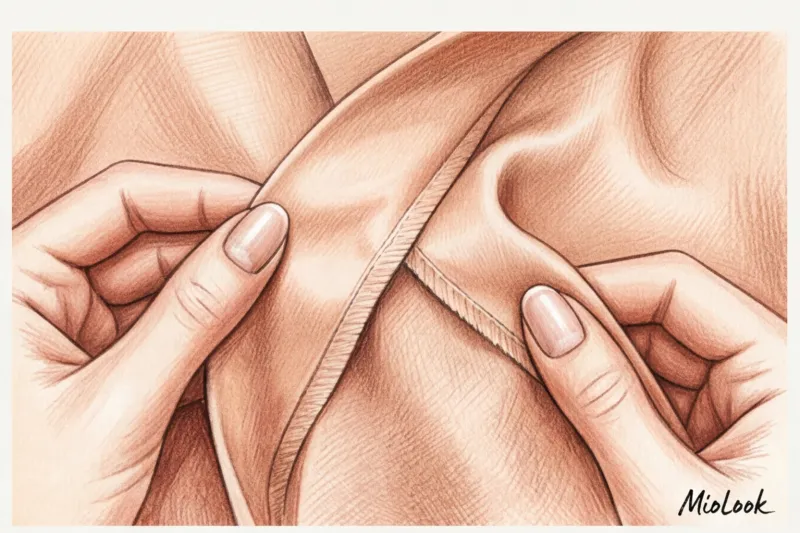
I always teach my clients to check the quality of an item by touch and from the inside out. What should I look for when choosing a vintage base for upcycling?
- French (lingerie) seams: The edges of the fabric are hidden inside the seam, nothing frays or chafes.
- Bias binding: When the inner seams of a jacket or coat are finished with thin fabric, this is a sign of expensive production.
- Lining: cupra or 100% viscose instead of electrifying polyester.
- Fittings: heavy buttons made of natural horn, mother-of-pearl or metal that do not tarnish for decades.
Upcycling in a high-status and business wardrobe: breaking stereotypes
Many are afraid to incorporate vintage into their office wardrobe, fearing it will look outdated or "poor." But the secret lies in modernizing the silhouette. A vintage piece shouldn't scream age.
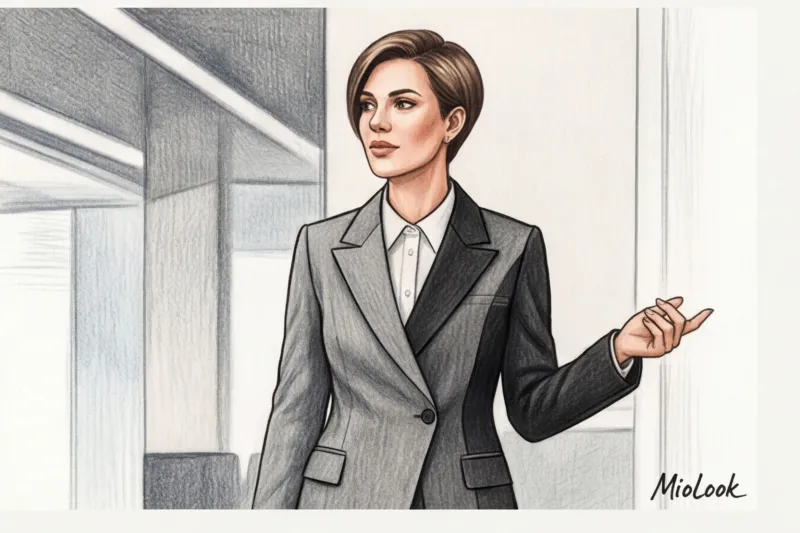
Last year, a client from the banking sector with a strict dress code approached me. She had a permanent stain on the lapel of her favorite premium jacket. Instead of throwing away the €600 garment, we took it to an architectural upcycler. He cut off the damaged lapel, combined it with a contrasting, dense graphite-colored wool, and reshaped the shoulders to a sharper line. The result was a unique power suit jacket. She says that now, at every board meeting, her colleagues ask which Jil Sander capsule collection it came from.
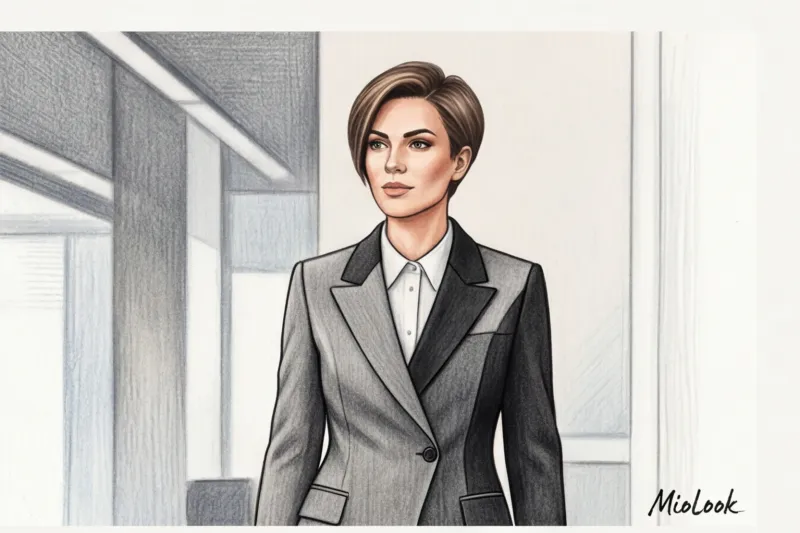
The main rule for the corporate environment: Pair one sophisticated upcycled piece with a perfectly tailored, streamlined modern base A sophisticated tailored jacket requires impeccable straight-leg trousers with creases and smooth leather shoes.
Wardrobe Mathematics: Why Repurposing Your Old Clothes Is Worth the Cost
Let's do the math. A new mid-range wool jacket (for example, Massimo Dutti or COS) will cost you around €150–200. The quality of the fabric will be acceptable, but not exceptional.
Alternatively, you find the perfect men's vintage jacket made of 100% dense Italian wool (price range: €40-€60). You take it to a reputable tailor to have the waist taken in, the shoulders raised, and the plastic buttons replaced with horn (labor and materials cost around €80-€100). The final cost is still €140-€160. But you get a garment that will last three times longer, fits you perfectly, and is unique to you.
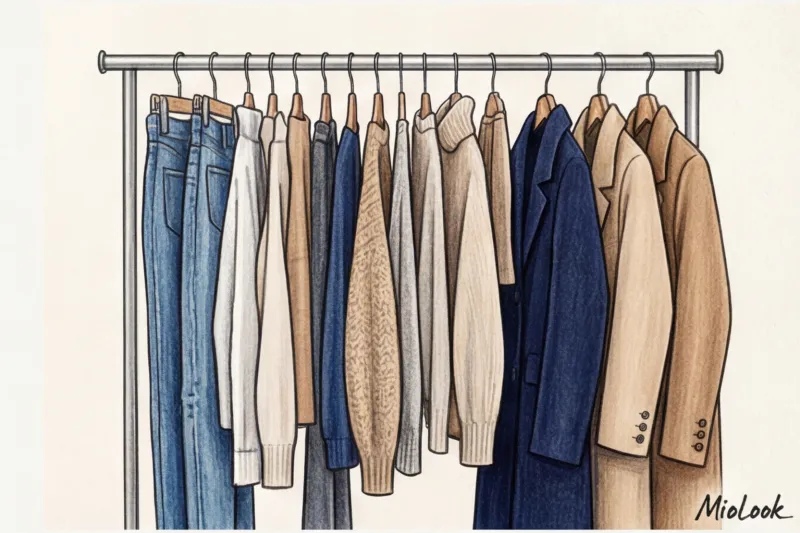
According to the ThredUp Resale Report (2024), the resale clothing market is growing 15 times faster than traditional mass-market clothing. The psychology of ownership works like this: we value items created or altered specifically to our measurements more highly and wear them longer, reducing the cost-per-wear to mere cents.
Your perfect look starts here
Join thousands of users who look flawless every day with MioLook. Digitize your vintage collection and create capsule collections in one click.
Get access — €0.99 onceA Practical Guide: Where to Start with Vintage and Upcycling
If you're just starting out on your journey to mindful consumption, don't rush to redesign your entire closet. Start with safe categories.
- Safe start: Jackets (especially men's ones - they're perfect for oversized clothing), high-quality, thick denim (Levi's 501 from the 90s), silk scarves (they can be sewn into the lining of a coat), leather belts with heavy buckles.
- What to avoid at first: vintage shoes and bags with intricate hardware. This is my strict limitation Shoe glue older than 15-20 years dries out and crystallizes. You can buy stunning vintage pumps that will literally fall apart after two hours of walking. Also, avoid trousers with complex pleats—re-tailoring them is incredibly expensive and difficult.
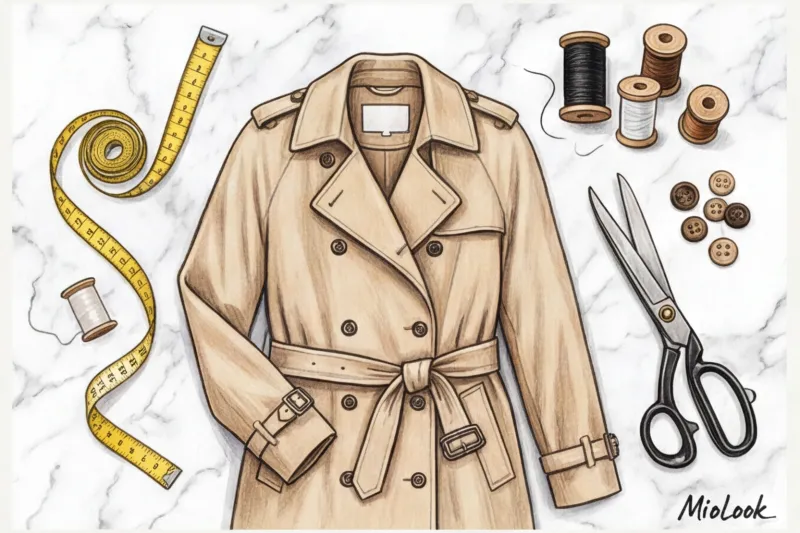
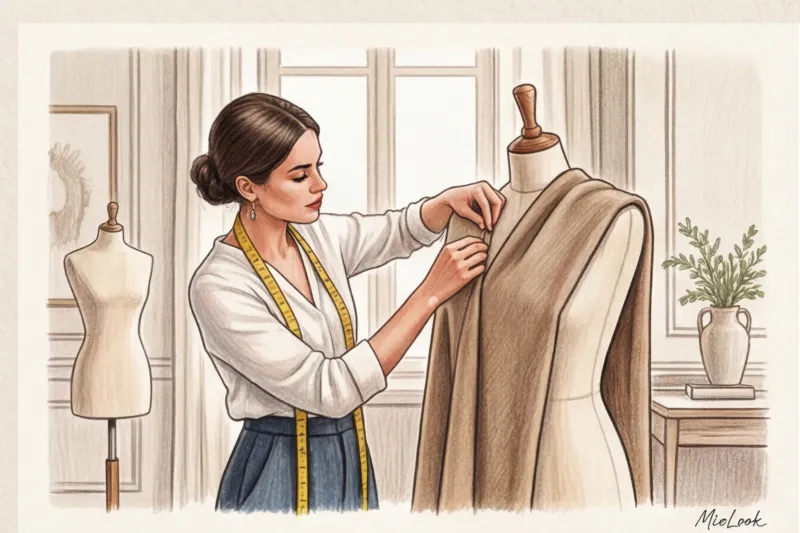
How to find your tailor? Before upcycling an item, ask the tailor if they've worked with men's cuts and if they can handle darts without distorting the silhouette. A good tailor will offer to pin the alterations onto you first, rather than simply taking the item and saying, "We'll do it."
To properly incorporate a new item into your capsule collection, I highly recommend digitizing it. Add a photo of the re-tailored jacket to the "smart wardrobe" feature in MioLook Artificial intelligence will suggest which of your current trousers and skirts this item will pair best with in terms of color and proportions.
Ethical Brands and the Future of Fashion: Who Sets the Standards?
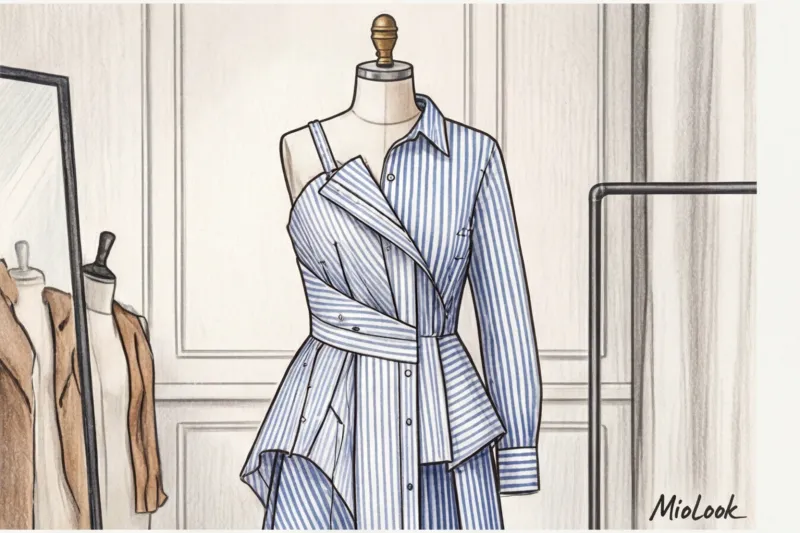
Today, standards are set not by the brands that produce the most collections, but by those who know how to work with history. Global players like Marine Serre and Marni regularly include pieces made from deadstock and old fabrics in their shows. Local niche brands are building entire business models around recycling denim and old men's shirts, transforming them into intricate corsets and asymmetrical dresses.
Mindful consumption is no longer about restrictions and abstaining from shopping. It's about moving to a completely different, premium level of personal style. You stop being a passive consumer of fast trends and become a co-creator of your wardrobe.
Before heading to the mall to buy yet another new, yet bland, item, take stock of your closet. Perhaps the perfect jacket of your dreams is already hanging there, awaiting only a pair of scissors from a talented tailor, some new buttons, and a little courage.