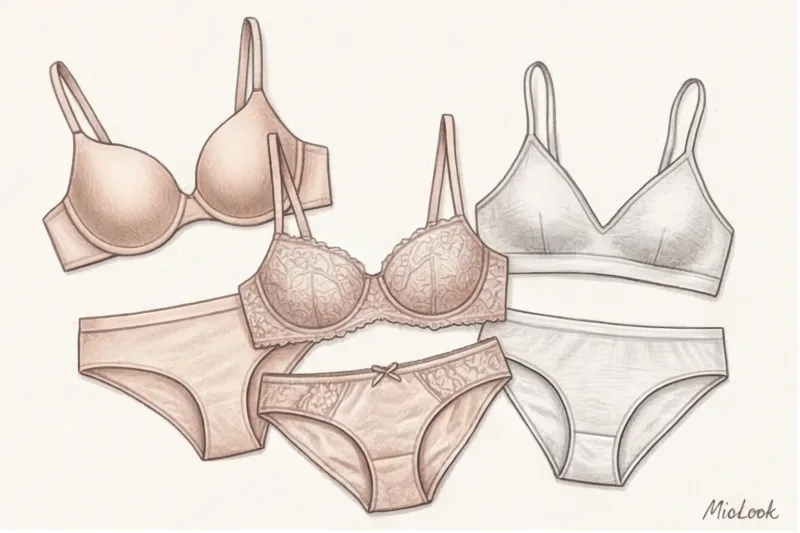
Basic Types of Women's Lingerie: The Anatomy of the Ideal Wardrobe
Over 12 years of working as a personal stylist in Europe, I've learned one hard and fast rule: you can spend 300 euros on a flawless silk blouse from Massimo Dutti or a perfect cashmere sweater from COS, but if you see rough, textured lace underneath or straps that cut into your shoulders, the whole look instantly becomes cheap. I call this principle the "wardrobe architect" approach. Any building, even the most beautiful, will collapse if it has a poor foundation. In the context of style, that foundation is the right choice of basics. types of women's underwear.
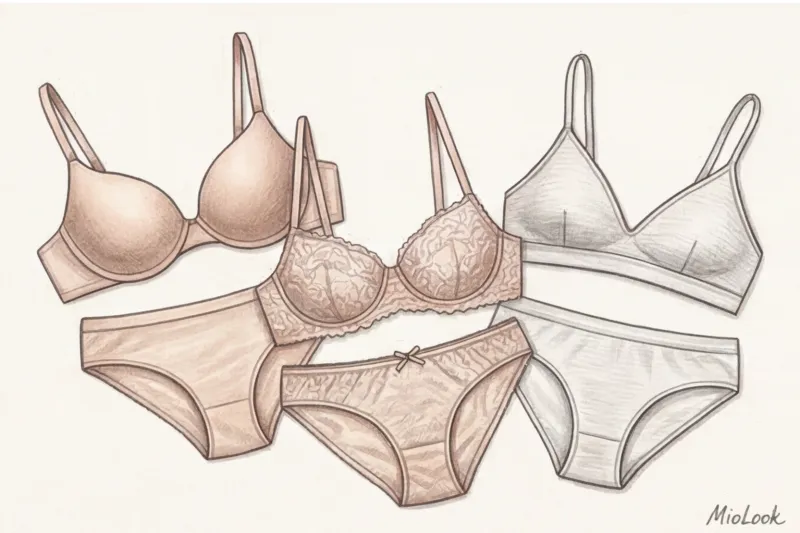
According to a global study by the Swiss Hohenstein Institute (2023), approximately 80% of women wear bras that are the wrong size or shape. Most often, we choose a band that is too wide and a cup that is too small. As a result, our breasts sag, our posture deteriorates, and the darts on our expensive jackets fall out of place.
The biggest mistake I see when sorting through wardrobes is buying lingerie solely based on the principle of "oh, how pretty it is." Lingerie should be classified based on functionality, not just aesthetics. In my practice, I strictly divide my clients' lingerie drawers into three categories:
- Everyday underwear — your "working tool." It's smooth, blends seamlessly with the skin, and has no unnecessary embellishments. Its purpose is to remain invisible and create a beautiful silhouette under any fabric.
- Shapewear — a practical base for special occasions. It softens figure contours under delicate slip dresses or formal evening gowns.
- Romantic lingerie — intricate cut, abundant lace, silk, and embroidery. This is art that we wear to set the mood, to celebrate a partner, or under very thick fabrics (for example, under a voluminous wool cardigan), where the texture won't show through.
Bras: From Balconette to Bralette
Let's get down to specifics. To ensure your wardrobe works for you, rather than leaving you racking your brain every morning, it's important to understand the purpose of each piece.
T-shirt bra (smooth molded bra) — an absolute must-have for a basic wardrobe. It creates a smooth, rounded silhouette without visible seams. I always recommend looking for styles made of spacer material (a 3D fabric that is much more breathable than regular foam). Excellent basic options in the 40-60 euro range can always be found from brands like Triumph or Intimissimi.
Balcony and "Angelica" — a lifesaver for trendy square necklines and wide bob cuts. Their design, with widely spaced straps and a horizontal cup line, lifts the bust from below, creating a dramatic cleavage without the bra itself showing.
Bralette — a soft, non-wired bra. Perfect for relaxed weekends, long flights, and casual looks. Bralettes often feature a beautiful lace back, which can be slightly visible under an oversized shirt. Honestly, this is ideal for smaller breasts. But if you're a D+ bust, look for bralettes with hidden internal support—the French brand Chantelle is currently making excellent, high-tech styles like these.
Important warning about sports bras. During the pandemic, many women switched to sports bras full-time. As a stylist who regularly consults with doctors, I can categorically state: they should not be worn 24/7. Sports bras work by providing intense compression. They press the breasts against the rib cage to minimize movement when running or jumping. When worn for hours every day, this disrupts microcirculation and contributes to stretching of the Cooper's ligaments—the natural framework of our breasts.
Panties: briefs, thongs, shorts and culottes
The bottom of your underwear wardrobe requires no less attention. The wrong underwear can ruin the fit of even perfectly tailored trousers.
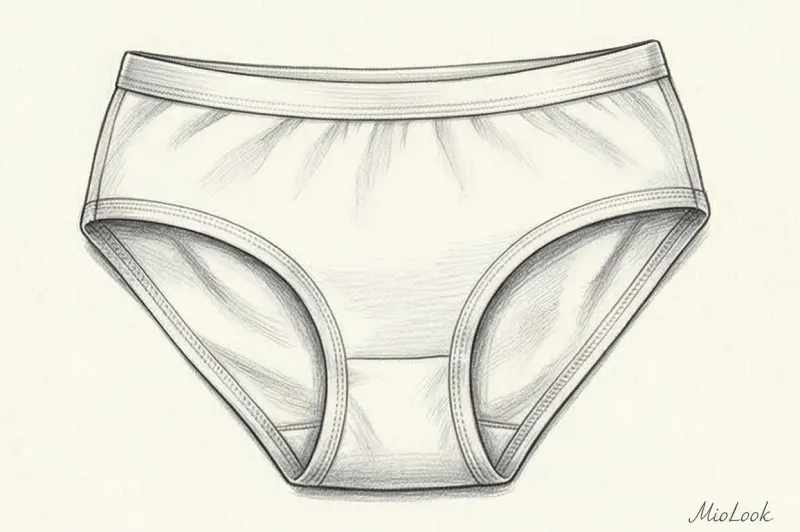
Slips and briefs — a golden classic for every day. They cover the buttocks and provide maximum comfort. If you choose seamless laser-cut styles, they become completely invisible even under thin viscose summer trousers or silk skirts.
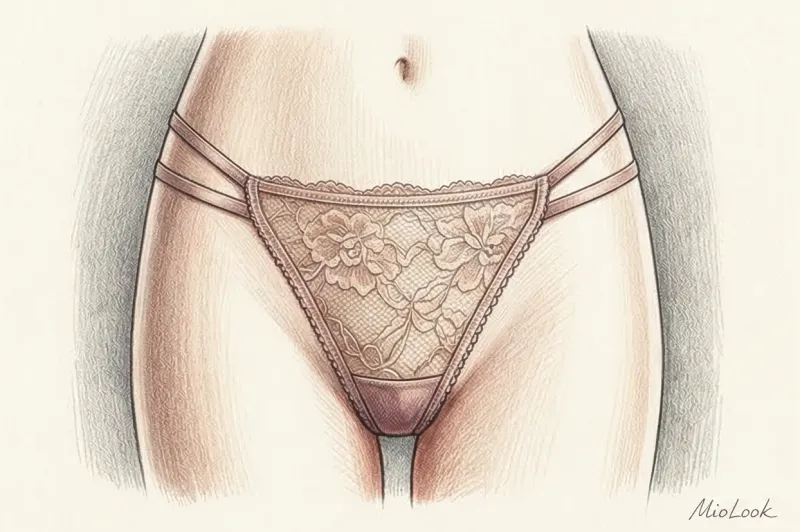
Thongs and tangas Many old-school stylists are against them, but let's be realistic: under tight knit dresses or tight pencil skirts, this is often the only aesthetic option. There's a strict hygiene rule here: a 100% cotton gusset is mandatory. There should be no compromises with polyester in this area.
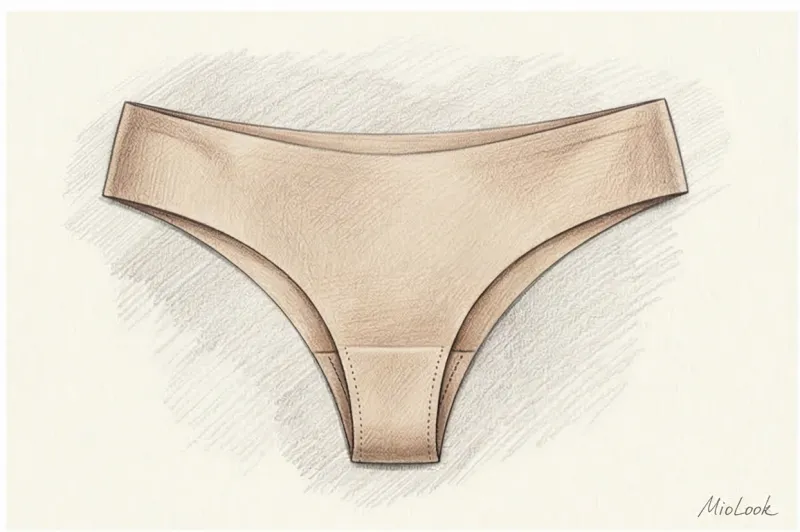
Brazilian — my personal favorite and number one recommendation for most clients. It's a brilliant compromise between the comfort of a brief and the discreetness of a thong. The V-shaped cut at the buttocks visually lifts them, and most importantly, the hem doesn't cut the gluteal muscle in half, preventing those telltale bulges under jeans.
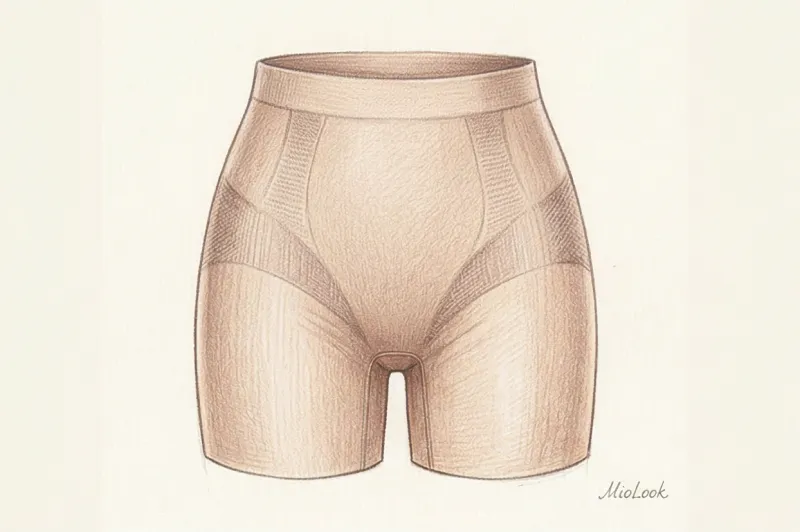
Shorts and culottes You know when they're indispensable? With flowy summer dresses and midi skirts. One of my clients from a windy seaside town calls them "insurance against the Marilyn Monroe effect." Furthermore, smooth culottes made of thin microfiber (for example, from the basic Uniqlo line for 15-20 euros) are the best solution for chafing on the inner thighs in hot weather. They work much more effectively and look more aesthetically pleasing than specialized bandages.
To avoid confusion about how many basic pieces you have versus accent pieces, I always recommend regularly auditing your lingerie drawer. An app is very handy for this. MioLook — You can digitize your database and immediately see what functional element is missing for your favorite looks. A smart approach to wardrobe starts with the invisible details.
How to choose the right types of women's underwear for different clothes
Do you know what detail most often ruins professional business photo shoots? It's not a wrinkled jacket or poor makeup. A couple of years ago, I was urgently called to a shoot: my client, a top manager at a large company, was shooting a portfolio for a specialized business publication. She was wearing a luxurious, thin cashmere turtleneck worth about 400 euros, and underneath, an equally luxurious, textured Chantilly lace bra. On the studio camera, this combination created a "bumpy" effect on her breasts, completely ruining the strict, prestigious silhouette. We interrupted the shoot, I pulled out a perfectly smooth microfiber bra from my work bag, and the problem disappeared in a second.
The main rule of a stylist is uncompromising: underwear should remain invisible unless you are deliberately building an image around it (for example, when the edge of a silk bralette provocatively peeks out from under a voluminous men's jacket). Studying various types of women's underwear , you'll quickly realize that their functionality directly depends on the thickness of your outerwear. The texture of your underwear should match the texture of the fabric: you can wear voluminous crystal embroidery under thick tweed or heavy wool, but never under flowing viscose.
Under knitwear, silk and linen: the invisibility rule
Wearing lace underwear under a thin turtleneck or a tight knit top is a complete faux pas. Lace creates unnecessary visual noise under the thin fabric, which instantly cheapens even the highest-quality designer piece. The same goes for delicate summer fabrics. If you're wearing flowy linen pants or a bias-cut silk skirt, regular panties with thick elastic bands will mercilessly cut into your buttocks, creating rolls where none exist.
Your only salvation in such cases is seamless laser-cut underwear. It has no hems or seams; the edges are simply heat-sealed, allowing the fine microfiber to literally blend with the skin. Excellent basic options in the 15-25 euro range can always be found from brands like Intimissimi or Uniqlo. They don't distort the silhouette and allow the silk to flow as the designer intended.
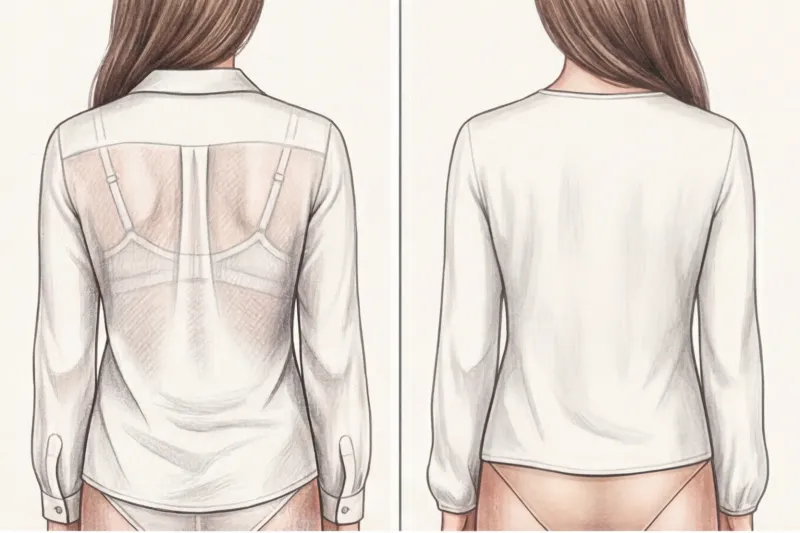
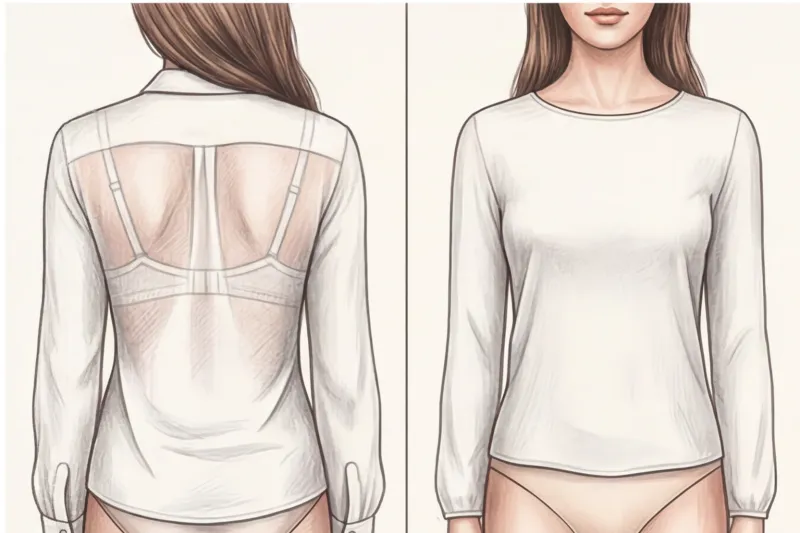
A particular pain point for many women is finding the perfect nude shade. Remember: nude isn't a color, it's a concept. If you have an olive undertone and buy a standard pinkish-beige bra, it will shine as brightly as neon under a white linen shirt. The ideal nude shade should perfectly match your skin pigmentation, not that of a plastic mannequin in a store window.
Access to MioLook for €0.99 — one-time payment
A smart AI stylist will select the perfect look.
Get access — €0.99 onceStylist's secret: red underwear under a white shirt
Now let's bust the most persistent myth of underwear wardrobes. If you ask someone on the street what to wear under a white, translucent cotton shirt, nine out of ten women will confidently answer, "White underwear." This is a colossal mistake that ruins thousands of office looks every day.
It's a simple matter of physics. White reflects light the most. By wearing a crisp white bra under a white blouse, you create the effect of two glowing hemispheres—the contours of the bra will be clearly visible due to the high contrast with your darker skin.
"The optics in styling work paradoxically: to hide something under white fabric, you need to imitate the color of your circulatory system, not the color of the shirt itself."
Human skin, regardless of its darkness, has a red or pink undertone due to capillaries. This is why red, burgundy, or deep wine shades of smooth underwear magically blend with our skin under a layer of white fabric. They absorb light just like your own skin. Classic scarlet or coral work great for fair, porcelain skin, while rich burgundy or terracotta work well for darker skin.
Don't take my word for it? Just try this experiment at home in front of a mirror: put on your favorite white office shirt first over a white bra, and then over a red one. I promise, the result will completely change your understanding of your basic wardrobe.
Swimwear: A Fashion Glossary and Selection Guide
A 2023 study of consumer habits by the WGSN agency revealed a curious figure: when packing for a seven-day vacation, the average European woman packs four to five swimsuits, but in reality, wears only two. We spend hundreds of euros on beach capsules that then simply sit in our suitcases. Studying types of women's underwear and beachwear, I always encourage my clients to avoid impulse purchases for the sake of one beautiful photo by the pool.
Let's get this straight: beach lounges and competitive swimming are two fundamentally different worlds. For a couple of kilometers in a hotel pool, you need compression, firm support, and fabric that's resistant to harsh chlorine. Sports brands like Speedo use fabrics with fiber protection technology that won't degrade in chemicals for months. Meanwhile, the thin elastane of an expensive designer bikini will lose its elasticity in a pool like that in a couple of weeks. For a seaside getaway, aesthetics and integration into your resort wardrobe are paramount.
Modern swimsuits have long ceased to be a garment exclusively for the water. Today, they are a fully-fledged element of a multi-layered look. A bikini top looks great under an unbuttoned, oversized linen shirt, and one-piece swimsuits pair perfectly with flowy pareos, Bermuda shorts, or midi skirts.
My top cost-per-wear tip: always buy two pairs of swimwear per bra if the brand (like COS, Oysho, or &Other Stories) allows you to assemble the set in parts.
Why is this critically important? The bottom of a swimsuit wears out twice as fast. It's constantly exposed to abrasive sand, salt, chemical filters from sunscreens, and is also subject to mechanical friction when you sit on a sun lounger. Plus, it's a simple matter of women's health—swimsuits need to be changed more often than a thick bra dries. With the "1 top + 2 bottoms" formula, you extend the life of your entire set by at least one or two seasons, saving €40 to €100 on your next purchase.
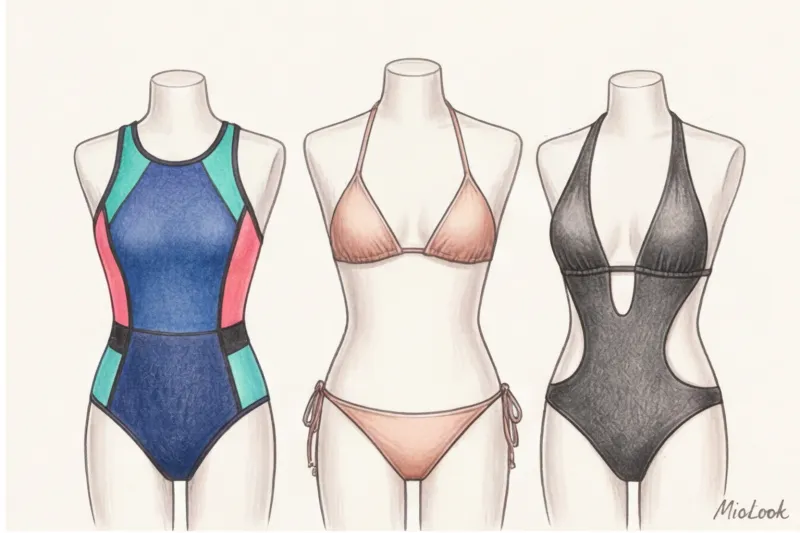
One-piece models: maillot, plange, monokini
One-piece swimsuits are experiencing a true renaissance. They elongate the silhouette, subtly contour the figure, and serve as a perfect base for evening wear.
- Mayo (Maillot): A versatile classic with attached straps and a round or square neckline, it's a reliable foundation for a beachwear capsule. A simple black or olive maillot made of thick microfiber makes the perfect bodysuit. Layer it with light denim shorts or linen trousers, and you've got yourself an elegant look for lunch on the terrace.
- Plunge: A style with an extremely deep V-neckline at the front (often reaching to the waist) and an open back. The vertical shape created by the plunge dramatically elongates the neck and visually lengthens the figure. Paired with wide palazzo pants in flowing silk, the plunge instantly transforms into a luxurious top for a dinner on the beach.
- Monokini: A one-piece swimsuit with architectural cutouts on the sides, at the stomach, or complex asymmetry on one shoulder. Stylist's warning: A monokini is a striking piece exclusively for a pool party in the shade, not for active tanning. Nothing ruins subsequent looks in revealing dresses more than a geometric tan that turns your waist into a zebra stripe.
Separate models: bikini, bandeau, halter
Separate styles offer maximum tanning freedom and allow you to mix and match tops and bottoms from different outfits. For example, sleek black bottoms pair perfectly with a textured crinkled top. To avoid packing too much, I recommend planning your combinations in advance. Upload photos of your swimsuits, pareos, and shirts to MioLook — The app will help you visually assess which tops work best as standalone pieces, so you can put together the perfect capsule wardrobe without adding unnecessary bulk.
- Bikini: Classic triangle bras with thin ties. Their main technical advantage is micro-adjustment. You can adjust the cups wider or narrower, perfectly adjusting them to your bust size, and the ties on the bras prevent the fabric from digging into your hips. This is an ideal choice for small to medium busts.
- Bandeau: A strapless bra resembling a wide band is your best bet for an even tan across your décolleté and shoulders. If you plan to wear a sundress with thin spaghetti straps in the evening, stick to a bandeau during the day. Modern, high-quality models always have a silicone band inside, ensuring they stay securely in place.
- Halter: A bra with wide straps that tie or fasten at the neck, often with a tight band under the bust. This is the best architectural support for D-cup and larger breasts. A halter bra physically lifts the breasts, centers them, and relieves strain on the back, distributing the weight more evenly than classic thin straps.
Materials and technologies: what's really worth investing in
Every time a client proudly declares during a wardrobe review, "I only buy 100% cotton," the pedantic technologist in me comes out. Let's face it: what's perfect for pajamas or a lounge T-shirt can be a disaster for a daytime underwear wardrobe.
Why is 100% cotton so far from the best choice for form-fitting underwear? Natural fibers have absolutely no memory effect. Putting on these briefs in the morning leaves you with a misshapen, stretched-out fabric by lunchtime, gathering in unsightly folds under jeans or a silk skirt. To ensure that basic women's underwear fits snugly and returns to its original shape after washing, high-quality synthetic fibers are essential.
Let's take a look at the basic triad of modern underwear production, which is truly worth investing in: polyamide, elastane, and microfiber.
- Polyamide It's responsible for phenomenal wear resistance. It's what allows a €40–€60 bra to survive dozens of washes without becoming a shapeless rag.
- Elastane (or spandex) is the elastic framework. According to quality standards, for a good fit, lingerie should contain between 5% and 15% elastane.
- Microfiber — an absolute favorite among personal stylists. This fabric is made of ultra-fine fibers, many times thinner than a human hair.
According to the Swiss Hohenstein Institute, which tests the physiological comfort of textiles, modern, high-quality microfiber wicks moisture away from the body 40% more effectively than traditional cotton. Visit any Oysho store and touch their basic lines: this microfiber feels like a second skin, glides on smoothly, and creates absolutely no friction against the lining of your trousers.
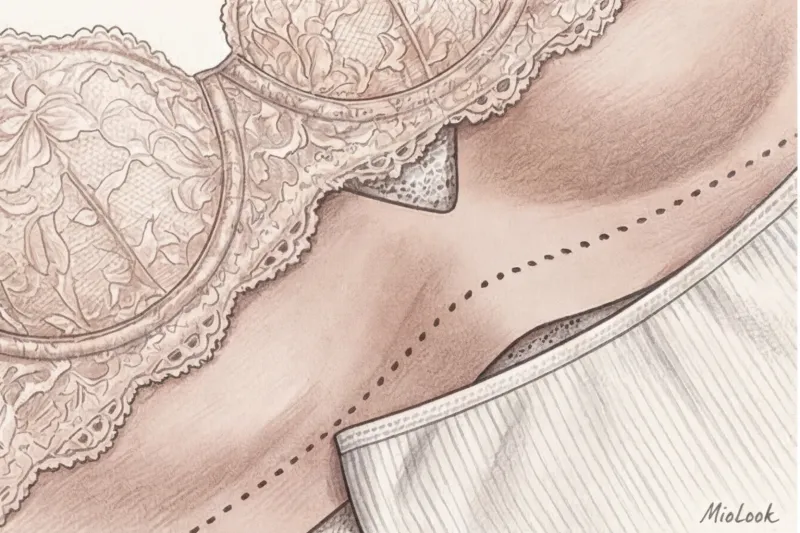
Innovations in breast support deserve special attention. The industry has finally listened to women tired of digging metal wires. Today, investing in a wire-free bra no longer means sacrificing shape for comfort.
Modern brands create a supportive architecture using thermoformed cups and zonal elasticity. A great example is the seamless line from COS. They use a technology with varying weave density: microfiber is woven into a tight, virtually stretch-free band under the bust and along the sides. This hidden frame absorbs weight and secures the fit just as well as a classic metal semicircle. This is an absolute lifesaver for long flights, office work, and any situation where you need a flawless silhouette without any rigid details.
By the way, when you digitize your closet through MioLook app I highly recommend adding the composition of items to your item cards. This will help the smart wardrobe algorithm more accurately understand the texture of the fabric and suggest flawless combinations where your underwear will never clash with the thickness of your outerwear.
Practical conclusion: Save pure cotton for bedtime and lazy weekends. For an active lifestyle and flawless looks, choose technical blended fabrics—they'll save you the hassle, provide value for your money, and protect your clothes from creasing.
Access to MioLook for €0.99 — one-time payment
Start creating perfect images with the help of artificial intelligence
Get access — €0.99 onceChecklist: A lingerie capsule collection from a personal stylist
When I open my new clients' dressers, I regularly see the same picture: mountains of intricate lace that can't be worn under smooth fabrics, and a single washed-out beige bra that does all the work. Let's move from haphazard shopping to stylistic math. The formula for the ideal lingerie wardrobe is based on the principle of rotation: the elastane in a bra needs at least 24 hours of "rest" after a day of wear to regain its shape. That's why we need a carefully curated capsule wardrobe, not a random assortment of beautiful pieces.
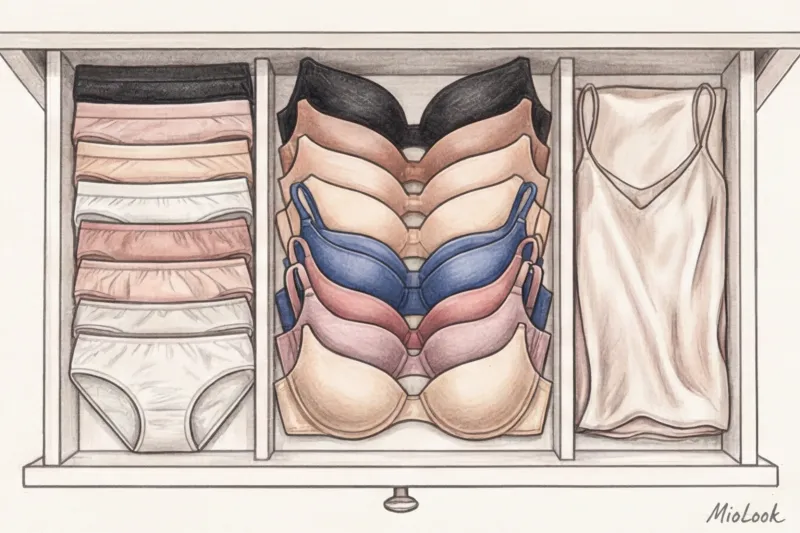
I've put together a strict, yet absolutely effective checklist. You can pull out your linen drawer right now and conduct an audit (or record your existing database via MioLook (to clearly see the gaps in your wardrobe). Here's what your foundation should be before you buy another neon sconce:
- Three basic smooth bras (T-shirt bras). This is your everyday uniform. Smooth molded cups or thick microfiber with no seams. You will need: black (under dark, thick clothing), your ideal nude (a shade that best matches your skin tone, not just the standard beige from the manufacturer) and alternative dark (deep wine, chocolate or navy blue, which works great as a base).
- One strapless bra. A must-have for off-the-shoulder tops, slip dresses, and asymmetrical necklines. The key selection criterion is a wide, thick silicone band around the entire inner perimeter. A good strapless bra is held in place solely by the corset structure of the band, not the cups. Don't skimp on it: a quality model will cost around 45-60 euros, but it will save dozens of your outfits.
- From 7 to 10 pairs of basic underwear. The optimal quantity for a comfortable weekly wash cycle. It's important to combine materials: 5-7 pairs of seamless laser-cut styles for perfect invisibility under flowing trousers and skirts, and 2-3 pairs of high-quality, heavy-weight cotton for days when you wear loose jeans.
- 1-2 sets "for the mood". When exploring functional types of women's lingerie, we mustn't forget about the psychology of style. Keep a couple of luxurious sets made of fine Chantilly lace or natural silk in your capsule collection. They may not be appropriate for a strict dress code, but their purpose is to give you confidence on those days when you wear voluminous cashmere sweaters or thick, layered outfits that conceal any texture.
Remember: this is the universal minimum. If you actively exercise, you'll want to add sports bras, and if you prefer dresses with a deep V-neck, you'll want to consider plunge dresses. But until these 12-16 basic items are covered, investing in complex designer brassieres is simply irrational.
The main mistakes when choosing underwear and swimwear
Do you know what test 8 out of 10 women fail the first time they try on a bra? The fit test. We can spend hours studying various types of women's underwear , invest in premium microfiber, or search for the perfect shade, but a couple of trivial technical errors will ruin the cut of even the most expensive French set for 120 euros.
The first and most damaging mistake for your wallet is buying a bra with the expectation of fastening it with the tightest hooks. The buyer's logic is understandable: "I'll fasten it tighter for better support." In practice, this means the item will last you a couple of months at most. The elastane in the band inevitably stretches with body heat and washing. If you buy a model that fits snugly only at the last (tightest) row of hooks, you'll have nowhere to tighten it when the fabric "fatigues." The rule of professional bra fitting is uncompromising: a new bra should fit perfectly when fastened exclusively at the last row. the freest (outer) hooks. The inner rows are your strategic reserve for future stretching.
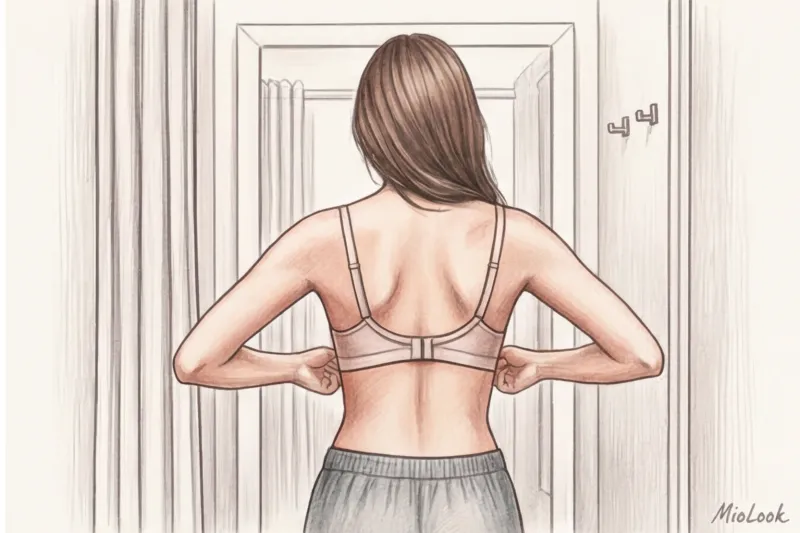
The second problem is a band that's too tight. Many people mistakenly believe that the straps provide bust support, so they opt for thin, delicate bands. In reality, 80% of the support comes from the corset. If the band is too tight and doesn't have sufficient contact with the ribcage, a seesaw effect occurs in the physics of your silhouette. The band inevitably moves up toward your shoulder blades, and the heavy front portion (the cups containing the breasts) sinks downward under its own weight. As a result, the straps begin to painfully dig into your shoulders.
"The gold standard of fit, as taught at the London Lingerie Institute, is that the back of the waistband should be strictly parallel to the floor. There should be no arches, diagonals, or distortions in the back."
Things are even more paradoxical with beachwear. Buying a swimsuit that fits perfectly is a surefire way to disappointment on vacation. On land, in the fitting room, we want the fabric to not cut into our sides. But the laws of hydrodynamics dictate otherwise. In water, any synthetic fabric relaxes: the polyamide fibers become softer, and the swimsuit always stretches slightly. While it might fit comfortably in the store, like a second skin, after your first swim, it will begin to bunch up at the waist or slip down treacherously when you exit the water. The right one-piece or two-piece swimsuit in the fitting room should fit just above mild discomfort—very tightly.
Your ideal image
it begins Here
Join thousands of users who look flawless every day with MioLook.
Get access — €0.99 onceCaring for underwear and swimwear: extending the life of your items
According to Invista, the creator of the famous Lycra fiber, approximately 70% of premature wear of underwear is not due to frequent wear, but to harsh washing methods. We can endlessly discuss premium brands and choose the perfect ones. types of women's underwear for every outfit, but if you throw them in the washing machine drum along with your jeans and douse them with regular gel, your investment literally goes down the drain.
Let's address the biggest mistake that kills expensive bras the fastest. Remember this: fabric softener is elastane's worst enemy. The chemistry behind the process is incredibly simple: softeners create a thin waxy film on the surface of the fabric. While this is great for stiff bedding or thick cotton, the elastic fibers beneath this film become suffocated, stick together, and permanently lose their ability to shrink back. As a result, an 80-euro bra loses its elasticity and becomes a shapeless rag in just a couple of months.
The second, no less brutal killer of underwear is the tumble dryer. For any garment containing more than 5% elastane or spandex, hot drying is an absolute death sentence. High temperatures literally melt and burst the rubber fibers within the fabric. You've probably seen those tiny white hairs sticking out of the seams of old underwear—that's "cooked" elastane.
Post-Beach Resuscitation: Chlorine and Salt
The story with resort wardrobes is even more dramatic. The rules for washing swimsuits after swimming (chlorine) and the sea (salt) tolerate no compromise. Chlorinated water and sea salt crystals act like a slow acid on delicate polyamide. If you simply take off a damp swimsuit and throw it to dry on the back of a chair in your hotel room, the process of fabric destruction has already begun.
- The 15-Minute Rule: After each swim, be sure to rinse your swimsuit in cool, fresh water, even if you don't plan to wash it with soap.
- No twisting: When wringing out the water, don't twist the fabric into a hard rope. Simply squeeze it gently between your palms or blot it with a dry terry towel.
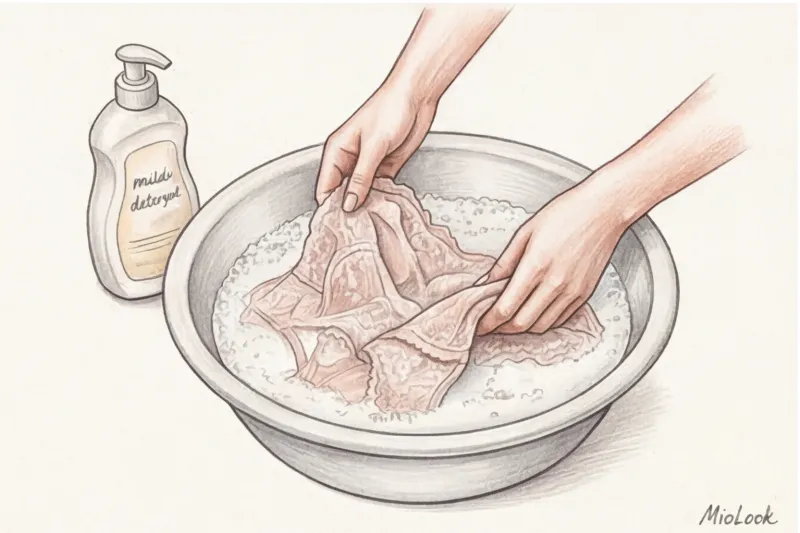
- Washing without aggression: Use only specialized shampoos for delicate fabrics or, as a last resort, a mild baby shower gel without aggressive surfactants.
Drying Architecture: Saving Molded Cups
A stylist's particular pet peeve is watching women dry bras with thick cups. How do you properly dry bras with molded cups to prevent them from becoming misshapen? First, never hang them by the straps. Wet foam weighs three times as much as dry foam, and under this weight, the elastic straps will stretch beyond repair overnight.
Secondly, forget about the habit of nesting one cup inside another to save space, turning it inside out. This breaks the internal structure of the memory foam, and the cup will be permanently left with an unsightly crease that will show through delicate knitwear.
"The only proper way to dry a molded bra is to place it over the drying rack's bar, centered (by the center bar between the cups), or lay it flat on a dry towel away from direct sunlight and hot radiators."
When machine washing everyday styles (if hand washing is too much for you), always use thick, framed bags—they protect the underwire from deformation and the lace from snagging. The water temperature should not exceed 30 degrees Celsius.
Once you start taking care of your base layer properly and add your kits in MioLook virtual wardrobe , you'll quickly notice a change in cost-per-wear (the price per wear). A quality garment, with proper care, will last for years, maintaining a perfect fit.
To wrap up our guide, I'd like to remind you of the most important rule: your style always begins with what's hidden from view. An ill-fitting bra or one that's warped from a poor wash can ruin the fit of even the most expensive designer dress. Treat your lingerie drawer not as a consumable item, but as the foundation of your personal style. After all, true self-confidence comes from knowing you're flawless down to the very bottom.
Guide Chapters
Push-up: What is it, types of underwear and clothing with a push-up effect
Briefs: What They Are, Types, and What to Wear Them With
What is a bodysuit: types and rules for combining them in clothing
Bikini swimsuit: what it is, the main types, and styling rules
Bralette: What It Is, Types, and How to Wear It | Glossary
Thong panties: what they are, the main types, and how to choose them
What is a corset: types, features, and what to wear it with
What Are Brazilian Panties: Cut Features and Style Guide
Brazilian briefs offer a perfect compromise between classic panties and thongs, featuring a flattering mid-buttocks cut and a contoured back seam.