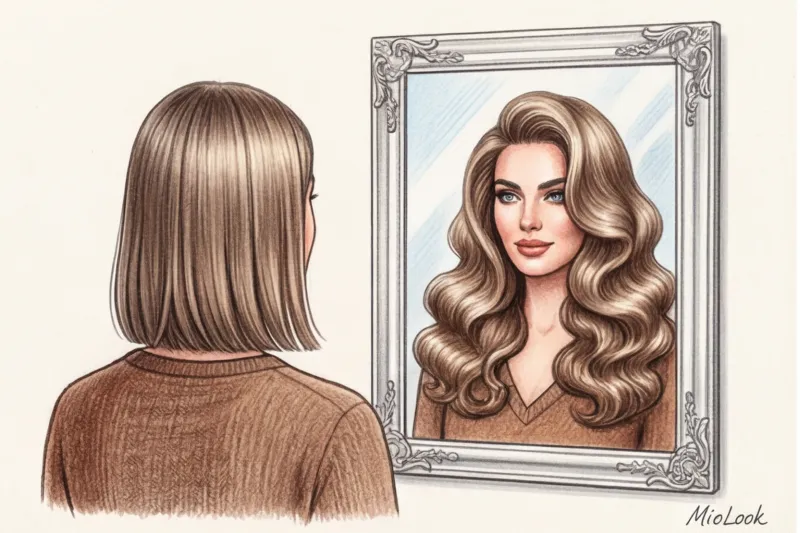
Trying on Hairstyles Online: Why AI Sometimes Lies to Us
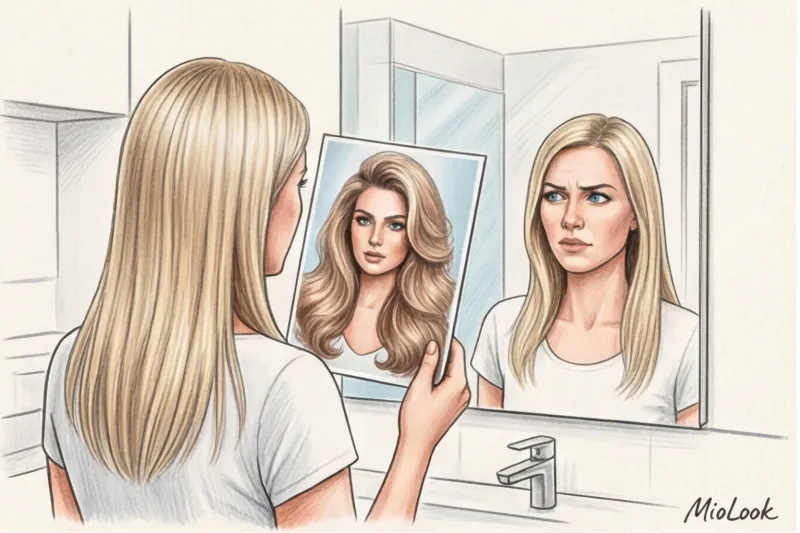
Have you ever noticed how easy it is to fall in love with yourself on your smartphone screen? You upload a photo, click a few buttons, and there you have it—a luxurious French bob, a perfect platinum blonde, chiseled cheekbones. It seems like... online hairstyle try-ons — it's magic that will forever save you from tears in the hairdresser's chair. But as a practicing stylist and colorist, I too often see the flip side of this virtual coin: shattered illusions and angry messages to stylists along the lines of "Why did it turn out so differently in real life than in the picture?" Spoiler: it's not always the stylist's faulty hands. More often than not, it's the artificial intelligence that's shamelessly flattering you.
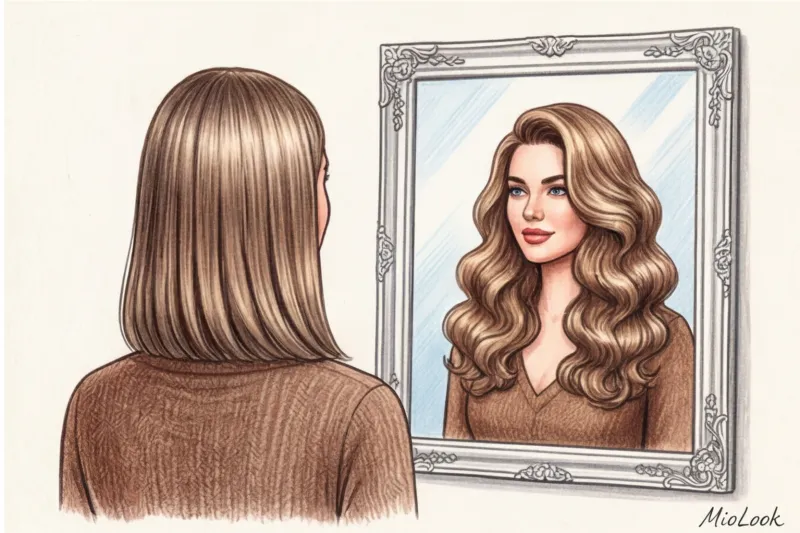
The big problem lies in the difference between entertainment apps (social media masks, popular photo editors) and professional AI for stylists. The former's goal is to make you smile, feel beautiful, and share the results with friends. They monetize your positive emotions, while professional tools rely on dry anatomy and physics.
A couple of years ago, a client came to me ready to chop off her ten-year-old hair. As a reference, she brought a photo of a graphic, chin-length bob, generated by a well-known app. In the picture, she looked like a supermodel. But when I began to analyze the image in detail, I was shocked: the neural network had simply "cut off" her cheeks, hair and all! The algorithm had imperceptibly narrowed the lower third of her face, lengthened her neck by a couple of centimeters, and added shadows to the cheekbones to make the cut's geometry appear flawless. This phenomenon is called "beautification."
Beautification apps are a silent sabotage of your real appearance. The algorithm adapts your face to your haircut, not your haircut to your face.
Moreover, artificial intelligence, unfortunately, can't yet touch your hair with its own hands. It completely ignores your actual hair thickness, porosity, and root growth direction. If you have stubborn fringes at the brow, AI will draw a smooth, trendy curtain fringe that, in reality, will rise up like a visor at the first gust of wind. If your hair is porous and frizzy, a neural network will "flood" it with virtual keratin in the photo, making it glossy. According to a WGSN (2024) report in beauty tech, up to 78% of disappointments after virtual try-ons are due to the fact that generative algorithms are unable to calculate the dynamic behavior of keratin structures.
How can you learn to look at a generated photo with the eyes of a skeptical stylist? I always give my clients a simple three-step algorithm:
- Palm test: Cover your hair with your hand in the photo and look only at your face. Compare it to the original. Has your jawline changed? Have your eyes gotten bigger?
- Root assessment: Look at the parting. AI often creates unnatural volume that starts right at the scalp, ignoring the natural parting of hair.
- Neck check: Check to see if your neck has become longer and thinner in the photo to accommodate the elegant hairstyle.
We discussed in more detail how to choose the right hair geometry without self-deception in the article Try on a haircut online: choose your length with an AI stylist But now let's talk about the most insidious deception - texture.
The Perfect Texture Trap
The biggest sin of generative neural networks is the illusion of volume. What looks like a "I just woke up, shook my hair, and went" aesthetic on the screen is called a "complex salon blowout" in the stylist's chair. To replicate this casual virtual volume in real life, you'll need an hour of blow-drying and brushing, a professional texturizing spray (quality ones start at €30-50), and, most importantly, a skilled hairstylist.
Virtual curls are especially deceiving to those with fine, straight, or so-called "glassy" (low-porosity) hair. In the photo, the AI easily curls it into bouncy, heavy surf curls, creating the effect of a lion's mane. In real life, such hair loses its curl within 20-30 minutes unless a strong hold is used, which will glue the strands together into an unsightly shell.
In the appendix MioLook We take a different approach, relying on natural analysis: if your hair is straight and thin, the system will help you find a style that works best with your texture (for example, a close-cropped cut), without promising effortless, airy volume. Learn to clearly distinguish between a "salon" style designed for the red carpet and your everyday reality, where you have exactly fifteen minutes to get ready in the morning.
How to prepare the perfect photo for a virtual fitting
There's a golden rule in the IT industry: "garbage in, garbage out." This applies equally to neural networks, and online hairstyle try-ons This is no exception. According to my professional statistics, about 70% of women test out their image makeovers using random photos from their phone gallery. And this is a fatal mistake.
Why would a car selfie or a photo with a subtle Paris filter on Instagram ruin the whole experiment? Inside a car, light always falls chaotically, creating deep, harsh shadows from the windshield and side pillars. Meanwhile, social media filters subtly narrow the nose, smooth out skin texture, and elongate the chin. The neural network simply won't understand where your real facial contour ends and the retouching begins, and will end up "applying" a haircut to a completely different person.
For the algorithm to work correctly, a complete "baseline facial map" is necessary. To obtain this, we use an oval assessment technique in our salon practice before making any radical changes to the face shape. Smooth Tail.
The gist of this technique (how-to) is simple, but crucial for the AI: gather your hair into a tight ponytail or a sleek bun at the nape of your neck. Keep all fine strands away from your face, and fully expose your ears and forehead hairline. Failure to do this will inevitably result in the AI trying to "weave" your current length and texture into the new hairstyle, resulting in an unnatural and bulky helmet-like effect on screen.
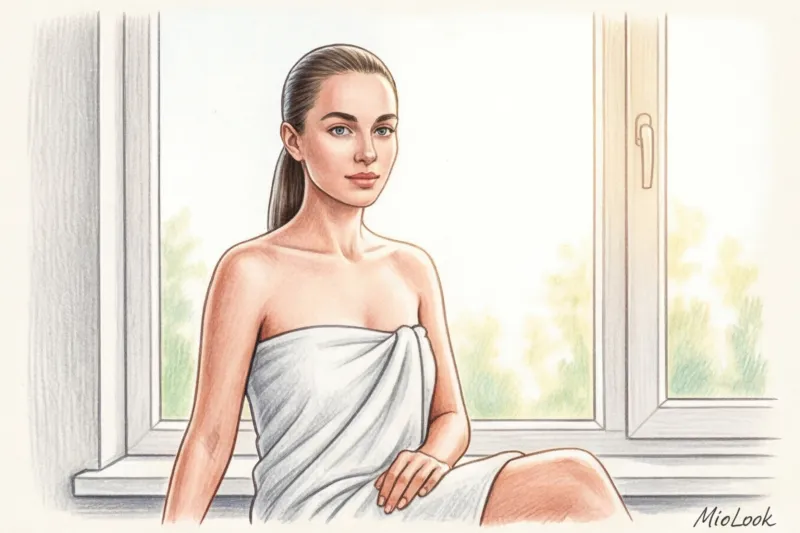
Next, embrace the "blank canvas" rule. Remove makeup. No contouring, heavy blush, or bold eyeliner. Makeup dramatically alters the light and shadow patterns, and a short, virtual bob will flatter your cheekbones rather than your natural bone structure. The background behind you should be strictly neutral: a white, light gray, or beige wall free of paintings, cabinets, or patterned wallpaper.
Lighting is 80% of the success of your virtual experiment. Forget ring lights (they flatten the face and reduce volume) and the directional yellow light from a bathroom chandelier. You need only diffused daylight. Stand facing a window at arm's length. Ideal conditions are a typical overcast day. Gray clouds act as a giant professional softbox, casting a soft light without harsh shadows that the algorithm might mistake for sunken cheeks or signs of aging.
Finally, strictly control the angle. Save flirty tilts (your favorite "working angle") for photo shoots. The smartphone camera should be positioned strictly at eye level. Keep your face frontal, with your chin perfectly parallel to the floor. If you accidentally tilt the phone slightly lower, the algorithm will visually shorten your forehead and widen your jaw. At such a distorted angle, even the most expertly chosen virtual bangs will look like an absolute disaster.
Access to MioLook for €0.99 — one-time payment
A smart AI stylist will select the perfect look based on your real facial features.
Get access — €0.99 onceChoosing a Hair Color Online: Coloristics for Beginners
Digital bleach has no ammonia smell, doesn't break disulfide bonds, and works in a split second. It's this ease that plays a cruel joke on users. The algorithm simply overlays the desired pixel filter on your photo, completely ignoring the basic laws of physics and hair chemistry.
In a professional environment we use a scale tone depth levels (TDL) , where 1 is jet black and 10 is a very light, platinum blonde. If you're a fiery brunette with a 3-level hair color, the neural network will happily transform you into a level 10 ash blonde in one click. In reality, such a transition in a single day is impossible without compromising hair quality. It would require 3-4 salon visits (each costing an average of €150-€300), a washout, and complex neutralization of the inevitable orange-yellow "lightening background," which the artificial intelligence is unaware of.
Any color works on the principle of optical reflection. Artificial intelligence draws a shade independently of your anatomy, whereas in reality, your hair is a frame that casts reflections onto your face.
This is where it comes into play contrast level A sudden color change can either accentuate your eyes, making them piercing, or completely ruin your facial harmony. A few months ago, a client with medium-blond hair approached me, obsessed with the idea of going a deep, jet-black. Instead of a long lecture on color, I suggested she experiment and upload a photo to the app. When the algorithm applied a dark filter, the laws of contrast kicked in: the black frame of her face instantly acted as a magnifying glass for her shadows. The deep dark color mercilessly emphasized her nasolabial folds and made the dark circles under her eyes alarmingly obvious, visually adding at least five years to her age. We abandoned this idea in favor of a soft chocolate shade with warm highlights.
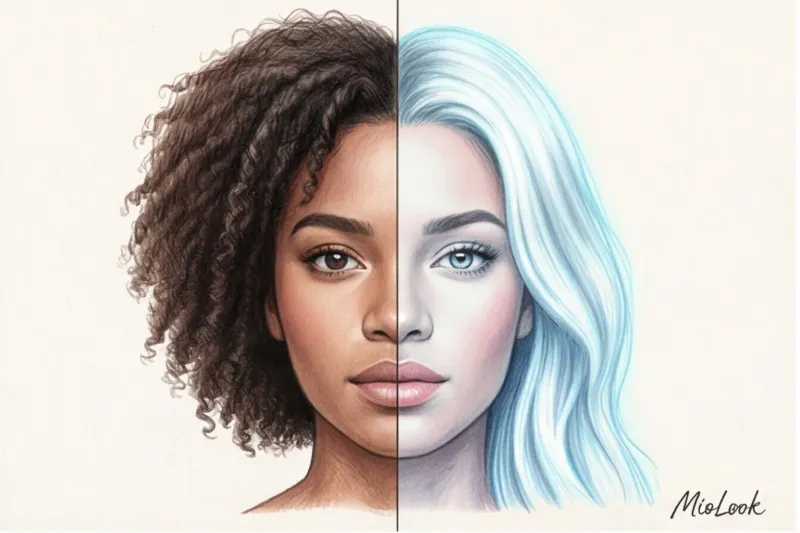
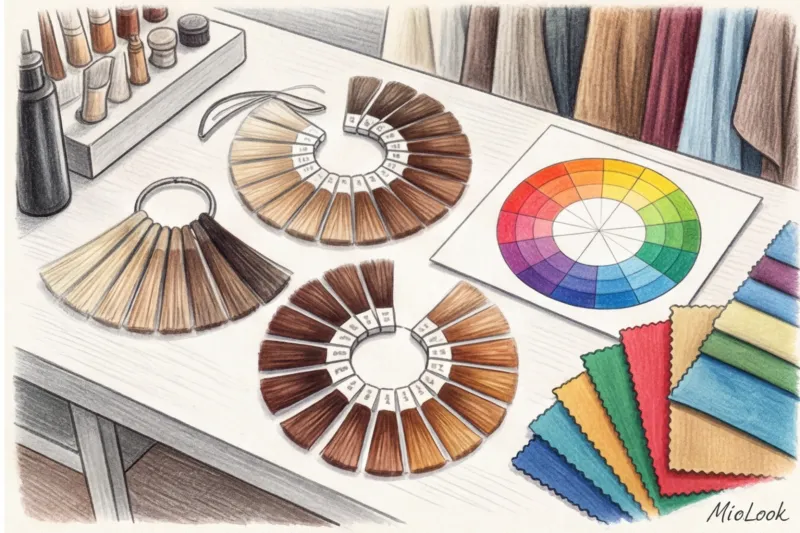
The second fundamental parameter is external temperature Your natural skin undertone can be cool, warm, or neutral. The quickest way to determine it without a palette is to look at the veins on your wrist in daylight: blue-violet veins indicate a cool undertone, while greenish veins indicate a warm undertone.
Ignoring temperature leads to the main mistake I regularly see after failed AI experiments: choosing ash blonde with a warm, olive skin tone. Olive skin has a subtle greenish-yellow undertone. When you place icy blonde (which contains blue and violet pigments) next to it, according to the complementarity rule of the Itten color wheel, these colors enhance each other. As a result, the cool hair color "pulls" all the green from the face. The skin appears sallow, tired, and unhealthy, and the whole look inevitably ages.
White T-shirt test in front of the screen
To ensure online hairstyle try-ons provide a realistic look, not just a social media image, you need to know your skin temperature accurately. I recommend the basic at-home test we use in our personal style courses.
Remove your makeup and stand in front of a window with indirect natural light (no direct sunlight or yellow bulbs). Take two items: one crisp white (like a sheet of office paper) and one cream or ivory. Apply them alternately to your face, covering your neck and décolleté.
- If in the background snow-white your face glows and the contour looks toned, but with cream the skin appears yellowish - you have cool undertone.
- If in creamy The skin looks velvety and healthy, and pure white highlights redness and makes the face pale - this is your undertone. warm.
How can you transfer this knowledge to the digital space? It's simple. If the test shows you're "warm," when working with filters, immediately block all ash, platinum, graphite, and jet-black options. Look for golden, caramel, copper, or chestnut filters in apps. To structure this process and avoid getting lost in dozens of screenshots, I recommend uploading the most successful generations to MioLook There, you can not only save your best color options but also immediately see how the new hair color will pair with your usual makeup palette and wardrobe.
Facial Architecture: Choosing the Geometry of a Haircut
Before picking up a pair of hairdressing scissors, I spent several years studying academic drawing and sculpture. And do you know what the most important lesson I learned from that? A haircut is pure architecture. The face is the façade, and the hair is the frame, subject to the strict laws of geometry and proportion. Correcting a poorly chosen hair shape in European salons will cost you at least €150–300, and growing it out will take months. So before you decide to experiment in the salon's chair, it's worth practicing the shape on screen.
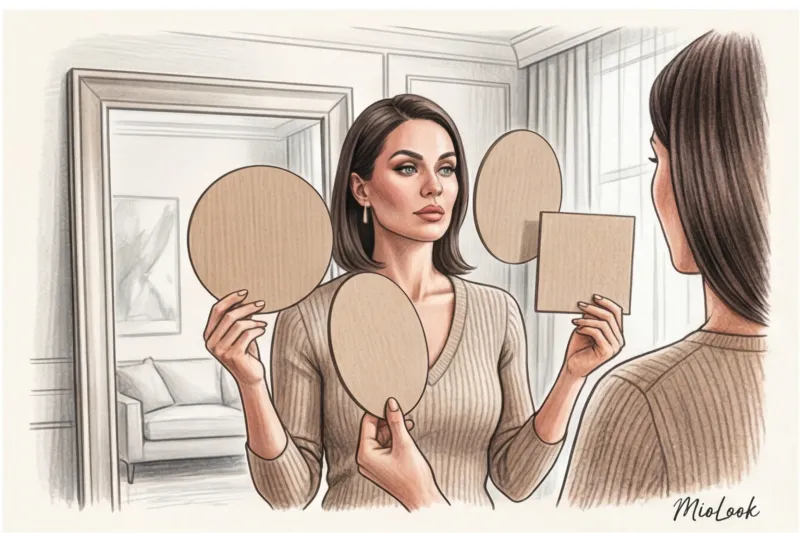
In hairdressing, basic face shapes (oval, round, square, heart) aren't a death sentence, but rather a technical specification. Our optical goal is always the same: to visually "complete" any shape to a harmonious, ideal oval:
- Oval It is considered a universal canvas, where you can experiment with any proportions.
- Circle desperately needs strict vertical lines: elongated strands near the face or an asymmetrical cut will set the desired vector.
- Square requires softening of angles: no graphic bangs, only soft layers, cascades and waves.
- Heart (wide forehead and narrow chin) requires volume in the lower third of the face to balance the proportions - a tight cut at collarbone level works perfectly here.
That's why it's literate online hairstyle try-ons — This isn't just a 15-minute game, but a powerful tool for testing optical illusions. By uploading your photo to a high-quality service, you can see in seconds how a short, graphic pixie cut can work phenomenally. stretch your neck , or how a properly graduated ladder helps gracefully hide a heavy jaw.
But it's important to keep in mind the ironclad "horizontal rule." The human eye is designed to always focus on the most obvious horizontal line—the hairline. If you try a classic bob and its length ends exactly at the widest part of your face (whether it's prominent cheekbones for a diamond-shaped face or a strong jawline for a square-shaped face), you optically enlarge that area by exactly one and a half times. I often demonstrate this effect to my students: we virtually shift the hairline just 3 centimeters below the jawbone, and the client's face instantly slims down without any dieting.
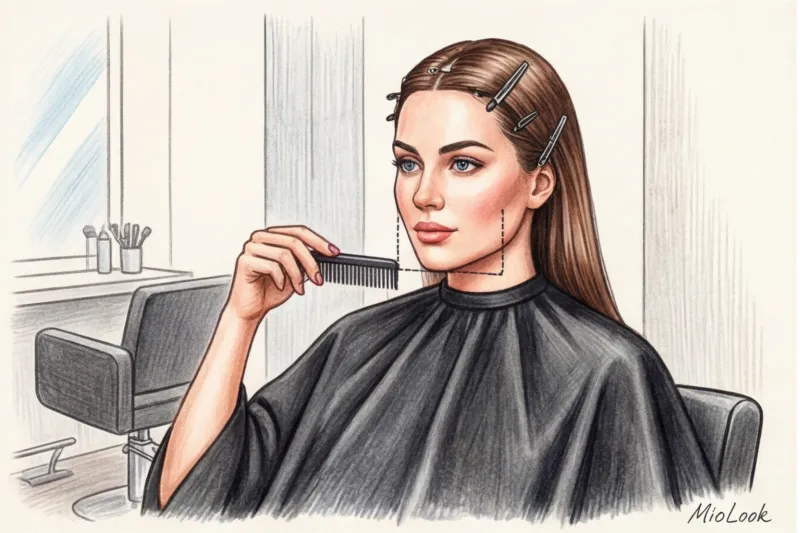
Another underrated tool that apps brilliantly illustrate is the parting. Perfectly symmetrical faces don't exist in nature (and even if they do, they look unnatural). Virtually changing your parting changes the perception of facial asymmetry with a flick of the wrist. If you have one eye slightly higher than the other or a slight asymmetry in your lips, a center parting will highlight it like a magnifying glass. Try a deep side parting in the app: the diagonal line will not only hide minor unevenness in your features but also visually narrow a wide face.
Virtual bangs: how to try them on and not regret them
Bangs are the riskiest and most treacherous part of any haircut. In an app, a neural network can easily create the perfect, thick, hair-perfect French fringe for you. However, a smartphone screen doesn't take into account your harsh anatomical reality.
Apps don't know about your cowlicks at the hairline, the presence of a widow's peak (the hairline triangle on your forehead), or how quickly your forehead gets oily. For one of my clients, the AI persistently suggested thick, straight bangs, which looked stunning in the render. But in reality, she has coarse, glassy hair and a low forehead—in real life, such bangs would stick out like a visor and require daily straightening with a flat iron.
Thick, straight bangs are absolutely contraindicated for you (even if the algorithm says otherwise) if you have deep-set eyes and drooping eyelids. A horizontal cut will create a shadow on the upper third of your face, making your look heavy and tired.
If you want to try out trendy curtain bangs, whether straight or choppy, always look for the option to control the thickness in the app. A choppy, light texture in real life is much more forgiving than a solid geometric cut. And remember, creating the right translucent texture is a complex salon job that can't be cheap: high-quality custom bangs will cost you between €40 and €80, depending on the stylist's skill level.
Access to MioLook for €0.99 — one-time payment
Start creating perfect looks and trying out haircuts based on your facial architecture using artificial intelligence.
Get access — €0.99 onceTop 5 Mistakes When Evaluating a Virtual Image
According to a 2023 WGSN analytical report, over 45% of women who decide to radically change their image after using beauty filters regret their decision within the first week. Why is there such a gap between expectations and reality? Artificial intelligence generates a flawless, flat image, while we live in a three-dimensional world where hair has weight, the wind blows, and the morning rush leaves no time for salon rituals.
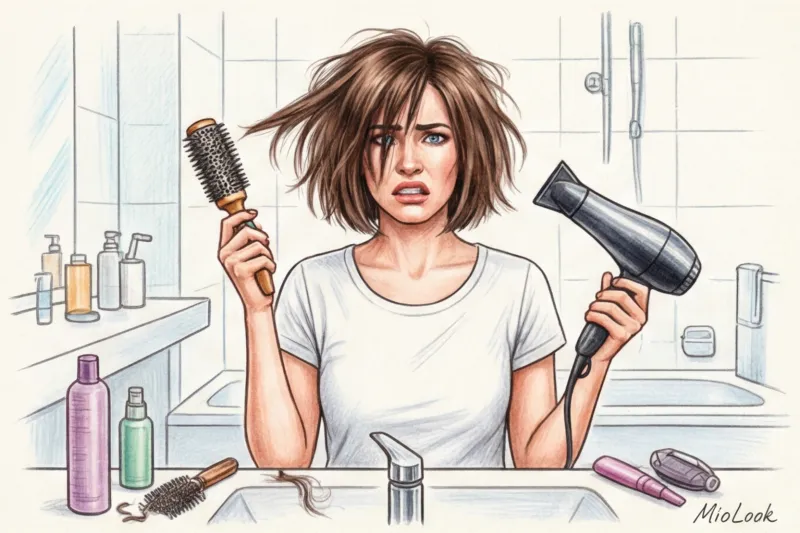
Analyzing my clients' unsuccessful experiments, I identified five main traps we fall into when looking at a generated portrait.
- Evaluation is from the front only. Carrying out try on hairstyles online , you see yourself strictly from the front. However, any haircut is primarily about volume and architecture. An ultra-short French bob can stunningly highlight your cheekbones on screen, but if you have a flat back or a low hairline, the shape will inevitably "sag" in profile. The algorithm doesn't scan the shape of your skull, so always look for references of the haircut you like from the profile and back.
- Ignoring your lifestyle. You've tried a textured choppy pixie, and in the photo it makes you look sassy and stylish. What the AI doesn't show is the 30 minutes of morning frizz control, the obligatory use of texturizing clay (like Kevin Murphy's), and blow-drying with a skeleton brush. The complex geometry of short hair requires perfect freshness every day and a salon re-shaping every three to four weeks (which will cost you around €40-€80 per visit). If your morning limit is 10 minutes with a hairdryer, this style will become a daily stress.
- Obsession with trends at the expense of archetype. Let's say you're a top manager in the financial sector (a "Ruler" or "Caregiver" archetype), but the app insists you look stunning with the trendy mullet haircut. The AI doesn't consider the social context. This creates a stark visual dissonance: your rebellious, grungy hair texture will clash with your cashmere turtlenecks from COS and simple jackets, undermining the integrity of your personal brand.
- Fatal mismatch of color type. One of the most common disasters in my practice as a colorist is choosing a warm copper or bronze shade for a cool "summer" complexion. While the color screen easily replaces your hair color, it doesn't correct your skin's undertone. In reality, a warm pigment will clash with cool skin: it will instantly highlight the smallest capillaries, draw out gray shadows under the eyes, and give your face a painfully tired look.
- The forgotten business dress code. An extreme color (ash pink, deep magenta, or neon blue) doesn't exist in a vacuum. How will it fit into your business wardrobe? In the office for important negotiations, your favorite high-status graphite suit will suddenly look dirty and out of place against the bright highlights. Any unusual hair color requires a complete overhaul of your basic makeup and a change in the contrast.
Your haircut and color are essential accessories you wear 24/7. They should enhance your status and comfort, not demand your complete submission for the sake of a beautiful photo.
From Pixels to Scissors: A Pre-Salon Checklist
The most terrifying moment for any hairdresser is when a client sits in the chair, shows a neural network-generated image, and categorically declares, "Do me exactly the same." According to statistics from the British Hairdressing Council (2023), 68% of salon disappointments are not due to the hairdresser's lack of skill, but to a huge communication gap. Try on hairstyles online gives you a great visual base, but now this digital fantasy needs to be skillfully translated into the language of real anatomy and chemistry.
How do you properly show the generated photos to the colorist? The main rule: don't bring a single, perfect image. Create a mood board of 3-4 options and clearly communicate what specifically appeals to you about each one. Is it the color density? The sharp angle of the cut? The volume at the roots? Ask for an adaptation to your specific needs right away. I always ask my clients to ask questions like this: "I love the shape and movement in the photo, but how will it work on my porous and slightly curly hair?" A good stylist will immediately explain that to achieve the same effect on your texture, you'll need to adjust the angle of the strands or add hidden inner layers that simply won't be visible in a smooth AI render.
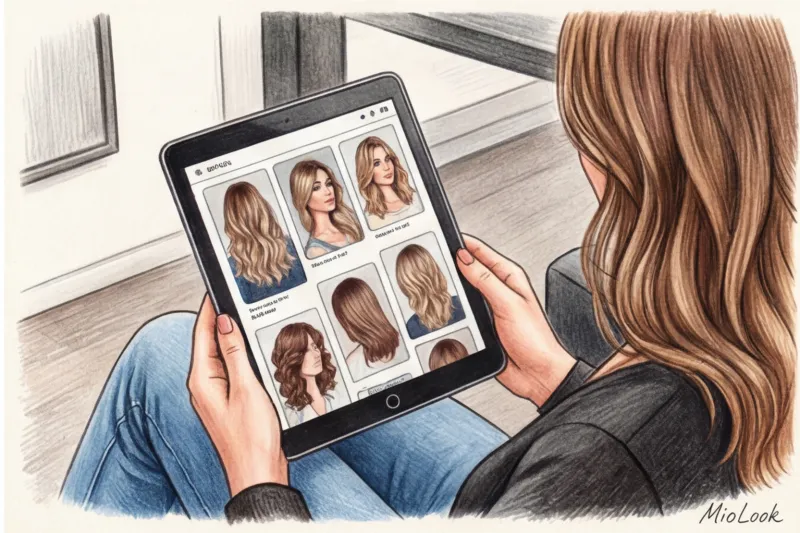
To avoid unpleasant surprises, we need to translate your emotional perception of the image into a dry vocabulary of hairdressing terms. Remember how to correctly formulate your desires:
- Instead of "just cool blond" say: "ash-blond at the 8th tone level without golden and copper highlights when washed out."
- Instead of "a little carelessness" Ask for: "textured cut with active thinning at the ends for easy styling."
- Instead of "a little volume around the face" specify: "graduation starting strictly from the cheekbone line, so as not to widen the lower jaw."
If you have any doubts about the geometry, you can always upload your selfie to MioLook and independently analyze which lines and angles the app used to make your face more harmonious.
Your ideal image
it begins Here:
Join thousands of users who look flawless every day with MioLook.
Get access — €0.99 onceBut the biggest hidden threat lies in coloristics. Your smartphone screen knows nothing about the fact that you had a keratin straightening treatment three years ago or that you used household dye from the supermarket last summer. Artificial intelligence simply overlays color on your photo. In reality, a colorist has to work with the layered history of your hair.
That's why a test strand is an absolutely essential step before any full-scale coloring. Ask your stylist to apply the lightening solution to a small strand at the back of your head (in an area hidden by the main mass of hair). Only then will the colorist see the true lightening effect and assess how the disulfide bonds in the hair structure will react to the chemicals. Trust my salon experience: it's better to spend €15-€30 on a consultation with a test strand today than €300-€400 on complex restoration and spot correction on burnt hair tomorrow.
Synchronizing your new style with your wardrobe
Many women perceive leaving the salon as the final step in their transformation. In reality, it's just the starting point for a major wardrobe overhaul. As a colorist and image consultant, I often repeat: hair is your most important, permanent accessory. It sets the tone for your entire look, and the slightest shift in shade sets off an irreversible chain reaction in your style.
A hair color change can either create a stunning new wardrobe or mercilessly destroy an old one. Imagine this: you invested about €800 in the perfect basic wardrobe in warm beige and caramel tones. Then, you gave in to the impulse and virtually (and then actually) dyed your hair from warm chestnut to a cool platinum blonde. The result? All your expensive clothes start to clash with your hairstyle, creating a visual temperature dissonance.
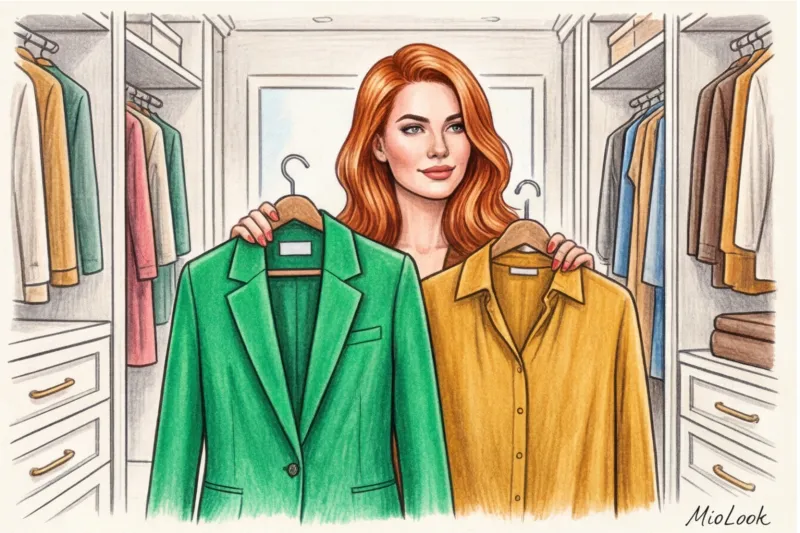
The first thing that requires immediate revision is portrait zone These are those top 30 centimeters of clothing that hug your face. This is why your old, favorite blouses can suddenly stop flattering you. Pure color physics is at work: light reflects off the fabric, mixes with your hair color, and falls on your skin. If you've added a warm copper tint to your hair, your once-favorite cool fuchsia shirt will begin to cast a grayish, painful reflection on your face. You have to rediscover "your" colors, drawing on Johannes Itten's classic theory of color harmonies.
In addition to changing your skin temperature, your natural contrast level changes dramatically. This directly dictates new rules for makeup and portrait accessories:
- Increasing contrast (transition to dark color): If you've become a scorching brunette, your usual translucent nude makeup will simply disappear against your thick, dark hair—your face will appear pale and tired. You'll need more saturated lip pigments and a defined, defined brow line.
- Reducing contrast (transition to blonde): Conversely, if you've gone too light, your usual jet-black eyeliner and chunky black glasses will look heavy and visually age you. They'll need to be promptly replaced with graphite, complex taupe, or a classic tortoiseshell pattern.
Changing your hairstyle is always a stress test for your budget. Before heading to the boutiques to buy new items to "save" your look, test your hypotheses digitally.
Trying on clothes virtually becomes the most logical next step. If you've already found the perfect haircut and color on your smartphone screen, save the generated photo. Then upload it to MioLook smart wardrobe feature to see how your new look pairs with items of different styles and shades. This simple step will save you from impulsive purchases of sweaters and jackets that absolutely clash with your new, even perfectly styled, hair color.
Conclusion: AI as an assistant, not a style dictator
Do you know what the main weakness of even the most advanced algorithms is? They've never seen you nervously tuck a stray strand of hair behind your ear during a tense Zoom call. The neural network doesn't know how your hair frizzes in the humid sea air or how difficult it is to style early in the morning when you only have ten minutes before you leave the house.
Over 12 years of working with visual image, I've come up with a fundamental rule for the digital beauty era: Trying on hairstyles online is your stylistic compass, not an exact topographic map. Artificial intelligence is excellent at setting a vector. It can show that a shorter neckline makes your silhouette more graceful, or that a warm caramel shade highlights your eyes better than a dull ash. But this vector always requires adaptation to reality.
The main danger of virtual makeovers is the dopamine trap. When a flawless face with a perfect hairstyle appears on the screen, critical thinking often switches off. This is where a call for strict mindfulness is needed. If you use smart tools like MioLook Learn to look past the "wow" factor of beautification. Disconnect your emotions from a beautiful image and analyze the generation like a cool professional. Ask yourself three questions:
- Form rating: Where exactly does the cut line end? Does it cover the most graceful part of my neck?
- Temperature rating: Does this shade of blonde have golden (warm) or platinum (cool) undertones? How does it resonate with my actual skin tone, not a photoshopped one?
- Texture Rating: Did the algorithm create density and root volume that I physically don't have?
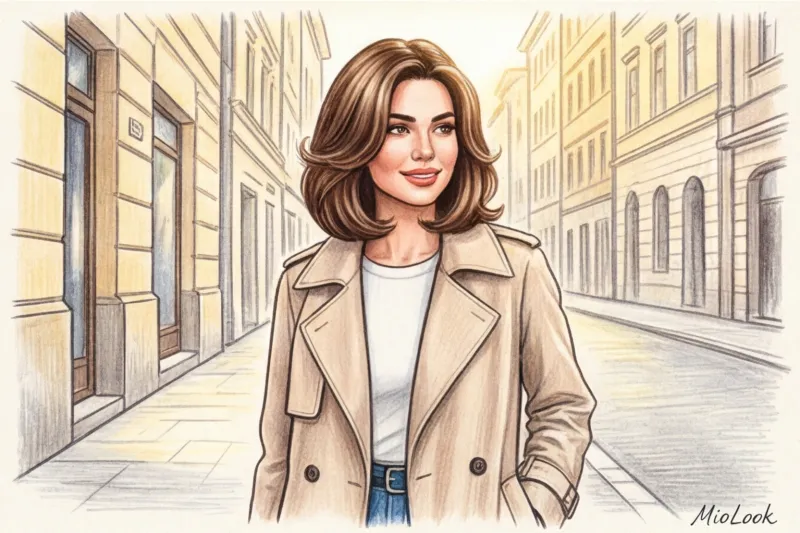
To avoid impulsive decisions, I always recommend the "48-hour rule" to my clients. Save the generated result as your phone wallpaper for two days. If, after this time, you're still drawn to the geometry and color, and not just the novelty, you can schedule a salon visit. Correcting the consequences of blindly trusting algorithms is always time-consuming and expensive: a proper solution to a bad bleaching or extensions after an impulsive bob cut will cost between €150 and €300, not to mention the stress on your hair itself.
"A haircut doesn't exist in a static state; it's born in motion. We wear our hair in motion, in the wind, in the turn of our heads"—this maxim, hammered into us in courses at British style academies, is more relevant today than ever.
My main advice: trust your natural talent and the professional's human eye. A salon professional evaluates not pixels, but the physics of the hair: its porosity, the hairline, the direction of the cowlicks at the back. Artificial intelligence is an incredible assistant that helps you break free from the usual look, explore bold ideas, and find common ground with your colorist. But the final touch that transforms lifeless generation into your organic style always rests with the human touch.
Guide Chapters
How to choose an evening hairstyle from a photo: pro tips
Neural networks create stunning hairstyles, often ignoring the laws of gravity. We'll explore how to use apps to find the perfect look.
How to Try Colored Hair Online Without Risk
Bright coloring can be very stressful for your hair structure. Learn how virtual color strand try-ons can help you avoid mistakes and preserve your locks.
How to use a neural network to try out a haircut without making mistakes
AI creates perfect shaggy and mullet hairstyles, ignoring physics and hair growth. A stylist explains how to translate digital trends into real-life styling.
How to try on long hair from a photo and avoid mistakes
Virtual filters promise luxurious curls, but the reality of extensions depends on the laws of trichology. We examine whether digital hairstyle try-ons are worth trusting.
How to try on blonde hair online from a photo and avoid mistakes
Hair color apps often embellish reality. We discuss with a stylist how to properly evaluate a virtual blonde and prepare your wardrobe.
How to choose a youthful haircut online using AI
Artificial intelligence often exaggerates reality when it comes to choosing a hairstyle. We'll explain how to effectively use neural networks to find the perfect anti-aging haircut.
Hair Color Changer App: The Truth About AI
Trying on a virtual hairstyle can be disastrous in a real-life salon. Learn from a professional colorist how neural networks are transforming our image.
Trying on bangs online from a photo: Why AI is deceiving
Virtual bang try-ons often promise the perfect look, obscuring reality. We discuss with a stylist why you shouldn't blindly trust AI before getting a haircut.
The Perfect Photo for Trying on a Hairstyle Online | MioLook
A beautiful selfie is the worst source material for artificial intelligence. We'll explore how to create the perfect shot so AI can create the most realistic haircut.
How to choose a hair color from a photo online and avoid mistakes
Virtual try-ons can create a perfect image on screen that's impossible to replicate in real life. We explore why AI distorts reality when choosing shades.
Hairstyle Matching for Face Shape Using Photos: How AI Works
Selfies distort facial proportions, which often leads neural networks to make haircut selection errors. Learn how to upload photos correctly to get the perfect AI reference.
How to find out if a short haircut will work online and not regret it
Should you trust AI when choosing a bob or pixie? We'll explain how to try hairstyles online and take your hair's characteristics into account.