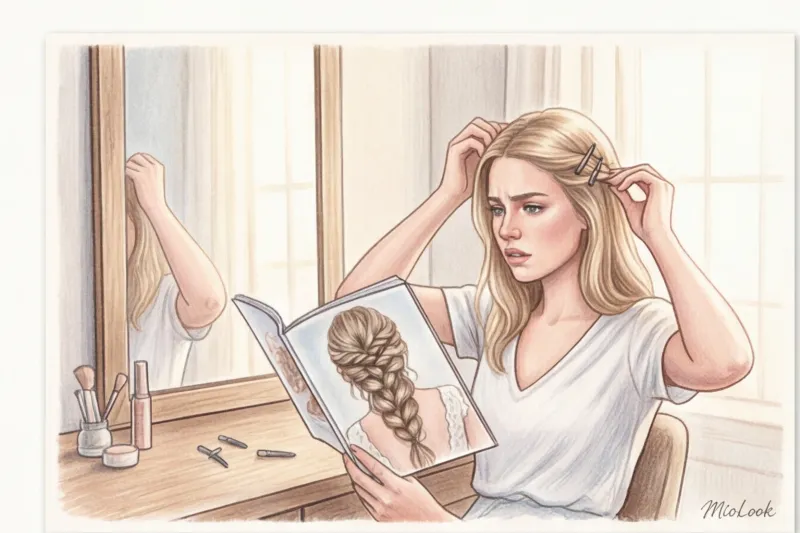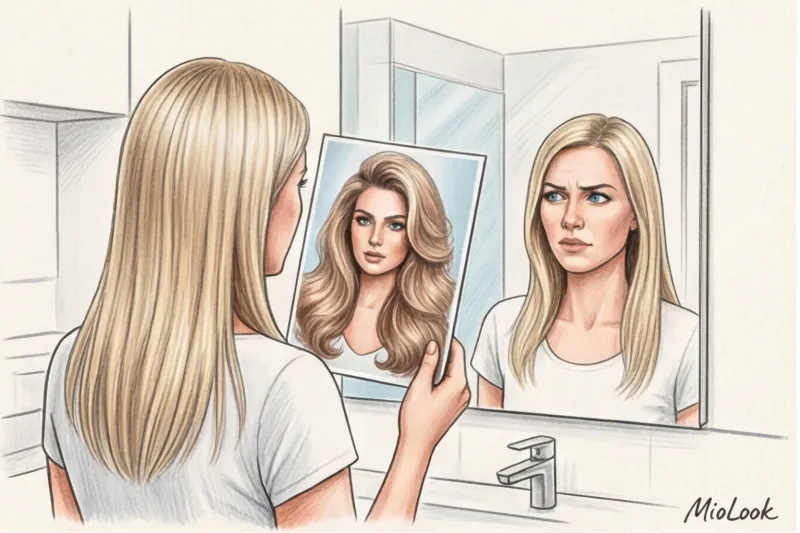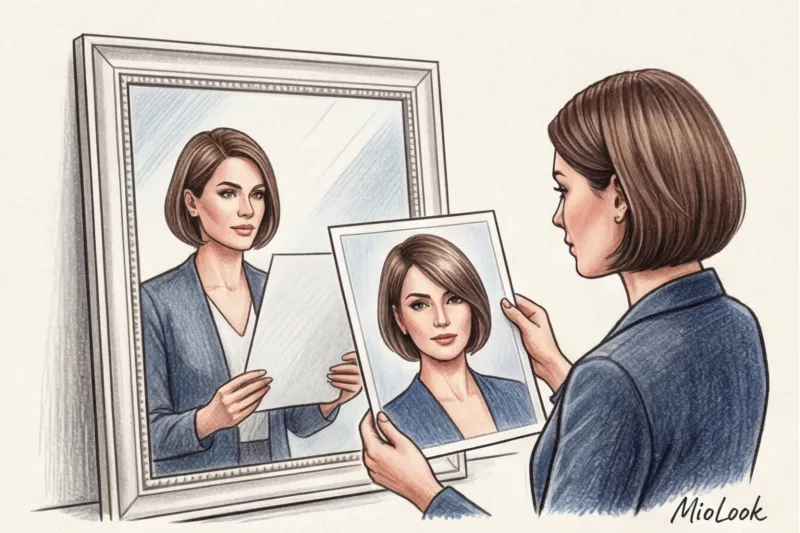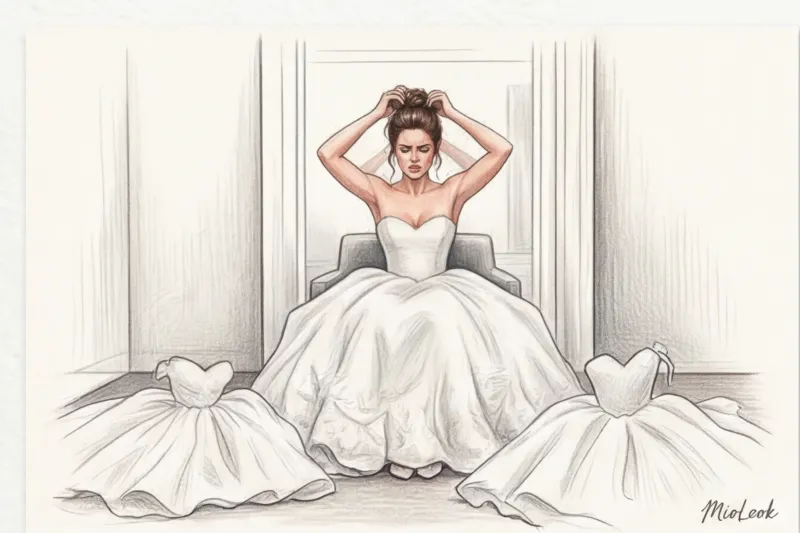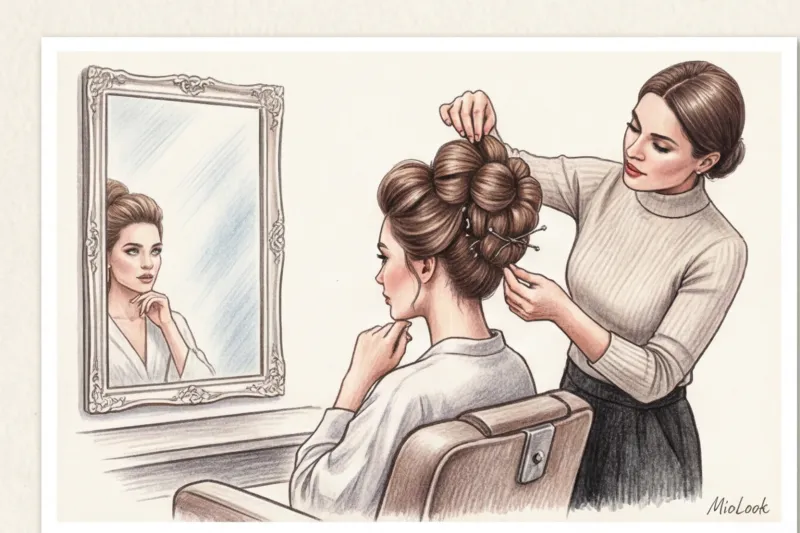
"Julia, I want this messy look," a client recently told me, showing me a generated image on her smartphone screen. The photo showed an incredible textured composition: a loose bun that seemed to float above the back of her head, defying all laws of gravity. There was just one problem. To recreate this masterpiece in real life, we would need about 150 grams of donor hair, two hours of work, and a rigid, hidden frame of bobby pins, which the neural network discreetly omitted. Trying to choose an evening hairstyle from a photo is a completely different process than trying on new bangs.
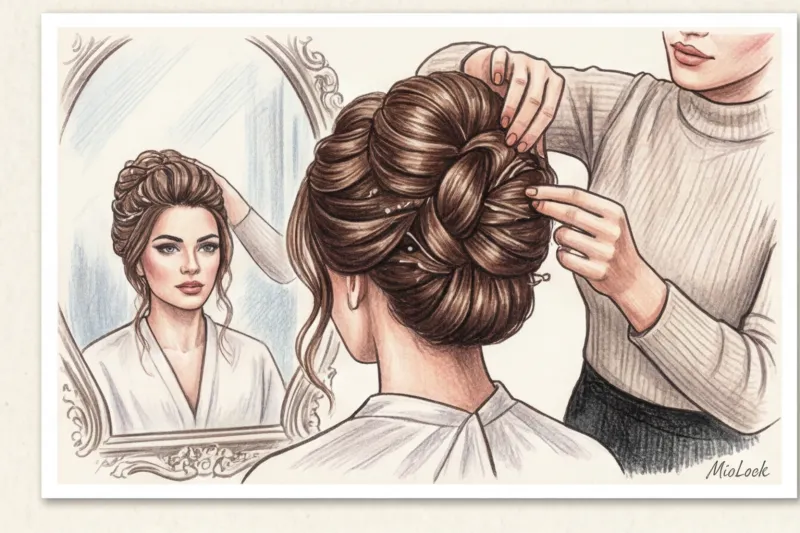
We have already discussed the basic limitations of virtual stylistics in more detail in our The Complete Guide to Online Hairstyle Try-Ons: Why AI Sometimes Lies to Us Today I want to talk about the highest level of creativity—the architecture of evening and wedding hairstyles.
Over 12 years of working with premium wedding dresses, I've learned the most important thing: neural networks are a fantastic tool for finding the perfect fit. But they don't understand physics at all. Let's explore how to effectively use virtual fittings to ensure you're delighted, not disappointed, in the stylist's chair.
Why is choosing an evening hairstyle from a photo more difficult than a basic haircut?
The difference between a haircut and an evening hairstyle is the difference between a 2D image and a 3D architecture. When you try on a bob, the algorithm only needs to apply a flat texture over your face. But an evening hairstyle works from all 360 degrees. The principles of structural hair design are ruthless: every pin distributes tension, every released strand carries weight.
A bride once came to me with a perfect high bun reference image generated in the app. From the front, it looked regal. But when I styled her hair into the exact same shape, the profile was flat and disproportionate. The AI had "applied" the hairstyle like a sticker, completely ignoring the actual anatomy of her skull (in particular, the sloping nape, which in real life we always correct with a roller).
Artificial intelligence doesn't understand that hair has weight, texture, and resistance. It draws light and shadow, while we, stylists, work with gravity.
Wedding Hairstyling App: Key Virtual Styling Illusions
The "beautification" phenomenon is reaching its peak in evening looks. Algorithms are programmed to deliver aesthetically flawless results. If you have fine hair, AI won't create a modest bun. It will seamlessly double or triple the thickness of your hair to fill in the gaps and create beautiful geometry.
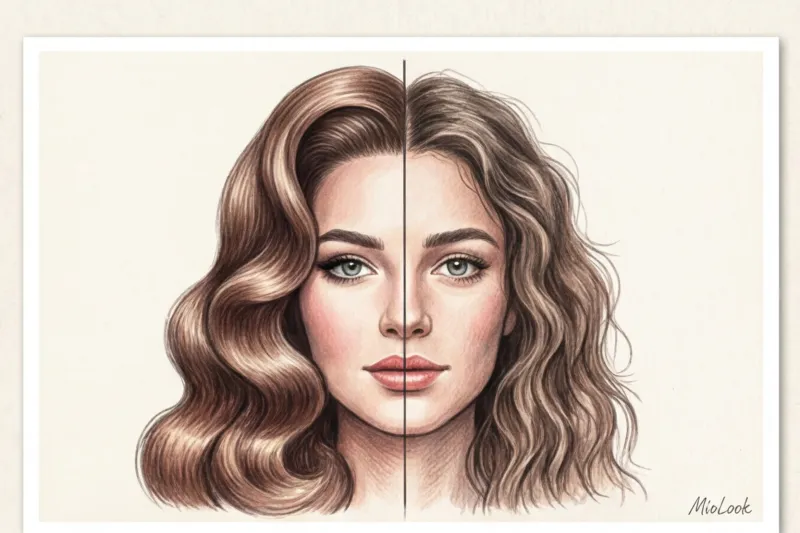
The technical problem is that the neural network doesn't calculate the number of hair follicles per square centimeter of your head. The transition from a 2D frontal photo to a 3D real-world volume is often accompanied by a visual loss of hair mass of approximately 30%. You look in the mirror from the side and can't figure out where that luxurious volume from the screen has gone.
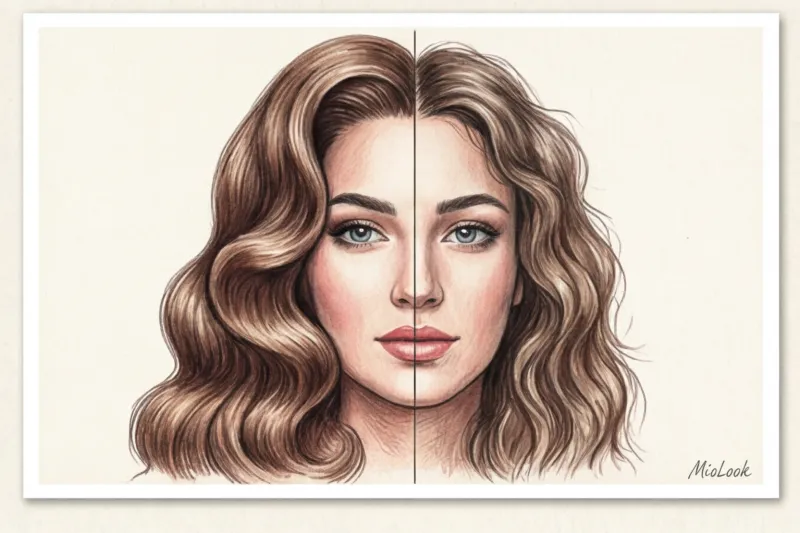
Volume trap and hidden hair extensions
Let's talk numbers. Most Hollywood waves, textured ponytails, and voluminous braids that look so impressive in fashion apps require the use of extensions. On average, this means 100 to 150 grams of extensions.
If you have fine European hair and are trying to create a voluminous boho braid, be prepared for some extra investment. In the premium segment, high-quality Slavic clip-in extensions will add €250 to €400 to your look. This doesn't mean the app is lying—it shows the potential. However, a hairstylist can't conjure matter out of thin air without the right tools.
Access to MioLook for €0.99 — one-time payment
A smart AI stylist will select the perfect look based on your actual measurements.
Get access — €0.99 onceEndurance test: 12 hours of celebration versus one second of rendering
My personal standard in the luxury segment is the "12-hour endurance test." A wedding hairstyle must survive tears, hugs from family, humidity by the lake, and dancing until three in the morning.
According to surveys by European wedding associations (2024), 68% of brides are disappointed with their hair trial precisely because the physics of real hair don't match the images generated by neural networks. The app depicts a perfect, airy, careless look of three freely falling strands. In real life, without the firm (and often noticeable) hold of hairspray, this "carelessness" will hang like sad icicles 40 minutes into the reception.
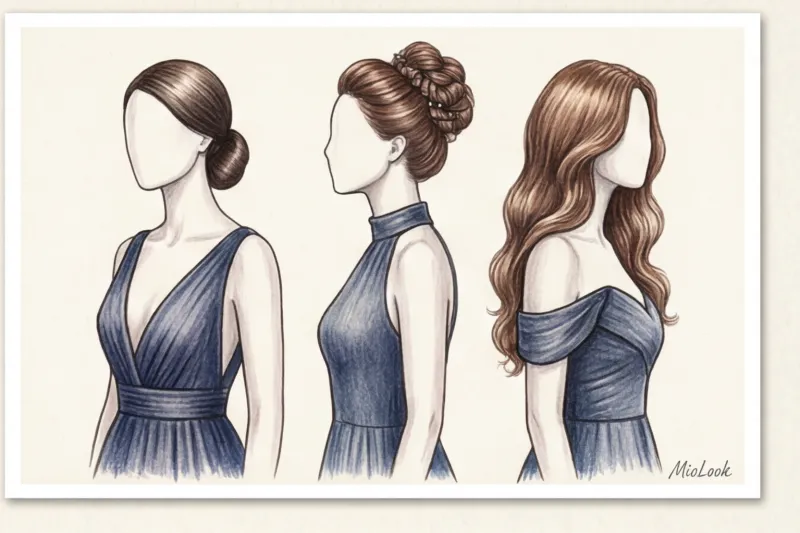
Image Architecture: How to Match Your Hairstyle to Your Dress Neckline Online
The main rule of premium styling, which I never tire of repeating: a hairstyle is not a standalone element. It's an extension of the silhouette of your dress. The most common and fatal mistake my clients make is uploading a photo of themselves in a casual T-shirt to the app to choose a hairstyle to go with an evening gown.
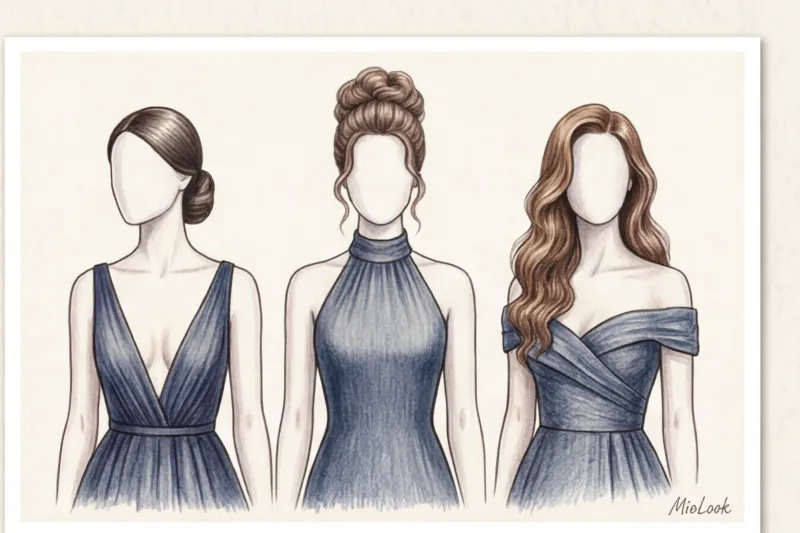
How to correctly try on hairstyles for a specific style:
- V-neck: requires balance. Loose Hollywood waves (try options with a side parting) or a low, slightly tousled bun are perfect here.
- High neck: This style strictly requires hair up. Try high, sleek buns in the app. Leaving your hair loose will visually disappear your neck, making your look heavy.
- Bateau neckline: Audrey Hepburn-style elegance. Choose a French twist or a neat mid-updo.
This is where the image loading function comes to the rescue. MioLook First, put on the dress (or a top with a similar neckline), take a photo in good lighting, and only then start virtual hairstyle try-ons. You'll immediately see how the proportions of your neck and shoulders change.
A Practical Guide: How to Properly Test Neural Network Configurations
To ensure the generated result becomes a truly useful tool and not just a toy, follow a strict protocol for preparing the source photo. This is the insider secret that saves hours on a real-life rehearsal in the salon.
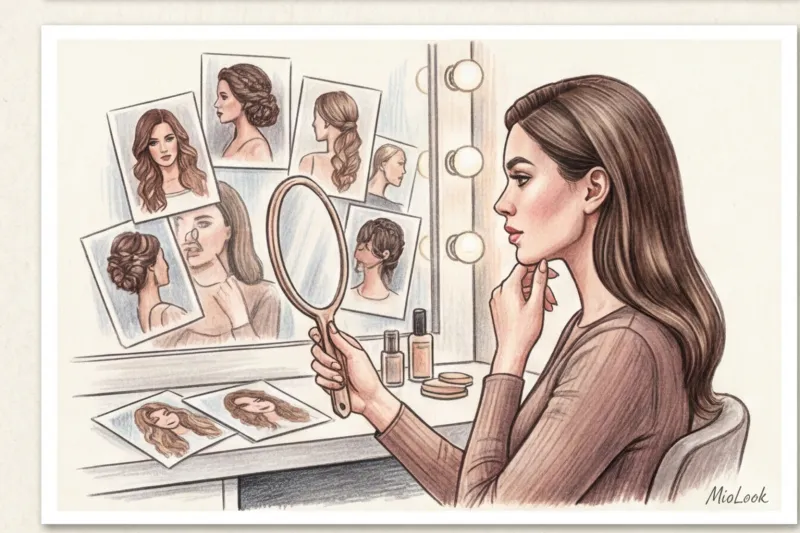
- Preparing the "canvas": Comb your hair back as smoothly as possible. Avoid leaving bangs or strands near your face, otherwise the AI will blend your real texture with the virtual one, creating a messy result.
- Correct light: Take your photo in front of a window. Even daylight will allow the algorithm to accurately calculate your skin undertone and face shape (round, oval, or square), which is critical for choosing the right hairstyle.
- Changing angles: Don't just generate a classic full-face shot. Try taking a semi-profile photo. This will force the neural network to show how the hairstyle will look from the side—where volume issues are most common.
Checklist: What to Bring to a Real Rehearsal with a Master
The virtual fitting is over, and you've found "the perfect" look. Now how do you translate it into reality? When you sit down with the stylist, your AI reference needs to be supported by concrete data.
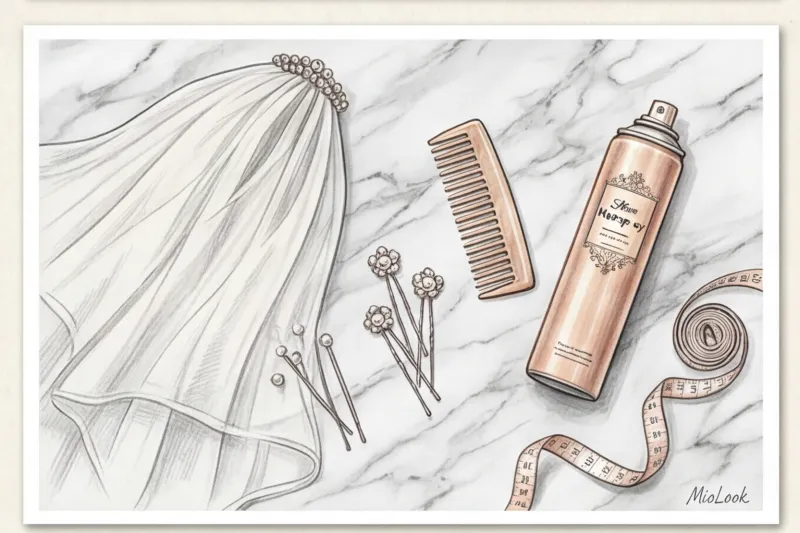
Take with you:
- 3-5 generated photos , preferably from different angles of the same hairstyle.
- A photo of you in a dress (In its entirety, in daylight). The stylist must understand the texture of the fabric: heavy satin requires smoother shapes, while light tulle requires airiness in the hair.
- Decorations. Massive chandelier earrings dramatically change the balance. What looked perfect on a bare neck in the app can become visual chaos with large earrings.
- Willingness to compromise. This is the most important thing. The stylist adapts the digital concept to the physical properties of your hair.
Your perfect look starts here
Join thousands of users who look flawless every day with MioLook.
Get access — €0.99 onceFrom Virtual to Real: When to Tell an App to Stop
The app is a mood board, not a technical brief for a stylist. It expands our boundaries, allowing us to try on looks we'd never dream of in real life. But at some point, pixels must give way to the hands of a professional.
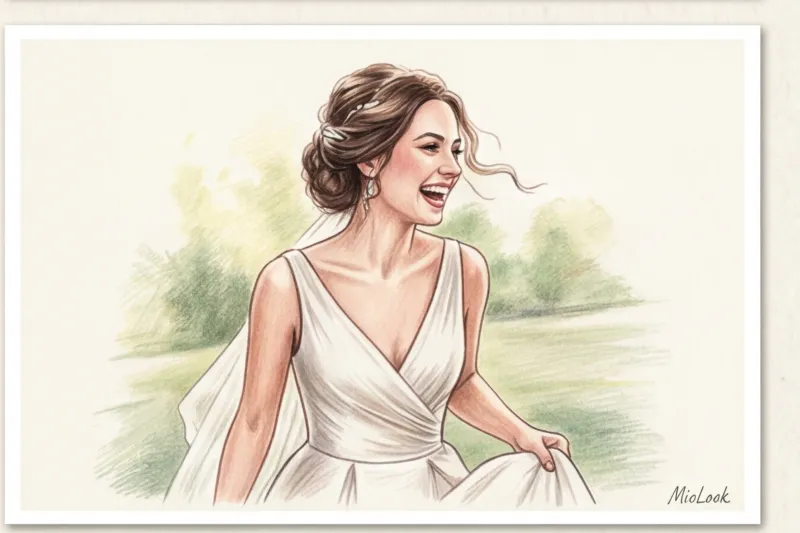
Of course, a neural network never tires and draws perfectly straight lines. But in the context of an investment wardrobe and premium style, artificial perfection often looks cheap. True luxury is a vibrant, shiny hairstyle. It's a strand of hair that's naturally blown out by the wind during your walk, a healthy shine, and a shape that highlights your individuality rather than obscuring it with filters. Use technology for inspiration, but trust your beauty to reality.