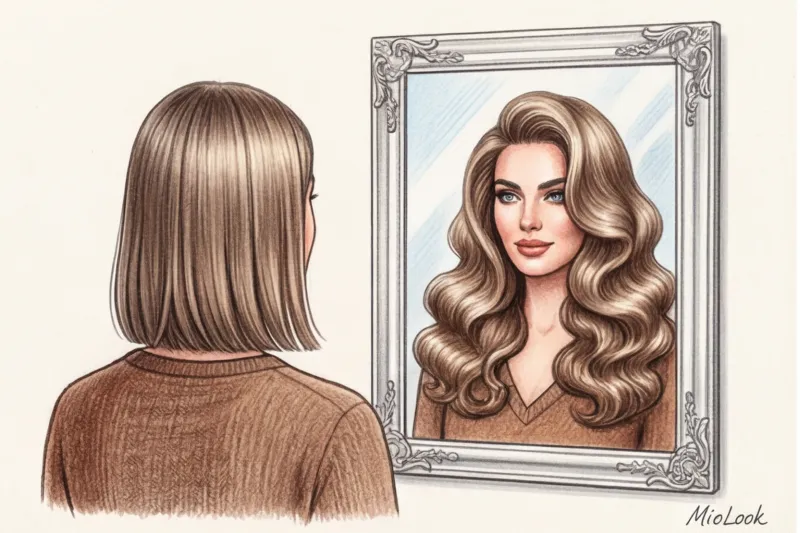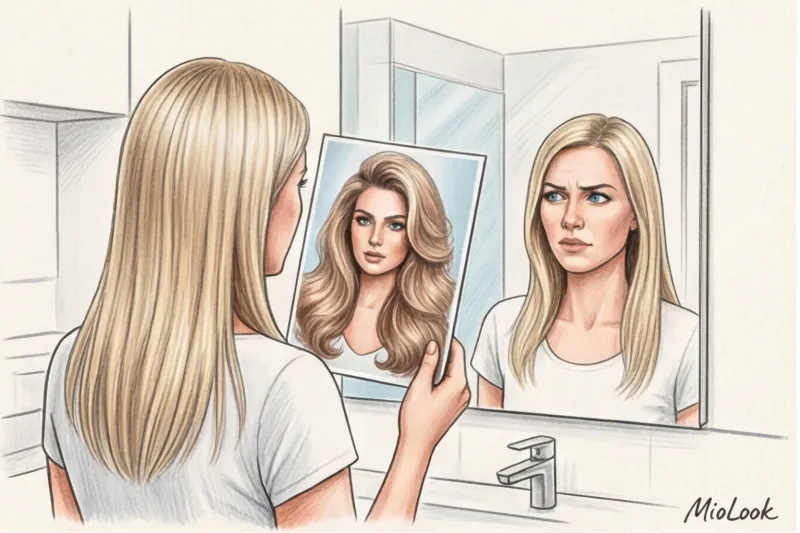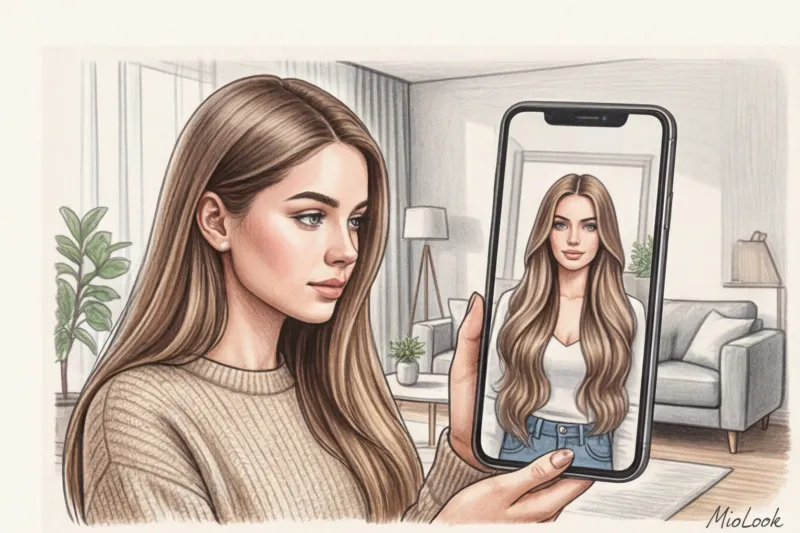
Recently, a client came to me with sparkling eyes and a printed photo from a popular filter app. The photo showed a luxurious mane of sleek, 70-centimeter-long hair. "Camilla, I want it exactly like this. Book me an appointment with your best hair extensions specialist," she declared categorically. The problem was that her own fine, bleached hair physically couldn't support the 150 grams of donor strands needed to create such thickness. If we had gone with the generated image, within a month she would have been faced with severe traction alopecia.
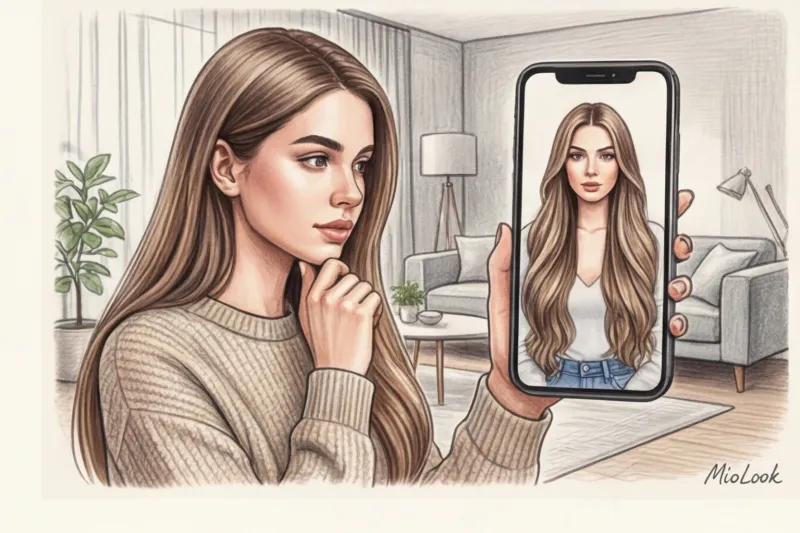
Wish try on long hair from a photo — a completely natural first step before a radical image change. However, neural networks design hairstyles based on the laws of digital graphics, not trichology. We discussed this phenomenon in more detail in our The complete guide to trying on hairstyles online and why AI is lying to you.
In this article, we'll examine virtual try-ons for long locks, not as a fun game with filters, but as a professional preparation tool. I'll show you where the algorithm mercilessly flatters, adding thickness where a stylist can't attach capsules, and how to avoid disappointment with a hefty price tag.
The Rapunzel Effect: Why We Want to Try on Long Hair Based on Photos
Long, well-groomed hair has historically been seen as a marker of health and vitality. According to the analytical agency WGSN (2024), the "liquid hair" trend (flowing, extremely long, and shiny hair) is currently experiencing an absolute peak in popularity. But going from a bob to a waist-length hairstyle in real life isn't just a change of style. It's a serious financial investment.
High-quality capsule hair extensions using selected Slavic donor hair cuts in Europe currently cost between €500 and €2,000. The cost of a mistake is prohibitive. If you impulsively extend your hair length and a week later realize you have trouble sleeping, find it difficult to rinse your roots, or the new proportions are eating away at your growth, you won't get your money back.
That's why a virtual test drive is essential. But apps sell us a dream. They use beautification algorithms: they don't just lengthen your hair, they make it three times thicker, while smoothing your skin texture and adding sparkle to your eyes. You fall in love not with a new hairstyle, but with an idealized version of yourself.
Access to MioLook for €0.99 — one-time payment
A smart AI stylist will select the perfect look based on your actual proportions.
Get access — €0.99 onceThe Main AI Trap: What's Hidden Behind Long Virtual Curls
When you upload your selfie to the app, the neural network commits several technological "crimes" against the laws of coloristics and hairdressing.
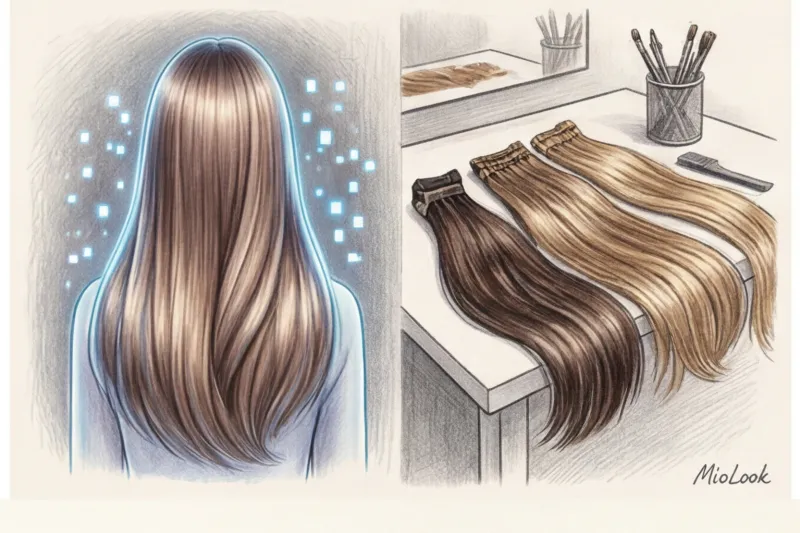
Invisible transition and erasure of the "header zone"
The biggest pain point for hair extension specialists is clients with tight, straight bobs. AI seamlessly blends your short hair with the longer strands. In reality, if you have thick, shoulder-length hair, extensions often create a "cap" effect—a clearly visible line where your hair ends and the donor hair begins. To achieve the result shown in the generated photo, the specialist will have to profile (thin) your ends, which not everyone is prepared for.
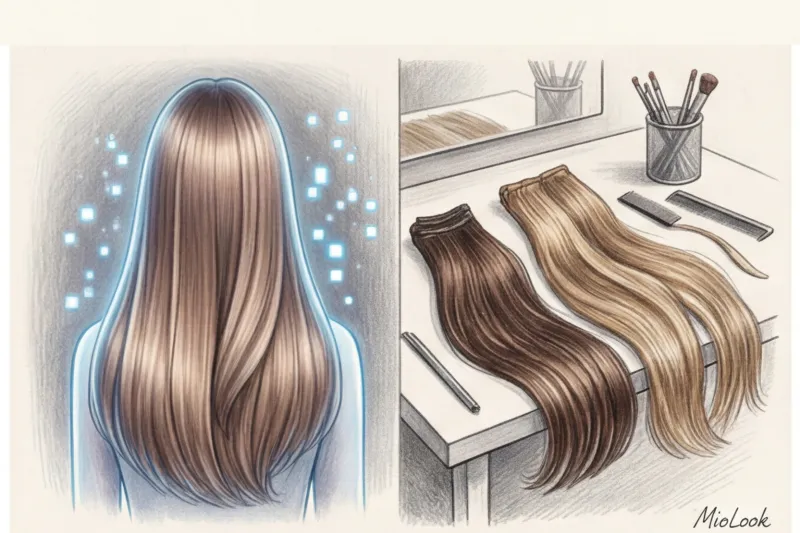
Root Volume Deception
And now the most interesting part—my favorite counterintuitive insight. Have you ever noticed how long hair always looks fuller at the roots in photos with filters? It's a complete illusion.
The extension protocol strictly prohibits attaching capsules or strips to the crown, parting, and facial hairline. Otherwise, the attachment points will be visible at the slightest breeze.
In reality, long hair extensions almost always appear flatter at the crown. The weight of the donor strands pulls your natural roots downward, depriving them of their natural volume. Virtual try-ons completely ignore this physical law.
The Problem of Density and Weight: Physics vs. Pixels
Pixels weigh nothing. AI can easily create a head of hair equivalent to 300 grams of thick hair. However, according to the European Hair Research Society (2023), the safe load per follicle is strictly limited. Healthy hair can withstand a donor section weighing approximately 100–150 grams. If your hair is naturally fine, the stylist will use microcapsules and only 70–80 grams of material. The result will be beautiful, but much less dense than the cascading avalanche the algorithm produced.
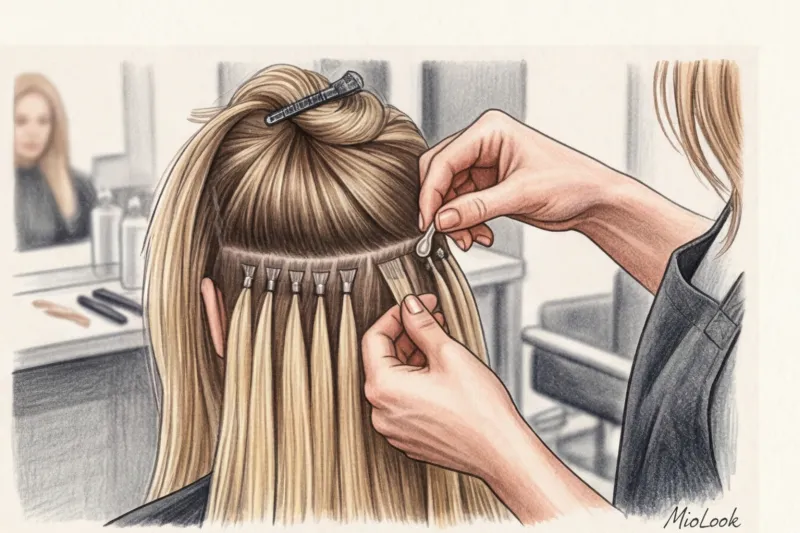
Types of extensions vs. on-screen reality
When trying on an image online, it is important to ask yourself: How exactly will this be implemented technically? Different types of extensions impose different restrictions on your daily life, which the AI tactfully keeps silent about.
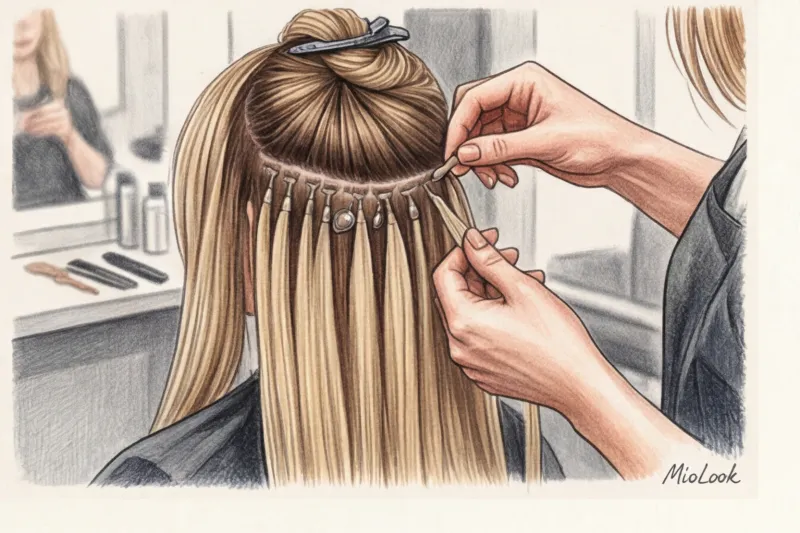
- Capsule (Italian) extensions: The most popular method. It allows you to gather your hair into a ponytail, but requires painstaking combing with a special brush. The capsules aren't visible in the photo, but in real life, you'll feel them on your scalp (approximately 150-200 tiny keratin beads).
- Tape-in hair extensions: If the neural network depicts your long hair pulled back into a high, sleek ponytail, forget about the ribbons. They're perfect for loose hair, but if you try to create a high ponytail, the wide adhesive strips will be noticeable to others.
- Hollywood hair extensions (tresses): The hair is sewn into a thin braid at the nape of the neck. This is safe, but it adds physical volume (a bump) where the braid is placed, which can disrupt the smooth nape that the filter so beautifully renders.
Your ideal image begins Here
Join thousands of users who look flawless every day with MioLook's intelligent algorithms.
Get access — €0.99 onceHow to Try on Long Hair from a Photo: A Stylist's Checklist
To Smart wardrobe and beauty try-on features in MioLook I got a result that I can confidently take to the salon, but the original needs to be properly prepared.
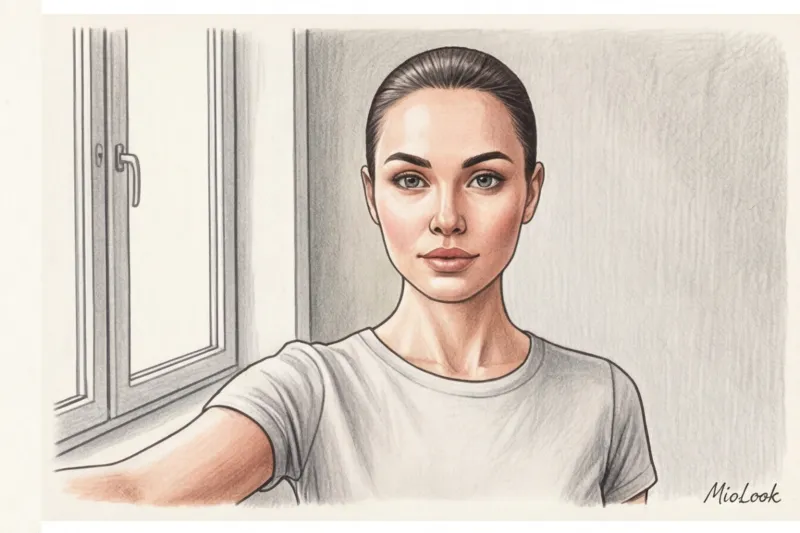
- Comb your hair back. Don't upload selfies with your hair down. Wear it in a tight, sleek ponytail or bun. This will allow the algorithm to accurately capture your facial anatomy, cheekbone width, and hairline.
- Find flat, "harsh" light. Stand facing a window on a cloudy day. Avoid direct sunlight and yellow lamps. If the light distorts your skin tone, the AI might create a platinum blonde, which in reality will make your face look tired.
- Analyze the proportions of the neck. This is a critical point. Long hair visually "eats" the length of your neck. Take a close look at the generated photo: does your head appear disproportionately large?
Real-Life Test Drive: What to Do After a Virtual Try-On
Let's say you like the photo. You look amazing. The next step isn't to call a salon, but to buy extensions (strands of hair clipped in) at your nearest professional cosmetics store or mass-market store (synthetic versions for €30–€80 are perfectly acceptable for testing).
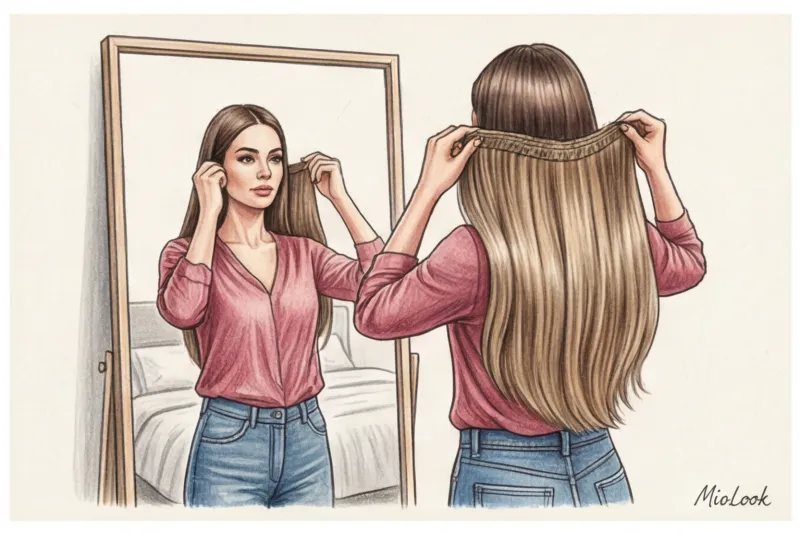
Put them on and walk around the house for half a day. Notice the weight. Feel the hair touching your back—some of my clients find this tactile sensation incredibly irritating.
Wardrobe adaptation: the unobvious consequence
As a stylist with 12 years of experience, I must warn you: changing your hair length will inevitably lead to a wardrobe overhaul. Long hair falling onto the chest creates a massive vertical line.
With a bob, you can confidently wear voluminous chunky turtlenecks, jackets with wide shoulders, and blouses with bows. But once you've grown 24 inches of hair, a turtleneck combined with it can create the effect of a "missing neck." You'll need to switch to V-necklines, plunging necklines, and exposed collarbones to restore the air space between your face and torso. Keep this in mind when planning your capsule hairstyle.
Expert Verdict: When a Virtual Try-On Says "Yes," and Reality Says "No"
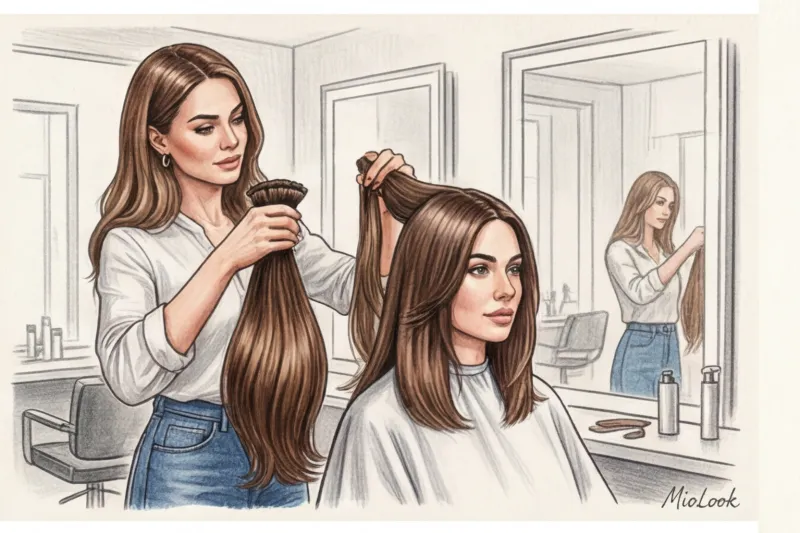
Let's be honest. In my practice, there have been dozens of cases where we refused extensions to clients, despite amazing references from neural networks. This technique doesn't work in three cases:
- You have a blunt bob cut on thick hair. As I mentioned, to hide the transition, you'll have to mercilessly thin out your natural ends. If you plan to ever remove the extensions, you'll be left with plucked "rat tails."
- Glassy gray hair or extremely porous structure. AI creates perfect silk. If your hair is frizzy from humidity and the donor strands are smooth, the slightest rain will cause your hairstyle to split into two separate, incompatible sections.
- Diffuse alopecia in the acute stage. The extra weight will simply pull out the weakened follicles.
If you fall into these categories, the best alternative is to stimulate your own hair growth with a trichologist, use high-quality hair replacement systems (modern lace wigs), or temporary hair extensions for events.
Ultimately, a virtual try-on of long locks is a brilliant moodboard. It helps you choose the right shade, understand whether a length below the shoulder blades suits you, and motivates you to make changes. But treating the generated photo as a strict technical specification for a stylist is a recipe for disappointment. Use technology for inspiration, and entrust the implementation to physics, anatomy, and a qualified specialist.