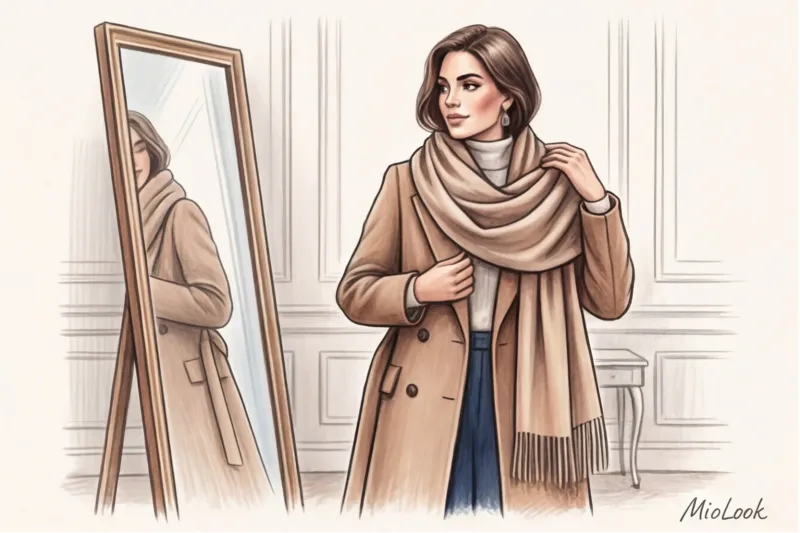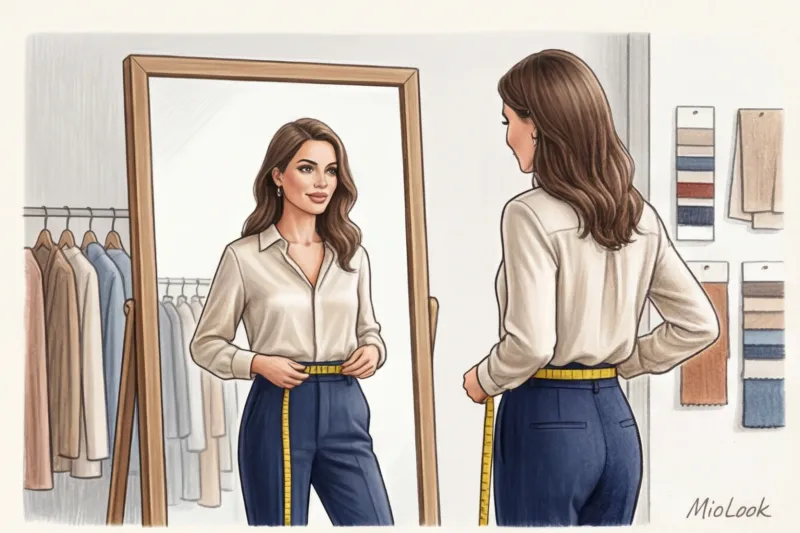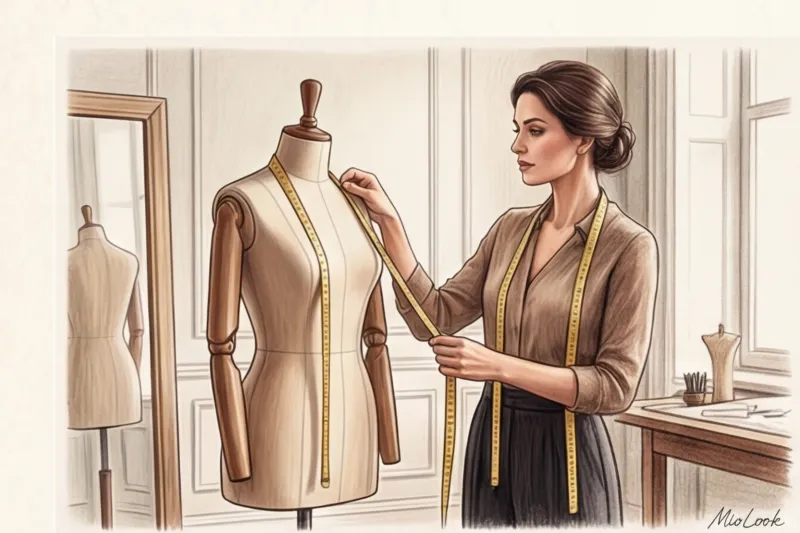
Several years ago, I was fortunate enough to observe the head tailor at work in one of Milan's oldest ateliers. While a client described her complexities, he wasn't even listening. His eyes, like precise scanners, were reading something entirely different: the slope of her shoulders, the length of her collarbones, the asymmetry of her pelvis, and the way gravity distributed her body weight. He didn't see "flaws"—he saw only geometry and architecture.
Today's request Use a neural network to select clothes from a photo has become one of the most popular search engines. Most women are looking to AI as a magic wand that will give them a list of the season's hottest trends. But as a stylist with 12 years of experience in the premium segment, I'll tell you something counterintuitive: the main value of artificial intelligence isn't trends. Its value lies in rigorous mathematics.
Algorithms have effectively digitized the Milanese tailor's "eye." They allow you to invest only in items whose architecture perfectly matches your bone structure. We've covered why classic typing systems are outdated in more detail in our article. a complete guide to body types , and today I want to show you the inside story of a virtual stylist's work.
Why Old Typing Methods Are Dead (And Why Algorithms Are Better)
Let's be honest: dividing living, unique women into "pears," "apples," and "inverted triangles" isn't just hopelessly outdated; it's psychologically toxic. These fruity metaphors force us to constantly "mask" and hide something.
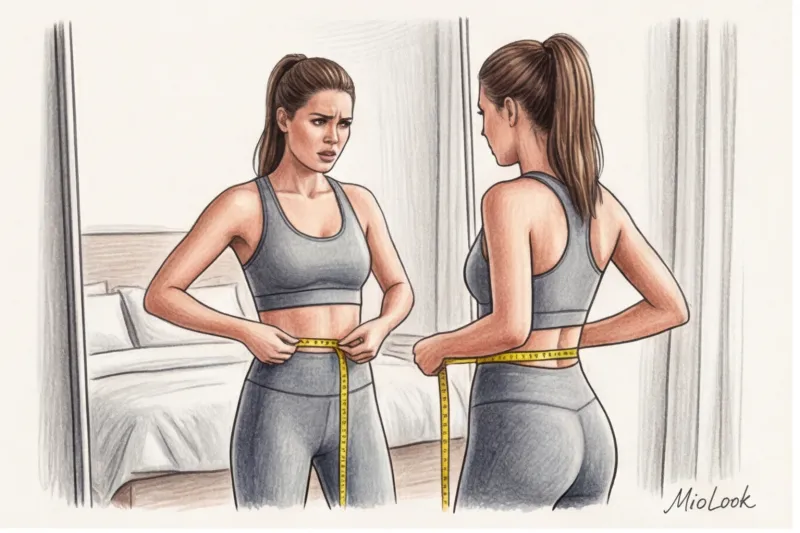
Classic 2D measurements (bust, waist, and hips) are practically useless when choosing a complex cut. Two women with measurements of 90-60-90 may have completely different fits on the same Zara jacket. Why? Because a measuring tape doesn't take into account posture, torso length, or lumbar arch.
Remember the principles of the great Cristóbal Balenciaga. In the 1950s, he revolutionized clothing by rejecting the rigid fit. He created a form around body, working with the unique architecture of each client. Modern computer vision does just that: it moves from flat numbers to a 3D perception of your silhouette.
Access to MioLook for €0.99 — one-time payment
A smart AI stylist will select the perfect look based on your unique geometry.
Get access — €0.99 onceThe Mathematics of Landing: How Computer Vision Analyzes Your Geometry
When you look in the mirror, you're not objective. You focus on what irritates you (like your tummy after a heavy dinner), ignoring the stunning line of your shoulders or the shape of your wrists. AI is emotionless.
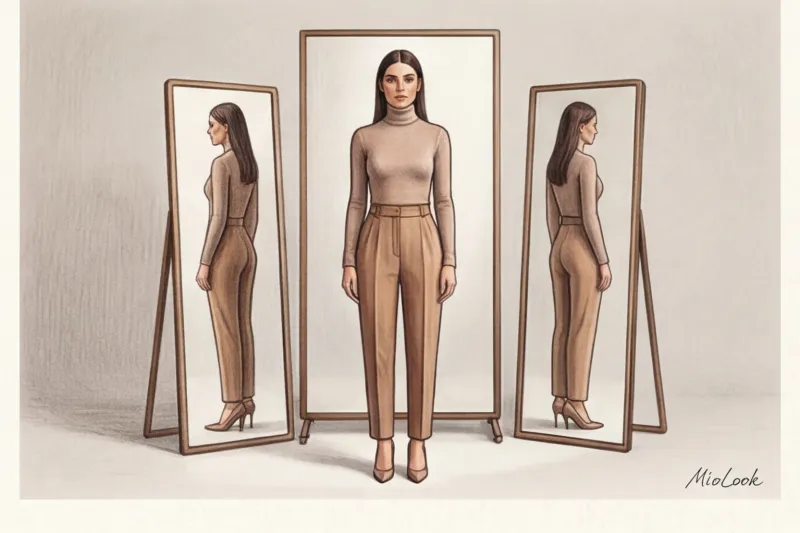
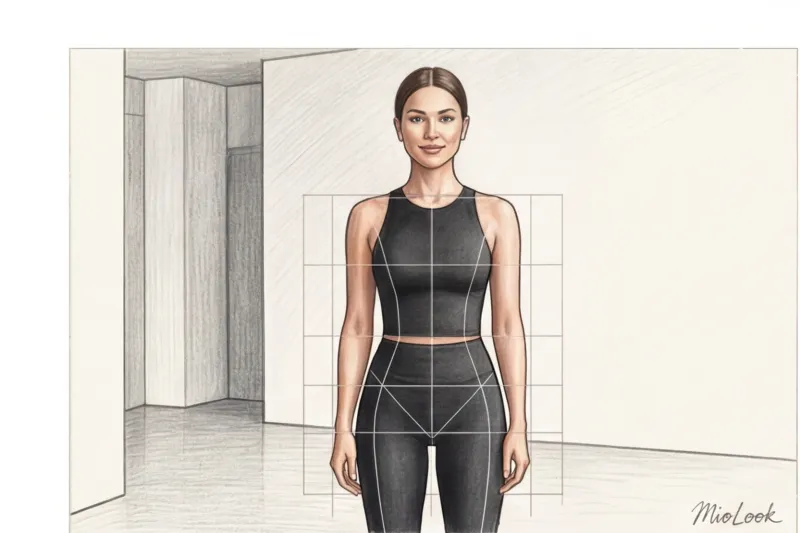
A modern neural network creates dozens of invisible anchor points on your photo: the clavicle line, the femoral trochanter, and the knee level. It evaluates vertical proportions and the balance between the shoulder and pelvic girdle.
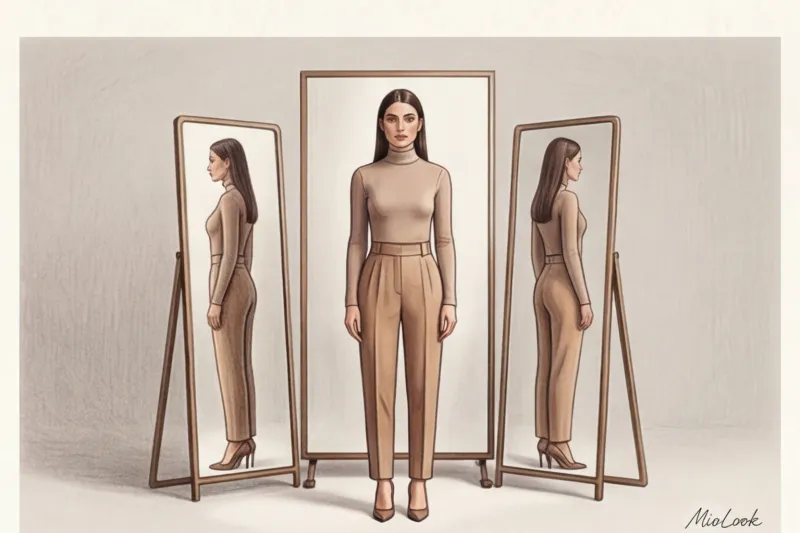
"AI sees negative space—the distance between your lowered arm and your waistline. It's this 'air' that determines whether a double-breasted jacket will make you look classy or turn you into a box."
Algorithms MioLook analyze this data in seconds, producing results that would take a real stylist an hour to achieve with a measuring tape and a plumb line.
Body architecture instead of fruit metaphors
What exactly is the algorithm looking for? Specific millimeters that make all the difference:
- Hip height (High/Low hip): If you have high hips, low-rise jeans will distort your proportions, even if you have perfect abs.
- Shoulder width: Determines whether you need a set-in sleeve or a raglan sleeve.
- Neck length: A difference of just 2 centimeters determines whether the stand-up collar of the basic COS shirt will look regal or create a “head-in-the-shoulders” effect.
From Analysis to Investment: How AI Saves the Budget on a Premium Wardrobe
Have you ever wondered how much money you're spending with tags still hanging in your closet? According to a 2024 Shopify study, up to 70% of online clothing returns are due to poor fit. We buy a pretty picture, only to be disappointed.
One of my clients, top manager Anna, spent years buying classic Max Mara coats in the 101801 silhouette because "they're a status staple." And she always looked bulky in them. When we ran her measurements through AI analysis, the machine mercilessly but accurately determined that Anna's sloping shoulders and short torso required a strong shoulder line and clear structure, not a relaxed cocoon.
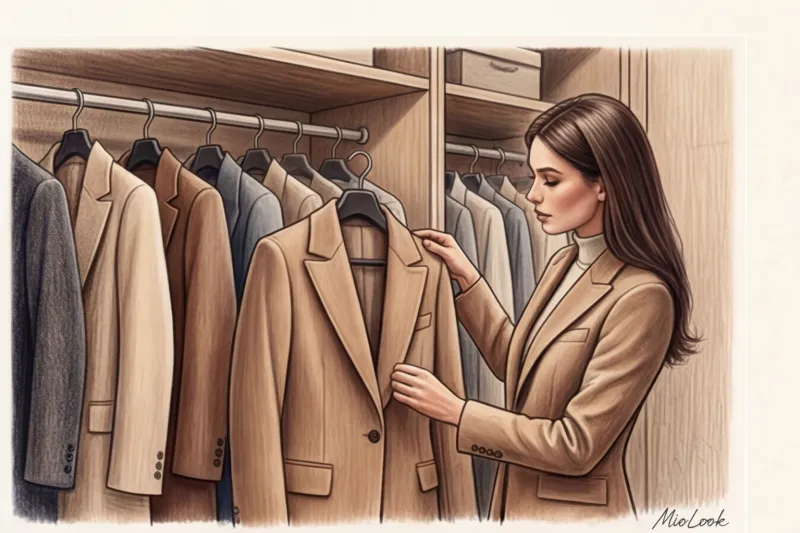
This is where the concept comes into play Cost-per-wear (cost per exit) A basic $500 cashmere sweater that perfectly fits your torso length will be worn 100 times (CPW = $5). A trendy $50 top, bought without taking your body shape into account, will be worn once and discarded (CPW = $50). AI allows you to confidently invest in complex silhouettes—asymmetry, oversize, architectural cuts—because you know in advance how they will interact with your skeleton.
Your perfect look starts here
Join thousands of users who look flawless every day with MioLook.
Get access — €0.99 onceWhat AI Can't Do Yet: A Stylist's Revelations (And Where Your Expertise Begins)
I sincerely admire technology, but my duty is to be honest. There is a line where mathematics ends and pure art of style begins.
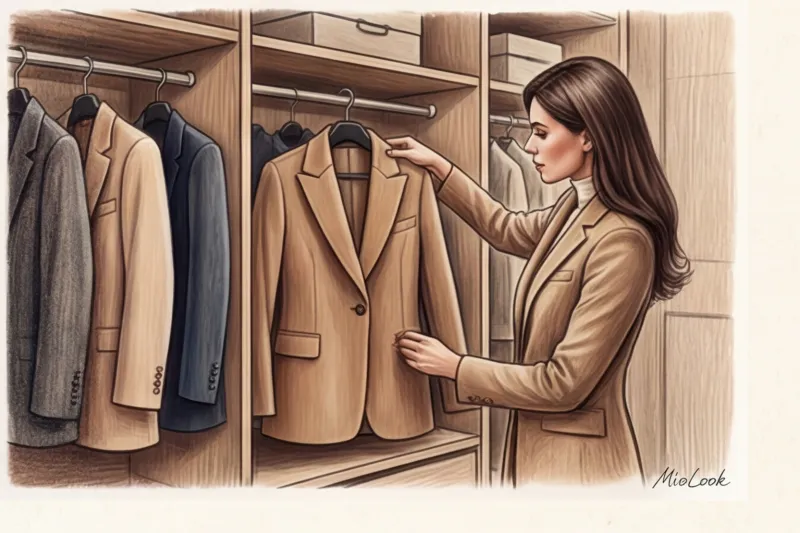
Italian tailors use the term La Mano (hand) is how the fabric feels tactilely. A neural network can perfectly calculate the silhouette of a slip dress, but it won't be able to tell the difference between flowing 19-momme silk and stiff synthetic organza. And yet, they will fit completely differently on the same figure.
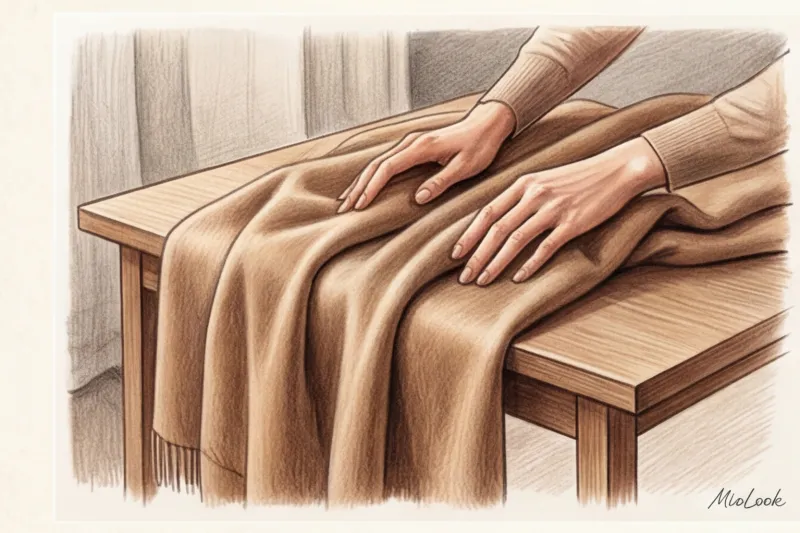
Moreover, this advice doesn't work if we ignore lifestyle. AI doesn't know that you spend three hours a day driving (tight pencil skirts made of stiff wool won't suit you) or work in an office with powerful air conditioning. Personal comfort, tactility, and that very "air" of freedom in clothing are the final decision, which is always yours.
Checklist: How to Take a Photo for an AI Stylist
In my experience, analyzing thousands of downloads to the MioLook app, I've noticed one trend: 8 out of 10 women take photos incorrectly, which causes the algorithm to fail. To ensure the virtual try-on works flawlessly, follow these rules:
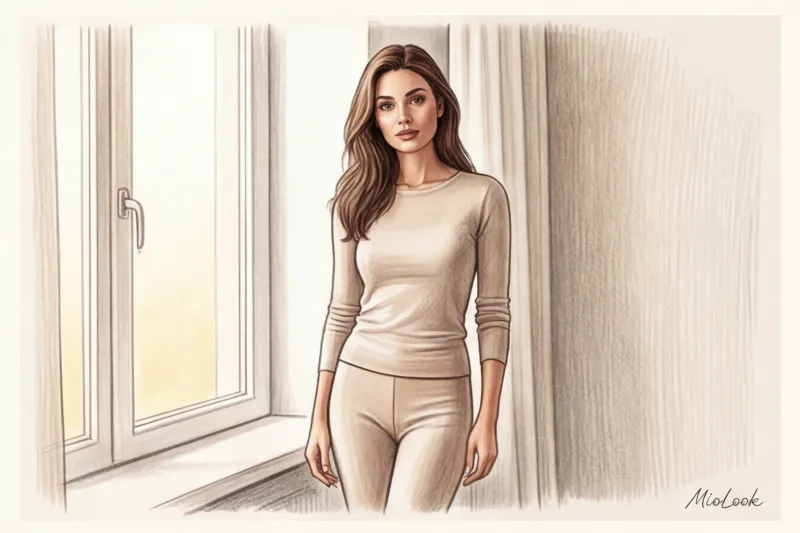
- No black: When you wear black leggings and a turtleneck, you blend into a single blur. The smartphone camera loses contrast, and the neural network can't detect body contours. Wear light-colored, form-fitting clothing (such as a gray or beige tracksuit).
- Light without drama: Stand facing a window in natural daylight. Harsh overhead lighting from a chandelier will create shadows that the algorithm might mistake for volume.
- Honest posture: There's no need to suck in your stomach, stand up straight, or stand on your toes like you're doing a beach photoshoot. Stand as if you were standing in line for coffee. The AI should work with your real, relaxed posture.
- Angle: This is the most common mistake! Ask someone to take your photo or use a tripod. The camera should be positioned exactly at the level of your belly button, without tilting up or down. Otherwise, the proportions of your legs and torso will be distorted by 15-20%.
The perfect symbiosis: your personal taste and machine intelligence
Let's summarize. A neural network isn't a dictator who'll ban you from wearing your favorite boyfriend jeans. AI gives you a perfectly taut canvas (understanding proportions), and you then pick up your brushes and paint your picture, choosing aesthetics, textures, and brands.
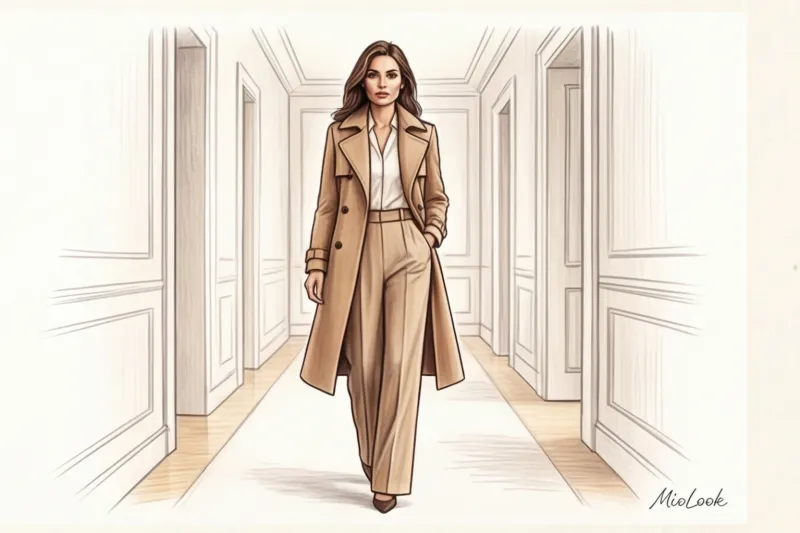
I suggest you try this experiment this weekend. Open the app. MioLook Take a good photo and analyze your proportions. Then open your closet and look at your favorite and least favorite items through this new, mathematical lens. You'll be surprised how quickly everything falls into place.
True luxury today isn't a logo on a bag. It's clothing that's tailored and chosen as if it were specifically designed to fit your bone structure. And now this level of premium service is available to you with just a click.