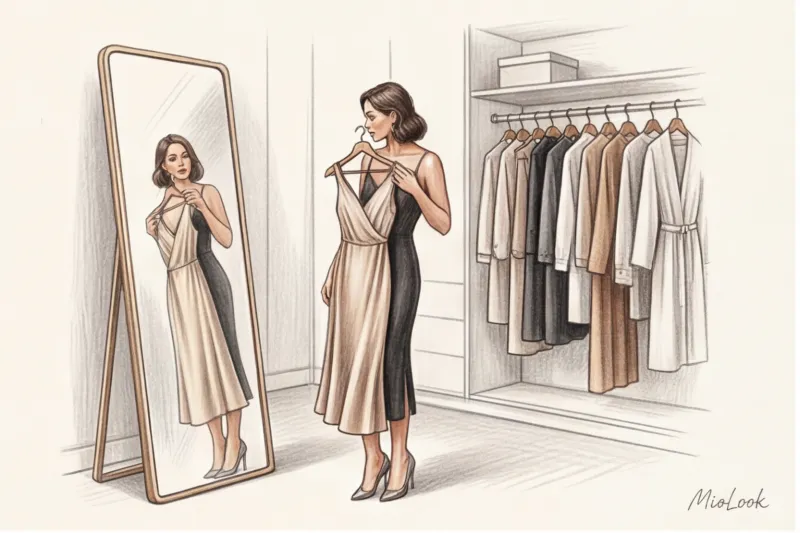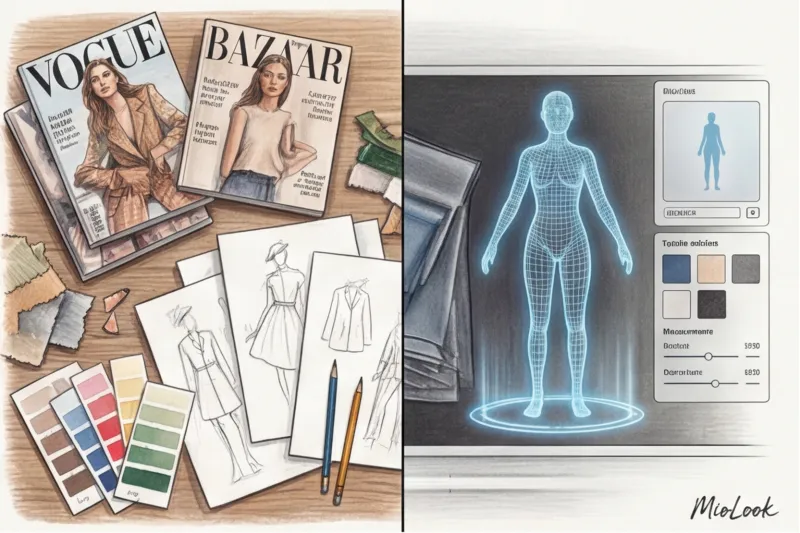
Have you ever wondered why your closet is overflowing with clothes, yet you have nothing left to wear? The statistics are relentless: most women wear only 20% of their wardrobe 80% of the time. The rest is made up of impulse buys, "weight loss" items, and outfits for an ideal, but nonexistent life. We've explored this psychological trap in detail in our the complete guide to finding your clothing style , but today I want to talk about a practical solution. In 14 years of working as a personal stylist, I've seen hundreds of such closets. And you know what changed the game? A high-quality app for choosing clothes from photos, powered by artificial intelligence.
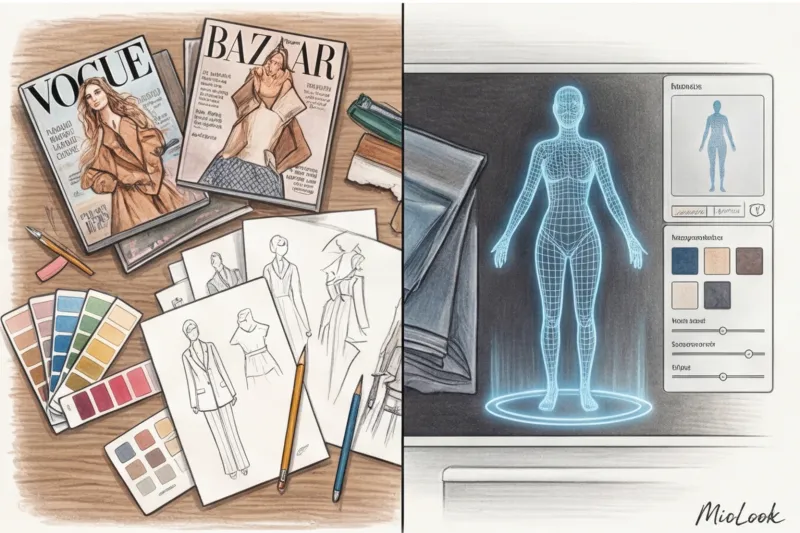
Forget the days when digital style meant awkwardly superimposing your face onto someone else's photo. Today, neural networks have made a quantum leap, combining mathematical precision with an understanding of human behavior.
Why Style Tests Are Obsolete and AI Is the New Reality
For years, the fashion industry has tried to force women into a box. Think of color type theory ("You're a Soft Winter, you can't wear warm gold!") or David Kibbee's body type system from the 1980s. These methods were good for their time, but today they're hopelessly outdated. Trying to fit a modern, dynamic woman into a rigid "Dramatic" or "Romantic" mold is like trying to navigate a modern metropolis with a paper map from 1985.
The main problem with static tests is the gap between the "perfect picture" and your real life. I had a telling example. My client, a top manager at an IT company, was obsessed with the aesthetics of "French chic." She bought luxurious velvet jackets and wrap dresses from Rouje. But the reality is this: she works remotely and spends weekends with her family in the countryside. As a result, the velvet jacket lost out to her favorite but shapeless hoodie. The perfect picture was shattered by her real life.
We only solved the problem when we digitized her wardrobe and shifted the focus to premium athleisure (sports-chic) using visualization in the app. We saw how a cashmere suit complemented her appearance without sacrificing comfort. AI doesn't label you. It analyzes your actual proportions and adapts your clothes to your rhythm.
How a Photo-Based Clothing App Works: The Magic of Neural Networks
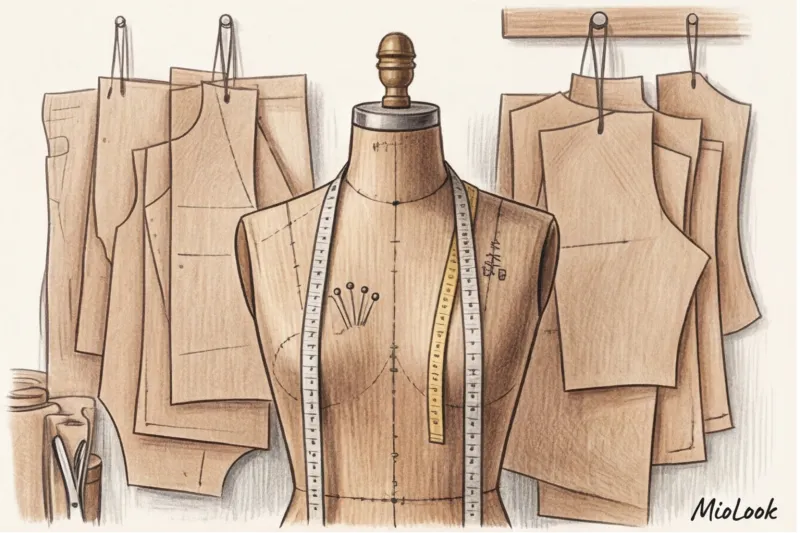
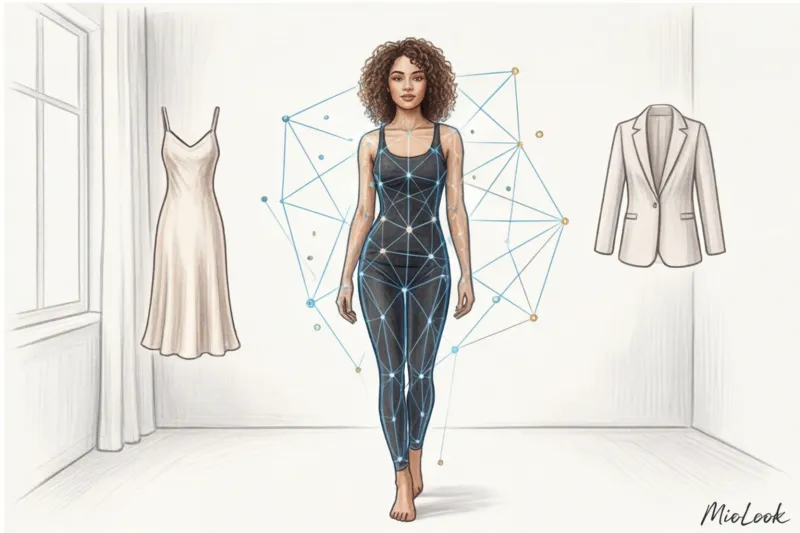
It's commonly believed that neural networks simply "draw" clothes over a photograph. This is a dangerous misconception. Modern algorithms, like those in MioLook, conduct a deep analysis of your body geometry. They construct a 3D model, taking into account hundreds of micro-variables that even an experienced tailor sometimes misses.
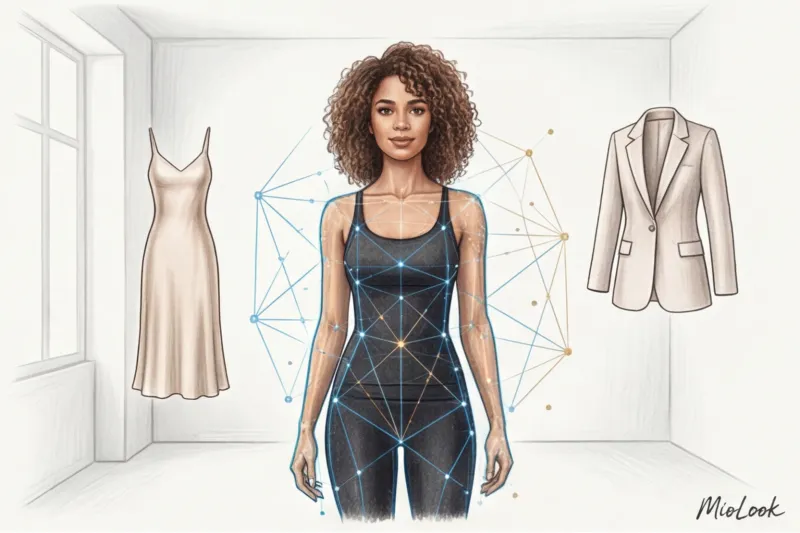
As a stylist, I always look for "tension points"—places where the fabric bunches, pulls, or sags. The neural network does the same mathematically. Moreover, advanced AI understands the difference in textures. It knows that a dense 180 g/m² cotton (like a good basic COS T-shirt) will hold its shape and broaden the shoulders, while a flowing viscose with 5% elastane will gently hug the hips. This is no longer just an image; it's a simulation of the physics of fabric on your unique body.
From wardrobe digitization to smart recommendations
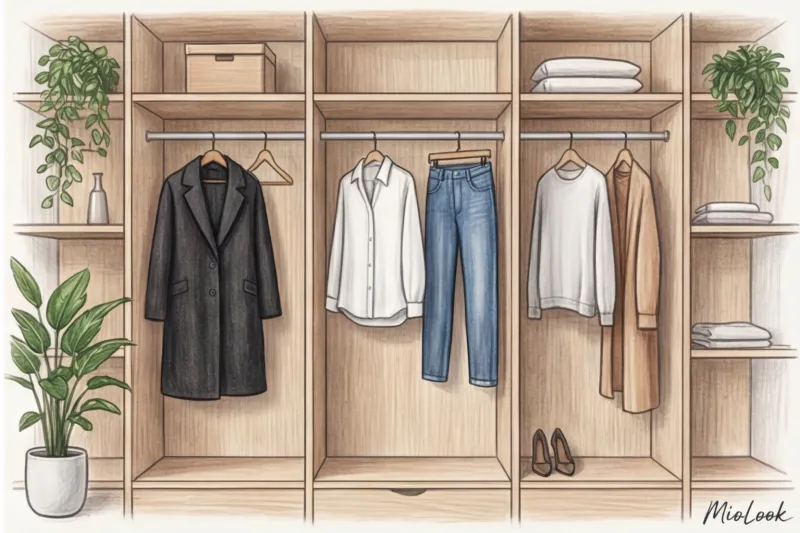
The fun begins when you upload your items to the system. By creating a digital twin of your closet, the algorithm impartially highlights your "blind spots." You might be thinking, "I have absolutely nothing to wear with this skirt." But the neural network reveals that your wardrobe is skewed: you have five pairs of wide-leg Zara jeans and not a single structured top that can pull together your silhouette.
Access to MioLook for €0.99 — one-time payment
A smart AI stylist will select the perfect look for every day.
Get access — €0.99 onceMioLook Virtual Fitting Room: Your Pocket Stylist
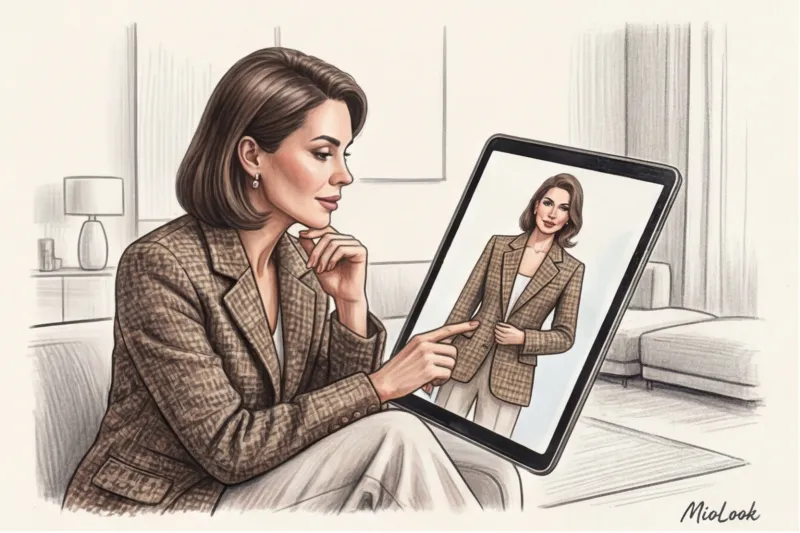
For me MioLook virtual fitting room It's not a fun toy for a few evenings, but a powerful tool for managing your personal style. Professional stylists have long used such platforms to manage clients remotely, but now this technology is available to every woman.
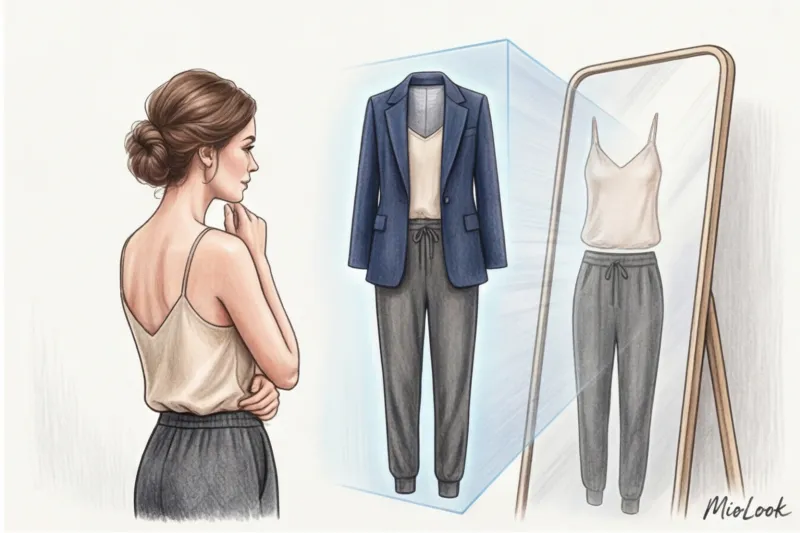
The system is built around integrated lifestyle audits. The algorithm doesn't just suggest beautiful items; it learns to understand your routine. If your schedule is dominated by Zoom calls and dog walks, the app won't push stiletto heels on you. It will suggest the perfect formula for status-conscious relaxation. My favorite combination, which we often create with our clients in the app, is: A structured jacket + a basic silk top + premium cashmere joggers = instant, effortless polish. You look put together on the computer screen, but you feel as cozy as in your pajamas.
My biggest fear: “What if the neural network makes me a clone?”
I often hear the objection from new clients: "If AI analyzes millions of data points, won't it offer me the same thing it offers to thousands of other women? I don't want to look like a mass-market mannequin."
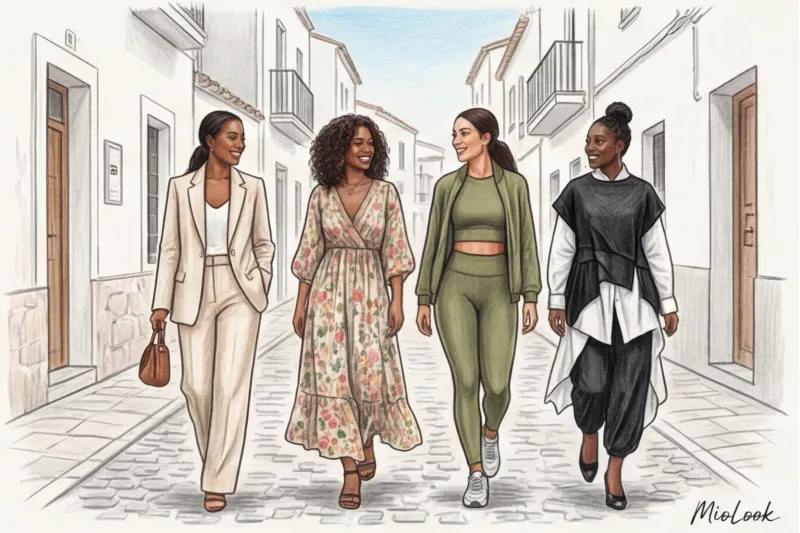
There's a stunning paradox here. In fact, it was glossy magazines and social media algorithms that for decades turned us into clones, imposing a single "trendy" standard of face and figure. We bought things en masse simply because they looked good on influencers.
"AI is giving us back our individuality. It doesn't dictate trends; it takes a trend and adapts it to your personal contrast level, shoulder slope, and neck length."
Of course, technology has its limitations. Let's be honest: AI can't yet replace the tactile pleasure of touching cool silk or thick wool. An app won't tell you if a sweater is itchy. But it will accurately show you if it will distort your proportions.
Checklist: How to Prepare Photos for the Perfect Virtual Fitting
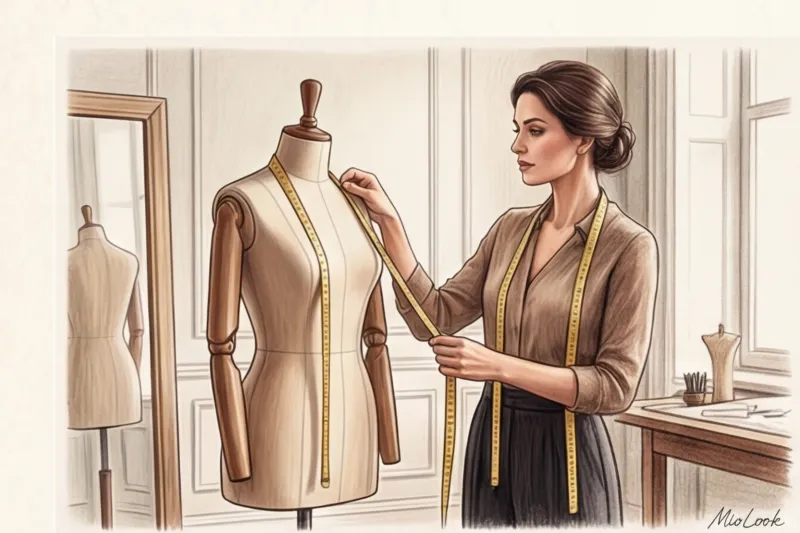
For the neural network to work its magic, it needs high-quality input data. This is a rule all professional tailors use when taking measurements remotely. If you take a photo of yourself in a baggy tracksuit under the dim light of a hallway lamp, you'll be disappointed. Here are three golden rules for a perfect scan:
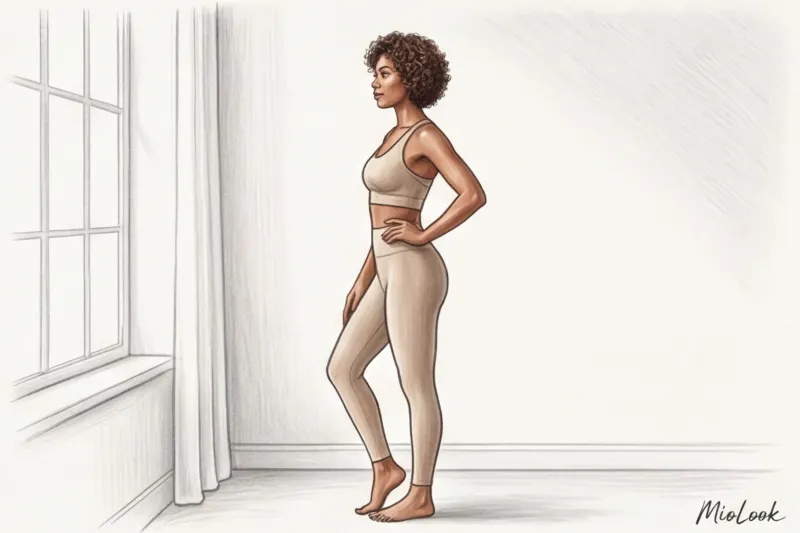
- Proper lighting. Daylight from a window is your best friend. Artificial yellow light distorts your skin tone, and the algorithm may miscalculate your color. Face the window during daylight hours.
- Clothes for scanning. Choose the most form-fitting base layers in a neutral color. Leggings and a top without unnecessary seams, folds, or embellishments are ideal. The more accurately the algorithm "recognizes" your body contours, the more perfectly the virtual clothes will fit.
- Angle and posture. The camera should be positioned exactly at waist level, at a 90-degree angle to the floor. Filming from above will make your legs appear shorter, while filming from below will distort the proportions of your shoulders. Keep your shoulders straight and stand naturally.
Your perfect look starts here
Join thousands of users who look flawless every day with MioLook.
Get access — €0.99 onceThe Future Is Here: How AI Saves You Money and the Planet
We tend to view fashion as something frivolous, but the numbers suggest otherwise. According to a global study by McKinsey & Company (2024), up to 70% of returns in the fashion e-commerce segment are due solely to sizing and fit issues. Returns are a huge pain point for retailers and a huge carbon footprint for logistics.
Trying things on virtually before buying radically reduces the percentage of impulsive decisions. You no longer buy a spectacular dress "just for one occasion," dazzled by a beautiful studio shot of the brand. In the app, you immediately see: this dress doesn't go with any pair of your shoes. As an expert, I always teach my clients to count. Cost Per Wear (cost per outing). If a skirt costs 10,000 € and you wear it twice, each outing costs you 5,000. If you pair it with 10 different tops in an app and wear it every week, the cost per outing approaches zero. For more information on how to create work capsule wardrobes, read our article about virtual fitting of business clothes.
Getting Started: A Step-by-Step Guide to Finding Your Style with MioLook
Theory without practice is dead. To stop staring at a full closet with longing and start enjoying your reflection, take three simple steps:
- Step 1: Honest audit. Write down where you actually spend 80% of your time. An office with a strict dress code? Freelancing from a cafe? Playgrounds? Your wardrobe should reflect your life, not your fantasy of it.
- Step 2: Digitizing the database. Upload to MioLook app Your most favorite, tried-and-true pieces. Those perfect-fitting jeans and that jacket. This will become the foundation of your digital wardrobe.
- Step 3: Experiment without risk. Start virtually trying on styles and colors you'd never dare to try in stores before. Try on bold combinations without spending a dime.
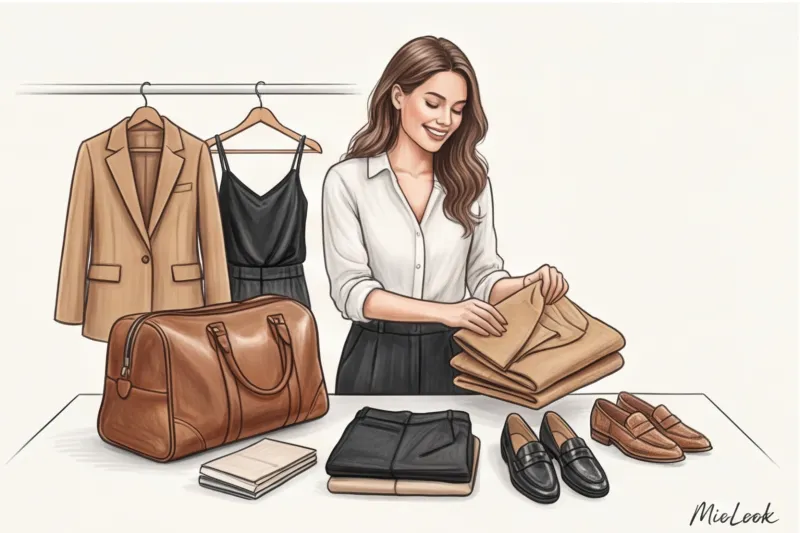
Style isn't a set of rigid rules or an attempt to squeeze yourself into someone else's mold. It's a Mediterranean ease, the freedom to be yourself and express your individuality to the world. Technology merely helps remove visual noise, leaving behind what's most important—you. Life is too short to wear uncomfortable clothes and doubt your attractiveness.