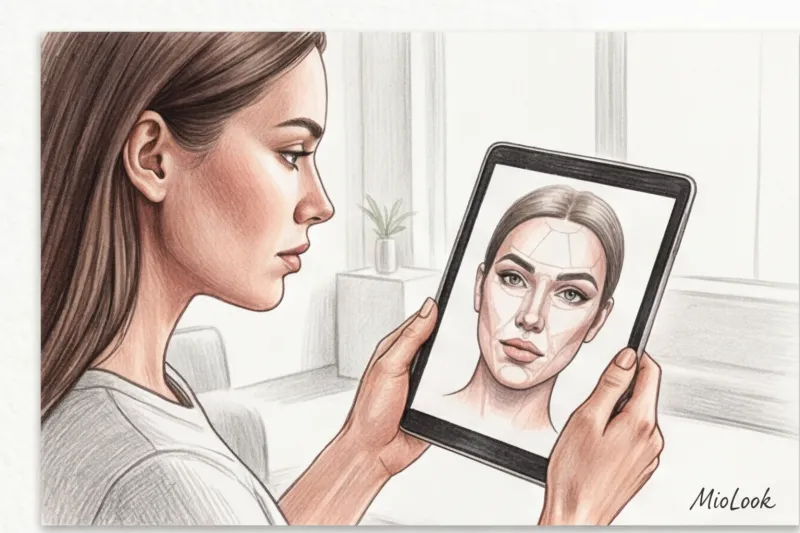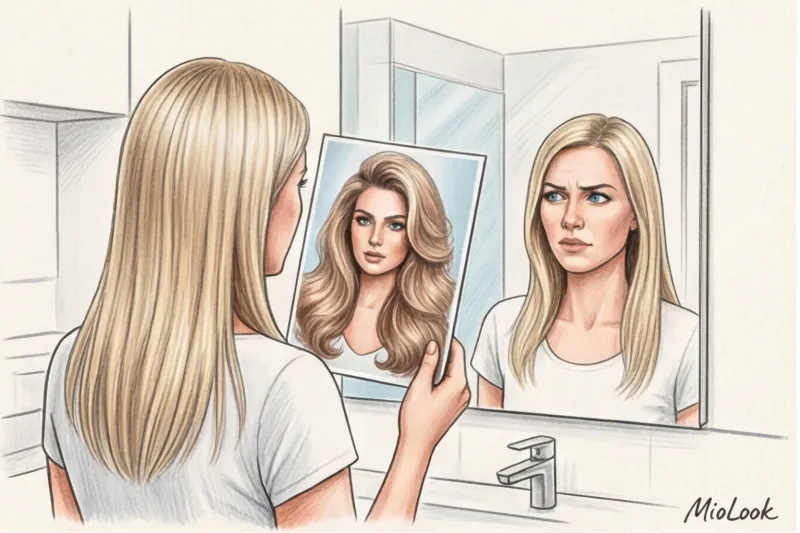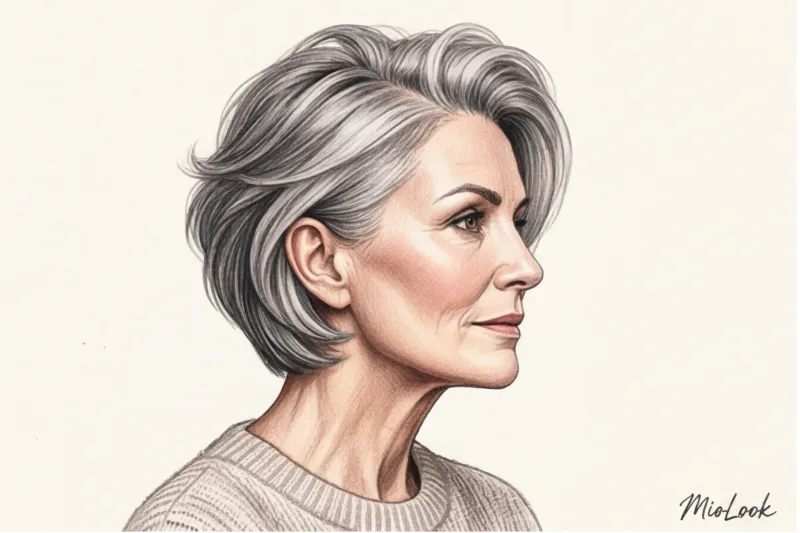
Recently, 48-year-old Anna sat down in my chair. She clutched a smartphone, the screen displaying her own face, filtered by a popular app. In the photo, Anna looked at me from beneath thick, perfectly straight French bangs, her hair falling like a heavy, silky cascade. "I want it like this," she said. "The neural network told me it's my ideal look."
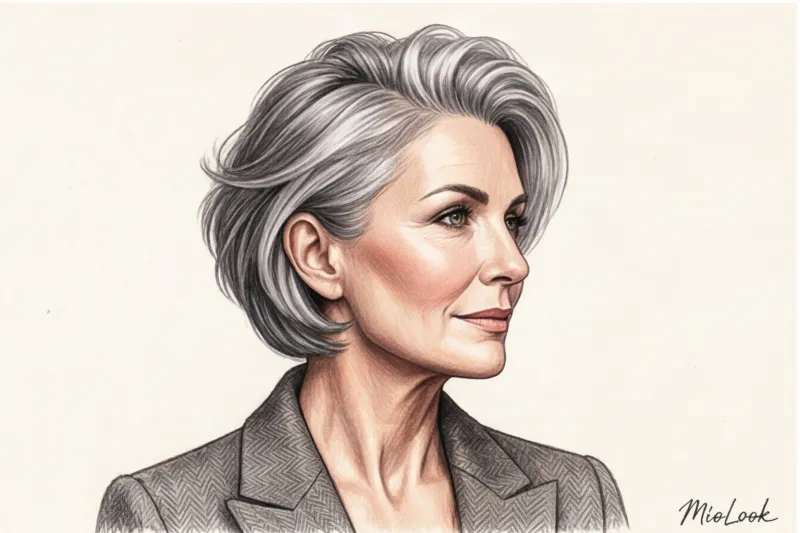
I had to disappoint her. The AI carefully erased the nasolabial folds and age shadows from Anna's face, and doubled the volume of her hair. If I had cut her bangs like that in real life, the harsh, straight cut would have cast a shadow under her eyes, exacerbating the signs of fatigue. We opted for a soft, curtain-like fringe, and the result exceeded expectations. We discussed neural network algorithms in more detail in our complete guide to Trying on hairstyles online: why AI is lying to you.
Today many are trying Find a haircut that makes you look younger online , relying on artificial intelligence. But for this tool to work for you, rather than against you, you need to learn to read its results critically. As a stylist with over 10 years of experience, I'll show you where neural networks falter and how to adapt the virtual ideal to the real physics of aging hair.
The Anatomy of an Anti-Aging Haircut: What Really Makes Us Look Younger?
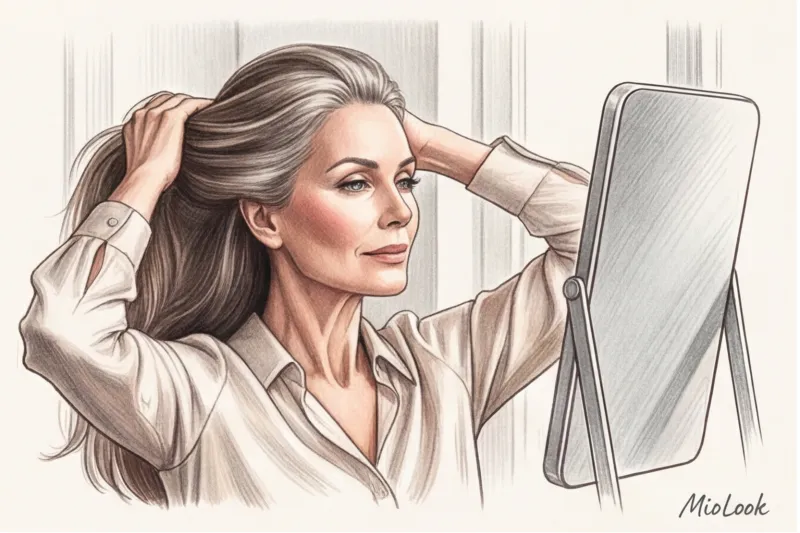
The main enemy of a youthful face is gravitational ptosis (sagging soft tissue). With age, the lines of the cheekbones, corners of the mouth, and chin begin to sag downward. Framing such a face with long, straight, flowing hair visually accentuates this downward movement.
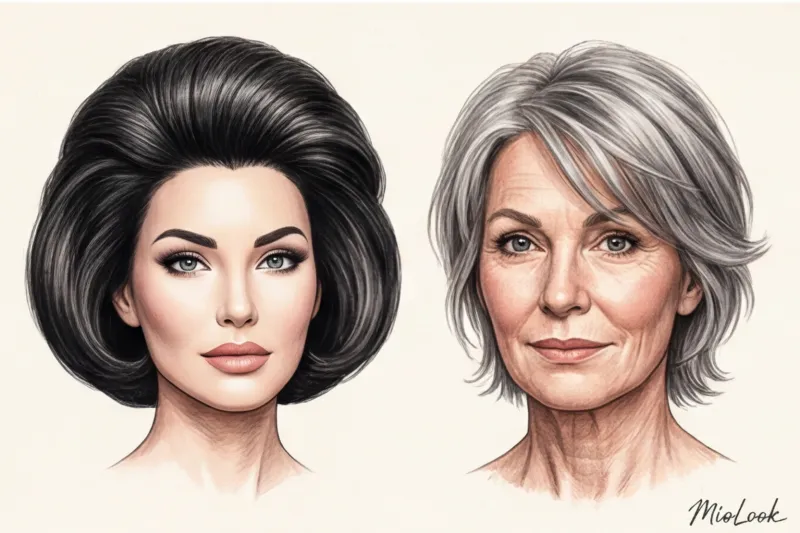
Let's recall the architectural principles of the brilliant Vidal Sassoon's haircuts. In the 1960s, he demonstrated that a haircut can alter facial geometry as effectively as a surgeon's scalpel. A well-chosen cut, directing lines upward and back from the face, creates a powerful visual lift for the cheekbones.
Another common mistake I see is trying to hide an aging neck under a thick curtain of hair. The paradox is that a closed neck makes the lower jaw appear heavier and makes the figure appear squat. An elegant open neck, on the other hand, elongates the silhouette and adds a touch of lightness.
"Symmetry and perfectly styled, hair-by-hair, hair-by-hair, which neural networks so love to generate, make you look older. They turn you into a static museum piece. A true anti-aging effect comes from subtle asymmetry, casualness, and movement." This is the principle I repeat to every client.
How to choose a haircut that makes you look younger online and avoid falling victim to AI filters
Consumer beauty apps are programmed to beautify you. They don't just suggest a hairstyle; they subtly slim your jawline, enlarge your eyes, and smooth your skin. This makes even the most disastrous haircut look like a masterpiece on screen.
According to the latest trichological studies, after the age of 45, women's hair density can decrease by 20-30%. Moreover, most AI applications by default add Around 30% of the volume and density are used during image generation. This creates unrealistic expectations. The neural network ignores the actual porosity, curls, and thinning of the strands.
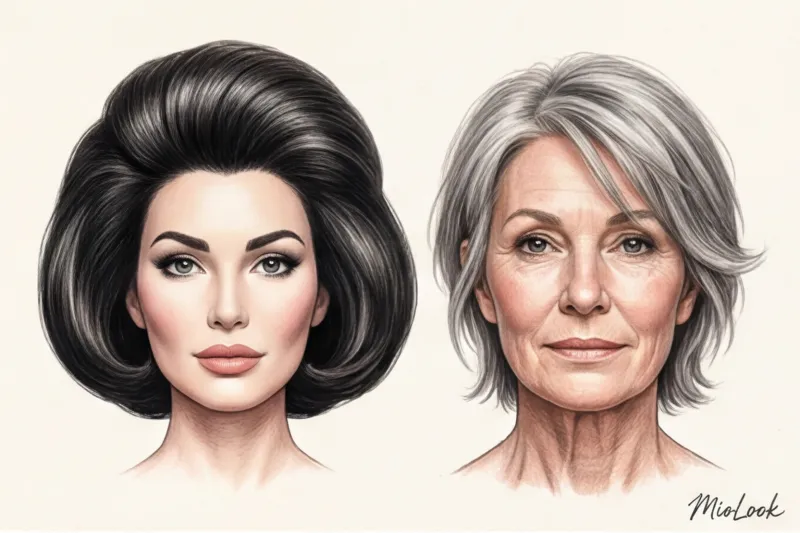
How to properly analyze an AI photo? Use the "finger rule." Cover the face in the photo with your finger or a piece of paper. Look only at the shape, density, and volume of the hair. Ask yourself: "Can my hair hold this shape on a rainy November Tuesday without three hours of styling?"
Rules for an honest selfie for a virtual try-on
So that algorithms (for example, in the application MioLook ) produced the most plausible result, you need to feed them the correct source:
- Lighting: No warm room light. Just harsh daylight facing the window. The AI should "see" the real shadows and contours of your face.
- Angle: Stand straight ahead, camera at eye level. A shot from above will make your chin appear narrower, while a shot from below will make it appear heavier.
- Hair preparation: Comb your hair back sleekly or pull it into a tight ponytail. If you leave your hair loose, the neural network will "build" a new hairstyle on top of your existing volume, turning you into a lion.
Access to MioLook for €0.99 — one-time payment
A smart AI stylist will select the perfect look based on your actual measurements and help you find the perfect haircut.
Get access — €0.99 onceTop 5 Haircuts with a Lifting Effect (and How They Look in AI vs. in Real Life)
Let's take a look at the shapes that are anatomically rejuvenating and see what to expect from them in reality. By the way, maintaining these architectural shapes in European salons will cost you an average of €60 to €150 per visit (and they need to be updated every 1.5–2 months).
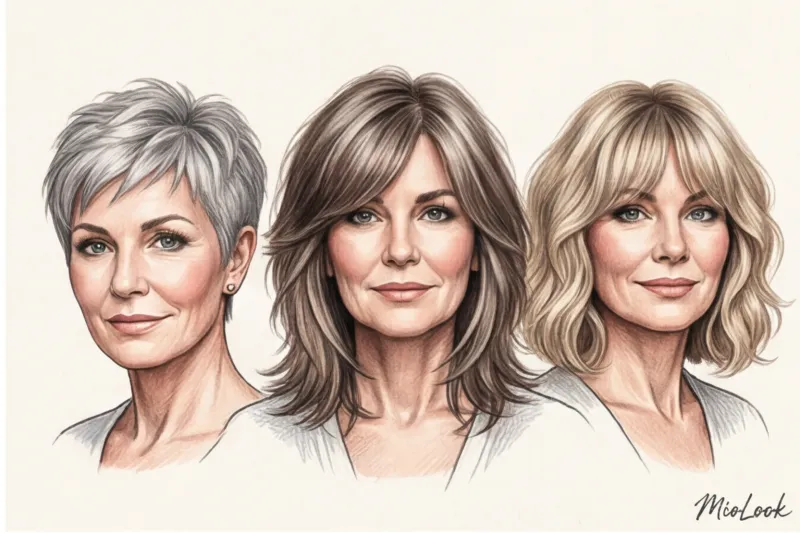
- Textured jawline bob. In the app, it looks like a perfect, glossy sphere. In real life, its main strength is the jagged, textured tips that frame the face and highlight cheekbones.
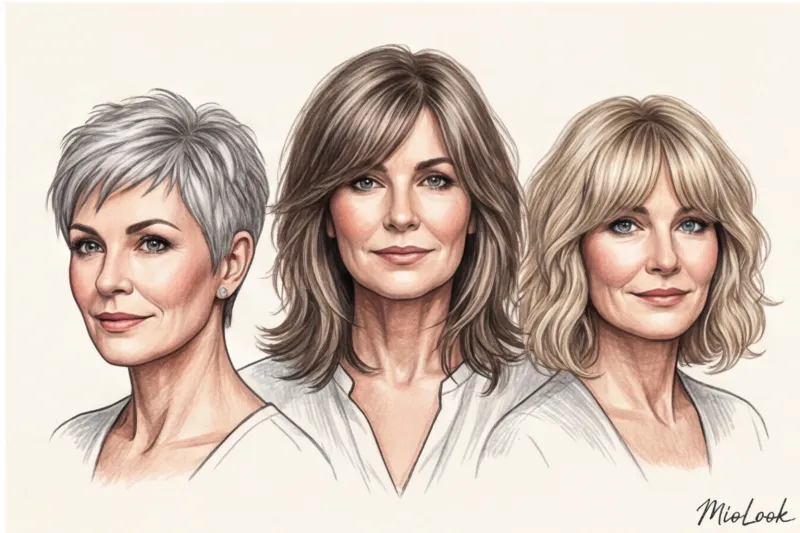
- Pixie with long bangs. AI often makes the pixie cut look too voluminous on top. In reality, this cut is beautiful because it opens up the neck and draws attention to the eyes. The long, asymmetrical bangs break up the strict geometry of the face.
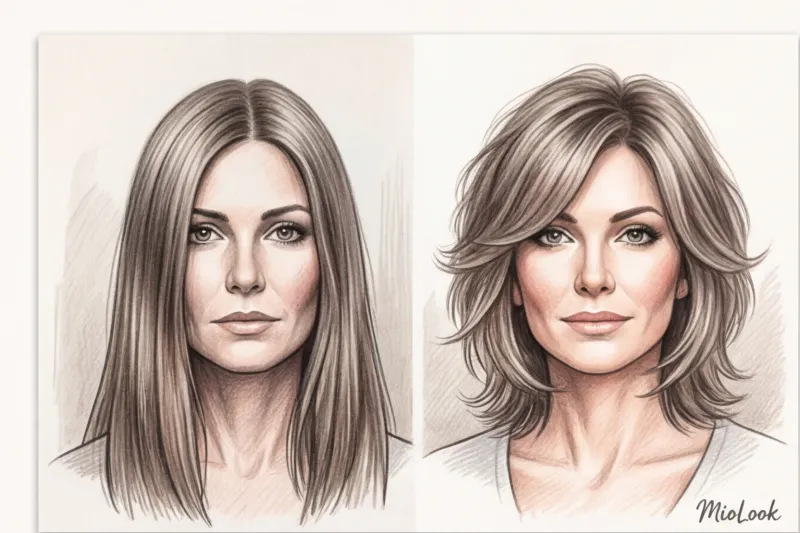
- Shag of medium length. My personal favorite for fine, mature hair. Layers add incredible movement. When hair moves, people's eyes wander, not focusing on fine lines.
- Butterfly cut. This is a modern take on the cascade. Soft "feathers" framing the face act as curtains, concealing a sagging oval shape. But remember: unlike in AI images, in real life, these feathers require styling with a round brush.
- Asymmetrical forehead (Long bob). An elongated bob with slight asymmetry (one side is 2-3 cm longer) works wonders. By breaking the symmetry, we trick the brain into perceiving the face as more youthful and energetic.
Dangerous Illusions: Haircuts That Age You But Look Perfect on Apps
There are forms that absolutely cannot be transferred from the screen into life without regard to age-related changes.
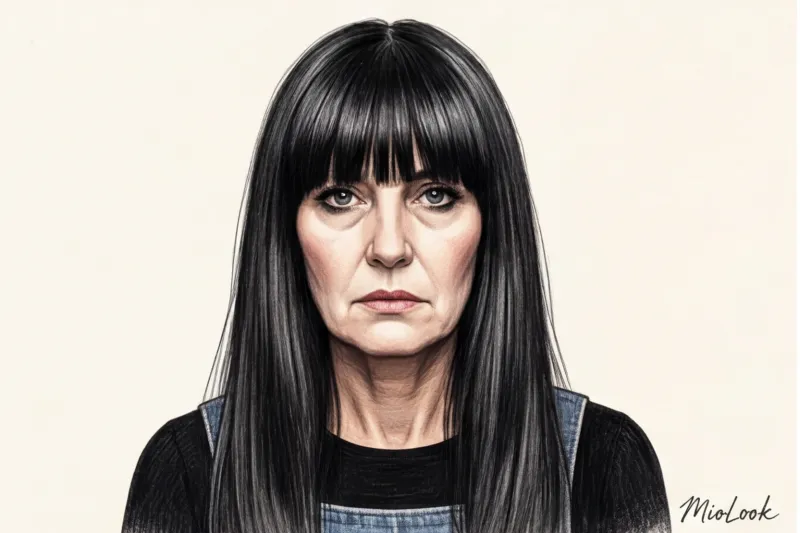
I already mentioned thick straight bangs On a phone screen, it looks stylish and conceptual. In reality, it creates a horizontal cut that acts as a visor. Shadows collect under this visor. Bags under the eyes, nasolabial folds, and drooping corners of the mouth appear deeper and more contrasting.
The second trap is - sleek long hair with a center parting A neural network can easily shape your face. But in real life, two straight vertical lines on the sides of your face will mercilessly pull all your features down. If you're not ready to part with the length, add layers around your face or change your parting to a deep side part.
The third dangerous option is small perm for short hair Algorithms render each curl structured and shiny. In real-world humidity, without daily use of gel and diffuser, this hairstyle often turns into a dull, dandelion-like look, adding a decade to the wearer's age.
Ready to get started?
Try the MioLook free plan—no strings attached. Upload a candid selfie and try out looks you could achieve in a real salon.
Get access — €0.99 onceColor Matters: Why AI Coloring Often Lies
As a colorist, I always emphasize the physics of light to my clients. Hair acts as a reflector. Actual color casts highlights on your skin.
One of the most common requests after virtual try-ons is ash or silver blonde. In AI photos, it looks luxurious and aristocratic. But cool gray shades in real life drain all the green and gray tones from aging skin, dulling the complexion and highlighting even the slightest pigmentation.
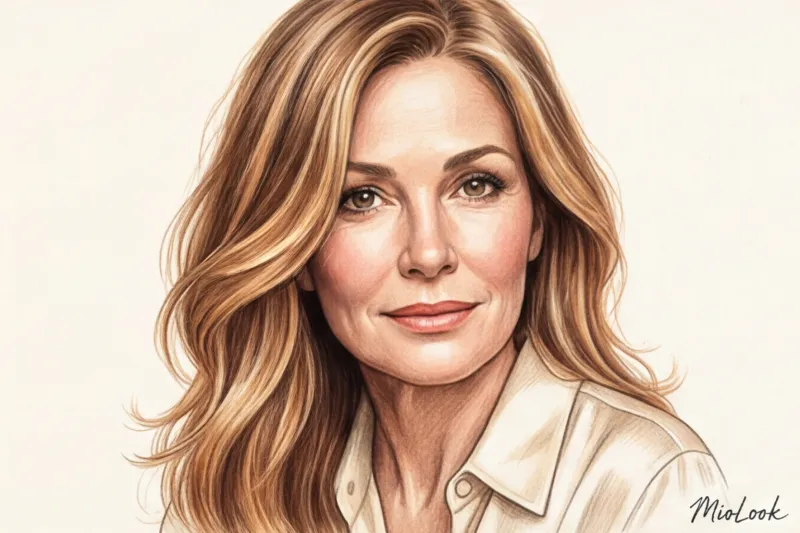
The golden rule of anti-aging coloring, confirmed by research from the Pantone Color Institute on the impact of shades on perception: warmth always makes you look younger. Opt for multidimensional techniques (balayage, shatush) with warm honey, caramel, or peach highlights near the face. A dense monochromatic color, like a dense, symmetrical fringe, makes the look flat and heavy.
Checklist: How to Transfer AI Results to a Real-Life Stylist's Chair
So, you've found a haircut on the app that makes your heart beat faster. How do you discuss it with your stylist to avoid tears?
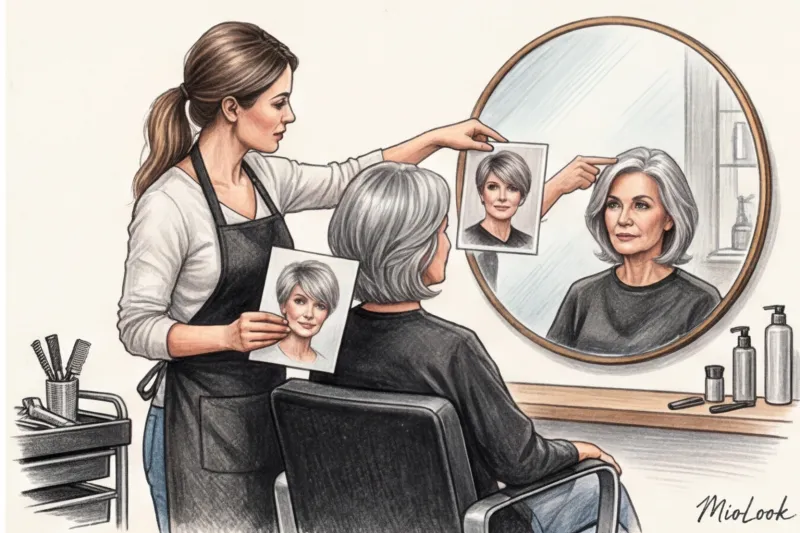
- Change the wording. Never ask for "exactly like the photo." The correct request is, "I like this geometry and the mood. How can we adapt this shape to my hair texture and face shape?"
- Identify risk areas. Ask a stylist to analyze your hair growth. If you have a strong cowlick on top, and the AI has created a perfectly smooth curtain fringe there, you'll have to fight nature every morning.
- Request an honest installation estimate. An AI-powered hairstyle is always perfectly styled. Ask your stylist: "How many minutes in the morning, and what brushes and styling products (in the 20-40€ range) will I need to achieve this look?" If the answer is "forty minutes for brushing," and you only have ten, this haircut isn't for you.
Artificial intelligence is a great tool for finding inspiration and breaking out of your comfort zone. With platforms like MioLook You can safely experiment with length and shape. But the finishing touch should always take into account the actual physics of your hair. Don't chase the perfect picture on the screen—look for a shape that will give you movement, highlight your cheekbones, and allow you to feel confident every day, even when the wind tousles your style.