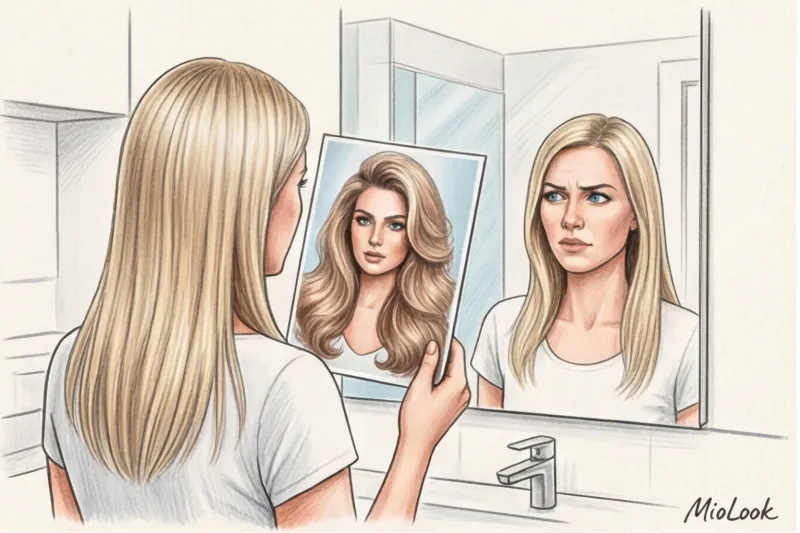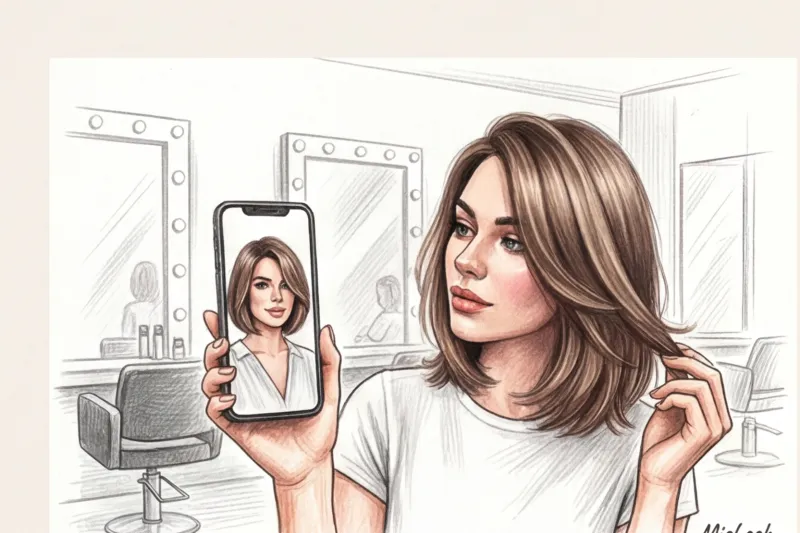
Just last Tuesday, my client showed me a photo on her phone. It was her, but with a bold, perfectly tousled mullet. "I want that! It'll save me so much time in the mornings," she declared. As a stylist with twelve years of experience, I had to disappoint her: the neural network simply erased her stubborn cowlick and ignored the low hairline on her neck. Request neural network try on a haircut breaks all records, but what looks like magic on screen often turns into a disaster in the barber's chair.
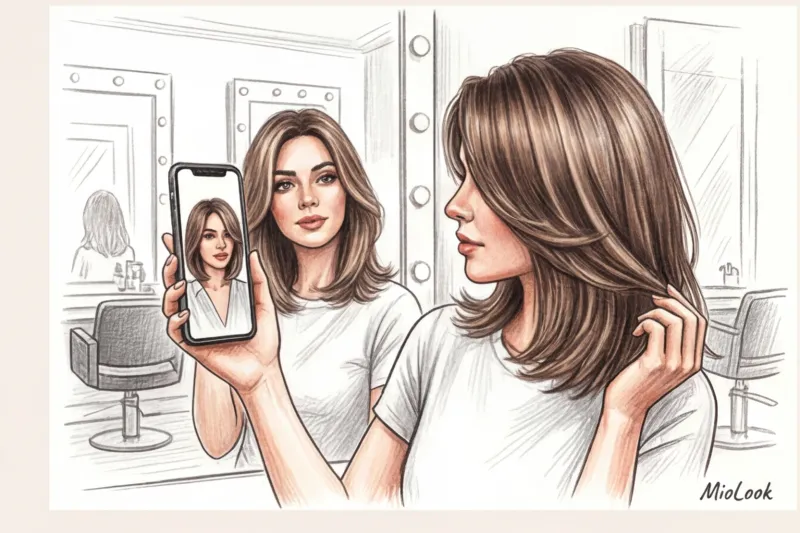
We talked about the phenomenon of digital distortion of appearance in more detail in our A complete guide to trying on hairstyles online There, we discussed why algorithms always "embellish" your look a little. Today, we'll go further. Instead of simply admiring trends, we'll examine how AI breaks the physics of specific layered haircuts (shaggy, mullet, layered), and give you a "translator" from the language of neural networks to the language of real-life styling in front of the mirror at 7 a.m.
Neural network haircut try-on: Why are the year's trends so difficult to assess on screen?
Algorithms are quite good at interpreting classic geometric haircuts like the bob. This is an architectural style, a legacy of the legendary Vidal Sassoon: a straight cut, the natural fall of strands under the weight of gravity. But when layered textures come back into fashion, artificial intelligence fails. Shaggy, mullet, and layered hairstyles are haircuts where the physics of a particular hair determines absolutely everything.
A salon stylist uses techniques like point cutting to remove weight within the strand and shape the hair into a specific shape. The neural network doesn't work with weight or density. It works with pixels. The algorithm simply overlays a 2D stencil of the ideal style on your photo, smoothing your skin texture and narrowing your cheekbones. As a result, you arrive at the salon with a "mood board," mistaking it for a technical brief.
The Shag Haircut: A Rebellious Look Made Too "Smooth" by a Neural Network
The modern shaggy is a 1970s rock 'n' roll aesthetic mixed with Parisian chic. Lots of layers, choppy ends, and long curtain bangs. I often analyze European street style, and a true shaggy hairstyle on the streets of Paris or Berlin looks vibrant: it's fluffy and reacts to the wind and humidity. But try it. neural network try on a haircut shaggy and you will see something different.
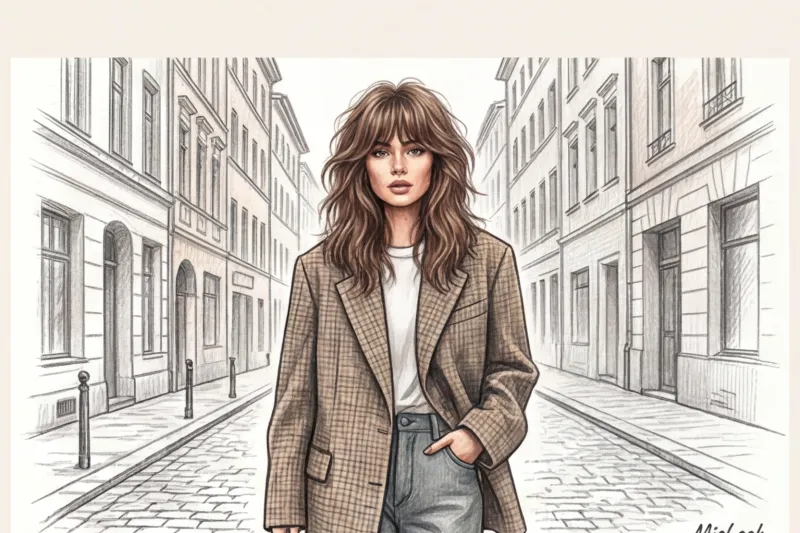
AI absolutely cannot stand "imperfection." It takes the rebellious shag and lays it down hair by hair, creating the effect of a smooth, glossy helmet. This defeats the very essence of the haircut. Moreover, the algorithm often generates shaggy hair on straight, glassy hair. In reality, if you have heavy, arrow-straight hair, the shag will hang like sad icicles until you curl it with a curling iron.
How to read the results of an AI shaggy try-on and who it suits
To understand whether an image will work in real life, apply the "translation" rule:
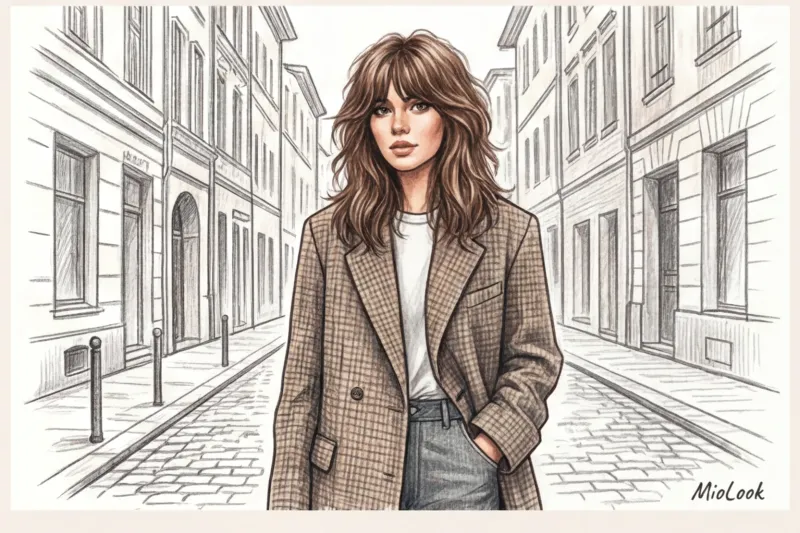
- Volume on the crown: If the AI has drawn a full crown for you, touch your hair. Is it thick enough? If your hair is thin and sparse, short layers will simply expose your scalp.
- Texture: Shaggy is ideal for porous, slightly curly hair. If your hair is perfectly straight, be prepared to spend a bit more: you'll need a good dry texturizer or salt spray (in the mass-market or professional segments, these will cost between €15 and €40 per bottle).
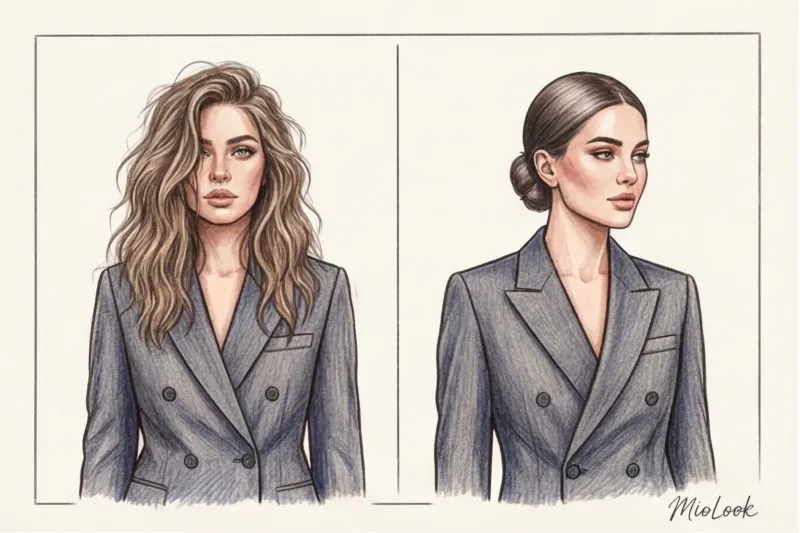
- Dress code: Shaggy fits perfectly into the smart casual style, but can compete with strict business suits.
It's important to debunk a major myth here: it's commonly believed that "messy" haircuts save time. In reality, achieving the "I just woke up and went" look requires the most sophisticated styling skills. Perfectly messy hair comes at a price.
Access to MioLook for €0.99 — one-time payment
A smart AI stylist will find the perfect look for your new haircut.
Get access — €0.99 onceMullet: A Bold Trend and the Main Pitfall of Virtual Try-Ons
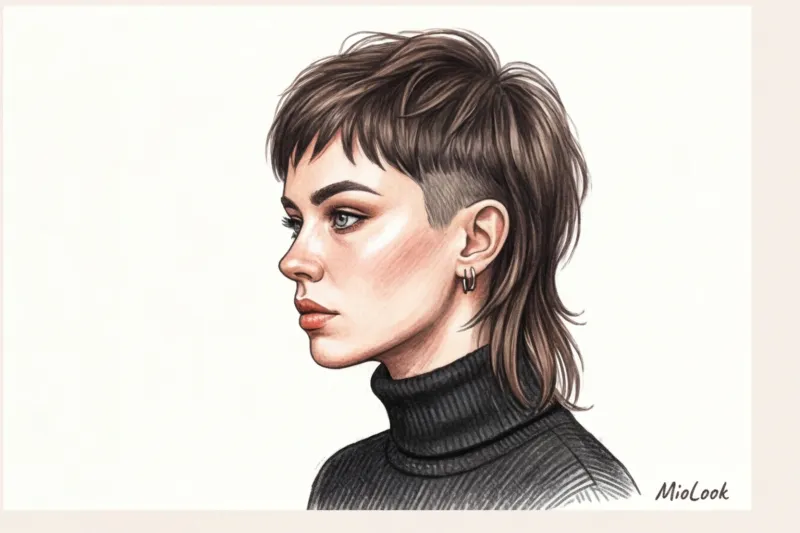
The mullet (short sides, a voluminous crown, and an elongated back) has made a triumphant return from the David Bowie era to the arsenal of modern influencers. It's a powerful personal style statement that requires boldness. But it's on the mullet that neural networks make their most blatant anatomical errors.
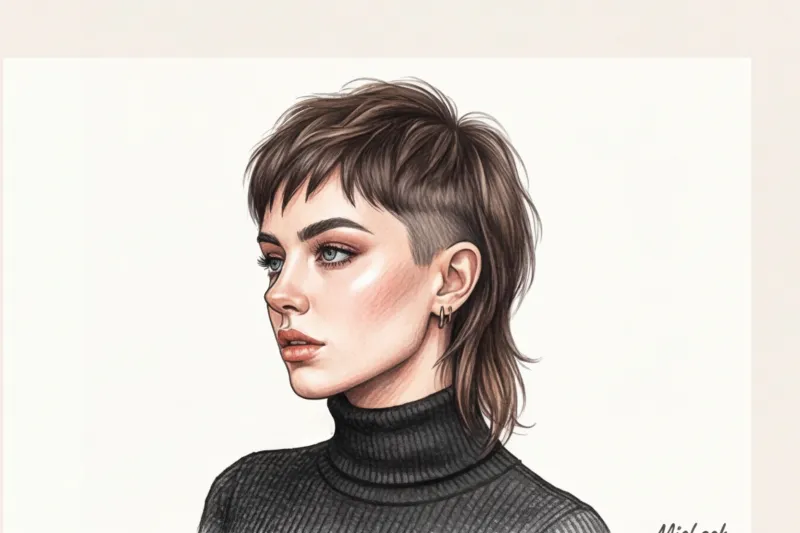
I remember one incident: a woman brought in a design for a gorgeous soft mullet. But the client's hairline on her neck was very low, and her hair grew straight up, forming a tight cowlick. The neural network simply "erased" these features, creating strands that flowed gracefully down her neck. If the stylist had blindly followed the image, the back strands would have stuck out perpendicular to her neck, like a duck's tail.
Checklist: Should You Get a Mullet?
Before booking a salon appointment, check yourself on three points. These are the areas where AI can lie to you:
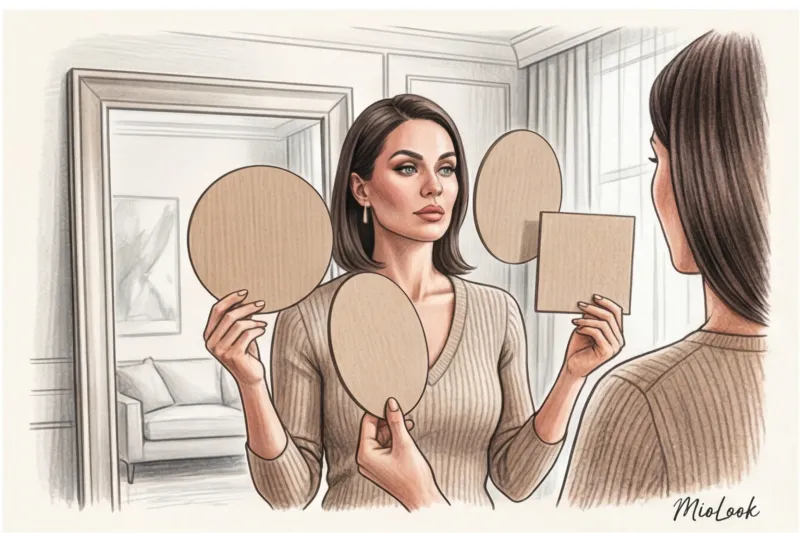
- Shape of the lower third of the face: Algorithms artificially narrow the jawline in photos. In real life, the lack of volume at the temples (which is trimmed off in a mullet) instantly emphasizes a strong chin or round cheeks.
- Support cost: A mullet loses its shape within 3-4 weeks. Be prepared to visit a hairdresser every month. In Europe, a quality corrective haircut will cost an average of €40-€80.
- Perception in the office: The mullet works great for image in creative professions, but can raise questions in conservative corporate environments.
Cascade (Butterfly Cut): The Illusion of Thickness Sold by Artificial Intelligence
The butterfly cut, with its luxurious, flowing layers around the face, is an absolute hit on social media. But this is where the algorithms' most cynical deception lies. The neural network takes your fine, thin hair and generously adds the volume of supermodels from '90s shampoo commercials.
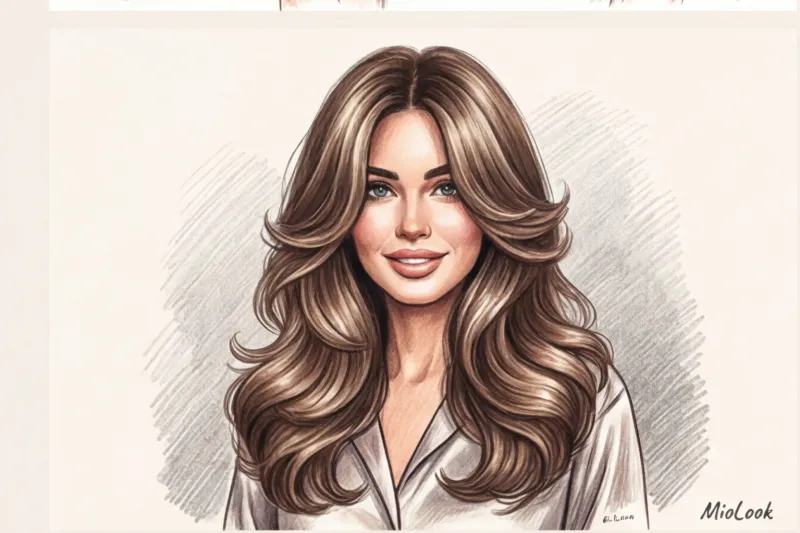
Over the years, I've gathered some disturbing statistics: approximately 80% of the volume in AI-generated cascades is hair that doesn't actually exist. A layered cut on fine Slavic hair without sufficient density will result in the lower part becoming transparent and pitiful. You'll end up with a so-called "mousetail" effect, not a Cindy Crawford mane.
Why does a neural network cascade require 40 minutes of styling daily?
AI sells the illusion that layered hair "lies on its own." As a recent study by WGSN Beauty (2024) shows, sales of heated brushes and curlers increased by 140% precisely on the wave of the layered haircut trend. Women are facing reality.
To recreate an image from a smartphone screen, you'll need the following tools:
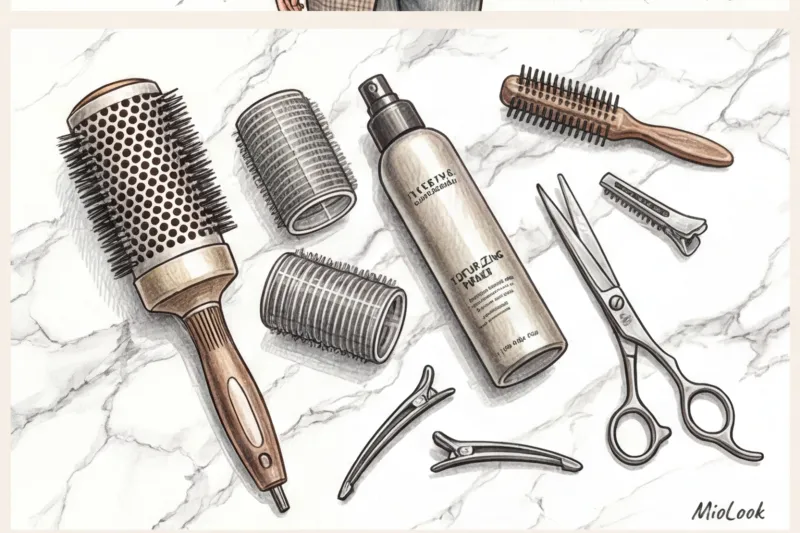
- Thermal protection with a thickening effect (from €20).
- A good hair dryer (Dyson or its quality equivalents, which means an investment of €150 to €500).
- Large diameter Velcro curlers (60-70 mm) for fixing volume on the bangs.
- Texturizing varnish with flexible hold.
Expert advice: If you have little hair but want a dynamic look, ask your stylist to create “ghost layers” inside the haircut, while maintaining a tight outer contour.
Your perfect look starts here
Join thousands of users who look flawless every day with MioLook. See how a new haircut will fit into your wardrobe.
Get access — €0.99 onceA practical guide: how to use a neural network to try out a haircut like a pro
Despite all the distortions, AI is a magnificent tool if you know how to "prepare" it. Here's a step-by-step algorithm for protecting yourself from digital illusions that I give my clients when they're searching for a new style.
Step 1: Correct source photo. Don't upload selfies from the car while wearing sunglasses. Take the photo in even daylight from the window, without smiling (smiling changes the volume of your cheeks and lifts your cheekbones), and with your hair slicked back. The lighting should be even to prevent the AI from creating false shadows.
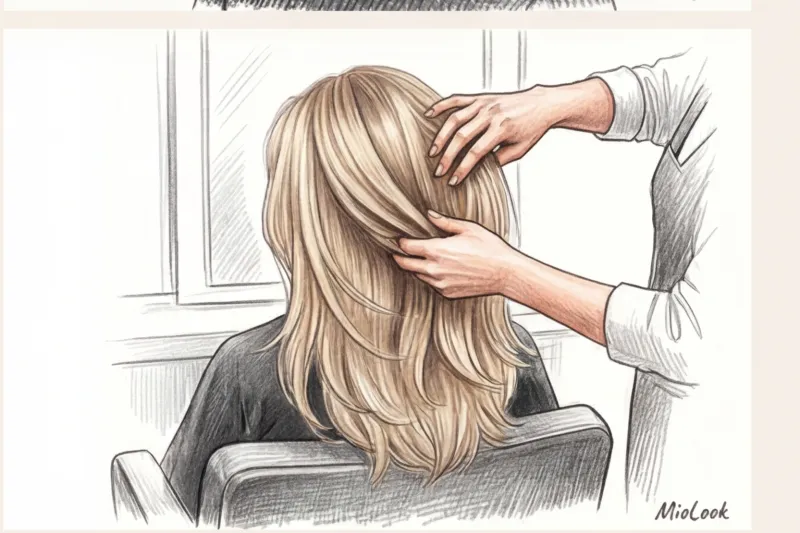
Step 2: Manage the prompts on the texture. If the app allows text suggestions, don't just type "shaggy haircut." Be sure to specify your hair type: "shaggy haircut on thin straight hair" or "mullet on frizzy curly hair." Force the neural network to work with your reality, not an advertising template.
Step 3: Closed Face Test (Thumb Method). You've created a stunning cascade and are in love with the result. Now grab your phone and cover your face with your finger on the screen, leaving only your hair. Do you still like this shape? Nine out of 10 of my clients at this point realize it wasn't the haircut they liked, but the way the filter smoothed out their nasolabial folds and opened their eyes.
Step 4: Take a holistic approach to style. A haircut doesn't live separately from your body and clothes. If you're unsure how the new, rebellious shag will fit in with your office jackets, download your wardrobe to MioLook Consider the collars and silhouettes that predominate in your closet. A voluminous mullet can clash with high turtlenecks, while a longer cascade will require a more streamlined cut in the portrait area.
Result: from a virtual image to a stylist's chair
Shaggy, mullet, and cascade cuts are all great tools for updating your look when chosen to suit your hair's texture. Use the query neural network try on a haircut It serves solely as a compass for finding a style direction. It's a mood board for your mood, not a strict engineering drawing for a hairdresser.
A well-chosen hairstyle is an investment in your personal brand and your mornings. It should repay the investment (salon and styling) with your daily comfort. Bring your stylist not just a simple "after" image, but a collage of realistic references, and most importantly, always listen to your professional when they say your cowlick on top won't accept those bangs.