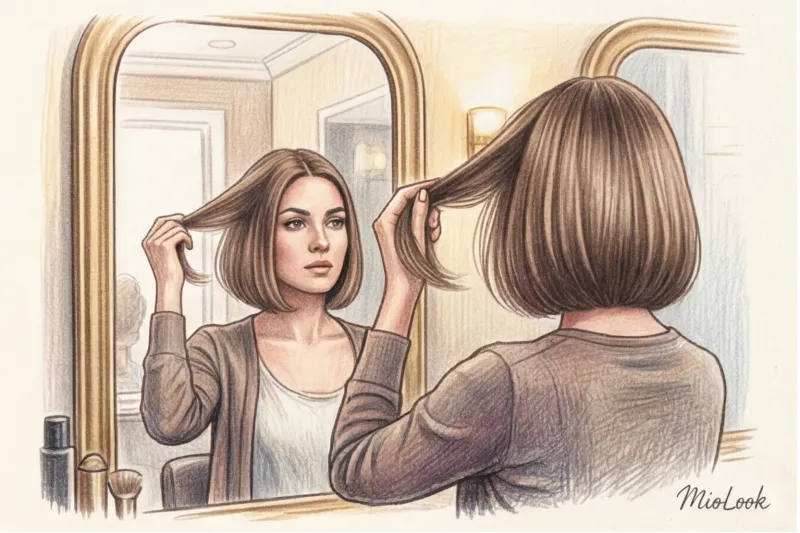
Last week, a client came to me with her phone in hand. On the screen glowed a perfect photo from a popular neural network: a luxurious, slightly tousled pixie cut that perfectly accentuated her high cheekbones. "I want that!" she declared categorically. I looked at the glossy image, then at the back of her head with its pronounced cowlick and thick, heavy hair. For this AI pixie to look like that in real life, she would have to spend 40 minutes every morning styling it with a flat iron and applying gallons of high-strength styling product.
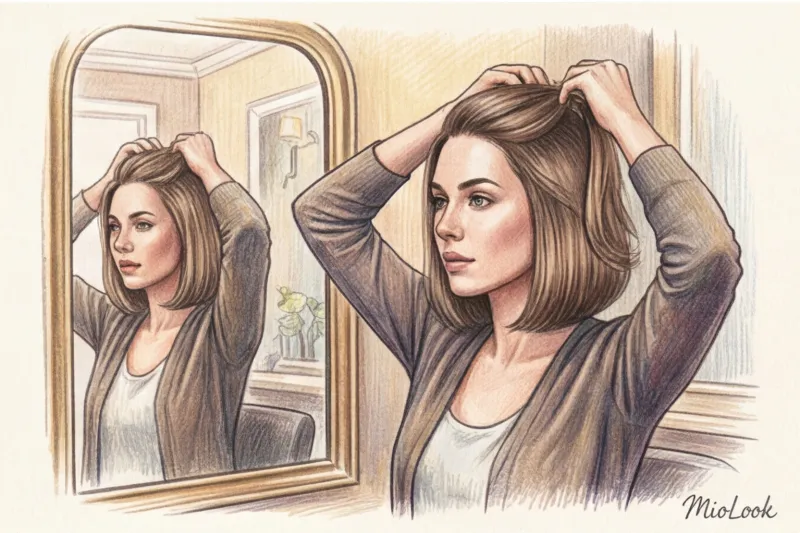
Today, when algorithms can create any appearance for us in a second, the main question my clients ask is: How to find out if a short haircut will work online , so you don't cut your hair and regret it five minutes later? Spoiler: don't blindly trust a pretty picture. I've already talked about algorithmic illusions in more detail in our A complete guide to trying on hairstyles online and AI errors.
In this article, we won't discuss the obvious. I'll teach you to be your own art director: how to deconstruct a perfect app image, identify algorithmic lies, and verify the result using strict anatomical rules of hairdressing.
How to Find Out if a Short Haircut Will Work Online: The Perfect Bob's Trap
Entertainment apps and social media filters don't just give you a new hairstyle. They have a hidden mechanism that developers prefer to keep quiet about: algorithmic beautification.
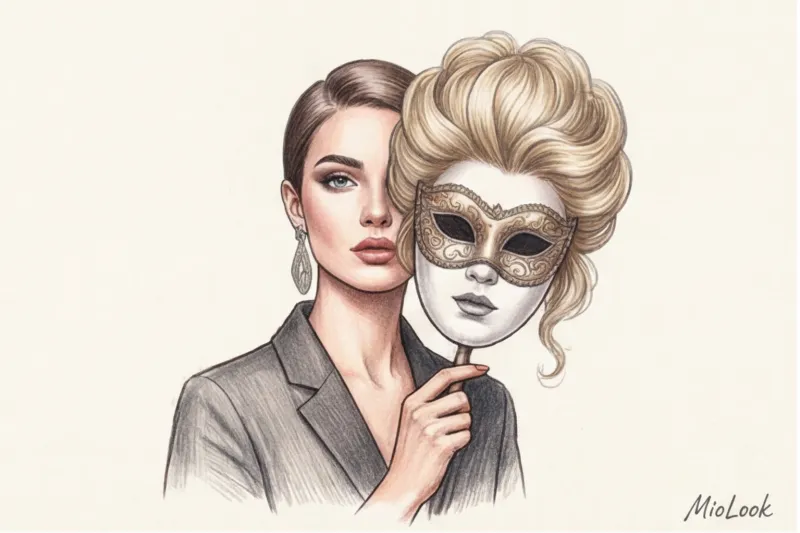
Over 12 years as a stylist, I've analyzed hundreds of references from clients. Do you know what artificial intelligence does when it generates a short bob or pixie for you? It subtly "Photoshops" your face to fit the haircut, not the other way around. The program slightly elongates your neck, sharpens your jawline, and narrows your cheeks. Why? Because short hair mathematically widens the face, and to ensure you're satisfied with the result (and buy a paid subscription), the algorithm compensates for this volume.
Hence my main rule: the more harmonious and “model-like” you look in the generated photo with a bob, the higher the chance that in real life the haircut will disappoint you.
Professional hairdressing software works differently—it applies texture strictly to your actual anatomy. That's why salon 3D models often look less appealing, but they are more realistic.
Access to MioLook for €0.99 — one-time payment
A smart AI stylist will select the perfect look based on your actual proportions.
Get access — €0.99 onceJohn Frieda's Formula: Mathematics vs. Neural Networks
If AI is lying, what can we rely on? The laws of geometry. In the 1960s, the legendary Vidal Sassoon revolutionized hairdressing by proving that haircuts should be based not on an abstract "oval" or "square" face, but on the bone structure of the skull.
Later, British celebrity stylist John Frieda, after studying the anatomy of thousands of women's faces, developed a universal rule of 2.25 inches (or 5.5 cm). This mathematical calculation of the jaw angle determines whether short hair will look good on you.
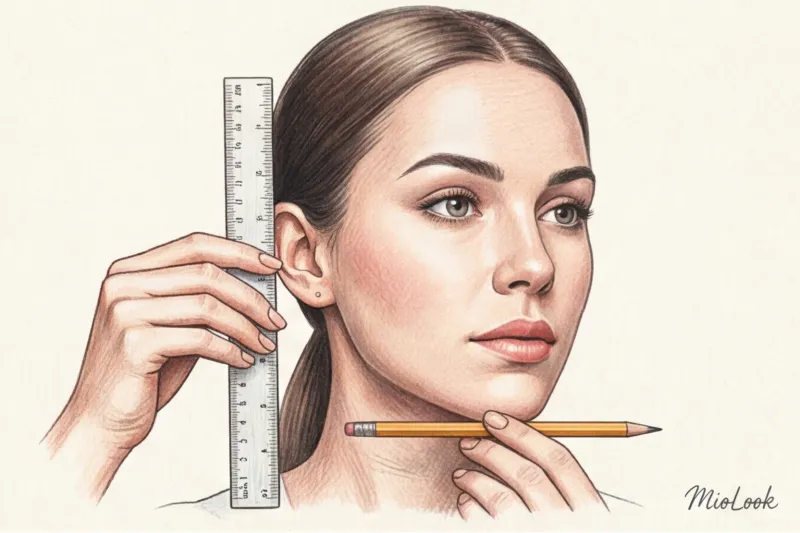
How to measure facial proportions in front of a mirror
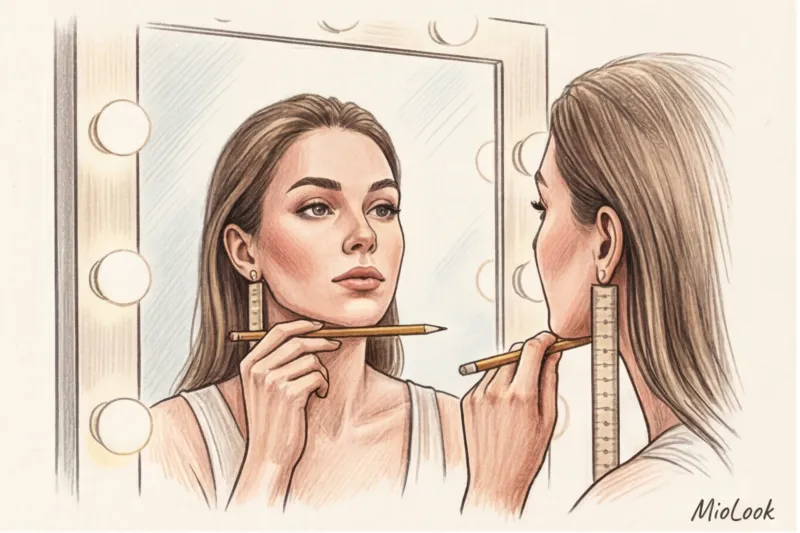
All you need is a pencil, a ruler with centimeter scale, and a mirror. Follow these steps:
- Stand directly in front of the mirror in profile or half-turned.
- Place the pencil horizontally under your chin (it should point forward, parallel to the floor).
- Place the ruler vertically under your earlobe so that it intersects with the pencil (this will create a right angle).
- Look at the mark on the ruler where the pencil touches it.
If the distance less than 5.5 cm - your face is made for short haircuts (from garcon to classic bob). If more than 5.5 cm — the jawline has a more obtuse angle, and short haircuts can visually weigh down the lower third of the face. In this case, your choice is a long bob (lob), a medium-length cascade, or long hair.
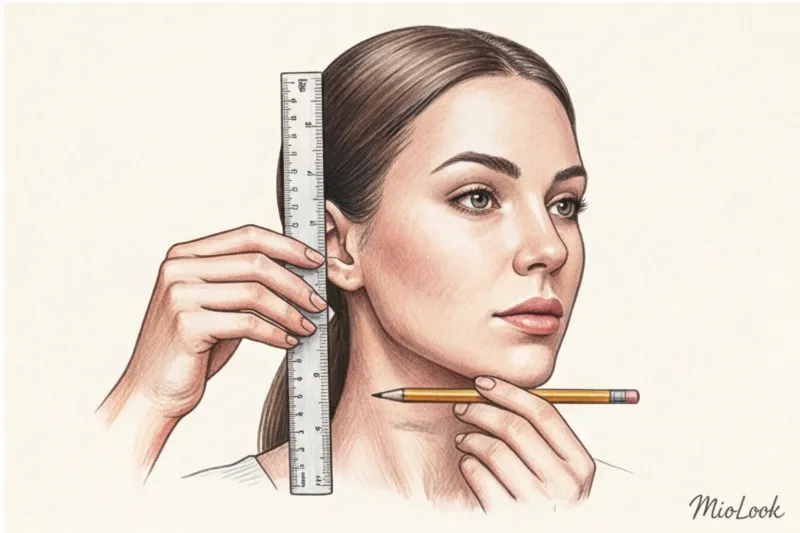
An important exception to my practice: This rule doesn't work for women with an anatomically short neck. Even if the neck length is less than 5.5 cm, a bob that's too short will make the figure appear squat. A collarbone-length cut works better here.
Trying on a Pixie and a Bob: 4 Factors AI Ignores
The neural network draws the shape, but it's completely blind to the physics of hair. The algorithm doesn't know that your strands have their own character, weight, and growth direction. When we try on an image in MioLook , we always recommend taking these four physical aspects into account.
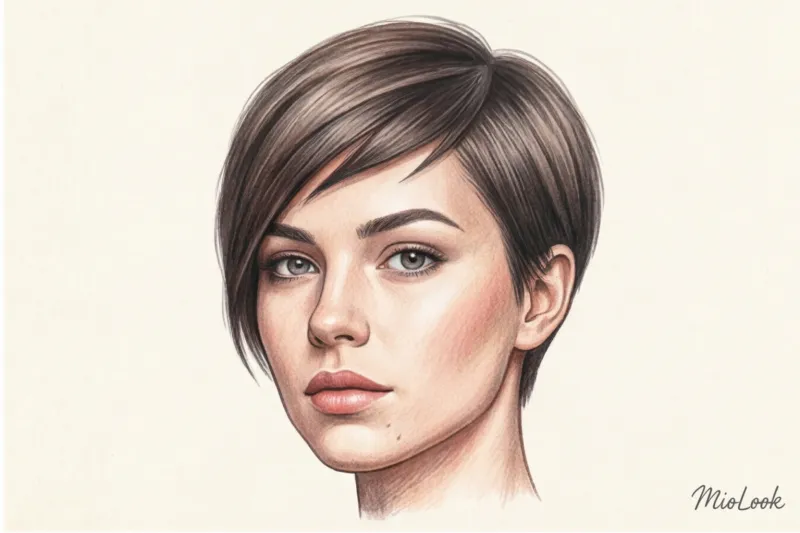
Texture, cowlicks, and hairline
In the picture, the back of the head looks smooth and neat. In real life, the hairline on the neck is everything. It can be high (ideal for a short bob) or low, when the hair grows almost to the seventh cervical vertebra (in this case, clippers will be your best friend, as you'll need to shave your neck every two weeks).
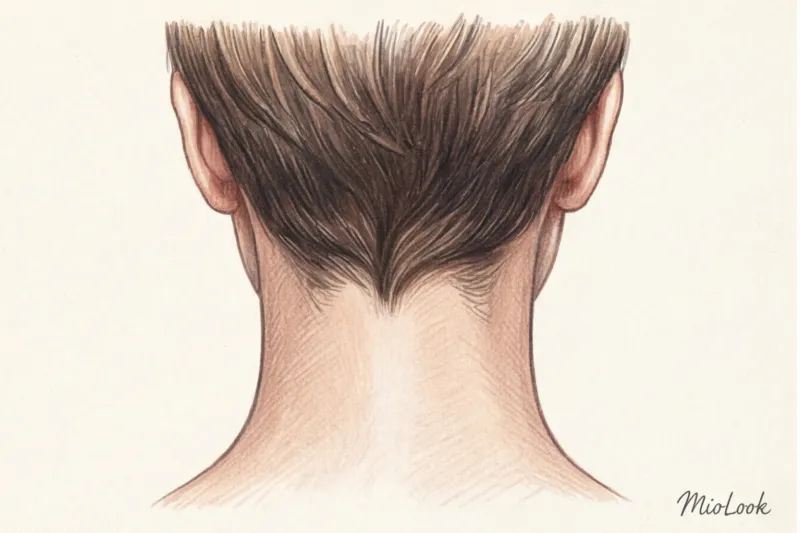
Another invisible enemy is cowlicks on the crown and bangs. These are areas where the hair grows in a spiral. They lie still under the weight of their length, but cut them into a pixie cut and they start to stick up vertically. An experienced stylist always looks for cowlicks on dry hair before cutting, and AI simply paints them over with texture.
Thickness and shrinkage of curly hair
If you have porous, wavy, or curly hair, you need to understand the law of shrinkage. According to the British Institute of Trichology (2022), curly hair experiences a 20-30% increase in volume after lengthening and weight loss.
What does this mean in practice? If you ask your stylist for a bob cut at jawline, expect the hair to bounce up to your earlobes, forming a ball when it dries. To achieve chin-length, cut at mid-neck.
Your perfect look starts here
Join thousands of users who look flawless every day with MioLook.
Get access — €0.99 onceInstructions: How to upload a photo correctly for a realistic result
If you still want to test a haircut online, do it wisely. To prevent the algorithm from adding cheekbones that aren't yours, give it the correct "original" image.
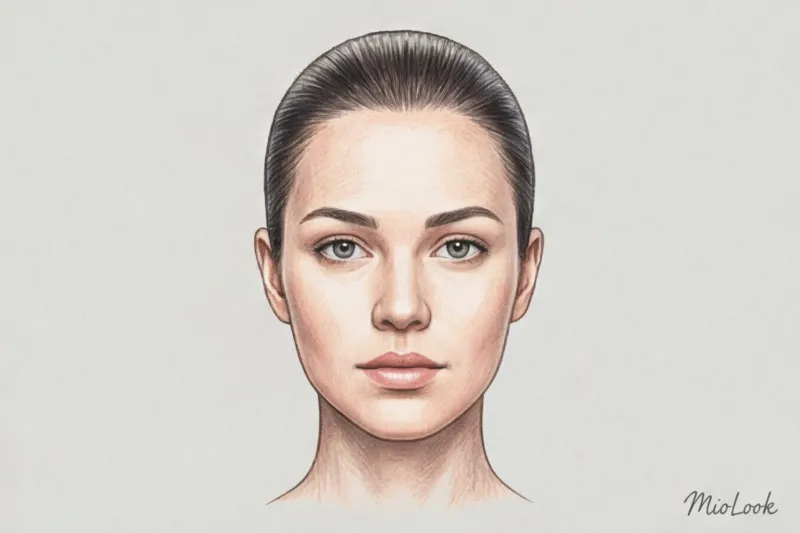
- Gather your hair: Comb your hair into a tight, sleek ponytail or bun, leaving your neck, ears, and hairline completely exposed.
- Choose flat light: Stand facing a window on a cloudy day. Avoid harsh shadows from the sun or overhead lights. The AI perceives harsh shadows as facial contours and begins to enhance them.
- Remove makeup: Neural networks often react to contouring, distorting the shape of the skull. Furthermore, hair color evaluation (for example, if you're trying a platinum blonde on a pixie) should be done against the background of your natural skin tone and natural under-eye circles.
Offline Test: Fake a Bob Without Scissors
Backstage at Paris Fashion Week, we often use a trick that allows models to walk the runway with a short bob without losing a centimeter of their long hair. This technique is called faux bob (false bob), and you can repeat it at home.
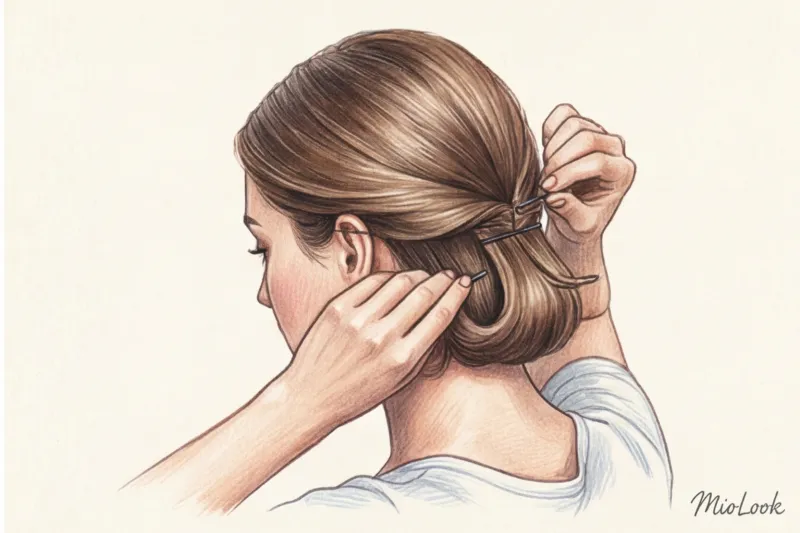
Gather your hair into a low, loose ponytail at the nape of your neck using a thin silicone elastic band. Pull the band down 10-15 centimeters. Then tuck the ends of the ponytail under and secure them at the nape of your neck with multiple bobby pins. Pull the sides slightly to create the volume characteristic of a bob.
Don't rush to undo this hairstyle. Walk around like this for a couple of hours. Take a profile selfie (very important!). Notice how your posture has changed. A short haircut reveals your shoulders—if you have a habit of slouching, the lack of hair on your back will immediately highlight it.
Checklist: Are You Really Ready for Short Hair?
Image consultants know: a haircut isn't just about your hair; it's the architecture of your entire look. By shortening your hair, you'll inevitably have to rethink your habits and even your wardrobe. You can try out new outfit combinations in MioLook wardrobe module.
- Wardrobe geometry: An open neckline requires different proportions. Traditional round necklines can start to look orphaned. Pixie cuts adore structured collars, jackets with defined shoulders, turtlenecks, and statement, large earrings that compensate for the "emptiness" between the ear and shoulder.
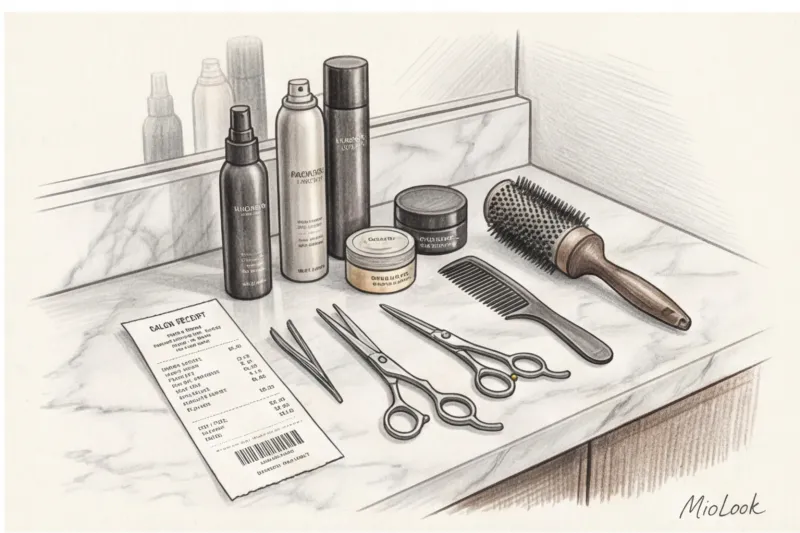
- Financial and time investments: Long hair forgives missed salon appointments. A geometric bob or pixie cut loses its shape catastrophically quickly. You should be prepared to visit the salon every 3-5 weeks (which in Europe will cost an average of €50-€120 for a quality haircut).
- Daily routine: Forget about "pull it up and go." Short hair, especially after sleep, takes on a life of its own. This means daily washing and essential styling (pastes, volumizing powders, texturizing sprays).
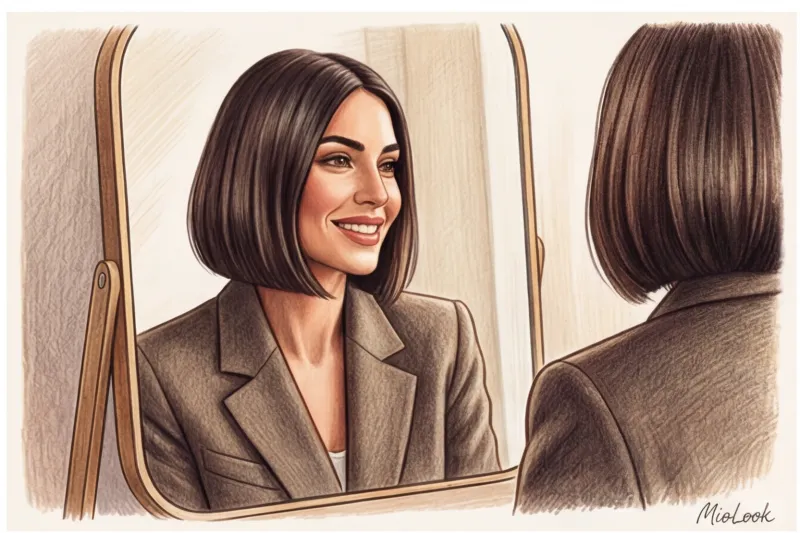
Before booking a salon appointment, ask yourself an honest question: do you want a short haircut or the carefree, effortless look that the girl in the photo captures? Artificial intelligence is great at selling us emotions, but it's up to you to live with your new length, style it in the morning, and adapt your wardrobe to it. Use technology as a first draft, and always make the final decision with a ruler in hand and a cool head.