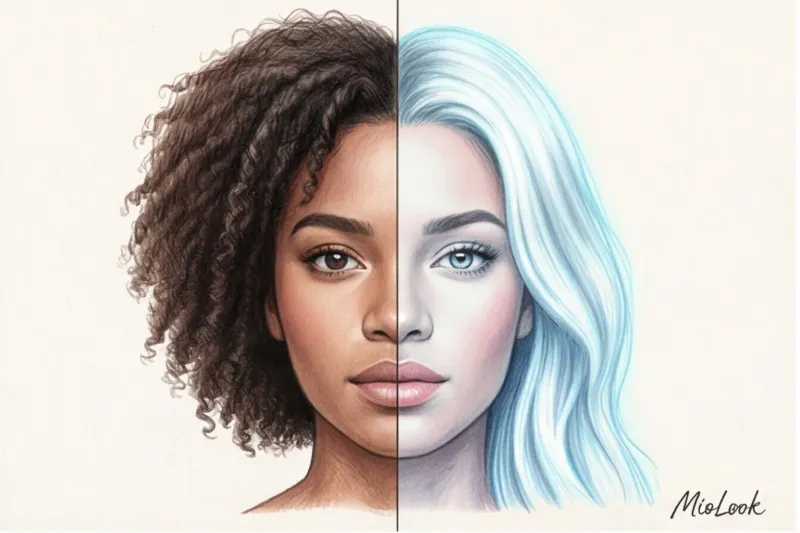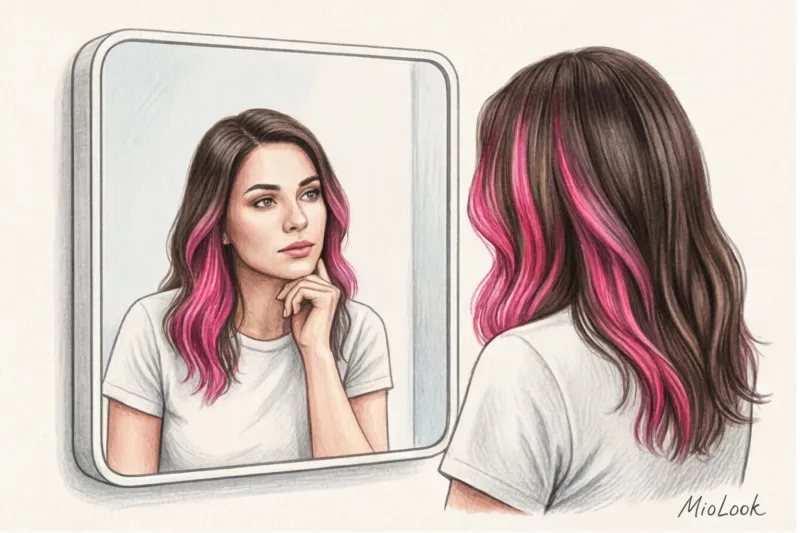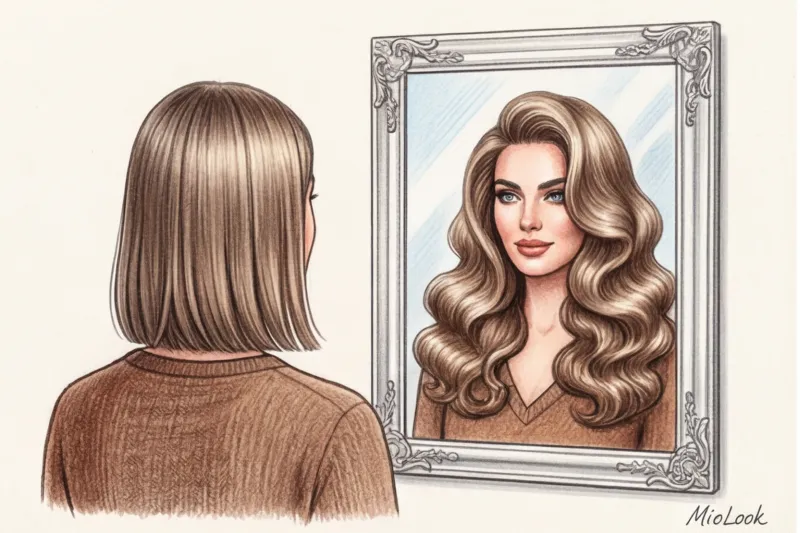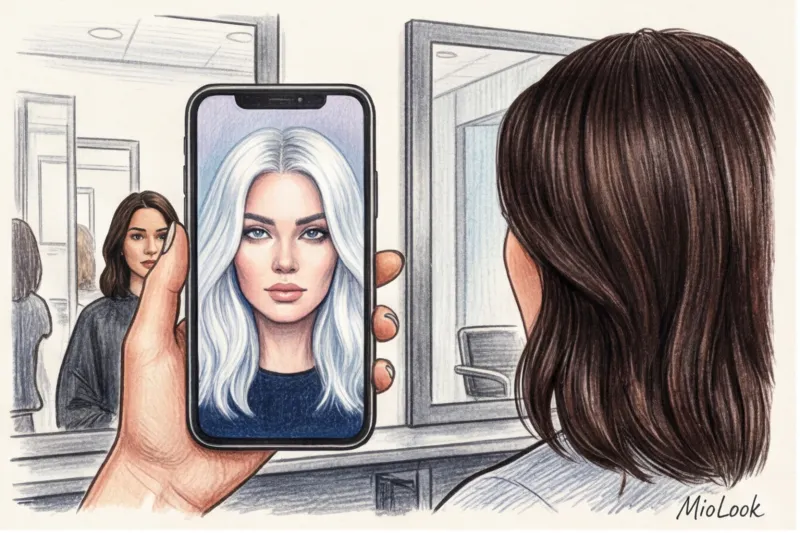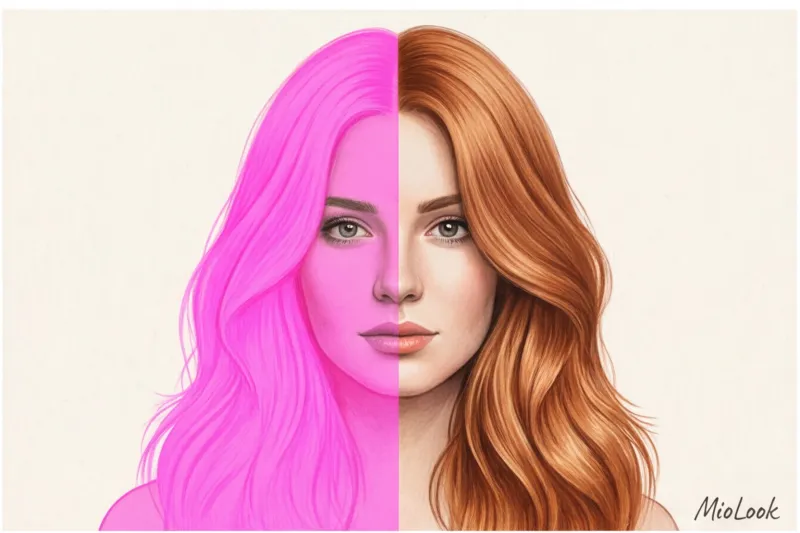
Last week, a woman with Level 1 Tone Depth (LDT) hair sat down in my chair—a dense, jet-black color that had been dyed multiple times with household dye. She excitedly handed me a smartphone with a photo of her perfect, cool ash blonde, without a single yellow tint. "I've tried a new look, and it suits me! Should we do it?" she asked. I had to gently explain that the screenshot was a beautiful illusion, but one that could be deadly for her hair.
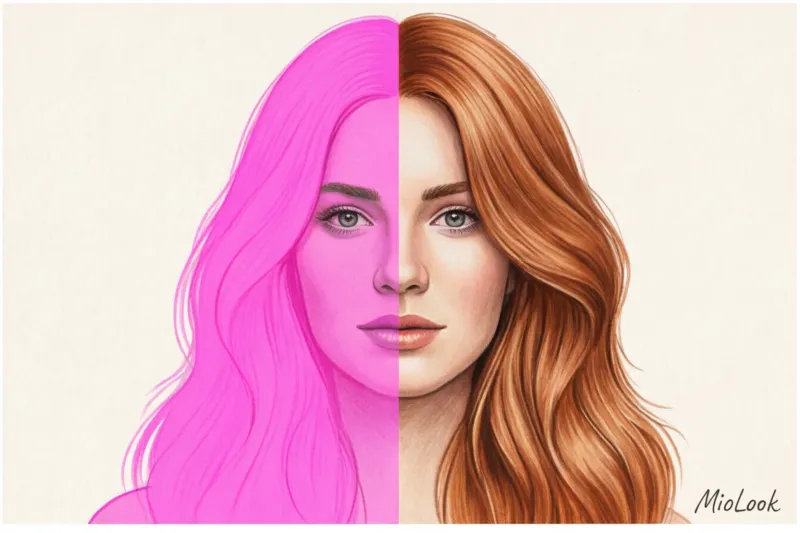
Artificial intelligence has drawn what in reality would require about 12 hours of work, several stages of bleaching, a bill of €300 to €500, and would most likely turn the structure of her strands into a fragile web. hair color changer app It's found in almost every phone. But as a practicing stylist and colorist, I see the downside of this technological magic. We covered this in more detail in our The Complete Guide to Online Hairstyle Try-Ons: Why AI Sometimes Lies to Us.
Let's explore how modern neural networks calculate light and shadow, why they perform better than older filters, and what algorithms "tactfully" omit, leading us to believe in impossible results.
The Evolution of Virtual Try-Ons: Why Old Masks Are Outperforming AI
Remember the first-generation AR filters from the early 2010s? You'd point the camera at your head, and a translucent neon pink or yellow pixelated mask would appear. Your hair would look like an anime character's plastic helmet. This was because the algorithm simply recognized the contours of your head and filled it with color, ignoring any texture.
According to a Beauty Tech study by WGSN (2024), a modern, high-quality hair color app works fundamentally differently. Neural networks have learned to calculate reflectivity index (specularity). Artificial intelligence understands that human hair isn't a matte wall. It's a cylinder covered in cuticle scales that refract light. Machine learning algorithms now recognize the direction of hair growth and rebuild the highlight map to create a three-dimensional color effect.
Over 12 years of practice, I've tested dozens of similar services. When I first compared the performance of a standard AR filter from social media and a professional AI tool on my own light-brown hair in room light, the difference was dramatic. The intelligent neural network didn't just change the pigment—it "understood" that the light was coming from the top right and simulated the natural shine of healthy hair on that side.
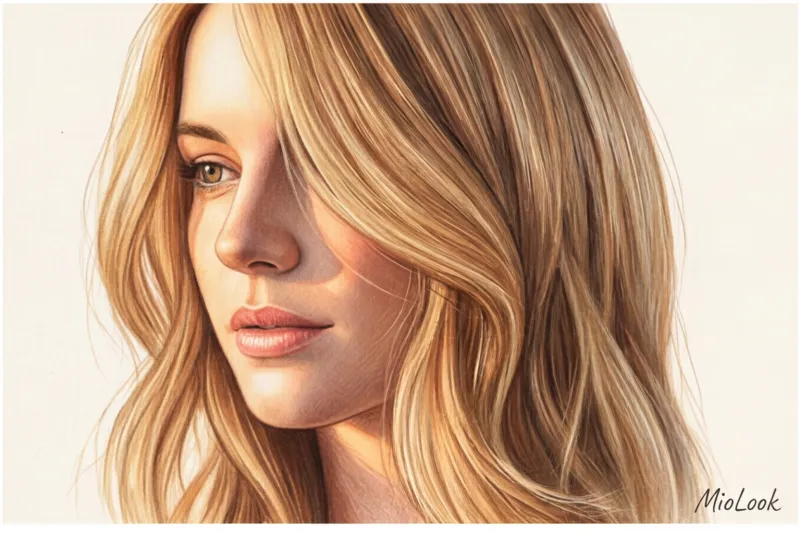
How does a professional hair color app work?
To produce a realistic image, the algorithm must conduct a rapid analysis of your source database. First, the AI determines your current tone depth—from 1 (black) to 10 (very light blonde). Then the physics of light begins.
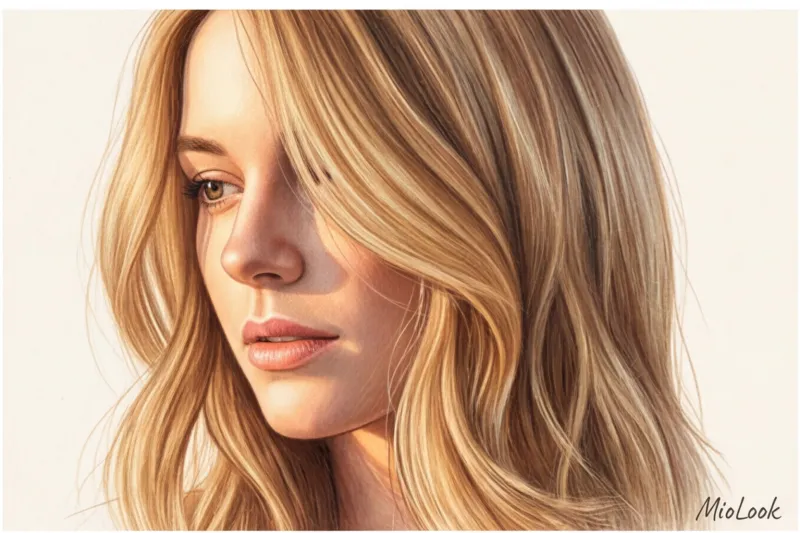
Blonde reflects light completely differently than deep chestnut. If you're dyeing your blonde hair dark in an app, the smart program will automatically enhance the contrast of the highlights because dark pigments appear shinier (they absorb light at the roots and reflect it sharply at the bends of the strands). If you're looking for a tool that takes these subtleties into account when creating a cohesive look, I recommend trying it. the selection function in MioLook - It helps you evaluate how a new shade will fit into your wardrobe.
Algorithms vs. Color Types: AI Selects the Perfect Contrast
Another hidden feature of smart networks is facial micro-correction. By changing your hair color in a photo, professional AI slightly shifts the white balance of your skin. Have you ever noticed that when you try on a copper shade, your eyes suddenly appear brighter and your skin more even? The algorithm reads the warmth or coolness of your skin and adapts the contrast.
That's why artificial intelligence often suggests shades we've historically feared. One of my clients always considered herself a "cold winter" and wore only ash blonde. An AI app generated a deep strawberry blonde for her—and it turned out to be right. The warm shade neutralized the redness on her cheeks, which the ash only accentuated.
Your ideal image begins Here
Join thousands of users who look flawless every day and choose their style without mistakes.
Get access — €0.99 onceTop tech: Which hair color app gives the most accurate picture?
There are two approaches on the market today: built-in tools from cosmetics giants (such as Modiface technology from L'Oréal or Redken) and independent generative networks (Midjourney or specialized AI apps). What's the difference for us?
Brand tools are based on real chemical formulas of dyes. When you select "mocha" at Redken, the app knows what pigments are mixed in that tube. However, they work like 2D editors: they handle flat surfaces well, but struggle with curls. Generative AI, on the other hand, creates a 3D model of the head. They're better at conveying complex, multidimensional coloring techniques like AirTouch, balayage, and smooth color gradients.
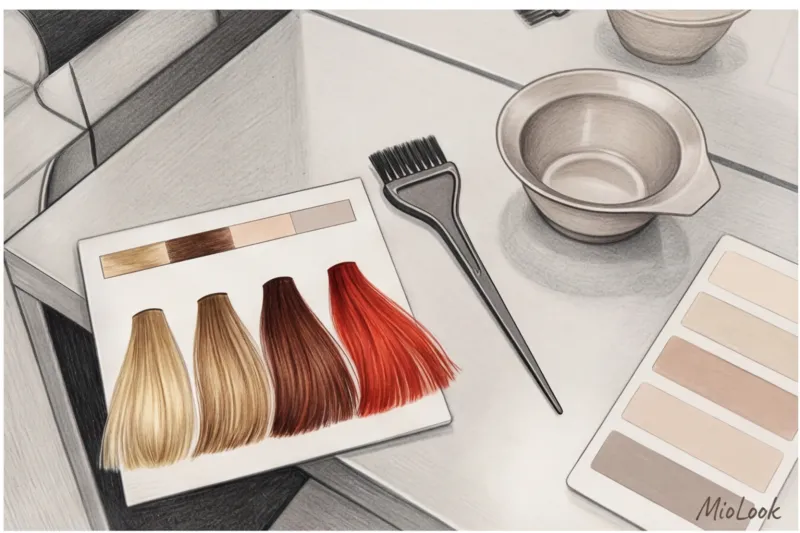
"If you're considering a major makeover, for example, wanting to see how a short haircut would look with a new color, use generative AI. It will show you the hairstyle's architecture taking into account the new pigment." — From the article Try on a haircut online: choose your length with an AI stylist.
But any technology has its limits. And that's where my territory as a colorist begins.
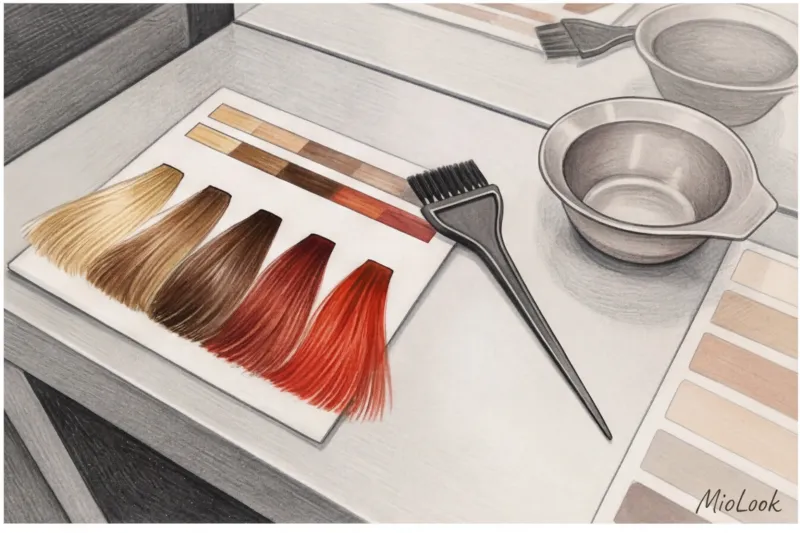
"Silent Sabotage" of Coloristics: What the Neural Network Will Never Tell You
I'll share a counterintuitive rule with you: If AI gives your hair a perfectly dense, consistent color from root to tip, it's lying to you. Real, living hair always has uneven, multidimensional pigmentation.
The main problem with any neural network is that it ignores background lightening Our hair contains two types of melanin: eumelanin (responsible for darkness) and pheomelanin (responsible for red and yellow pigments). The app doesn't know that beneath your chestnut brown lies a stubborn reddish-copper tone that will be revealed by bleaching. On the screen, you become a platinum blonde in 0.5 seconds. In the salon, the stylist will have to combat the yellowness using complex neutralizing formulas.
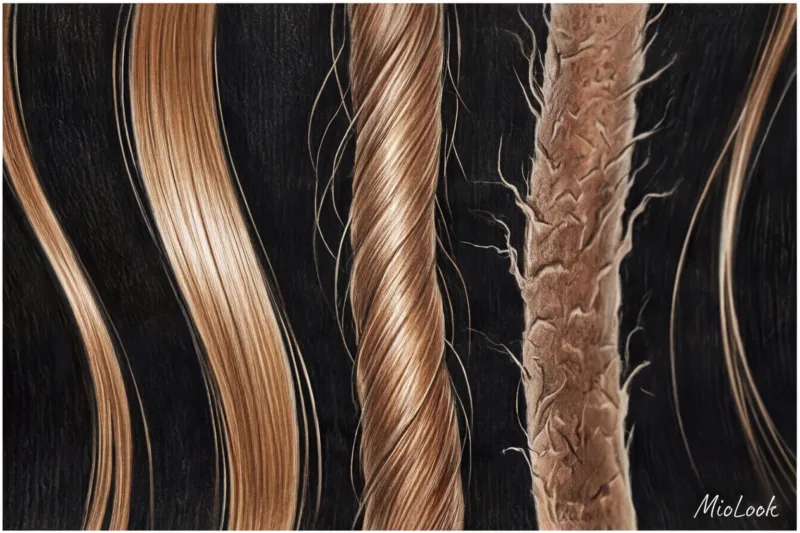
Moreover, AI always sells you the illusion of perfect health. Even if you "bleach" your hair ten times in a row on your smartphone screen, it remains smooth and shiny. In reality, going from brunette to total blonde often means a loss of quality, split ends, and the need to spend €50 to €150 monthly on restorative lipid masks.
The Porosity Problem: Why Color Appears Differently in Real Life
No algorithm can currently determine the extent of damage to your cuticles from a photo. If your cuticles are porous, previously dyed, or heat-treated, they will absorb the pigment like a sponge.
This is the very moment when AI fitting doesn't work You might see a uniformly colored light brown in the photo, but in real life, the stylist knows that on porous ends, the same dye will fade to a deep dark, creating a "dirty" effect. That's why a skilled colorist always pre-pigments or varies the percentage of oxide in different sections of the strands.
Ready to get started?
Try the free plan—no commitment. Find a look that complements your new hair color.
Get access — €0.99 onceChecklist: How to Properly Prepare Photos for AI Fitting
Statistically, about 80% of clients bring me reference photos with distorted colors simply because the original selfie was taken incorrectly. If you want your hair color app to show you the truth, not just a fantasy, follow these three rules:
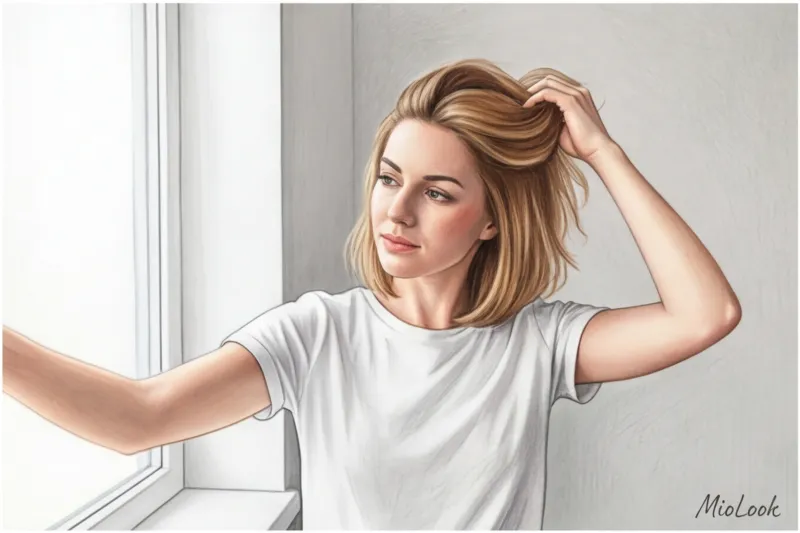
- Correct light: No ring lights, incandescent bulbs, or direct sunlight. Soft, diffused daylight is all you need. Ideally, face a north-facing window. This will give the algorithm a realistic white balance.
- Neutral background: Take photos against a white or light gray wall. Wear a basic T-shirt without any prints. Bright clothes or patterned wallpaper will force the neural network to "reflect" the shades onto your hair (by the way, this is critically important when you Choose your wedding makeup online ).
- Clean texture: Take a photo with freshly washed, naturally dried hair without gels, hairsprays, or oils. Styling products tend to stick strands together, causing the AI to perceive them as a single, monolithic block, distorting the highlight calculations.
Stylist's Summary: Using AI as a Vector, Not a Guarantee
Technology has made huge strides. What seemed like a silly toy just five years ago now helps us avoid fatal image mistakes. But any hair color app or even an advanced smart stylist MioLook - this is a search tool directions , and not an exact engineering drawing.
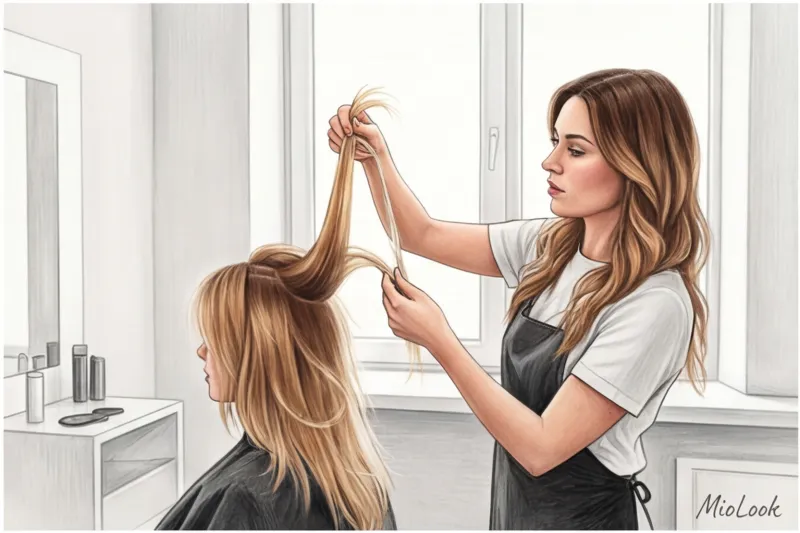
When you bring an AI photo to your stylist, discuss the color tone ("I want a cooler undertone," "I like the brightness level"), but don't demand perfect pixel-for-pixel accuracy. Machine code doesn't wash your hair, doesn't know your color history, and doesn't take into account the hardness of tap water in your region. A consultation in the chair with a test strand will always be more honest than any neural network—because the health of your hair is more important than a pretty picture on a screen.