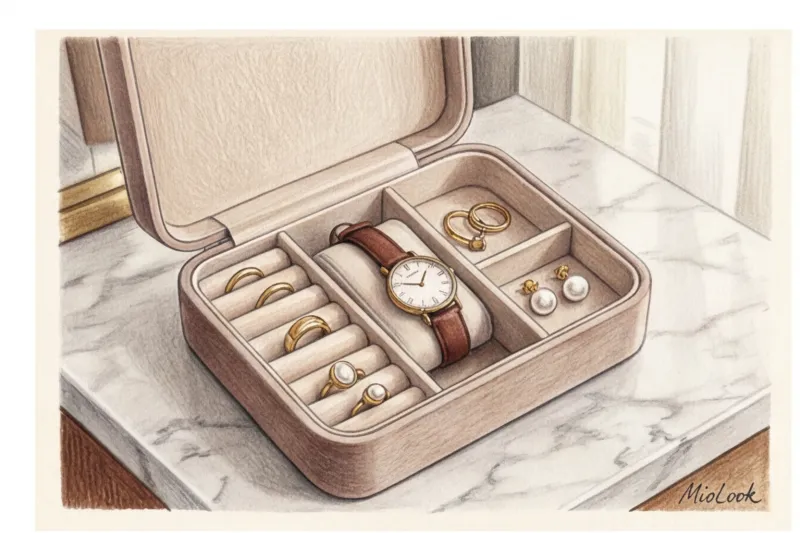
What is a jewelry wardrobe and why does every woman need one?
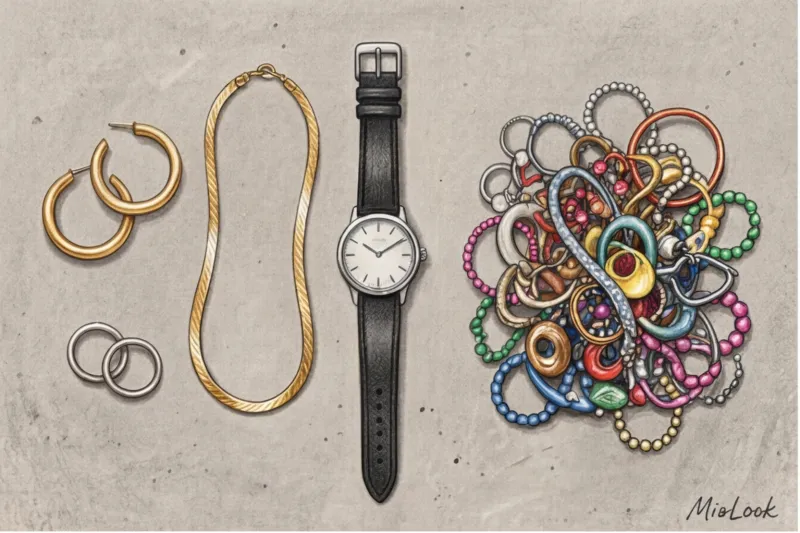
Over 12 years of working as a personal stylist and luxury wardrobe consultant, I've conducted dozens of inventory reviews. And every time I open another client's treasured jewelry box, I see the same depressing sight. Mountains of tangled necklaces, lonely earrings, tarnished silver, and spontaneously purchased rings that were worn exactly once, at a friend's wedding. In my experience, it turns out that about 80% of jewelry sits idle simply because it's completely incompatible with the owner's everyday style and lifestyle. Women often don't think about How to wear jewelry correctly , making impulsive purchases based on fleeting moods, rather than building a unified system that works for them.
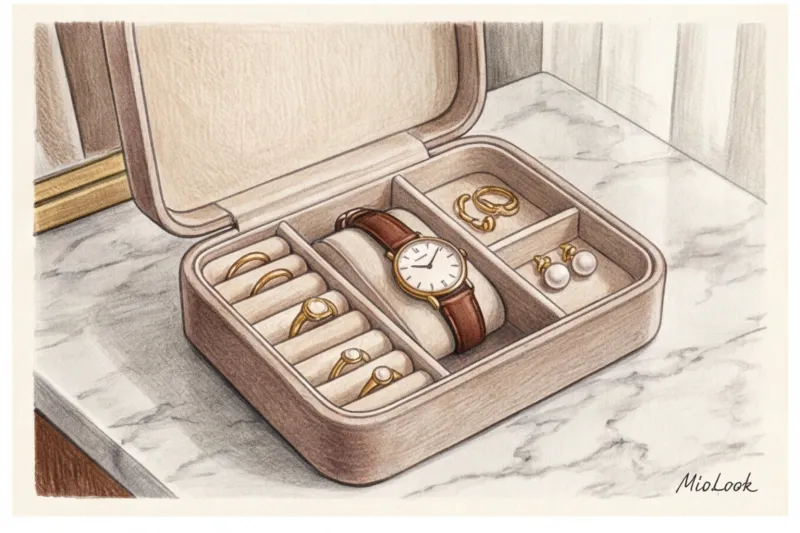
It's time to abandon the concept of a "chaotic jewelry box" once and for all. A jewelry wardrobe is a conscious investment system, where every element is thoughtfully considered, mathematically calculated, and perfectly coordinated. In my style philosophy, accessories aren't just an optional finishing touch or the icing on the cake. They're the true "assemblage point" of the entire look.
Imagine the most basic, basic outfit: a simple black straight-cut jacket, a white cotton T-shirt, and straight-leg jeans. On its own, this mass-market outfit is neutral and bland. But add structured gold hoop earrings of the right weight and a high-quality Swiss watch with a sapphire crystal on a leather strap—and the look instantly elevates, moving into the luxury category. Precious metal, clean lines, and a subtle sheen elevate everything you wear. This technique is indispensable when choosing stylish office clothes for women over 40 , where elegance and status come to the fore.
Let's talk about numbers and a strict formula Cost-per-wear (cost per wear). I regularly have clients who sincerely believe that spending $2,000 on classic diamond studs is an unthinkable waste. Yet, they unhesitatingly spend $40–$50 on trendy jewelry every couple of weeks. Over a few seasons, the sum adds up to a hefty sum, and the bottom line? A tarnished alloy, a green streak on the finger, a nickel allergy, and rhinestones that fell out because they were set with cheap glue.
Now let's do the math. $2,000 diamond stud earrings in white gold that you'll wear every day for at least 10 years (3,650 days) will cost you just $0.54 per occasion. You'll get a flawless look, self-confidence, and a piece you can pass on to future generations. But 50 pairs of cheap jewelry that lose their shape after three occasions is literally money down the drain. You should invest in something that touches your skin every day.
Base, Accents, and Investments: The Structure of a Jewelry Capsule
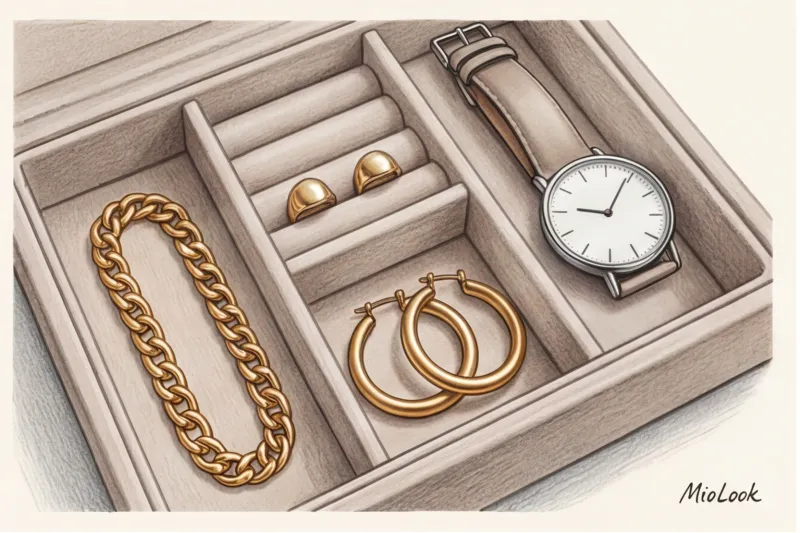
Any well-designed wardrobe, whether it's clothing or jewelry, is built on the principle of an architectural pyramid. Its monolithic foundation is your everyday base, or The Daily Signature These are the pieces that blend in with you, become your signature look, and you can wear them for weeks. These include: statement watches, smooth rings (bands) without protruding prongs, basic earrings (studs or small, thick hoops), and a simple snake or anchor chain.
The most important and absolutely unquestionable requirement for a base capsule is uncompromising materials. Only solid gold (14K or 18K) or platinum are acceptable here. Why? Because the base lives with you: it comes into contact with your skin, harsh perfume, sweat during exercise, and water in the shower. Gold plating, even the most expensive and high-quality (vermeil), will inevitably wear away from daily microfriction against clothing and skin. To determine if you have enough base, I always recommend conducting a thorough inventory and digitizing your inventory. You can upload your current pieces to MioLook app — this will help to clearly assess which elements are duplicated and which are critically missing to create complete sets.
The next, narrower level of the pyramid is accents, or Statement pieces This is the realm of large shapes, complex architectural geometry, and vibrant colored stones. A chunky chain necklace, long chandelier earrings, asymmetrical cuffs, or a cocktail ring with a large aquamarine. These pieces are absolutely not suitable for a morning commute to the office. Their primary purpose is to elevate a simple evening slip dress or a formal tuxedo to a truly luxurious and dramatic look.
"Julia, how can I wear my grandmother's ring with a massive Soviet-cut ruby without looking outdated?" is perhaps the most frequently asked question about family heirlooms in my consultations.
The secret to Italian styling for vintage and sentimental jewelry (the pinnacle of our pyramid) lies in sharp contrast. Don't even think of pairing period pieces with lace blouses, velvet, or retro silhouettes—it'll instantly transform you into a theatrical actress. Wear a chunky family ring with the most modern, utilitarian pieces: a voluminous menswear-style cashmere sweater, a sleek leather trench coat, or integrate it into winter office style With a crisp white shirt. In such a contrasting setting, the jewelry loses its mothballed aura and becomes an intellectual statement piece with a real story behind it.
How to Wear Jewelry Properly: 5 Golden Rules from Experts
At a recent closed lecture on visual styling in Milan, we discussed a curious paradox. One woman can wear $50,000 worth of diamonds and look downright provincial, while another complements a simple basic shirt with a sleek brass cuff for €300 and creates a look worthy of a glossy magazine cover. The secret lies not in the price tag, but in an impeccable understanding of body geometry and the laws of visual weight.
Based on the fundamental rules of proportion in styling, I identify five immutable principles that distinguish the amateur approach from the professional one.
The Anti-Set Rule
Let's start with a classic rookie mistake I regularly see. Wearing a complete jewelry set—when earrings, a necklace, and a ring from the same set are all worn together—is a surefire way to add 10 years to your age. Today, this approach looks outdated, heavy, and overly "effortful." Contemporary luxury is built on a subtle casualness. True mastery lies in the ability to combine pieces from different collections so that they interact with one another, rather than blend into a boring uniform.
Rule of Balance
There should always be some air in the overall look. A strict stylistic rule is: if you wear statement chandelier earrings (for example, massive chandeliers or large geometric designs), your neck should remain completely free. Any necklace, even the thinnest, paired with statement earrings will create a visual suffocation effect and overwhelm the portrait area. Let one bright piece stand out.
Focus Areas: The Diagonal Rule
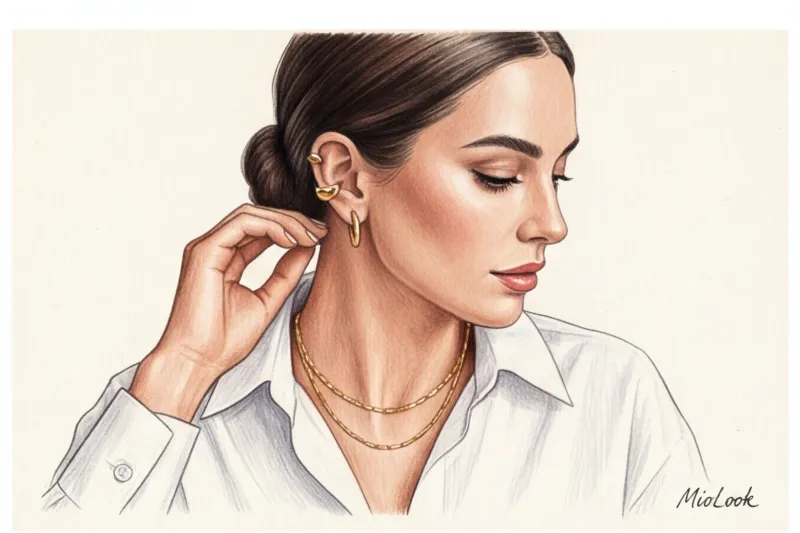
We never emphasize everything at once. An expert approach requires selecting a maximum of one or two areas to attract attention. The most elegant combinations are built on the principle of staggered focus: face + wrists (accent earrings and a massive bracelet with a bare neck and hands without rings) or cleavage + fingers (A deep V-neck with a prominent pendant paired with a large cocktail ring.) This creates the right dynamic, drawing your companion's gaze along your entire silhouette rather than focusing on one spot.
Contrast of textures of clothing and metal
Perfect styling is always built on the strength of materials. Remember this ingenious rule: smooth, mirror-polished gold looks phenomenal against a loose, textured tweed or dense wool. Conversely, matte, satin-finished metal or uncut stones look incredibly expensive against shiny silk or smooth satin. The contrast in texture emphasizes the nobility and depth of both materials.
Seasonality of decorations and scaling
It's that subtle detail that instantly reveals a sophisticated eye. Thin, delicate chains with micro-pendants are completely out of place over chunky, chunky cashmere sweaters. Against the heavy fabric, the delicate jewelry simply "sinks," loses its shape, and looks like a stray thread. A winter wardrobe, with its dense textures, demands scale: chunky chains, large links, and wide bracelets that can be worn right over the cuffs of a turtleneck.
Anatomy and proportions: matching to facial features and figure
Beyond clothing, jewelry should also harmonize with your natural facial structure. Research on visual perception confirms that properly chosen accessories can correct facial geometry more effectively than contouring.
Linearity and oval of the face. The principle of visual compensation is at work here. If you have a round face, your goal is to add vertical lines. Long chains, drop earrings, and strong geometric lines that visually elongate the silhouette are ideal choices. Women with angular, square, or rectangular faces with a strong jawline, on the other hand, need a softer look. In this case, soft rings (hoops), round studs, and smooth, flowing shapes without sharp angles are the best investments.
Scale and complexion. In my practice, this is the most common stumbling block. Petite women should be extremely careful with hyper-oversized jewelry. An oversized cuff bracelet on a thin wrist or a necklace that covers half the chest creates a comical "girl trying on her mother's clothes" effect and visually reduces height. The best choice is proportionate elegance and demi-fine scale.
For plus-size women and those with a curvaceous figure, I strongly recommend avoiding details that are too small or "lost." A thin 1mm ring on a size 18 finger or a microscopic pendant on a full bust not only becomes invisible but also, paradoxically, visually makes your figure appear even larger due to the strong contrast. Opt for confident, sculptural shapes—wide signet rings, layered necklaces, and statement earrings—that will complement your luxurious frame.
Access to MioLook for €0.99 — one-time payment
A smart AI stylist will select the perfect look and help you seamlessly integrate your jewelry into your everyday wardrobe.
Get access — €0.99 onceThe Art of Combining Metals: Debunking Old Myths
Did you know that the most persistent myth about the incompatibility of gold and silver was debunked by luxury industry giants back in the last century? In classic jewelry etiquette, the strict rule of "one metal per entire look" served only one purpose: to demonstrate that a woman possessed sufficient status to afford an entire set. But that era is gone forever.
When clients question whether it is legal to mix white and yellow alloys, I always cite the iconic Rolex Datejust, released in a bicolor design. Rolesor (a combination of steel and gold) back in the 1930s, or the legendary Cartier Trinity ring. These masterpieces were originally conceived as an elegant statement: they forever legitimized the mixing of metals at the highest level. Today, wearing only one shade from head to toe is considered overly conservative and detracts from the dynamic look.
To skillfully combine different shades and avoid the effect of a chaotically worn jewelry box, professionals use the “bridge” rule ( The Bridge Piece ). You'll only need one transitional piece that already fuses two or three metals. This could be that same bicolor watch, a ring made of several types of gold, or a bracelet with combined links.
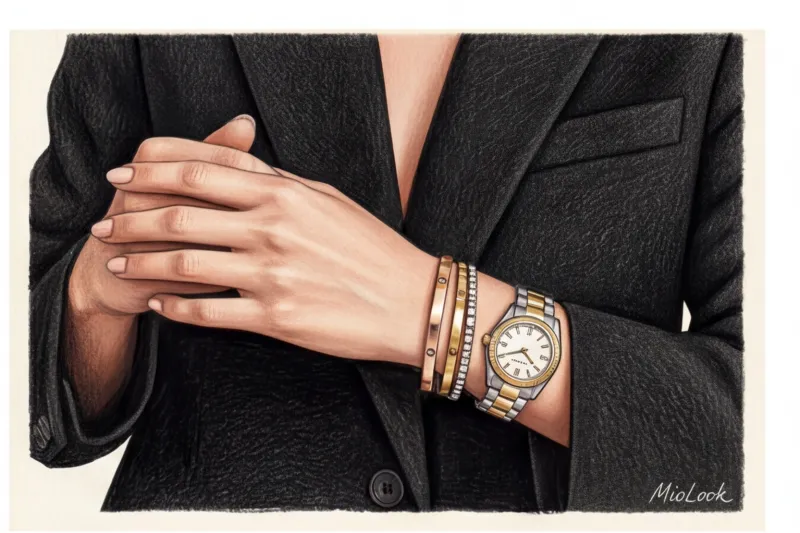
By wearing such a "bridge," you provide the eye with a visual foundation for the entire composition. With a watch made of cool steel and warm yellow gold on your wrist, you can confidently pair platinum stud earrings with a gold pendant—the look will be seen as a coherent, architecturally precise design, not a random mistake.
There's a crucial nuance that's rarely mentioned: the unity of a piece's style and texture is always more important than the color of the metal itself. This is the secret to a rich, rich-sounding mix. Vintage matte silver with a deep black finish will look simply stunning with similarly aged, matte gold. They share a common aesthetic, the same visual weight, and a similar historical context. However, trying to pair glossy, mirror-polished platinum with rustic hammered gold is almost always doomed to failure, even if both pieces cost $5,000. Texture dictates the rules: wear smooth with smooth, and rough with rough.
Finally, how do you balance temperature contrast and your natural coloring? The classic theory is that "cool" skin tones look good in silver, while "warm" skin tones look good in yellow and rose gold. But what if you have a cool undertone and dream of a chunky yellow gold chain? Use the temperature gradient method.
Place a cool metal that complements your skin tone in the portrait area (closer to the face), and move the warmer one lower—to your hands or décolleté. You can also intertwine two thin chains of different temperatures around your neck: the cool white gold will visually "cool" the adjacent yellow, adapting it to your appearance. To avoid misaligning the proportions, I strongly recommend Upload your jewelry to the MioLook smart wardrobe — On-screen visualization allows you to instantly see if metals clash with each other, even before you start assembling the set in front of the mirror.
Jewelry vs. Costume Jewelry: When to Spend and When to Save
In 2023, the research firm McKinsey published a report on consumer habits in the jewelry sector. A striking detail emerged: women spend colossal sums on "quick-fix" mass-market jewelry, which is thrown away within a month due to peeling plating. Annualized, this spending often exceeds the cost of a fine diamond ring. As an investment wardrobe expert, I always tell my clients: the mathematics of style tolerates no half measures. You won't save money by buying ten cheap necklaces instead of one high-quality one.
The main rule of jewelry investment is uncompromising: Spend serious budgets on what you wear every day near your face and on your hands Your basic stud earrings, sleek rings, and your favorite necklace with a simple pendant are the visual foundation. They shape your status every second. However, you can and should save on special, evening-themed accents. The enormous chandelier earrings you wear twice a year to the corporate New Year's party and the theater premiere don't have to be made of platinum and natural sapphires. Their purpose is to create a wow effect in the dim light, and high-quality jewelry will achieve this brilliantly.
Why is such a strict separation of zones necessary? It's all about the aggressive chemistry of our bodies and the environment. Rings and chains are in constant, uninterrupted contact with skin, sweat, perfume, cosmetics, and soapy water. If you buy a brass ring with thin gold plating (even from a renowned fashion house), the plating will inevitably wear off. In my experience, galvanic rhodium plating or standard gold plating on rings, with daily wear, lasts an average of 6-8 months. This results in an unsightly green streak on the finger, metal oxidation, and a high risk of contact dermatitis. Therefore, the base that comes into contact with the body must be made of precious metals. At the same time, brooches (which are attached exclusively to fabric) and statement evening earrings (worn for 3-4 hours and not rubbing against clothing) can be made of costume jewelry.
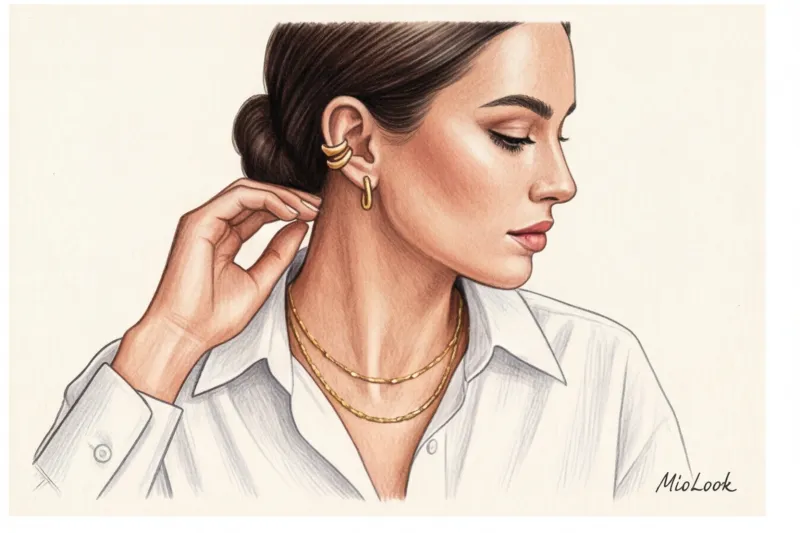
But not all costume jewelry is the same. Cheap accessories have the amazing ability to instantly ruin even a perfectly tailored cashmere suit. When shopping, I always ask people to pay attention to three quality markers The first is the weight of the item. True luxury has a pleasant, tangible heft, while mass-market jewelry churns out lightweight, hollow, and suspiciously jingling parts. The second indicator is the quality of the clasps and fittings. A flimsy, sticky carabiner or a thin stud on a stud will give away the item's origins.
The third and most critical point is the method of crystal attachment. In the premium segment, prong setting (When each stone is securely held in place by metal "prongs" called claws). In cheap pieces, rhinestones are simply glued in place. Over time, the glue becomes cloudy, turns yellow around the edges of the crystal, and the stones themselves begin to fall out. If you notice any glue, return the piece to the shelf.
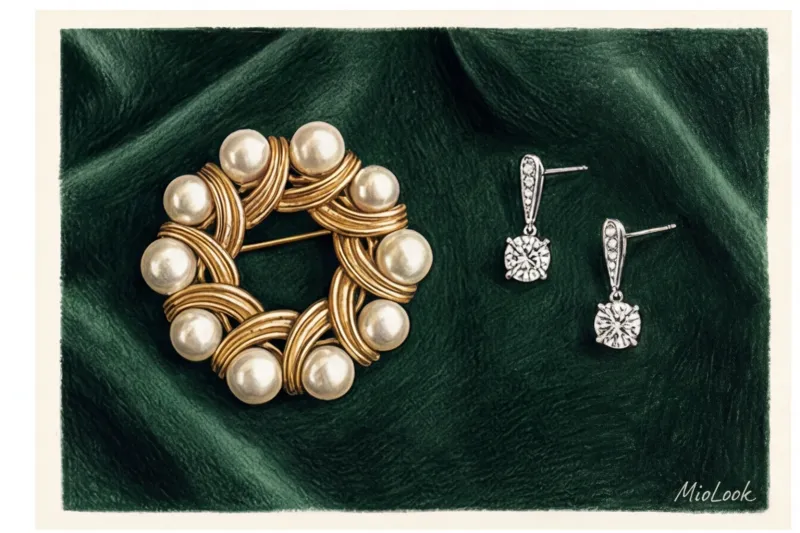
Status Jewelry: Why Vintage Chanel Can Be Worth More Than Gold
When we say the word "costume jewelry," many instinctively imagine plastic beads. This is a dangerous misconception, depriving you of a vast stylistic toolbox. The concept of Haute Bijouterie (high costume jewelry) was introduced into fashion by the legendary Coco Chanel and Elsa Schiaparelli. Mademoiselle Coco openly declared that wearing millions in jewelry was a sign of bad taste and fear. She began mixing natural pearls with artificial glass, making costume jewelry not just acceptable, but elite. Women gained long-awaited freedom: they could now wear massive necklaces without hiring security for social events.
Today, vintage designer jewelry has significant investment value. Massive Chanel or Yves Saint Laurent runway clips from the 1980s only increase in value with time. At international auctions, a pair of these clips, made of jewelry alloy with the famous hand-blown Gripoix glass, easily sells for $1,500–$2,000. This is more expensive than many modern gold pieces. And rightfully so: the quality of the casting, the intricate hot enamel, the weight, and the historical value make them a status statement. It is the understanding of how to properly wear jewelry with a history, masterfully incorporating it into a modern, minimalist wardrobe, that distinguishes a woman with innate taste.
Try MioLook
Start creating perfect images with the help of artificial intelligence and assemble your first virtual jewelry box
Get access — €0.99 onceIf vintage isn't your thing, and solid gold isn't in your budget (or seems too pretentious for the office), consider the category demi-fine This is the perfect compromise, emerging at the intersection of high jewelry and accessible fashion. These pieces are crafted from 925 sterling silver, which is then coated with a layer of gold using the vermeil technique.
According to strict international jewelry standards, the gold layer used in vermeil jewelry must be at least 2.5 microns thick—dozens of times thicker and more durable than conventional electroplated gold. Such jewelry looks absolutely like solid gold, ages gracefully, is hypoallergenic, and lasts for years. It's the smart choice for the modern woman who wants to look expensive but prefers to invest the difference in price in travel or self-improvement.
How to choose jewelry for your neckline and dress code
The architecture of the look is built on strict lines. According to the rules of geometric harmony taught in styling institutes, the most serious mistake is a visual clash between the hem of a garment and a piece of jewelry. When a pendant is constantly hidden under the collar or a charm haphazardly interrupts the neckline, the look instantly loses its polish. And it doesn't matter whether you're wearing simple costume jewelry or a $5,000 Cartier necklace—geometry doesn't forgive carelessness.
The basic rule for working with necklines is that the embellishment should either mirror the shape of the neckline or be positioned at a respectful distance from it, not touching the fabric. Let's look at four main scenarios.
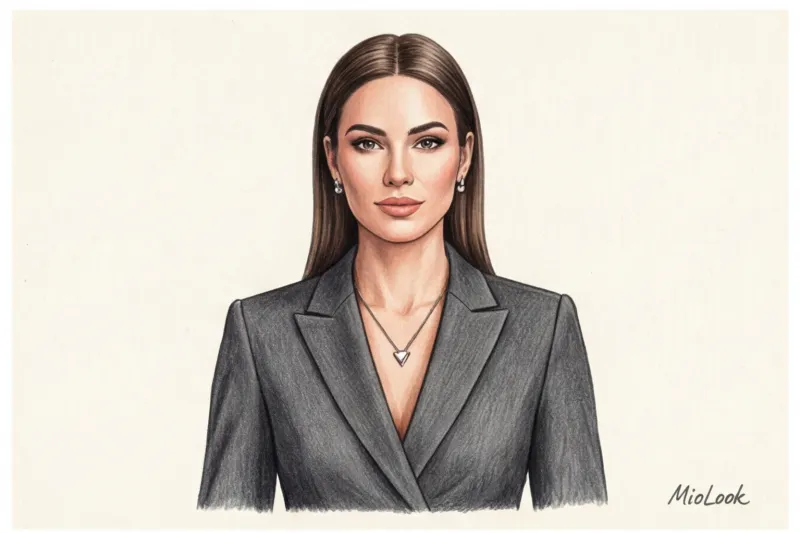
V-neck — the perfect canvas for pendants on a chain. The principle of overlapping works here: the pendant should form a V, tapering downwards and echoing the lines of the neckline. The optimal length is determined individually, but the gold standard is for the pendant to end 2-3 centimeters before the edge of the fabric, creating a "breathing" effect between the metal and the garment. Absolutely avoid short chokers in this case. They will visually "cut" the neck in half, create a horizontal barrier, and completely destroy the graceful vertical line that the V-shaped silhouette was created for.
Turtlenecks and closed necklines. A high collar demands length and scale, as short, thin chains will simply disappear against the dense knitwear. Art Deco-style sautoirs, long chains with massive pendants (falling below the bustline), and, of course, large brooches are your surefire choices. A brooch on a cashmere turtleneck is the quintessence of Parisian elegance. Just remember to always consider the density of the fabric: heavy metal shouldn't weigh down delicate silk or fine merino wool.
Boat neckline (Bateau). Historically, this cut broadens the shoulders horizontally and beautifully reveals the collarbones. Filling the resulting space with long vertical pieces at the neck is avoided, as this will disrupt the proportions. The correct solution is long, statement earrings that hang down to the shoulders, or very short chokers that fit snugly around the neck. The most important rule: the jewelry should never cross the line of the fabric, otherwise it will create that same imbalance and create the feeling of dressing in the dark.
Off the shoulders. When your décolletage is completely bare, you have two surefire options. Either leave your neck completely bare and wear luxurious, statement chandelier earrings, drawing the focus to your face and the beautiful curve of your neck. Or choose a chunky plastron necklace to fill the empty space. The math here is strict: never wear both at the same time, to avoid weighing down your upper body.
Jewelry Etiquette for the Office and Public Speaking
While the geometry of the neckline dictates the shape, the context of the situation determines appropriateness. In corporate styling, there is a rigid, yet highly effective 13-item rule It states that a strict dress code requires a woman to wear no more than thirteen accent details at any one time, including buttons on a jacket, a belt buckle, a watch, and eyeglass frames.
Let's use a real-life example to calculate this. If your double-breasted blazer has six metal buttons, you wear glasses, and a classic watch—that's eight pieces. That leaves just five slots for jewelry. This could include a pair of simple stud earrings (two pieces), a wedding ring (one), and a thin chain with a pendant (two more). This meticulous calculation ensures you never cross the line between business elegance and overdressedness.
"The status of a female leader is not determined by the number of carats, but by the silence with which she enters the negotiation room."
When preparing top managers for public speaking, I always pay attention to sound. Bangle bracelets (which jingle with every gesture) and long, dangling earrings are absolute no-nos for business meetings, especially on stage. Once, at a major business conference in Geneva, a speaker had to interrupt her presentation because her massive earrings kept hitting the lavalier microphone, creating a deafening crackle in the entire room's sound system. Save kinetic, jingling jewelry for informal dinners.
When it comes to precious stones, the new norms of business etiquette have become slightly more relaxed, but remain ironclad. Diamonds during the day? Yes, but only as a basic accessory. Diamond studs up to 0.5 carats each or a thin tennis bracelet delicately peeking out from under the cuff of a cotton shirt are a sign of excellent taste. But diamond necklaces, evening chandeliers, or solitaire rings with stones over 2 carats in the office in daylight look like a desperate attempt to demonstrate wealth.
Choosing the right proportions of embellishments for different necklines can be difficult if you're used to doing it in a rush before going out. To avoid mistakes and easily maintain the 13-piece rule, I recommend collecting ready-made formulas in advance. the "smart wardrobe" feature in MioLook You can digitize your jackets, basic tops, and all your jewelry to visually create flawless combinations right on your smartphone screen. This saves time in the morning and eliminates those painful second thoughts in front of the mirror.
Watchmaking as the foundation of a prestigious wardrobe
“Nobody buys a Patek Philippe to tell the time” – this phrase from industry insiders perfectly describes the current reality.
In an era when every one of us carries a smartphone with atomic precision in our bags, the need for mechanical calibers would seem to have disappeared. But the paradox is that this is precisely why a good watch remains the ultimate status symbol. Understanding How to wear jewelry correctly We often forget that Swiss mechanics act as the most powerful nonverbal code. At a business lunch or a social event, they are read in a second, conveying your taste, financial independence, and respect for tradition to those around you.
At the intersection of fashion and Haute Horlogerie, strict investment rules apply. I always strongly recommend investing in classic shapes without visual clutter. The ideal choice for a basic capsule is a strict rectangular case (recall the iconic geometry of the Cartier Tank) or a simple round dial without excessive diamond embellishment. An investment in such a model in the $4,000 to $10,000 range pays off with decades of impeccable service, because minimalism here is directly proportional to elegance.
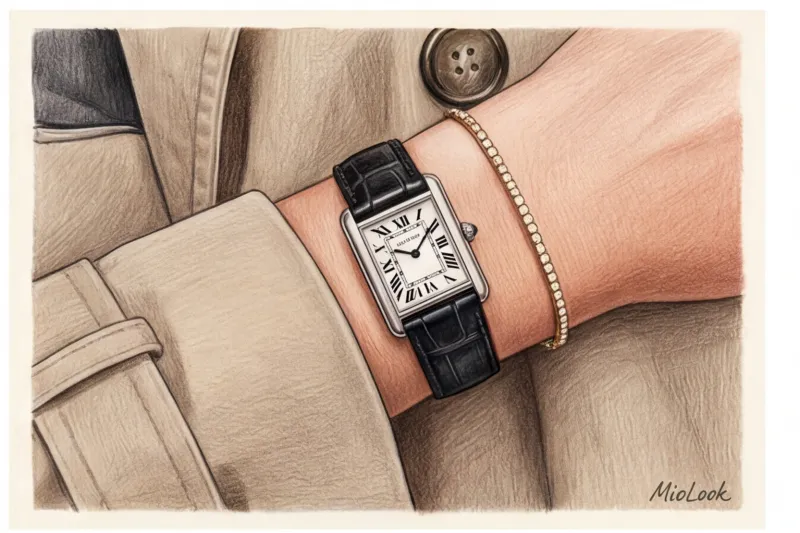
Once you've decided on the style, the inevitable question arises: a leather strap or a metal bracelet? According to classic etiquette, a matte leather strap (especially alligator in deep black, chocolate, or burgundy shades) is always considered more formal and conservative. It's perfect for strict corporate dress codes and won't visually clash with your rings. A metal bracelet (for example, the iconic Jubilee weave or the sleek Oyster) is a full-fledged jewelry statement. It slightly tones down the formality, veering toward elegant casual or evening chic. If you choose steel or gold for your wrist, make sure the metal doesn't clash with the rest of the watch.
But what about the everyday need to monitor your heart rate and read notifications on the go? Integrating an Apple Watch and other smartwatches into an elegant look is a real headache for many women. Let's be honest: a basic silicone strap is considered sports equipment. Pairing it with a silk blouse or cashmere jacket is a style crime. To avoid the gadget cheapening your look, immediately replace the factory-made plastic with premium leather, an elegant Milanese loop, or metal chain bracelets. Only then can a utilitarian device masquerade as a status item.
To make sure that the new metal bracelet for your smartwatch harmoniously matches your favorite earrings and rings, try putting together these combinations virtually through MioLook This is a great way to assess the balance of textures before leaving the house.
Your perfect look starts here
Join thousands of users who look flawless every day with MioLook.
Get access — €0.99 onceChecklist: Where to start building your jewelry collection
One day, a client came to my Paris office with a Birkin bag and... a velvet pouch filled to the brim with disparate necklaces, bracelets, and rings, bought on impulse. This chaotic collection cost around €8,000 in total, but there was absolutely nothing to wear with her basic silk blouse. It's a classic illustration of what happens when we buy accessories without a strategy, guided by a momentary impulse.
If you want to solve the problem of how to wear jewelry correctly and look classy on any budget once and for all, you need a system. Let's move from theory to practice. Below is your step-by-step shopping plan for beginners: from your first basic studs to a statement ring.
Before investing in complex shapes, you need to establish a foundation. This is the bare minimum that works like the perfect white shirt—appropriate anytime, anywhere, regardless of trends.
- Quality watch. This is your nonverbal anchor. Start with a steel or bicolor model in a classic diameter (28–32 mm). They tie your look together better than any bracelet.
- Earrings for every day. I highly recommend choosing smooth gold chuppahs (congo rings) up to 2 cm in diameter or classic diamond studs. Why choose these? This shape doesn't snag in your hair, doesn't clash with your coat collar, and literally illuminates your face, erasing signs of fatigue.
- A chain with a simple pendant. The ideal choice is a thin anchor chain, 40–45 cm long. The pendant should be minimalist: for example, a single diamond in a bezel setting or a small, smooth metal drop. It will create an elegant vertical line across the décolleté.
- One smooth or textured ring. This could be a modern signet ring without engraving, a wide cigar band, or a croissant-shaped ring. The lack of a scattering of small stones makes such a piece appear more expensive and versatile.
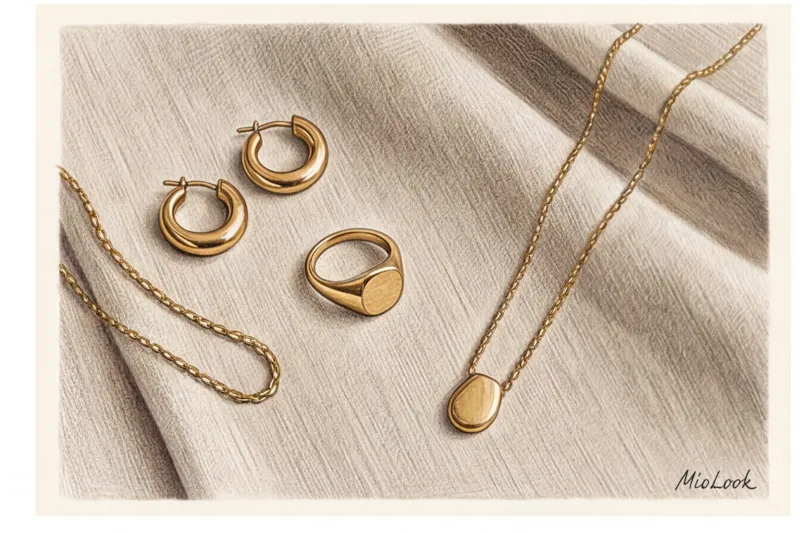
Only after this magnificent foursome is assembled do we move on to the next level. Your next step is to purchase a statement piece. A statement cocktail ring with a large semi-precious stone like citrine, smoky quartz, or malachite is ideal. Wearing it on your index or middle finger creates a strong focal point that instantly adds sophistication and thoughtfulness to your look.
Audit: The Art of Parting with the Excess
But buying new jewelry is pointless if your jewelry box is cluttered with visual clutter. How can you regularly inspect your jewelry box and get rid of outdated pieces?
I recommend following the "12-Month Rule" and conducting a rigorous audit every six months. Lay out all your treasures on a table in good daylight. Cheap, tarnished jewelry with glue stains and fallen rhinestones should be discarded without hesitation—it only cheapens your look.
What should you do with old jewelry? For example, those gold earrings with an intricate floral pattern and an English clasp from the early 2000s that your relatives gave you? Don't keep them as dead weight. Take them to a reputable repair shop and have them re-melted into a trendy, rigid choker chain or a sleek bangle bracelet. Gold is a resource that should complement your style, not gather dust in a safe.
To make the revision process less of a chore and more of a convenient tool, digitize it. Digitize your essential items by adding them to MioLook When your jewelry and clothing collection are in the same app, you instantly see gaps in your wardrobe. You'll stop buying the fifth identical pendant and start investing only in what's truly missing to complete your looks.
True elegance is always the discipline of eliminating the unnecessary. Start your transformation this evening: take an honest inventory, create a shopping plan for the essentials you're missing, and enjoy how effortlessly and flawlessly your looks will come together each morning.
Guide Chapters
What earrings to wear with glasses: stylist tips
80% of the person's attention is focused on your face. We'll tell you how to pair frames and earrings to look stylish and compelling.
How to Wear a Brooch Stylishly: Stylist Tips
A brooch is the perfect way to transform basic casual into impeccable chic. Let's dispel the myths about this accessory and learn how to style it in a new way.
How to Store Jewelry: Rules for a Jewelry Wardrobe
Ordinary jewelry boxes often become "black holes" for your accessories. We'll show you how to create a convenient and visual jewelry storage system.
Jewelry Dress Code for the Office: Stylist Tips
Modern business style has evolved: strict formalities are a thing of the past, but the rules of appropriateness remain. We'll explain how to choose the right accessories for work.
What Jewelry to Wear with a Turtleneck: Stylist Tips
A thin chain can snag into cashmere and ruin the garment. We'll explain how to choose the right accessories for winter knitwear without relying on outdated rules.
Jewelry for an evening dress: rules for the perfect look
The right accessories are the key to a flawless evening look. We'll explore common mistakes and learn how to pair jewelry like a professional stylist.
How to Wear Watches with Bracelets: Styling Tips
Pairing watches and bracelets isn't just a matter of aesthetics, but also of proportional design. We'll show you how to stylishly mix accessories without damaging them.
Gold or silver: which metal suits your color type?
Dispelling myths about choosing jewelry. Learn how to choose a metal that will enhance your skin's beauty, not dull it.
Layering: How to Wear Multiple Necklaces at Once
Tired of untangling your jewelry before going out? We'll explore the rules of perfect layering and learn how to create a stylish cascade with your favorite chains.
How to Wear Multiple Rings: Secrets to a Stylish Set
Ring combinations aren't random, but rather a thoughtful design. Learn how to create a stylish jewelry set to look luxurious and prestigious.
How to wear pearls in a modern way without looking older
A perfectly round strand of pearls can be incredibly aging. Together with a stylist, we explore how to incorporate this insidious accessory into a modern wardrobe.
Can you wear gold and silver? Style rules
For many years, mixing different metals was considered a fashion taboo. We'll explain how to properly combine gold and silver for a stylish look.
The Top Jewelry Trends of 2024: What to Wear This Year
The era of cheap, disposable jewelry is over. We'll tell you what shapes are trending this year and why it's worth investing in high-quality demi-fine jewelry.
How to Choose Earrings for Your Face Shape: A Guide to Proportions
80% of jewelry sits idle in jewelry boxes due to a lack of understanding of its proportions. Discover a systematic approach to choosing earrings that will accentuate your status.
How to Choose Jewelry to Match a Dress's Neckline: Stylist Tips
A well-chosen necklace can transform an outfit, while a mistake can visually distort proportions. Let's explore the basic rules for combining jewelry and necklines.
Basic Jewelry Wardrobe: Everyday Jewelry
How to stop wasting money on cheap costume jewelry and build the perfect jewelry collection. A practical guide to choosing durable jewelry.