Clients often come to me with the same request: "Darina, I bought a classic strand of pearls, as Coco Chanel instructed, but every time I wear them, I see a tired woman ten years older looking back at me in the mirror." And you know what? They're absolutely right. A perfectly round, snow-white strand of pearls isn't a universal magic wand, but one of the most insidious accessories in a woman's arsenal.
I understand this sounds like heresy to those raised on the glossy style rules of the 20th century. But the truth is that what worked in the 1920s, against the backdrop of a completely different makeup and clothing aesthetic, mercilessly ages 90% of modern women in 2024. The problem lies not in the stone itself, but in the imbalance of the geometry and temperature of the face. In this article, as a colorist and stylist, I will explain... How to wear pearls in a modern way so that it illuminates the skin and does not emphasize wrinkles.
Before we dive into specific formulas, it's important to understand how this organic mineral fits into your overall accessory system. We covered jewelry architecture in more detail in our complete guide to jewelry wardrobe , and now let's look at the physics of pearl light.
Why a classic strand of pearls ages: A colorist's perspective
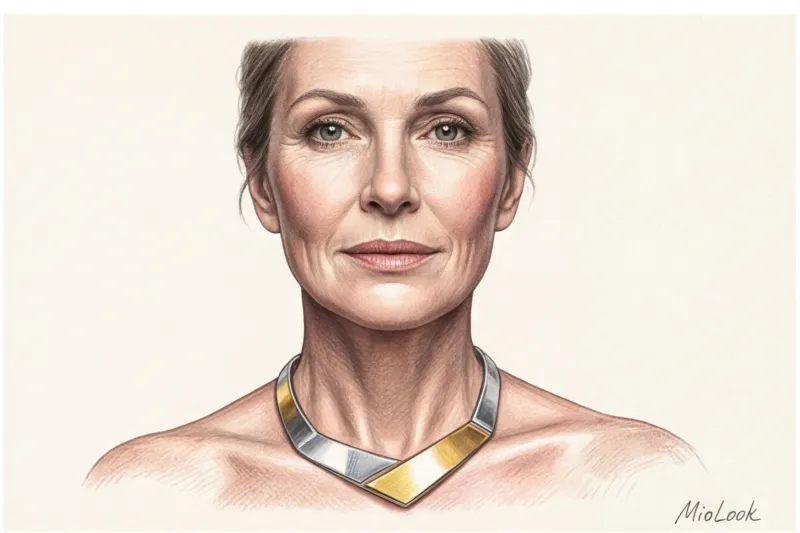
Let's look at the classic pearl strand from the perspective of the laws of optics and color. A perfectly perfect circle is a rigid, uncompromising geometric shape. As we age, the facial oval naturally loses its former symmetry: nasolabial folds appear, and the jawline changes. By placing perfect spheres right next to the face, you create a ruthless contrast. According to Itten's Law of Contrast, the ideal always emphasizes the imperfect.
The second issue is temperature and light reflection (reflex). A classic, snow-white pearl has a cool undertone. As a colorist, I constantly observe this effect in practice: white pearl casts a cool, almost bluish reflection on the skin. If you have the slightest signs of fatigue, dark circles under your eyes, or age spots, white pearl will act as a spotlight, focusing these areas.
"The biggest mistake when choosing pearls is ignoring their optical properties. Pearls that are too white and matte will draw out the warm tones of your skin, leaving an earthy undertone."
And finally, the "set effect" or parure. Wearing identical earrings, necklaces, and rings from the same set instantly evokes the aesthetics of the Soviet nomenklatura or the conservative 90s. Modern styling is built on a slight casualness, while the perfect set conveys excessive effort.
Access to MioLook for €0.99 — one-time payment
A smart AI stylist will select the perfect look and help you incorporate trendy jewelry into your wardrobe.
Get access — €0.99 onceThe Main Rule of 2024: How to Wear Pearls Modernly
If classic design isn't working, what's the answer? The answer lies in deconstruction. Contemporary jewelry houses like Completedworks and Sophie Bille Brahe have long abandoned perfect spheres in favor of chaos, asymmetry, and deliberate casualness.
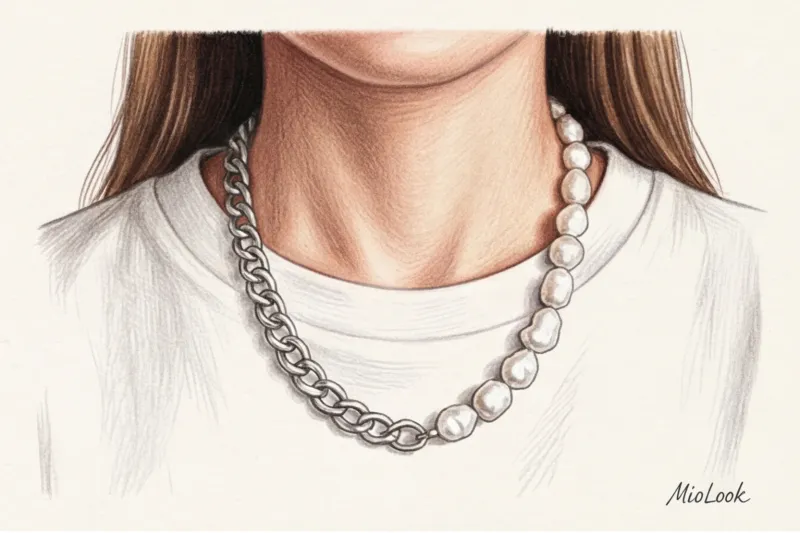
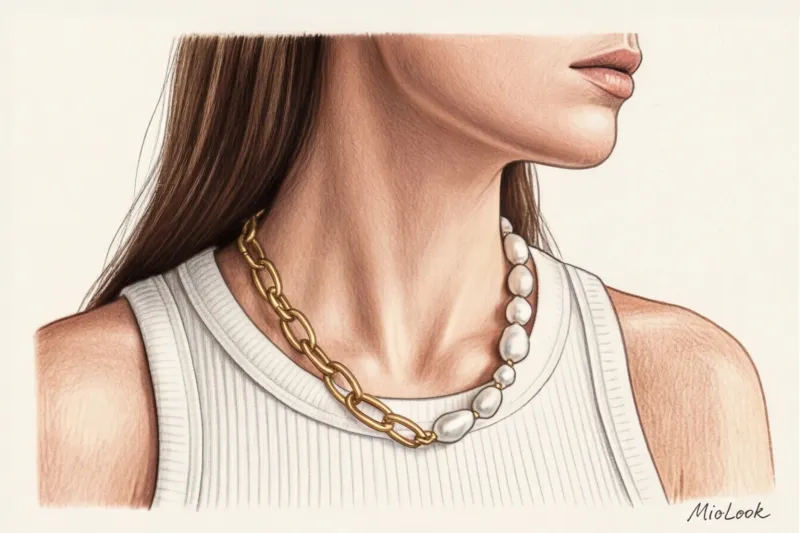
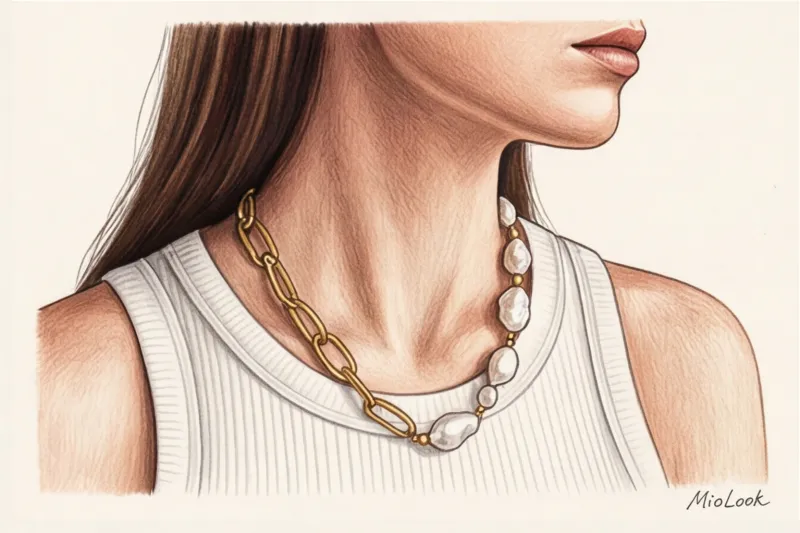
The main principle of modern jewelry styling is contrast of textures Noble, delicate mother-of-pearl should be juxtaposed with something rough and earthy. Forget delicate chains. Pair pearls with chunky chain links, crushed gold, blackened silver, or even leather laces. This stylistic approach removes the "dust of centuries" and pretentiousness from pearls.
By the way, if you have any doubts about how these textures will look with your everyday clothes, I recommend digitizing your things through MioLook app There you can imagine how a new necklace will fit on the collar of your favorite jacket before buying it.
Baroque, Keshi, Blister: Choosing the Right Shape
According to Lyst, searches for baroque pearls have grown by 40% between 2023 and 2024, finally displacing classic round shapes. Why?
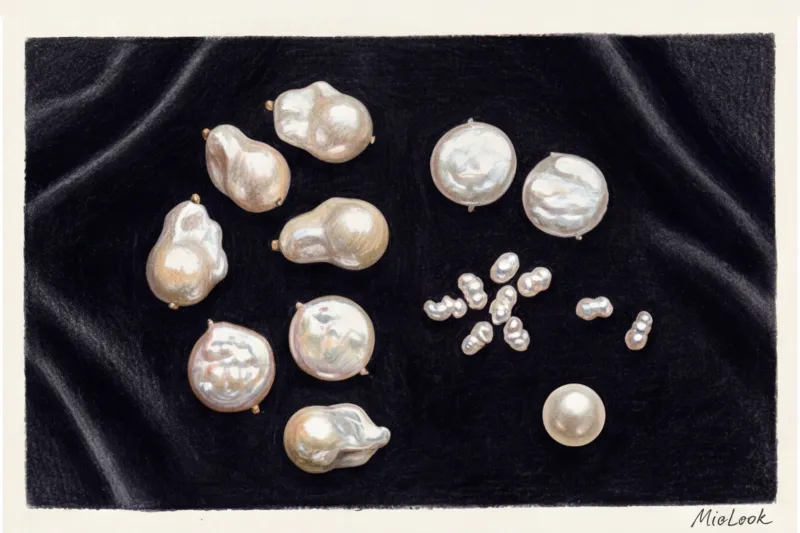
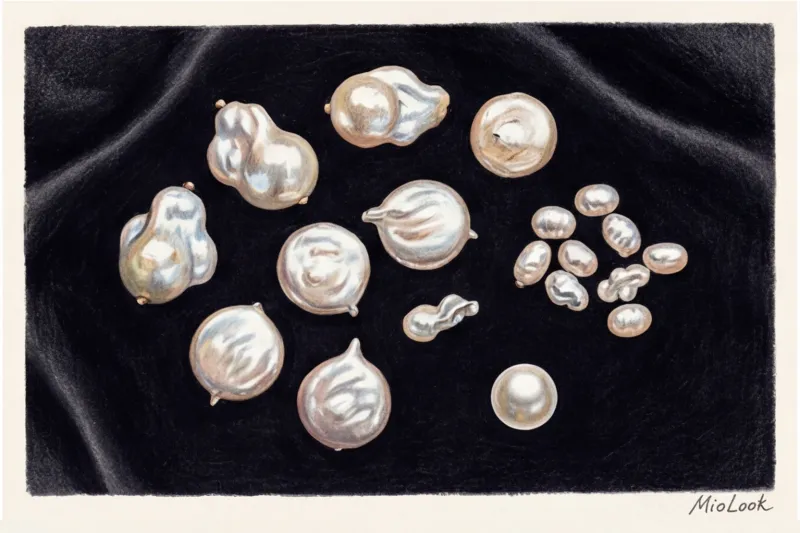
- Baroque: These pearls are irregular, bumpy in shape. Their imperfections act as a lifeline for the face—their lack of strict geometry doesn't conflict with our natural curves. Each pearl is unique.
- Keshi and Coins: These are anode pearls, often flat, resembling petals or flattened coins. They sit incredibly beautifully on the collarbones, creating the illusion of a "second skin," and reflect light beautifully thanks to their wide surface.
- Blister: A pearl grown on a shell. Often sold directly in a piece of mother-of-pearl shell. It looks like an art object, not just a piece of jewelry.
Combination formulas: integrating pearls into everyday looks
At a recent shoot for a local brand, I tested different background textures for a pearl choker. And I was convinced once again: the simpler the outfit, the more expensive the pearls look. If you wear it with a silk blouse with a bow, you'll get a "mature schoolmistress" look. But swap out the blouse for the right base, and the magic comes back.
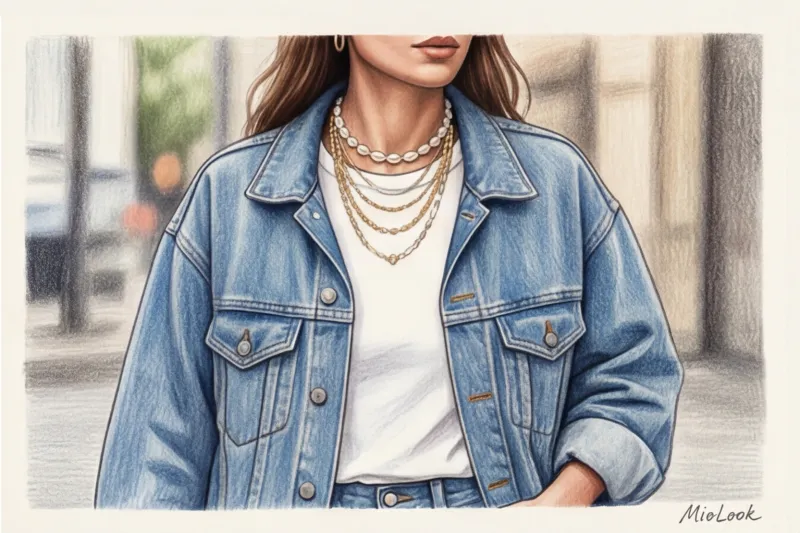
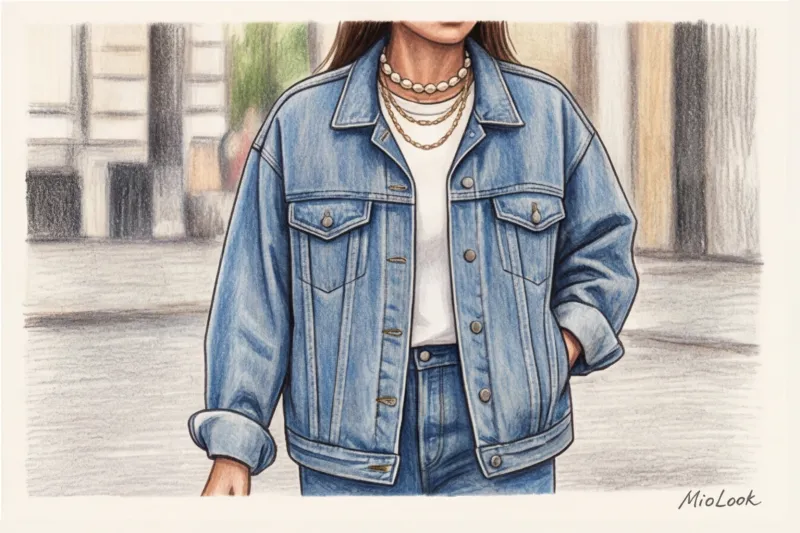
Formula 1: Pearl + Denim. This is my favorite recipe for reducing pretentiousness. A thick, rough denim jacket (at least 12-14 oz cotton) or a stonewash shirt is the perfect backdrop. The flawless sheen of the mother-of-pearl against the work fabric creates just the right amount of tension that makes the look stylish.
Formula 2: Pearls + Volumetric Knitwear. Here, we play with the difference in volume. Large baroque earrings look stunning with a chunky knit sweater (look for blends with mohair or alpaca). The main rule: the sweater's neckline shouldn't clash with the jewelry. If the sweater has a turtleneck, remove the necklace and leave only the statement earrings.
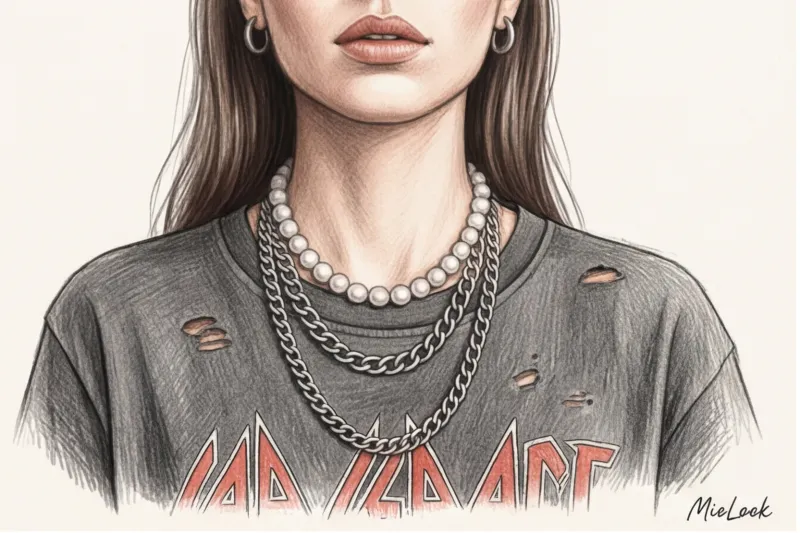
Formula 3: The Art of Neckmess (neck in disarray). Layering is the trend. How to put it together? Take a short pearl choker (baroque or beaded pearl) and add two or three metal chains of varying lengths with pendants, medallions, or coins. Limitation: This technique doesn't work at all on printed tops. The background should be monochrome (a basic white T-shirt or a plain top).
Your perfect look starts here
Join thousands of users who look flawless every day with MioLook. Plan pearl looks in just a few clicks.
Get access — €0.99 onceHow to choose pearls according to your skin tone
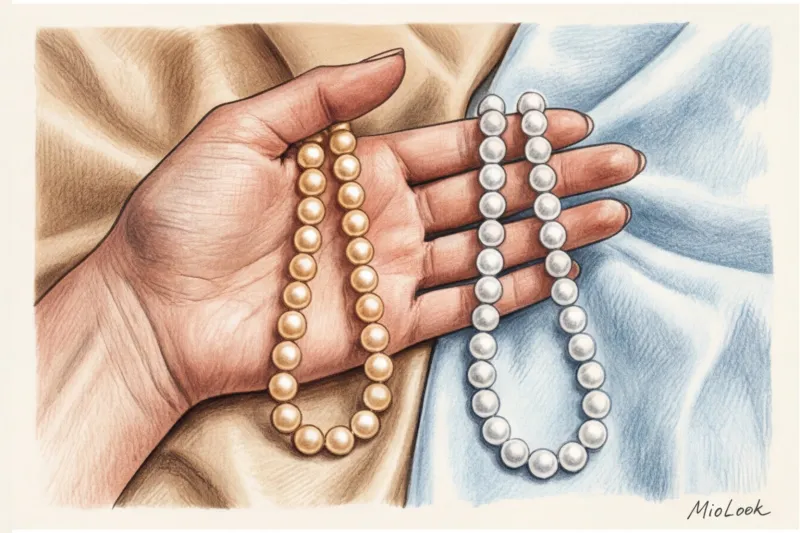
We've reached my signature expertise. Choosing a pearl's color isn't a matter of taste; it's a matter of strict coloristic mathematics. According to the Gemological Institute of America (GIA), a pearl's color is composed of its base color and its overtone (the translucent hue on the surface). It's the overtone that determines whether you'll sparkle or look sallow.
For warm colors (Spring, Autumn): If your skin has a peachy, golden, or olive undertone, snow-white pearls are strictly contraindicated. They will make your face look gray. Look for pearls in champagne, cream, gold (such as South Sea pearls), or with warm pink undertones. They will blend with your natural coloring, working as a highlighter.
For cold colors (Winter, Summer): Your skin has a pinkish or porcelain-blue undertone. Here, classic white pearls with silver overtones will work beautifully. Also consider Tahitian pearls—deep taupe, graphite, eggplant, and petrol shades will make your eyes incredibly bright.
Besides color, pay attention to chandeliers (intensity of light reflection). Pearls with a high luster (when you literally see your reflection in them) illuminate the face. Dull, chalky pearls (often a sign of low quality) absorb light and look flat.
Pearls in Business Style: From Strict Dress Code to Smart Casual
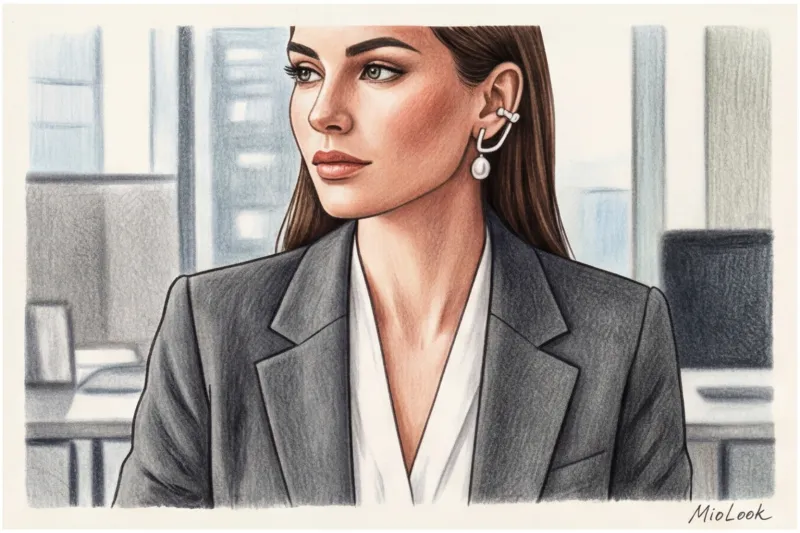
How to wear pearls to the office without looking like a headmistress from a Soviet movie? In business attire, we balance status with modernity.
If you have a strict corporate dress code, avoid long sautoir earrings. A great alternative is irregularly shaped studs. Not round "peas," but slightly flattened Keshi pearls. They look understated, but upon closer inspection, they reveal your taste.
For a smart casual look (for example, a Friday dress code where high-quality dark jeans and a structured jacket are acceptable), try pairing a single earring with a large baroque pearl or a simple ring with mother-of-pearl set into solid, smooth gold. Pair pearls with a statement watch on a metal bracelet—the juxtaposition of cool steel or gold with organic materials instantly elevates your expert image.
A Stylist's Checklist: A Revision of Your Pearl Box
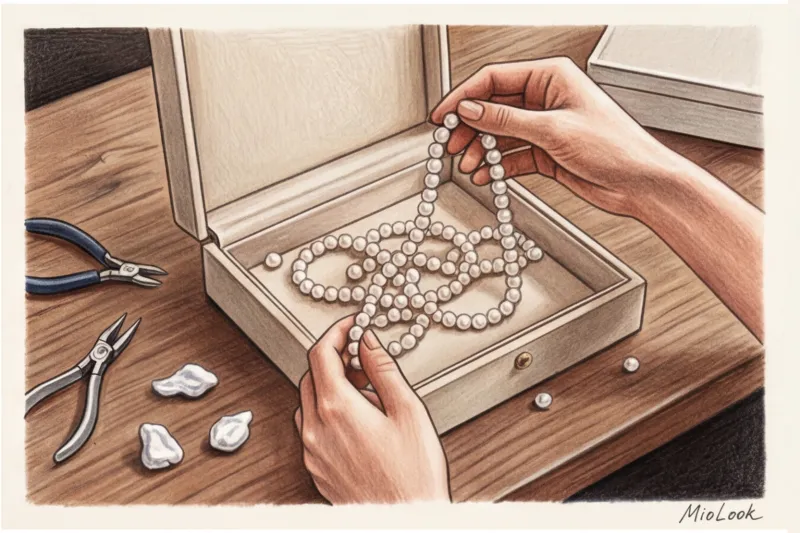
A year ago, a client approached me about throwing out her Mikimoto heirloom necklace, valued at around $2,000. "It makes me look like a grandmother," she complained. I categorically forbade her from doing so. We took the necklace to a jeweler and reassembled it: we broke up the neat row of pearls with asymmetrical inlays of crushed gold and added a modern lobster clasp, which she now wears at the front as a stand-alone accent. The necklace has become her favorite everyday piece.
Here's your step-by-step plan for revising your jewelry box:
- What to put away: Solid round necklaces (when the earrings, ring, and necklace are identical). Thin strands of small pearls worn at the neck without pendants or accents—put them aside for now, this micro-trend is too difficult to style without the risk of looking dated.
- What to redo: Old long beads. Give them to a artisan. Ask them to add hematite, spinel, or metal beads between the pearls. Make a choker and an asymmetrical bracelet from one long strand.
- What to invest in: Using the Cost-per-wear formula, the pieces that will pay for themselves the fastest are: statement earrings with dangling baroque pearls (wearable with jeans or an evening dress), a half-chain and half-pearl combination necklace, and a signet ring with a mother-of-pearl inlay.
The key to stylishly wearing pearls is to stop treating them with reverence. They're not a museum piece. The more boldly you integrate them into your everyday, slightly casual wardrobe, the more youthful, dynamic, and modern your look will be.