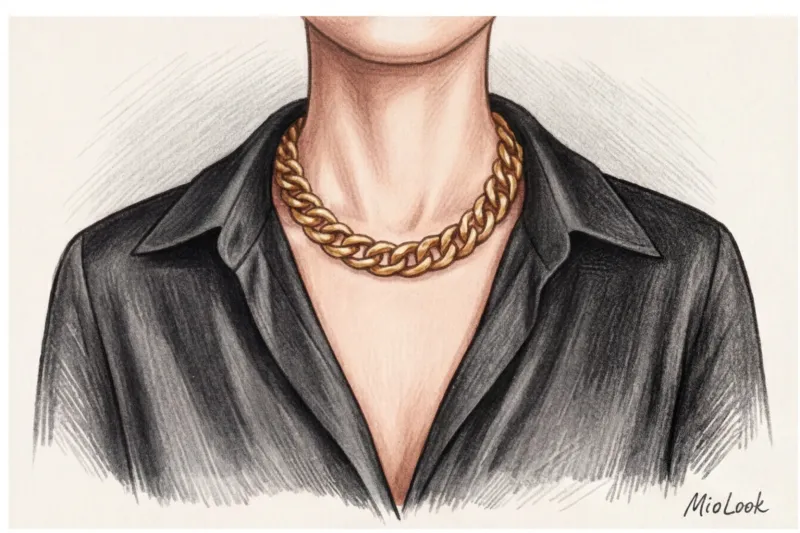
Last week, a new client and I were sorting through her jewelry box. It's a classic scene I see every other wardrobe review: two dozen haphazardly purchased necklaces that constantly get tangled, and... not a single one works. She tried to "save" a chunky, chunky-knit Massimo Dutti sweater with a thin necklace with a tiny cross, and then layered it on with a massive rhinestone necklace. As a result, she visually added 10 kilograms to her shoulders, and her neck began to look half as long. Sound familiar?
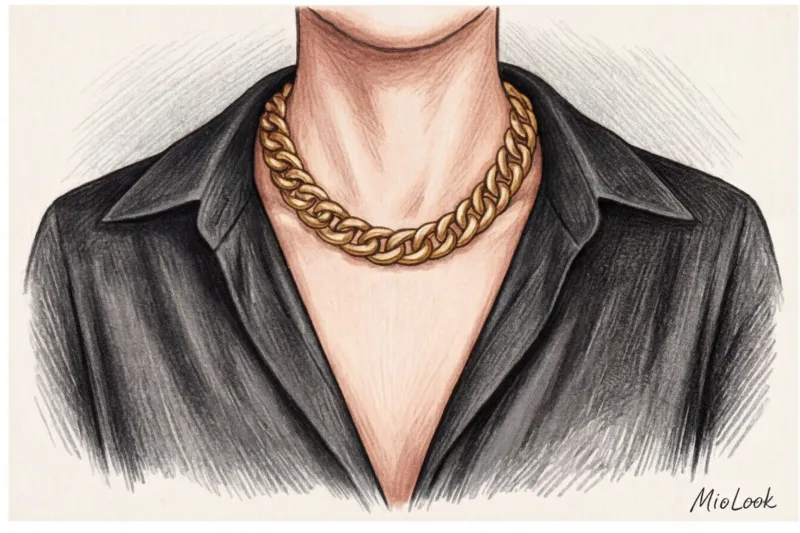
We can spend hours searching for the perfect basic T-shirt or jacket, but often ruin it in the last five seconds before leaving the house. Choosing the right jewelry to match the neckline of a dress or blouse isn't magic or an innate gift. It's pure geometry, an understanding of visual weight, and a knowledge of your proportions. We've covered the basic principles of creating a cohesive look in more detail in our The Complete Jewelry Wardrobe Guide: How to Wear Jewelry Properly , and today we'll look at a specific and most common problem: the design of the portrait area.
Why the Old Rules Don't Work Anymore: A New Look at Neckline Jewelry
Over 14 years as a stylist, I've thrown out dozens of outdated style guides. If you've ever read advice along the lines of "a square neckline requires a strictly square pendant, and a V-neck requires a triangle-shaped pendant," forget it. Today, such linear geometric shapes look like you've tried too hard. They make the look mothballed and artificial.
My clients often widen their eyes when I suggest pairing a strand of classic baroque pearls with an oversized sporty hoodie, or a stiff metal tube choker with the deep V-neck of a flowing silk blouse. But it's precisely this contrast of form and meaning that brings a modern look to life.
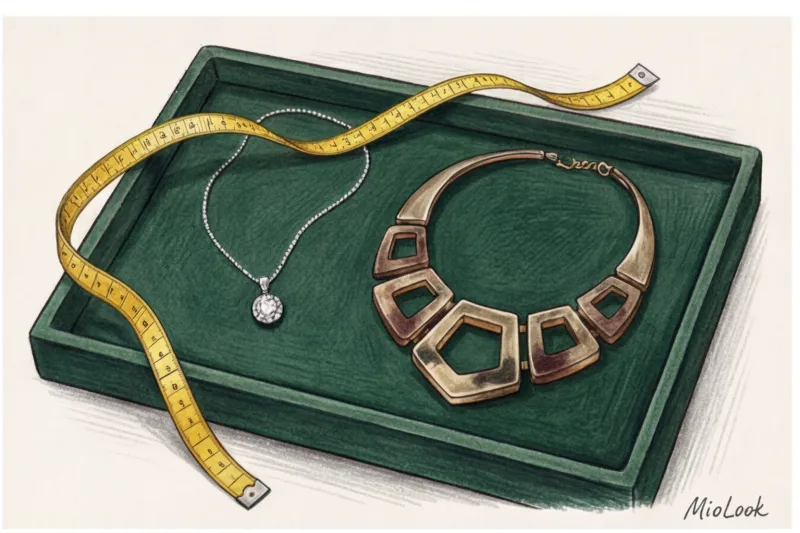
According to the WGSN global trend report (2024), eclecticism has replaced the strict rules of jewelry etiquette. The concept of "visual weight" now rules the roost. The density of your garment directly dictates the density of the metal. Light linen, fine viscose, or silk call for graceful lines. But heavy denim (12 oz and over) or winter sweaters Aggressive support is required: massive links, cast metal, or large plastic. A thin chain on thick cashmere will simply get lost and look lonely.
The Anatomy of a Perfect Match: How to Match a Necklace to Basic Neck Shapes
The foundation of a proper jewelry wardrobe is built on one uncompromising rule: avoid clashing boundaries. This means that your jewelry should either lie entirely on exposed skin, with a 2-3 centimeter margin, or sit confidently on top of your clothing.
As soon as a pendant starts to peek out timidly from under the edge of a neckline, hide behind a shirt collar, or cut in half by the neckline, the look instantly becomes unkempt, as if you were getting dressed in the dark.
V-neck: from minimalism to layering
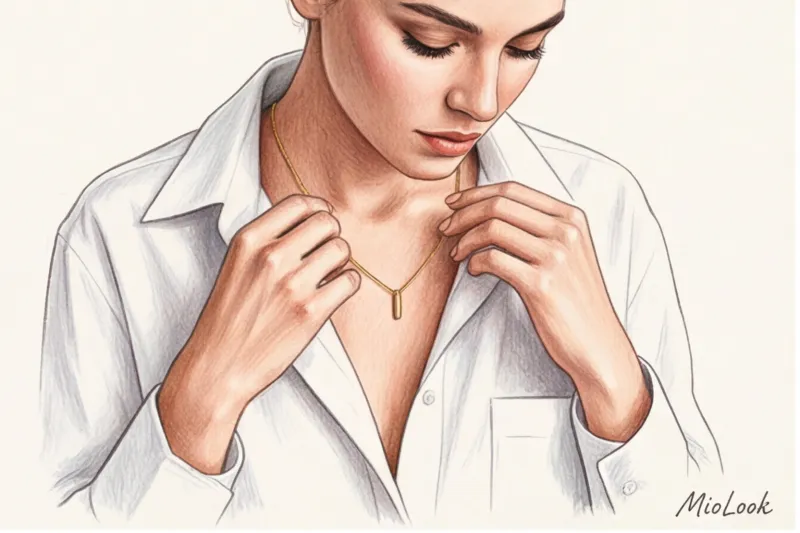
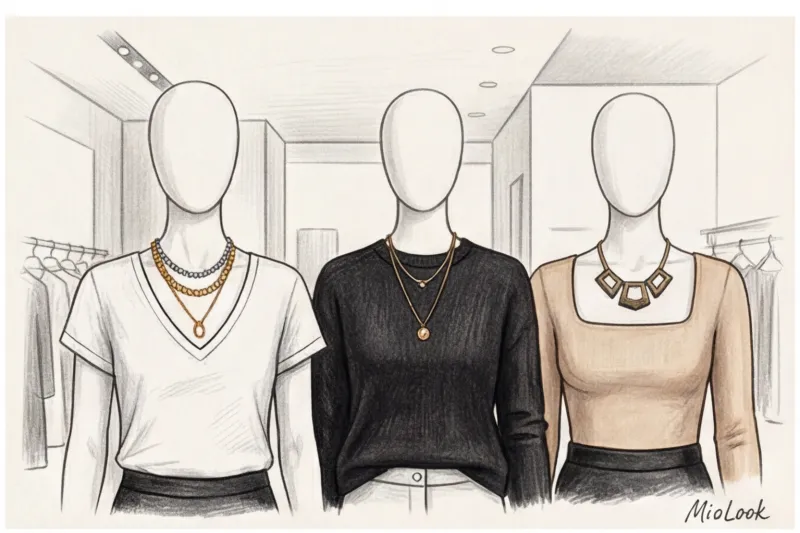
A classic, fail-safe solution for a V-neckline is a pendant on a 45-centimeter chain (in jewelers' standards, this length is called a "princess"). It creates a neat vertical line and provides ample air space between the metal and the hem of the garment.
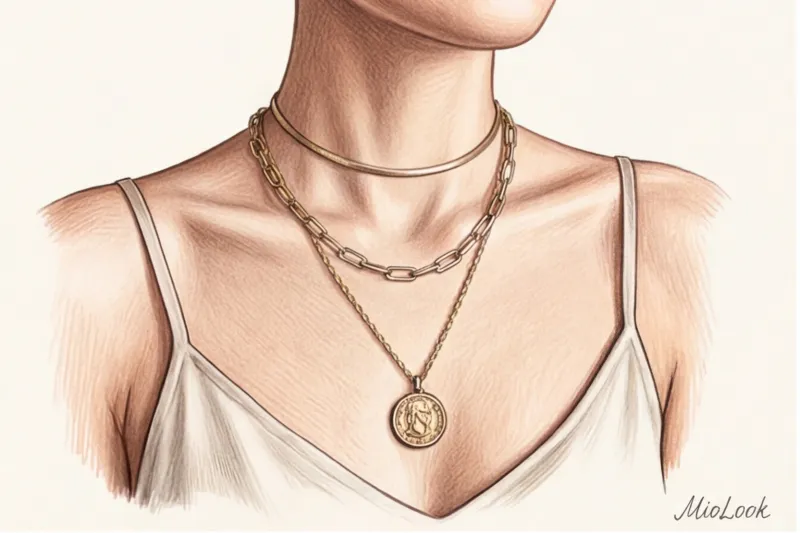
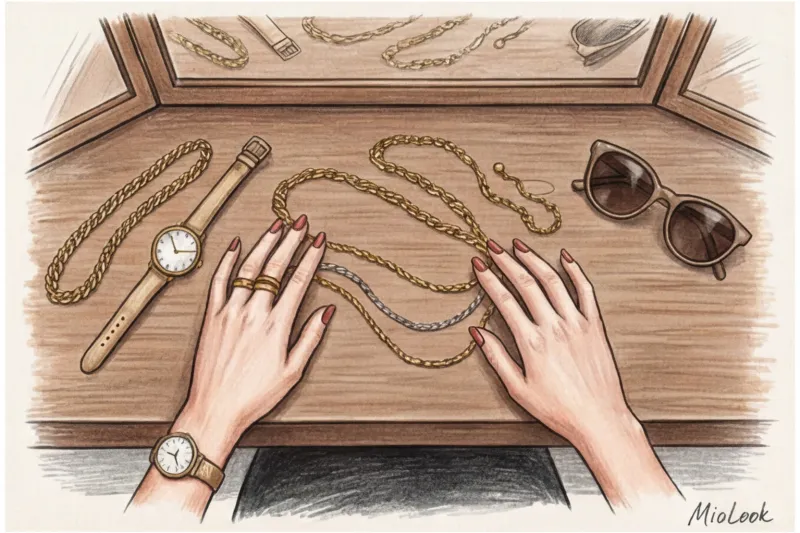
But if basic elegance seems boring to you, try a modern trick: layering. Use three chains of different weaves (for example, a thin 40 cm snake chain, a 45 cm anchor chain, and a pendant on a 50 cm chain). The main rule is to leave at least 2 centimeters between the tiers, otherwise they will clump together into an uneven mass.
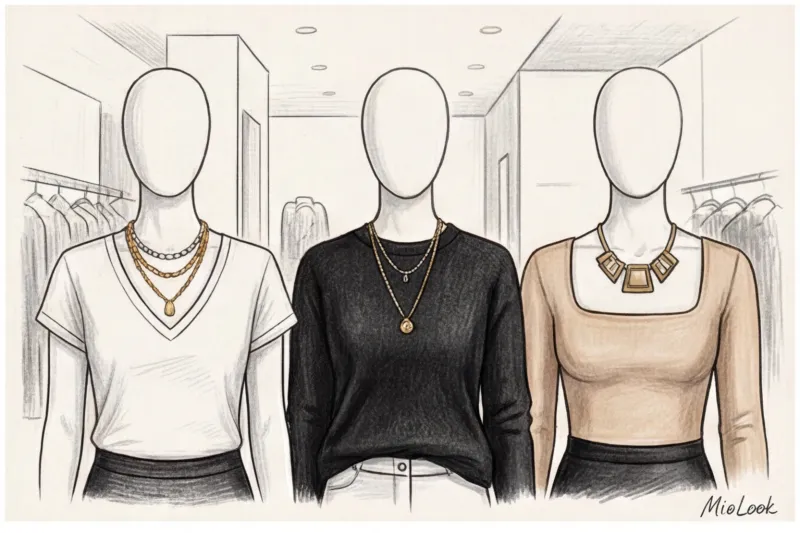
A contrasting piece I've already mentioned: a chunky short choker (35 cm), sitting snugly at the base of the neck. The expanse of bare skin between the choker and the plunging neckline creates an incredibly sexy yet understated accent.
Your perfect look starts here
Join thousands of users who look flawless every day with MioLook. A smart AI stylist will help you find the perfect combination of clothing and accessories.
Get access — €0.99 onceRound neckline: saving your look from the "plain" effect
With round necklines, the situation is twofold. If we're talking about a deep round neckline (U-shaped), it leaves a huge area of empty skin. This is the perfect canvas for massive, statement necklaces to fill the space. Large geometric elements or voluminous pearls work great here.
But the high crew neck, typical of T-shirts from basic brands like Uniqlo or COS, is tricky. Short necklaces are a no-no here; they'll constantly fall under the collar. Your salvation is long sautoirs (at least 60 cm) or necklaces with large coin pendants that will lie flat on the fabric, creating an artificial vertical V and elongating the silhouette.
Square neckline (bob) and boat neckline
A square bob neckline beautifully accentuates the collarbones. To avoid disrupting this delicate geometry, choose very short, delicate necklaces (35-40 cm) or thin chains that end just above the neckline.
The bateau neckline, made famous by Audrey Hepburn, visually broadens the shoulders. Short, round necklaces are absolutely out of place here—you'll look like a closet. The best solution is long, thin pendants (waist-length) that will balance out the width of the shoulders with a slender vertical line. Alternatively, eschew necklaces entirely in favor of statement earrings.
Scale and Proportion: How Bust Size and Neck Length Dictate the Rules
In styling, we constantly use the laws of visual illusions. For example, in the psychology of perception, there's the Müller-Lyer law, which perfectly explains how leading lines influence length perception. A wide, flat choker acts as a horizontal line—it visually "cuts" the neck, making it appear shorter and wider. Meanwhile, a chain hanging down like a check mark adds a precious few centimeters to the neck.
We were once styling a wardrobe for a 160 cm tall client for her presentation at an IT conference. She wore a dark sheath dress with her favorite short, turtleneck necklace. The silhouette looked bulky and squat. We simply replaced the necklace with a minimalist pendant with a longer chain (55 cm instead of 40 cm), and she appeared taller and slimmer. Just 15 centimeters of metal, but the difference was enormous.
But here I must make an important warning. There is a fair limitation: this advice with long sautoirs It doesn't work For women with a full bust (size D and above). A thin, long chain won't create a beautiful, even vertical line. It will either fall into the cleavage between the breasts or hang unattractively at the side, distorting the proportions. If you have a prominent bust, your choice should be jewelry that reaches just to the base of the bust (around 45-50 cm), but with sufficient visual weight (medium chains, large flat medallions) so that it lies flat.
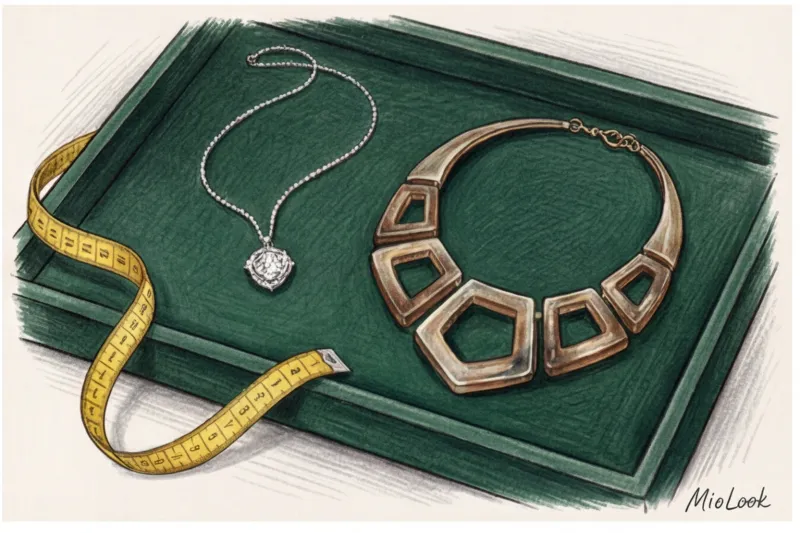
Also, remember the rule of proportionality. If you're petite, choose delicate details—even if it's layered, keep the chains thin. For plus-size women, overtly small pendants are a no-no, as they'll accentuate a larger figure. Choose more expressive, larger, and more legible elements.
The "Head-to-Toe Rhinestones" Mistake: When You Don't Need a Necklace at All
The ability to stop in time and remove excess is the main sign expensive and prestigious wardrobe The concept of status minimalism is based on the rule of "one accent zone".
You don't need necklaces and pendants at all if you wear:
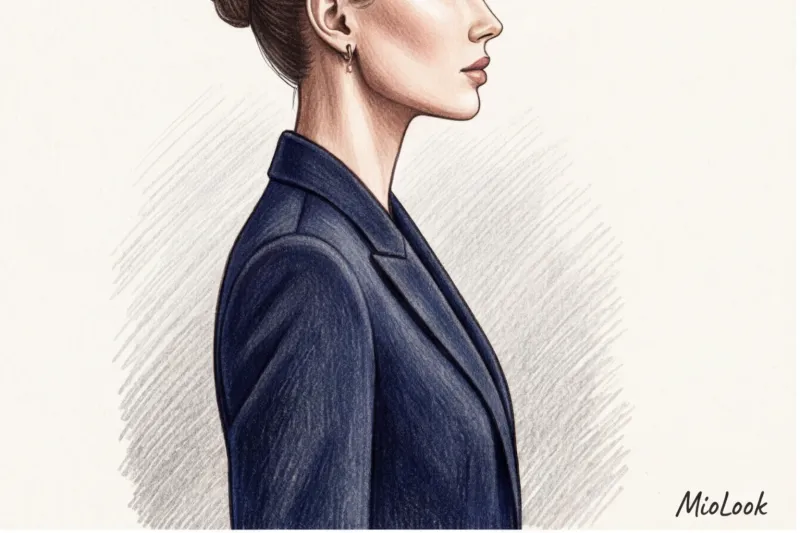
- Clothes with an American armhole, a cowl neckline or a stand-up collar with draping;
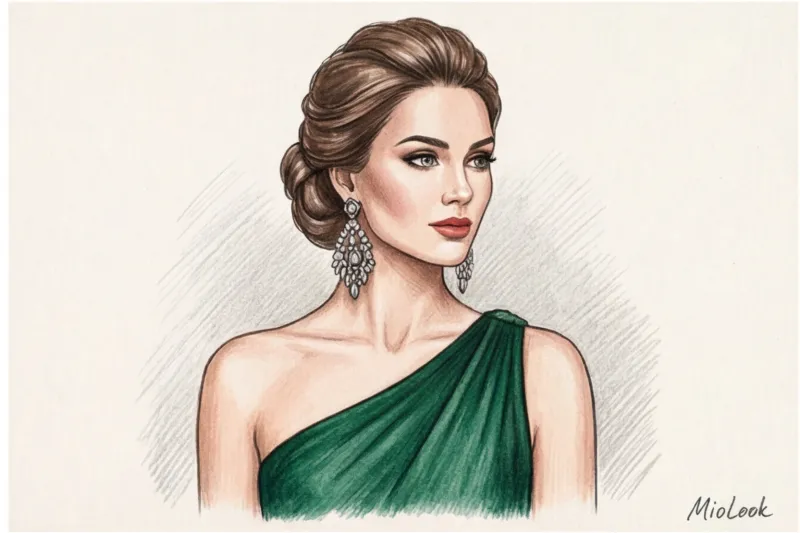
- Asymmetrical one-shoulder tops (a necklace will only break the complex diagonal cut);
- Blouses with abundant decoration on the chest (jabot, large flounces, active embroidery, sequins or rhinestones).
These design elements are completely self-sufficient. Adding a chain necklace will create the "I'm wearing my best at once" effect. Instead, shift the focus: opt for statement earrings (large studs or long chandelier earrings), or draw attention to your hands by layering a chunky bracelet over a cuff.
Olena Kovalenko's Checklist: How to Choose the Perfect Necklace Before Leaving the House
Getting ready in 15 minutes in the morning, choosing a look, and sticking to it all day is a skill that's easy to develop. Here's my personal, practical, four-step algorithm that I make every client learn:
- Evaluate the texture of the fabric. Fine silk, viscose, and cambric = fine jewelry work, delicate links. Thick wool, tweed, and leather = chunky chains, thick metal, and large ceramics.
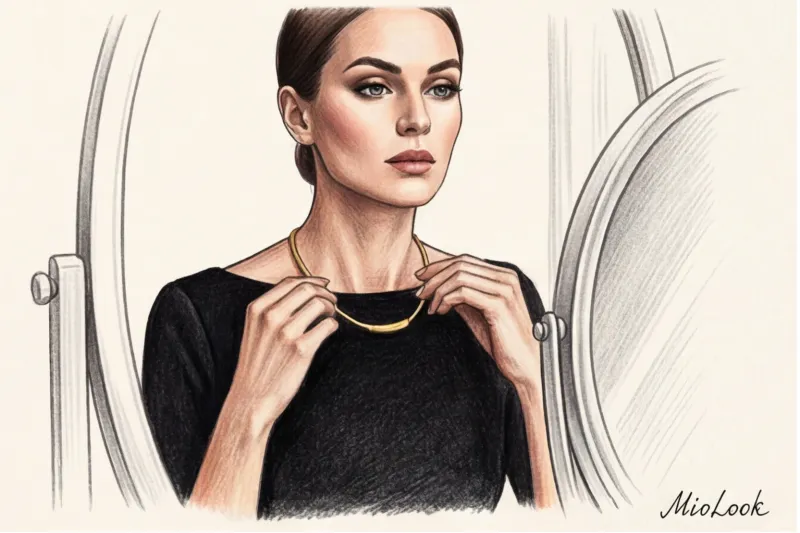
- Check for "boundary conflict". Look in the mirror: the hem of your dress or top shouldn't cut the necklace in half. There should be some air space between the necklace and the neckline, or the necklace should rest deep in the fabric.
- Test in motion. Never judge a look while standing at attention. Lean forward, turn from side to side, take a few steps. Is your pendant constantly flipping over? Is your chain getting caught in your shirt's neckline? Take it off and change it to a different length.
- Portrait zone assessment in a selfie camera. Our brains get too used to our reflection in a large mirror. Raise your phone to chest level and take a quick selfie of your face. The photo on your phone screen will instantly give you an objective picture: whether your look is airy or whether your décolleté looks overcrowded.
Access to MioLook for €0.99 — one-time payment
A smart AI stylist will help you review your wardrobe and suggest which jewelry will best complement your neckline.
Get access — €0.99 onceInvesting in a Basic: 3 Versatile Pendants for Your Jewelry Wardrobe
Let's talk about money and smart consumption. Do you know the cost-per-wear (CPW) formula? According to a 2024 McKinsey study on the evolution of consumer habits, purchasing a premium basic capsule collection pays for itself several times faster than fast fashion.
The math is simple: a 10,000-ruble silver chain that you'll wear 100 times a year will cost you 100 € per occasion. A cheap, mass-market necklace that costs 1,000 € and will peel after two corporate events costs 500 € per occasion. It's better to buy less, but more efficiently.
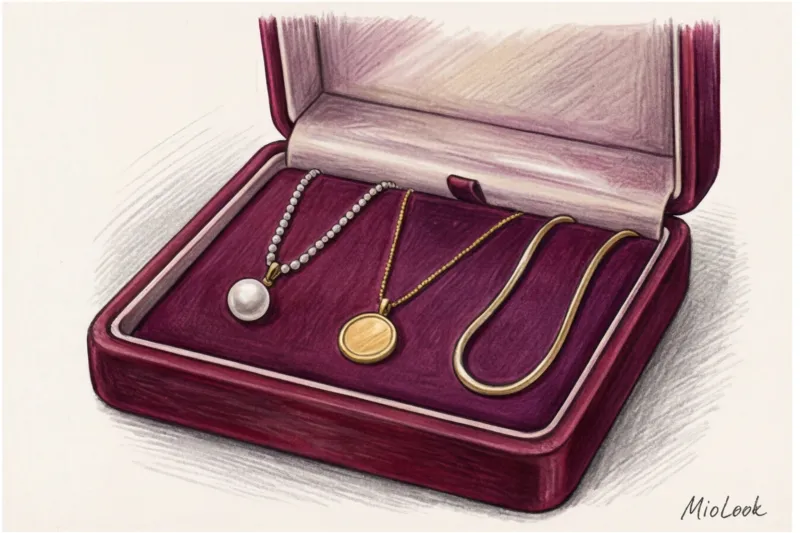
To cover 90% of your basic wardrobe needs—from a smart office shirt to a relaxed tee and silk slip dress—you only need three right accessories:
- Snake chain of medium thickness (40-45 cm). Smooth and seamless, it flows across the collarbones like liquid metal. It perfectly fills the space in open-collar shirts and looks luxurious when worn alone with deep necklines.
- Minimalist coin pendant on an anchor chain (45 cm). A versatile lifesaver for V-necks and basic tops. A subtle vintage touch always adds depth to any look.
- Long sautoir (lasso) or chain with a runner (60+ cm). A brilliant invention for thick turtlenecks, warm winter sweaters, and turtleneck dresses. The slider allows you to adjust the necklace's length to suit any garment's shape.
"Jewelry is the seasoning for your look. Under-salt it and it'll be bland; over-salt it and it'll be edible. Find your balance and don't be afraid to try new things in front of the mirror."
Don't try to buy everything at once. Open your jewelry box, take out all your necklaces and pendants, wear three different necklines (a T-shirt, a V-neck sweater, and a shirt), and simply follow the steps on the checklist. Understanding how lengths and textures work on your specific body will forever rid you of the "nothing to wear" problem and help you make smart investments in your style.