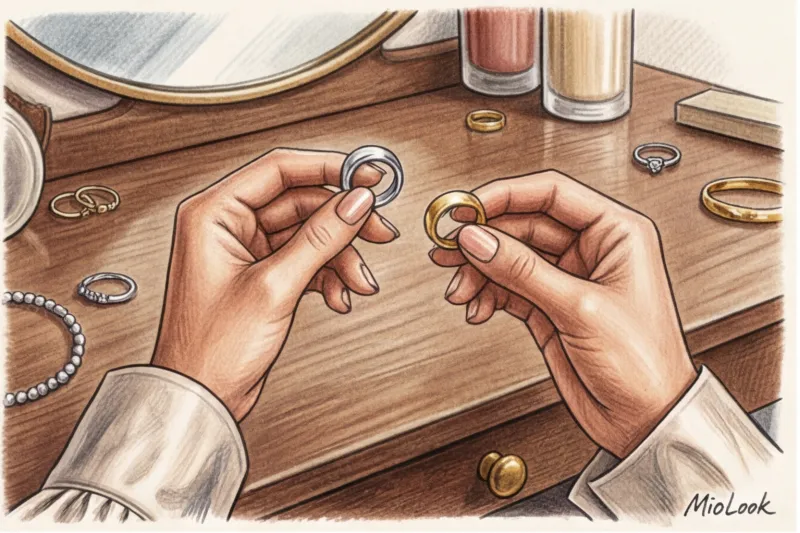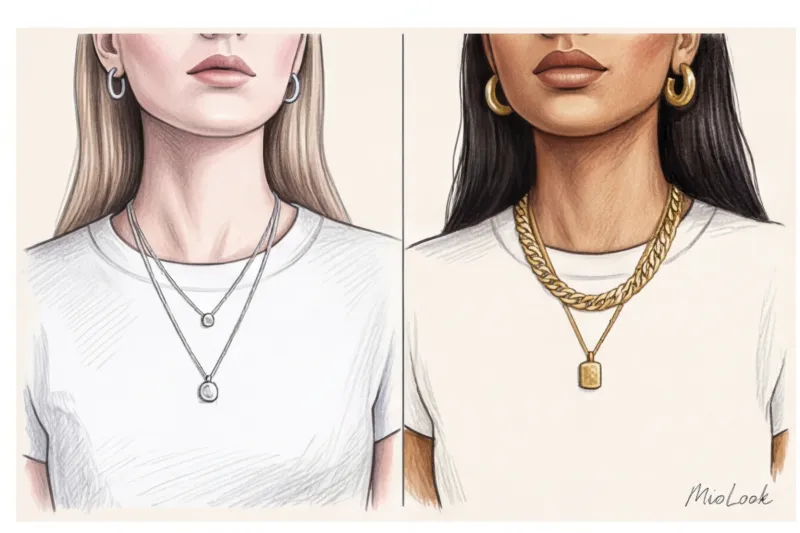
A couple of years ago, a woman came to me for a consultation with a heavy velvet bag. Inside were luxurious gold chains, earrings, and bracelets. "I'm giving these away to my friends," she sighed. "Yesterday, I took an online quiz and learned that I'm a typical 'Winter,' which means I absolutely can't wear gold. Only silver." The problem was that she had a pronounced olive undertone to her skin, and the cool shine of the silver, which she'd spent half her salary on, made her face look sickly gray.
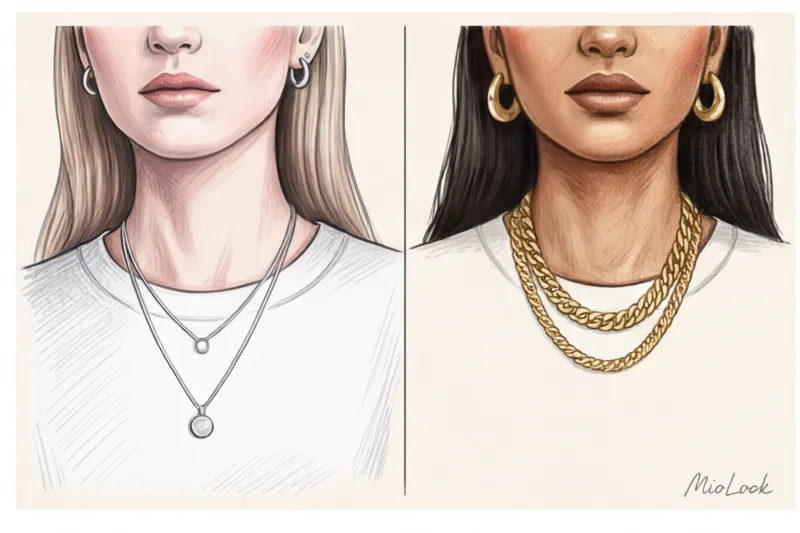
This story is a classic example of how outdated, rigid typing frameworks ruin style and make us waste money. When we discuss jewelry wardrobe and how to wear jewelry correctly , the first and main question always sounds like this: What metal suits my color type? Specifically for you? But we won't be looking for the answer in tables from magazines of the 2000s, but in modern styling rules, the physics of color, and a competent cost-per-wear calculation.
Why the old rules of color type no longer work
A classic myth, still circulated in many courses, goes like this: "Spring and autumn girls should wear only gold, while winter and summer girls should wear only silver or platinum." Over 12 years of working as a personal stylist in Europe, I've become convinced that this rule is hopelessly outdated. It completely ignores two crucial factors: the modern variety of jewelry alloys and the difference between skin tone and undertone.
Your skin tone (surface color) can change. In the summer on the Riviera, you got a tan—your tone became darker. In the winter at the office, it became lighter. But deep undertone (your appearance temperature) stays with you forever. Furthermore, adapting David Kibby's system to jewelry proves that contrast in appearance is more important than base temperature. One of my clients, with a distinctly cool "Summer" type, looks phenomenal in smooth 14-karat lemon gold. Why? Because the bright shine of this metal perfectly complements the high contrast of her facial features, whereas matte silver would be "lost" on her.
How to Determine Your Skin Undertone: 3 Stylist-Inspired Tests That Actually Work
According to the analytical agency WGSN (2023), approximately 70% of women misidentify their skin tone due to confusion between tan and undertone. To avoid being one of them, throw away digital "color cards"—smartphone screens always distort color reproduction. And here's the main rule: Never perform the test under a ring lamp. Artificial LED light mercilessly destroys the white balance, extracting non-existent blue or yellow tones.
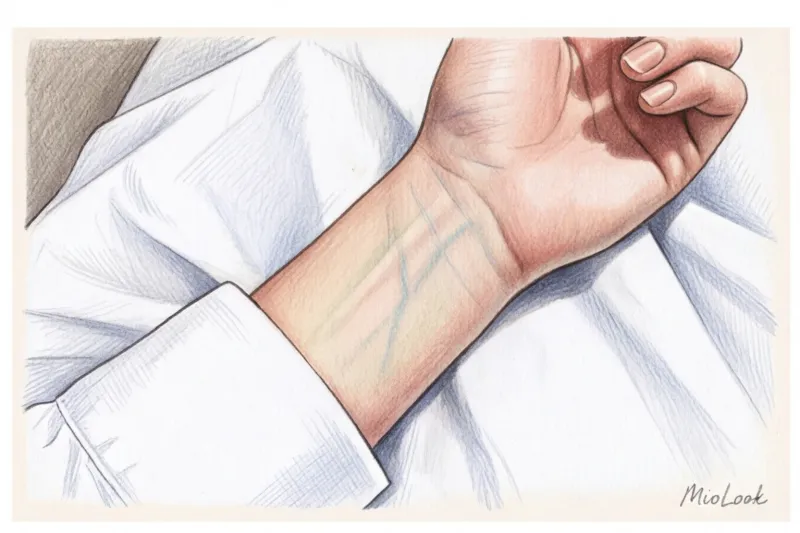
Vein test in daylight
Remove your makeup, go to a window on a cloudy day (direct sunlight is also not recommended), and look at the inside of your wrist. This is the most honest part of your skin.
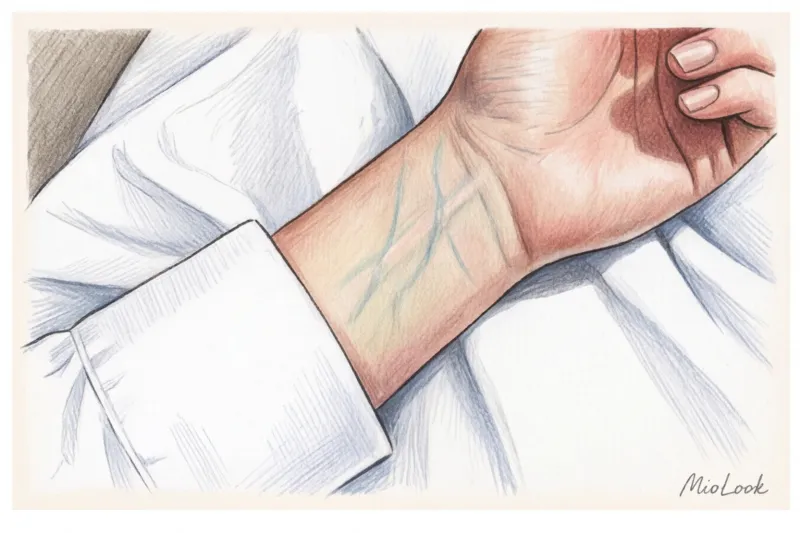
- If the veins are clearly blue or purple - You have a cool undertone.
- If they go to greenish or olive shade - warm undertone.
- See a mix of blue and green veins and you're having trouble deciding? Congratulations, you've got neutral undertone You are that rare person for whom absolutely all metals are physiologically compatible.
White cotton shirt test
Take two items: a crisp white cotton shirt (the color of office paper) and an ivory item (milky, slightly yellowish). Place them on your bare face, one after the other. If your face looks fresh and rested against the pure white, you have a cool undertone. If, however, the pure white suddenly highlights dark circles and redness under your eyes, while the milky color makes your skin "glow," you have a warm undertone. The same principle applies when choosing business wardrobe according to color type.
Access to MioLook for €0.99 — one-time payment
A smart AI stylist will select the perfect look based on your individual characteristics and wardrobe.
Get access — €0.99 onceWhich metal suits your color type: a modern cheat sheet
Having established the base, we can turn to Albert Munsell's principles of color, where the key is matching the temperature of the metal and skin. This creates harmony, so that the jewelry doesn't "shout out" but rather highlights your face.
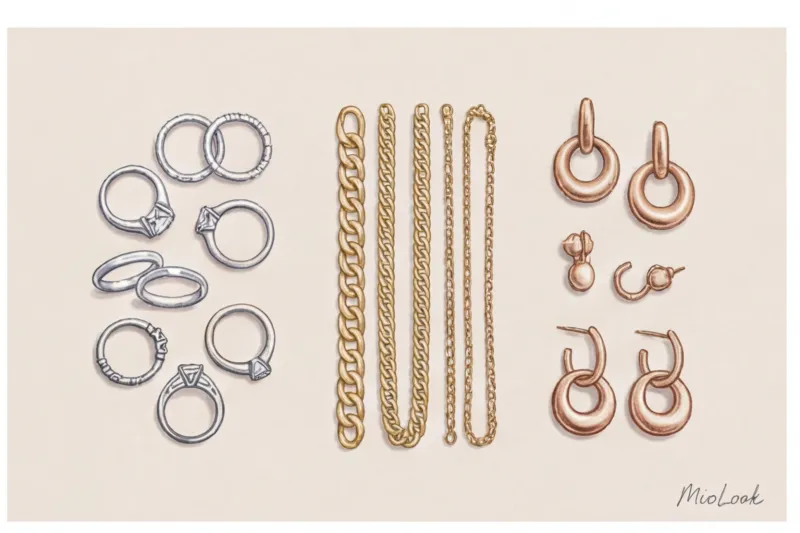
Cool undertones (Winter, Summer). Your best friends are platinum, white gold, rhodium-plated silver, and sterling silver. These metals have a frosty, icy sheen that visually evens out porcelain or rosy skin, giving it an aristocratic look.
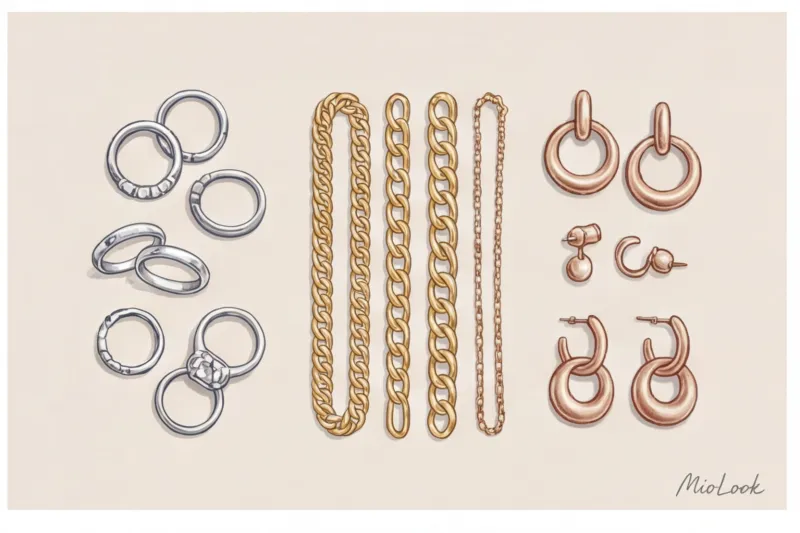
Warm undertones (Spring, Autumn). Classic yellow gold, brass, and copper are recommended for you. The earthy, golden, and peachy tones of your skin, paired with warm metal, create a luminous effect. However, it's best to avoid the overly bright, "medical" shine of white gold—it can give your complexion an unhealthy grayish cast.
The Rose Gold Trap: Who Does It Really Suit?
Glossy magazines love to call rose gold (an alloy of gold and copper) a universal soldier. This is only partially true. It does look great on neutral undertones and tanned skin. But there's an important limitation that stylists often overlook: Rose gold is absolutely not suitable for skin prone to rosacea, rosacea, or frequent redness. The copper ligature in the metal will act as a magnifying glass, greatly enhancing any redness on the face. If this is your case, choose a calm lemon gold or silver.
Mixing Metals: How to Wear Gold and Silver Together
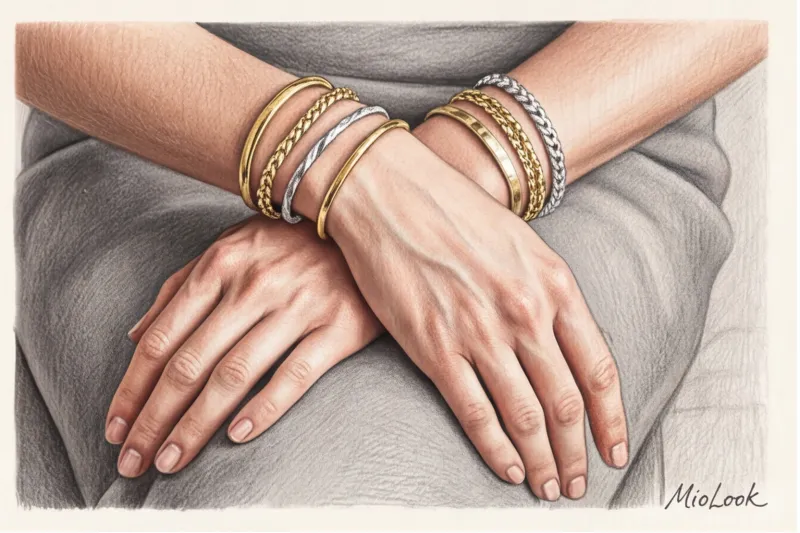
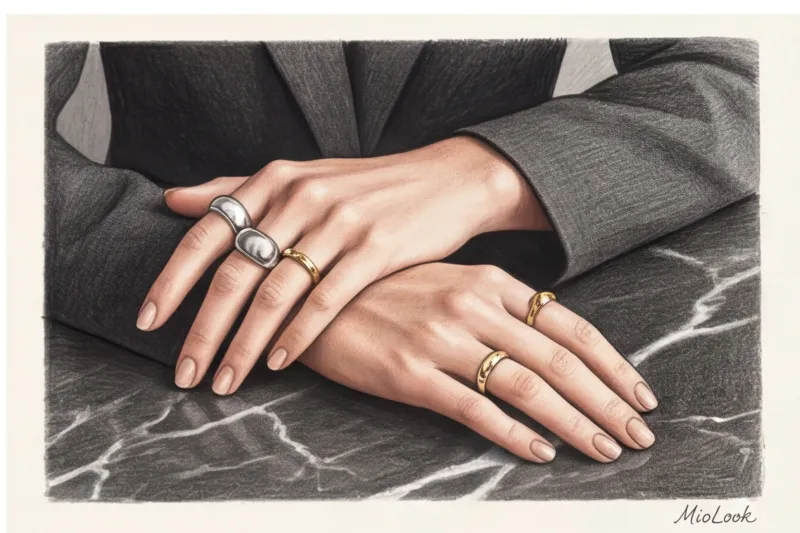
According to a 2024 report from Lyst, searches for bicolor jewelry increased by 45%. The "strictly one metal" rule is dead, and thank goodness. Modern, high-end styling is built on clever mixing.
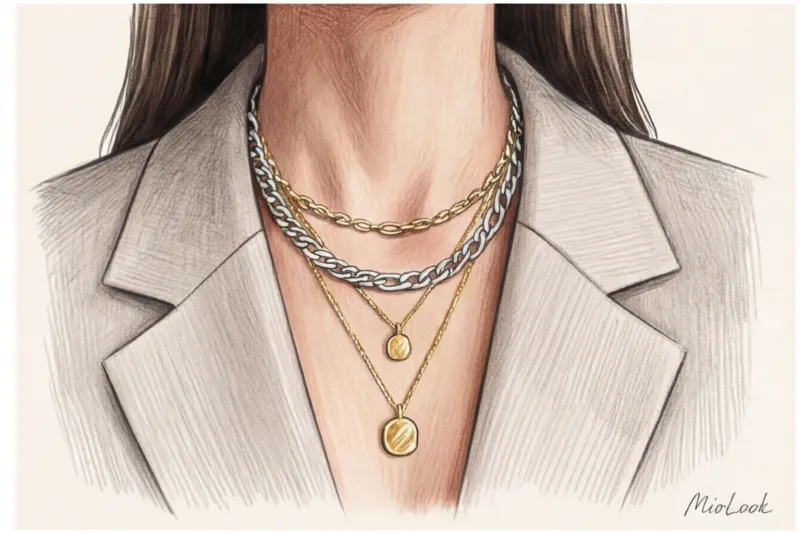
How do you do it correctly so you don't look like a Christmas tree? I always teach my clients 80/20 proportion rule Choose a dominant metal that suits your color type (for example, 80% silver near your face—earrings and necklace), and add 20% accent metal (gold ring or bracelet).
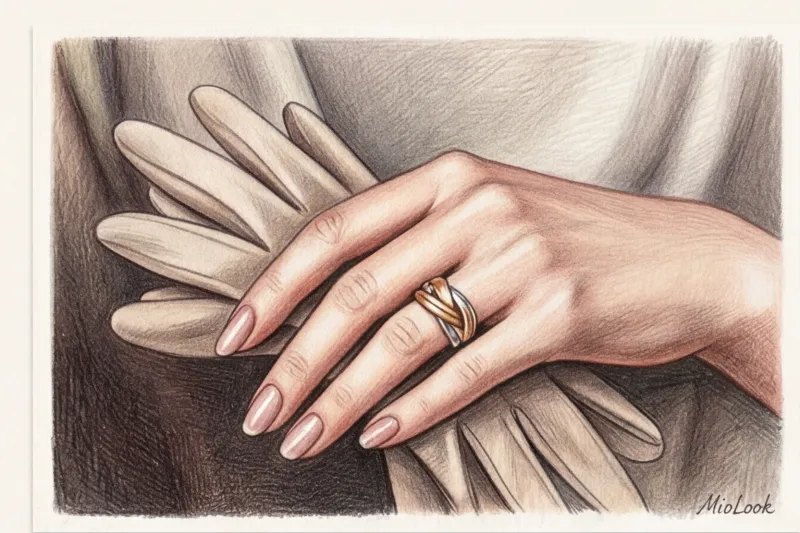
My favorite styling trick is to use "connecting elements." This is jewelry that already fuses two metals together. For example, a watch with a bicolor strap (steel and gold) or intertwined rings in the style of the Cartier Trinity. Once you put one on, it gives you legal license to add monochromatic jewelry in any of these shades to your look. This instantly makes color combinations in business clothes more prestigious and complex.
Budget or Luxury? Where to Find the Right Metal Shades
Often, the problem isn't that gold "don't suit you," but that you're trying on a cheap zinc alloy with flash gold plating. Mass-market jewelry is guilty of creating jewelry in the color of "samovar gold"—an aggressive, almost orange-yellow hue. This shade cheapens any look, even the most carefully considered one.
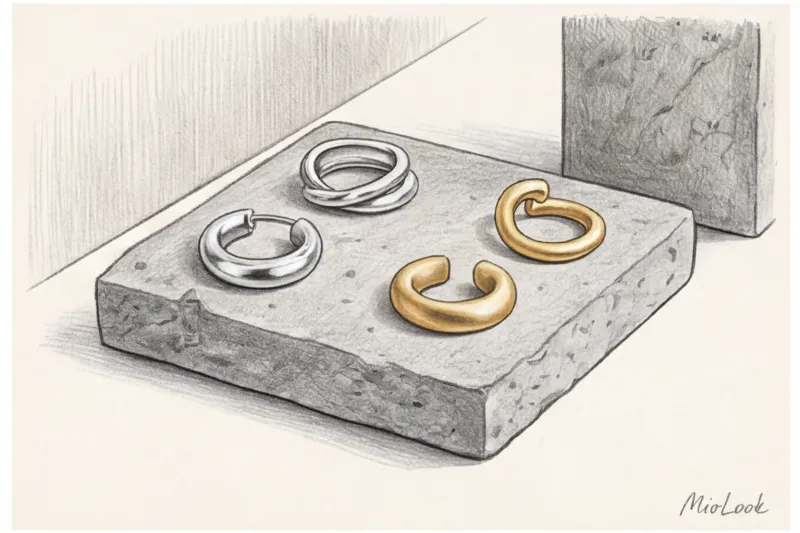
Where to look for "expensive" jewelry if you're on a budget? Forget the accessories departments at fast-fashion giants. Consider mid-market brands: COS, Massimo Dutti, &Other Stories Their designers work with brass and true gold vermeil. They often use matte, crafted, or slightly "dented" metal textures. Matte gold always looks more refined and expensive than glossy gold, especially in the budget segment.
Let's calculate the cost-per-wear (CPO). Buying five pairs of trendy earrings made of a cheap alloy for 15 euros, which will oxidize and turn green within a month, is a waste of 75 euros. Buying one basic pair of sterling silver or high-quality brass hoops at COS for 45 euros and wearing them 200 days a year reduces the CPO to 0.22 cents. In wardrobe, as in investments, mathematics works.
Your perfect look starts here
Join thousands of users who look flawless every day with MioLook. Check out your jewelry and clothes in one click.
Get access — €0.99 onceChecklist: Audit Your Jewelry Box in 15 Minutes
Knowledge is useless without practical application. Take 15 minutes today to conduct a ruthless audit of your jewelry. You can use the app MioLook to digitize the remaining items so that they are always at hand when creating images.
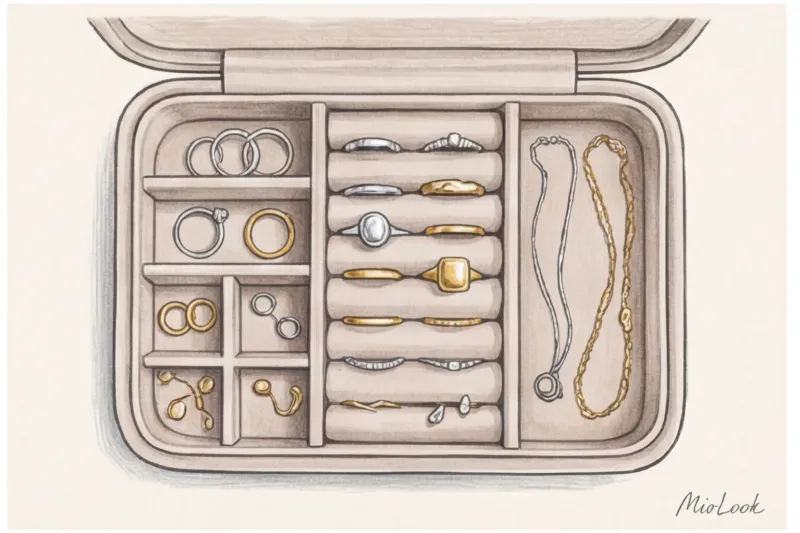
- Unloading and sorting. Take out absolutely everything. Divide the jewelry into three piles: distinctly cool (silver/white metals), warm (gold/bronze), and mixed.
- Cleaning the ranks. Without regret, get rid of jewelry that has darkened, peeled, or leaves green marks on your skin. Remove that "samovar" yellowness that will brighten your appearance.
- Check with undertone. Remember the results of the vein or shirt test. Gather your essentials (watch, everyday earrings, necklace) in your dominant metal. This is your foundation.
- Formation of accents. Set aside a few quality decorations of opposite temperatures to use according to the 80/20 rule.
Choosing the right metal isn't a restriction on your freedom, but a filter that eliminates unnecessary details. When basic jewelry perfectly matches your skin temperature, you stop wasting your mornings in front of the mirror. You simply put on your pieces and know they're working for you, highlighting your face rather than drawing attention to themselves.