Imagine this: you're presenting your quarterly report to the board of directors. Your graphs are flawless, your arguments are rock-solid, but every hand gesture you make is accompanied by the ringing clatter of metal bracelets. The castanets' effect breaks the audience's focus faster than a forgotten zero on a slide. Over 12 years as a personal stylist, I've learned one golden rule: in a business environment, the sound of your accessories is just as important as their appearance.
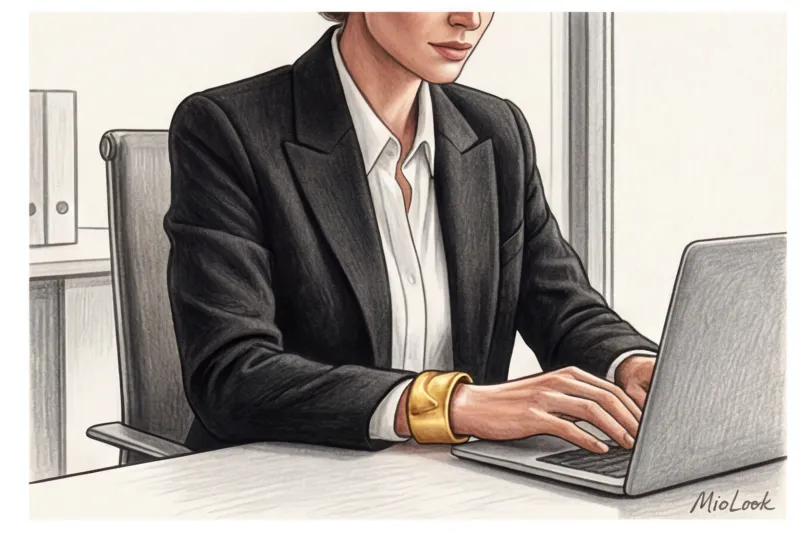
Modern jewelry dress code in the office has changed dramatically over the past few years. We no longer hide behind invisible studs, but we also don't turn the workplace into a red carpet. If you want to understand how to build a smart accessory base from scratch, I highly recommend checking out our A detailed guide: a jewelry wardrobe and how to wear it correctly Today we'll talk about how to turn rings, earrings, and watches into tools of influence without violating corporate ethics.
Jewelry Dress Code in the Office: Why It's Time to Forget the "Rule of Three"
Remember the old etiquette rule: "earrings + ring + watch = office wear limit"? Well, you can safely file that away. Today, this approach is hopelessly outdated. Strictly counting the number of items has given way to evaluating them. visual weight and architecture.
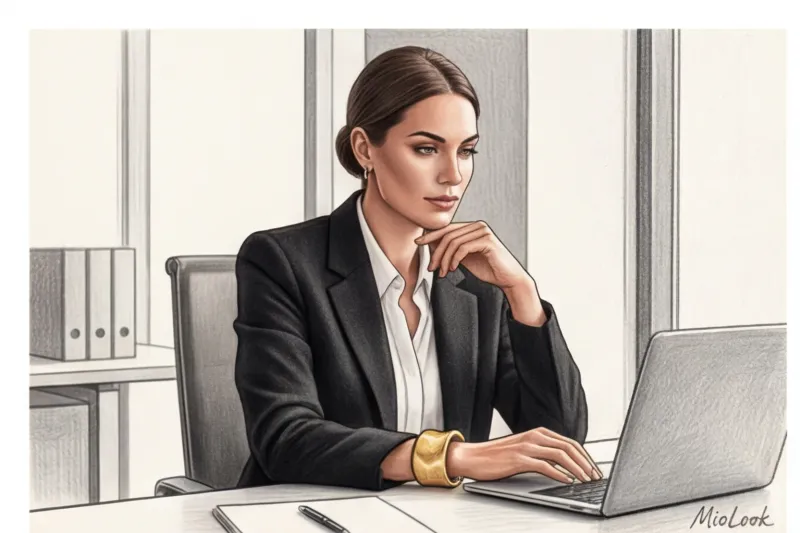
According to the updated guidelines The Protocol School of Washington (2023) , corporate dress codes have made the final transition from "legacy formal" to "modern professional." What does this mean in practice? Three thin, barely noticeable rings and microscopic studs will make a look fussy and fragmented. However, a single, massive, sculptural ring or a statement cuff in matte metal against a clean, basic shirt will create the image of a confident woman.
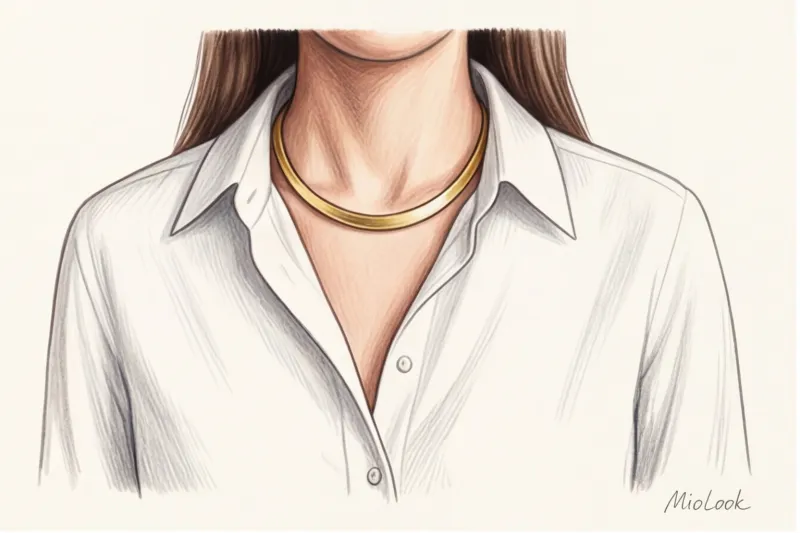
The new paradigm is built around the concept of a "focal point" or "soloist." Your jewelry ensemble should have only one star performer. If you wear structured earrings, your neck remains free. Opting for a large chain necklace? Simple studs are the way to go. This rule balances your look and prevents you from looking like you've worn everything you've got at once.
Access to MioLook for €0.99 — one-time payment
A smart AI stylist will select the perfect look for the office, taking into account your favorite accessories.
Get access — €0.99 onceThe Anatomy of Status: How Jewelry Drives Attention in Business
Research by an analytical agency WGSN (2024) A study on the evolution of business style revealed an interesting figure: 80% of eye contact during business communication (and especially during video calls) is concentrated in the so-called portrait zone—the face, neck, and shoulders. This is why earrings and necklaces are a direct investment in your personal brand.
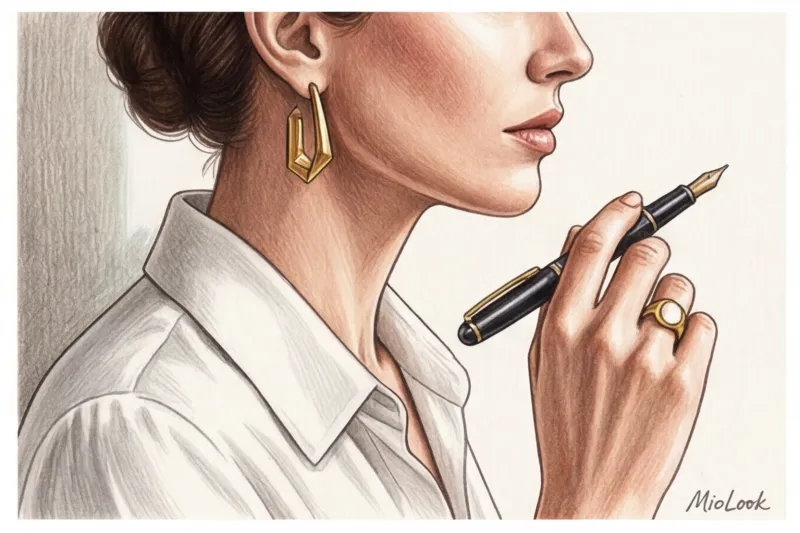
I had a particularly revealing case in my practice. My client Elena, a senior partner at a consulting firm, complained that she was often pressured during tough negotiations. Her signature accessory was tiny silver bows in her ears. We replaced this childish accessory with sleek, geometric gold hoops of medium thickness. The change in scale of the accessory against her face gave her profile a more structured appearance. Within a month, she remarked with surprise, "Isabella, people have started listening to me differently. I physically feel more focused."
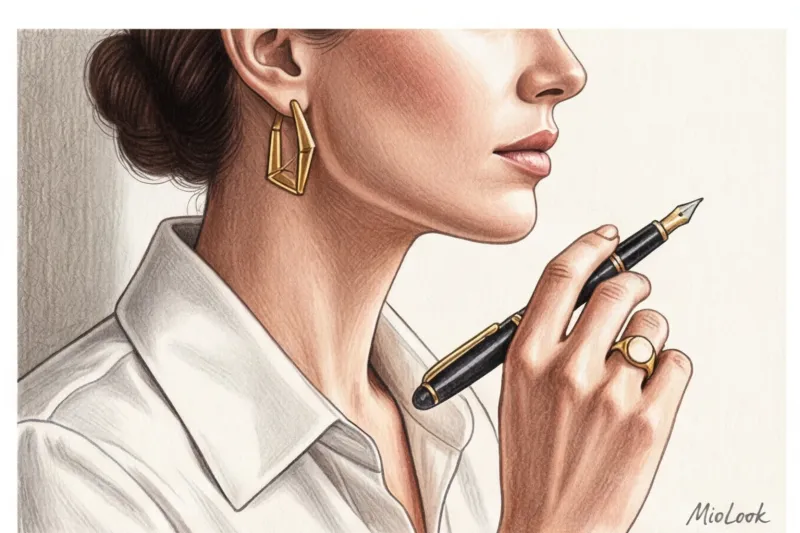
"In a business environment, jewelry shouldn't overshadow your expertise. It should work like a good frame for an expensive painting—emphasizing your status while remaining in the background."
An equally important aspect is the magic of watches. Although the Apple Watch has become the uniform of modern business, classic mechanical watches remain an unrivaled status symbol in high-ranking positions. Wall Street Journal In a recent corporate culture review, he noted that at the highest levels of management, a mechanical watch on a leather strap or steel bracelet is still seen as a sign of someone who values tradition and manages their time, rather than being subject to instant messaging notifications.
Gradations of rigor: from Business Formal to Smart Casual
The office dress code is not uniform. What might be admired at a creative agency might be met with criticism from HR at an investment bank. Let's look at the three main steps.
Business Formal (Conservative)
The most rigorous level, typical of diplomacy, the courts, and the highest banking sector. Strict geometry and minimalism reign supreme here.
What we wear: Metals of the same shade (a mix of gold and silver is not welcome here). Smooth textures.
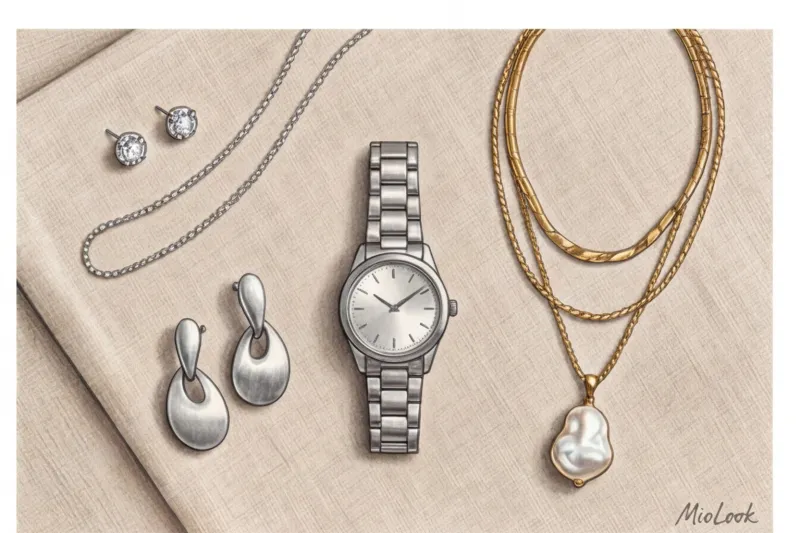
Debunking the myth: There's an old cliché that diamonds can only be worn after 5:00 PM. This rule applied to large solitaire-cut stones. Modern protocol allows for smaller diamonds (up to 0.3 carats) or baguette-cut stones to be worn during the day, as long as they're set in the metal (bezel-set) and not protruding from the claws.
Business Professional
The standard for most modern corporations. It provides freedom for self-expression.
What we wear: You can add color. Deep, noble shades of semi-precious stones (sapphire, emerald, onyx, malachite) work beautifully with basic suits. Matte, crushed ("crinkled") gold, sculptural shapes, and medium scale are also acceptable.
Smart Casual
Friday format or standard for IT, media and marketing.
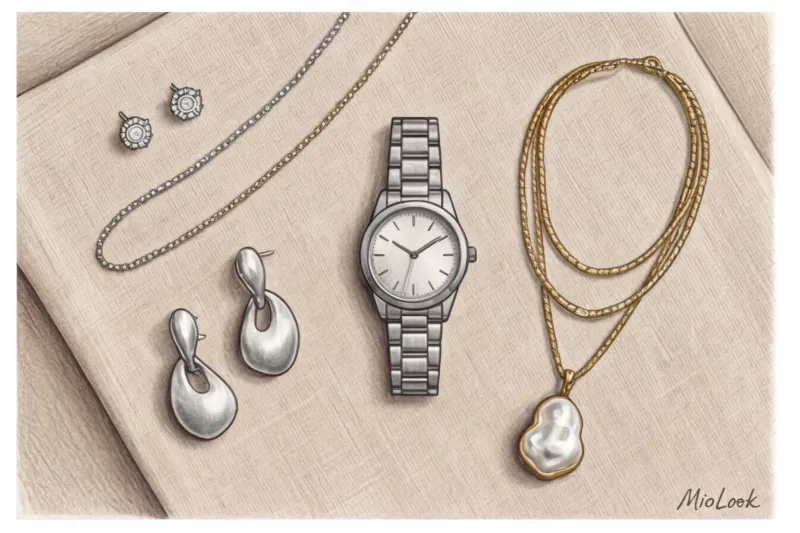
What we wear: Layering. You can wear two or three thin chains of varying lengths over a turtleneck, mix white and yellow gold (bicolor), or wear a large ring with a wood texture or enamel. However, even here, the rule of "acoustic silence" applies—nothing should jingle.
Your perfect look starts here
Join thousands of users who look flawless every day with MioLook, choosing accessories to match their dress code in one click.
Get access — €0.99 onceThe Main Taboos of an Office Jewelry Box (And It's Not Just Cheap Plastic)
There are things that instantly kill a professional's credibility, even if you're wearing a perfectly tailored Armani suit.
- Infantile motives. Hearts, flowers, butterflies, and enamel TOUS bears. The psychology of perception is merciless: if a woman wears jewelry designed for a little girl, her interlocutor subconsciously doubts her ability to make tough adult decisions.
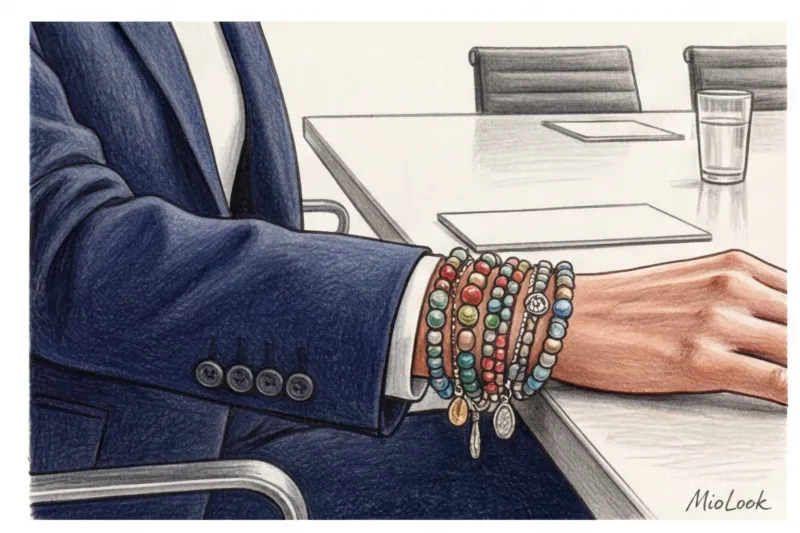
- Excessive romanticism and boho. Long chandelier earrings grazing the shoulders, feathers, an abundance of leather bracelets and beads on the wrist. While appropriate in Ibiza, at the conference table they convey a relaxed, almost casual air.
- Religious and esoteric symbols. Crosses, Stars of David, crescent moons, red threads to protect against the evil eye, and runes. The corporate environment is a neutral zone. If you wear symbols of faith, they should be hidden under your clothing.
Counterintuitive Insight: Be Careful with Pearls!
You'll read in many articles that a classic short strand of round white pearls is the safest choice for the office. I strongly disagree. In 2024, perfectly round, identical pearls paired with a jacket are almost guaranteed to add 10-15 years to your age and create a "conservative 90s schoolteacher" look. If you love pearls, choose a modern interpretation: baroque (irregularly shaped) pearls on a chain link or a single pearl set in a strict geometric metal setting.
Investing in Your Career: Building a Basic Capsule Wardrobe
When my clients are intimidated by the prices of quality jewelry, I always suggest they do the math Cost-per-wear (CPW) — the cost of one wearing.
A cheap $30 piece of costume jewelry that will tarnish after a month (20 wears) will cost you $1.50 per occasion. Meanwhile, a high-quality pair of earrings made of a good alloy or sterling silver with gold plating that you'll wear to the office 200 days a year for three years (600 wears) costs only $0.50 per occasion. The math of style proves that basic office jewelry is an asset you shouldn't skimp on.
Top 5 must-haves for an office jewelry wardrobe:
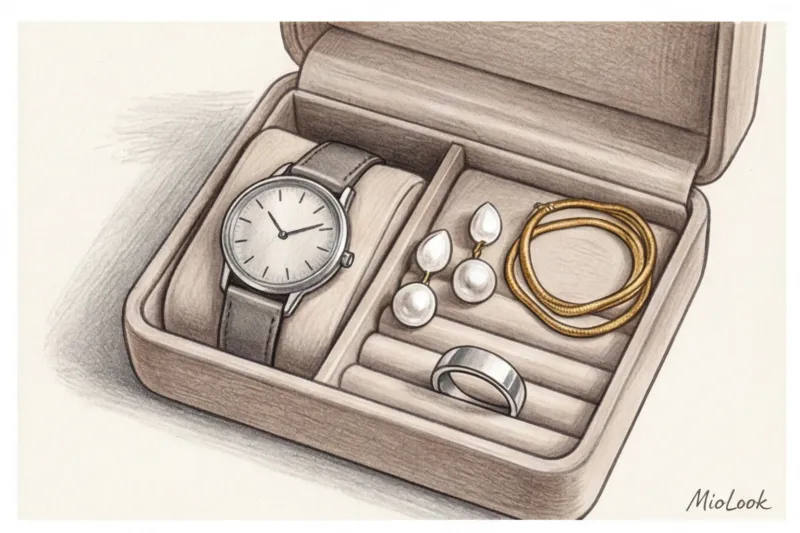
- Hoop earrings (rings) of the correct diameter. The optimal size is between a 1 cent coin and a 2 euro coin. The ring tube should be thick enough, not thin wire.
- Status watch. No rhinestones or unnecessary dial complications. Pure metal or high-quality leather.
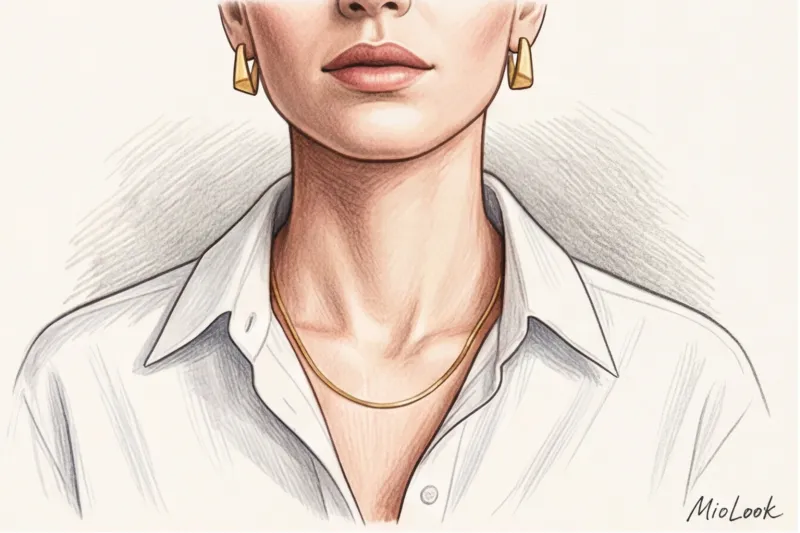
- Laconic snake chain. A sleek, streamlined chain, reminiscent of a snake, resting in the jugular notch. Perfect under an open shirt collar.
- Stud earrings of modern design. Not just a “stone on a leg”, but, for example, metal knots, hemispheres or geometric triangles.
- Signet ring. Smooth, without monograms, worn on the index or pinky finger—a powerful marker of confidence.
To avoid confusion and always know what to wear in the morning, I recommend digitizing your jewelry database. You can upload photos of your jewelry and business attire to the app. MioLook — Artificial intelligence will help you create ready-made capsule outfits and show you which accessories best complement a specific outfit.
Isabella Garcia's Checklist: 5 Questions to Ask Before Leaving the House
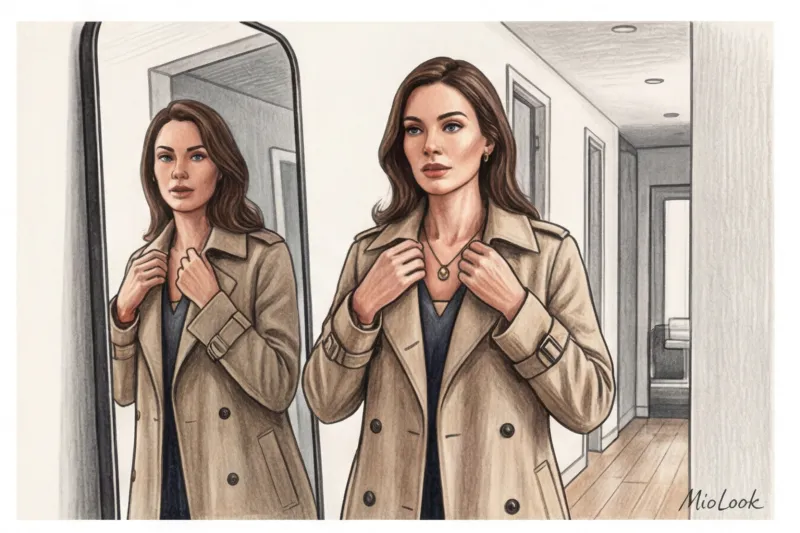
Before you step into the office, stand in front of a well-lit mirror and honestly answer these questions. This short audit will save you from making countless style mistakes.
- Does it ring? Shake your hands as if you were actively gesturing, or imitate typing on a keyboard. If you hear a ringing sound, remove one bracelet.
- Does it catch on clothes? Sharp ring prongs tearing silk blouses or catching on the lapel of a wool jacket not only ruin the item, but also cause you constant discomfort during the meeting.
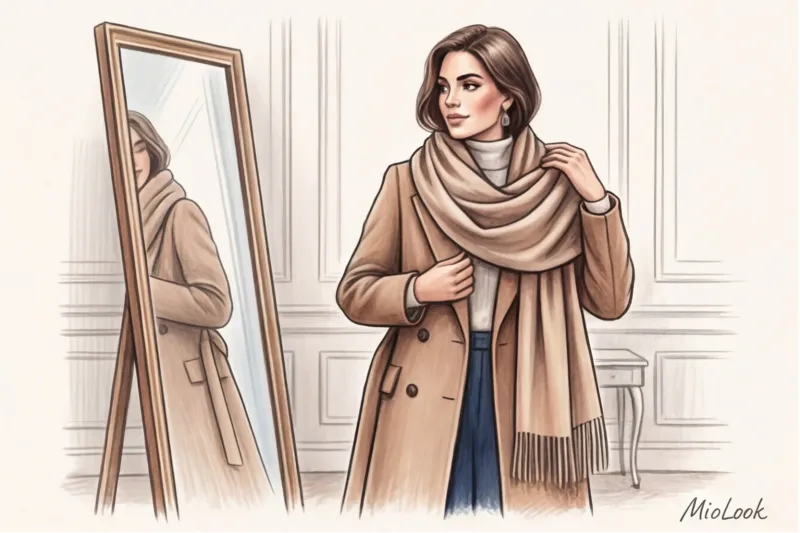
- Is the scale appropriate? Important limitation: Large statement jewelry doesn't work if you're petite and wearing a thin, flowing blouse. Heavy metal will crush the lightweight fabric. The density of the accessory should be proportionate to the density of the garment's fabric.
- Is there one "soloist" left? Check your focal points. If you have a large chain around your neck, remove the chunky earrings and opt for sleek studs.
- Do I feel confident? If you have to constantly adjust your necklace or tug at your sleeve to hide your watch, the item doesn't suit you.
A jewelry dress code isn't a set of boring restrictions designed to erase your individuality. It's your visual language. Properly chosen office jewelry acts as a subtle psychological attunement: it communicates your status, attention to detail, and professionalism even before you utter a single word in a negotiation. Let it work for your career.