

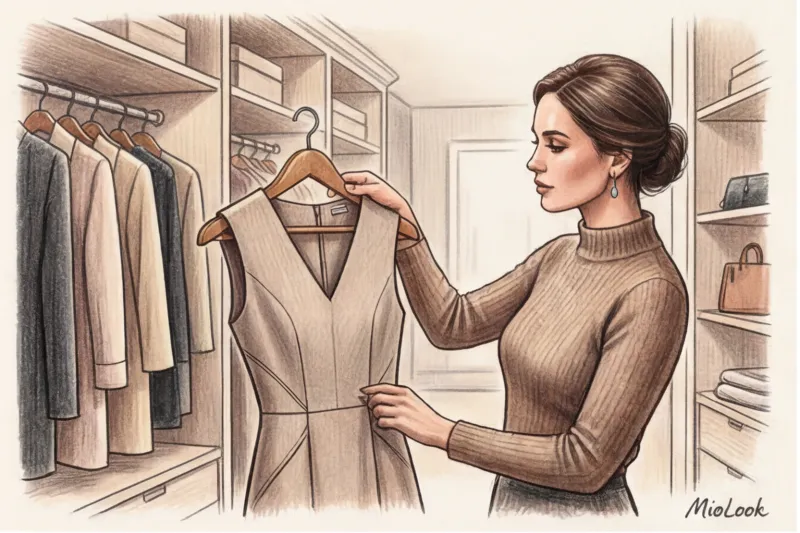
Style Architecture: Why Knowing Dress Styles Saves You Money
Have you noticed how often we buy something for a fleeting emotion, only to have it hang in our closets for years with the tag still intact? As a fashion consultant, I see this all the time when I go through my clients' closets. My name is Julia Rossi, and after twelve years in the industry, my approach to style has become extremely pragmatic: I treat my wardrobe like an investment portfolio. And trust me, the right choice dress styles - these are your most reliable blue chips.
There's an immutable rule in the philosophy of an investment wardrobe: the cut is always more important than the brand. In my experience, a €300 dress from a local Italian atelier, tailored according to all the laws of body anatomy, often looks far more prestigious than a trendy €2,500 model from a luxury boutique, bought solely for its recognizable pattern. You pay for how the garment sculpts your figure, not for the name on the label.
“True luxury is not a flashy logo, but a perfect fit that makes you confident every second” – this is what I tell every client at our first meeting.
A thorough understanding of a garment's geometry is your best and only defense against impulse buying. When you know exactly how a diagonal dart, a dropped waistline, or a V-neckline interacts with your proportions, you'll no longer be tempted by flashy store displays or seasonal sale banners. You begin to see the structure, not just a pretty picture.
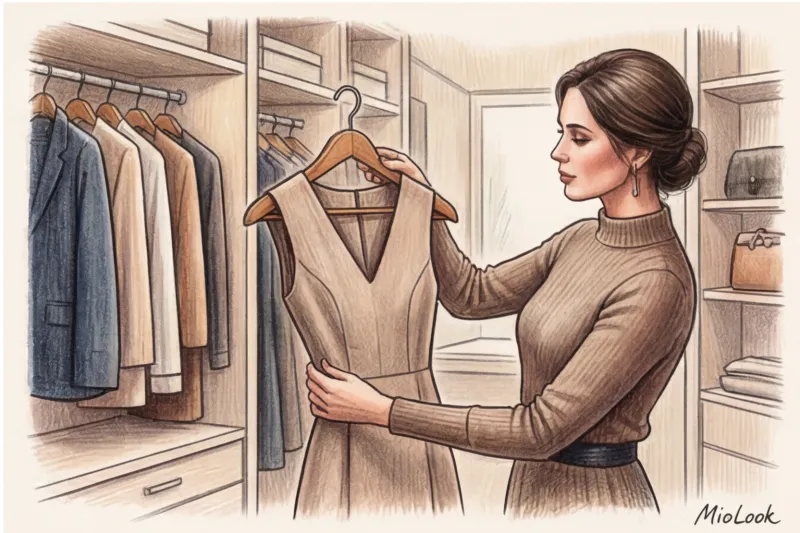
This is where my favorite concept comes into play. Cost-per-wear (price per appearance). In our wardrobe, each style has its own "profitability level," which directly depends on how often it's worn. Let's do the math: a striking but uncomfortable mass-market dress for 80 euros, worn exactly once to a corporate New Year's party, costs you 80 euros per appearance. But a simple sheath dress made of thick, shape-resistant wool for 600 euros, worn to business meetings twice a week for three years (that's about 300 appearances), costs only 2 euros per wear. The difference is colossal.
But why is it that one dress makes you want to wear it all the time, while another makes it hard to even call a taxi? The secret lies in the patterns. According to a 2023 Business of Fashion analytical report, fast fashion brands optimize fabric cutting up to 98%, using extremely flat, two-dimensional patterns. Their main goal is to minimize fabric waste. Premium tailoring, by contrast, is created in 3D, often by pinning directly onto a mannequin (the dummy method). It takes into account the body's natural curves, incorporates the correct ease allowance—that essential "air" between the fabric and the skin—and utilizes complex anatomical darts. It is this invisible architecture that distinguishes a one-season garment from a decade-long investment.
Basic Dress Styles: Investments That Last for Years
A 2023 McKinsey study on consumer habits revealed a terrifying figure: women regularly wear only 20% of their wardrobe. The remaining 80% are complex pieces, emotional purchases, and difficult to pair with anything else. To break this vicious cycle of senseless spending, I always begin working with clients with the concept of a "blank canvas."
A basic style is all about pure lines and precise geometry. No accentuated puff sleeves, asymmetrical hems, bold prints, or complex hardware. It's the architectural framework of your look. In the premium segment, these minimalist dresses are crafted from the most expensive fabrics—cashmere, heavy crepe, or mulberry silk. Why? Because the minimalist cut is unforgiving. The lack of embellishment works like a magnifying glass: the slightest flaw in the material, cheap sheen in the threads, or crooked seam instantly catches the eye. By investing in a basic style, you're paying for impeccable quality and a masterful pattern.
How can you choose a dress that you'll pull out of your closet in 10 years and still look just as fashionable? The secret lies in a neutral silhouette. If you can't tell exactly which decade the collection was released when you look at it, you've found the perfect investment. Avoid microtrends like exaggerated shoulders, extreme slits, or specific lengths that are only fashionable for this short season.
Here we encounter the main styling stereotype. It's commonly believed that a basic dress must be black—a tribute to Coco Chanel's legendary invention. In reality, graphic black is the most demanding shade in the palette. If your natural coloring is soft, a black dress will overpower your natural complexion, highlighting signs of fatigue and making your face appear older. Furthermore, from a purely practical standpoint, every lint is treacherously visible on black fabric, necessitating constant use of a lint roller. Try replacing it with a deep shade of dark chocolate, rich navy, graphite gray, or elegant burgundy. These colors look significantly more expensive, are easier to pair with shoes, and are just as versatile in a wardrobe.
Sheath Dress: Armor for the Business Lady
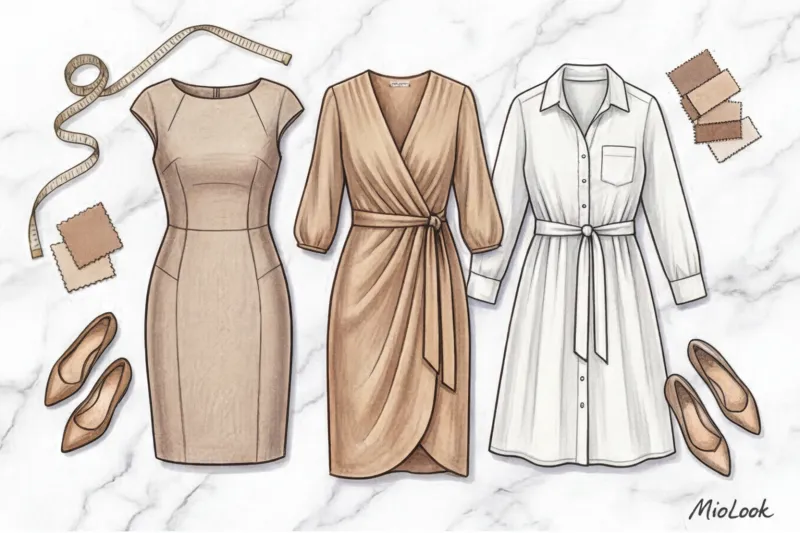
Introduced in the 1950s, thanks in large part to Christian Dior and Hubert de Givenchy, the sheath dress has become synonymous with elegant poise. Today, it's a true armor for the businesswoman. Wearing one, you enter a meeting room, and your appearance conveys competence, status, and confidence even before you utter a single word.
The biggest mistake when choosing a sheath dress is confusing it with a bandage dress from the 2000s. A proper fit requires some air between the body and the fabric (about 1.5–2 centimeters of looseness). The dress should softly contour the figure, not dig into it, creating creases. The ideal business length is exactly mid-knee or just below (an elegant midi).
Carefully examine the backing and construction details. In premium patterns, darts are always meticulously crafted: they're aimed precisely at the highest point of the bust, creating anatomically correct relief without a "bubble" effect. And, of course, the lining is the unseen hero of a good garment. A high-status sheath dress is never made with a polyester lining. Polyester will create a greenhouse effect and will attract static. Look for linings made from natural viscose, cupro, or silk. A high-quality sliding layer will allow the dress to move gracefully with you and prevent the main fabric from deforming at the hips.
Wrap Dress: The Genius of Design
In 1974, Diane von Furstenberg (DVF) revolutionized the world by introducing the wrap dress. For half a century, this style has remained a must-have, and there's a compelling mathematical reason for that. The design works on the principle of a flawless optical illusion.
A diagonal line across the torso visually elongates the silhouette and defines the waist, even if it's not naturally defined. A V-neckline elongates the neck and gracefully accentuates the collarbones. One of my clients, a top manager at a Swiss bank, had long avoided wrap dresses, considering them too casual for the office. We selected a style made of thick wool crepe in a deep wine shade, and it instantly became her favorite business attire.
However, the devil is in the details. When choosing a wrap dress, the density of the material is crucial. Cheap, thin jersey will cling unattractively to the seams, highlight even the slightest imperfections in the skin, and bunch up into untidy folds. Look for a dense knit with a weight of at least 250–300 g/m², which holds its shape and has a subtle sculpting effect.
The second most important detail is the depth of the neckline. A perfect fit ensures that the décolleté remains within the bounds of modesty even when bending over or moving vigorously. If you have to pin the neckline, constantly adjust the bodice, or wear a top underneath, it's a poorly tailored dress. It's best to avoid such a purchase, no matter how much it costs.
Before investing €300-500 in a quality basic dress, analyze your actual needs. A great help here is MioLook's smart wardrobe analytics feature The app will clearly show you which silhouettes you actually wear every day and calculate the cost-per-wear, protecting you from impulse purchases.
Digitize your wardrobe with MioLook
Stop buying clothes you can't wear. Upload your dresses to the app, and the AI stylist will create dozens of new looks from what you already own.
Evening and cocktail dress styles: dress code and status
According to the protocol of international social events, an outfit mistake is noticed before you even utter a word. Modern dress styles for special occasions adhere to a strict gradation: cocktail dress and evening dress codes (Black Tie) are two completely different stylistic universes.
Cocktail styles tend to be midi or just above the knee, with off-the-shoulder silhouettes, playful asymmetry, and more relaxed silhouettes. Evening wear, on the other hand, is all about formality, floor-length, and covered ankles. How to choose a dress to avoid looking... overdressed (too smart) or underdressed (Not elegant enough)? The golden mean rule taught in boarding schools of etiquette states: if you're unsure about the dress code, choose the most minimalist cut possible, but offset it with a premium texture. It's better to show up to an event in a brilliantly tailored minimalist outfit than to end up wearing inappropriate feathers and rhinestones at an intimate dinner.
Evening fashion tolerates no fuss. While a cocktail dress can forgive a touch of casualness and trendy experimentation, Black Tie demands monumentality. Here, we invest not in embellishment, but in the architecture of the pattern and the weight of the fabric.
Last season, I was preparing a client for a charity gala dinner in Geneva. Her initial impulse was to buy a gold sequined dress for €4,500. I insisted on a radically different solution: we chose a completely sleek, floor-length gown with a low back and a closed front. No glitter, just a precise silhouette. At the event itself, where half the guests resembled disco balls in machine-embroidered sequins, her minimalist look was a hit. It's a clear example of how "quiet luxury" works in an evening gala.
The status of an evening dress depends 80% on the material. Cheap synthetics have a flat, shiny sheen and instantly cheapen the look. Only three textures convey true aristocracy:
- Heavy silk: It flows like liquid metal, has a noble matte finish and drapes beautifully in movement.
- Thick cotton velvet: absorbs light, creating incredible depth of color, and visually conceals any nuances of the figure.
- Shape-stable taffeta: holds a given volume and produces a characteristic “expensive” rustling sound when walking, which the French call frou-frou.
Slip Dress and Bias Cut: Silk Quality Test
When French fashion designer Madeleine Vionnet invented the bias cut technique in the 1920s, she forever changed the history of eveningwear. The method involves cutting the fabric at a 45-degree angle to the grain. This technologically complex and incredibly expensive process nearly doubles material consumption, and only the most skilled tailors can sew on the bias. This is why true premium slip dresses are not cheap.
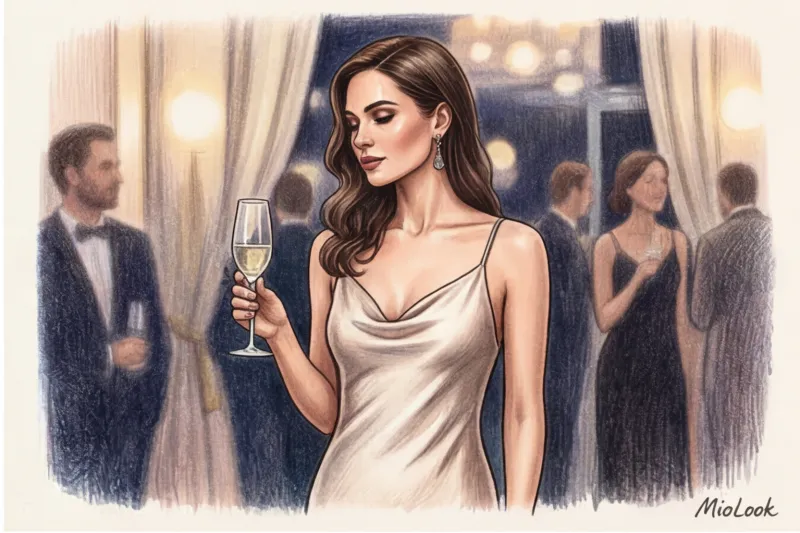
But the result is worth every penny. The dynamic, bias-cut slip dress feels like a second skin: it stretches elastically where volume is needed (at the hips and bust) and tapers delicately at the waist, creating a fluid, enveloping silhouette. This dress doesn't just hang on your figure—it dances with you.
The key to a perfect fit, a secret we constantly use when preparing stars for the red carpet, is the right underwear. Fine, flowing silk mercilessly highlights even the flattest elastic bands, seams, and lace edges. The only true solution is completely seamless, laser-cut underwear, chosen precisely to match your skin tone (not the dress!). If the dress has an open back or complex necklines, stylists use kinesiology tape and special silicone pads for the chest. Not the slightest hint of underwear should be visible under a silk slip dress.
A-line and Empire style: effortless elegance
The empire waist (with a high waistline starting just below the bust) and classic A-line silhouettes are a lifesaver for those who want to look regal without sacrificing comfort after hours of partying. The maxi length of the A-line silhouette automatically alters the body's biomechanics: it forces you to keep your back straighter, makes your stride smoother, and visually elongates your height by several centimeters.
Who really suits the empire waist? It's a perfect tool for optically correcting proportions if you have a long torso and relatively short legs. The high waist instantly draws the eye, creating the illusion of endless legs. However, herein lies the main stylistic danger: the slightest mistake in the cut, and you will get an undesirable association with “maternity wear” or a Regency nightgown.
How can you avoid this effect? The secret lies in the design of the underbust area. It should be firmly constructed—no cheap elastic bands or soft, shapeless gathers. Choose styles with a bodice with defined darts or a hidden corset base, and a skirt that flares smoothly, without creating excess volume at the stomach. Stiff taffeta or thick wool crepe are best for this, as they maintain an A-line shape without clinging to the body.
If you're unsure whether such a specific cut will suit you, or are worried about getting the proportions wrong, I recommend testing the silhouette first. Upload your photo to MioLook and see in the virtual fitting room how a high-waisted dress changes your figure before investing in an expensive evening gown.
Skirt styles: from strict classics to relaxed elegance
If chosen correctly dress styles While skirts solve the "nothing to wear" problem in a second, offering a ready-made, monolithic look, skirts are the ultimate wardrobe mechanics. In a well-designed capsule collection, a skirt becomes an investment asset that phenomenally reduces your cost-per-wear. One basic, premium-cut skirt in dark chocolate or deep navy paired with a silk blouse, a voluminous cashmere sweater, or a tailored jacket creates three completely different outfits, each with a different mood and dress code.
The main secret to styling here lies in the architectural balance of volumes. A golden rule I never tire of repeating during consultations: "A tight bottom requires a voluminous top, and vice versa" If you're wearing a flowing maxi skirt or a full A-line silhouette, balance it with a compact, fitted top, a thin turtleneck, or a structured cropped jacket. When choosing a fitted bottom, add some airiness to the top with a loose-fitting men's shirt. Disrupting this proportion either turns the figure into a shapeless rectangle or makes the look overloaded.
The length of a garment is another critical factor that directly impacts the perception of your height and the proportions of your legs. Any horizontal line visually "cuts" your silhouette. Therefore, the hem should end only at the narrowest point of the leg—just below the knee or at the thinnest part of the ankle. A length that reaches mid-calf (the widest part of the shin) is guaranteed to steal several centimeters of height and weigh down even the slenderest legs.
"A skirt is unforgiving when it comes to footwear. Unlike trousers, which can hide an awkward toe or a wide bootleg, a skirt puts the shoe's design on full display. This is the main reason why many women instinctively avoid this wardrobe item during the cold season."
Here's a strictly professional winter styling tip: the hem of a midi skirt should overlap the top of your boots by at least 2-3 centimeters. There shouldn't be a strip of tights or bare skin between the boot and the hem (the "chopped leg" effect). This technique creates a continuous vertical line, visually elongates the figure, and looks truly expensive—this is exactly how stylists at the Hermès and Celine shows styled looks.
Pencil Skirt: How to Choose the Right Vest and Length
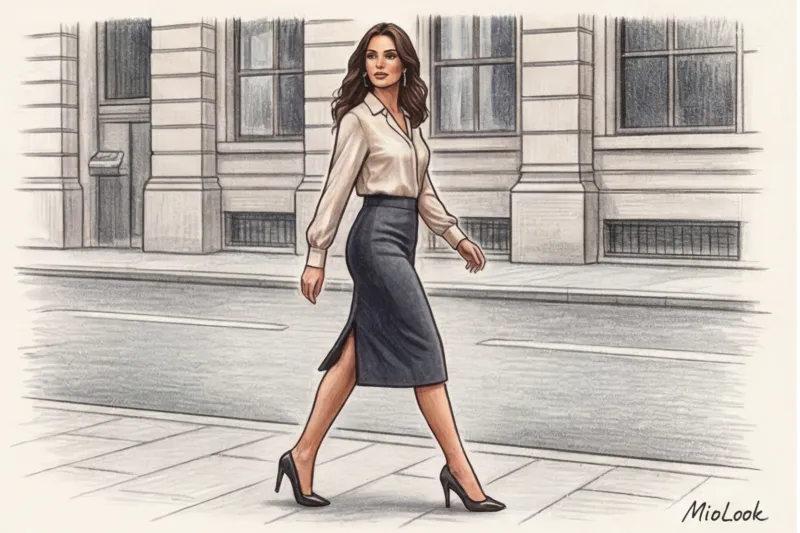
Let's be honest: 80% of what's sold in mass-market stores as a pencil skirt is actually just a straight skirt. The anatomy of the perfect pencil skirt requires a tapered fit. This requires masterfully crafted darts with deep, anatomically correct darts. A straight skirt is simply a piece of fabric, while a pencil skirt is a sculpture that shapes the hip line and literally forces you to maintain your posture.
The ideal length for this style is a confident midi, just below the knee (the so-called "French length"). A skirt that ends exactly at the mid-knee or above instantly cheapens the look and evokes the bank clerk uniforms of the early 2000s. When investing in a basic style (a high-quality skirt made of thick gabardine or fine wool will cost around 250-400 euros), pay close attention to the shape of the step.
A classic back vent (where the fabric overlaps) is a nod to traditional etiquette and strict corporate dress codes. It maintains the integrity of the silhouette when static and allows for freedom when dynamic. A front or side slit looks more provocative and modern, but is only appropriate for relaxed office or cocktail wear. The fitting room test is simple: if you sit on a chair and the slit reveals leg above mid-thigh, the garment is categorically unsuitable for business meetings.
Access to MioLook for €0.99 — one-time payment
Start creating perfect images with the help of artificial intelligence
Get access — €0.99 oncePleated and corrugated skirts: geometry in motion
In fashion magazines, these two terms are often confused, although the difference in their structure is fundamental. Pleats are laid in parallel folds of equal width along the entire length of the garment. Shirring, on the other hand, is cut using the sunray principle (half-sun or sun-shape): the folds are very narrow at the waist and widen significantly toward the hem. Shirring is a more flattering option for most body types, as it smoothly hugs the hips and doesn't create excess volume in the abdominal area.
Why do cheap pleats often flare out at the hips in an unsightly "accordion" pattern, visually adding a couple of sizes? The problem lies in the manufacturing technology. In premium skirts, the pleats are either neatly stitched at the yoke (the top 10-15 cm), or the fabric undergoes a complex heat treatment that cheap polyester simply can't withstand. When choosing a pleated skirt, always do a test run: walk around the room and see if the pleats return to their original, strictly vertical position when you stop.
To tone down the dressiness and integrate this skirt into your everyday wardrobe, I always recommend playing with radical contrasts of textures. Forget about thin silk blouses and classic pumps—save this combination for theatrical premieres. For daytime wear, pair the flowing geometric pleats with chunky Chelsea boots with a chunky sole, a voluminous chunky knit sweater (slightly tucked in at the front), or a thick vintage biker jacket. It's this stylistic dissonance that makes a modern look sophisticated, intellectual, and truly stylish.
The Anatomy of Cutting: How Fabric Changes the Same Style
Even a brilliant pattern like that of Cristobal Balenciaga will turn into a mediocre piece if transferred to the wrong fabric. Various dress styles are designed for specific physical properties of materials, and ignoring this rule is the main reason for unsuccessful purchases.
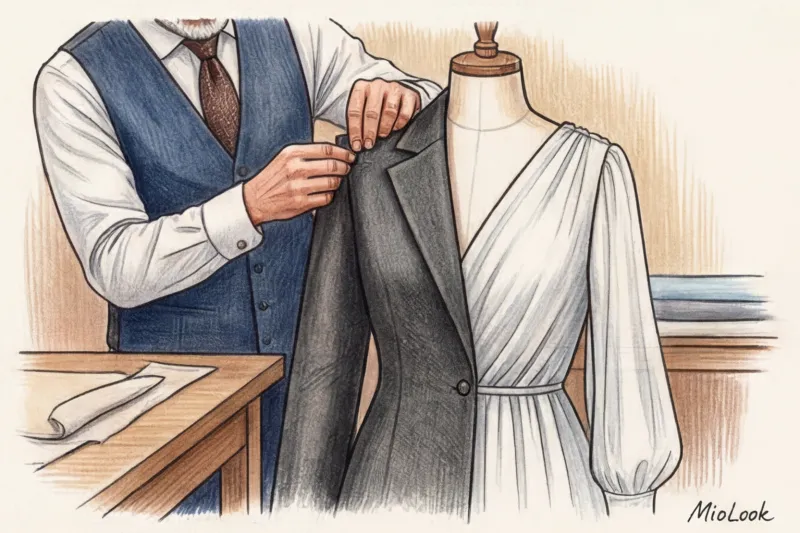
During a buying session in Milan, I demonstrated this phenomenon to a client using a classic A-line dress as an example. The first option, priced at €45, was made of thin, static-producing polyester: the fabric hung limply, stuck to her tights, and looked like cheap rags, completely ruining the intended geometric shape. The second option, an exact copy of the pattern, was made of thick wool crepe, costing around €580. It was a true sculptural masterpiece: the hem held the perfect architectural bell shape, and the weight of the fabric elongated the silhouette, obscuring even the slightest nuances of the figure.
This is precisely why it's absolutely impossible to sew a formal sheath dress from thin summer linen. A sheath dress is a kind of fashionable armor that requires a rigid frame. Linen has zero dimensional stability: after fifteen minutes at the desk, such a dress will stretch out at the hips, develop deep creases in the groin area, and form an unsightly "bubble" at the back, forever ruining the original design.
The secret of a truly prestigious garment is often hidden from prying eyes. The lining is the unseen hero of a premium dress and an absolute indicator of its quality.
Mass-market brands almost always use 100% polyester for the lining, creating a greenhouse effect on the body. In the luxury segment, you'll find only breathable materials: cupro (often labeled as Bemberg), dense viscose, or natural silk. The right lining acts as a sliding barrier—it prevents the main fabric from catching on underwear, prevents the hem from deforming when walking, and allows the dress to glide smoothly along the curves of the body.
To avoid making mistakes in the fitting room, learn to read ingredient labels through the prism of two key concepts:
- Drapability (Critical for wrap dresses, slips, and flowing silhouettes). Look for silk, high-twist viscose, lyocell, or modal. These fibers flow like water, creating soft, feminine folds.
- Form stability (essential for A-line silhouettes, formal sheaths, and shirt dresses). Your choices include gabardine, heavy cotton poplin, taffeta, and wool crepe. A 2-5% elastane blend is essential here, not for a tight fit, but to ensure the fabric "springs" back to its original shape immediately after being stretched.
A simple test to check fabric right in the store: squeeze the edge of the dress in your fist for ten seconds. If the material has smoothed out almost completely, you have an excellent base. If the fabric remains wrinkled, leave it on a hanger; otherwise, you'll have to spend more time with the steamer than you did on the dress itself.
The Main Myth of Stylistics: Why the Theory of "Body Types" Is Outdated
Open any archived issue of glossy fashion magazines from the early 2000s, and you'll inevitably stumble upon quizzes like "How to Dress If You're a Pear." For decades, this fruity typology forced women to hide their bodies under shapeless robes or, conversely, squeeze themselves into uncomfortable underwear, trying to fit the mythical hourglass figure. Today, as a guest lecturer at European styling courses, I can confidently declare: the professional industry has abandoned this primitive classification forever.
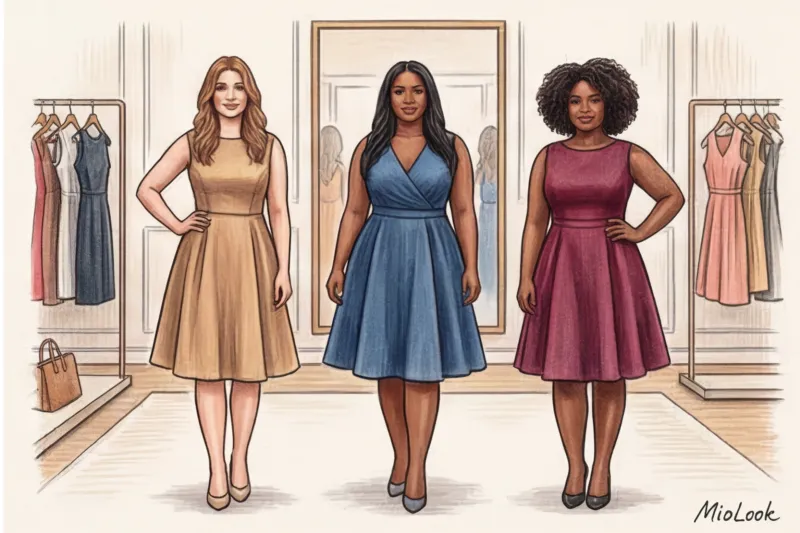
Dividing body shapes into fruits and geometric objects catastrophically limits your personal style. It reduces complex, multidimensional anatomy to a flat 2D silhouette. Instead of celebrating individuality, this theory dictates only complexes and taboos: "no horizontal stripes," "forget pleats," "you can't have volume." True elegance can't be built on the fear of looking wrong.
"Clothing shouldn't be an apology for your body. Modern tailoring is an architect's tool, highlighting the strengths of a structure rather than hiding its load-bearing walls behind thick curtains."
What has replaced outdated rules? An architectural approach. We no longer mask imaginary flaws; we analyze the body's proportions and vector lines. The main metric today is the torso-to-leg ratio. For example, if you have a short torso (3:5 ratio), a low waist in the spirit of the roaring 1920s will work flawlessly. Trying to artificially draw a waist with a classic belt where it's anatomically tight will only disrupt the visual harmony.
Vector lines define the very geometry of the fabric. Women with sharp, graphic shoulder lines (dramatic vector) are ideally suited. dress styles with a rigid, shape-stable construction. However, for those with soft, rounded lines, the same thick gabardine will add unnecessary bulk—they require flowing textures and delicate draping.
The next crucial skill is managing your focal points. Imagine your body as a gallery space. You decide where to direct the spotlight. An asymmetrical, one-shoulder neckline instantly draws the eye to your graceful collarbones and the portrait area. The deep V-neck and continuous vertical row of buttons create a central axis that visually elongates your height by at least a few centimeters, drawing the eye down without lingering on the volume.
The art of optical illusions using cut and color is absolute mastery. Remember the famous dress? Miracle Dress The Stella McCartney bra (priced at around €850) was a red carpet sensation. Its secret lay not in the cinching corset, but in the contrasting black side panels on a light background. This color-blocking technique literally carves a new, chiseled silhouette from within, without the slightest physical discomfort.
Color always works in strict tandem with pattern. Dark, matte fabrics absorb light and visually distance objects, while light, glossy textures (such as silk satin) reflect light and add the illusion of volume. By understanding these basic laws of optics, you can sculpt your figure solely through careful investment in the right cut, forever forgetting what kind of "fruit" you are.
Your ideal image
it begins Here
Join thousands of users who look flawless every day with MioLook.
Get access — €0.99 onceA stylist's checklist: how to check the fit of a dress before buying it
When I accompany buyers to Paris showrooms during Fashion Week, assessing a new collection takes just minutes. A professional eye never gets caught up in rhinestones, buttons, or complex prints. We focus on the so-called "tension points" of the fabric. These are the ones that reveal the quality of the stitching and the geometric shape of the pattern, whether it's a €150 or €2,500 item.
The most common mistake I see is judging dress styles while standing rigid in front of the fitting room mirror. Clothes are dynamic, and they need to be tested in motion. My mandatory test drive consists of three steps: sit on a pouf (the fabric shouldn't be dangerously stretched across your hips, risking a split at the seam), raise your arms (if the dress slips behind your ears and doesn't return when you lower your arms, the balance is off), and take a long step. If you have to constantly tug at the hem or adjust the neckline while walking, don't hesitate to leave the dress in the store—it will only become an irritant.
The foundation of any tailoring design begins at the top. The shoulder line and armholes are areas where no compromise is possible.
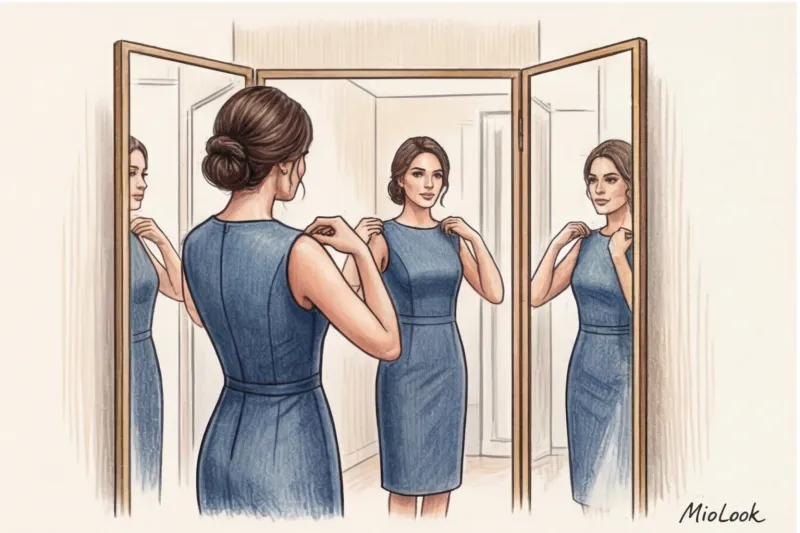
The shoulder seam must lie precisely on the anatomical point of the joint (unless it's a dropped shoulder, as the designer intended). If the armhole cuts into the armpit, restricting movement, or, conversely, is a gaping hole, revealing underwear, altering it at a tailor will be astronomically expensive. The tailor will have to completely remake the bodice, which is often physically impossible due to insufficient seam allowances.
Next, we move down to the bust. Darts are a navigation system for a perfect fit, creating 3D volume on flat fabric. The main rule of construction: a bust dart should always point directly to the highest point of the bust (the apex), but always end 2-3 centimeters before it. If the dart pierces the apex completely, forming a sharp cone, or points somewhere toward the armpit, the dress will visually distort your proportions.
"A bad fit isn't your body's fault, it's the designer's fault. Your body is perfect, it's just that the pattern was created for a different mannequin"—that's the mantra I make every client repeat when they're upset in the fitting room.
And finally, let's learn to read your body's signals. Any horizontal creases in the fabric are a cry for help from an incorrect size or cut. If transverse folds form at the hips, waist, or stomach (cutters call them "smile lines"), it means the fabric simply doesn't have enough volume to contour to your curves. It's stretched to its limits. No amount of shapewear will save you from a situation where the basic math of a cut is flawed—just go up a size or try a different silhouette.
Integration with MioLook: your personal style library
You can memorize all the historical patterns from Christian Dior to Martin Margiela and accurately distinguish a bias cut from a straight cut. But let's be honest: academic knowledge won't save you from morning panic in front of your closet if your wardrobe is a chaotic pile of beautiful but disparate items. Theory only works when it's backed by a rigorous system. That's why I strongly recommend my clients transfer their physical wardrobes to the digital environment.
The first step to conscious style is a complete inventory. Digitize your dresses and skirts in an app. MioLook It literally takes up one free evening. You simply upload photos of your items (or save catalog photos directly from brand websites), and the algorithm automatically removes the background and sorts them into categories. Suddenly, you see the real picture: for example, you have five nearly identical black sheath dresses hanging tightly together, but not a single comfortable everyday shirtdress for flights or long walks.
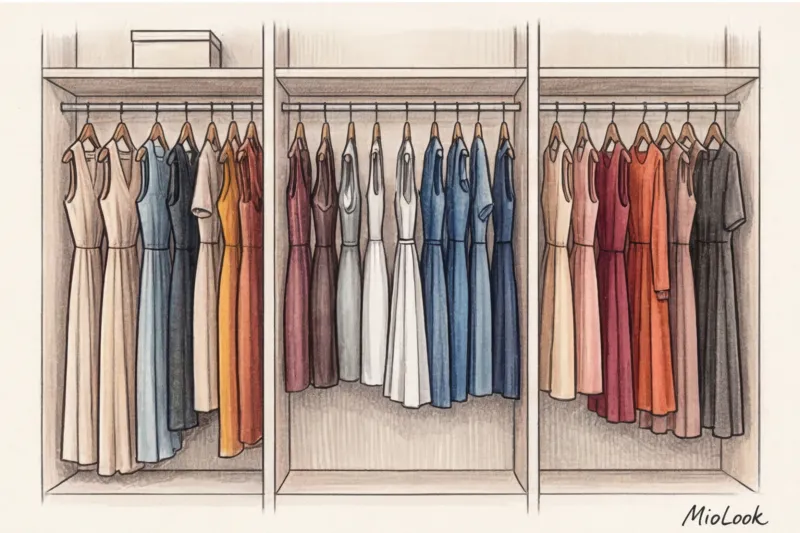
But the real magic begins later, when artificial intelligence kicks in. The app impartially analyzes which dress styles You wear it most often. We women tend to delude ourselves into believing we regularly wear that €800 silk slip, when in reality, we only wear it twice a year. Using AI for cost-per-wear analytics is sobering. The system clearly shows: a basic €150 A-line dress made of thick cotton, worn every week, costs you only €3 per outing—a brilliant financial investment. But an intricately draped evening maxi dress with a €1,200 price tag, worn once to a friend's wedding, remains "frozen capital."
Before making another expensive purchase, I always make my clients take a test drive. The virtual fitting room in the app is your personal filter against impulse shopping. You can test a new silhouette before buying: simply add a photo of the desired item to your digital database and see if this complex asymmetrical cut works with your favorite jackets, coats, and shoes. If a new dress requires special seamless underwear, new shoes with a specific toe, and a matching cardigan, it's a bad investment. We leave it in the store.
The final step in style architecture, which will forever solve the "nothing to wear" problem, is creating capsules around the perfect basic dress right on your phone. The app lets you pre-create 10-15 ready-made looks using the same item. Add a tailored double-breasted blazer and graphic pumps—and you've got a boardroom look. Swap the jacket for a chunky knit sweater (remember the volume balance rule from previous chapters) and throw on some Cossack boots—and you've got a relaxed Sunday brunch outfit. You spend half an hour on this builder on a weekend, and then every morning, simply open the catalog and choose a ready-made, stylistically perfect look.
Style isn't an innate gift or the magic of flashy logos. It's mathematics, the geometry of proportions, and discipline. By understanding the anatomy of cut and delegating routine to smart algorithms, you stop being held hostage to fleeting trends. You begin to manage your wardrobe, your budget, and, most importantly, the impression you make on others. Invest in the right fit, wear it with dignity, and remember: the best thing in your closet is the one that works for you every day.
Guide Chapters
Pencil skirt: what it is, styles, and what to wear it with
Sheath dress: what it is, its distinctive features, and what to wear it with
What is a Slip Dress? | Fashion Glossary
Wrap dress: what it is, who it suits, and what to wear it with
Pleated skirt: what it is, types, and what to wear it with
A-line silhouette: what it is, its features, and style rules
Shirtdress: What It Is and How to Wear It | Glossary
A-Line Dress: What It Is and Who It Suits | Glossary
Sun skirt: what it is, types of cuts, and rules of combination
Balloon dress: what it is, its style features, and what to wear it with
Noodle Dress: What It Is, Types, and What to Wear It With
Balloon skirt: what is this style, its history, and what to wear it with
Godet Skirt: What It Is, Types, and How to Wear It | Glossary
Shorts (skort): what is it and what is it called?
What is a tuxedo dress: cut features and what to wear it with
Babydoll Dress: What It Is, Styles, and What to Wear It With
Tulip skirt: what it is, styles, and what to wear it with
Cargo skirt: what it is, its style features, and what to wear it with
Safari Dress: What It Is, Styles, and What to Wear It With
Tutu Skirt (Chopinka): What It Is, Description, and Photos
A-line skirt: what it is, cut and style features
Shift dress: what it is, its cut, and what to wear it with
Wedge skirt: what it is, its cut, and what to wear it with
Parachute dress: what it is, style and cut features
Tatyana skirt: what it is and its cut
Frequently Asked Questions
What style mistakes do you make?
Honest Quiz: Find Out Your Wardrobe Weaknesses and How to Fix Them
About the author
Unlock MioLook
for €0.99
Start creating perfect outfits with artificial intelligence
Get access — €0.99 onceRelated Articles
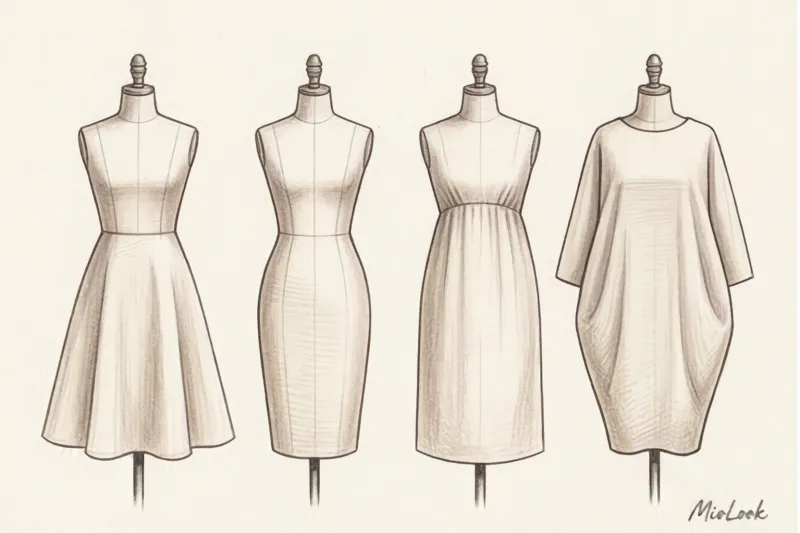
Clothing Silhouettes: Secrets to the Perfect Fit from a Stylist
Silhouette is the first thing our brain processes when we look at an image. Let'...
Clothing Details: Names for the Perfect Style
Why does the same item fit differently? Find out how understanding cut details h...
Clothing Styles: Why Clean Looks Don't Work Anymore
Traditional clothing styles in their original form are a thing of the past. Find...
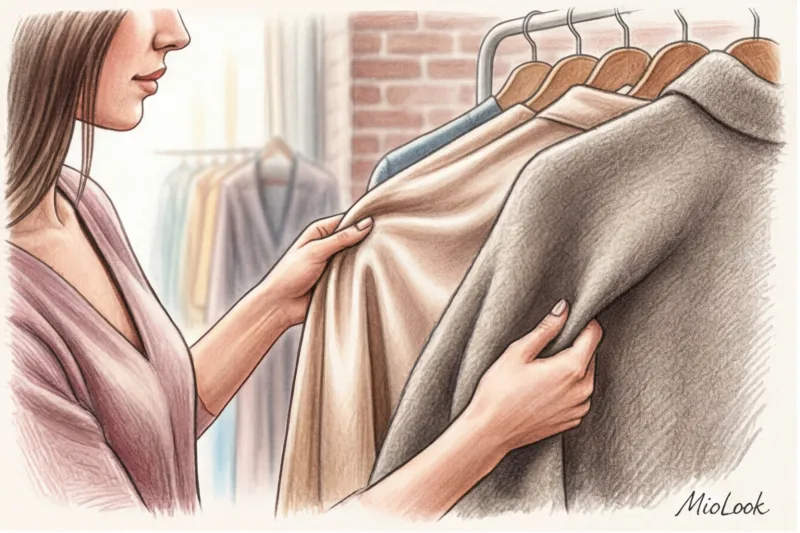
Fabric Types: How Composition Decides Everything About Your Style
The secret to a perfect wardrobe lies not in the brand, but in the composition o...