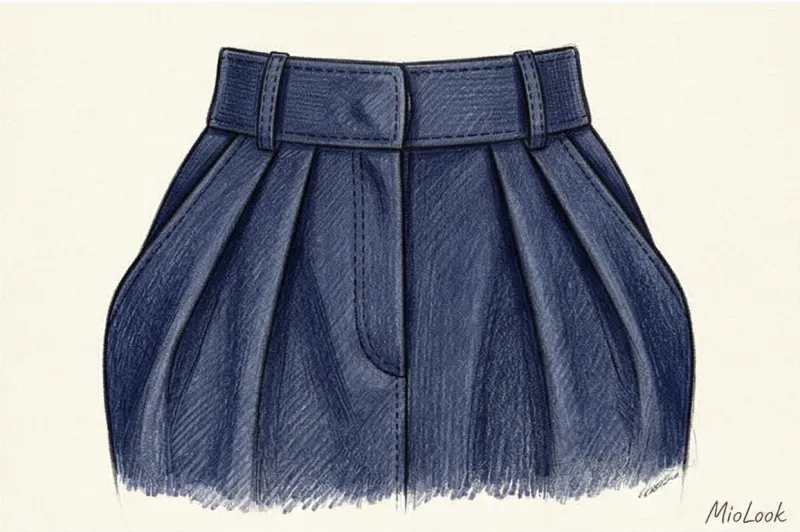
What is a pencil skirt?
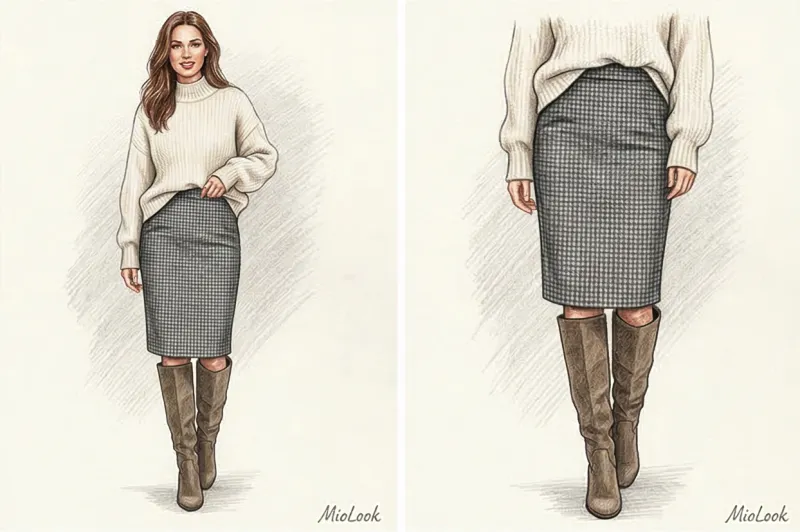
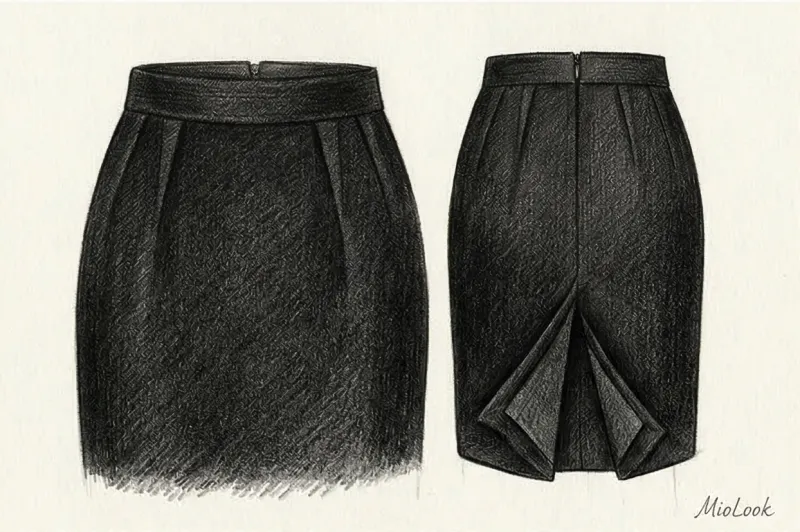
Pencil skirt - is a narrow, tight-fitting, straight-cut skirt that tapers towards the bottom and is usually knee-length or just below.
Read also our full guide: Ideal Dress Styles: How to Choose and Save
The style was first introduced by Christian Dior in 1954 as part of his "H-Line" fall/winter collection. It became a minimalist alternative to the curvaceous silhouettes of the New Look style. The garment's primary visual function is to create a clear, elongated vertical line, accentuating the figure's natural curves without adding unnecessary volume.
Distinctive features
The design of the pencil skirt is based on several strict cutting rules that ensure its characteristic silhouette:
- Tapered hem. The narrowing towards the bottom limits the width of the step, which historically formed a specific, smooth gait.
- Structural elements. To ensure freedom of movement at the back, side or front, a slit or cut is always provided.
- Landing. This classic style features a high rise at the natural waist. Darts ensure a snug fit across the hips.
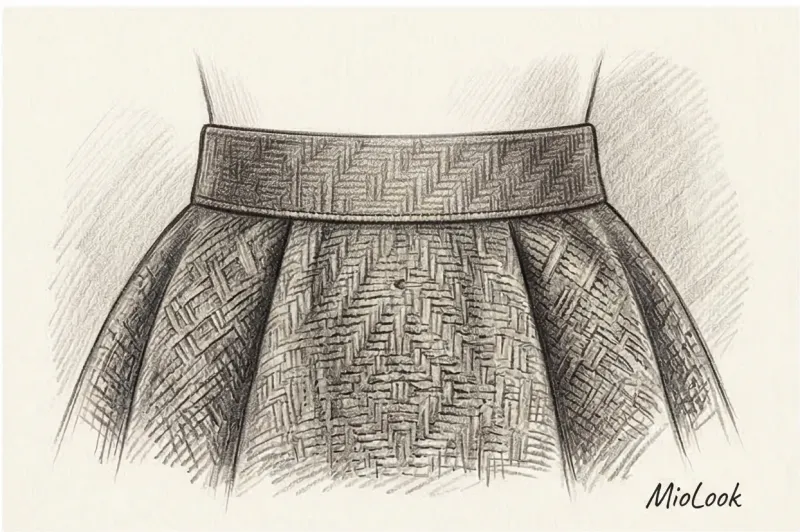
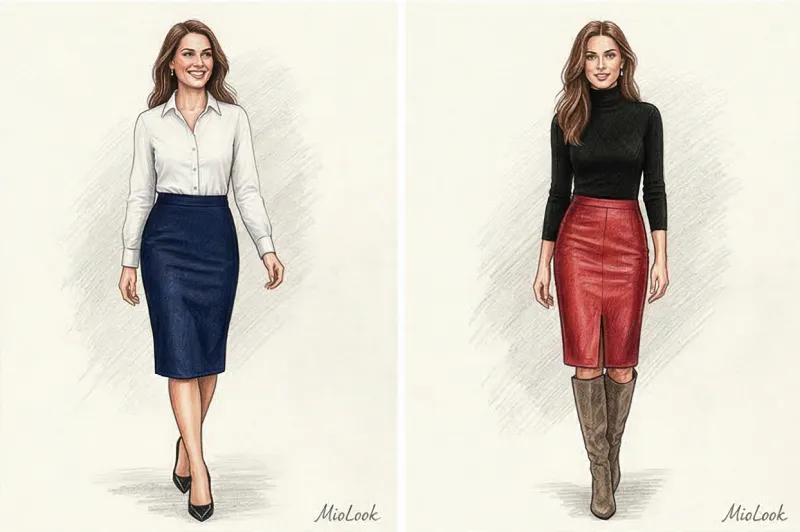
- Materials. Traditionally, this style is made from dense, shape-retaining fabrics. These include suiting wool, tweed, heavy cotton, leather, or modern blends with added elastane.
What to combine with
Thanks to its laconic cut, the pencil skirt easily integrates into various stylistic trends:
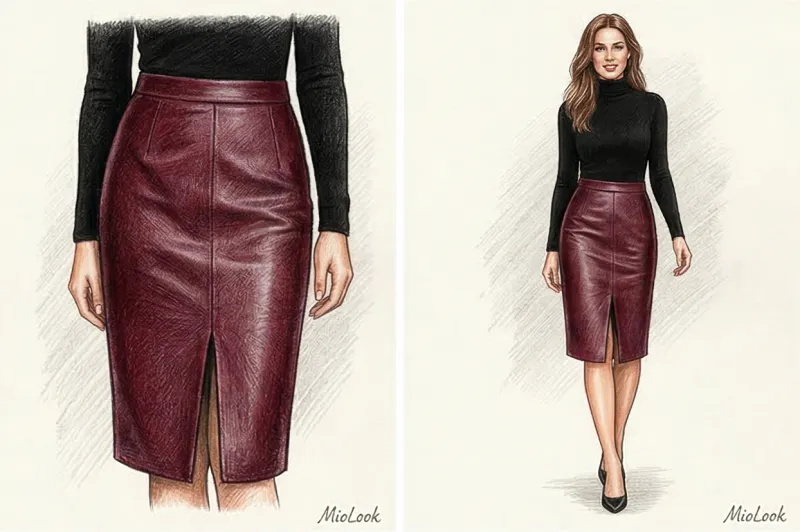
- Business style. A classic black or grey pencil skirt is paired with a tucked-in silk blouse, a tailored jacket and high-heeled pumps.
- Smart casual. A thick skirt is paired with a voluminous cashmere sweater, partially tucked in at the front. The look is perfectly completed with tall leather boots, the shafts of which extend below the hem.
- Evening look. Leather, velvet, or sequined styles are complemented by crop tops, corsets, or sheer blouses. Sandals with thin straps are the perfect footwear.
- Shoes. Due to its midi or knee-length, this style looks best with heels. Pumps or ankle boots will visually offset the shortened leg proportions created by the horizontal hemline.