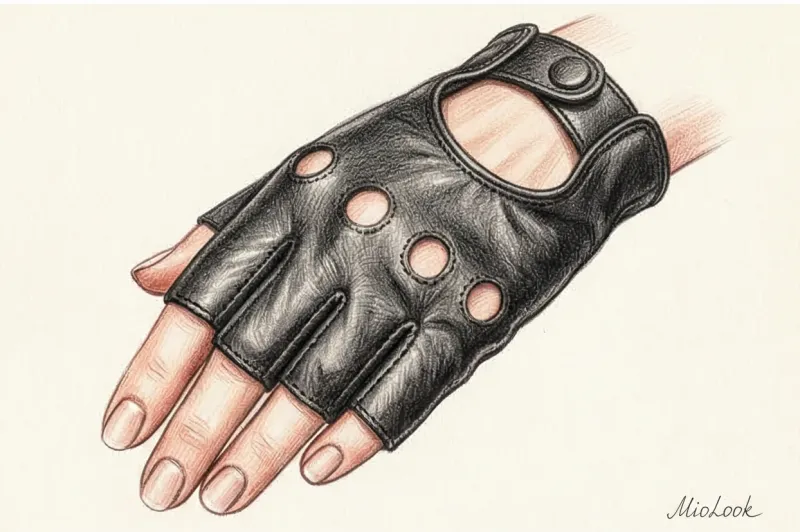
What are glovelettes?
Glovelettes Gloves are a type of fingerless glove, with each finger having a separate compartment extending to the first or second phalanx. The main difference between glovelets and mittens is their design: mittens often have only a hole for the thumb and a common space for the rest of the fingers, while glovelets anatomically separate each finger.
Initially, this accessory served a utilitarian purpose. It was used by drivers, cyclists, and weightlifters to securely grip steering wheels or sports equipment while maintaining tactile sensitivity in the fingertips. Glovelettes entered high fashion thanks to punk and rock subcultures, as well as designers. Karl Lagerfeld brought the accessory to prominence, making black leather glovelettes an integral part of his signature style.
Main types
There are several main types of glovelettes, which differ in materials and stylistic purpose:
- Leather (biker and driver): A classic option made of smooth leather or suede. Often enhanced with perforations for ventilation, round cutouts on the knuckles, metal studs, or wrist straps.
- Evening and decorative: Models made of guipure, lace, fine mesh, or silk. They serve a purely aesthetic function and can be embroidered with beads or rhinestones.
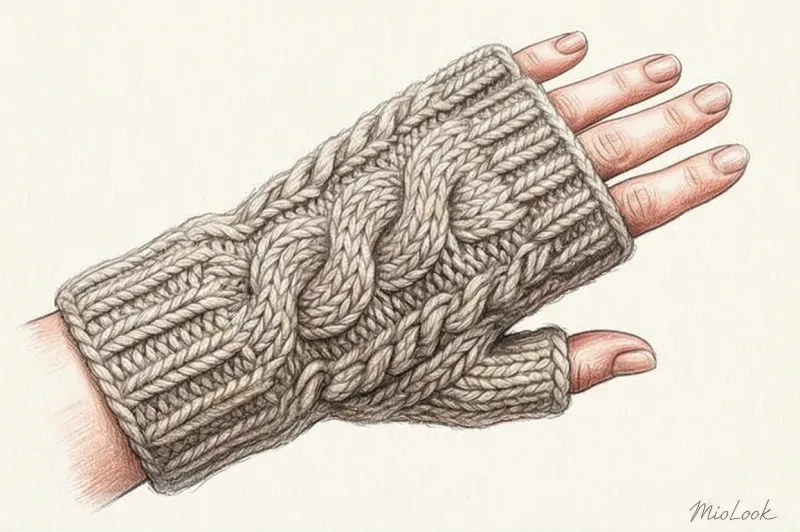
- Knitted and crocheted: Warm, everyday options made from wool, cashmere, or blended fibers. Designed to protect your hands from the cold while allowing you to freely use your touchscreen smartphone.
- Sports: Technological models made of neoprene, spandex or nylon with anti-slip polymer inserts on the palms.
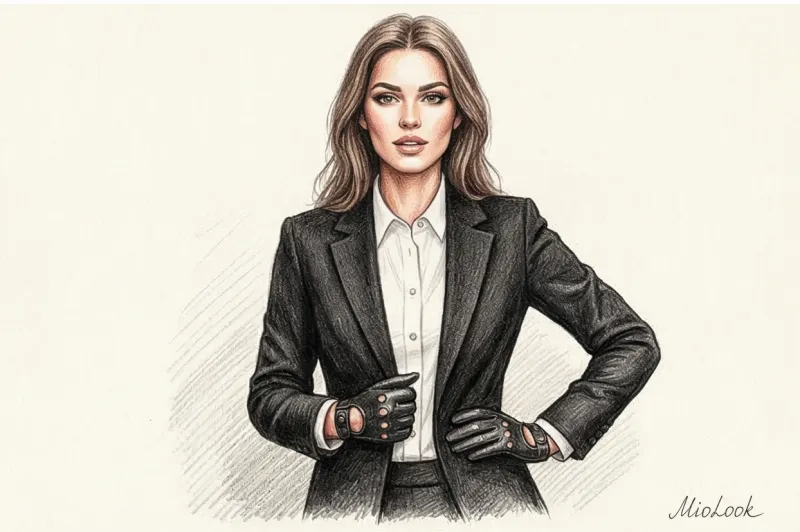
What to combine with
Leather glovelettes pair harmoniously with biker jackets, chunky lace-up boots, and heavy denim, embracing a grunge or rock-chic aesthetic. For business or smart-casual styles, black leather models pair with a tailored, fitted jacket and a classic white shirt. These gloves are often paired with chunky metal bracelets or oversized watches.
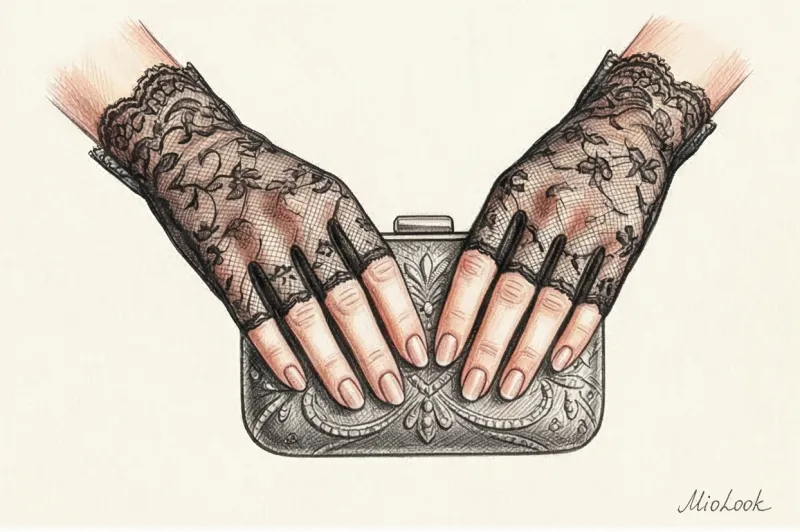
Lace or mesh glovelettes pair well with sleeveless evening dresses, tight corsets, and cocktail dresses, adding a touch of theatricality and vintage flair to the look. This accessory requires open arms or short sleeves to avoid overcrowding the silhouette.
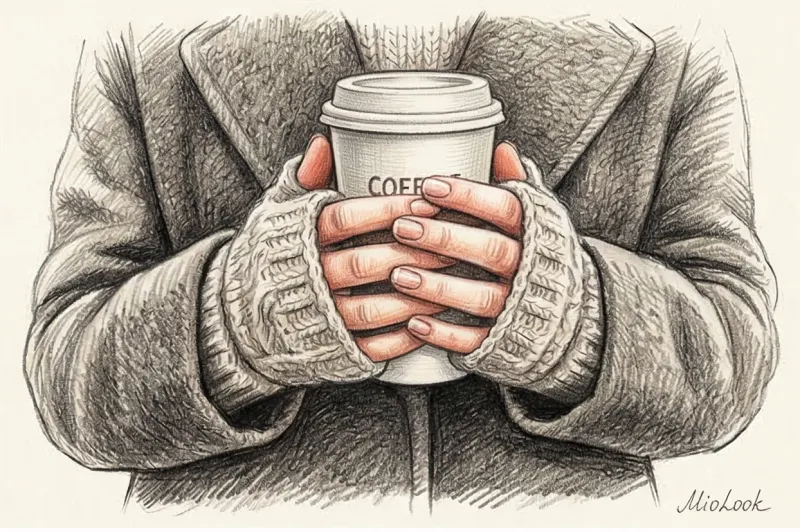
Knitted and jersey pieces are worn in layered fall-winter looks. They emerge from under the sleeves of oversized chunky knit sweaters, puffy down jackets, or classic wool coats, creating a textured contrast between outerwear and accessories.