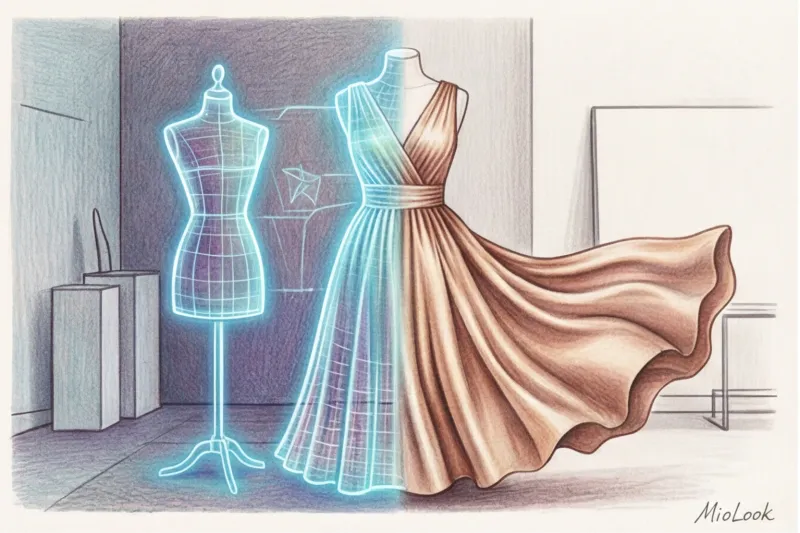
What is digital clothing and how does virtual fashion work?
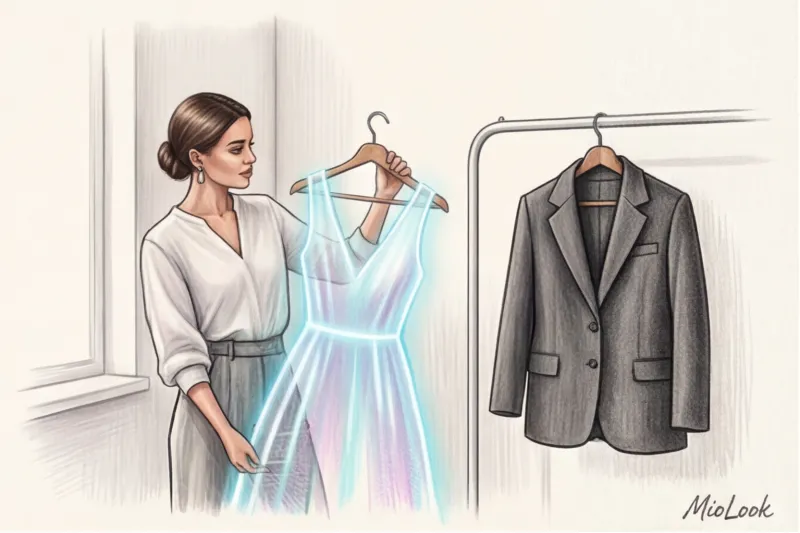
When one of my blogger clients asked if she should invest €150 in a non-existent trench coat from a digital couture house, I froze for a second. In 12 years as a stylist, I've sorted through hundreds of closets, but I've never styled a piece that can't be touched or hung on a hanger. Today digital clothing — is no longer just a futuristic concept or a cyberpunk plot. It's a fully functional, utilitarian tool for creating content, optimizing budgets, and managing one's online image.
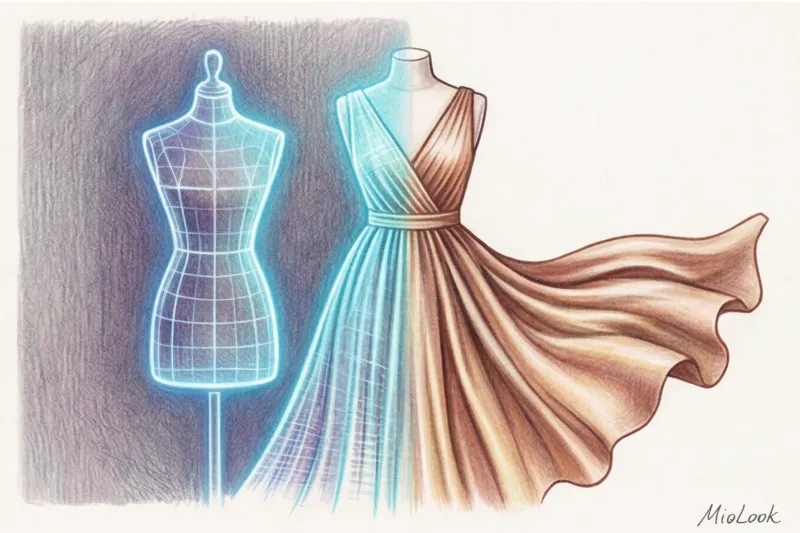
To understand, let's first differentiate the concepts. People often lump everything virtual together. Digital clothing — these are highly detailed 3D objects that professional designers “put on” your real photos, taking into account light, shadows, and anatomy. This is fundamentally different from skins for avatars — pixelated costumes that are purchased exclusively by gamers for their characters in universes like Roblox or Fortnite.
It is also important to distinguish 3D fashion from AR try-ons — augmented reality masks and filters (like in Snapchat or Instagram). AR filters are applied in real time via the camera, but they often look cartoonish and shift when moving quickly. And finally, there is NFT fashion — is a blockchain technology that merely confirms your exclusive ownership of a virtual jacket. The digital item can be sold as an NFT, but its aesthetic value lies in the 3D modeling process itself.
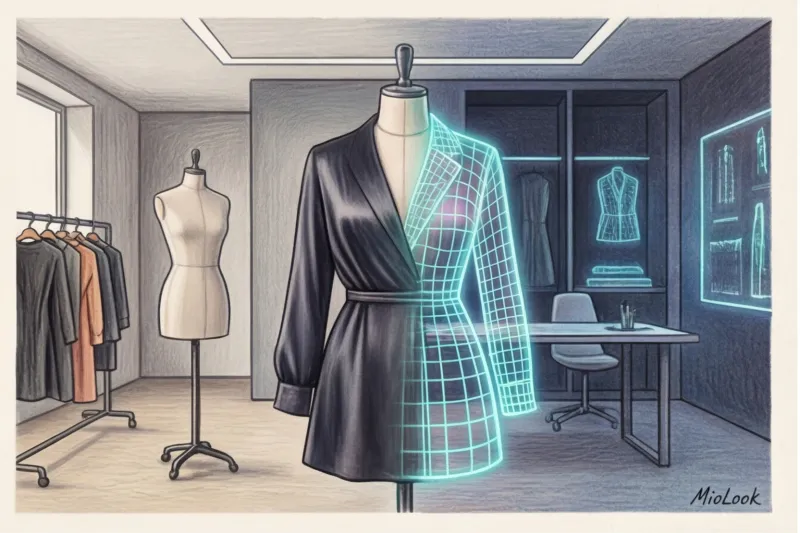
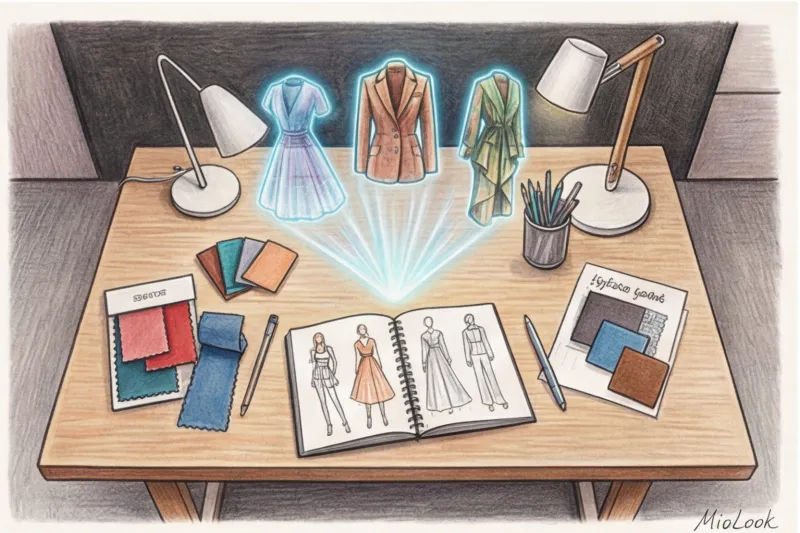
How are such masterpieces created? The process is strikingly similar to traditional tailoring, except that scissors, pins, and meters of fabric are replaced by software code. Designers (now called 3D modelers) create real digital patterns in specialized software such as Clo3D or Marvelous Designer.
These virtual patterns are "sewn" onto a 3D mannequin. But the real magic, the one people are willing to pay real money for, happens during the final rendering and fabric physics setup. The program mathematically calculates how heavy velvet will shimmer in the studio light, how denim will gather into rigid folds, and how translucent silk will flow in the wind. The industry has advanced so far that today we can generate perfect digital copies of physical garments. The same logic underlies the technology for creating digital wardrobe twins. MioLook app You digitize your physical closet, and smart algorithms collect images on your smartphone screen, eliminating the need to spend hours trying on clothes in front of a mirror.
Just a couple of years ago, virtual sneakers and neon coats were the preserve of geeks and crypto art collectors. So why has digital fashion now become part of the everyday wardrobes of lifestyle influencers and serious business experts? The answer lies in pragmatism. According to a McKinsey analytical report, the virtual fashion market is experiencing tremendous growth because technology has finally solved a real consumer problem: a thirst for new content amid fatigue from overproduction.
I regularly work with entrepreneurs who order virtual business suits for their online portfolios and media publications. If you need a flawless, high-status look for a single photo shoot, why buy a physical designer jacket for €800 that you'll only wear once? It's much smarter to choose conscious consumption in clothing and purchase a 3D version for €40–50. This allows you to broadcast the desired message online—whether it's a strict corporate dress code or a relaxed one. quiet luxury style - keeping your real closet free of one-day-old items.
Why People Really Buy 3D Stuff: The Economics of Frames
Last year, I conducted a large-scale analytical project that forced me to completely rethink my approach to clothing consumption. I digitized and analyzed the wardrobes of 50 of my regular clients. After crunching the numbers, I discovered a disturbing pattern: exactly 30% of bright, statement pieces were worn only once. Purely for the sake of a striking photo for their feed.
We buy a neon pink jacket with voluminous marabou feathers, take a series of stunning photos wearing it, collect reactions, and then it hangs in the back of the closet for years with its tag still attached. Why? Because "I've been seen in it before," and it's too extravagant to wear to the office or brunch. This "one-time wear" phenomenon has long been a real headache for the economy. According to a well-known report by Barclays analysts, almost 10% of shoppers buy clothes solely to pose for photos on social media and then return them to the store. Retailers spend millions of euros on logistics, dry cleaning, and repackaging such returns. Virtual fashion offers a brilliant solution to this problem: you get your perfect shot, and the planet doesn't choke on overproduction.
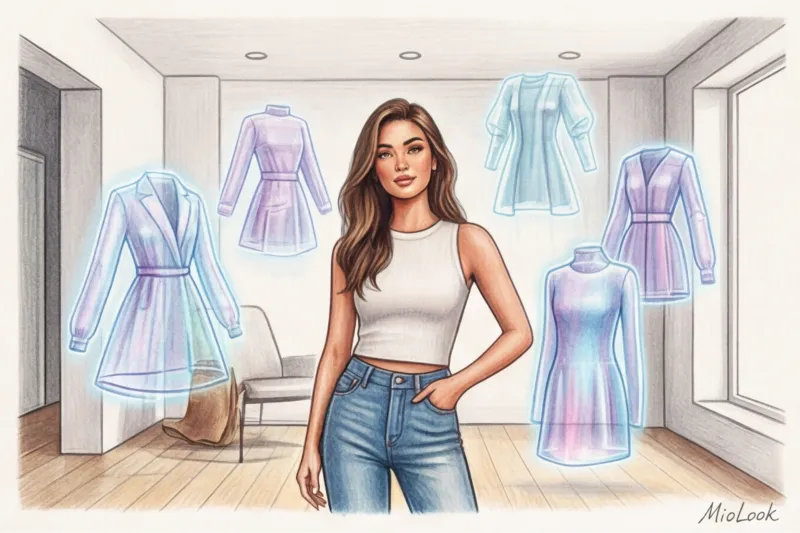
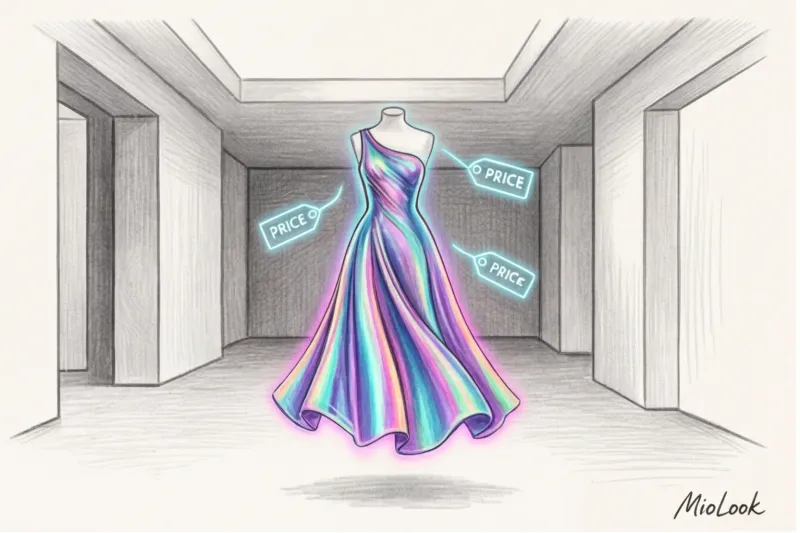
For modern influencers and creators, 3D clothing has become a legitimate tool for saving colossal budgets. Imagine stylizing a futuristic shoot. Instead of buying a physical, complex, architecturally designed couture dress for €4,000 (which they then have to store somewhere or try to resell at a huge discount), bloggers buy its digital counterpart for €30–50.
These virtual outfits are classic statement Items (accent wardrobe elements). The digital format gives complete freedom to physics: a jacket can glow with neon, and a dress can be made of flowing liquid chrome. As a result, the content creator constantly generates rich visual material while maintaining minimalism and order in their physical space.
But it's a mistake to think that 3D fashion is the exclusive preserve of stylists and bloggers. We're rapidly moving into an era where our digital identity is becoming as important as our physical one. Consider how Generation Z's consumption patterns are changing. For many, limited-edition virtual sneakers from the RTFKT studio (acquired by Nike several years ago) carry far more social weight than a real pair of shoes from a shopping mall.
We spend 8-10 hours a day online: this is where we meet people, build our careers, and attend virtual events. Your avatar is your calling card. Therefore, status in the digital environment is now as valuable as a Swiss watch in a face-to-face meeting. The younger generation is more concerned with how their character looks on screen in front of millions of users than with what basic hoodie they're wearing in their living room.
Finally, digital fashion has transcended the entertainment stage and become a serious investment market. Digital couture, released as NFTs (non-fungible tokens), has become a legitimate collectible. When a fashion house releases a capsule collection of just 50 virtual dresses, their value on the secondary crypto market can skyrocket tenfold.
"Digital clothing today isn't just pixels on a screen. It's a new asset class. You're not buying meters of fabric; you're buying exclusivity and mathematically proven ownership."
I remember the industry being rocked by the news when The Fabricant's first digital dress, Iridescence, sold at auction for the equivalent of €9,500. Today, investors hunt for rare NFTs with the same fervor that fashion connoisseurs seek out vintage Hermès bags. It's pure investment, where your closet is replaced by a crypto wallet, and the safety of your couture is unaffected by moths, dust, or humidity.
Access to MioLook for €0.99 — one-time payment
A smart AI stylist will select the perfect look.
Get access — €0.99 onceThe Practical Benefits of Digital Clothing: A Stylist's Perspective
Did you know that, according to Shopify data from 2023, approximately 30% of clothing purchased online is returned to the store? The main reasons are simple: "the item doesn't fit," "the fabric looks different," or "the color doesn't match my skin tone." For me, as a practicing stylist, this isn't just a dry statistic. It's a daily headache for my clients, who spend hours processing returns, packing boxes, and agonizingly waiting for their refunds.
This is where virtual fittings become the perfect test drive before a real purchase. Instead of ordering four sizes of the same pantsuit and freezing a hefty sum on your card, you "fit" a digital replica onto your precise 3D avatar. I call it a stylistic testing ground: you can safely test how Balenciaga-style exaggerated shoulders will look on a pear-shaped figure, or whether that complex neon green shade will suit you. If the 3D model shows that the style shortens your legs, you simply close the tab without spending a single euro or a single minute on trips to the pickup point.
Smart wardrobe and virtual fitting room
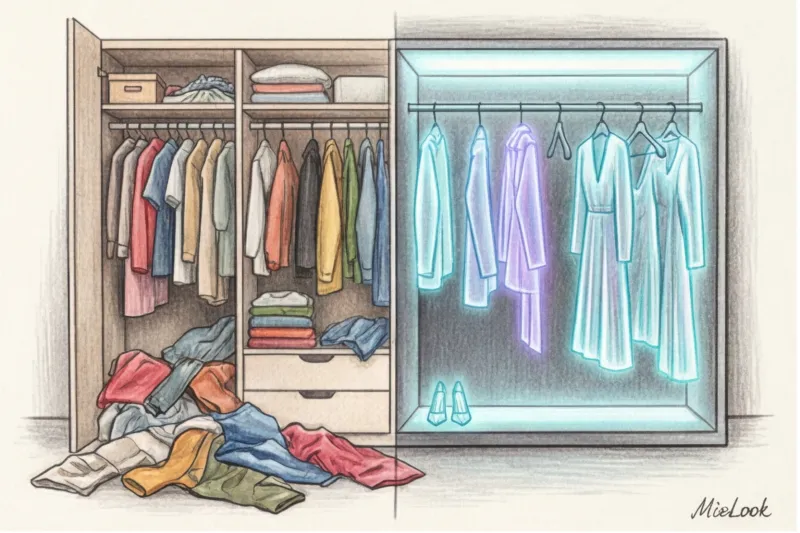
But the magic of 3D technology works not only with new purchases but also with what's already hanging on your hangers. Try digitizing your closet. Many people think this is a task for professional 3D designers, but in reality, the process takes a couple of evenings with your phone in hand. For example, using an app MioLook , you create a structured and visual database of your items right on your smartphone, creating a complete "smart wardrobe."
What does this mean in practice? You'll be freed from the exhausting morning ritual of emptying half your closet onto your bed and still having nothing to wear. The virtual fitting room lets you mix and match your real-life clothes with potential new arrivals on the screen. You can put together outfits for the entire workweek just by sitting with a cup of coffee on Sunday.
Moreover, the AI algorithms of modern platforms have learned to analyze your proportions, your personal color palette, and even how different textures (for example, thick wool and fine silk) interact in the same outfit. This dramatically reduces the percentage of unsuccessful purchases. When you see on the screen that a new designer cardigan for €150 doesn't fit into your current shopping list and requires the purchase of three more items, you easily abandon it right at the cart stage. Algorithms act as your personal stylist and rationalizer.
The transition to virtual fitting rooms logically leads us to a concept that, I am sure, will determine the vector of fashion development for the next decades - phygital wardrobe (from the fusion of words physical And digital ). The essence of this approach is extremely pragmatic: we establish a strict division between the “physical base” and the “digital emphasis.”
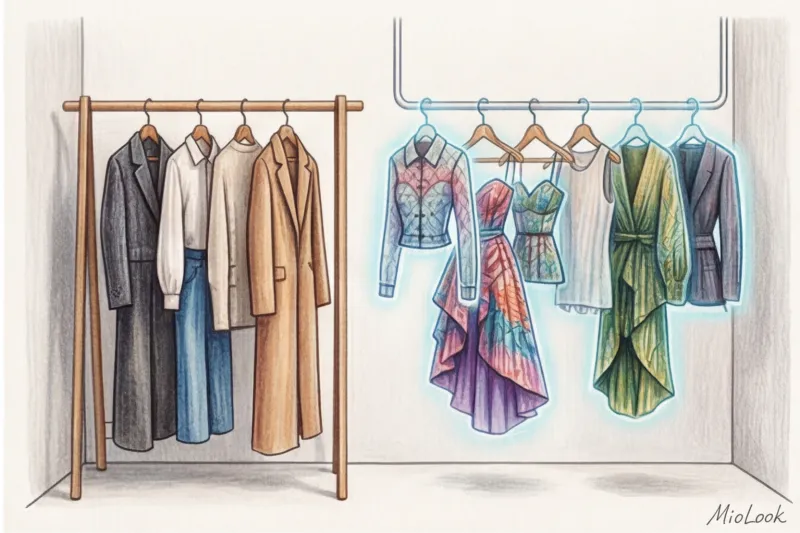
In the physical world, you invest exclusively in uncompromising quality, comfort, and tactility. This could be an impeccably tailored cashmere sweater, heavy denim jeans, a classic trench coat, and comfortable, anatomically designed shoes. You live, work, and walk in these items. The price of such essentials (often in the range of €200–€500 for a quality item) is fully justified by the low cost per wear.
But all the fleeting trends, micro-trends, and extravagant impulses—acid-colored tops, dresses with giant bows, latex corsets, or asymmetrical liquid metal jackets—are disappearing into the digital space. Why buy a sequin dress from a fast-fashion store for €80, wear it exactly once to a party, and then leave it gathering dust in your closet? You buy its digital couture version for €20, "wear it" in photos for social media, or use it as an AR filter during an online conference. The image gestalt is complete, and the closet is uncluttered.
Beyond the obvious savings in space and personal budget, there's a powerful environmental argument here. The fast fashion industry is catastrophically depleting the planet's resources. Producing just one cotton T-shirt requires approximately 2,700 liters of fresh water—that's what the average person drinks in two and a half years!
By replacing single-use physical items with their 3D counterparts, we're literally saving the environment. To substantiate this claim, let's look at some hard data. According to a large-scale study by DressX, the largest digital fashion retailer (2022 report), producing one piece of digital clothing generates 97% less carbon footprint (CO2 emissions) than producing a similar physical item.
"We can't completely stop people from buying new things, but we can relocate our need for endless change to a space where it doesn't harm the planet," is the key message being conveyed by the creators of phygital fashion today.
Creating a 3D look wastes no water, uses no toxic chemical dyes, and produces no microplastics when washed. This isn't just some trendy eco-activism for the sake of it. It's a new level of wardrobe awareness: you fully indulge your passion for trends and novelty, while keeping your closet and our planet clean.
How to try on and wear digital clothing in real life
A common question I hear from new clients is, "Let's say I bought this gorgeous 3D dress. How exactly am I supposed to wear it?" Don't think that virtual fashion exists solely within complex computer games. The mechanics of using a digital wardrobe depend on where exactly you plan to appear. Today, there are three main ways to integrate 3D objects into your real life, and each of them addresses completely different stylistic needs.
AR filters: try them on in real time
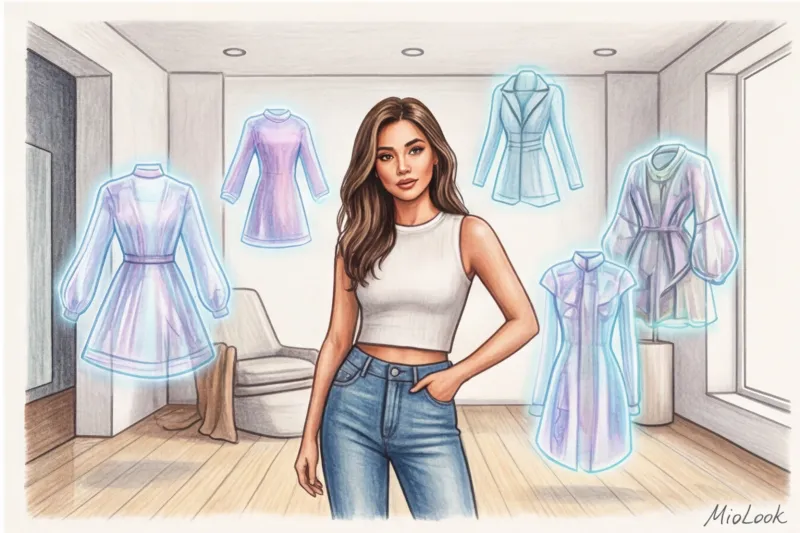
If you need dynamic content right here and now—for Stories, short videos, or live streams—augmented reality (AR) comes to the rescue. Modern smartphone cameras equipped with depth sensors like LiDAR can recognize body contours using skeletal tracking and superimpose objects directly on top of a moving person.
The mechanics are incredibly simple: you open a dedicated digital fashion marketplace app, select a futuristic down jacket, and point the front camera at yourself. The algorithm instantly calculates how the virtual fabric should sway as you step and react to your body movements. While complex textures—such as translucent latex or mirrored metal—may exhibit slight visual glitches, as rendering reflections in real time requires a device's immense computing power, this is the fastest format for a viral video on social media, requiring no waiting time.
Integration into video conferencing services: Zoom wardrobe
For entrepreneurs and experts spending half their work week online, the integration of virtual clothing into video conferencing services like Zoom, Microsoft Teams, or Google Meet has become a real lifesaver. Using special plugins (virtual cameras that capture the video signal), you can sit in front of a monitor in a faded t-shirt, while your investors or students see you in a smart designer jacket.
"When I was preparing a speaker for a series of expert webinars, we encountered an unexpected problem: where to attach a physical lavalier microphone if the jacket is virtual?"
This personal experience inspired a subtle styling hack. I advised the client to wear a fitted black long-sleeved shirt in real life, with a buttonhole clip right at the neck. For the show, we chose a flawless electric-blue digital blazer (costing around €45) with a deep V-neck that neatly framed the device area without obscuring the microphone. The illusion was perfect—not a single one of the 500 livestream listeners realized the business dress code was code-generated.
Digital tailoring: studio quality
While AR filters are suitable for video, digital tailoring is used to create reference static photographs (covers, professional blog posts, avatars). You send your photo to 3D artists, and within 24-48 hours, the virtual garment is literally "sewn" into the frame. The designer doesn't simply overlay a flat image: they simulate gravity to ensure the fabric hangs correctly on your collarbones, and position 3D light sources so that they mathematically precisely match the lighting in your photo.
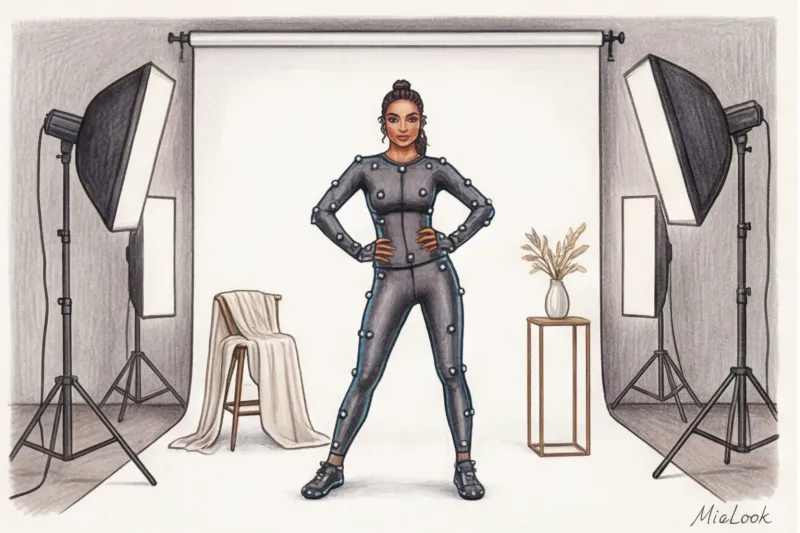
To ensure the result looks like a glossy photo shoot and not like a cheap photomontage, the source material must be prepared according to strict guidelines. Here's my working guide to creating the perfect photo for 3D sewing:
- Form-fitting base. Wear a sports bra, cycling shorts, or a bodysuit in a neutral color. A baggy sweater will hopelessly distort your silhouette, causing your 3D model to "float" at the shoulders or waist.
- Posing with "air". Don't press your arms tightly against your torso. Leave a noticeable gap between your elbows and waist so the program can accurately calculate the volume and drape of the digital outfit at the sides.
- Soft lighting. Avoid harsh, direct sunlight, which casts deep, black shadows on the face and body. Diffused daylight from a window is best. If the source image contains complex backlighting, the 3D artist will have to manually re-engineer the reflection physics on the virtual cloth, which often increases the cost.
Many of my clients, when planning a digital tailoring order, check in advance how the selected 3D item will match with their real accessories or shoes, using the "smart wardrobe" feature in MioLook This allows you to create a coherent image before you pay for a render.
Try MioLook
for free
Start creating perfect images with the help of artificial intelligence
Get access — €0.99 onceVirtual vs. Physical Clothing: Breaking the Stereotypes
Every time I speak at fashion conferences, I anticipate the same skepticism. The question invariably comes from the audience: "Emily, are you seriously suggesting that adults buy air?" Misunderstanding the nature of virtual things has given rise to many myths. Let's examine three main misconceptions that I encounter almost daily as a stylist and look at digital fashion through the prism of pragmatism.
Stereotype 1: "Paying for pixels is stupid."
The most common argument of opponents of 3D fashion breaks down against the basic rule of wardrobe economics - the formula cost per wear (cost per wear). We're used to thinking that a physical item is inherently more valuable because it can be hung in a closet. But let's do the math.
You buy a trendy dress from a mass-market store for €80 for a single, eye-catching photoshoot or party, after which it settles on the back shelf forever. The price of one wear is €80. Meanwhile, buying a similarly vibrant digital dress will cost you around €15-20. You can "wear" it in five different photos for your blog, reducing the cost to €3-4. Paying for pixels isn't foolish if those pixels solve a specific content creation problem more cheaply and environmentally friendly than a real piece of fabric.
Stereotype 2: "It's obvious that it's painted on."
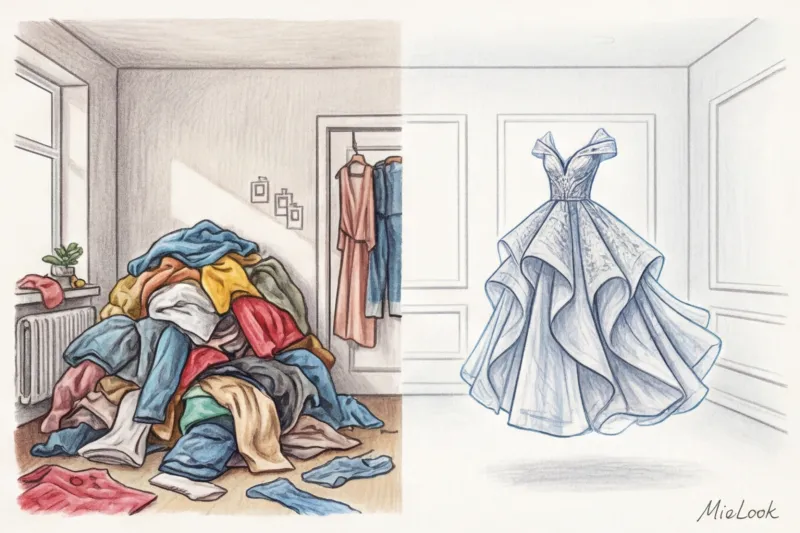
Many people still associate virtual clothing with the angular textures of computer games from the 2000s. If you think so, you've missed the colossal technological evolution of the last three years. Modern 3D fashion is created in the same programs that design real-life patterns, and ray tracing technology is responsible for visualization.
Algorithms calculate the physics of fabric with mathematical precision. Today's rendering takes into account how studio light refracts on glossy virtual latex, how digital silk flows softly when moved, or how the pile of 3D fur reacts to the direction of lighting. I once had a glossy magazine publish a photo shoot of my client in digital couture, and not a single reader in the comments suspected the dress didn't exist.
Stereotype 3: "It's only for zoomers."
It's commonly believed that virtual sneakers and neon hoodies are exclusively purchased by teenagers for their avatars in metaverses. In fact, the fastest-growing segment is digital business attire. Coaches, top managers, and business experts are actively using 3D suits to create a prestigious online image.
I'll share a paradoxical, but time-tested insight: a perfect virtual jacket for €30 has a much higher ROI (return on investment) for a personal brand than a real cashmere jacket for €500, if 90% of your communication takes place online.
Zoom's video compression algorithms will still "eat up" the premium texture of real cashmere, but the impeccable fit and deep color of a digital suit on your avatar or in webinar promotional materials will be 100% accurate. When my established clients integrate such solutions into their profiles through the "smart wardrobe" feature in MioLook , they get an endless designer of professional looks, saving time, money and closet space.
The Future of the Industry: From Metaverses to Phygital Wardrobes
Morgan Stanley analysts predict that the virtual luxury and digital fashion market could exceed €50 billion by 2030. This figure seems impressive until you realize the industry's most significant transformation: virtual clothing is no longer confined to smartphone screens. It is rapidly integrating into our physical lives, creating an entirely new class of wearable assets.
The concept comes to the fore Phygital (a fusion of the English words physical and digital). Imagine a scenario typical for the coming years: you buy a high-quality, tangible cotton hoodie in a basic cut for €120. But it comes with an NFT token or an embedded invisible marker. This detail activates its digital twin or a complex AR animation. In physical reality, you're walking down the street in a simple black hoodie that fits the strictest casual dress code. However, on your smartphone screen—while recording a video for a blog or an online conference—this same item is covered in holographic scales, glows with neon, or changes patterns in sync with your voice. You pay for one utilitarian item, but get an infinite number of accent variations for your content.
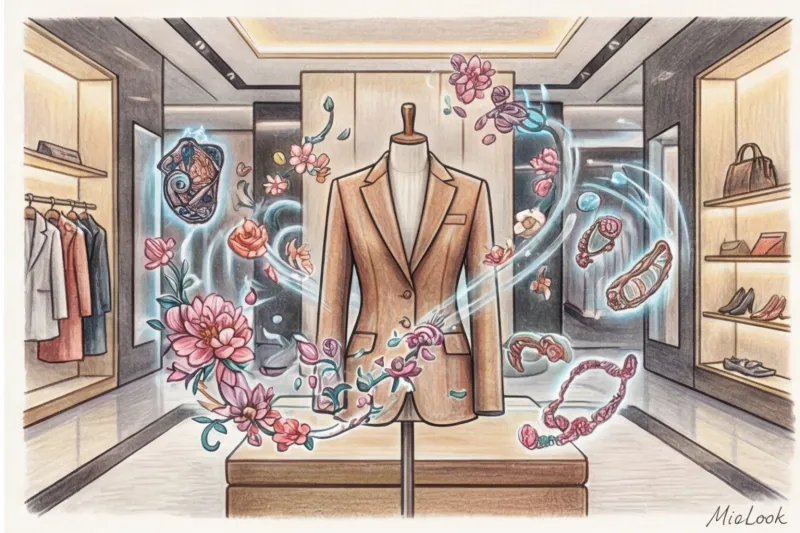
Along with the development of these formats, the very principle of selecting such collections is changing. While the first steps of virtual fashion resembled buying standard digital patterns, we are now seeing the deep integration of AI into the process of creating personalized digital capsule collections tailored to a specific body type. Algorithms have learned to read your body geometry, posture, and overall appearance. You're no longer trying on an abstract 3D render—a neural network constructs a mathematically verified wardrobe that fits as flawlessly in a virtual environment as a bespoke suit.
It is this principle of algorithmic selection and deep personalization that forms the basis smart wardrobe features in MioLook Machine learning analyzes which proportions work for you in real life, offering AI styling that's equally effective when sorting through your physical closet and creating digital images.
Your ideal image
it begins Here
Join thousands of users who look flawless every day with MioLook.
Get access — €0.99 onceIf we're talking about macrotrends and long-term market development forecasts, a real tectonic shift will occur when we ditch phone screens for smart glasses. The everyday use of AR in fashion will completely revolutionize street style. Put on a lightweight, stylish frame before leaving the house, and you'll see not just passersby in coats and jeans, but projected digital auras. Virtual trains, brand logos hovering around shoulders, and dynamic 3D details on collars will become commonplace. The line between material tailoring and digital superstructure will blur completely, turning every street into an interactive catwalk.
Checklist: How to Get Started with Digital Fashion
Enough theory. Last week, I challenged the CEO of a tech startup with whom we were putting together a travel capsule: I suggested she completely forgo purchasing physical content for a month. Instead, we switched to pixels. The result? Budget savings of about €600, and engagement on her professional blog increased thanks to a completely unique, eye-catching visual.
If you're ready for your own experiment and want to optimize your stylistic habits, I've put together a rigorous, practical, no-nonsense checklist. Complete these four steps in one weekend.
Step 1: Download the AR try-on app and try on free basic items
There's no need to spend money on complex virtual couture right away. Start by testing the mechanics. Install apps like DressX or ZERO10—their catalogs always have a starter section with a free database. Turn on your smartphone's front camera and watch the algorithm apply a digital T-shirt or hoodie to you in real time. Move around, twirl in front of the screen, and appreciate how the fabric reacts to your movements. This process takes exactly three minutes, but it instantly breaks the psychological barrier to digital clothing becoming part of your routine.
Step 2: Digitize 5 Essential Items from Your Physical Closet
Virtual fashion works best when it seamlessly intersects with reality. Choose five of your most popular physical items: a perfect white shirt, tailored black pants, a favorite cashmere sweater, and a couple of neutral tops. Photograph them in good daylight and upload them to MioLook app The algorithm will automatically remove the background and transform your real-life objects into fully-fledged digital assets. This will create a solid foundation for creating future phygital images (a combination of physical and digital) right on your smartphone screen.
Step 3: Order a digital tailoring of an accent dress or extravagant jacket based on your best studio photo
Now let's get to the magic. Take your best studio photo—one with well-lit and well-defined figure. Find something on digital fashion marketplaces that you'd be hesitant to buy in real life because of its exorbitant price or overly bold cut. It could be a gravity-defying statement dress made of liquid metal or an extravagant jacket with exaggerated neon shoulders.
I always recommend choosing items with unusual textures for your first try: iridescent latex, holographic silk, or 3D fur. Digital tailoring (professional fitting by a 3D designer) will cost you approximately €20–€40. The specialist will manually adjust the virtual item to your proportions, drawing shadows and highlights from a real light source on the original. In 24 hours, you'll receive a magazine-quality file.
Step 4: Use the digital image for a new post on a professional blog
Final test drive: publish the resulting photo on LinkedIn, Telegram, or Instagram. Write your usual expert post and intentionally avoid mentioning that you're wearing 3D clothing. Simply observe the audience's reaction.
According to statistics from the Digital Fashion Institute (2024), 87% of social media users cannot distinguish high-quality digital tailoring from real studio photography while scrolling through their feed.
Spoiler: you'll get tons of compliments in the comments about your fresh style, and almost no one will suspect the renderer's intervention.
As a practicing stylist, I see a very clear direction: the wardrobe of the future is a hybrid system. We'll keep premium essentials, comfortable knitwear, and quality shoes—everything that gives us physical comfort and tactile pleasure—in our physical closets. But the need for extravagance, status markers for social media, and the rapid change of trends will be replaced by pixels.
Micro-step for today: Right now, open your physical closet, take out that one basic item that you wear most often, and take its first photo for digitalization in MioLook Welcome to the era of the smart meta-wardrobe!
Guide Chapters
Clothing for avatars: style and fashion in the metaverses
A digital wardrobe is no longer just a gaming hobby. We'll explore how your avatar's style influences your VR workflow and personal brand.
How much does virtual clothing cost: prices and fashion shows
Why pay hundreds of euros to rent couture dresses when pixels are much cheaper? We explore the real costs of digital fashion and meta-impressions.
Augmented Reality Clothing: Transforming Your Look with AR
How can one basic NFC-enabled item replace an entire wardrobe for video calls? We explore how AR technologies work in modern utilitarian fashion.
Sustainable Fashion: Virtual Clothing Will Save the World
Producing a typical T-shirt consumes thousands of liters of water. Find out how 3D fashion can help satisfy the thirst for novelty and protect the environment from overconsumption.
What is NFT clothing? Why pay for digital items?
Digital fashion has long since moved beyond games for geeks. Find out how virtual outfits help save money on photo shoots and reach millions.
Neural Network for Clothing Design: How AI Creates New Styles
Artificial intelligence is no longer just a toy, but a utilitarian tool. We'll show you how to generate ideal styles for non-standard figures.
Digital Clothing Brands: Who Creates 3D Fashion?
Forget about "one-shot" social media pieces. Find out who creates 3D clothing, where to buy it, and how to use a virtual wardrobe for stylish content.
Virtual Wardrobe: An App for Digitizing Your Clothes
Spending too much time choosing clothes in the morning? Learn how to transfer your closet to your smartphone and create stylish looks in just a few clicks.
How to superimpose clothing on a photo: neural networks and apps
Forget about disappointing online purchases. A review of the best AI tools and apps that will help you virtually try on any look before paying.
Virtual Clothing Try-On: How to Try on Clothes Online
Around 40% of online purchases end in returns due to poor fit. Learn how virtual try-on technology can help you save time and money while shopping.