What are modern modest fashion trends: from forced compromises to architectural style?
In 2015, when clients asked me to create a fully covered wardrobe, we literally hunted for items. We had to buy dresses two sizes too big for length, rip out translucent polyester inserts, and obsessively buy turtlenecks to salvage overly revealing sundresses. modest fashion trends They dictate the rules on the main catwalks of Paris and Milan. We no longer have to compromise aesthetically—covered clothing has become synonymous with absolute, uncompromising chic.
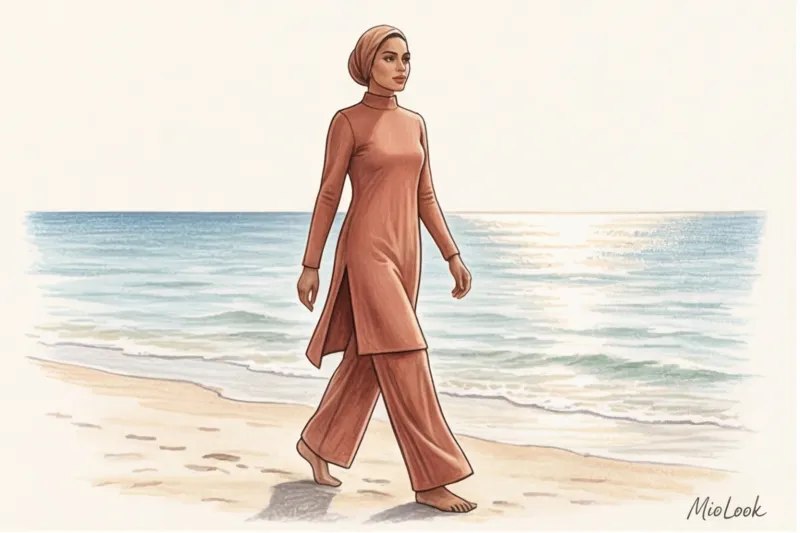
Modern modest fashion has long since transcended the confines of purely religious precepts. While this demand was initially driven by women observing the rules of Islam, Judaism, or Christianity, today it's a global macrotrend for comfort, personal protection, and physiological safety. Women around the world are tired of objectification, belts that dig into their skin, and uncomfortable, tight-fitting clothing. A covered body today conveys confidence and status. It's the perfect foundation for a "quiet luxury" aesthetic, where the focus shifts from the naked body to the intricate texture of fabrics and impeccable fit. Properly chosen Quiet luxury accessories for the executive , like a structured bag or a minimalist watch, work much more effectively in this look, as they aren't overshadowed by the excessive openness of the outfit.
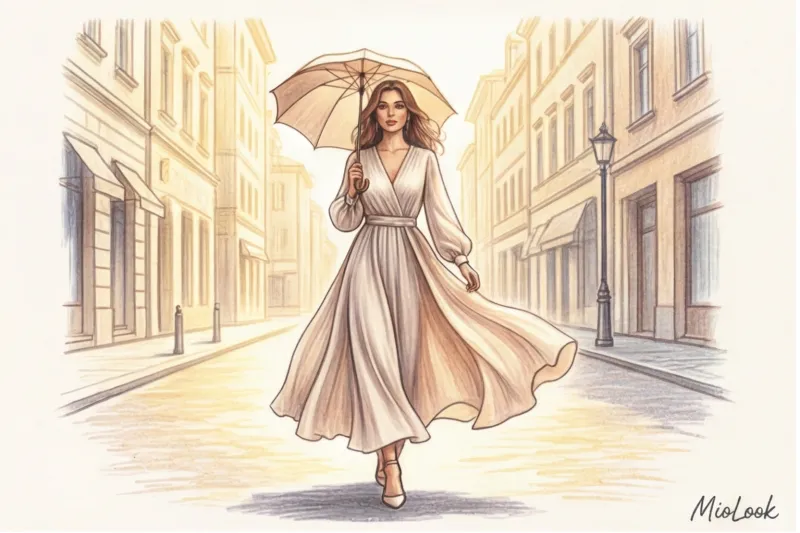
Consider the collections of the flagships of intellectual fashion: The Row, Jil Sander, Lemaire. These fashion houses have made high-necked clothing the ultimate object of desire for the global elite. Their aesthetic is built on architectural forms, complex layering of premium fabrics—heavyweight cashmere, dense matte silk, shape-resistant Japanese cotton—and loose, flowing silhouettes. They have proven that a woman in a full-length maxi dress with long sleeves, a well-cut shoulder, and perfect draping looks far more intriguing and prestigious than in an extreme miniskirt.
"Concealing your body doesn't mean hiding from the world. It means masterfully managing attention, choosing exactly what you want to convey: your intelligence, taste, and understanding of complex proportions."
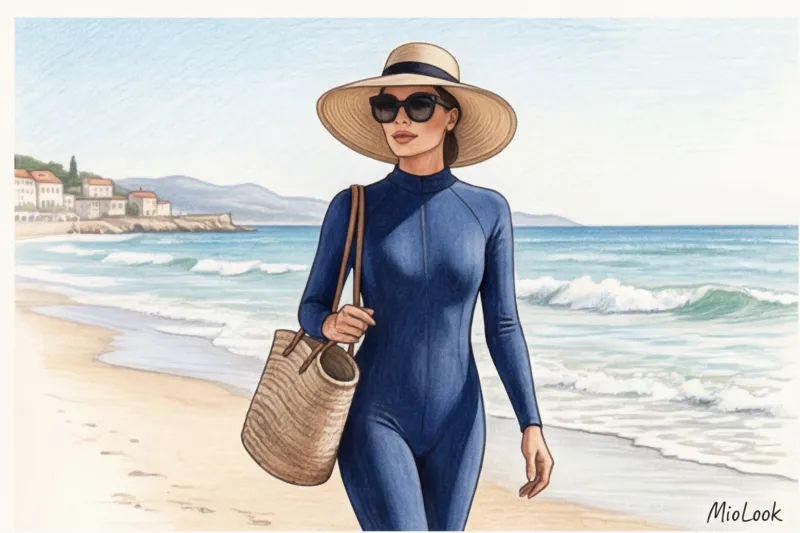
Global brands can no longer ignore this demand, according to a report State of the Global Islamic Economy Report (2023) Global spending on modest fashion has surpassed $318 billion and continues to grow rapidly. Over 12 years as a personal stylist, I've clearly seen this transformation in action. While finding a stylish, opaque maxi dress with a low neckline in the mass market and mid-market used to be a real find, it's now a staple of collections. Brands have realized that elegant, low-cut clothing is needed by millions of women worldwide. And not just for the office, but also for implementing fashion trends spring-summer without feeling awkward.
Why Artificial Layering No Longer Works
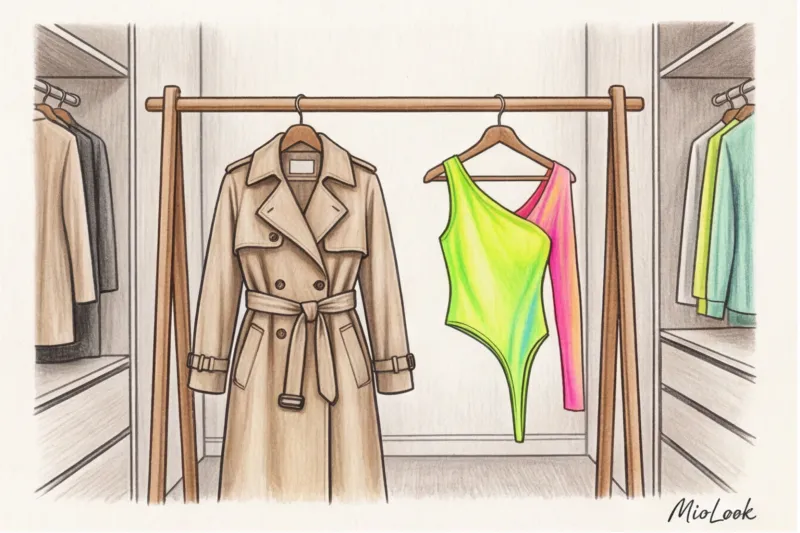
The most common mistake I see when sorting through wardrobes is aggressive, artificial layering, when a woman tries to adapt a revealing garment to her modesty boundaries. A classic example: trying to wear a trendy, open-toed slip dress with thin straps over a thick cotton T-shirt or wool turtleneck.
Why does this visually ruin the look? Firstly, it radically distorts the figure's proportions. The armholes of a lightweight summer dress are physically unable to accommodate the extra bulk of the fabric underneath. Harsh creases appear in the armpits and chest area, the fabric pulls, and instead of an elegant, flowing silhouette, we get the notorious "cabbage" effect. Secondly, mixing incongruous seasonal textures (for example, thin linen silk and thick ribbed knit) almost always looks sloppy.
These painful compromises have been replaced by the concept one-piece modesty The idea is simple: we stop trying to "make" a revealing garment appear covered. We begin by seeking out and investing in the right styles. Instead of a summer sundress over a long-sleeved top, we opt for a self-contained midi-length shirtdress made of thick cupro that elegantly covers the arms and legs while still allowing the skin to breathe. Instead of a crop top with a basic tank top peeking out, we opt for a loose, shape-resistant cotton blouse that tucks neatly into high-waisted palazzo pants, leaving not a centimeter of exposed skin at the waist.
To avoid mistakes with proportions and to avoid buying items that will be difficult to layer later, I always advise my clients to visualize combinations before purchasing. After uploading your database to MioLook app , you can virtually try on new pieces over existing ones, creating complete capsule collections. The architectural style of modest fashion tolerates no fuss: each layer of clothing should slide freely over the previous one, creating a clean, uninterrupted line.
Global trends 2024-2025: what fits easily into a modest wardrobe
According to the report McKinsey State of Fashion By 2024, the industry is undergoing a global shift from the aggressive sexuality of the 2000s to "quiet elegance" and investment wardrobes. For you and me, this means something amazing: relevant modest fashion trends No need to search specialized niches anymore. The global catwalk has already done all the work for us.
If we look at the latest collections of such intellectual brands as Lemaire or Bottega Veneta, we'll notice that the most powerful and talked-about looks are completely covered. Designers have stopped using nudity as the only way to attract attention. Instead, they offer three powerful themes that can be taken straight from the runway and transferred to real life without any adaptation.
Officecore and Architectural Power Dressing
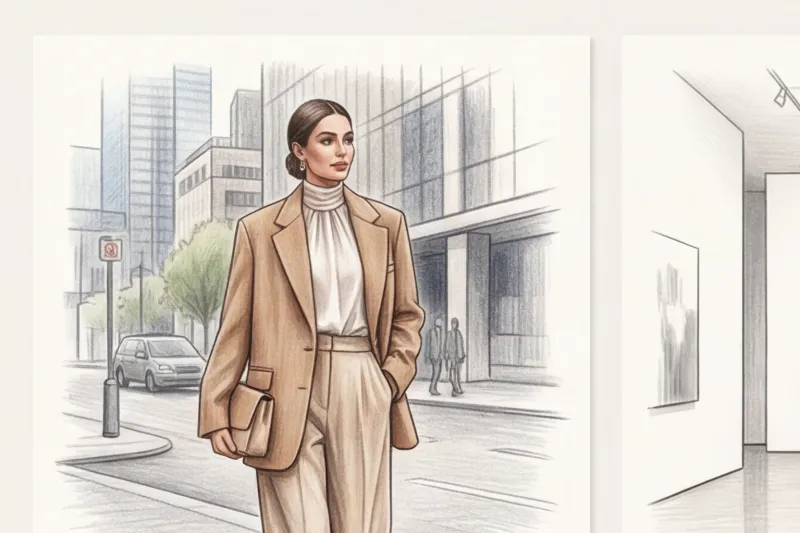
The corporate chic aesthetic has completely changed the game. Today, deconstructed men's suits, worn on the female figure, are the focus. I recently styled a client for a keynote at a major IT conference in Berlin, and we ditched the usual fitted jackets.
Instead, we chose a deliberately oversized jacket with a sharp shoulder line and wide trousers with pleats at the waist. The secret to this trend is that the exaggerated masculine cut paradoxically emphasizes the fragility of the female figure. The garment maintains its own architectural shape without clinging to the body, providing 100% confidence and security. It looks incredibly classy, especially if the suit is made of thick worsted wool (in the mid-price range, high-quality two-piece suits currently cost around €250-€400).
Maxi-minimalism and elongated silhouettes
We're finally saying goodbye to those uncomfortable, tight midi skirts that restrict your stride and force you to constantly tug at your hems. The absolute triumph of the 2024-2025 season is A-line skirts and dramatically long coats.
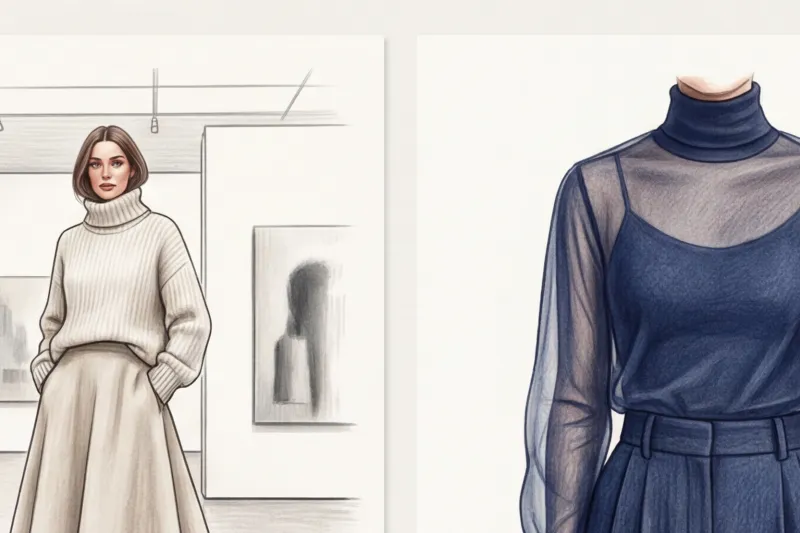
At Bottega Veneta, we see luxurious coats with sweeping hems. This length creates a continuous vertical line that elongates the figure. A maxi skirt made of thick cotton or wool, paired with a long coat, creates an elegant shield. This look doesn't require any elaborate styling: simply add a basic turtleneck, and the look is complete.
Complex textures instead of deep necklines
How do designers compensate for the lack of exposed skin? Through extreme tactility. When you remove a visual trigger like a cleavage or a high slit from an outfit, the eye needs a new point of reference. The focus shifts from the bare skin to the texture of the fabric.
In closed images the following come to the fore:
- Heavy boucle: gives the necessary volume and looseness, making the look more comfortable, but structured.
- Dense "boiled" silk: Unlike thin satin, it is not translucent and does not highlight underwear, but drapes luxuriously.
- Natural and eco-suede: a matte, light-absorbing surface that begs to be touched.
My micro-tip for shopping: When choosing a piece for a fully covered look, close your eyes and touch the fabric. If it feels flat, slippery, or downright plasticky, avoid the purchase. In a fully covered monochrome silhouette, it's the texture that creates that "quiet luxury."
Access to MioLook for €0.99 — one-time payment
A smart AI stylist will select the perfect look based on current catwalk trends and your comfort preferences.
Get access — €0.99 onceImage Engineering: How to Adapt "Naked" Trends Without Compromising Modesty
Have you noticed the paradox of recent seasons? The more the catwalks offer us so-called "naked fashion," the more interesting the challenge becomes for those who prefer a more covered-up wardrobe. Adapting modest fashion trends today isn't a dull compromise or an attempt to drape a sundress over a turtleneck. It's a true architectural engineering of silhouette, where we delicately play with proportions, textures, and volumes.
Let's start with the sheer trend. Organza, ultra-fine chiffon, and large mesh are breaking popularity records in collections from Saint Laurent to more affordable brands. How to wear this if your rules forbid showing skin?
One of my clients, a top manager at a European bank, fell in love with a weightless chiffon blouse from Prada's spring collection. It was stunning, with a delicate silk sheen, yet completely sheer. For a strict business dress code, we employed the principle of clever layering. We categorically rejected the usual tank tops with thin straps, which visually "break up" the shoulders and cheapen the premium fabric. Instead, the base layer was a thick, completely opaque long-sleeved silk blouse that matched the client's exact skin tone. This created a complex optical illusion: from a distance, it appeared as if she was naked beneath the chiffon, but in reality, the dress code and personal boundaries were 100% respected.
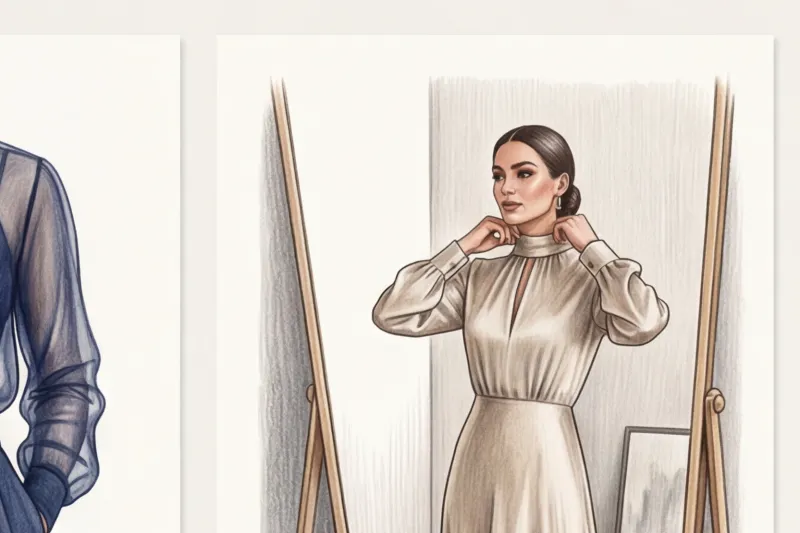
A second, equally effective technique for working with transparency, which I often recommend when composing capsules in an application MioLook — is the integration of a contrasting basic turtleneck. Imagine a thick black cashmere turtleneck layered over a voluminous blouse of stiff white organza. In this combination, the chiffon ceases to be provocative and begins to function as an architectural filter, adding tactile depth to the outfit.
Another fashion challenge is the triumphant return of the low-rise. The hip-hugging maxi pants and skirts we see everywhere seem like an absolute no-no for a modest wardrobe. Psychologically, a low rise often makes one feel vulnerable. But the physics of cut allow for an elegant way to circumvent this limitation.
How to balance an exposed stomach without throwing off proportions? The answer lies in a crisp, sculpted top. The ideal solution is a long, masculine-cut shirt made of crisp cotton poplin, worn untucked. It creates a straight vertical line, securely covering the waist and hips. You get a relaxed silhouette with a trendy low-rise, but you'll still be fully covered. No tummy rolls or telltale skin showing when you walk.
"The secret to maintaining a low waist in a modest wardrobe is to categorically avoid tight, thin knitwear. Only shape-supporting fabrics (poplin, linen, heavy denim) can create a safe distance between the body and clothing, forming a protective "armor.""
The third current fashion element that requires stylistic taming is crop tops. Cropped jackets, cardigans, and sweatshirts (cut to just below the hipbone) are a great height-correcting tool. Incorporating a cropped top is possible, but only with one ironclad rule: an extra-high rise on the bottom.
We pair a crop top with wide-leg palazzo pants with deep double pleats, where the rigid waistband starts right under the ribs. This geometry works flawlessly: it visually elongates the legs to infinity (which is crucial when the silhouette is closed and we wear flat shoes), and the tight fit of the pants' waistband to the hem of the top ensures a secure fit.
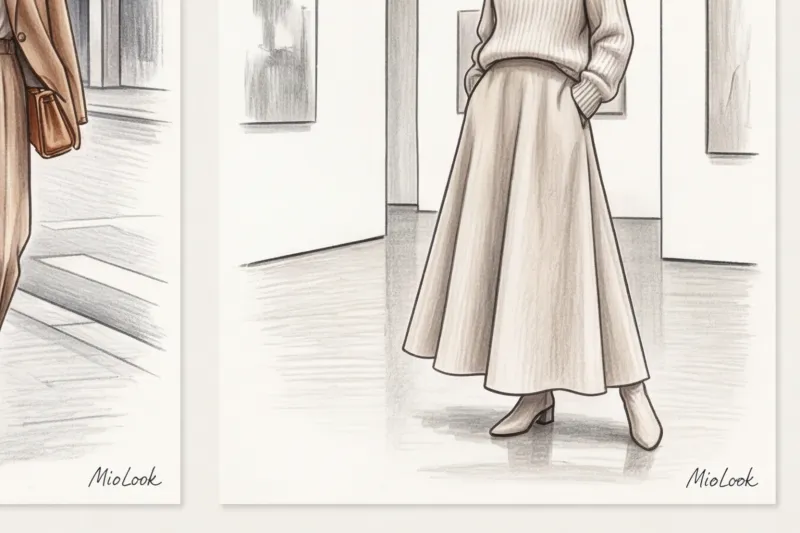
No matter what you do—whether it's a quick bend to pick up a dropped bag or raising a hand to fix your hair—not a centimeter of skin should be visible. It's important to ensure that the loose edge of your top (it's best to choose a boxy fit that doesn't cling to your chest) overlaps the waistband of your trousers by at least three to four centimeters, creating a secure, textile "lock." This technique works well at any price point: you can take a trendy cropped tweed jacket from a mass-market store for $60 and style it with heavy, high-waisted wool trousers for an impeccably respectable and understated look.
Textile essentials for modest fashion: mitigating heat while keeping your body covered
When integrating current modest fashion trends into our everyday style, we tend to focus on cut design, hem length, and collar height. But let's face it: when you physically cover your body from wrists to ankles, fabric immediately ceases to be a matter of aesthetics or price. It becomes a matter of basic physical survival.
When 90% of your skin is hidden beneath clothing, your natural thermoregulation mechanism faces a serious obstacle. As a textile materials expert, I regularly witness the same dramatic scenario: a beautifully styled, perfectly proportioned, multi-layered outfit turns into a torture device after just half an hour in a warm room. The reason is always the hidden danger of synthetic fibers.
"Polyester layering doesn't just keep you warm—it violates the laws of physics of the human body, blocking the natural evaporation of moisture and creating localized thermal shock."
To understand the mechanics of this process, just look at the numbers. A key indicator of fabric comfort is its hygroscopicity (the ability to absorb water vapor from the air and wick it away from the body). For standard polyester, this figure is a disastrous 0.3–0.4%. By comparison, the hygroscopicity of high-quality cellulose fibers ranges from 11% to 15%.
What's going on under a €150 polyester dress? The moisture released by the body isn't absorbed by the fibers. It condenses on the inner surface of the fabric, creating a harsh greenhouse effect. The temperature inside the garment rises locally, and the moist, warm environment becomes the perfect breeding ground for bacteria. The result is an immediate unpleasant odor and a sticky feeling that destroys any self-confidence.
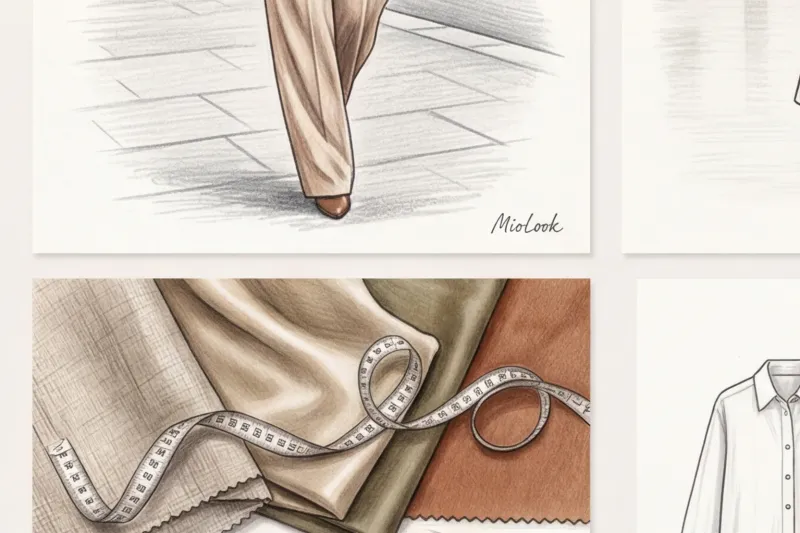
That's why the foundation of a closed wardrobe should be built on a strict textile filter. If you're building a modular base, you should have the following materials in your arsenal:
- Cupro and Lyocell (Tensel): High-tech cellulose derivatives. They have the heavy, fluid feel of expensive silk, yet breathe like cotton. They're ideal for wide palazzo pants and flowing maxi dresses, as they create a beautiful draping effect without weighing down the silhouette.
- High quality linen and cotton: An absolute must-have, but with an important caveat. For closed-toe looks, look for high-twist fabrics—they wrinkle less and maintain microscopic gaps between the threads for air circulation.
- Extrafine Merino: The most unconventional, yet brilliant, material for a closed wardrobe, even in warm weather. Fibers 16–17 microns thick act as intelligent climate control. Wool can absorb up to 30% of its own weight in moisture while remaining dry to the touch, and actively wicks moisture away from the body before it turns into sweat.
A proper textile strategy allows you to wear three layers of clothing and feel more comfortable than in just one synthetic T-shirt. To avoid confusion about compositions and always know which items are safe to layer, I recommend my clients include information about materials when digitizing their closet. MioLook app You can simply filter your virtual database by the "breathable fabrics" tag and create a safe, temperature-regulating outfit for the day in just a few seconds.
Smart wardrobe management
Digitize your items in MioLook, specify fabric compositions, and let artificial intelligence create flawless, layered looks that will always make you feel comfortable.
Get access — €0.99 onceCapsule Approach: Incorporating Modest Fashion Trends into Everyday Life
The arithmetic of a classic capsule wardrobe—where any pair of trousers goes with any shirt without a second thought—quickly collapses as soon as we introduce the variable of modesty. If you buy a trendy cropped jacket, you instantly need extremely high-waisted trousers that are guaranteed to conceal your waistline even when you raise your arms. That's why I teach my clients to build not just a capsule wardrobe, but a truly "modular" system of modest wardrobes. In this system, every cutting-edge trend rests on a carefully crafted, architecturally precise foundation that completely eliminates any accidental skin exposure.
Over the years of styling, I've developed a formula of 5 versatile, transformable pieces. These aren't just basics; they're your essential tools for adapting to any runway trend:
- Long white shirt made of thick cotton. The fabric's density (from 120 g/m²) is critical here—the shirt shouldn't be see-through. It works as a base layer under today's popular crop sweaters, providing secure coverage around the hips and pelvis, or as a standalone, thick top.
- Midi shirt dress (length between midi and maxi). A brilliant wardrobe staple that can be worn buttoned up as a self-contained, modest dress, or unbuttoned like a duster over trousers and a top, creating a vertical extension and concealing the body's contours from behind.
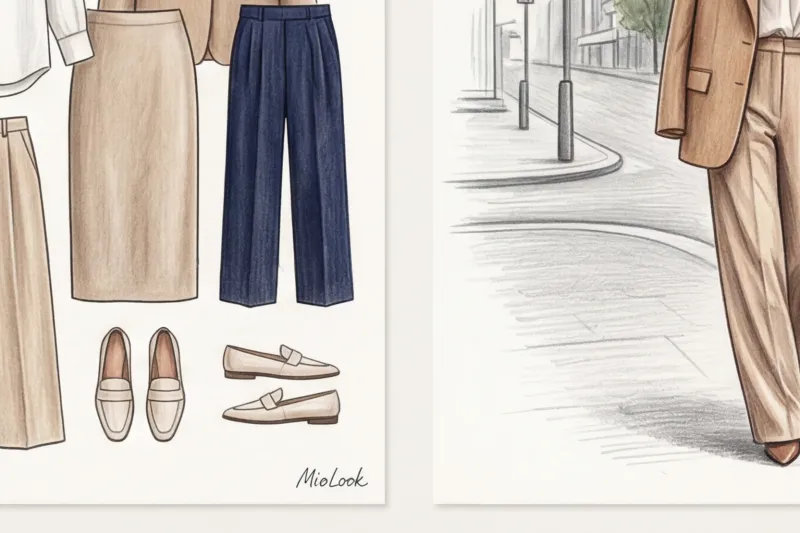
- Wide palazzo trousers. They completely offset the shape of your legs. The key is to choose styles with active pleats at the waist, which create the right architectural volume in the abdominal area, allowing you to tuck in voluminous blouses without adding extra weight.
- Loose blazer in men's cut. The ultimate power dressing tool. It must cover the buttocks and have a sharp, defined shoulder line. A blazer instantly brings together any layered look, preventing it from becoming a shapeless sack.
- Thin cashmere long sleeve. An essential temperature-regulating layer under slip dresses or sundresses. Unlike synthetic turtlenecks, premium cashmere doesn't create unsightly folds under the arms and looks classy.
Keeping all the possible combinations of these five elements and complex trends in mind can be challenging. To avoid impulse purchases that we then have nothing to wear with, my clients and I digitize this modest database. The app's visualization feature is a great tool for this. MioLook When a woman sees a luxurious, semi-sheer chiffon top for $250 in a boutique, she layers it right on her smartphone over her digitized basic long sleeves and dresses. If the look works out and the coverage is 100% perfect, she buys it. No suitable base? The purchase is cancelled, saving both stress and money.
The next crucial step is managing the focal point. One of the golden rules of styling is that when the silhouette is completely covered from neck to ankle, the eye needs visual anchors. Otherwise, the look risks becoming a dull, monolithic blob. This is where strategic accessorizing comes into play. Large, statement pieces—for example, sculptural drop earrings or heavy metal cuffs worn directly over shirt cuffs—work like magnets. They masterfully draw attention away from a low-cut neckline, focusing the gaze on the face and slender wrists. Vintage silk scarves have the same effect. Asymmetrically tied around the neck or casually draped over one shoulder, a scarf breaks the strict symmetry of the outfit and adds dynamism.
Integration into business dress code
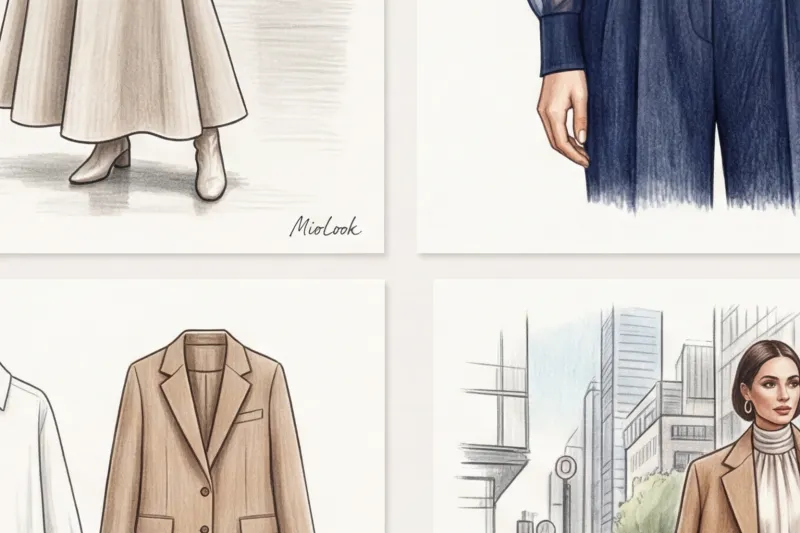
The corporate environment often becomes a real conflict zone between protocol and personal comfort boundaries. For decades, the classic office dress code has relied on fitted silhouettes and knee-length dresses. How can you incorporate modest fashion trends without breaking the chain of command or looking like you're heading out for a stroll? The secret lies in replacing familiar shapes with their strict yet architectural maxi counterparts.
The first thing I recommend categorically avoiding in a modest business capsule is the classic pencil skirt. Historically, its cut was designed to accentuate the curves of the hips and intentionally narrow the stride. This directly contradicts the philosophy of modest fashion. A flawless alternative, which is dominating office trends today, is the straight, maxi-length column skirt.
Take a look at the formal lookbooks of Khaite or Jil Sander: we see flowing, floor-length skirts made of very dense suiting wool (weight over 280 g/m²) or gabardine. They're completely uncling and allow for freedom of movement, but the stiff texture of the fabric makes them appear extremely formal. A column skirt creates a precise vertical line. Pair it with a tucked-in silk blouse with an ascot collar or a buttoned-up suit vest, and you'll create a look that simultaneously conveys high professionalism and absolute adherence to your principles of reserved fashion.
Stylist checklist: checking your look for aesthetics and comfort
My biggest professional nightmare early in my career occurred during a lookbook shoot under the scorching sun: a luxurious linen maxi dress, which in the dimly lit studio fitting room seemed completely solid, instantly turned into translucent gauze on the street. Since then, when preparing clients for public appearances or long events, I have made it a mandatory crash test for every outfit. After all, integrating modest fashion trends , we want to feel absolutely safe, and not control every fold in fear of an awkward situation.
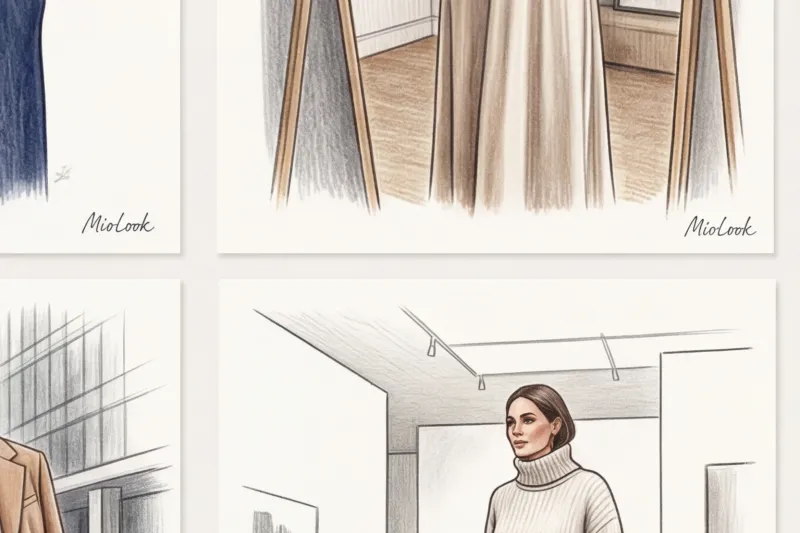
The first and most insidious test is light test Summer cotton, viscose, or light linen with a weight below 110 g/m² are prone to optical illusions. My personal life hack for photoshoots and stage appearances: ask someone to take a photo of you with a flash in a dark room, then stand directly in front of a window in bright daylight. If artificial lighting or backlit daylight makes your body contours too obvious, the look requires a protective layer underneath—a nude silk shift dress or a thick basic slip.
The second stage is movement test Modest clothing shouldn't make you look like a static porcelain figurine. Raise both arms sharply upward, pretending to reach for an item on a high shelf: are your back and stomach exposed? Lean forward deeply and mimic a long stride up a flight of stairs. Often, a trendy maxi skirt without a proper inner vent rides up as you walk, exposing your shin, while a cropped jacket rides up over your trousers. If an item requires constant tugging, it has failed the comfort test.
Your ideal image
it begins Here
Join thousands of users who look flawless every day with MioLook.
Get access — €0.99 onceFinally, the finishing touch - checking volumes When layering clothes to effectively cover the figure, the rule of balance comes into play. If the layering is concentrated on top (for example, a thick shirt and a voluminous cardigan), it's crucial to maintain the architecture of the shoulders. Otherwise, the silhouette will inevitably take on a shapeless "sack" effect. I often use hidden shoulder pads with Velcro fastenings under the base layer: they create a clear, graphic line. As a result, even the most radical oversize looks like a thoughtful design decision, not like a garment that was thrown together.
By the way, to avoid these physical manipulations every time you leave the house, I recommend recording successful combinations. Save a successful look in a smart wardrobe. MioLook , you will always be 100% sure that this particular set has already been tested by both light and the dynamics of the city.
Results: Modesty as a Manifesto of Modern Elegance
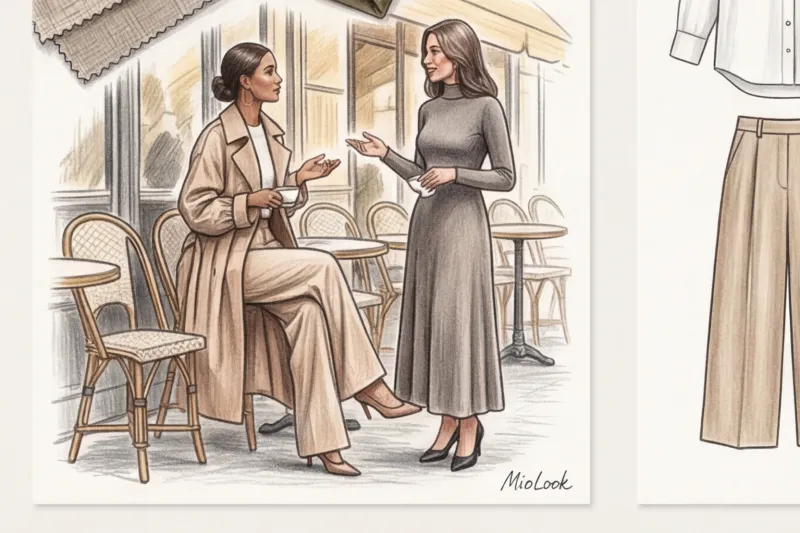
Remember the days when the absence of a plunging neckline or a maxi length was automatically interpreted by society as forced conservatism or even boredom? Today, the paradigm has been completely flipped. As WGSN analysts aptly noted in their global macrotrend forecast, the industry has finally entered the era of "protective elegance." Trendsetters are tired of aggressively displaying the body, and the focus has shifted to mystery.
We are witnessing an amazing and beautiful phenomenon: Closed clothing has ceased to be a limitation and has become a tool for powerful self-expression By choosing stand-up collars, elongated cuffs, and loose, flowing cuts, the modern woman sends a very clear message: "I decide where the boundaries of what's acceptable end and where the viewer can look." It's a deeply intellectual approach to style, one in which personal comfort and security are valued far more than fleeting visual shock.
If we crystallize the entire mechanics of trend adaptation, which we've discussed in detail above, then today's current modest fashion is based on three immutable rules. This is your stylistic foundation:
- Textile intelligence: Fabric is our absolute focus. When your body is 90% covered, the material ceases to be just a decorative shell—it becomes your second skin. We select only smart, breathable textures (linen, cupro, dense silk, fine merino) that ensure proper temperature regulation.
- Architecture instead of "cabbage": This is the main fashion revolution of our time. We declare a complete rejection of awkward layering. No more attempts to throw a summer slip dress over a heavy cotton turtleneck. We seek essential integrity—pieces with precise, complex, architectural cuts that are beautiful in themselves and require no additional layers to achieve modesty.
- Air and the right volumes: Concealing your silhouette doesn't mean hiding it in a shapeless sack. Elegance is born when there's space (air) between the fabric and the body, and proportions are well-defined through defined shoulders or accentuated wide-leg trousers with pleats.
But for this aesthetic system to work for you every day, one important step is required on the part of your wallet. I sincerely urge you invest in a quality base that will make any runway trend adaptable The concept of conscious consumption (Cost Per Wear) works flawlessly here. It's much more cost-effective to invest €150-200 in the perfect pair of flowing crepe palazzo pants or an impeccable Egyptian cotton shirt than to buy a bunch of cheap synthetics every season that will lose their shape after the third wash.
A high-quality, solid base allows you to easily integrate any microtrends. My personal method for saving budget and time is strict digital tracking of such purchases. Wardrobe management tools in MioLook , you can digitize your basic items and create new outfits right on the screen. This allows you to clearly assess whether a new trending purchase will really “make friends” with your closed capsule, even before you click the “pay” button.
"True elegance doesn't shout—it speaks quietly, but in a way that's impossible to miss. Your wardrobe is your quiet, yet most powerful, word."
As a final practical step, I suggest you conduct a micro-audit of your closet this evening. Find two or three items that you use exclusively as a "bottom layer" to salvage outfits that are too revealing or translucent. Try putting them away on a back shelf for exactly one week. This simple, artificial limitation will force your brain to search for new, coherent architectural solutions from what you already have on hand.
Modesty in clothing today is truly "quiet luxury." It's self-respect, coupled with impeccable taste and care for your body. Don't be afraid to experiment with textures, play with proportions, and confidently adapt high fashion to your own personal style. Create your own style consciously, because you deserve it!
Guide Chapters
Cargo Pants with a Modest Style: How to Adapt Y2K Trends
2000s trends can look grown-up and elegant. We'll show you how to transform Y2K streetwear into architectural minimalism for your closet.
Evening dress trends: Adapting outfits
Modesty is back in fashion: plunging necklines are giving way to intricate tailoring. We'll show you how to stylishly adapt a revealing dress to a strict dress code.
What to wear with a slip dress modestly: stylist tips
Modesty is no longer synonymous with boredom. Learn how to style a slip dress without the cliché turtleneck with dramatic layering.
AI Stylist: Modest Fashion Without Compromise with MioLook
Forget about searching through mass-market stores for the perfect low-cut clothing. Discover how MioLook's smart algorithms help you create stylish and modest looks.