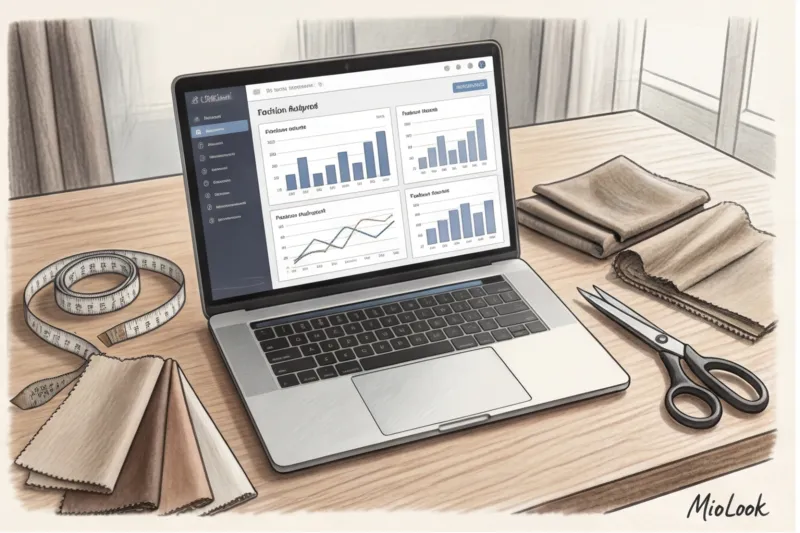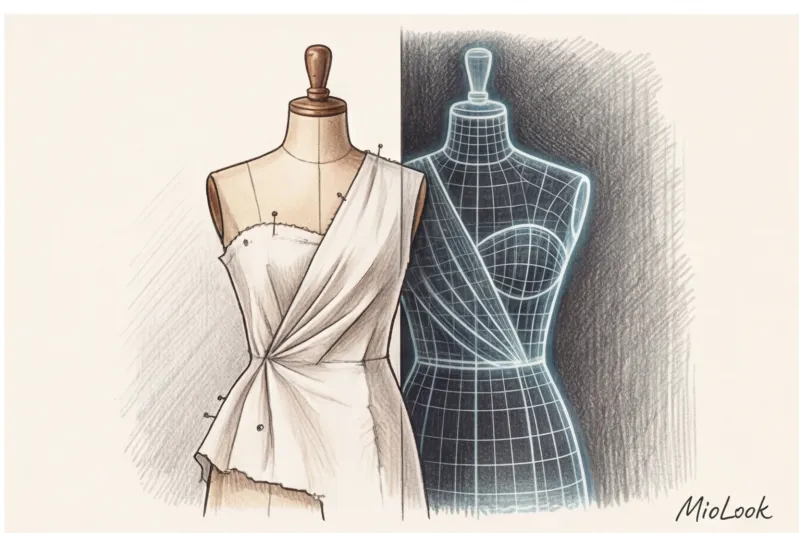
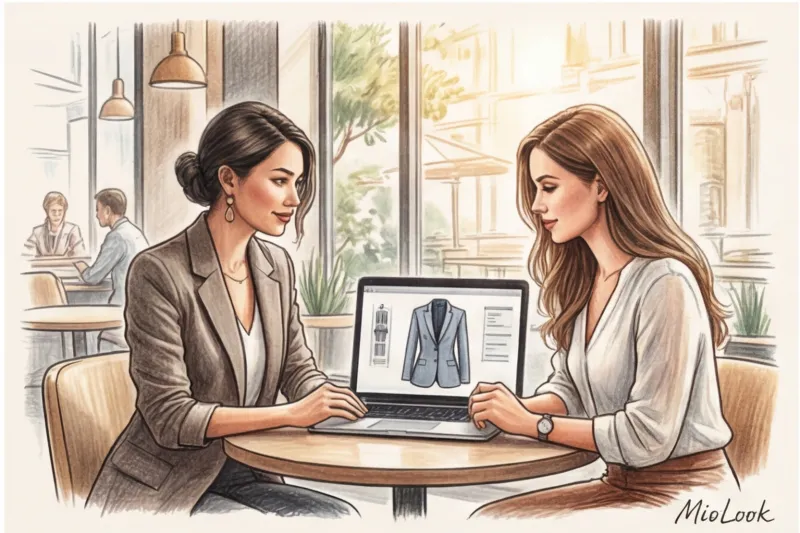
Two weeks ago, a client and I toured five shopping centers in search of the perfect jacket. She has a stunning figure, but one that's difficult to fit into ready-to-wear: broad swimmer's shoulders and a narrow waist. Everything we tried on at Massimo Dutti or COS either fit like a box or was treacherously misaligned at the chest. After three hours of trying on, looking at her disappointed face, I closed the brand catalogs, opened my laptop, and typed in a text query.
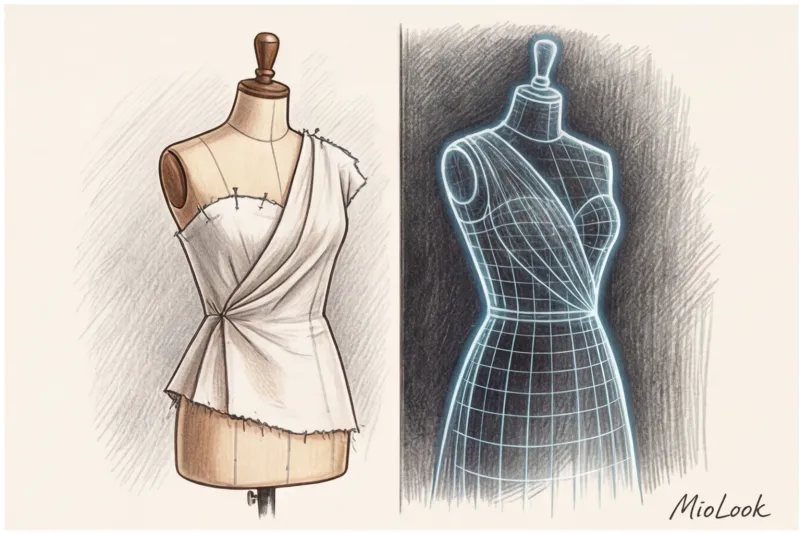
Forty seconds later, a mathematically precise sketch appeared on the screen: a jacket with a soft shoulder line, architectural darts, and perfect proportions. We sent this reference to the tailor, and a week later, the client had the garment of her dreams. This is exactly how things work today. neural network for clothing design — this is not just a toy for creating funny pictures, but a utilitarian tool that solves real wardrobe pain points.
We talked about the origins of this trend in more detail in our The Complete Guide: What is Digital Clothing and Why People Buy It? But while digital things were once created exclusively for metaverses, today artificial intelligence has stepped into our physical closets.
Neural networks for clothing design: the evolution of fashion or just a new artist's brush?
For a long time, generative AI in fashion was associated with cyberpunk: liquid glass dresses, neon raincoats, levitating sneakers. Great for social media, but completely useless for getting ready for the office in the morning.
But the situation has changed dramatically, according to a recent report. McKinsey & Company (2024) Regarding the impact of Generative AI on the fashion industry, the implementation of algorithms reduces the time it takes to prototype a new collection from several weeks to 2-3 days. Moreover, brands like Collina Strada and G-Star RAW are already openly experimenting with AI to optimize patterns and reduce production defects.
Instead of sewing hundreds of physical samples of cotton and polyester, designers test fit on digital avatars. This isn't just an "evolution of the brush," it's a paradigm shift: we've moved from inspiration to precise mathematical models that account for thread tension before the fabric is even cut.
How Algorithms Design New Styles: A Look Under the Hood
As a practicing stylist, I often see people confuse image generators with professional fashion software. Let's differentiate.
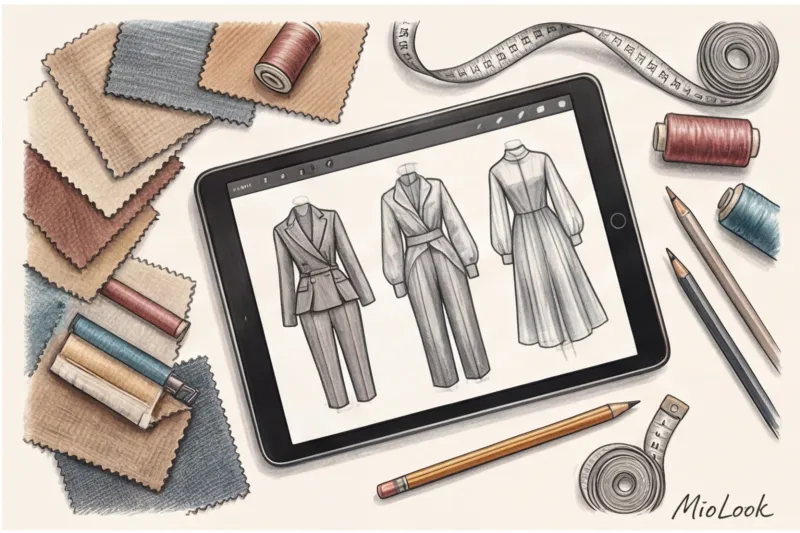
When you ask Midjourney or Stable Diffusion to draw a "beautiful evening dress," you get a stunning 2D illustration. A tailor will look at it and ask, "Where are the seams? How should this be held at the waist?" Diffusion models don't understand physics; they understand pixels.
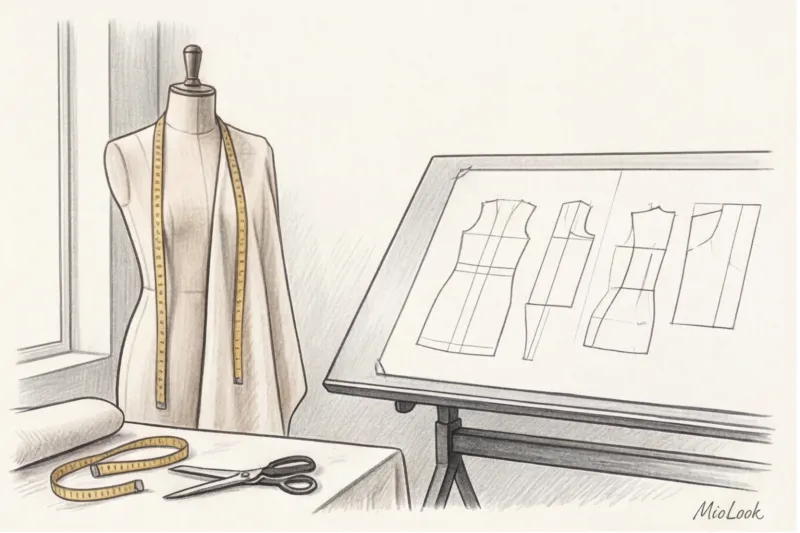
It's a completely different matter with specialized programs like Clo3D, CALA, or Lalaland, which are now actively integrating AI. They create technical sketch (technical flat).
- Tissue Physics Analysis: The algorithm understands that silk flows and provides a soft drape, while cotton gabardine with a density of 320 g/m² will stand upright and hold a rigid shape.
- Conversion to patterns: AI is capable of breaking down a 3D concept into flat, printable pieces.
- Taking into account allowances and darts: The program calculates the volume of the human body and lays down mathematically precise design elements.
Access to MioLook for €0.99 — one-time payment
A smart AI stylist will select the perfect look for every day, taking into account your individual features.
Get access — €0.99 once3 Myths About Generative Design It's Time to Stop Believing
When I suggest that my clients use AI to find their perfect style, I often encounter stereotypes. It's time to debunk the main ones.
Myth 1: "AI just steals and pastes together other people's ideas."
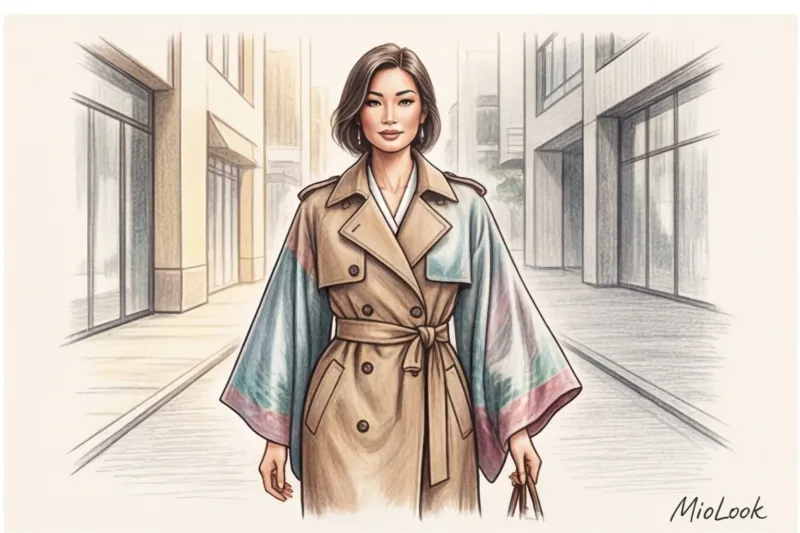
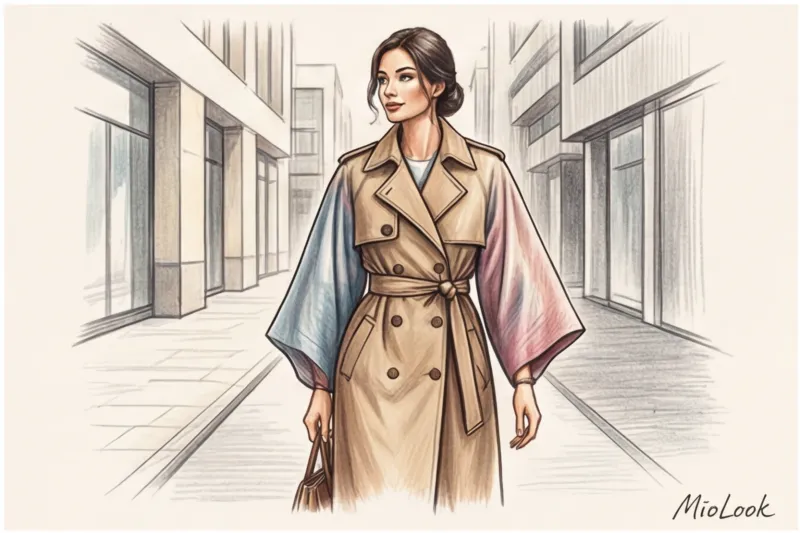
Reality is much more complex and interesting. There is a concept latent space The algorithm doesn't create a collage from scraps of old photos. It analyzes millions of silhouettes and finds "blind spots" in fashionable geometry. For example, AI can mathematically flawlessly cross a classic English trench coat with a Japanese kimono. The human brain, constrained by the rules of design school, often simply can't conceive of such hybrids.
Myth 2: "Neural network clothing is unwearable in real life."
For some reason, everyone thinks AI only generates outfits for Lady Gaga. In fact, algorithms are brilliant at creating basic smart casual. Ask a neural network to create a "minimalist capsule for a Friday dress code at an IT company," and you'll get ingeniously simple yet original pieces: shirts with asymmetrical buttons, trousers with intricate pleats.
Myth 3: "AI will replace designers and stylists"
Artificial intelligence won't replace a stylist. But a stylist using AI will certainly replace one who works the old-fashioned way.
An algorithm is an exoskeleton for a creative. It takes care of the mundane: repainting a sketch in ten colors, checking how the design fits a size 50, and creating a technical description.
Stylist's Practice: How a Neural Network for Clothing Design Solves the "Nothing to Wear" Problem
We are on the threshold of transition from mass market to mass customization Let's return to the jacket story from the beginning of the article. If you're a non-standard height, have pronounced asymmetry, or are simply tired of cloned Zara pieces, AI can become your personal couturier.
Financially, it's completely justified. That perfect jacket cost the client approximately €230 (€80 for the high-quality Italian wool and €150 for the tailor's work). That's a mid-range price, but the fit is luxurious.
But it’s important to add a fly in the ointment here - When does this method NOT work? It's doomed to fail if you don't know your body measurements, coloring preferences, and if you bring the tailor a picture that defies the laws of gravity. The neural network will generate whatever you ask, but you'll be the one wearing it. That's why it's important to integrate custom-made items into your existing wardrobe.
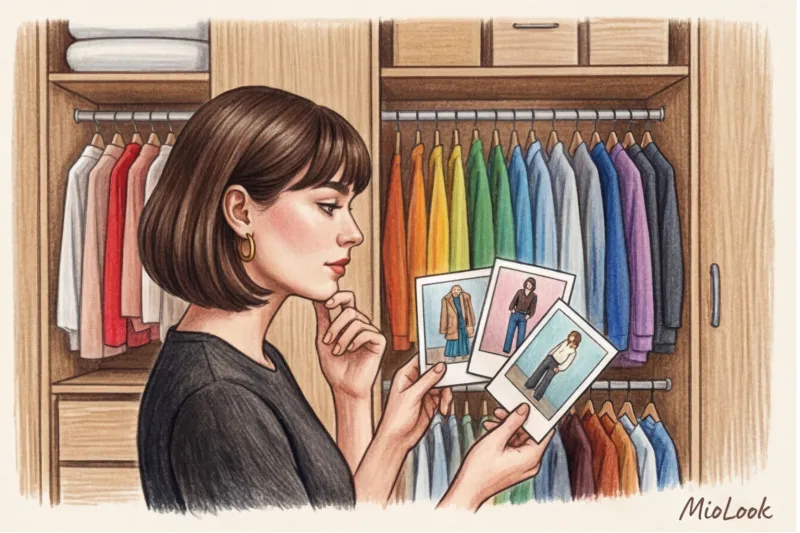
It helps a lot with this. image visualization function in the MioLook app Before ordering a custom-made item from an AI sketch, you can see how this new silhouette will pair with your favorite basic jeans or skirts already hanging in your closet.
Your perfect look starts here
Join thousands of users who look flawless every day with MioLook. Digitize your wardrobe in a few clicks.
Get access — €0.99 onceInstructions: Create your first unique style using AI
Want to experiment yourself? The secret to a good result is in the right prompt. Forget words like "beautiful," "stylish," and "fashionable"—they're just empty words to a machine.
The anatomy of an ideal fashion prompt should include:
- Silhouette: A-line, oversized, fitted, cocoon.
- Textile: matte silk, thick denim, boucle, cashmere.
- Cutting details (use professional terms): English collar, raglan sleeves, hidden fastening, French darts.
- Color palette: not just "red", but "deep burgundy with a cool undertone".
Checklist for "stitchability":
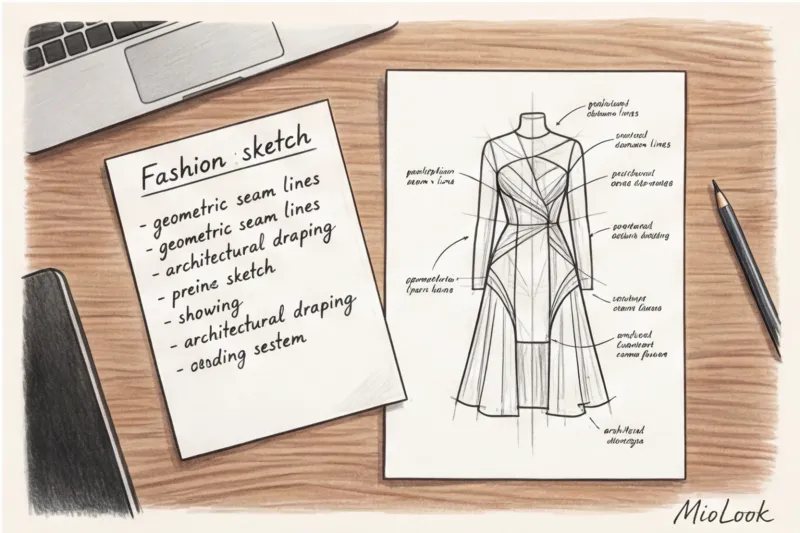
After generating the image, look at it critically. Where is the fastening (what will you be putting it on through)? Does the texture of the fabric clash with the silhouette (chiffon can't stand up as a rigid square without a frame)? If the answers are logical, feel free to take the sketch to the studio.
From Screen to Closet: How Artificial Intelligence is Changing the Way We Shop
The future of personal style isn't a complete rejection of physical clothing in favor of digital avatars. It's a symbiosis.
We'll buy basics (T-shirts, turtlenecks, classic jeans) in traditional stores, and create statement pieces using neural networks and have them made to order. Algorithms are already helping us assemble capsule collections of items that mathematically perfectly complement each other in proportions and color.
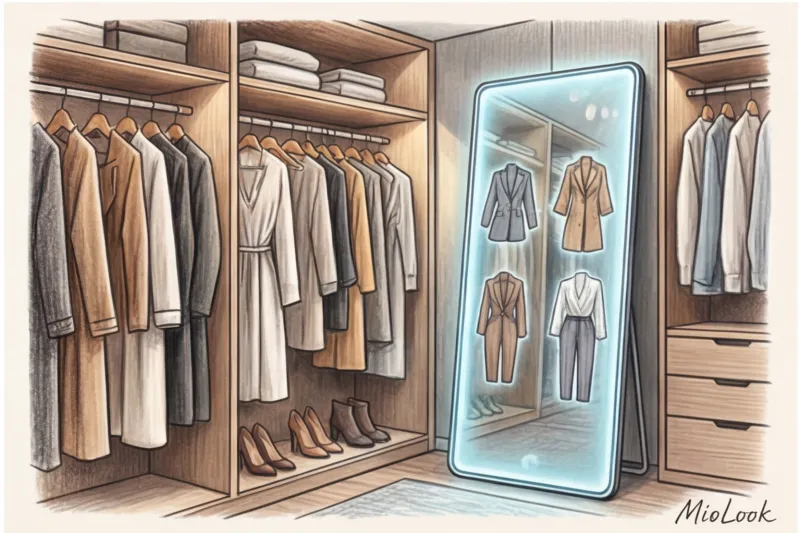
The main conclusion I've drawn over the past year of integrating AI into my work is that technology has made haute couture and custom tailoring accessible to everyone. You no longer need to be a fashion designer to create a garment that reflects your uniqueness—all you need to do is formulate the idea correctly, and the algorithm will translate it into patterns and fabrics.
Ready to start your style transformation?
Try the MioLook free plan—no commitments required. Start creating perfect looks with AI right now.
Get access — €0.99 once