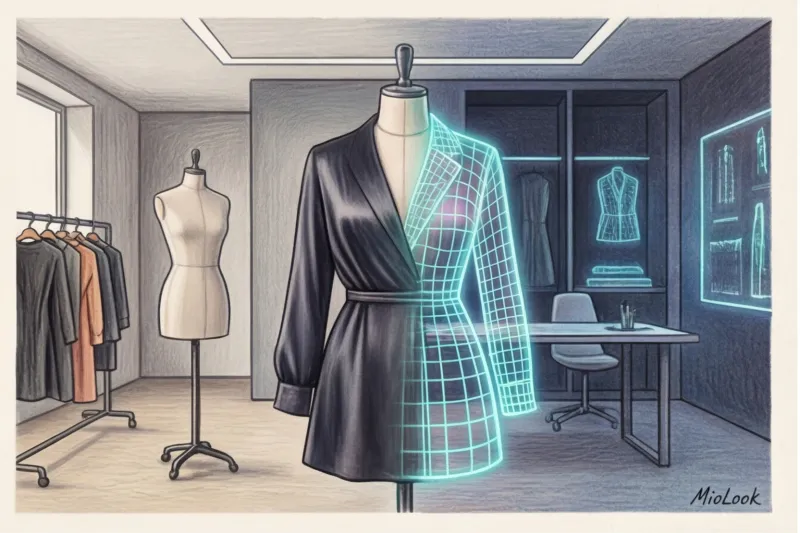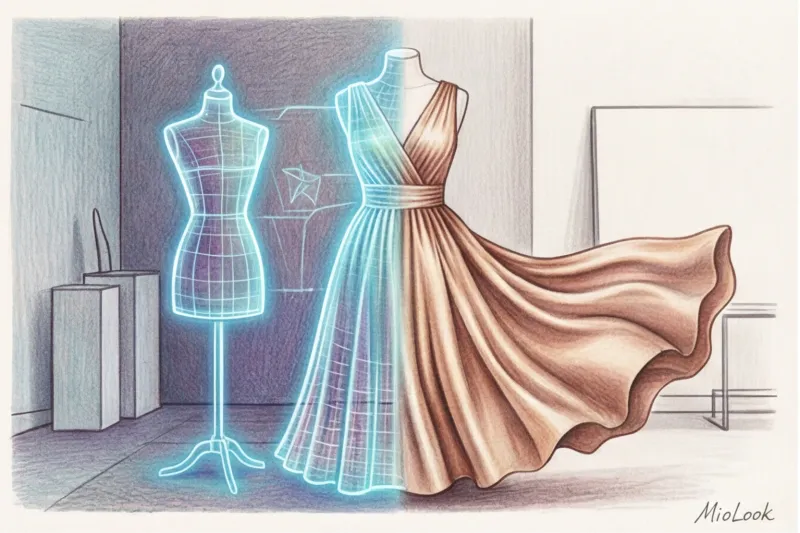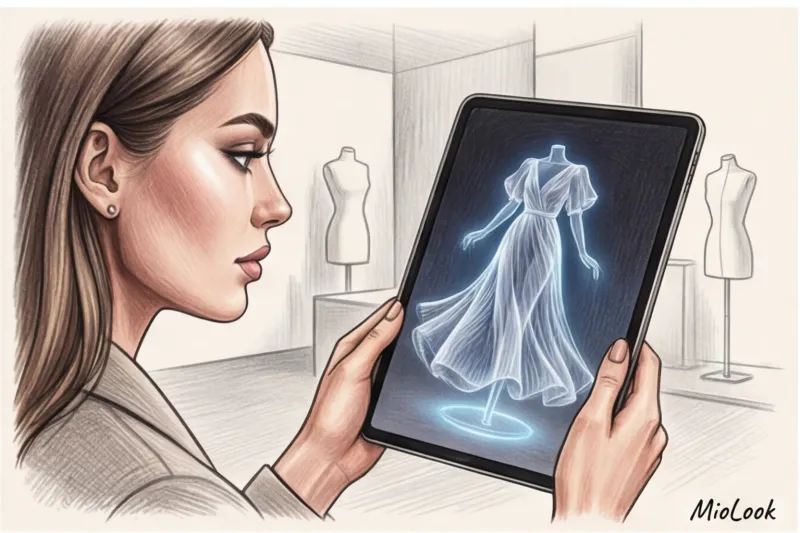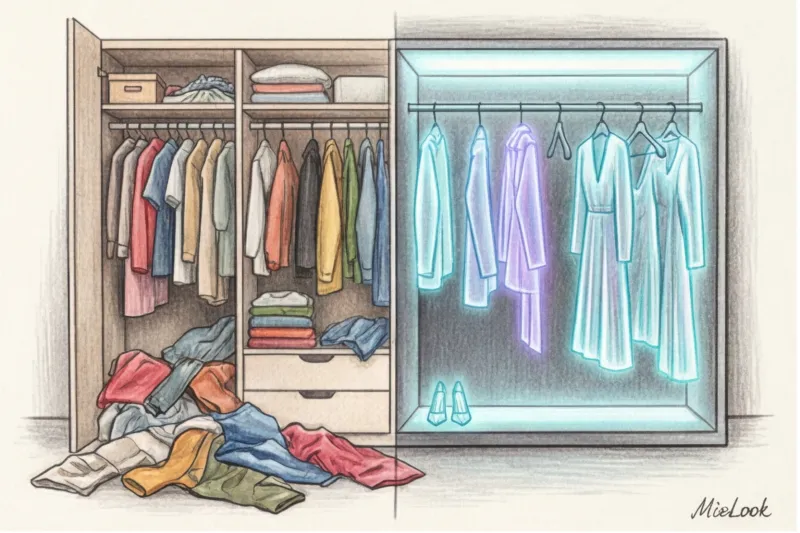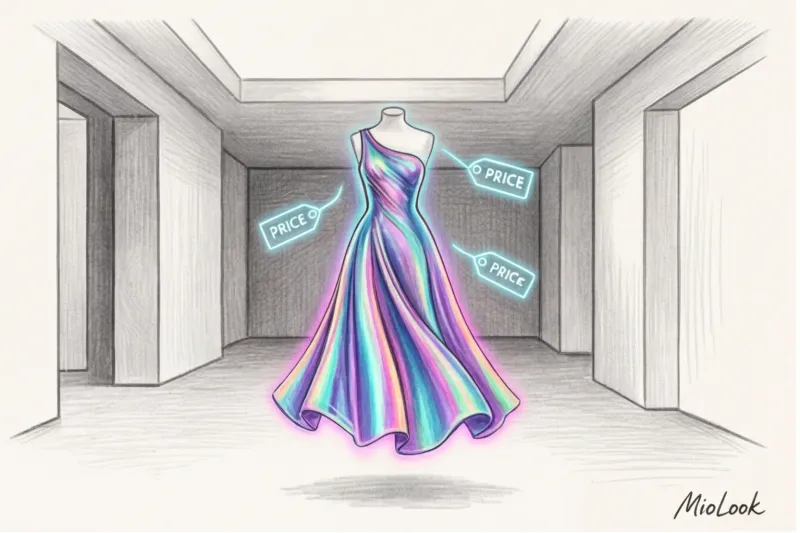
Recently, a client, a lifestyle blogger, approached me. She needed an explosive, avant-garde look for a promotional campaign for a new project. We sat down to calculate the cost of the physical styling: renting a couture dress with intricate architectural draping would cost €350, renting a studio with the right lighting would be another €100, plus dry cleaning and a deposit. Then I suggested something that at first seemed crazy: buy pixels instead of silk.
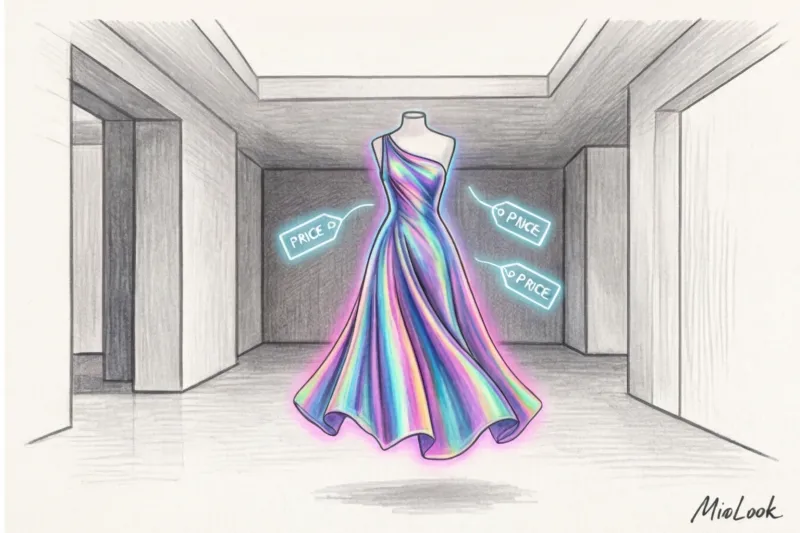
We chose a stunning virtual corset made of liquid metal for just €40. The photo garnered a record number of saves and shares, and the client saved over €400. That's when she asked me a question I now hear regularly: How much does virtual clothing cost? And why isn't this being talked about as the most pragmatic tool for content?
We covered the meta-fashion phenomenon in more detail in our complete guide: What is digital clothing and why do people buy it? But today I want to talk about money, numbers, and real benefits. Forget the stereotypes that it's "just for gamers." I'll show you why digital fashion has become a powerful cost-saving tool for influencers, experts, and anyone building a personal brand.
What determines the price: how much does virtual clothing actually cost?
The most common misconception is, "It's just a picture on a computer, it should be free." Let's be honest, creating a high-quality digital product is a full-fledged engineering art.
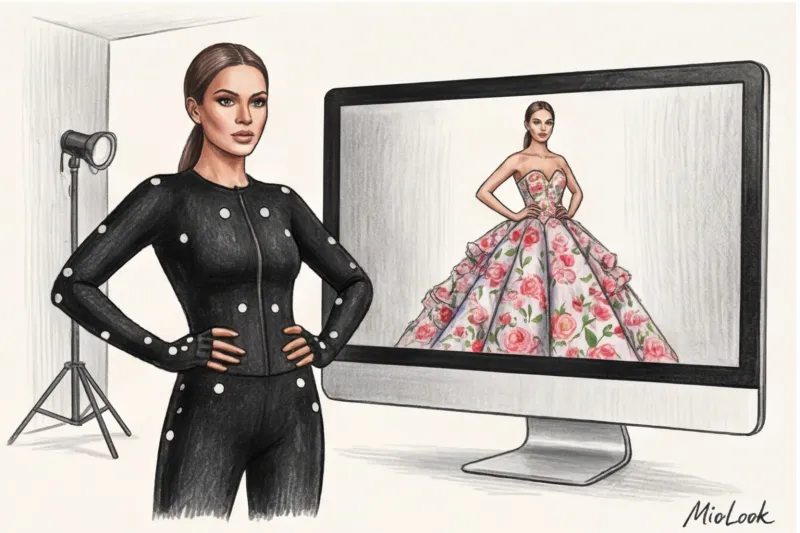
Digital couture is created in specialized programs (such as Clo3D or Marvelous Designer). A 3D designer doesn't just draw a silhouette. They also define the physical properties of the virtual fabric. If it's silk, the designer sets the density to something like 80 g/m², adjusts the coefficient of friction, gravity, and light reflection. To ensure the virtual dress flows naturally in your photograph, the computer must calculate millions of polygons. This requires hours, sometimes weeks, of painstaking work.
That's why the price depends on two factors: exclusivity (the edition size) and the fitting technology. If you buy an item with an automated AR fitting, it's one price. If you pay for a professional 3D designer to manually drape a complex item onto your photo, taking into account real-world shadows and lighting, it's a completely different bill.
Digital mass market: from 15 to 50 euros
For those looking to create a striking post without breaking the bank, there's the digital mass market. The main players here are platforms like DressX.
For €15–€50, you get access to a huge selection. This includes digital capsule collections from real-world brands like H&M, Bershka, and Puma. For this price, the platform offers either automated AR try-on via your smartphone camera or a service Metalooking — you send your photo, and within 24 hours, algorithms (and sometimes designers) superimpose the purchased 3D item onto your face. It's the perfect entry point into the world of meta-fashion.
Your perfect look starts here
Join thousands of users who look flawless every day with MioLook. A smart AI stylist will help you choose the perfect wardrobe.
Get access — €0.99 onceDigital Couture and NFT Investments: From €500 to Infinity
While mass-market fashion is bought for likes, digital couture is bought as an asset. A historical precedent occurred when digital fashion house The Fabricant sold its first dress. Iridescence For almost €9,500 at a blockchain auction, the owner received not just an image, but a unique code (NFT) confirming their exclusive ownership.
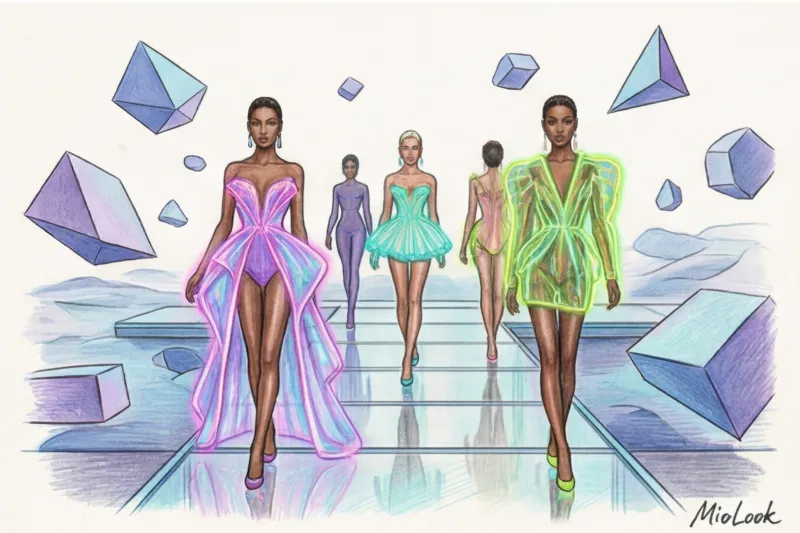
Today, brands like Tribute Brand or RTFKT release limited edition collections (for example, only 100 copies of a dress) that sell out in seconds. Prices on the secondary market can skyrocket. The same principle of exclusivity applies here as with Birkin bags, except the item doesn't take up closet space and will never lose its marketable appearance.
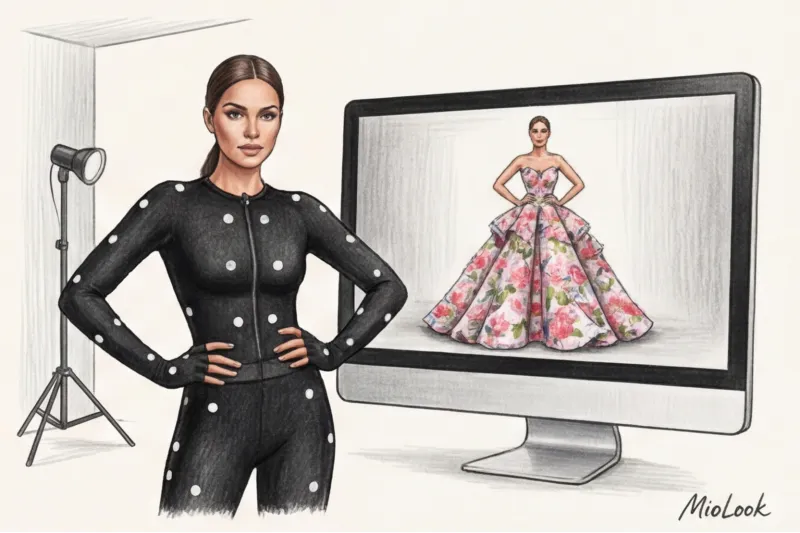
Why Pay for Something That Doesn't Exist: A Personal Stylist's Perspective
I often encounter skepticism: why pay even €40 for air? My answer is simple: you're not paying for air, you're paying for ready-made, high-quality visual content.
"The most paradoxical thing about digital fashion is that buying a non-existent dress for €40 is a much more rational investment than buying a real, extravagant top from a mass-market store for the same price, which you'll wear exactly once for a photo, and then it will gather dust in your closet for years."
As a stylist, I see three undeniable advantages:
- Content Mathematics: Imagine you're a speaker or expert. You need to update your feed regularly. Buying new designer suits every time is expensive. Renting one is a hassle. A virtual jacket for €30 solves the problem instantly.
- Ecology without compromise: According to the DressX platform's 2023 sustainability report, producing one digital item produces 97% less carbon dioxide than creating a physical one. We can finally satisfy our thirst for novelty without polluting the planet.
- Violation of the laws of physics: No real couture can give you what 3D can. You can "wear" a dress made of blazing fire, water, floating neon threads, or anti-gravity fabric.
Where are digital fashion shows taking place? New catwalks
If things are virtual, where are they shown? Fashion's geography has long since expanded beyond Paris, Milan, and New York. Now, the main locations are servers and metaverses.
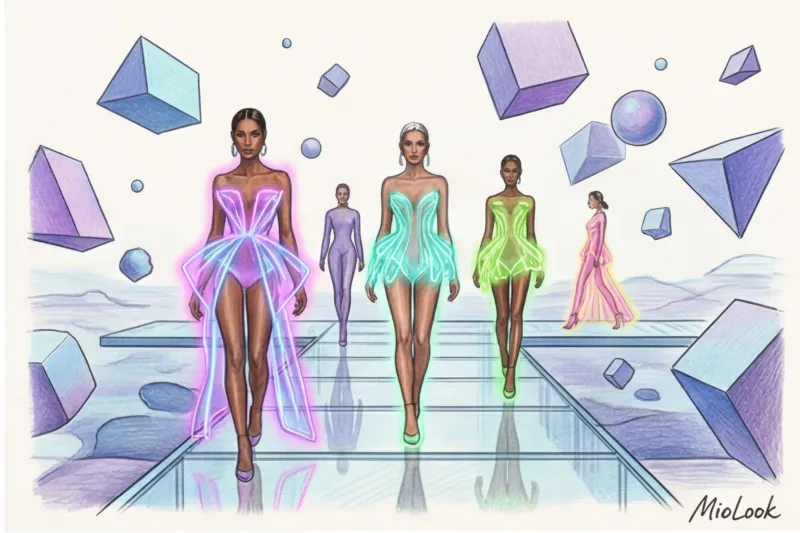
The front row has changed forever. At digital shows, seating arrangements are no longer a problem: avatars of Vogue editors, fashion influencers, and regular users can sit side by side. This is an unprecedented democratization of the industry.
Metaverse Fashion Week (MVFW) in Decentraland
The industry's largest event is Fashion Week in the Decentraland metaverse. It's a full-fledged simulation of the real Fashion Week, but with limitless possibilities.
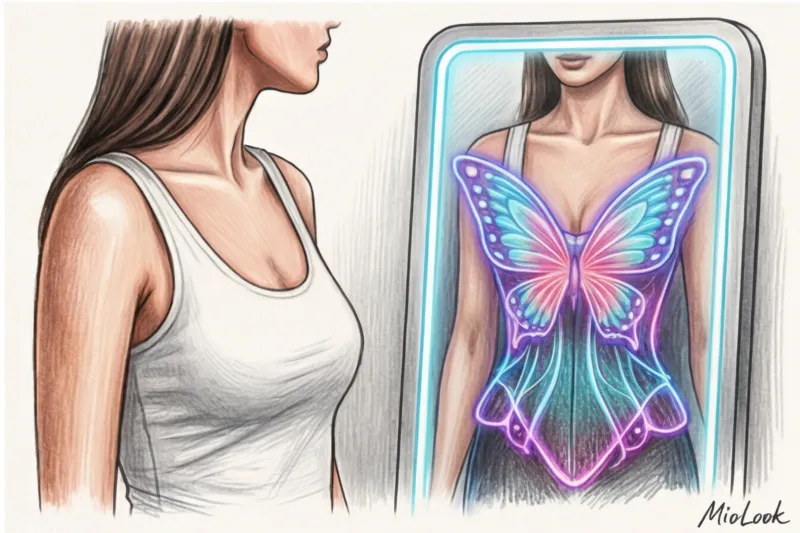
Such giants as Dolce & Gabbana, Tommy Hilfiger, Etro, and Dundas have already participated in the shows. The mechanics are captivating: you connect from your computer, create an avatar, and walk up to the virtual catwalk. Avatar models walk down it wearing 3D clothing. If you like a coat from the new collection, you click on it right during the show and buy a digital copy for yourself.
Gaming platforms: Roblox, Zepeto, and Fortnite
Luxury brands understand that their future customers are now playing games. According to McKinsey (2024), Generation Z spends up to 15% of their time in virtual spaces. Therefore, fashion houses are actively exploring gaming platforms.
Gucci Town has appeared on Roblox, and exclusive Ralph Lauren collections are available on Zepeto. Prices are incredibly affordable: a digital skin (character costume) from the luxury brand can cost just €2–5. It's the perfect marketing ploy: a teenager who buys a virtual bag for €3 today will be back in a boutique ten years from now to buy a real one.
Ready to get started?
Try the free plan—no commitments. Create your smart wardrobe in just a few clicks.
Get access — €0.99 onceHow to "Wear" Purchased 3D Clothing: Three Main Scenarios
The purchase is complete, the money is debited. What next? When I first tested digital fashion platforms myself, I encountered confusion about how exactly "delivery" works. In fact, there are three use cases.
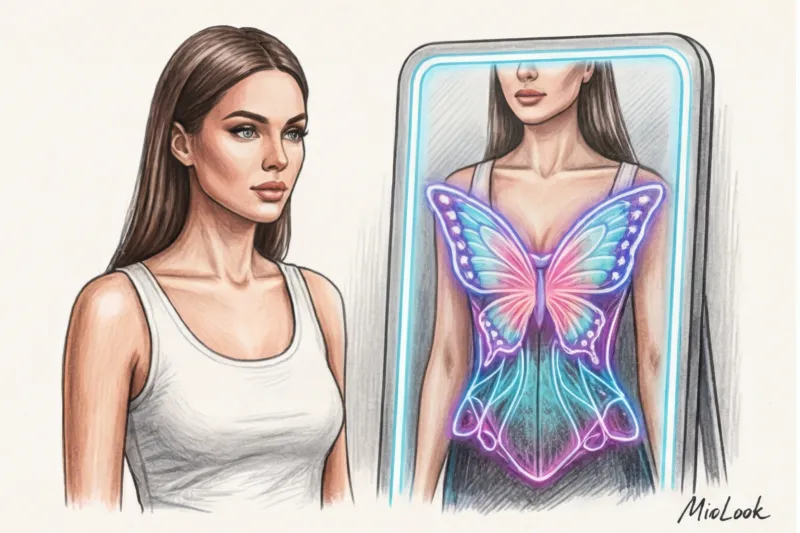
- Metalooking (Superimposing): This is the highest-quality photo option. You take a photo wearing form-fitting basic clothing (for example, black leggings and a T-shirt). Upload the photo to the platform, and 3D designers manually "dress" you in the purchased virtual trench coat, adjusting the shadows to your actual lighting. The result is indistinguishable from the real thing.
- AR filters: A video option. The technology is similar to masks on Instagram or TikTok. You point the camera at yourself, and the dress appears in real time. It's suitable for Reels, but be careful with sudden movements—it could cause the dress to fly off.
- Avatar equipment: You purchase a file (usually in.obj or.fbx format) that can be uploaded to your character in Decentraland, VRChat, or even used as an AR mask in Zoom conferences.
An important caveat from the stylist (a limitation that is often kept silent): Digital fashion doesn't work if you send a low-quality source image. The most common mistake my clients make is taking a selfie in a dark room, standing in a bulky wool sweater, and asking them to layer a silk digital slip dress over it. 3D fabric can't conceal the actual physical volume of your clothing. For the best results, take your photos in good daylight and wearing a form-fitting base layer!
Checklist: Should You Buy Digital Fashion?
Before investing in pixels, let's audit your needs. I've put together a short checklist to help you make your decision.
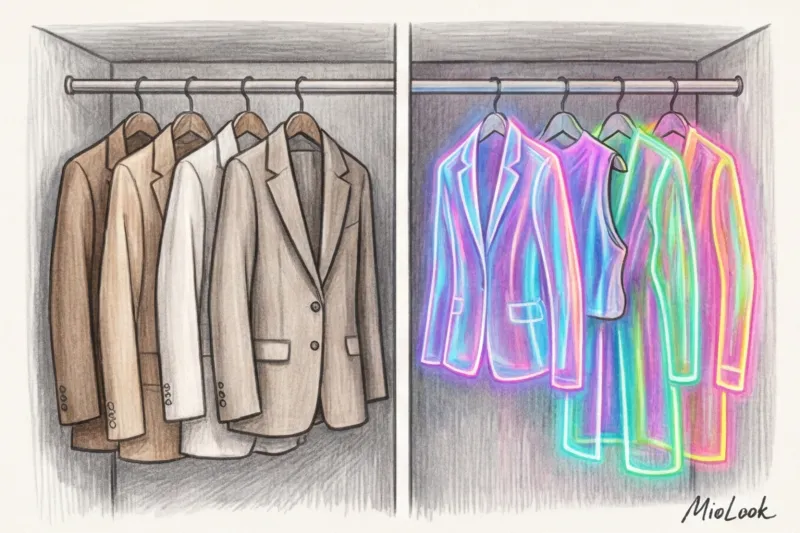
- Assess your goals: Need a striking look for a podcast cover, a poster, or a viral Reels? If so, digital fashion will save you hundreds of euros. If you're looking for something to wear to a real-life interview, obviously, skip DressX and go for a good basic jacket.
- Calculate your content budget: Add up the cost of studio rental, gear rental, on-site stylist, and dry cleaning. Compare that to €40–€80 for a premium digital look. The math speaks for itself.
- Check out the site: Buy only from trusted marketplaces (DressX, XR Couture, The Dematerialised). Avoid dubious, no-name projects offering NFT clothing that you can't technically try on anywhere.
My philosophy is simple: a digital wardrobe will never replace the softness of a cashmere sweater on a chilly evening or the confidence a perfectly tailored wool suit gives you during an important meeting. And it shouldn't.
But virtual clothing brilliantly solves another, no less important problem of our time—the paradox of "I have nothing to wear for the new post, and the old ones have already been seen." We are entering the era of hybrid wardrobes: physical ones for everyday life, digital ones for online self-expression. And the sooner you master this tool, the more impressive and affordable your visual brand will be.