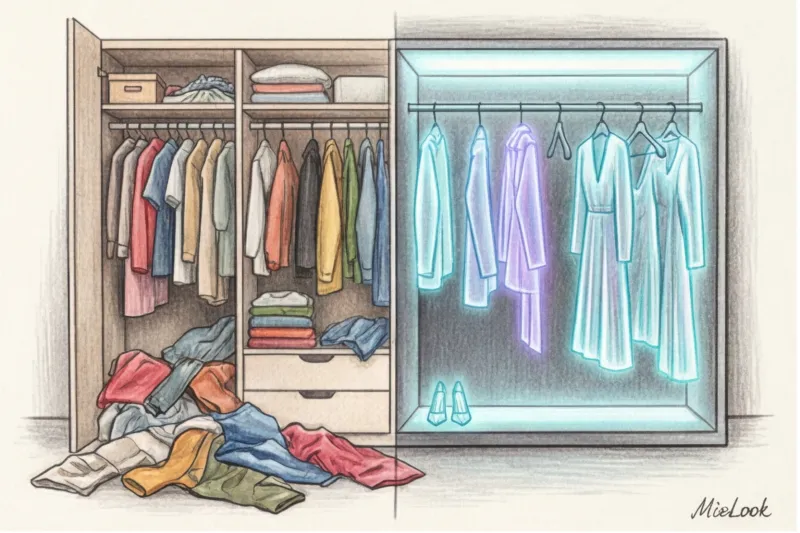
Let's be honest. How many times have you bought a stunning jacket or sequin dress, worn it for a single photo shoot, and then shuffled it around for years? As a practicing stylist, I constantly see these "one-shot items" languishing in my clients' closets. They take up space, eat into budgets, and make them feel guilty. But what if I told you that to create wow-worthy content on Instagram or LinkedIn, you no longer need to buy the actual item? Welcome to the era of 3D tailoring.
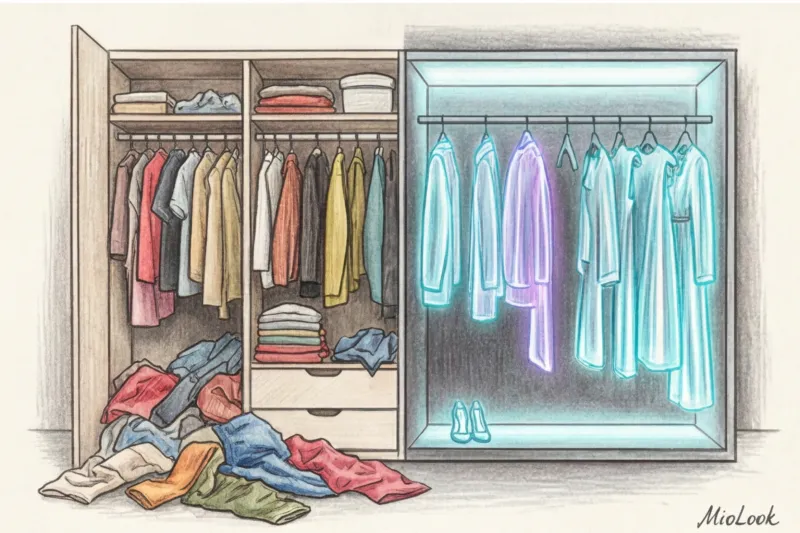
It is generally accepted that digital clothing brands — is a toy for gamers and crypto enthusiasts. In fact, today it's the most practical tool for bloggers, psychologists, and coaches who need constant visual content without cluttering their physical closets. We've covered the origins of this phenomenon in more detail in our complete guide to What is digital clothing and why do people buy it? In this article, we'll focus on the purely practical side: who makes it, where to buy it, and how to avoid looking silly in 3D prints.
Why do stylists and experts need digital clothing brands?
I had a revealing case in my practice. A client, a successful business coach, contacted me. She needed an extravagant fuchsia jacket with exaggerated shoulders for a series of reels. We found a suitable option in a store for €250. The problem was, the item didn't fit at all into her everyday capsule wardrobe, which was characterized by calm minimalism. She had no plans to wear it to in-person meetings.
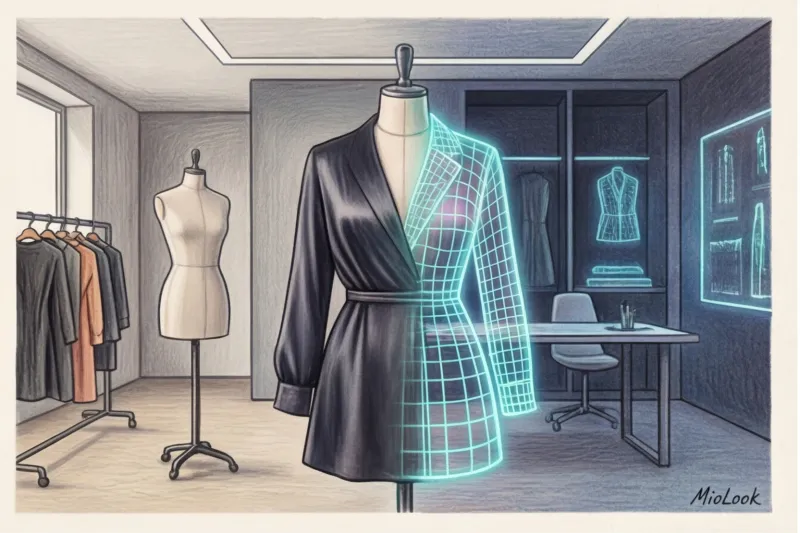
Instead of buying a physical item, we chose a basic black turtleneck from her closet, shot the footage, and then I commissioned a 3D jacket overlay for €25. The result? A €225 savings, zero wardrobe clutter, and a perfect image that garnered thousands of views.
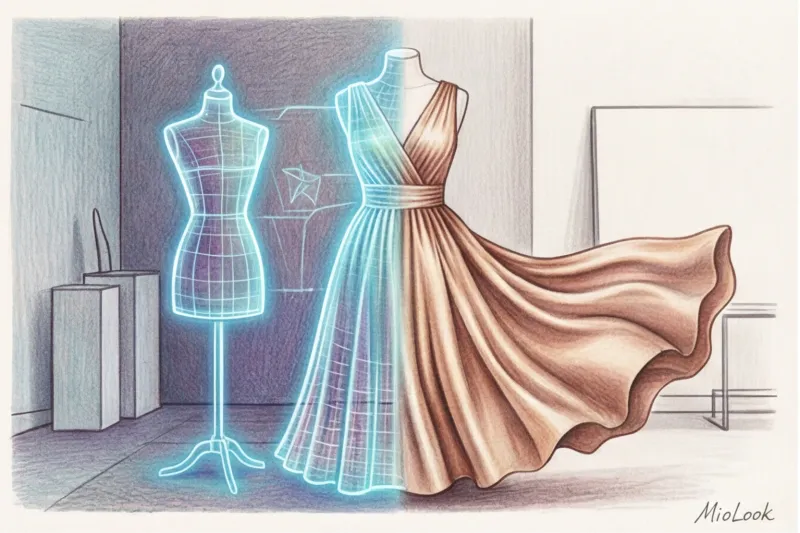
Digital fashion isn't just those simplistic social media masks that "fly off" when you turn your head. It's full-fledged 3D tailoring. Designers create patterns, calculate the physics of fabric (how silk lays, how liquid metal refracts light), and manually "fit" the garment onto your photo. This allows us to maintain physical minimalism at home and absolute stylistic maximalism on our blog.
Top Market Players: Digital Apparel Brands Changing the Industry
As a stylist, I divide the digital clothing market into two categories: "avant-garde" brands (for fashion shoots and covers) and "everyday" brands (for expert blogs). It's important to understand the difference: we're talking about buying a 3D render of your photo, not acquiring an NFT token for the metaverse, although the two often go hand in hand.
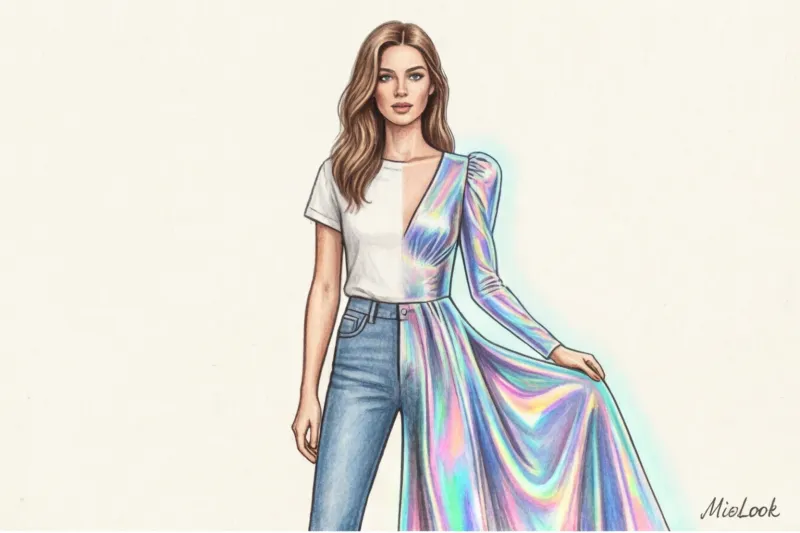
The Fabricant – Couture that doesn't need to be dry cleaned
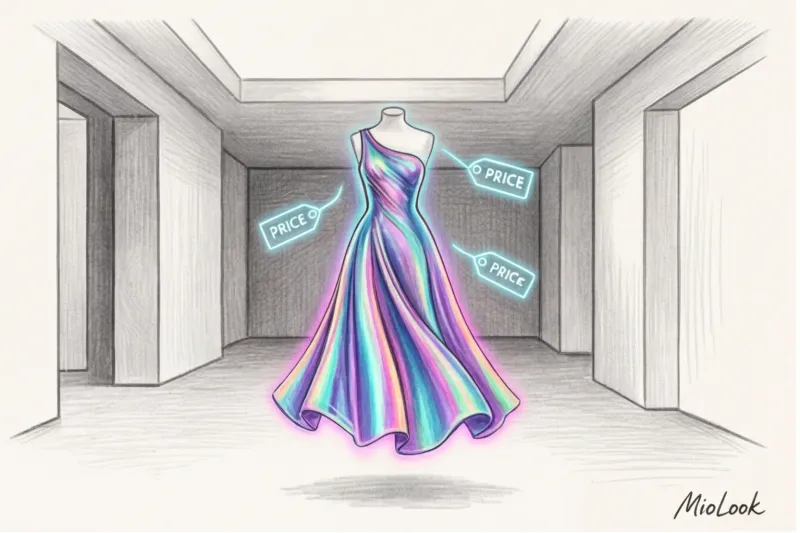
This Dutch digital fashion house made history by selling its virtual dress, "Iridescence," for €9,500. The Fabricant is haute couture for the digital world. Their specialty is impossible physics. Liquid metal dresses, floating textures, fabrics that change color depending on the lighting.
"We will never make physical clothing. Our goal is to dress digital identities," the brand's founders declare.
Who's it for? Whether you're shooting podcast cover art or want to create a viral post with a wow factor, The Fabricant's pieces will be worth every penny.
Tribute Brand – Cyberpunk for Bold Looks
Croatian Tribute Brand blends Y2K aesthetics with aggressive futurism. Their signature style is giant inflatable jackets, latex corsets, and neon textures. The brand brilliantly exploits the mechanics of artificial scarcity: they release limited "drops" (for example, just 100 virtual jackets). Once they're sold out, they're no longer available. This creates an exclusivity that's sorely lacking in physical mass-market clothing.
DressX is the leading mass market for digital fashion.
If The Fabricant is Schiaparelli, then DressX is the ASOS of the digital world. It's the most accessible, intuitive, and largest multi-brand 3D clothing store. This is where I recommend starting your virtual wardrobe journey.
The platform offers both items from independent 3D creators (starting at €15) and collaborations with traditional brands like Bershka and Printemps. According to DressX's 2023 sustainability report, producing one of their digital garments emits 97% less CO2 than a regular cotton T-shirt. Their sustainability credentials are backed by real numbers.
Your perfect look starts here
Tired of racking your brain over outfit combinations? Trust our smart algorithms.
Get access — €0.99 onceHow Physical Mass-Market Brands Are Going 3D
Don't think of digital clothing brands as a closed club. Traditional retail has long been in the game. Take Zara, for example, with their Y2K Creatures collection. They're releasing a capsule collection in a phygital (physical + digital) format—you can buy a real sweater in the store and then wear a digital copy with crazy animations on your avatar.
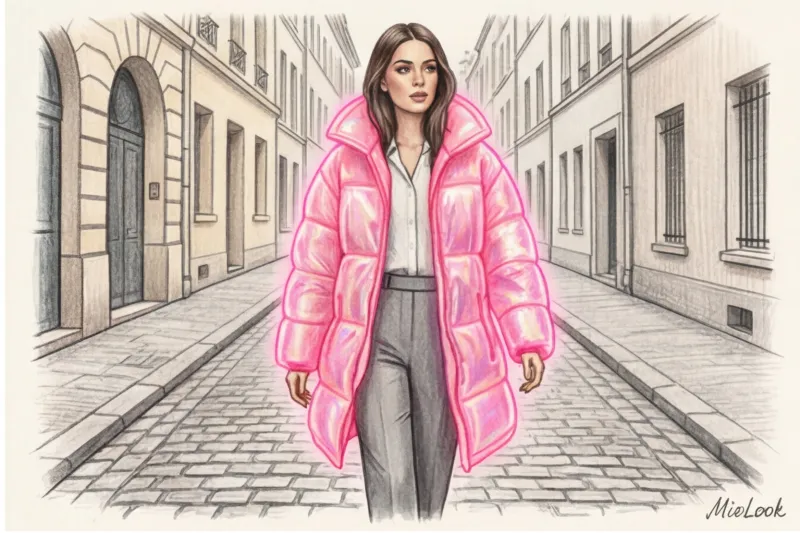
Why do H&M and Zara do this? The answer is simple: production optimization. Today, patterns are created in Clo3D. And these same files are sent in two directions simultaneously: to the Chinese factory for physical production and to the online store as a digital product. Boundaries are being erased.
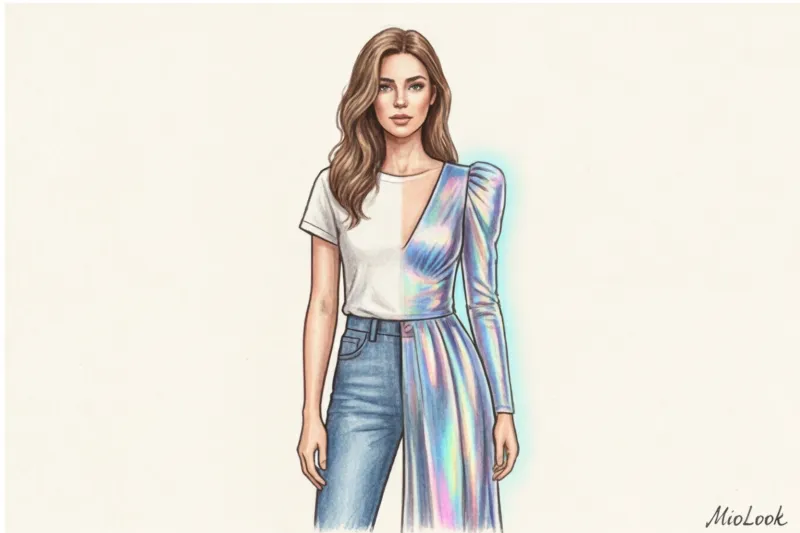
By the way, if you are looking to organize your physical things while experimenting with 3D, I recommend using the “smart wardrobe” feature in MioLook This is a great way to digitize your physical capsule and understand what you really need in life and what is best left in a virtual format.
Where and how to buy virtual clothes: a step-by-step guide
The process of buying a digital item is fundamentally different from online shopping. Here, you're not buying a box, but a service to embed the item in your photo. Here's the step-by-step process I give my clients.
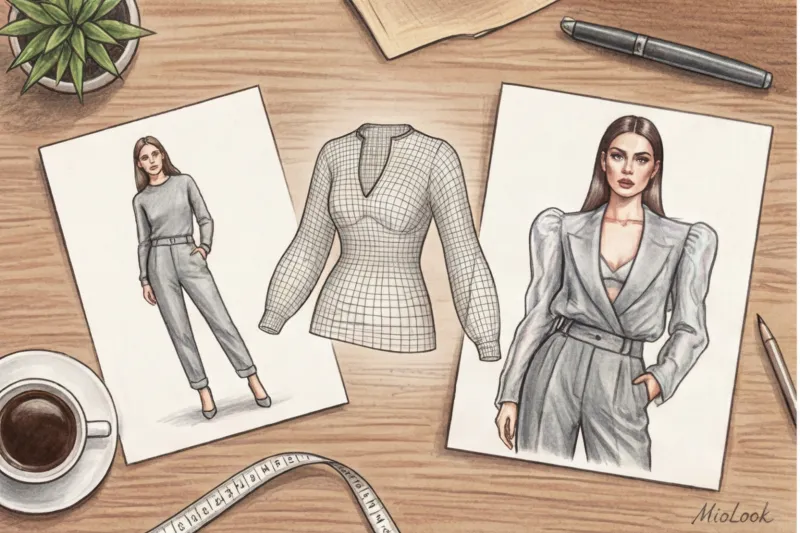
- Step 1: Select a platform. Go to DressX, XR Couture, or Replicant. Choose the look you want and pay.
- Step 2: Preparing the perfect source. This is a critical moment. The most common mistake my clients make is taking a photo in a voluminous hoodie and expecting a digital silk dress to fit beautifully over it. No! The original photo should be taken in the most form-fitting clothing possible (leggings, turtleneck, bodysuit). It's best to tie back your hair so it doesn't fall over your shoulders.
- Step 3: Light and shadows. The 3D designer will have to adjust the lighting of the virtual fabric to match the light on your face. If the photo is taken in a dark room with a flash aimed at your forehead, the result will look like a cheap appliqué. Take the photo in soft daylight from a window.
- Step 4: Waiting. Upload your photo to the platform. A high-quality render takes 1-2 days. This isn't a filter; a live 3D artist will customize the template to your body shape.
How Much Does a Digital Wardrobe Cost? The Mathematics of Style
Let's do the math. According to a Morgan Stanley report (2022), the virtual fashion market could reach $50 billion by 2030. But how much is that worth to us right now?
The price segment looks like this:
- Basic (15–30 €): Everyday items, digital denim, 3D printed T-shirts.
- Medium (30–80 €): Complex textures, virtual neon, inflatable jackets (Tribute Brand).
- Premium (100–1000+ €): Exclusive renders with complex physics or limited drops.
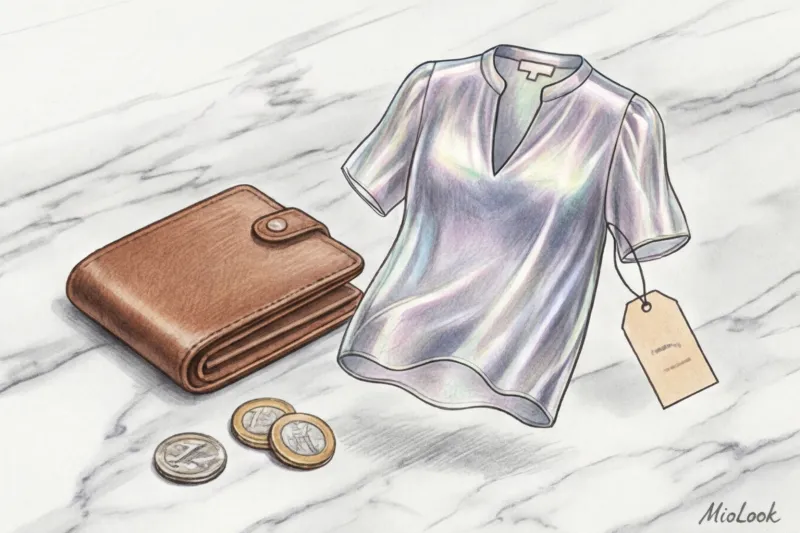
Let's compare it to reality. To shoot a great expert reel in a designer look, you'll need to: rent a studio (from €40/hour), rent a jacket (from €100/day) or buy a mass-market one (from €80), and pay for dry cleaning. Total: at least €150-200.
Alternatively, you take a photo of yourself at home against a white wall and buy a digital jacket for €30. The cost per wear (CPU) of virtual clothing in the context of social media is vastly superior.
Illusion or reality: the main mistakes when buying 3D clothing
As much as I love digital clothing brands, I have to be honest: it doesn't always work. Over the years of integrating 3D items into clients' content, I've identified three main mistakes that kill the magic.
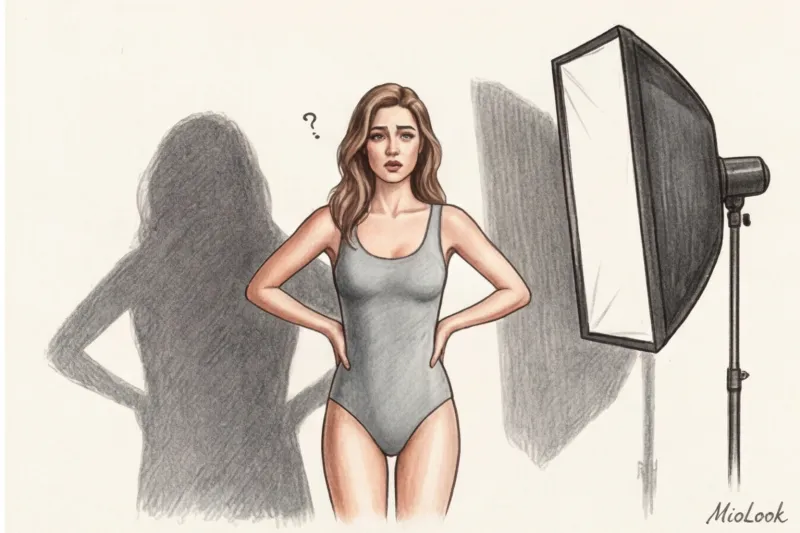
1. Trying to hide a bad posture with oversized clothes.
Many people think, "I'll stand anyhow, and a huge 3D down jacket will hide everything." Digital clothing is based on your skeleton in a photo. If you slouch, the virtual jacket will slouch along with you. 3D fashion doesn't correct your posture.
2. Lighting conflict.
If the original photo is lit from the right and the virtual fabric reflects light from the left, the viewer's brain will immediately detect the fakeness. Choose evenly lit shots.
3. Betrayal of your style DNA.
If you're an etiquette coach for Old Money aesthetics and suddenly show up in a latex cyber-corset, your audience won't believe you. Integrate 3D pieces carefully, enhancing your established style rather than disrupting it.
Ready to get started?
Analyze your wardrobe and find the perfect balance between the real and the virtual.
Get access — €0.99 onceThe Future of Your Wardrobe: Is Digital Fashion Worth Investing in?
Who needs this right now? Definitely content creators, stylists, speakers, and anyone who regularly posts photos. Digital clothing brands are solving the headache of "I have nothing to wear."
Who should avoid it? If, for you, clothing is purely a tactile experience, the feel of silk on your skin and the smell of new wool. The 3D world won't give you the emotional experience of touch. And that's okay.
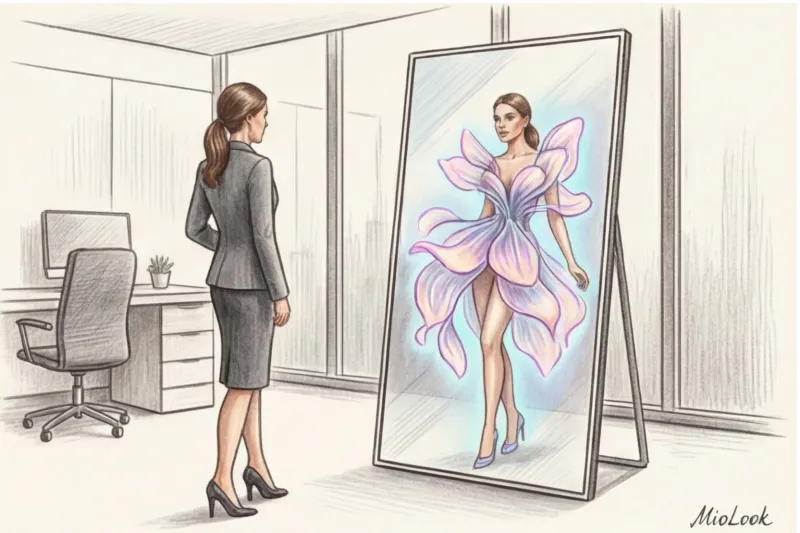
My main conclusion as a stylist: virtual fashion isn't a replacement for your physical closet, but a brilliant complement. Keep your hangers stocked with solid cashmere coats, perfectly tailored trousers, and basic T-shirts made of heavy cotton (at least 180 g/m²). Invest real money in real comfort. And leave the crazy one-season trends, neon latex, and liquid gold dresses for 3D. It's a smart, modern, and very elegant approach to fashion.