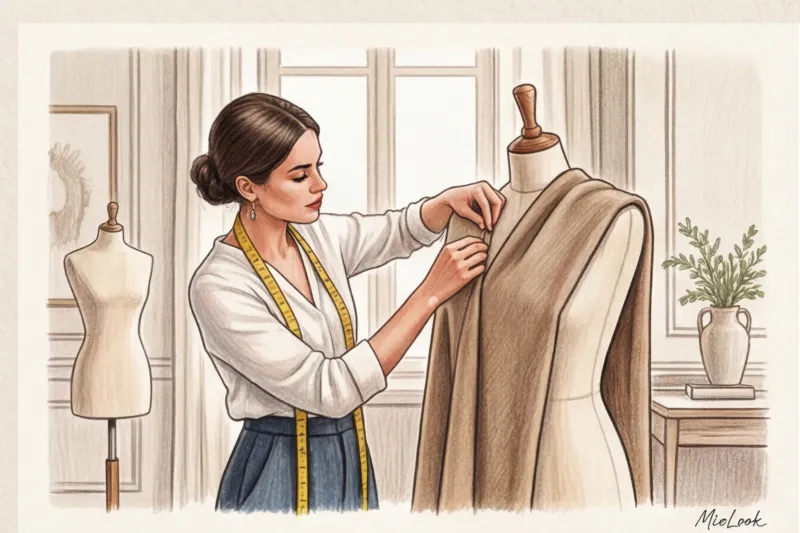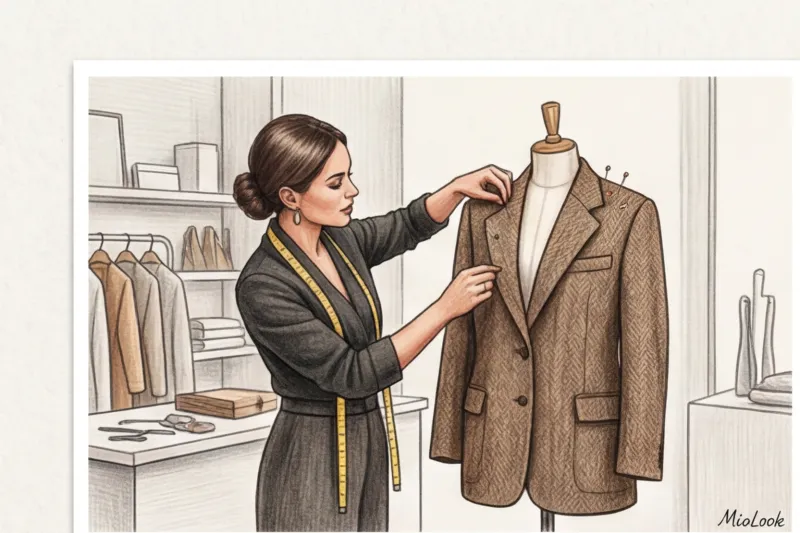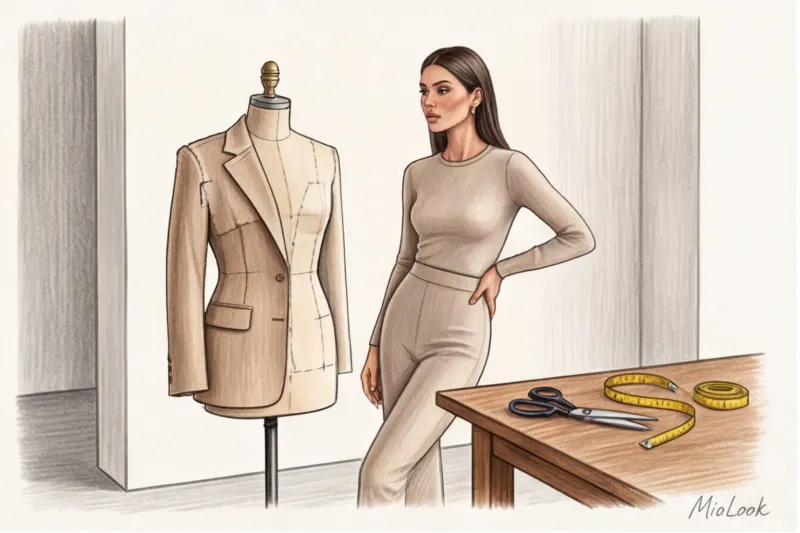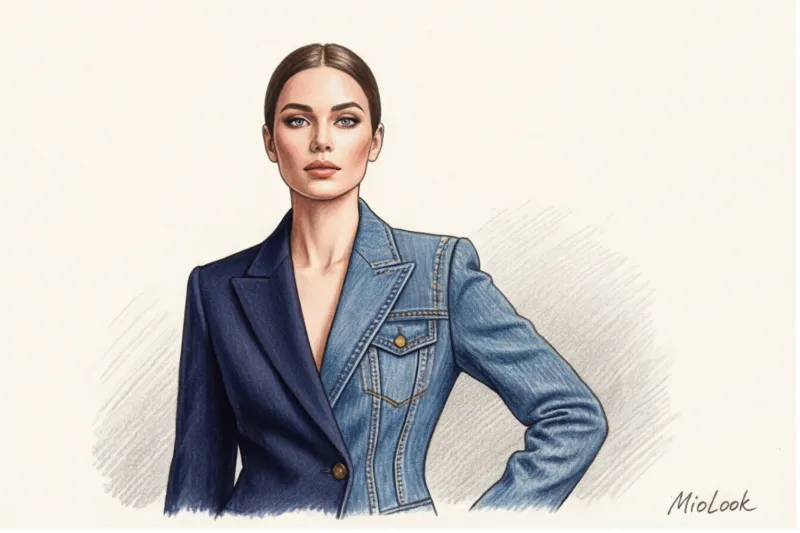
Did you know that it takes about 2,700 liters of water to produce one new basic cotton T-shirt? That's exactly the amount an adult drinks in three years. When I first saw this statistic in a World Resources Institute (WRI) report, my attitude toward the contents of my closet changed forever. Today, we'll talk about clothing upcycling — an approach that saves not only the planet but also your budget, turning forgotten items into exclusive, high-status style pieces.
I talked in more detail about how to build a competent base without unnecessary purchases in our the complete guide to creating a smart wardrobe Upcycling is a logical continuation of this philosophy. And if you use MioLook smart wardrobe , you probably know how important it is to have items in your arsenal that fit your figure perfectly and reflect your individuality.
What is clothing upcycling: More than just reworking
Let's get these concepts straight. People often confuse upcycling, recycling, and downcycling. Recycling is an industrial process where an old coat is shredded into fiber to create new yarn. Downcycling is turning a worn-out T-shirt into a mop. Upcycling, however, is a creative transformation. You take an item and enhance its value through design and reworking.
According to data Ellen MacArthur Foundation (2023 report) Every second, the world throws away or incinerates a volume of textiles equivalent to an entire garbage truck. Against this backdrop, upcycling has become not just an eco-initiative, but a major trend in conscious fashion. It's a way to preserve your favorite items, even those that are slightly outdated or damaged, and adapt them to your current lifestyle.
Ready to get started?
Try the MioLook free plan—no commitments required. Artificial intelligence helps you integrate altered pieces into your everyday looks.
Get access — €0.99 onceEconomy and Haute Couture: How Upcycling Became the New Luxury
Forget the stereotype that altering clothes is for those looking to save money on mass-market purchases. Today, it's couture. Take a look at the collections of recent years: Miu Miu Upcycled (2024), where the brand reimagines vintage denim and leather, or the line Recicla From Maison Margiela. Fashion houses openly declare: true luxury is uniqueness.
"The most sustainable item is the one already hanging in your closet. And the most luxurious is the one that exists only once in the world," says Orsola de Castro, co-founder of Fashion Revolution.
In my practice, clients regularly encounter an interesting phenomenon. One of them once confessed: "Sofia, I bought a Saint Laurent jacket for a fortune, but I only get compliments when I wear that asymmetrical top we repurposed from men's shirts." Why does this happen? Because the eye detects unusual proportions, complex cuts, and fabric textures that you simply won't find in mid-range stores these days.
Financial math is on your side here, too. A high-quality vintage 100% wool jacket will cost you $30-50 at a thrift store. A good tailor will remake it for another $100-150. For that kind of money, you'll only buy a polyester jacket at a mass-market store, which will lose its shape after the first dry cleaning. A remade vintage jacket, however, will last for years.
The biggest myth about upcycling: why you can't save anything
I'd like to make an important digression here. Popular opinion holds that upcycling is a magic wand for saving any worn-out garment. I have to disappoint you: this is wrong Upcycling cheap polyester, thin viscose, or frayed fast-fashion knitwear is a waste of time, money, and stress.
The problem lies in the term "fabric structural integrity." Cheap clothing uses short fibers with a high percentage of elastane (over 5%). Over time, elastane breaks down from washing and temperature fluctuations. The fabric loses its ability to return to its original state—a condition known as "fiber fatigue."
When a tailor cuts such fabric to make new seams, it begins to creep right under the machine needle. Only high-density materials should be re-stitched: high-quality suiting wool, heavy denim, natural silk, and high-quality linen.
A Second Life for Old Clothes: A Stylist's Checklist Before Repurposing
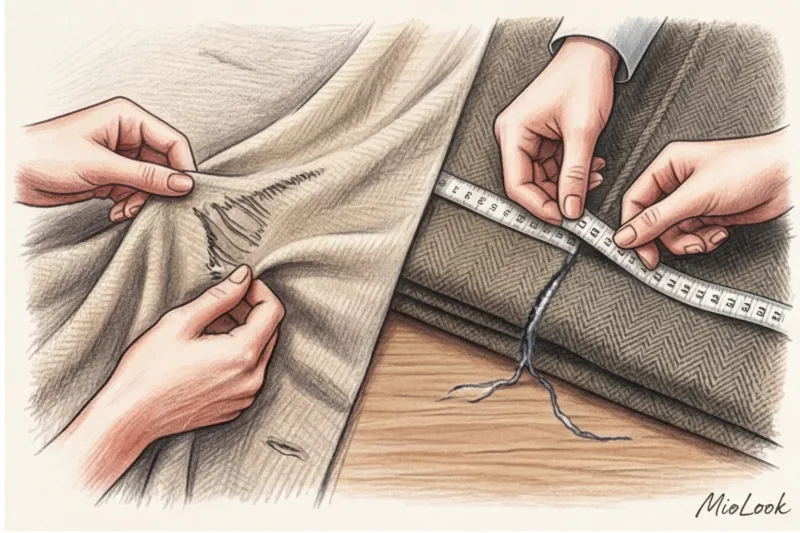
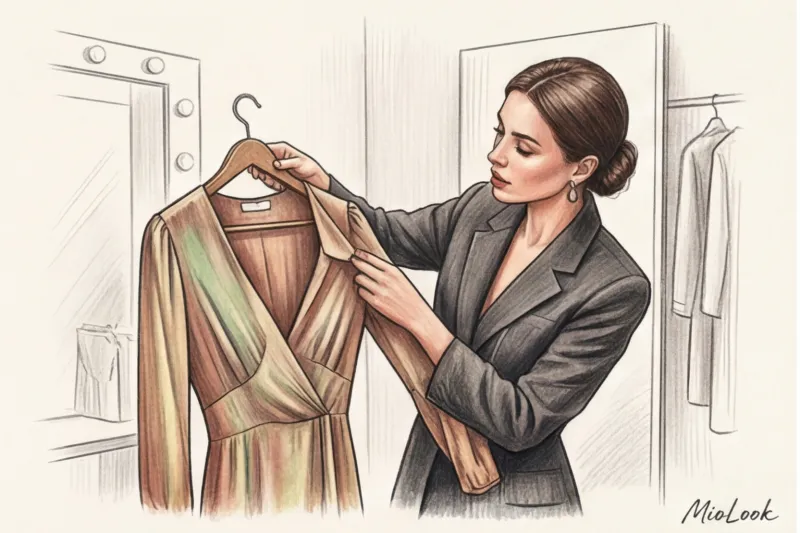
As a textile expert, I always conduct a technical audit before sending a garment to the atelier. If you want your upcycled clothing to look classy, remember this rule: for high-quality work, the fabric density must be at least 120 g/m² (and for outerwear, at least 250 g/m²). Here's my personal checklist.
- Tension test. Grasp the fabric with both hands and gently tug it in opposite directions, then release. If it immediately returns to its original shape, the fabric is still intact. If it remains a distorted "wave," the fibers are damaged and should not be recut.
- Evaluation of seams and folds. Pay close attention to areas of friction: the collar, cuffs, and inner thigh. If there are severe abrasions or sheen on the fur that can't be removed with steam, that area will only need trimming.
- Testing for pilling. If an item is already covered in small, stiff pilling that's difficult to machine-remove, the thread structure is compromised. This often happens with blended fabrics (e.g., 70% acrylic, 30% wool).
Your perfect look starts here
Join thousands of users who look flawless every day with MioLook. Digitize your upcycle items and create new combinations.
Get access — €0.99 onceWhat to look for in thrift and vintage stores
If your closet isn't stocked with suitable candidates for repurposing, try vintage hunting. Look for specific items:
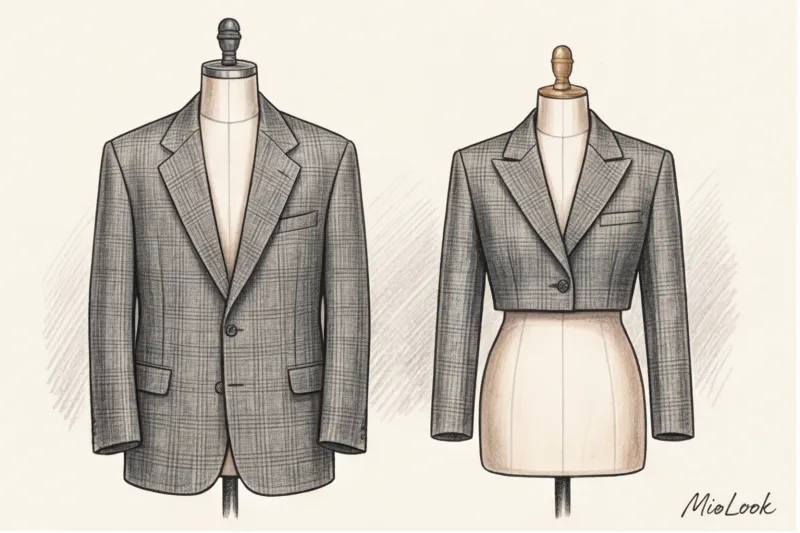
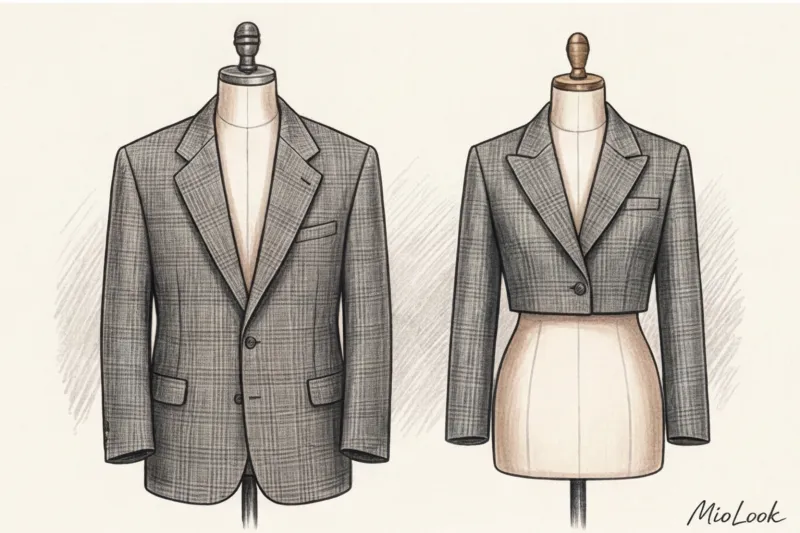
- Men's suits of the 80s and 90s. This is a gold mine of pure virgin wool of incredible quality. Their wide-shouldered cut is perfect for creating modern, oversized women's jackets.
- Vintage denim. Look for old Levi's or Wranglers. They don't contain a single ounce of elastane—only 100% heavyweight cotton, which ages beautifully and holds its shape perfectly after being altered.
- Leather coats and jackets. Old leather can often be a bit stiff, but with the right treatment and re-cutting, an oversized coat can be transformed into an incredibly stylish crop jacket.
5 Elegant Ideas for Upcycling Premium Clothing
Let's get practical. Forget about sewing on silly patches and cutting jeans with crooked scissors. We're talking about creating a wardrobe with a "quiet luxury" aesthetic. Here are five scenarios I regularly implement with my clients.
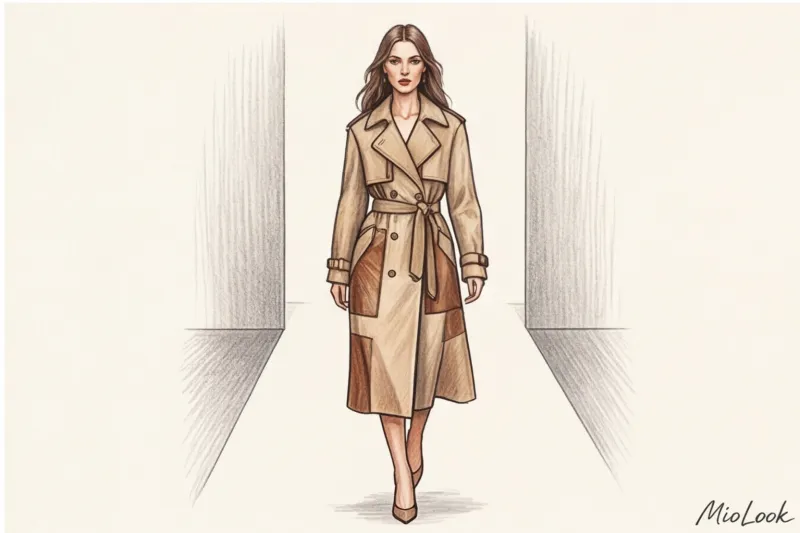
1. Transformation of grandfather's suit. This is my favorite case. We took a men's cashmere jacket, size 54. The tailor shortened it to the waist (making it a spencer jacket), and from the remaining bottom and trousers, we constructed an asymmetrical wrap skirt. The result looks like a Jil Sander ensemble.
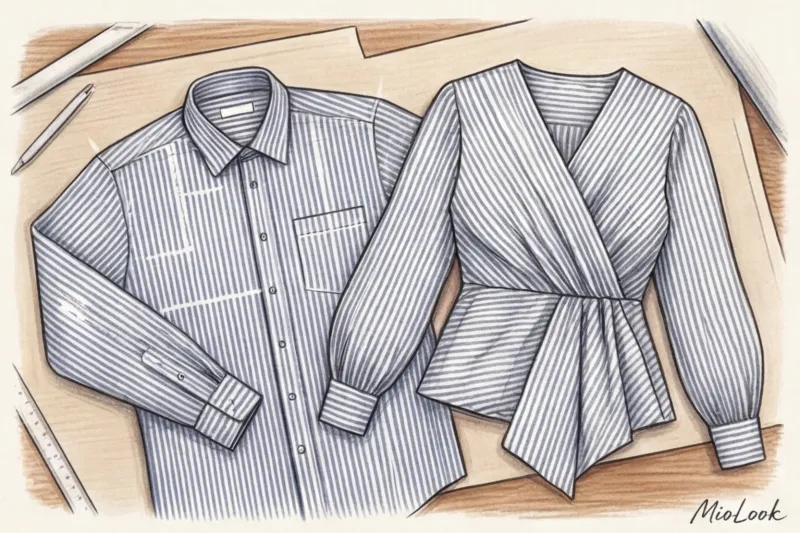
2. Color-block blouse. Take two old men's shirts (say, one blue striped, the other plain white) with worn collars. Cut the collars off completely, creating an elegant V-neck, and sew the blouse together from the halves of the two different shirts.
3. Coat update. If you have a long, high-quality but old-fashioned coat, cut it down to a trendy midi length. A tailor can use the cut-off hem to create a stunning wide scarf with matching fringe—coat and scarf sets in the same fabric are currently at the peak of popularity at brands like Toteme.
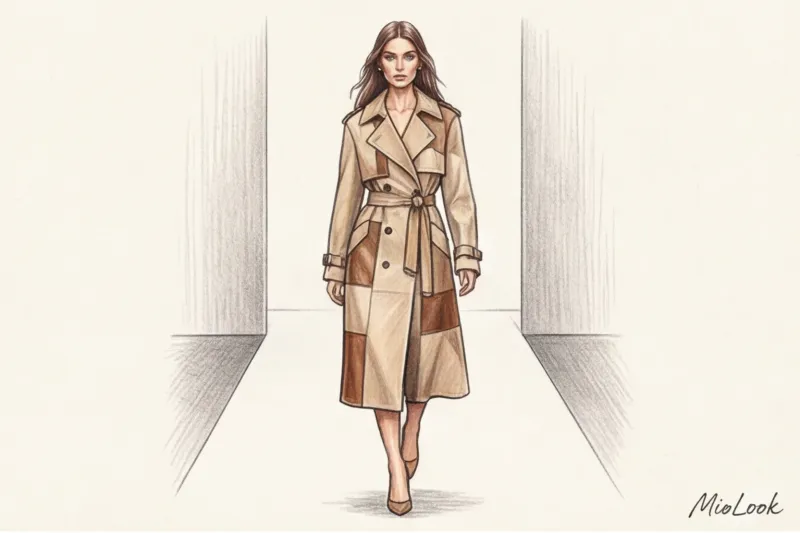
4. Upgrade the basic trench coat. A classic beige trench coat can easily be transformed into a statement piece by replacing some of the details (such as the back yoke or sleeves) with contrasting gabardine or vintage leather inserts.
5. Japanese sashiko for denim. If your favorite heavy jeans have frayed, don't just darn them. Use the sashiko technique, but with a premium twist: instead of a piece of another denim, place a piece of thick Chantilly lace or natural heavy silk under the tear and stitch with a contrasting thread.
Do it yourself or in a studio: when is it worth delegating?
The most important skill in upcycling is knowing your limits. It's one thing to embellish a shirt collar with beads (an evening DIY project), but quite another to change the fit of a jacket.
Re-cutting outerwear (coats, jackets, trench coats) absolutely not allowed It's impossible to do without professional equipment or a deep understanding of tailoring. The shoulder girdle is a complex engineering structure with interlining, shoulder pads, and piping. If you simply cut off and sew the shoulder, the garment will end up with bubbles.
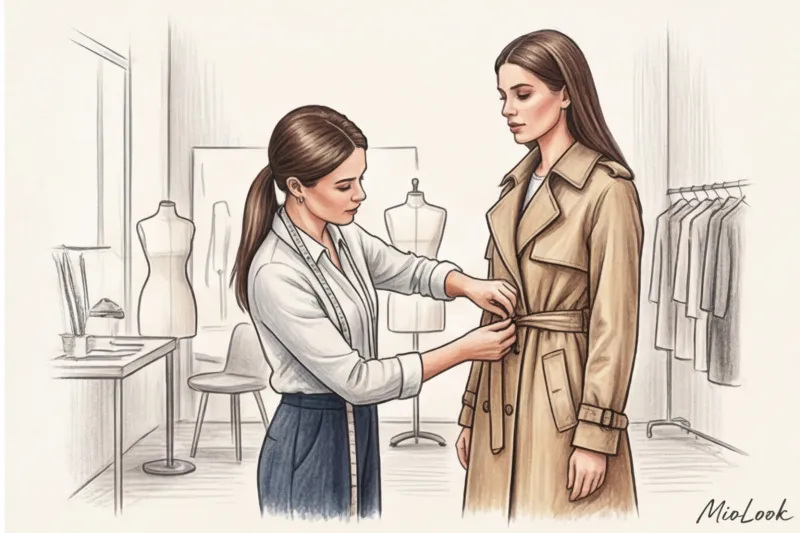
How do you find a good stylist for such tasks? When you visit a studio, ask one simple question: "How do you plan to finish the inside seams if we change the silhouette?" A good tailor will suggest a bias binding or a closed seam, rather than simply overlocking, which cheapens the look of the garment.
How to Incorporate Upcycled Clothing into Your Sustainable Wardrobe
To ensure your recycled pieces work for you and don't feel like dead weight, maintain balance. Upcycled items should make up no more than 20-30% of your everyday business or smart-casual wardrobe. The rest is a flawless, understated base. Wearing a recycled asymmetrical jacket with a basic white T-shirt, straight jeans, and loafers makes you a style icon. Adding a complex skirt, bright tights, and chunky jewelry can make you look eccentric.
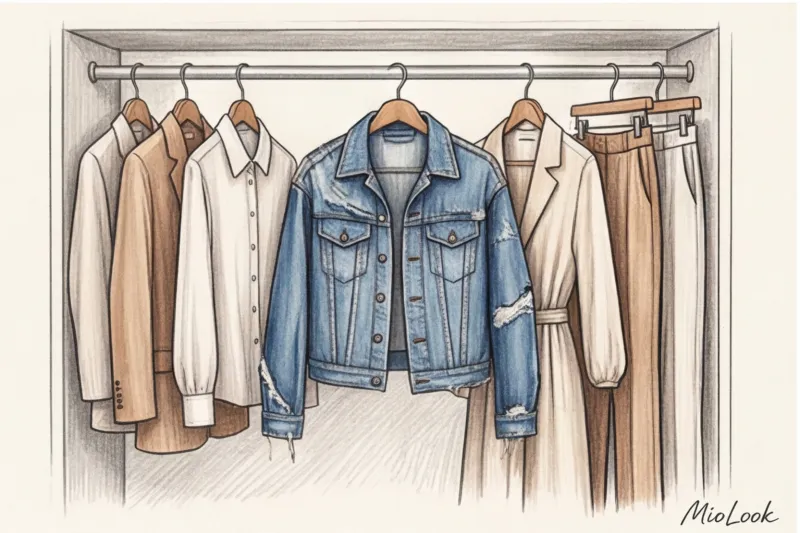
It's very convenient to integrate such complex things into your images through the app. MioLook You simply upload a photo of the updated item, and the AI stylist will suggest dozens of combinations with the clothes you already own.
Upcycling isn't a compromise between fashion and ecology. It's the pinnacle of personal style. Start small: go through your closet this weekend. Find just one item made of premium fabric that you haven't worn in over a year because it's a bad fit, and take it to a reputable tailor. I assure you, the process of creating your own design is captivating, and the results will exceed your expectations.