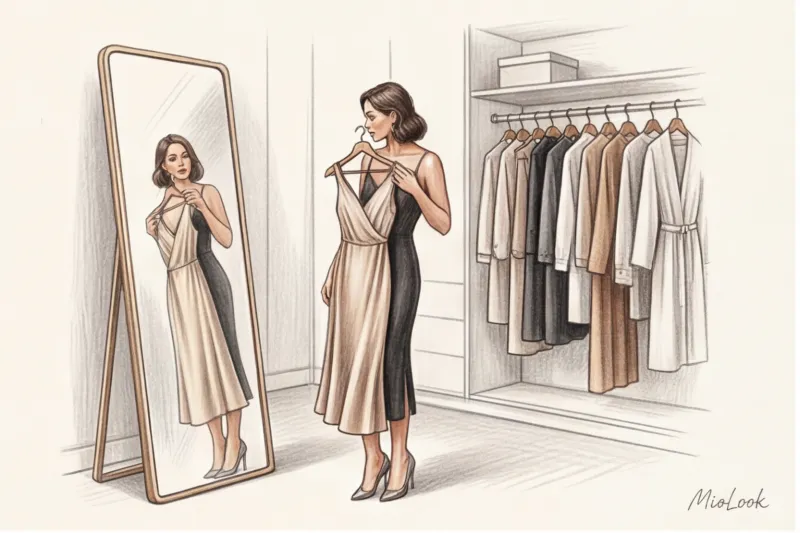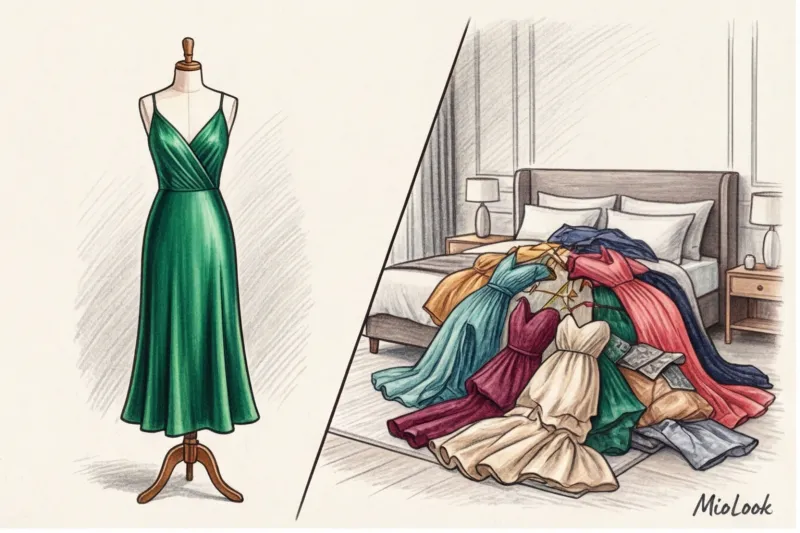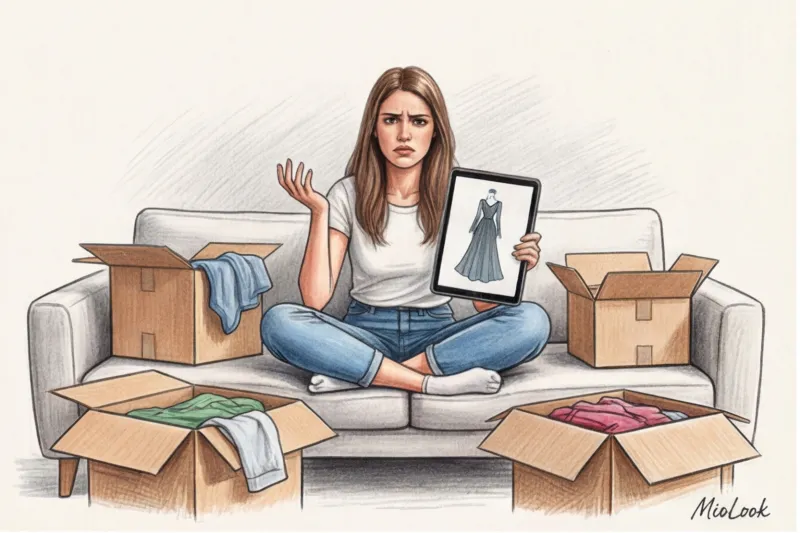
According to the National Retail Federation, as of 2024, approximately 40% of clothing purchased online ends up back in warehouses. The reason is simple: an item that looked gorgeous on a model in a studio shoot doesn't fit in person or highlights something you didn't want to hide. It's a familiar situation: you order a €120 dress, wait for delivery, try it on—and feel disappointed.
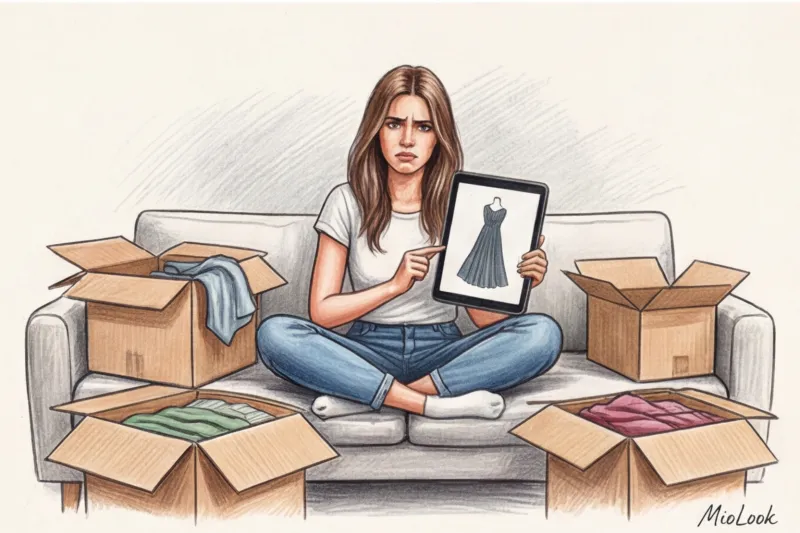
This is where it comes into play virtual clothing fitting And no, this is no longer just a pastime for teenagers on social media. Over 14 years of working as a stylist, I've realized: this is the most powerful diagnostic tool for adults, busy women who value their time and money. We've covered the mechanics behind these technologies in more detail in our the complete guide to digital fashion , and today we’ll talk about purely practical application.
Why do real people, not just bloggers, need virtual clothing try-ons?
It's commonly believed that neural network image generation is exclusively for Zoomers to create viral content. My experience shows otherwise. The main beneficiaries of this technology are conservative women over 30—those who want to update their wardrobe but are wary of spending their budget on unfamiliar styles.
The problem with modern shopping is our perception's blind spot. We become accustomed to certain silhouettes. When a customer has worn skinny jeans and fitted jackets their entire life, getting them to try on a voluminous pantsuit in a store is physically difficult—they'll simply walk right past the rail.
Virtual try-ons remove this barrier. You can try on a bright fuchsia or an extremely oversized outfit while sipping coffee on your own couch, without spending a cent. E-commerce market research (WGSN, 2023) confirms that seeing a product on yourself first increases confidence in purchasing by 70%.
I introduced AI try-on into my consultations two years ago. The result? My clients' impulse spending has been cut in half. They've stopped buying "cute blouses" because they can see in advance how they distort their proportions.
Your perfect look starts here
Join thousands of users who look flawless every day with MioLook. Our intelligent AI stylist will select styles that perfectly suit your figure.
Get access — €0.99 onceHow Online Try-On Works: AI vs. 3D Modeling
To avoid disappointment with the results, you need to understand how exactly the algorithms process your photo. Two fundamentally different technologies currently compete on the market, and each has its own strict limitations.
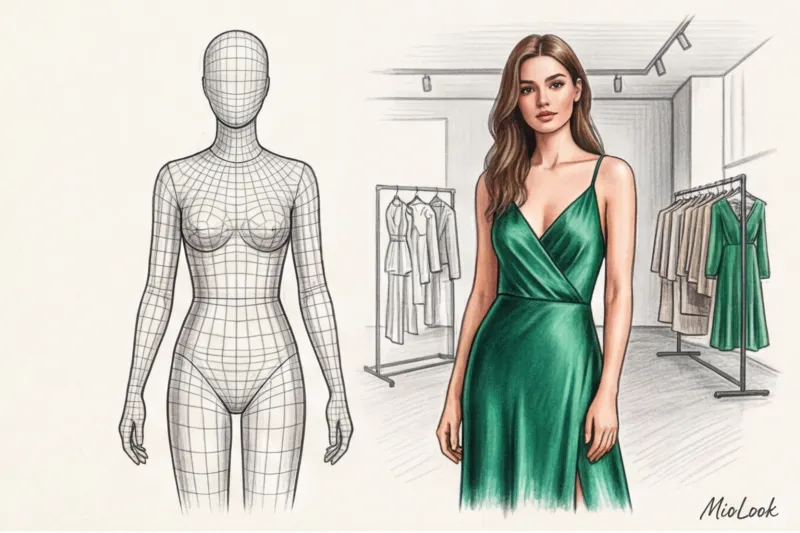
Neural Networks: Fast Silhouette Testing
AI generators work based on prompts and references. They analyze the contours of your body in a photo and "draw" the specified clothing over them.
- The main advantage: This is the perfect tool for checking your color palette. You'll know in seconds whether cool emerald or warm olive suits your complexion.
- Fair Limit: Neural networks have a poor understanding of fabric physics. Thick cotton can form soft folds, while natural silk often looks like glossy plastic in photos. Therefore, judging a material's texture from an AI image is pointless.
3D fitting rooms in online stores
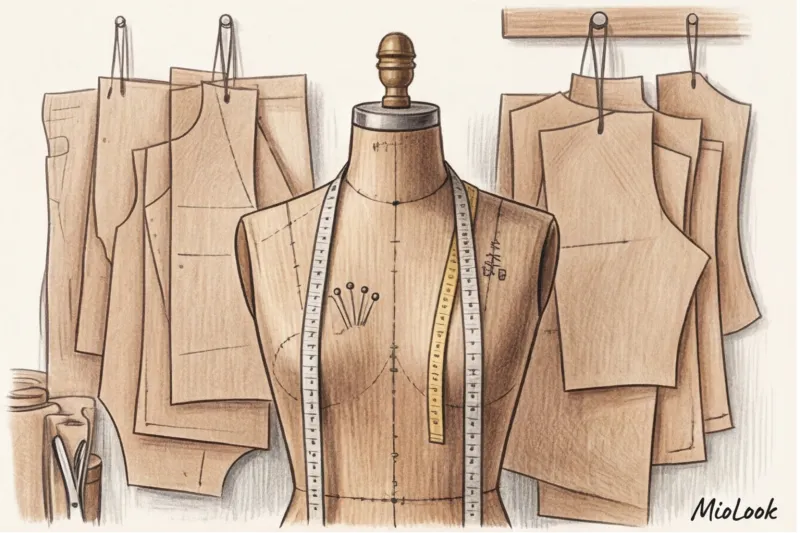
Unlike 2D generation, professional software (for example, those based on engines like Clo3D) works with digital patterns. The algorithm creates a rough 3D avatar of you based on the entered parameters (height, chest, waist, and hips) and "stretches" a virtual copy of the real thing onto it.
This technology is incredibly accurate when it comes to fit. The program takes into account the stretch coefficient of the fabric and shows where the shirt will bunch up and where the chest buttons will treacherously come apart. Mass-market giants like H&M and Zara are currently actively testing such solutions, introducing AR mirrors in their flagship stores.
Top Mistakes: Why Do Virtual Clothes Look "Like a Sticker" in Photos?
Clients often send me the results of their experiments with the words, "Olena, the program is broken, I look like a paper doll!" In 9 out of 10 cases, the problem lies in the original image.
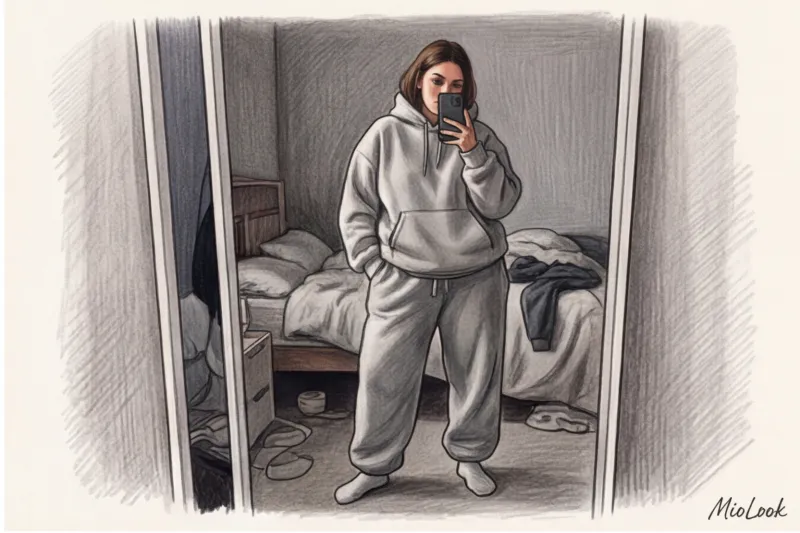
Here are three critical mistakes that ruin the magic of digital fitting:
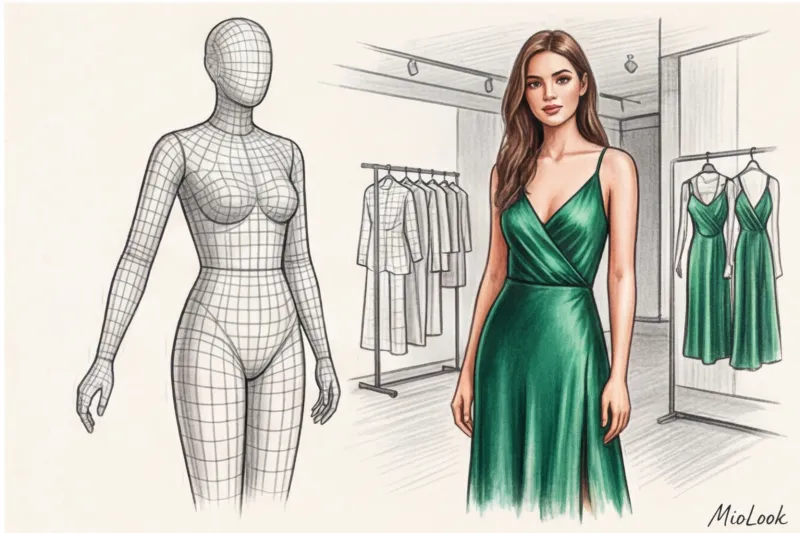
- Complex pose. Arms crossed over the chest, severe slouching, leaning on one leg with a severe pelvic tilt. The algorithm is going crazy trying to figure out where to thread the virtual sleeve.
- Volumetric clothing on the original. The neural network can't "slim" an oversized hoodie. If you take a photo wearing a baggy sweater and try on a silk slip over it, the program will stretch the dress over the bulk of the sweater. You'll gain 10 kg of visual weight.
- Perspective distortion. Forget about taking mirror selfies from the bottom up! As a stylist, I constantly fight this habit. This angle artificially elongates your legs and makes your head look tiny. Any virtual outfit layered on top will look disproportionate.
Stylist's Guide: How to Prepare the Perfect Photo for an Online Try-On
To Virtual wardrobe features in MioLook If you're using a neural network that works 100%, prepare a base photo. I give this checklist to every client before a remote wardrobe review.
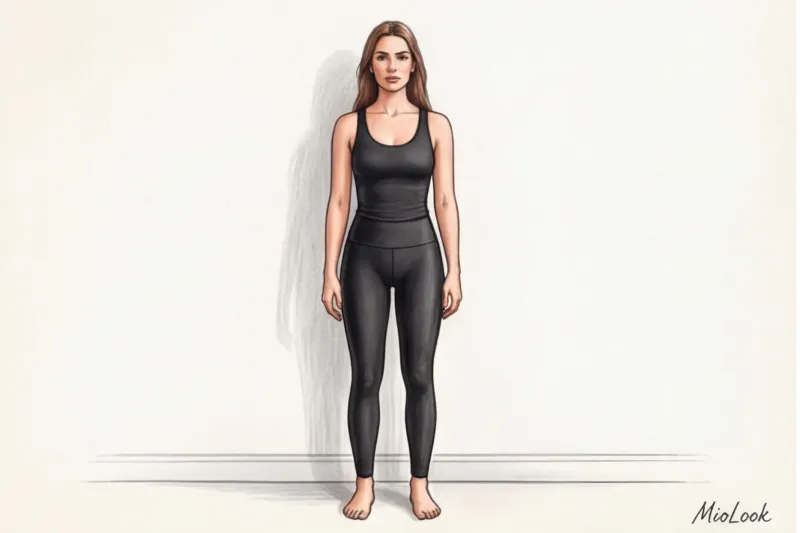
What you need to do:
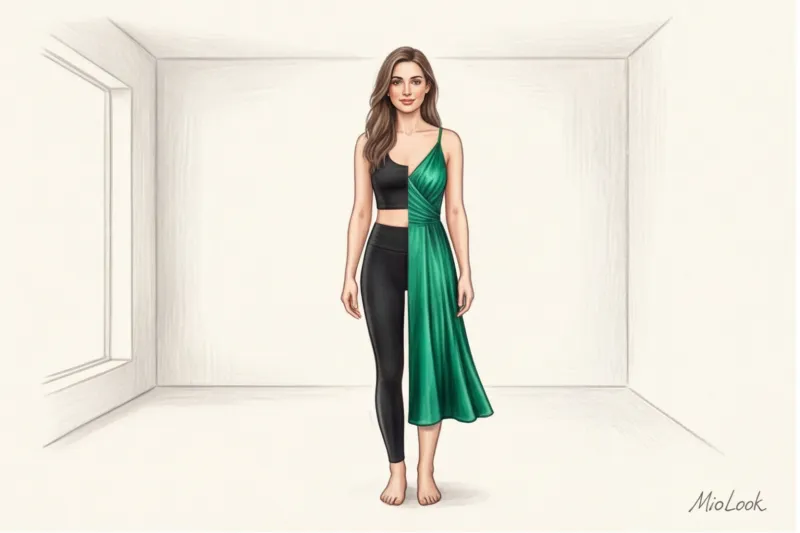
- Cloth: Wear thick black leggings (or bike shorts) and a fitted tank top. Make sure to pull your hair back into a sleek ponytail or bun to keep it out of the way of your shoulders and neck.
- Light: Stand facing the window. You want even daylight falling directly on you. Harsh side shadows will confuse the texture mapping algorithm.
- Background: Find a wall that's as plain and light as possible. Your silhouette should clearly contrast with the background.
- Angle: Ask someone to take your photo or set up your phone on a tripod. The camera should be positioned exactly at chest or solar plexus level. Position yourself straight ahead, with your arms slightly outstretched (A-line silhouette).
Ready to get started?
Upload your perfect photo to MioLook and try out dozens of new looks without risking your wallet.
Get access — €0.99 onceTesting Trends Without Spending: My Capsule Wardrobe Method
Virtual clothing try-ons truly reveal their potential when working with a capsule wardrobe. Before investing €200–€300 in a high-quality wool jacket or trench coat, you need to make sure it complements your appearance.
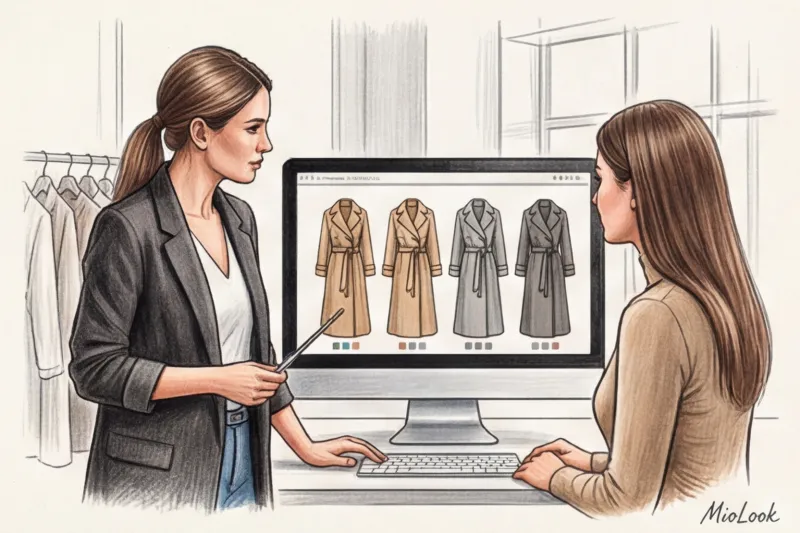
Recently, my client Anna and I were putting together a fall capsule collection. Wide-leg baggy jeans were just coming into fashion, and Anna really wanted to incorporate them into her everyday style. I suggested that instead of rushing to order, we try the style out in a virtual fitting room using her photos.
The results were sobering. At 160 cm tall and with a pear-shaped body, the AI generation clearly showed that low-rise baggy pants visually "sucked" into her height and made her lower body look monumental. For this cut to work, she would have to constantly wear heels or chunky platforms, which conflicted with her lifestyle. In 10 minutes, we saved about €150 and a ton of time on the return process.
Instead of baggy jeans, we tested straight leg jeans—and Anna's digital avatar immediately became slimmer and taller.
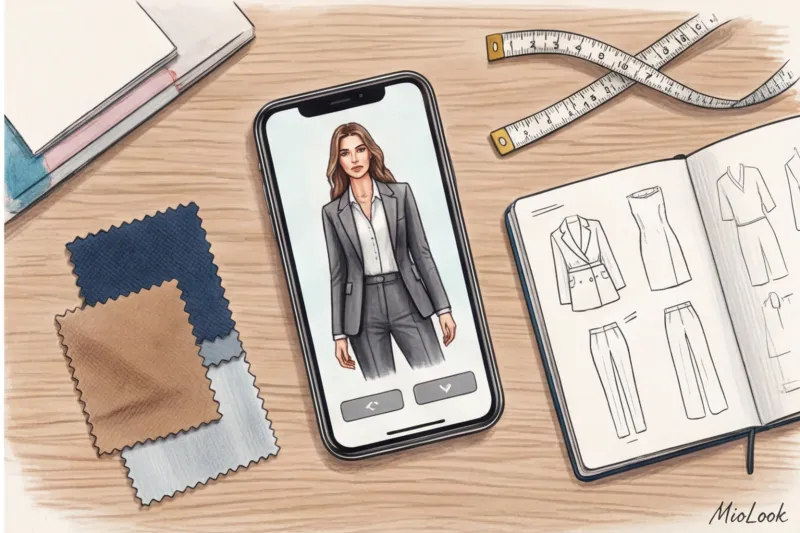
From Pixels to Reality: 5 Steps from Virtual Try-On to Purchase
To make the technology practical, use it as a filter before you actually shop. Here's an algorithm guaranteed to rid your closet of clutter:
- Choose extremes. Upload a base photo and generate 3-5 completely different styles. Are you used to a fitted look? Try an oversized one. Do you only wear black? Request a monochrome cobalt look.
- Evaluate the proportions. Look not at a pretty picture, but at the geometry of your body. Where is your waist visually located? Are your shoulders too broad?
- Check the portrait zone. Zoom in on your face. If the new color makes your skin look sallow or highlights dark circles under your eyes, ruthlessly reject the shade, even if the style is impeccable.
- Create a mood board. Save 2-3 of your best silhouettes to your phone as references. This will be your cheat sheet.
- Go hunting. When you go to the mall or browse a marketplace, look for a specific style from your digital cheat sheet. Ignore everything else.
The Future of Shopping and Style Management
We are on the cusp of a global shift in consumer habits. In the next five years, the concept of "order three sizes, keep one, return two" will become a relic of the past, largely due to brands' rising logistics costs and environmental regulations.
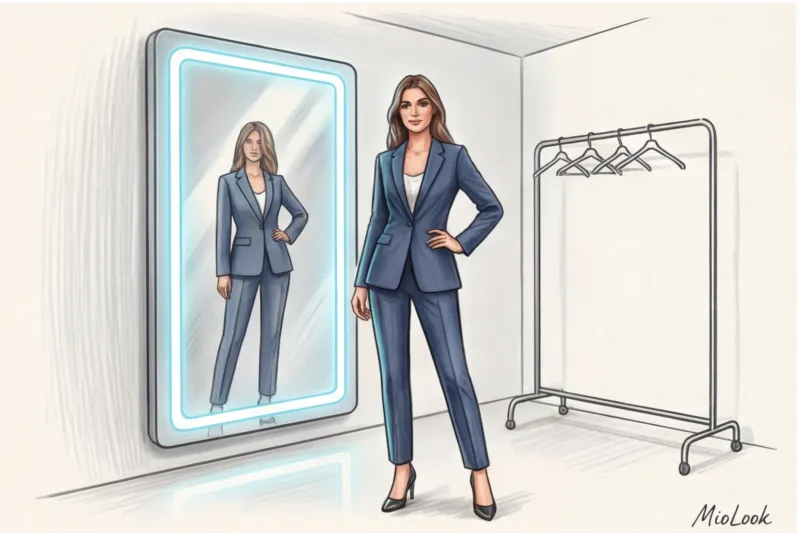
The new norm is "try on digital first, order physical later." Artificial intelligence is no longer a toy, but your personal, impartial diagnostician. It won't flatter you like a sales associate trying to meet a sales quota. It will simply show you how a specific cut interacts with your unique physiology.
Use this tool not to create unrealistic fantasies, but to explore yourself. Try bold things, make mistakes with the numbers, and then your real closet will only contain those things that make you feel like a million bucks.