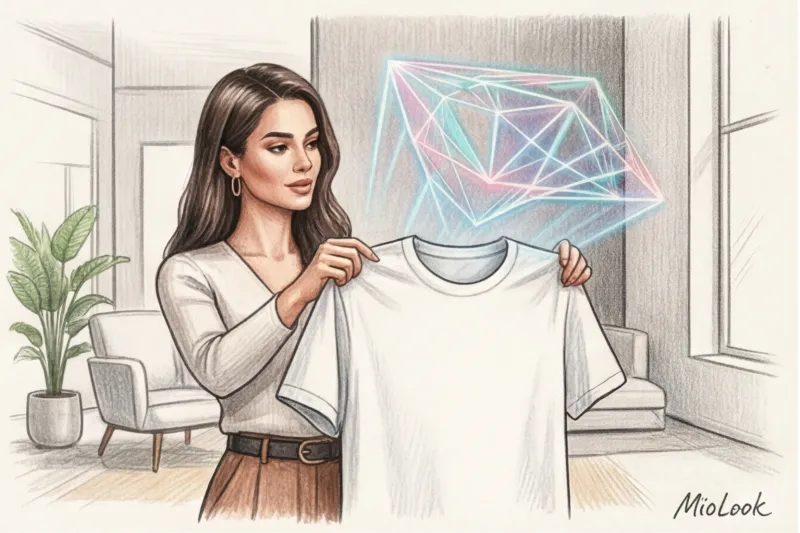
Six months ago, my client Anna, a marketer from Berlin, complained to me about a typical problem for the modern speaker: "I have a closet full of basic clothes, but for a series of twelve expert webinars, I literally have nothing to wear. I don't want to buy a dozen new jackets just for the Zoom video, but looking the same every week is unacceptable." My solution initially shocked her. We bought exactly one physical item—a perfect black, heavy cotton sweatshirt for €80 with a built-in NFC tag. Over the next three months, she appeared on screen in "different" looks twelve times, simply by changing the digital design of her sweatshirt using her smartphone camera.
If you remember, we already discussed the concept of fully virtual 3D bows in our The complete guide to digital clothing and why people buy it But today we'll talk about another, much more practical direction. Augmented reality (AR) clothing — is no longer a toy for Zoomers on TikTok. It's a practical tool for minimalists, experts, and anyone who wants to streamline their wardrobe without sacrificing style.
Phygital Fashion: What Are Augmented Reality Clothing?
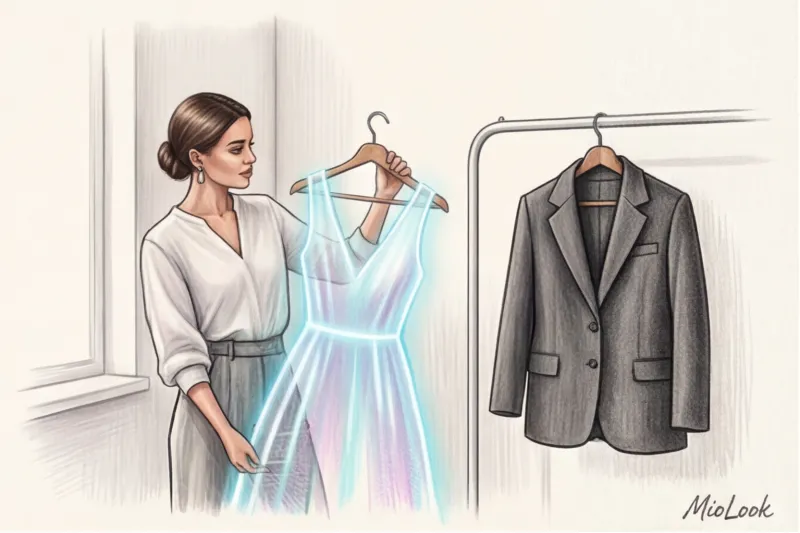
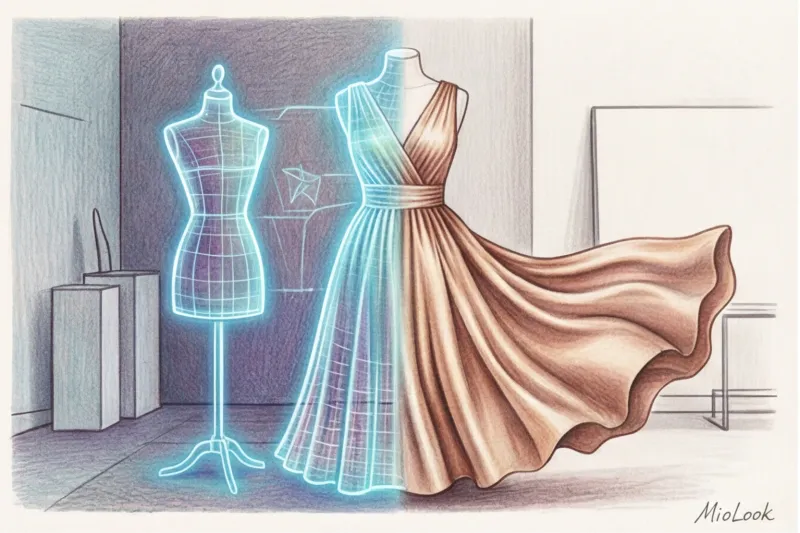
Let's get this straight. There's a huge difference between purely virtual fashion (where the item exists only as a 3D file) and AR (Augmented Reality) technology. Phygital fashion (physical + digital) operates at the intersection of these two worlds: you buy a real, physical item that you can touch, wash, and wear, but it has a hidden digital layer.
As a stylist who adores tactile fabrics (I can talk for hours about the benefits of cashmere or cotton with a weight of 180 g/m² or higher), I was long skeptical of AR fashion. I considered it a passing trend. My opinion changed when I saw how much closet space a single item saves. AR clothing operates on the "blank canvas" principle: through the lens of a smartphone or smart glasses, a basic T-shirt acquires three-dimensional holographic elements, changes color, or is animated.
According to the Business of Fashion (2024) report, the phygital clothing market has moved beyond the runway concept and into the everyday wear category for content creators. Why buy a disposable sequin dress for €200 for a single photo shoot when you can buy a basic hoodie for €60 and digitally overlay it with a liquid metal texture?
The Anatomy of an AR Thing: How a Digital Layer is "Sewn" to Real Fabric
The real magic of phygital clothing lies not in the graphics, but in the tracking system. To keep the digital jacket from slipping off your shoulders as you move, the camera needs a fulcrum.
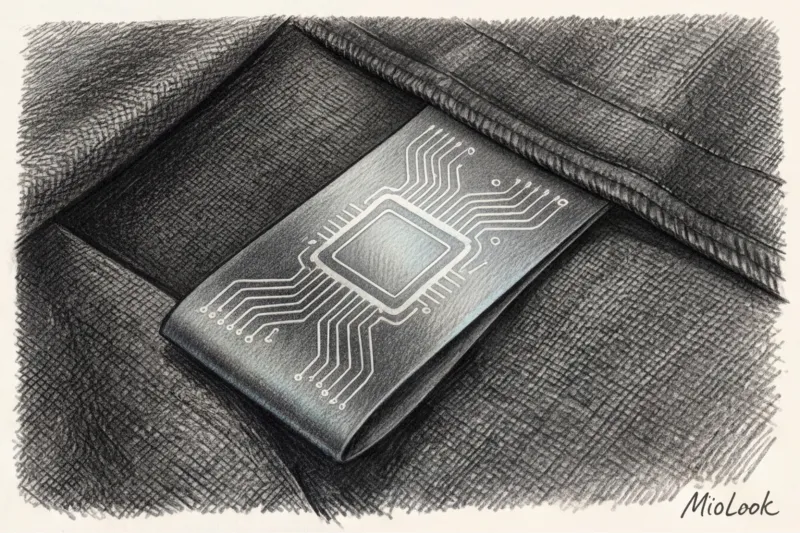
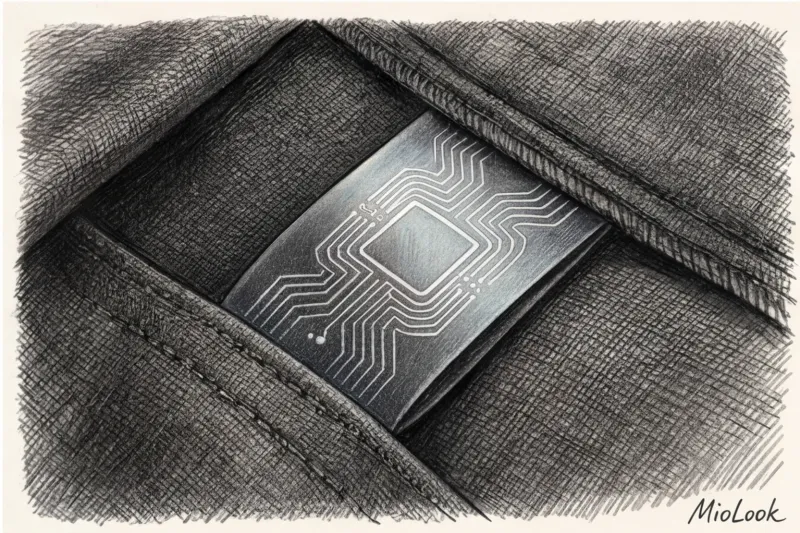
High-quality pieces from brands experimenting with AR (for example, Puma's capsule collections or niche projects like Tribute Brand) utilize invisible markers. These can be embedded NFC chips or subtle geometric patterns on the fabric itself. Body-tracking algorithms read these markers, recognize the depth of the frame, and make the digital element move with you, perfectly matching every fold of the real fabric.
Moreover, according to the Institute of Digital Fashion's technical standards, high-quality phygital clothing is often linked to the blockchain. This means that along with the real T-shirt, you receive an NFT certificate of authenticity. No one will be able to copy your digital look, because the right to use it in the app is encrypted in your crypto wallet.
Access to MioLook for €0.99 — one-time payment
A smart AI stylist will create the perfect look based on your schedule and digital wardrobe. Start organizing your belongings now.
Get access — €0.99 onceCapsule 2.0: Minimalism in the Closet, Maximalism on Social Media
We've reached the most common pain point of my clients. The problem with the modern wardrobe is that "lifestyle" items (comfortable, basic, and easy-to-clean) clash with "content" items (bright, statement pieces, unusual cuts). As a result, the closet is overflowing with clothes with nowhere to put them, but nothing to wear.
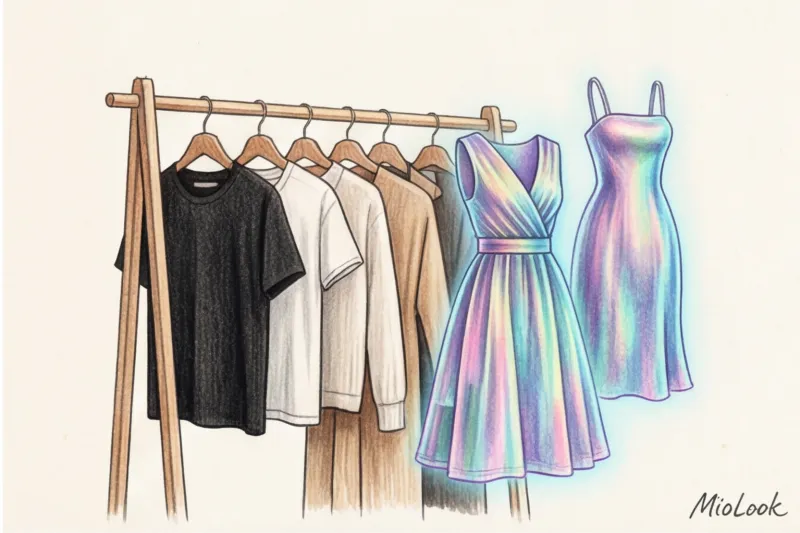
I was recently analyzing user statistics during wardrobe reviews and realized something alarming: about 40% of statement pieces are bought by modern women only for one or two occasions or Instagram photos. This is a real environmental disaster and a waste of money.
Augmented reality clothing offers the concept of "Capsule 2.0." The essence of the strategy: you putting together a classic capsule wardrobe A collection of 15-20 high-quality monochrome items. They last for years in real life. But when you need to shoot a reel, go live, or take a photo, you activate the AR layer. Yesterday, your white shirt was an office classic, and today, digital neon flowers are crawling across it in the frame. No impulse buys, no clutter.
Augmented Reality for Personal Branding: A Wardrobe for Videos and Webinars
If you think phygital fashion is all about flying dragons and flaming jackets, you're wrong. For infopreneurs, experts, and executives, AR clothing has become an elegant way to enhance their status at online meetings.

Returning to my client Anna, she used strict digital layers for her webinars. In one broadcast, it was a holographic brooch featuring her company logo, in another, a strict geometric pattern on a collar, and in a third, an expensive silk sheen effect over matte cotton.
"The main rule for using AR in a business environment is appropriateness. A digital element should look as if it could exist in reality, but would just be very expensive. We use technology to add status, not to turn the broadcast into a circus tent."
If you frequently perform online, I recommend checking out our tips for choosing ideal clothes for video shooting and interviews , where we take a detailed look at which textures look best in a frame, whether it's real silk or its digital projection.
The Cartoon Effect: Why Cheap AR Can Ruin Your Image
I must issue a stern warning here. A common myth is that "any Instagram filter with clothes will make me look stylish." This is false. As a practicing stylist, I can categorically state: a cheap, poorly configured AR filter is worse than a regular wrinkled T-shirt.
What limitations will you face?
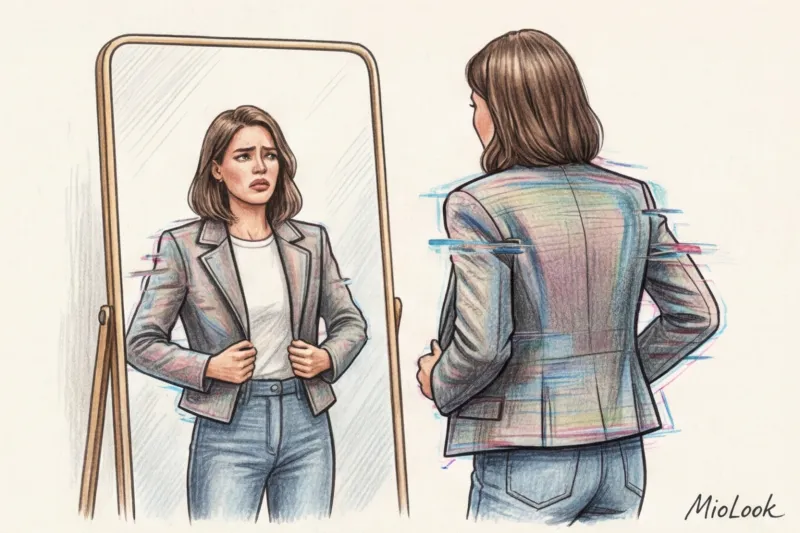
- Desync: When you turn your shoulders and the virtual 3D jacket is "late" by half a second, it looks comical and instantly cheapens the look.
- Ignoring Light: Free masks from social media don't take into account the actual lighting in your room. So, you end up looking like you're wearing a bright digital jacket, even though you're sitting in semi-darkness. Your brain detects this falseness in a millisecond.
- Complex backgrounds: The algorithms don't work well if there's colorful wallpaper or a lot of small details behind you.
Practical advice: If you're using AR clothing, invest in a ring light. Even frontal lighting ensures the algorithm accurately recognizes the markers on the fabric and securely attaches the digital layer.
Your perfect look starts here
Join thousands of users who look flawless every day. Plan your outfits with artificial intelligence in the MioLook app.
Get access — €0.99 onceVirtual Fitting Room: AR as a Way to Choose the Right Style
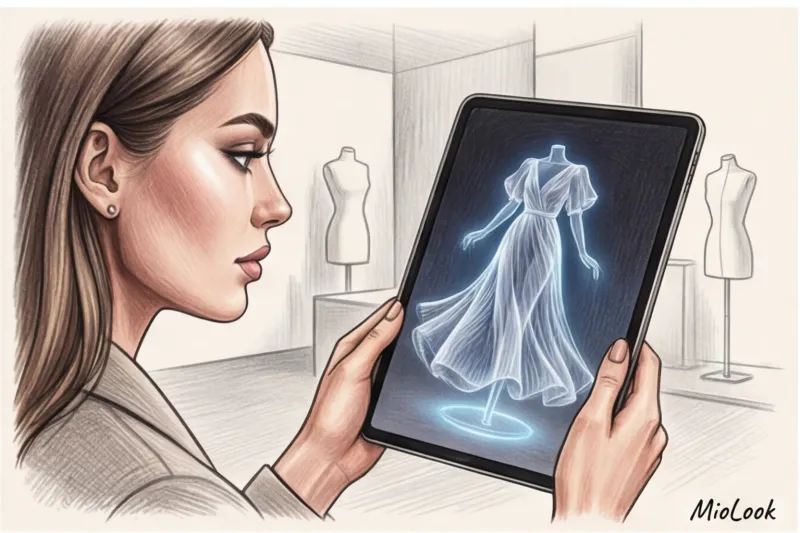
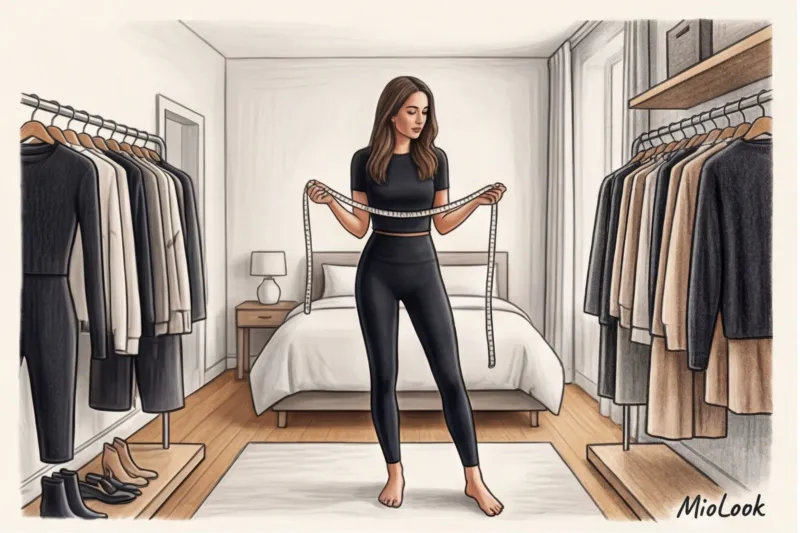
Beyond "wearing" digital items, AR technologies are fundamentally changing the process of buying real clothes. The focus is shifting toward virtual fitting rooms. You scan your body with a smartphone, and an algorithm superimposes a 3D model of a real dress onto your measurements, taking into account how the fabric will stretch over your hips or sag at the waist.
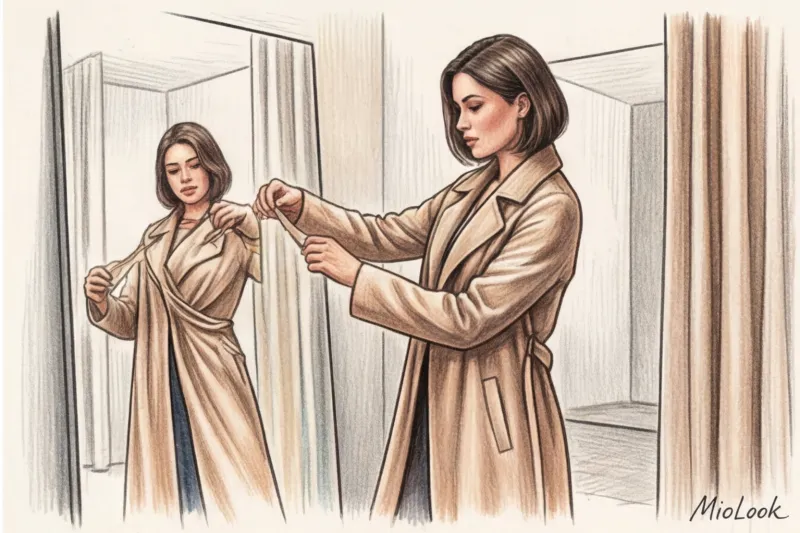
The numbers speak for themselves. A large-scale study by Snap Inc. (2023) showed that integrating precise AR try-ons into e-commerce reduces clothing return rates by 25%. For the fashion industry, where returns are a major source of losses and a huge carbon footprint, this is revolutionary.
For us, consumers, this solves the "expectation vs. reality" problem. You can try on business clothes virtually before ordering its delivery, which fits perfectly into the philosophy of a smart wardrobe.
Checklist: How to Take Your First Steps in Phygital Fashion
If you think all this is complicated and requires a technical background, I assure you it's not. Any girl who can scan a QR code in a restaurant can handle phygital clothing. Here's a step-by-step algorithm for getting started in the €50 to €150 price range.
- Step 1: Testing virtual fitting rooms. Before purchasing AR items, visit major brands' apps (like Farfetch or sneaker brands) and test the AR try-on feature. Understand how your phone's camera works with tracking.
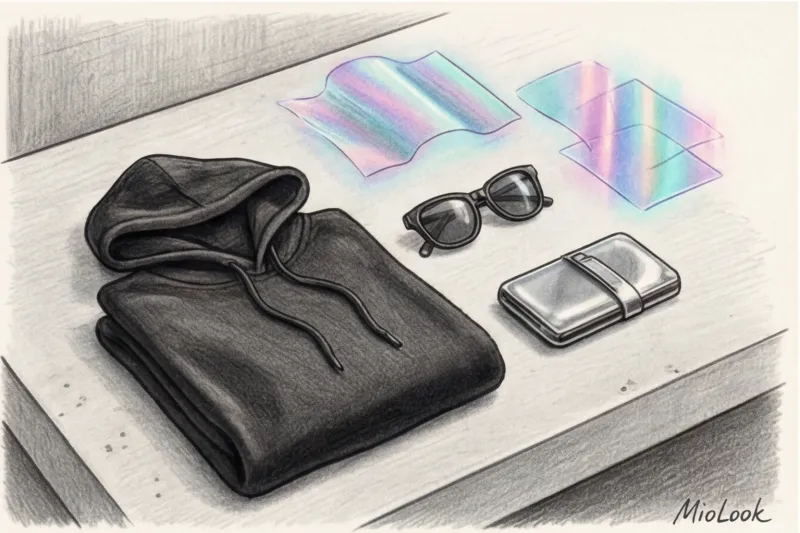
- Step 2: Purchase a base with a marker. Find a brand that makes phygital basics. Buy a simple black or white item with an NFC chip. Skip the fancy dresses—start with a sweatshirt or oversized t-shirt.
- Step 3: Setting the Light. Adjust your lighting. As I mentioned above, position the light source directly in front of you. Avoid harsh side shadows.
- Step 4: Digitizing your wardrobe. Add your new hybrid purchase to your planner, such as MioLook , where you can mix the real version with other items in your capsule.
Augmented reality clothing won't replace the joy of touching natural silk or warm wool. But it shouldn't. Its main purpose is to become a smart extension of your style. Buying one high-quality item gives you endless room for experimentation online. In an age when our digital lives are no less important than our physical ones, the ability to distinguish between items "for comfort" and items "for pixels" is the key to an intelligent approach to style.