
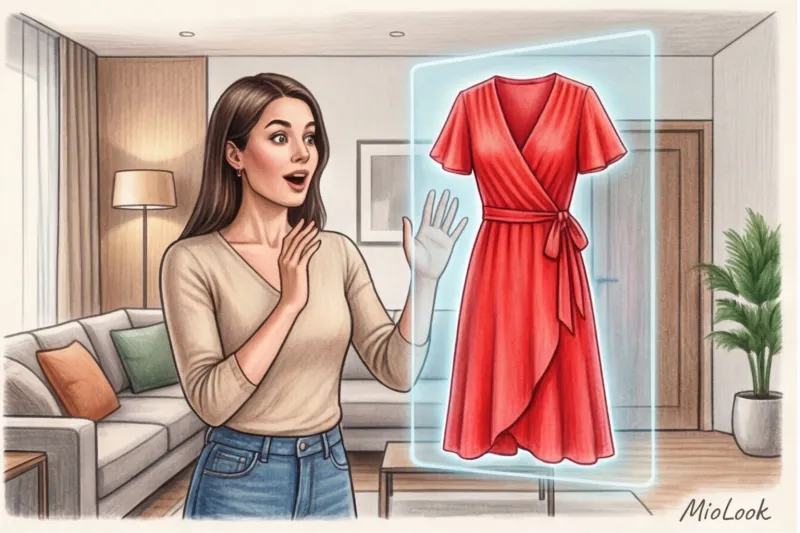
Virtual Clothing Try-On: From Techno-Toy to Indispensable Style Tool
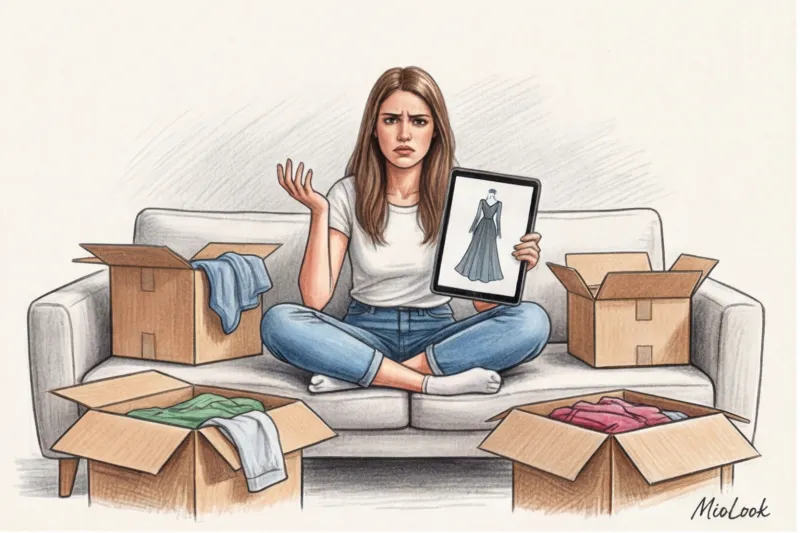
Have you ever noticed how a luxurious €180 linen midi dress, which looks like the epitome of relaxed Mediterranean chic on a model in an online catalog, turns into a shapeless sack on you in real life? I hear this story from my clients almost every week. We fall in love with the artfully placed lighting, the makeup artistry, and the pose of a 6-foot-1 model, only to be bitterly disappointed when we unpack the long-awaited package. This is precisely why traditional online shopping is becoming obsolete, and is rapidly being replaced by... virtual clothing fitting This technology has finally allowed us to buy not the glossy fantasy of marketers, but real, working style for our unique bodies.
Flat studio photography no longer works because it obscures the truth. Clips on a model's back, hidden pins, meticulously adjusting a garment to the perfect shot—all of this happens behind the scenes. World-renowned brands have already recognized the scale of the problem. According to an authoritative report, McKinsey State of Fashion Leading retailers are now embracing augmented reality (AR) technology en masse. Large businesses understand that static visuals no longer inspire confidence in modern women, who value their time and absolutely do not want to waste weekends processing returns for unsuitable items.
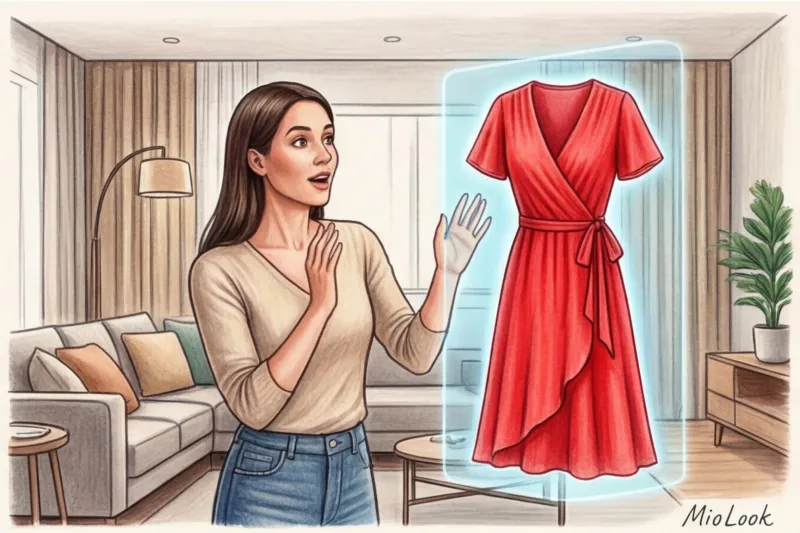
But what is virtual clothing try-on today? Forget the clunky filters of early social media that only distorted proportions. Today, it's a powerful and elegant symbiosis of AR technology, advanced neural networks, and precision 3D modeling. Platforms no longer just do flat appliqués. They build a complex mathematical model of how a specific fabric will behave when it touches your body.
As a stylist, I've seen my clients become three times more confident in their style choices since they started using virtual fittings.
And it's the honest truth. Women who spent years hiding in safe black turtlenecks and straight-leg jeans are suddenly starting to happily experiment with asymmetrical cuts, rich fuchsia shades, or intricate architectural blazers. The fear of "what if it doesn't suit me" dissipates when you can see the honest results before you even enter your credit card details.
It is this philosophy of courage and conscious consumption that we have laid down in MioLook app and other innovative services. Technology is changing the rules of the game because for the first time, it has combined the cool computational intelligence of AI with the immutable rules of real-world styling. The system doesn't just show you a picture; it evaluates the harmony of proportions, the appropriateness of textures, and your personal color balance. By the way, for those looking for perfect, millimeter-perfect office solutions, I highly recommend exploring our materials about virtual fitting of business clothes and creation AI wardrobe for managers — the price of a mistake in the fit of a jacket is especially high there.
How a modern virtual fitting room works
Let's take a look under the hood of this technology. Seven years ago, the best we could hope for was overlaying a flat 2D photo of the item on top of our own. Remember that comical "paper doll" effect that only confused the buyer. Old systems would take a photo of a dress and simply stretch it across the screen, completely ignoring your actual bust size or the difference between your waist and hips. Today, this primitive method has finally given way to the creation of a fully dynamic 3D avatar.
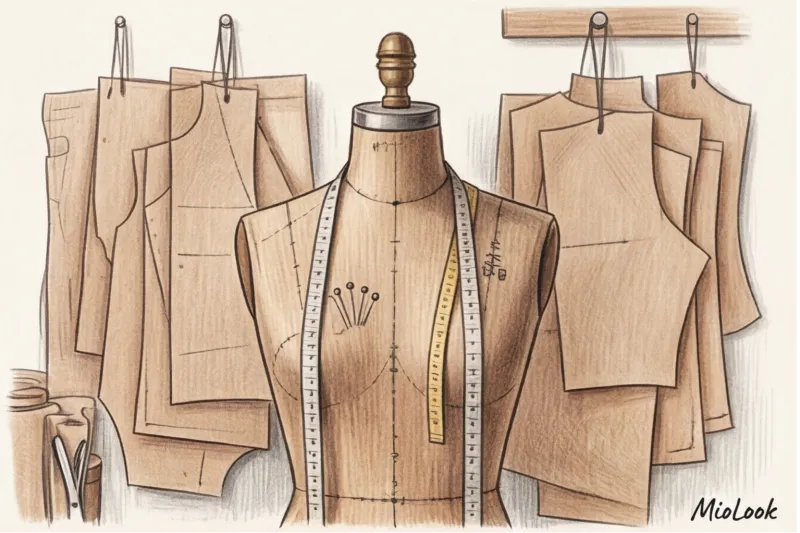
Modern algorithms work with the meticulousness of an experienced tailor. They scan hundreds of parameters and calculate so-called "points of articulation"—the key joints, curves, and axes of symmetry of your body. The neural network understands exactly where your waistline is (whether it's high or low), how sloped your shoulders are, and what your true, rather than measured, hip measurement is. Thanks to this, 3D modeling allows you to predict whether a jacket will treacherously bunch up at the armholes, or whether trendy palazzo pants will drag on the ground or, conversely, look awkwardly baggy.
But a perfect cut is just a technical foundation. The real stylistic magic lies in color analysis. When choosing between a terracotta or a cool burgundy sweater, it's extremely easy to make a mistake if you rely solely on a retouched computer screen. Now, neural networks can analyze your unique color type directly through your smartphone's selfie camera. Sophisticated recognition algorithms capture your skin's undertone, the degree of contrast in your appearance, your eye color, and the smallest nuances of pigmentation in daylight. The system instantly calculates whether this shade will enhance your natural beauty, making your skin glow, or mercilessly highlight signs of fatigue after a long work week. It's literally your personal colorist, always at your fingertips.
5 Major Online Shopping Problems Solved by an AI Stylist
According to a large-scale study Vogue Business (2023), the e-commerce industry is facing a harsh reality: over 70% of all clothing returns are due solely to an ill-fitting garment. These dry statistics conceal not only our personal disappointment over a disappointing purchase but also a genuine environmental disaster. Every year, millions of tons of returned clothing are sent to landfills or incinerated because it is cheaper for large retailers to dispose of the goods than to pay for logistics, dry cleaning, and repackaging. In this context, high-quality virtual try-on experiences cease to be a fun filter and become a tool for conscious consumption.
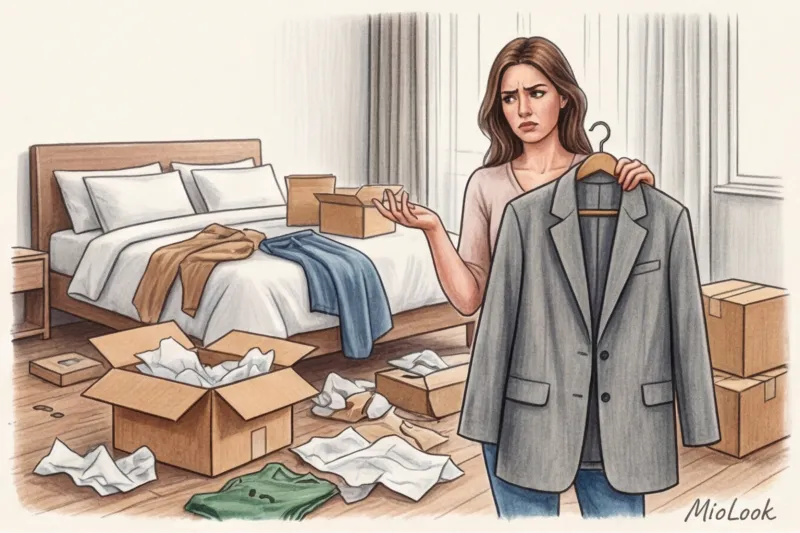
End the size chart chaos
Let's face it: there's no such thing as a standard size chart anymore. The familiar "M" on a youth-oriented Zara label and the same "M" on a more conservative Massimo Dutti are two completely different physical dimensions. Brands design clothes based on different fit models (models for fitting), focusing on different target audiences.
My regular client, Maria, a financial director with a schedule that's strictly scheduled, ordered the same pair of trousers in sizes 38, 40, and 42 for years. She was simply afraid of getting it wrong, and two out of three boxes always ended up being returned. Once we implemented smart fitting algorithms into her routine, the need for "choose a la carte" orders disappeared completely. The neural network compared her actual 3D measurements with the precise measurements of a specific brand's patterns and delivered the only correct size.
Proportion Blindness: Where Does the Hem Actually End?
Another pain point of online shopping is the distorted perception of length. You see a gorgeous dress on a 178 cm tall studio model, with the hem elegantly revealing the ankle. But if you're 162 cm tall, the same hemline will treacherously "cut" your leg at the widest part of the calf, visually squaring your silhouette. An AI stylist solves this problem with mathematical precision: it superimposes the garment's texture and cut onto your digital avatar, accurately depicting your waistline and sleeve length. You know in advance whether you'll need to take the item to a tailor or whether it's best to abandon the purchase outright.
Fear of Color: Instant Palette Test
Phrase "This color will kill me" — the main sponsor of boring wardrobes overloaded with gray and black. We're afraid to experiment because a quality item costs €150 and up, and the cost of error is too high. Virtual try-ons allow you to test any shade without financial risk. Want to try on an ultra-fashionable shade of butter yellow or a bold fuchsia? Point the camera, and the technology will show whether the pigment illuminates your skin or, conversely, accentuates signs of fatigue and dark circles under your eyes. It's the perfect visual aid.
Visualizing compatibility with your base
My favorite and absolutely foolproof formula: Blazer + midi skirt + loafers = instant polish Sounds simple, right? But in practice, a bulky menswear-style blazer paired with an ill-fitting A-line skirt can make you look boxy. Artificial intelligence helps you avoid buying "lonely" items that you have nothing to wear with. By uploading your current base to the app, you can layer a new item on top of your existing ones. This is precisely the mechanic we incorporated into our development. smart wardrobe feature in MioLook You can see with your own eyes how textures and volumes collide or cooperate, creating the perfect capsule even before you enter your bank card details.
Access to MioLook for €0.99 — one-time payment
A smart AI stylist will select the perfect look.
Get access — €0.99 onceAn honest test drive: where the virtual fitting is ideal, and where it’s still wrong
Let's discuss the elephant in the room. Since 2018, tech evangelists have been predicting the imminent demise of traditional boutiques, claiming we'll soon forget the way to shopping malls. As a practicing personal stylist, I'm here to dispel this myth: offline shopping isn't going away, at least not for decades. The reason is simple: we can't yet blindly trust technology. Virtual try-on is a brilliant assistant, but a terrible dictator.
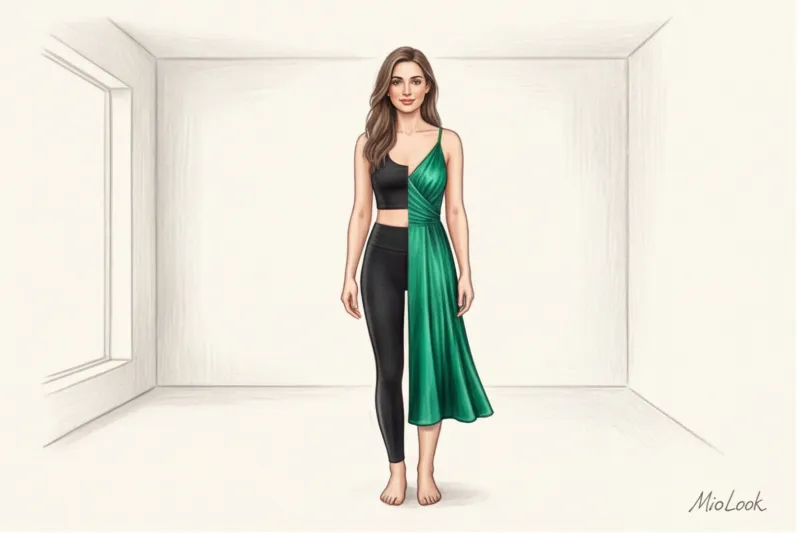
Last spring, I decided to give one of the most hyped AI services a rigorous crash test before recommending it to my clients. I uploaded my measurements and chose a luxurious emerald satin slip dress for €240. On my digital double, it looked like a masterpiece: the fabric flowed, concealing every detail, and the cut seemed impeccable. I ordered it. In reality, however, the material was so treacherously thin that it highlighted anatomical features I hadn't even suspected. The algorithm had calculated the pattern's geometry perfectly, but completely ignored the physics of fabric.
So where is virtual clothing fitting truly perfect? In the mathematics of style. AI handles macro tasks flawlessly. It's your best tool for choosing a silhouette. The program will show you in a second whether a flowing A-line or a strict, architectural sheath will better balance your hips. The technology is excellent at testing the depth and shape of necklines: you'll immediately see how a V-neckline elongates your neck compared to a classic boat neck. And, of course, there's color. Neural networks have learned to match the temperature of a garment's shade with your skin tone with incredible accuracy. If you're unsure whether a complex mustard color will flatter you or make your face look sickly yellow, AI will give you a precise answer before you even hit the checkout button.
But as soon as we move from pure geometry to human anatomy, turbulence sets in. The main scourge of modern technology is the problem of "perfect posture" in 3D avatars. Have you ever noticed how digital mannequins always stand like Olympic gymnasts in front of the judges? They have perfectly squared shoulders, absolute symmetry, and zero slouching.
The harsh reality is that we are alive. Eighty percent of my clients have one shoulder physiologically slightly higher than the other, we hunch over laptops, and we have a natural arch in our lower backs.
When you virtually try on a stiff double-breasted jacket, it fits perfectly on a digital matrix. In real life, however, due to your unique posture, the lapels may treacherously spread out across the chest, and an unsightly bubble may form at the back.
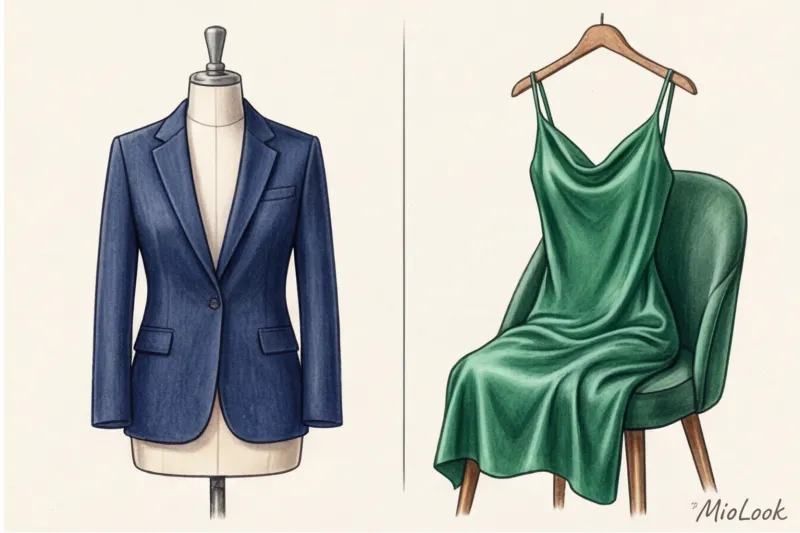
Fabric Secrets: What Your Smartphone Screen Will Never Reveal
The biggest failure of any modern algorithm lies in the tactility and physics of materials. No smartphone screen can yet convey the difference in physical sensations: the noble, enveloping heaviness of natural silk versus the dry, almost papery stiffness of starched cotton.
A virtual fitting takes place in a static, airless space. It doesn't understand the difference between static and dynamic. How will the fabric behave when you walk? Will the hem gracefully curve around your legs, or will the material bunch unattractively between your thighs with every step? Complex draping, asymmetrical folds, and the way fabric behaves in motion are a complete blind spot for artificial intelligence.
Let's take my favorite fall formula: a chunky knit sweater and a silk slip skirt. In the render, it looks like the epitome of relaxed chic. But the screen doesn't warn you that the cheap synthetic sweater will instantly statick the thin skirt, causing it to cling to your tights and completely ruin the intended silhouette.
This is where the main optical illusion of online shopping lies: the density of materials. On a 3D avatar, a cheap, thin $15 knit from a mass-market store looks exactly the same as a premium cashmere sweater from Loro Piana for $800. Pixels smooth out the cheap sheen of 100% acrylic, adding a non-existent, noble texture. AI shows you the designer's intent, not the harsh reality of factory production.
How to outsmart the system? I'll share my top stylist life hack: learn to "read" the composition of a garment while trying it on virtually. Never rely solely on a rendered image.
- For architectural shapes (jackets, trousers with creases): If the AI draws a rigid frame, look for at least 30-40% wool, dense cotton, or high-quality gabardine.
- For flowing silhouettes (slip dresses, blouses): Pay attention to silk, cupro or high-quality viscose, otherwise the item will become stiff.
- Exposing the Deception: If you see perfect, wide-leg palazzo pants with a defined crease on your screen, but the composition says "95% viscose, 5% elastane," your avatar is lying. Viscose is fluid, it will shrink and won't hold the crease you've created.
When you form your capsules and upload your findings into the "smart wardrobe" feature in MioLook Make it a steadfast rule to always check the virtual silhouette against the composition label. Only this conscious synthesis of new technologies and basic knowledge of fabric properties will protect you from bitter disappointment when unpacking your long-awaited order.
How to Use Virtual Fitting Rooms to Find Your Unique Style
The biggest obstacle to a statement wardrobe isn't a modest budget, but a simple fear of being judged. In my experience, the same scenario has played out hundreds of times: women are physically embarrassed to take items into the store's display cabinet that are radically different from their usual "grey basics." The appraising gaze of a boutique salesperson often forces us to quickly return to the rack the items we've always secretly wanted to try on.
Style Therapy: A Safe Way Out of Your Comfort Zone
For such situations, technology has become a real salvation - what I call "style therapy" A virtual fitting room is a completely safe, private psychological space. There's no consultant standing over you asking the usual question, "So, is this the right size?" and no impatient line waiting behind the curtain.
In this digital vacuum, you can indulge in anything. Try relaxed Mediterranean chic with its abundance of chunky jewelry and flowing linen textures. Wear a bold fuchsia pantsuit that instantly makes you the center of attention. Or try out complex animal prints (from classic leopard to zebra) without fear of appearing vulgar. It's pure experimentation, costing $0, that removes internal inhibitions and powerfully expands your boundaries.
Adapting complex trends to your body type
Many of my clients over 30 panic when they see ultra-fashionable silhouettes. Take those hyper-wide jeans or crop tops, which have made a triumphant comeback from the 2000s. They look flawless in a studio photo of a model, but how will such a cut fit on a real figure with hips and a belly?
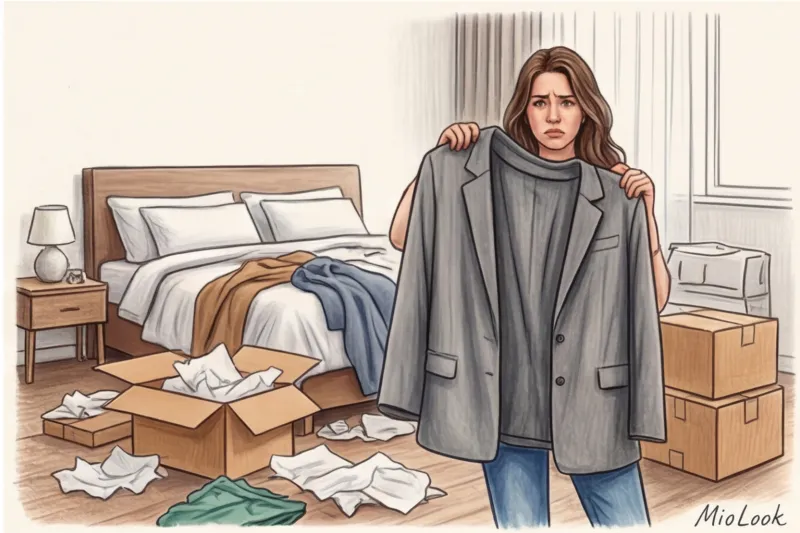
AI makes it easy to adapt to any trend, even the most complex. For example, you can upload your avatar and try my proven balance formula: Wide-leg jeans + a tight-fitting bodysuit + chunky heels = endlessly long legs and a sculpted silhouette As for crop tops, the 3D model clearly demonstrates the golden rule of styling: the gap between the top's hem and the high-waisted trousers shouldn't exceed 2-3 centimeters, otherwise the proportions will be mercilessly distorted.
Visual capsule method and mix with a real cabinet
Do you know what the biggest problem with impulse online shopping is? It inevitably leads to the "closet full, but nothing to wear" syndrome. To break this vicious cycle, professionals always use visual capsule method — We put together our dream wardrobe conceptually, even before purchasing the first real item.
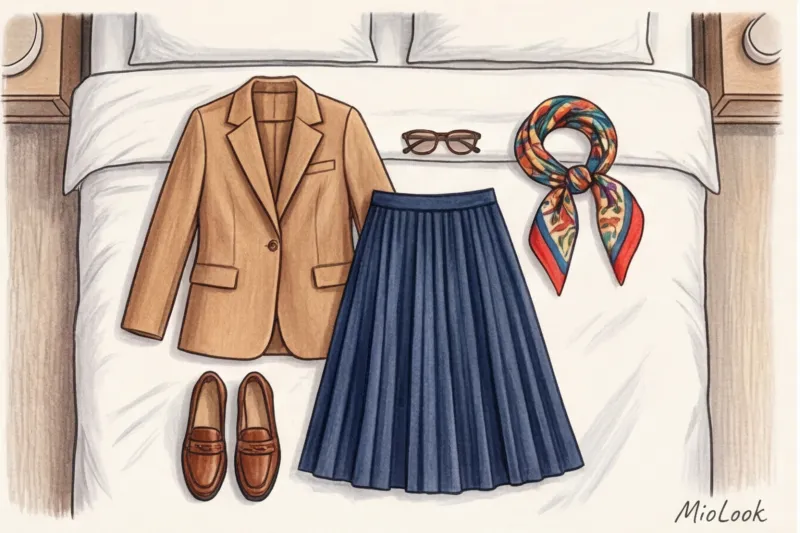
It is this philosophy of mindfulness that we have integrated into MioLook app We've intentionally added a crucial feature: the ability to mix your real, already digitized basics with virtual new arrivals from our catalogs. Before shelling out €150 for a statement jacket, you literally "put it on" your avatar alongside those favorite palazzo pants and basic turtleneck already hanging in your home. You assemble the capsule like a puzzle, ensuring that every new purchase is worth every penny.
Access to MioLook for €0.99 — one-time payment
Start creating perfect images with the help of artificial intelligence
Get access — €0.99 onceBuilding a Personal Brand through Archetype Visualization
Let's not forget that your style is a powerful visual language of your personal brand. Applying Carl Jung and Carol Pearson's archetype theory to fashion, our clothes are perceived by others within the first seven seconds. But how can you tell whether you're a powerful "Ruler" or a freedom-loving "Explorer" at your current stage of life?
Digital fittings allow you to truly test-drive any role model. Want to project unquestionable expertise and status? Try on strict architectural jackets with accentuated shoulders and crisp bags. Want to highlight your creative side? Mix asymmetrical cuts, complex deconstruction in the spirit of Maison Margiela, and vibrant color blocking. You literally direct your impression on others through your smartphone screen, choosing the visual style that makes you feel most authentic.
Virtual Business Attire Try-Ons: A Secret Weapon for Experts
A 2023 study by visual sociologists revealed a paradoxical fact: in a corporate environment, 80% of the initial impression of your competence is based solely on the geometry of your silhouette. In a relaxed casual style, we can easily forgive deliberate oversize or sloppiness, but a business wardrobe demands uncompromising, architectural precision. It is in this niche that virtual fitting transforms from a convenient gadget into a full-fledged secret weapon for a careerist.
Strict office dress codes don't tolerate impreciseness. If the shoulder line of a €450 structured jacket drops just half a centimeter, you instantly lose visual credibility—the look becomes heavy and tired. The same rule applies to trouser length. Modern 3D algorithms can calculate a custom fit with millimeter precision. You'll see on the screen in advance whether the hem of classic palazzo pants will form a perfect, elegant fold over your leather loafers, or whether the trousers will bunch awkwardly, visually shortening your height.
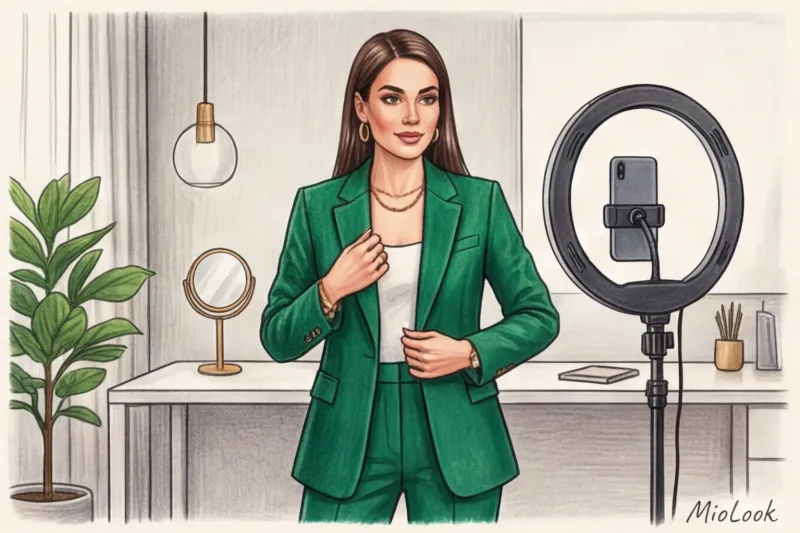
Fashion technology plays a special role in preparing for public speaking and large-scale conferences. Stage lights are merciless: they can dramatically alter color temperature, make dense fabric translucent, or exaggerate even the slightest creases. Advanced virtual simulators allow you to test your look in any lighting conditions—from warm, directional stage lighting to cool, flat office neon—long before you take the first step toward the microphone.
"The specifics of choosing a suit for a video interview dictate its own strict rules. The camera lens reduces contrast by up to 30% and flattens the silhouette. What looks incredibly stylish in a perfectly lit fitting room often turns into a shapeless blob on the monitor," warn experts at the Image Institute.
As we've already discussed in detail in our cluster articles on business dress codes, an AI stylist offers a radical solution to this problem. A virtual try-on allows you to not only "put" an item on a 3D avatar but also immediately overlay it with the backdrop of a corporate studio or your home Zoom office. You can visually test the "status" of your look through the screen, finding the perfect balance of formality and trustworthiness. For example, a stiff, charcoal-black double-breasted jacket conveys absolute authority but can be off-putting, while a softer camel cashmere silhouette instantly signals a reliable, empathetic, and approachable partner.
For busy women over 30, whose daily routines are scheduled down to the minute, hours-long shopping trips to boutiques or the agonizing process of returning unsuitable online orders are an unaffordable waste of resources. According to my personal statistics, one-click business capsule collection creation has become the top request among executive clients. And it works incredibly simply:
- Step 1: You upload your parameters and choose the capsule's semantic center—let's say, the perfect three-piece wool suit in a neutral shade.
- Step 2: The algorithm instantly selects five silk blouses, three basic tops, and the perfect structured laptop bag to go with it.
- Step 3: You evaluate the compatibility of textures and proportions of all elements on your digital twin.
It is this paradigm of total time savings and impeccable accuracy that we have implemented by creating MioLook's smart wardrobe planner Technology takes care of the grueling work of analytics and landing checks, leaving you with the satisfaction of knowing you can handle any negotiation with impeccable style.
The Future of Fashion Tech: How We'll Buy Clothes in 5 Years
Recently, at a closed strategy session with the MioLook development team, we discussed the trajectory of the fashion industry. If you think algorithmic image selection is the pinnacle of innovation, prepare for a tectonic shift. The retail of the future will cease to be simply a transactional venue and will transform into a highly precise, almost intimate service for every user.
Imagine a typical morning in 2029. You approach the mirror in your bedroom, but it doesn't just show you your reflection. Smart mirrors in your home wardrobes will become digital portals: they'll analyze your schedule (e.g., "Board meeting at 10:00 AM"), assess the temperature outside, and seamlessly connect your physical closet with the virtual display cases of global brands. The mirror will suggest putting on your favorite basic palazzo shoes and, right over your reflection, show you how they'll look with a new architectural jacket from COS, available to order with just one click.
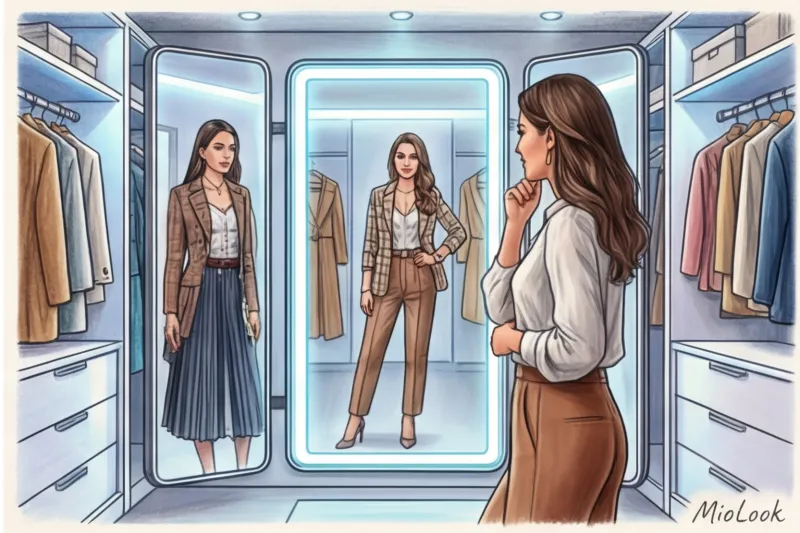
The frustrating era of standard sizes S, M, and L will finally become a thing of the past. According to analysts at WGSN, mass-market fashion will inevitably give way to mass customization. Generative AI will come into play to create personalized, made-to-order patterns. A smartphone camera can calculate 150 micro-parameters of your body in a split second. Production of a €350 cashmere coat will only begin after you've experienced the perfect virtual fitting. No more factory warehouses filled with unsold inventory, and no more compromises—the garment will be tailored to your physiology, be it a slight asymmetry in your shoulders or an unusual arch in your lower back.
At the same time, technology won't destroy the emotional joy of shopping. Next-generation social shopping will transport our traditional boutique shopping experiences into the metaverse. You'll be able to organize digital try-ons with your friends, even on different continents. Your hyper-realistic 3D avatars will stand in a virtual Jacquemus showroom while you, over your morning coffee, debate in real time whether that back cutout is too extravagant.
I often hear panicked questions from my colleagues: "Isabella, will algorithms really put us out of work?" My answer is a resounding no. We're in for a stunning symbiosis of AI and human stylists.
Our profession won't die, but rather evolve. Technology brilliantly solves the wardrobe math: it instantly calculates proportions, checks color, and filters millions of items in warehouses. But only humans can grasp the psychology of the moment. A neural network doesn't know that today you want to appear a little more daring after a difficult life situation, or that you need to project a gentle confidence in a new leadership position. AI will become our all-powerful assistant, taking over all the technical routine, leaving stylists a blank canvas for empathy and art.
Your ideal image begins Here
Join thousands of users who look flawless every day with MioLook. Digitize your wardrobe and step into the future of fashion today.
Get access — €0.99 onceChecklist: How to take photos correctly for an accurate virtual fitting
Any neural network operates according to the fundamental law of programming: "The input determines the output." Even the most advanced virtual fitting algorithms will falter if you upload a corrupted source file. Observing users' first steps in fashion apps, I've identified a clear pattern: the technology is most often criticized by those who took photos while running, in a dark room, and wearing bulky loungewear.
During my practice, I have taught over three hundred clients to create their exact digital copies through MioLook Trust me: 90% of disappointments with a jacket that looks awkward on the screen are due solely to a poorly designed base photo. To ensure your 3D avatar is a flawless replica and not a caricature, go through this professional checklist before pressing the shutter button.
1. Lighting: Avoid tricky shadows
Frontal daylight is your best friend. Why is this so important? Harsh shadows from overhead room lighting or a directional lamp distort the perception of volume. Computer vision interprets a deep shadow under the chest or in the stomach area as a physical mass, adding a few non-existent pounds to your avatar. The ideal scenario is to stand facing a window on a bright but overcast day. This will create soft, diffused light without harsh contrasts, which will accurately convey the body's geometry.
2. Clothing for scanning: the second skin rule
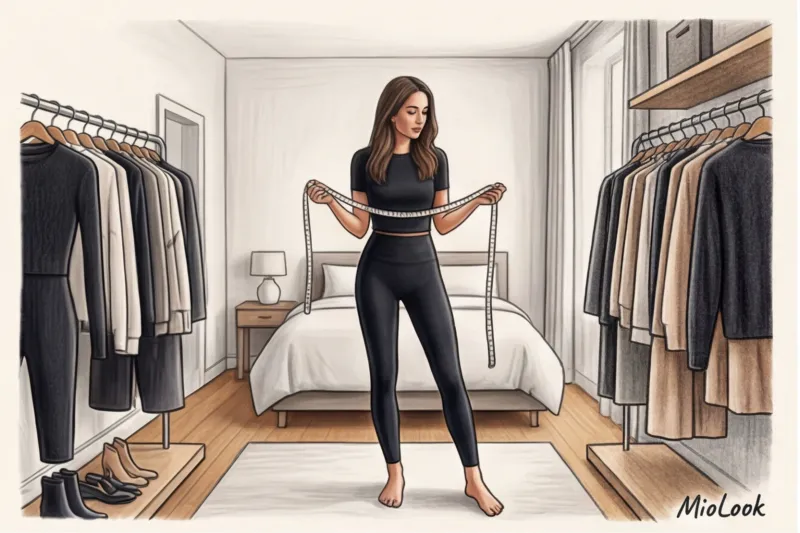
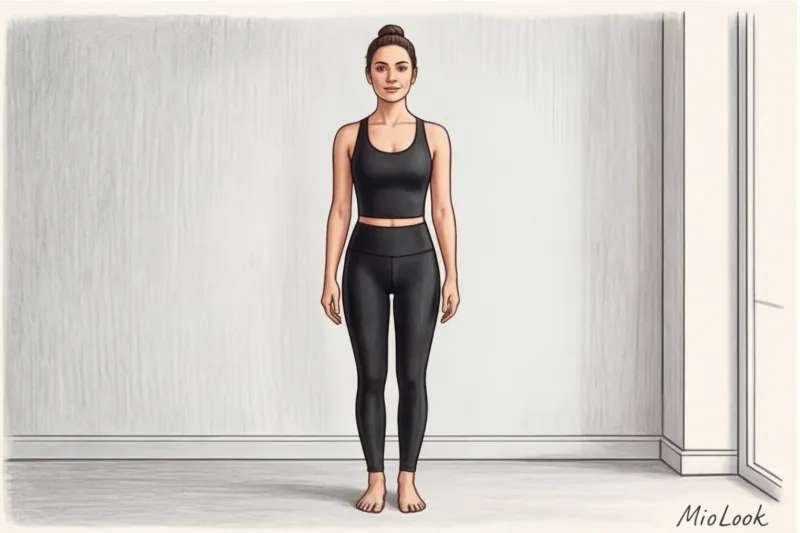
To create a correct profile, wear basic, smooth underwear or extremely form-fitting clothing in a neutral color (for example, black matte leggings and a top). Avoid lace, ruffles, or sports bras with large cups—they disrupt the natural lines. The algorithm builds a polygonal mesh strictly along the outer contours; if you're wearing a loose sweatshirt, the AI will "sew" this void to fit your actual measurements, and any virtual sheath dress will fit the resulting avatar like a shapeless sack.
3. Angle of inclination: a subtle error that breaks the proportions
This is where all beginners' biggest pain points lie. As a stylist, I absolutely forbid taking mirror selfies for uploading to the system! Mirror distortion, combined with the tilt of the phone in your hand, instantly distorts the proportions. Smartphone optics have a wide angle: things closer to the lens appear larger. Shooting yourself from above, you end up with a person with a massive torso and short legs. The right approach: The camera should be positioned exactly at waist level (use a tripod, a stack of books, or a shelf) and moved away exactly 1.5–2 meters. The lens should be pointed strictly parallel to the floor, without tilting forward or backward.
4. Posture and articulation: help the algorithm understand you
A common mistake is holding your arms tightly against your body. In this position, the system can't find the so-called points of articulation and visually merges your hips and wrists into a single, monolithic block. Spread your arms slightly out to the sides (approximately 15-20 degrees), as if preparing to hug—in 3D modeling, this is called an A-pose. Place your feet shoulder-width apart. Another crucial detail: be sure to pull your hair back into a high, sleek bun. An open neckline and shoulder girdle are essential for the proper fit of collars, deep necklines, and accurate shoulder line assessment.
To summarize our dive into the world of fashion technology, I want to emphasize the most important thing: virtual clothing try-ons are no longer just a fun feature on your smartphone, but your personal analytical tool. It frees you from exhausting fittings, reduces the carbon footprint of returns, and gives you that courage to try new things that we so often lack.
My final practical advice: update your 3D avatar every six months. Our bodies are alive, changing under the influence of stress, exercise, hormones, and simply the passage of time—this is completely normal. Use AI not to squeeze yourself into pre-existing standards, but to mathematically find the pieces that highlight your unique beauty here and now. Set up your camera, take the perfect shot, and let the algorithms take care of the routine, leaving you with the most enjoyable part—the pure creativity of discovering your own style.
Guide Chapters
Try on a dress online from a photo: stylist tips
Tired of unsuccessful online clothing purchases? Find out how a virtual pattern scanner can help you choose the perfect dress without going to the store.
AR Shoe Try-On: How the Technology Works
Find out why virtual try-ons aren't just fun, but a powerful tool for online shopping. We'll explore how technology can help you choose the perfect pair without returns.
Virtual Mannequin for Trying on Clothes: Creating a 3D Avatar
Tired of ordering items in multiple sizes and dealing with returns? Learn how to create a precise 3D avatar based on your measurements for the perfect online shopping experience.
How to Choose Clothing Size Online Without Trying It On: A Stylist's Guide
Up to 70% of online returns are due to incorrect sizing. Learn stylist secrets to always choose the perfect fit.
Virtual Fitting Room Online: Stylist Secrets
Why does a perfect fit on a 3D avatar often turn into disappointment? Discover insider secrets from stylists on virtual clothing try-ons.
Find clothes that fit your figure online: virtual fitting
Online store photos are often misleading, leading to mass returns. Learn how new technologies can help you see the true fit of items in advance.
How to try on clothes from a photo: step-by-step instructions
Why do algorithms often distort figures during online fittings? Learn how to take the right photo to ensure the virtual fitting room works flawlessly.
Neural network for trying on clothes: the perfect AI wardrobe
A personal stylist shares the results of a six-month trial of AI-powered fitting rooms. Find out how algorithms help you eliminate returns and create the perfect wardrobe.
The Best App for Trying on Clothes: A Review of Services
How to choose a service that doesn't just overlay an image, but also accurately captures body proportions and fabric texture? An honest review of virtual fitting rooms from a practicing stylist.
MioLook Virtual Fitting Room: A Stylist's Guide
Tired of returning clothes from online stores? Learn how technology can help you find the perfect look and save money.