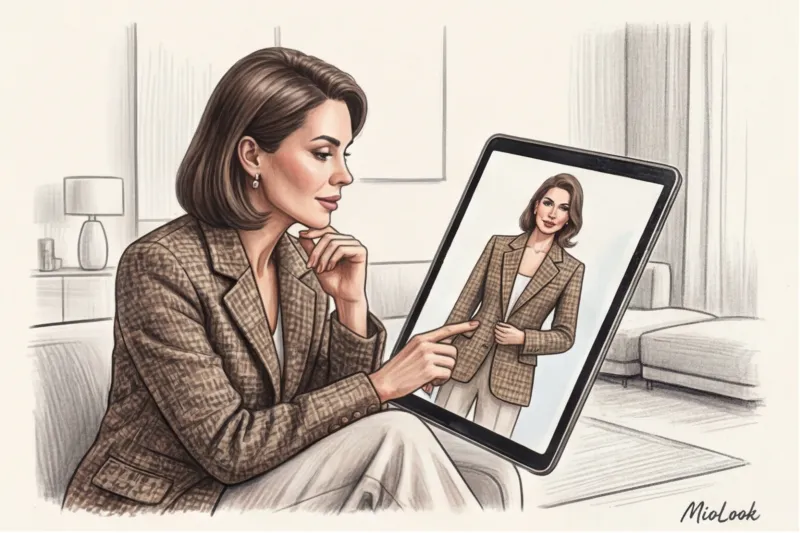

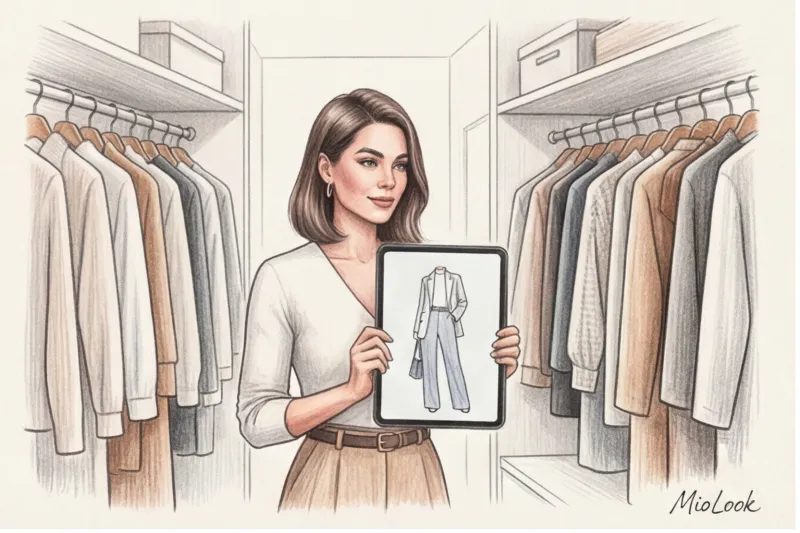
Have you ever ordered a luxurious structured jacket from Massimo Dutti or basic jeans from Zara, and they look impeccable on the model? You wait for delivery, anticipating the perfect look for Friday's office dress code. But when you open the package and put it on, the reflection in the mirror reveals a completely different person, with distorted proportions. The agonizing process of filing a return, packing boxes, and wasting a precious weekend trip to the pickup point begins.
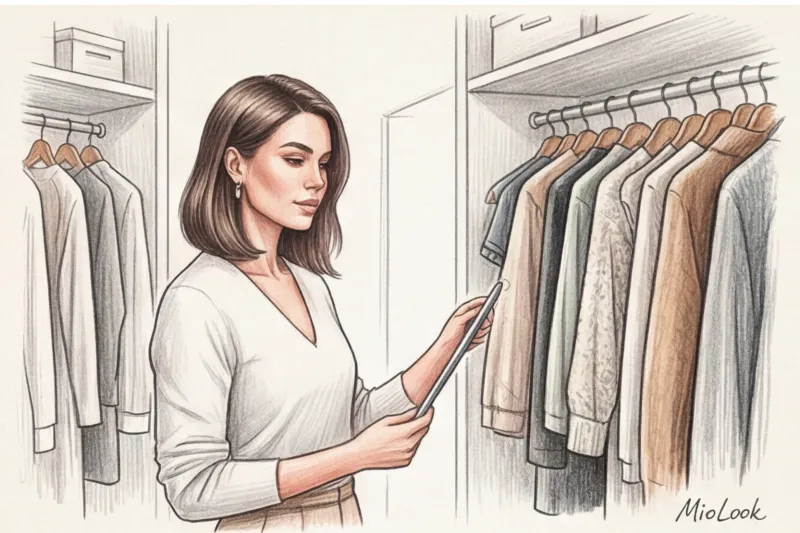
I'm Emily Thompson, a personal stylist and minimalist. I recently completed a six-month personal experiment: testing five different AI fitting rooms and closet digitization algorithms. My verdict? High-quality. neural network for trying on clothes — is no longer a toy with fun filters. It's a pragmatic tool that solves the "nothing to wear" problem and acts as a ruthless face check for your closet, weeding out the things that will never suit you.
We've covered the global development of these technologies in more detail in our complete guide. Virtual Clothing Try-Ons: The Future of Online Shopping And today I want to show you the inside story: how AI works in synergy with the capsule approach and why it will forever change your consumption habits.
Neural network for trying on clothes: the end of the era of unsuccessful purchases
Let's be honest: static photos in online stores are lying to us. What you see in the catalog is the result of an entire team's work. Dozens of clips and pins are hidden behind the model, adjusting the garment to her figure, and studio lighting smooths out any creases in the fabric. We buy a glossy fantasy, but we have to wear the real thing on a real body.
According to the latest McKinsey State of Fashion (2024) report, retailers' adoption of precise AI sizing and AR technologies reduces clothing returns by a staggering 30%. Technology has made a quantum leap: from flat stickers simply overlaid on your photo in early apps to complex mathematical silhouette models.
"AI solves the modern woman's biggest pain point—it saves time. You no longer order three adjacent sizes of the same shirt just to return two of them," notes a Vogue Business Index analyst.
Neural networks learn to understand how fabric behaves when moved and create a projection tailored specifically to your proportions. This represents a radical shift from impulse purchases "for an ideal future self" to purchasing real style.
How AI Analyzes Your Body: A Look Under the Hood of Algorithms
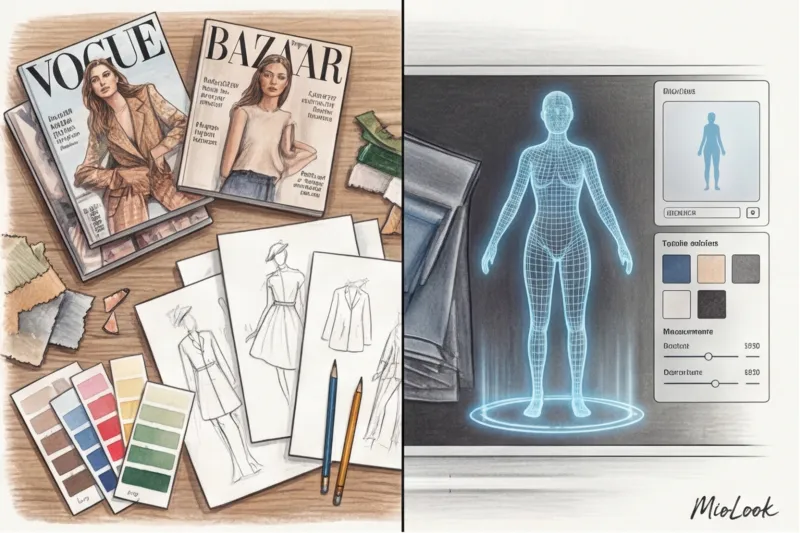
Early attempts at virtual fittings were like playing with paper dolls. You'd upload a selfie, and the app would "glue" the dress on top. It looked unnatural and didn't provide any insight into the fit. Modern 3D modeling operates according to completely different laws of physics and geometry.
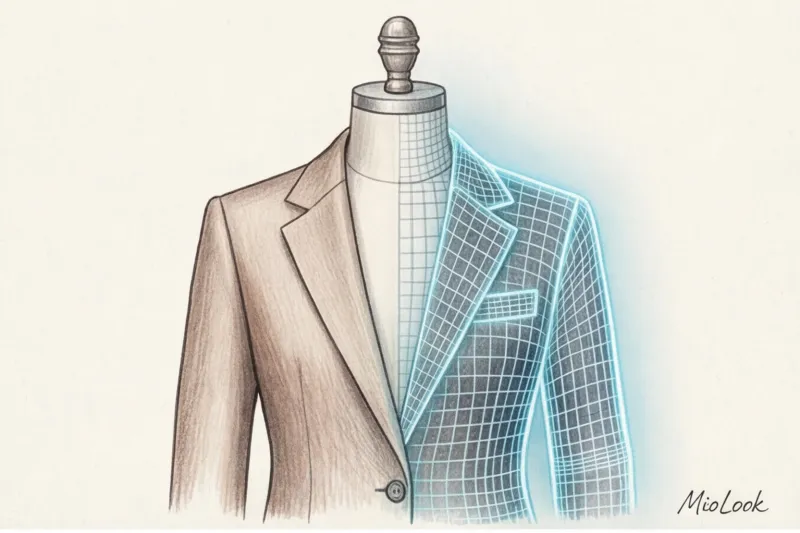
From a flat photo to a precise 3D model
Modern fitting rooms are based on technology computer vision (computer vision). Your smartphone's camera captures not just contours but also depth of field, calculating body volumes with millimeter accuracy. A neural network, trained on millions of scans of real body types—from the hourglass to the inverted triangle—creates your personal virtual mannequin.
A common question I get from my clients is, "Is this safe? Where does my biometric data go in my underwear?" Spoiler alert: nowhere. The architecture of most modern, high-quality applications is designed so that rendering and processing of data occurs on-device (locally on your phone), and only an anonymized mathematical vector (a set of numbers) is sent to the cloud.
Fabric Physics in Virtual Reality
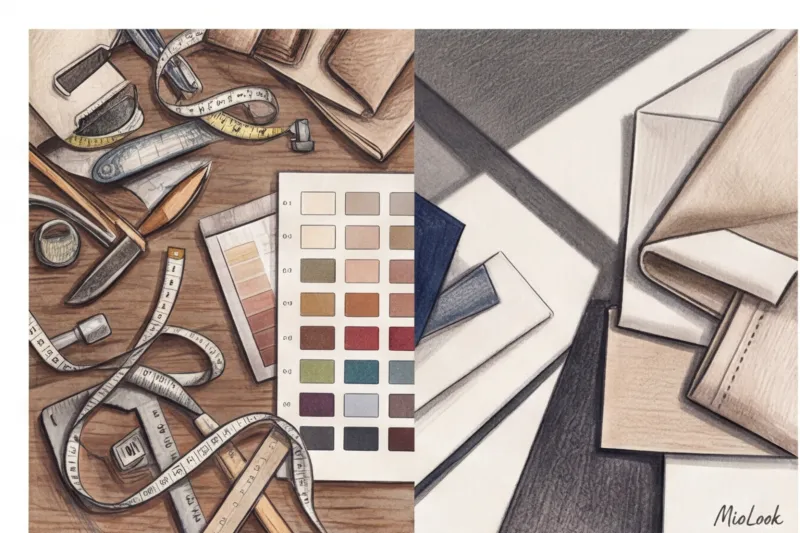
The most challenging part for an algorithm is understanding how a garment will drape. Heavy 14-ounce denim holds its shape and creates rigid creases, while thin viscose flows and clings to the body. Today's algorithms take fabric composition into account. They predict tension in problem areas: they'll show where buttons on the chest might treacherously come undone, and where pants will bunch up in unsightly folds in the crotch.
Access to MioLook for €0.99 — one-time payment
A smart AI stylist will select the perfect look based on your measurements and eliminate any doubts you might have when shopping.
Get access — €0.99 onceNeural networks for wardrobe analysis: your pocket stylist-analyst
Over 12 years of practice, I've learned one stubborn statistic: we wear 20% of the items in our closet 80% of the time. The rest is dead weight, bought at sales or for events that never happened. Transitioning from a one-time virtual try-on in a store to constantly managing your closet is where the real magic begins.
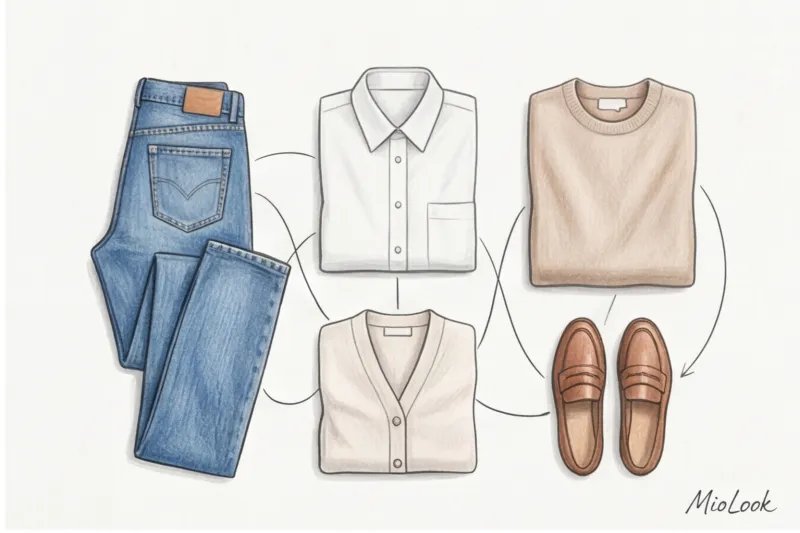
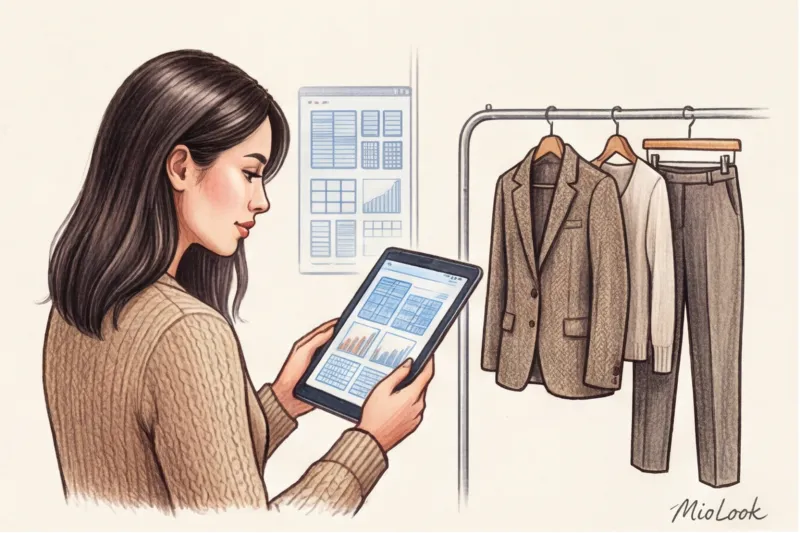
When you digitize your closet, AI takes on the role of a neutral analyst. It automatically calculates the most important metric of mindful consumption: Cost Per Wear (cost per outing). For example, a $200 cashmere sweater worn 50 times per season will cost you $4 per outing. A stunning $50 sequin dress worn once to a corporate event still costs $50 per outing.
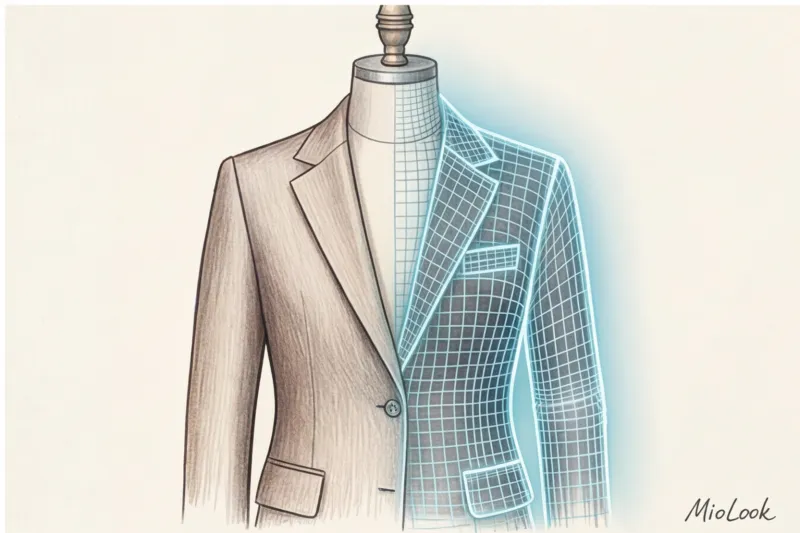
The algorithmic creation of capsules works flawlessly. You upload a new item to the "smart wardrobe" feature in MioLook , and the neural network instantly shows which of your existing The basic clothes can be combined. If the AI can't create at least 3-4 looks with the new shirt, it's a signal to cancel the purchase.
What Algorithms Can't Do (Yet): A Stylist's Honest View
For the sake of objectivity, I must remove my rose-colored glasses. Technology isn't omnipotent, and it has blind spots that advertising brochures prefer to remain silent about. The main myth is: "AI will find your unique inner style."
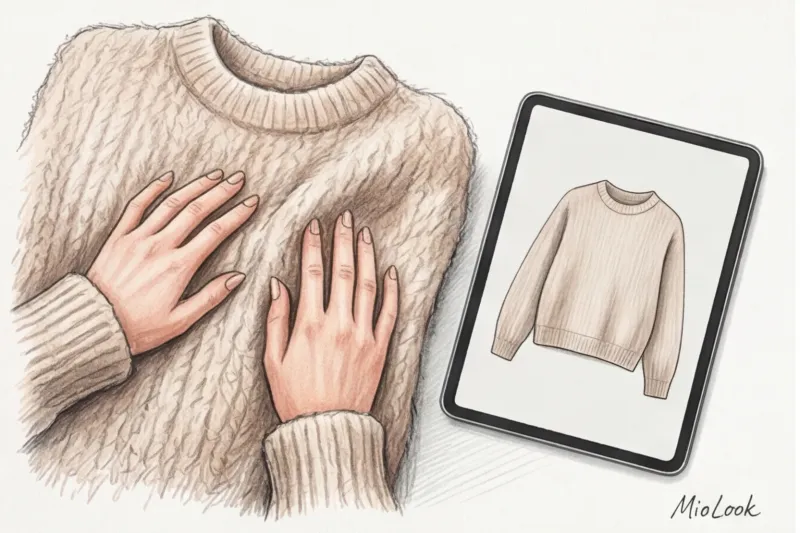
No, it won't. AI is a brilliant combination artist, but it lacks taste in the human sense. It operates only within the aesthetic coordinates you give it. If you only digitize stretchy sweatpants and neon T-shirts, the algorithm will happily assemble combinations from them, but it won't make you a style icon.
The second major limitation is tactile blindness The neural network will tell you that this mohair sweater matches your trousers perfectly according to the golden ratio. But it won't warn you that the collar is as itchy as fiberglass, and the fabric itself causes allergic redness on your neck.
Finally, the psychology of clothing. The algorithm doesn't understand context: whether you're going to a stressful interview at an IT company (where a smart-casual balance is needed to avoid looking overdressed) or a relaxed brunch. It doesn't understand your mood or level of confidence on a given day.
Your perfect look starts here
Join thousands of users who look flawless every day with MioLook's intelligent algorithms.
Get access — €0.99 onceCommon mistakes when trying on clothes virtually
Even the most advanced tool will produce absurd results if used incorrectly. One of my clients, Anna, almost abandoned the idea of a virtual wardrobe on the very first day. She complained that all the AI-recommended items looked clunky on her avatar. When we analyzed the process, we discovered a classic mistake.
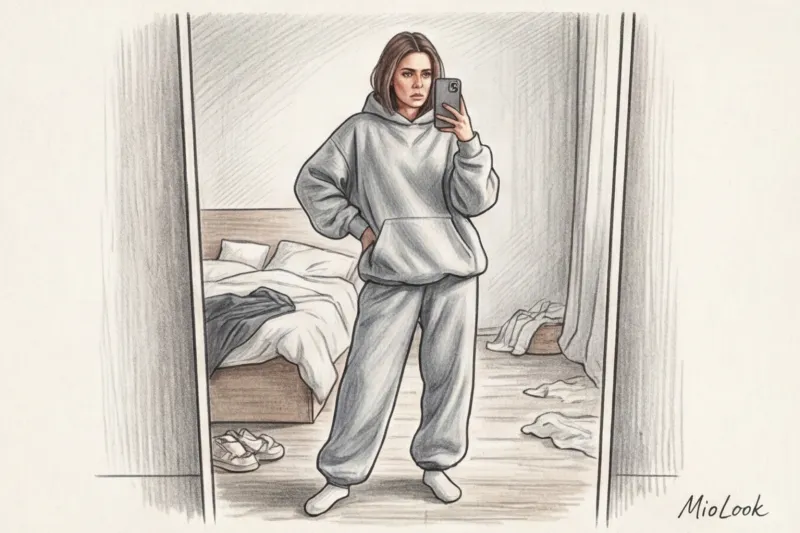
Anna underwent a basic 3D body scan while wearing a baggy, oversized tracksuit. The smartphone camera calculated the folds of the hoodie as her actual body measurements, adding three visual dimensions. Oversize clothing ruins the accuracy of any mathematical model.
Here are three more less obvious traps that newbies fall into:
- Ego-sizing: Ignoring AI recommendations. If a neural network, after analyzing a specific brand's patterns, advises you to take a size L (even though you're used to considering yourself a size M), listen to the algorithm. COS and Zara patterns are radically different, and the AI knows it.
- Bad light: Scanning in a dark bedroom with a yellow floor lamp distorts the color rendering of your skin and the contrast of your figure. The neural network will incorrectly determine your color type.
- Digitization in the "all at once" style: Trying to photograph 150 items in one weekend is guaranteed to burn out. You'll hate the process by the 30th T-shirt.
Checklist: How to Digitize Your Closet for AI
To start using technology today, forget about large-scale revolutions. Take targeted actions. I've developed a four-step algorithm that takes no more than an hour.
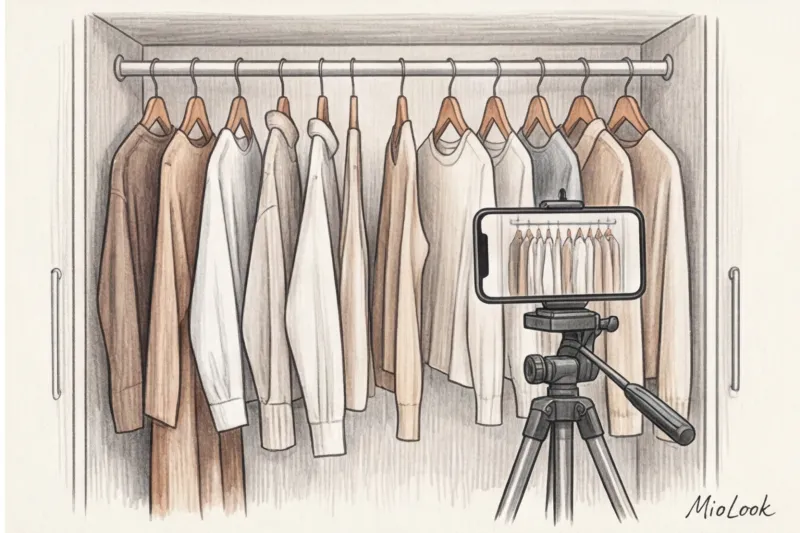
- Step 1: Scan correctly. Wear form-fitting clothing (ideally, cycling shorts and a top). Stand in front of a window in natural light, hold your phone at chest level (perpendicular to the floor, without leaning), and follow the app's audio prompts.
- Step 2: Selecting the Active Backbone. Open your closet and take out exactly 15 items you've worn in the last two weeks. Avoid evening dresses and seasonal outerwear. Your goal is to digitize only your basic everyday capsule.
- Step 3: Shooting technique (Flat Lay). Place each item on a flat, contrasting, solid-color surface (a clean sheet on the floor works well). Smooth out any large creases. Shoot straight from above. The algorithms will easily crop out the background if the edges of the item are clearly visible.
- Step 4: Test integration. Upload your photo to MioLook or a similar app and ask it to generate 5 looks for the work week based on these 15 items. You'll be surprised to see combinations you never thought of.
Smart Shopping of the Future: Fewer Stuff, More Style
I'm deeply convinced that AI's greatest superpower in the fashion world isn't making you buy more. Its true value is teaching you how to buy. smaller, but more accurate.
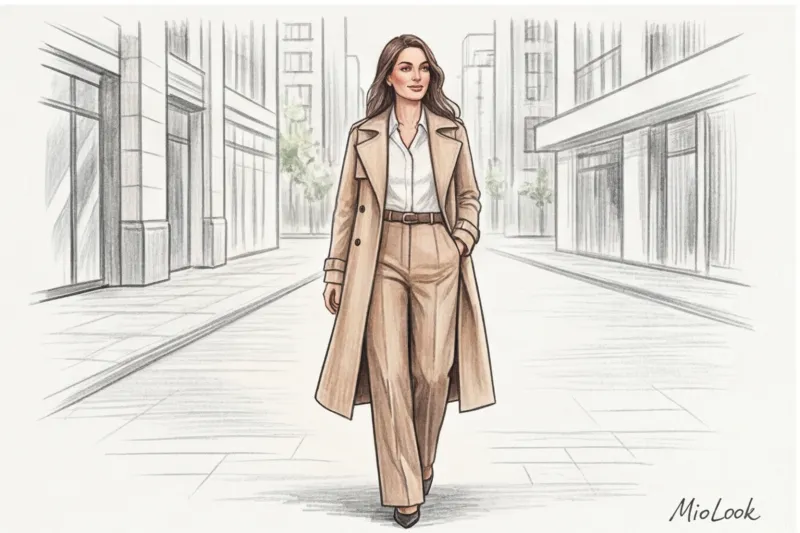
Virtual try-ons and AI-powered wardrobe analytics take the anxiety out of online shopping. When you see on your smartphone screen that a new shirt clashes proportionally with 80% of your pants, your hand instinctively reaches out to close the shopping tab. Impulse purchases lose their hold on your wallet.
Don't wait for perfect technology—it's already here. Take 15 minutes tonight, choose 10 of your favorite items, and bring them into the digital realm. You'll do more than just organize your closet; you'll take the first step toward a wardrobe that works for you, not the other way around.