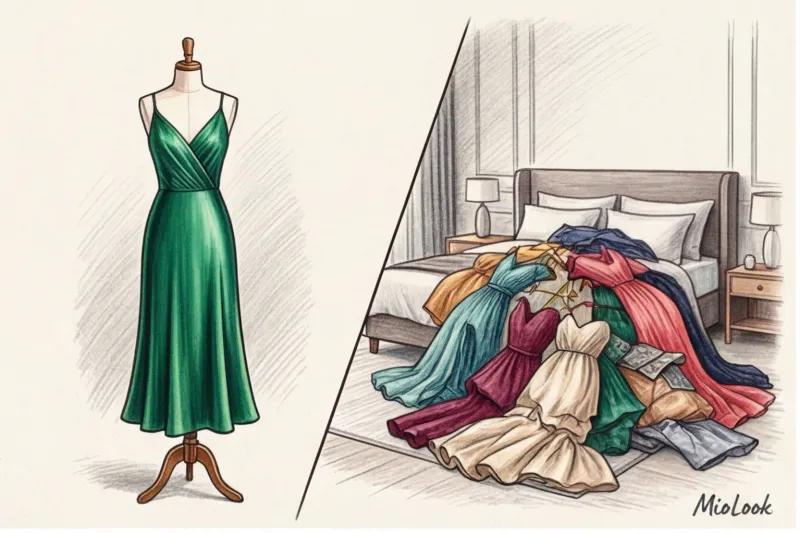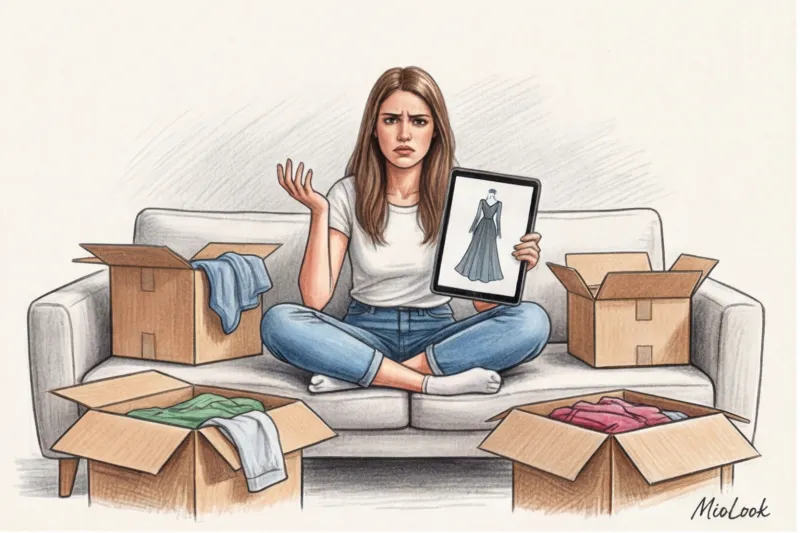

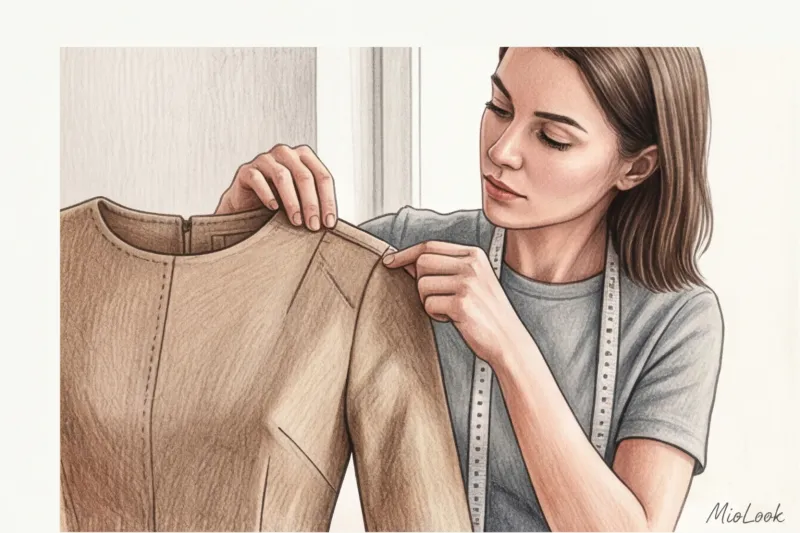
Do you know what 42% of women's clothing returns from online stores have in common? Shoppers expected to see a movie star in the mirror, but instead received a shapeless rectangular bag. According to a 2023 National Retail Federation (NRF) report, disappointed expectations regarding fit and fabric density are the leading reasons for returns. Women look at retouched models, their clothes generously pinned up at the back, and believe the image.
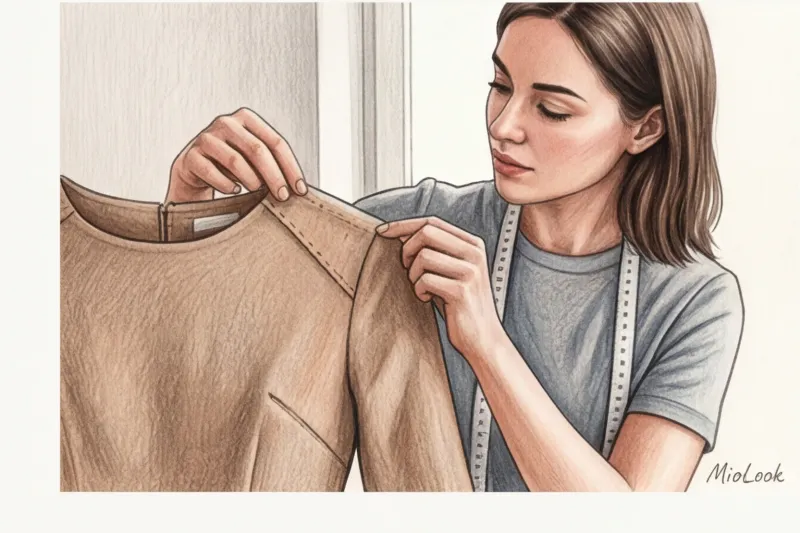
We have already discussed AR technologies in retail in more detail in our a complete guide to virtual clothing fitting , but today I want to talk about a rigorous practice. In 12 years of working as a personal stylist, I've learned one rule: a piece must earn its place in your closet. And today we have a rigorous, uncompromising tool for the initial selection process. try on a dress online from a photo — it's no longer just a social media mask. It's your personal tailoring scanner.
Why "trying on a dress online from a photo" is no longer a toy, but a filter for unsuccessful purchases
Modern AR fitting rooms don't work like a filter that simply overlays a flat image over your silhouette. They're a complex mathematical model. The algorithm evaluates your body volume, fabric tension points, and gravity. And if you want to use this technology wisely, stop judging the entire image.
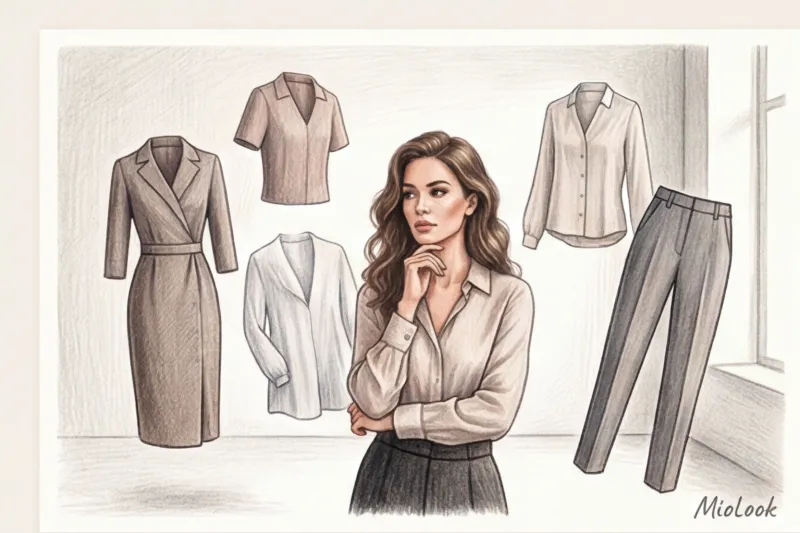
When evaluating a dress online, I always make clients look at exactly three points:
- Shoulder line: The seam should lie directly on the underwire. If it "slants" down in AR on a strict sheath dress, in real life you'll create the effect of a hunched back.
- Darts on the chest: Their peak should point directly to the center of the chest. The algorithm often shows gaps or folds in this area if the pattern doesn't match your chest measurement.
- Waist level: The most common problem. The neural network will accurately detect if the waist of a cut-off dress is at your lower ribs.
And now for the shock value: your static pose in a home photo with your arms down reveals a hundred times more information than the pose of a catalog model who's flying, running, or arched into an S. Research shows that using an accurate digital double in a static photo reduces the likelihood of silhouette errors by 60%.
Access to MioLook for €0.99 — one-time payment
A smart AI stylist will select the perfect look and help you evaluate the fit of items before purchasing.
Get access — €0.99 onceEveryday Dresses: Testing European Mass Markets from Zara to COS
I regularly test fitting room algorithms across different price segments. And there's a clear pattern: the stiffer the fabric and the more architectural the cut, the more accurate the artificial intelligence.
Let's take for example, COS Their patterns are a celebration of geometry. Basic dresses made of thick cotton poplin (from 180 g/m²) are rendered in 3D simply brilliantly. The neural network perfectly understands the material's stiffness and displays a realistic, slightly upright A-line silhouette. You can immediately see whether this dress will make you look like a "nightstand."
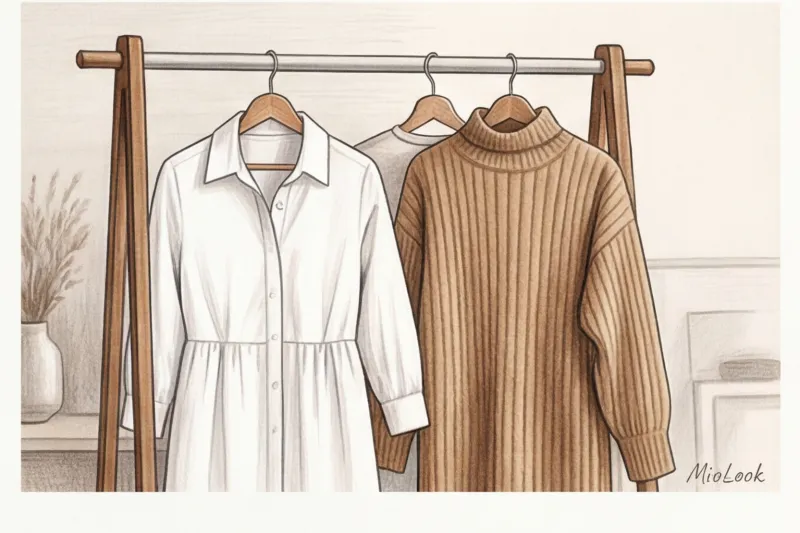
WITH H&M It's a different story. Their classic shirt dresses and sundresses made of blended fabrics (cotton and viscose) need to be checked in AR for the collar and armhole area. If the collar looks limp and shapeless on the virtual model, in real life it will lose its shape after the first wash.
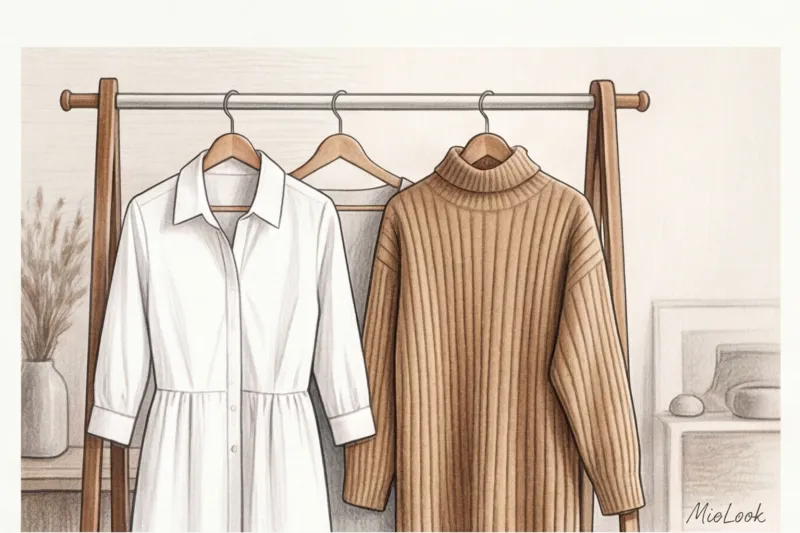
And here are the flying dresses Zara Dresses made of thin viscose often fail. In the app, they can look like sad rags hanging off the figure. Why? The algorithm isn't yet able to accurately render wind, static, and dynamic movements of a stride. So, if a dress is supposed to flow, AR will show it in its most unflattering, "stuck" state. And you know what? It's a real eye-opener.
Knitwear and linen: where neural networks still lie shamelessly
Trusting AI 100% is foolish. There are two categories of fabrics where algorithms fail.
The first is linen. A virtual try-on always shows you a perfectly ironed linen dress. It doesn't take into account that after 15 minutes of sitting in the office, hard creases will appear on your stomach and hips. The second is thick ribbed knits and fine cashmere. The neural network often flattens them, hiding the treacherous way the ribbed fabric stretches across the widest parts of the figure, revealing the underwear underneath.
"My advice: first, read the ingredients. If it's 100% linen or a thin viscose jersey, mentally add 50% wrinkling and 30% fit to the beautiful AR image."
Evening and Cocktail Dresses: How to Appreciate Drapery, Silk, and Shine
Buying an evening gown online is always a gamble. But a virtual try-on can save you a significant amount if you read the lighting cues correctly.
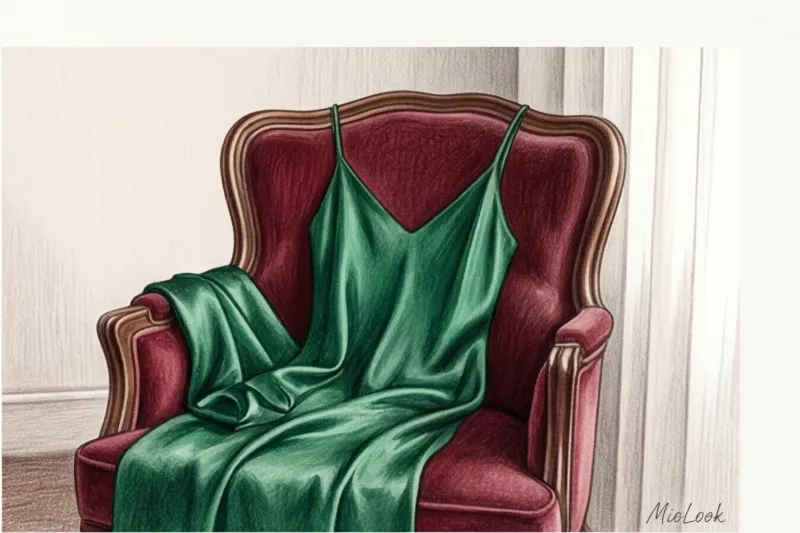
A month ago, my client Anna fell in love with an emerald silk slip dress by Massimo Dutti for 150 euros. It looked perfect on the model. We uploaded Anna's measurements to the fitting room and overlaid the 3D model. But then a problem arose: the virtual light falling on the satin fabric created a bright highlight right on her lower stomach—an area Anna was determined to conceal.
Silk and satin always reveal their secrets in 3D through reflections. Where the fabric stretches, the algorithm creates a bright spot. Anna decided against buying it; we found a matte crepe dress, and she saved 150 euros and a lot of stress.
Sequins and intricate embellishments deserve special attention. Virtual engines often oversaturate the texture of sequins, making dresses appear 5-7 kilograms heavier. This is a case where a dress can look more elegant in real life than onscreen. However, midi and maxi lengths should be carefully checked: upload photos barefoot if you're buying a beach dress, or with heels of the right height if you're looking for a wedding gown.
Your perfect look starts here
Join thousands of users who look flawless every day with MioLook. Create your virtual capsule collection now.
Get access — €0.99 onceVirtual Wedding Dress Try-On: Should You Trust AI on Your Big Day?
Searching for a wedding dress in a salon is an exhausting marathon. By the fifth dress, the bride no longer knows what suits her, and the corsets begin to press against her ribs. Here, a virtual fitting serves not as a final decision, but as a powerful analytical tool for stress relief.
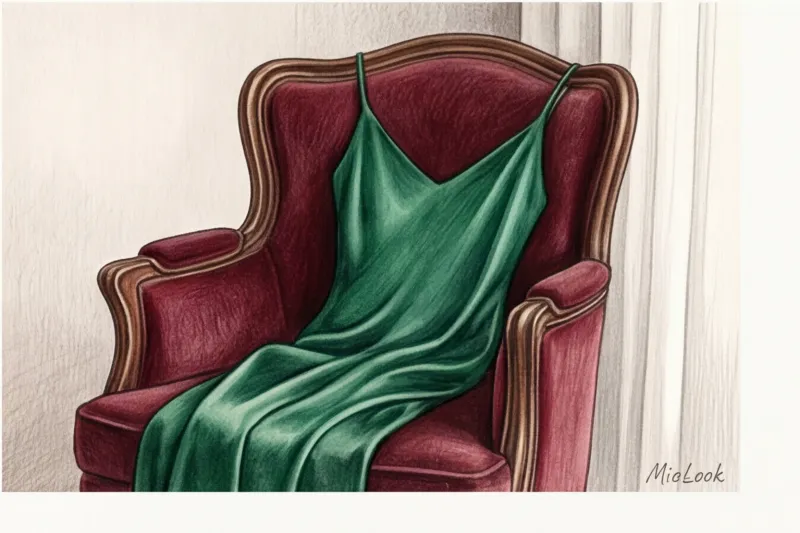
Use AR for initial screening. Upload a photo of yourself and try on an A-line silhouette, a crisp mermaid cut, a flowing empire waist, and a full ball gown. In just 15 minutes, sitting on the couch with a cup of coffee, you'll understand your body geometry. You'll realize that a V-neckline might flatter your neck much more than a trendy square bob.
But let's be realistic: what won't AI show you? It won't convey the weight of a 15-layer tulle skirt. It won't explain that you won't be able to sit at a table in that rigid corset. And it won't tell you whether the hem will get caught between your legs while dancing. That's why we do cold-blooded silhouette analysis at home, and go to the salon to check ergonomics and tactility.
Stylist checklist: how to take the right photo for an accurate virtual fitting
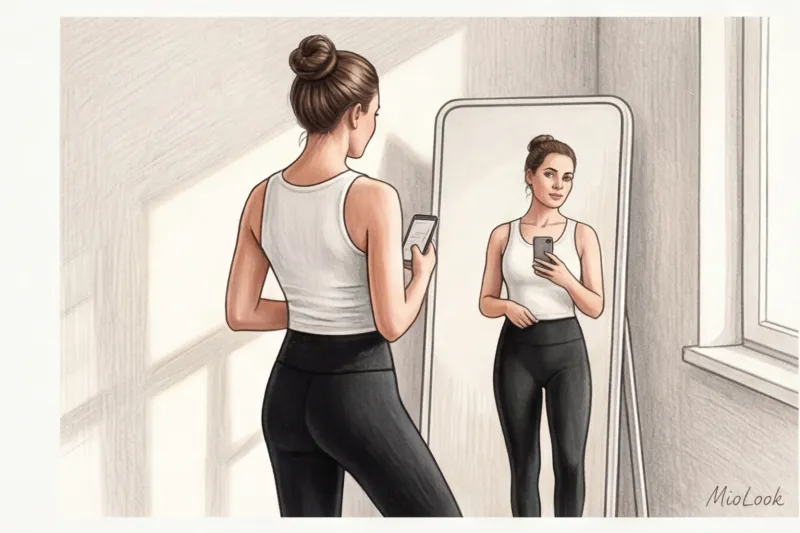
If you upload a top-down selfie in a bathroom mirror to the app, the result will be terrible. Here are my instructions for a perfect source:
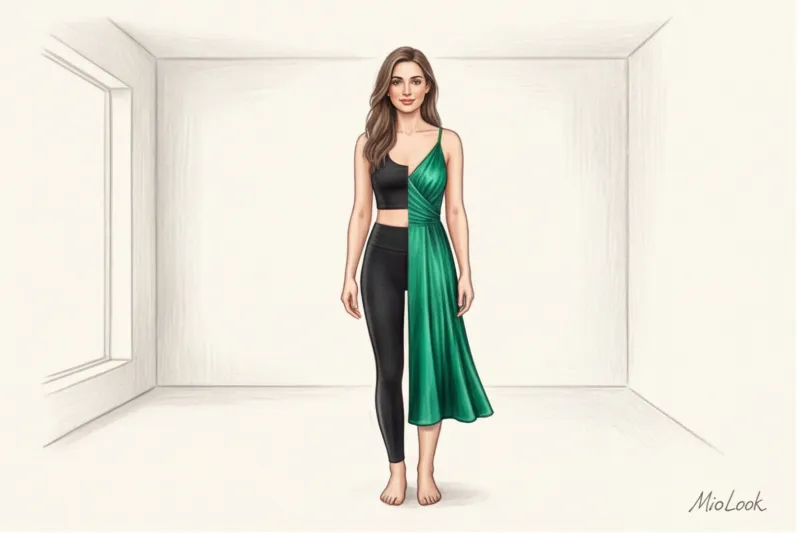
- Cloth: Only a tight-fitting top and leggings. Preferably in a contrasting color. No baggy t-shirts—the AI will mistake them for your size.
- Lighting: Stand facing a window. Natural daylight without harsh shadows on the face and body is the key to a proper rendering.
- Angle: The smartphone camera should be at chest level (use a tripod or have someone else hold it for you). Stand up straight, weight on both feet, and arms slightly away from your hips so the algorithm understands where your waist ends and your arms begin.
- Hairstyle: Gather your hair into a sleek bun, leaving your neck and shoulders completely exposed.
The biggest mistake my clients make is: don't look for a pretty filter, look for red flags.
I'll be strict here. The main problem modern women have with virtual fitting rooms is the desire to see a pretty picture. This isn't Instagram! This is the technical documentation of your wardrobe.
Counterintuitive fact: if a dress in a photo bunches up in the groin, wrinkles at the back, or flattens the chest, don't chalk it up to a "software glitch." 90% of the time, the software is right. Algorithms are created based on the actual physical properties of fabrics. If AI shows a low armhole with the edge of a bra sticking out, the same thing will happen in real life.
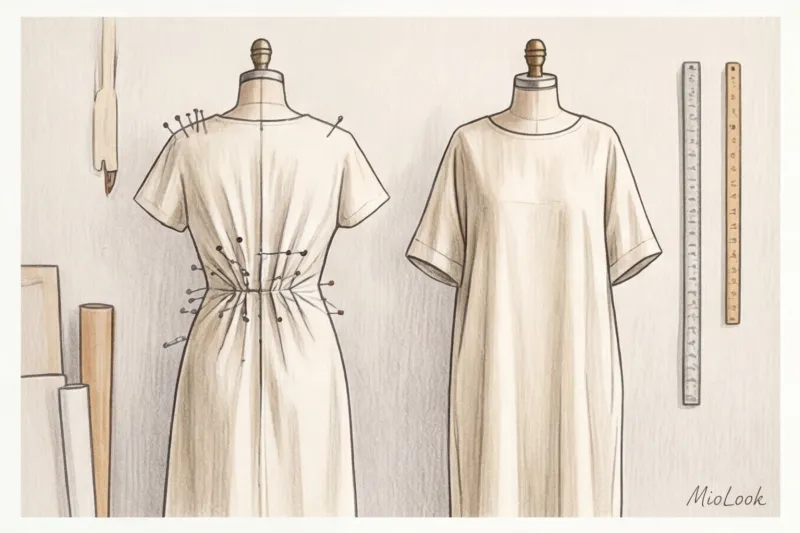
Brands spend millions on marketing and sales psychology. Some platforms intentionally embed subtle "enhancing" filters, slightly elongating the silhouette. Your job is to resist this. Look for red flags: is the waist out of place? Is the sleeve too tight at the forearm? Does the hem look skimpy? Evaluate the garment without emotion, like a critic.
Summary: Smart Shopping and the Future of Fitting Rooms
According to forecasts from a Vogue Business report (2024), in the next two years, e-commerce will shift from simple visualization to tactile simulations and perfect avatars based on LiDAR scans from smartphones. But you can already benefit from these technologies.
Integrate virtual try-ons into your online shopping routine with this 3-step algorithm:
- First, look at the item in the catalog and read the composition (we discard polyester under the guise of silk).
- Then we upload it to our digital avatar and look for structural cutting errors (shoulders, darts, waist).
- Only if the item has passed the first two stages, we place the order.
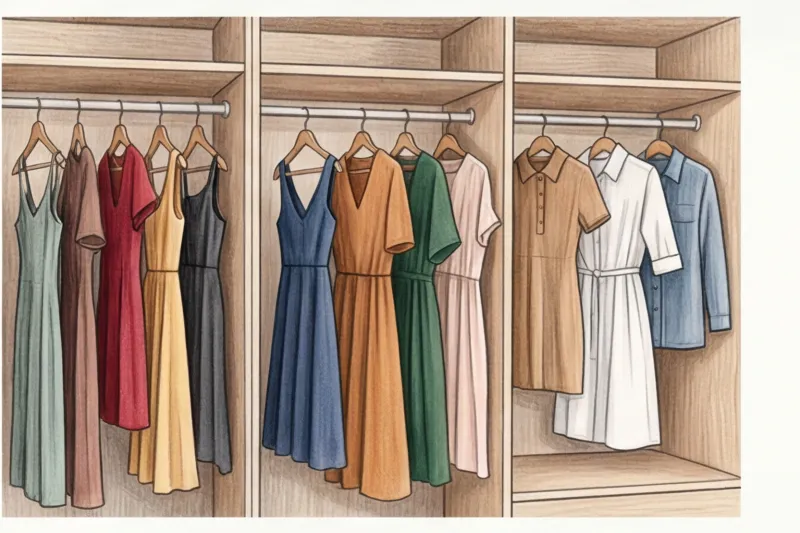
Every item you buy should be worth its price. Stop hoarding dresses in your closet that are "almost perfect if you suck in your stomach." Technology doesn't exist for entertainment; it exists to make your wardrobe work for you, not you for it.
Ready to get started?
Try the MioLook plan for free—no commitments required. Upload your items and create your first smart look today.
Get access — €0.99 once