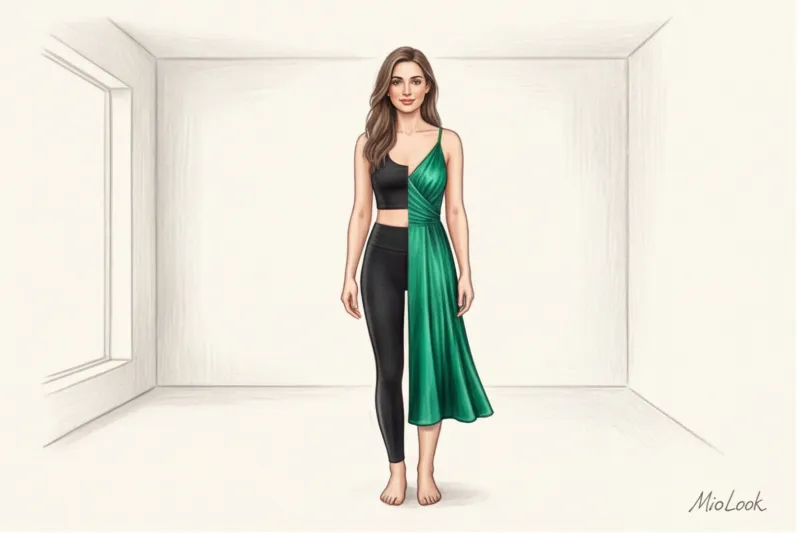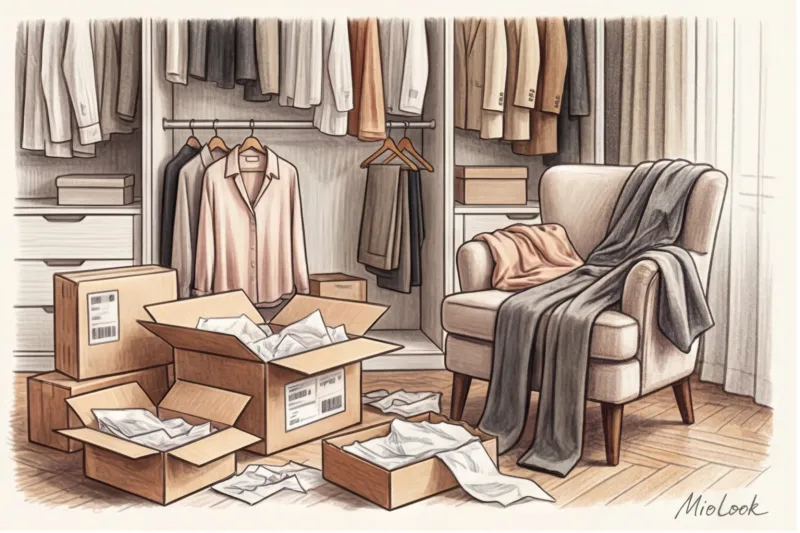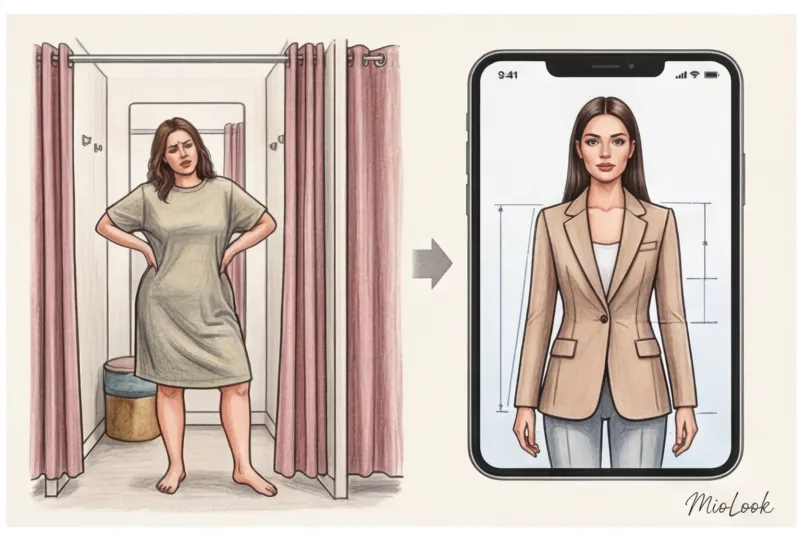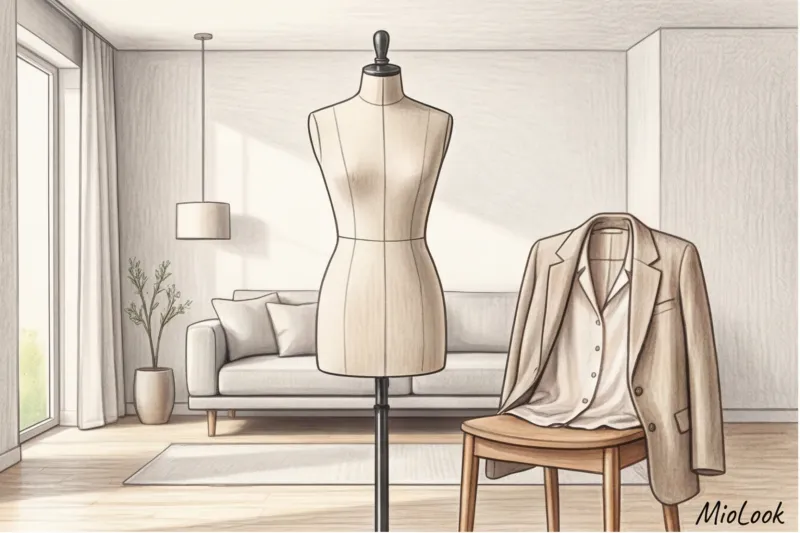
I have a client, Anna. She recently ordered three identical double-breasted Massimo Dutti jackets in sizes S, M, and L, knowing in advance that two of them would be returned to the warehouse. Sound familiar? This practice is called "bracket buying"—buying a range of sizes "with room to spare," which eats up our frozen credit cards and generates a ton of carbon emissions from return shipping. Up to 40% of online returns are due to one simple reason: an ill-fitting garment. And while brands have been struggling with standardizing patterns for decades, the solution to this problem has proven to be on the consumer's side. We just need honesty. virtual mannequin for trying on clothes.
We talked in more detail about how algorithms are changing our habits and making shopping more conscious in our a complete guide to virtual clothing fitting Today, we'll explore 3D avatar creation not as a fun AR toy, but through the eyes of a professional clothing designer and fabric expert. I'll teach you how to digitally capture your real-life anatomical features so you can forget about returns forever.
Why do you need an honest virtual mannequin to try on clothes?
Let's face it: there are no standard sizes. The "S" on the labels of Zara, COS, and a local niche brand represents three completely different female figures. Factories use so-called average sizing charts, which physically cannot account for individual waist curves, shoulder width, or bust height.
According to McKinsey's extensive "State of Fashion" report (2024), the implementation of AR technology and precise 3D avatars reduces the rate of clothing returns in online stores by a significant 30-40%. These aren't just numbers in business reports. Fewer returns mean fewer CO2 emissions from courier trucks, less plastic packaging, and fewer items sent to landfill due to damage during transportation.
But for the algorithm to work for you, not against you, your digital double must be ruthlessly accurate. Not embellished, not "thinned out" by two kilograms, but the real deal.
Access to MioLook for €0.99 — one-time payment
A smart AI stylist will select the perfect look.
Get access — €0.99 onceAnatomy of a Digital Twin: Taking Measurements Like a Professional Tailor
Modern apps often offer to create an avatar based on a single selfie. It sounds tempting, but this is more of a social media filter than a mathematical model of the body for clothing fit. A true digital twin is built on rigorous anthropometric measurements.
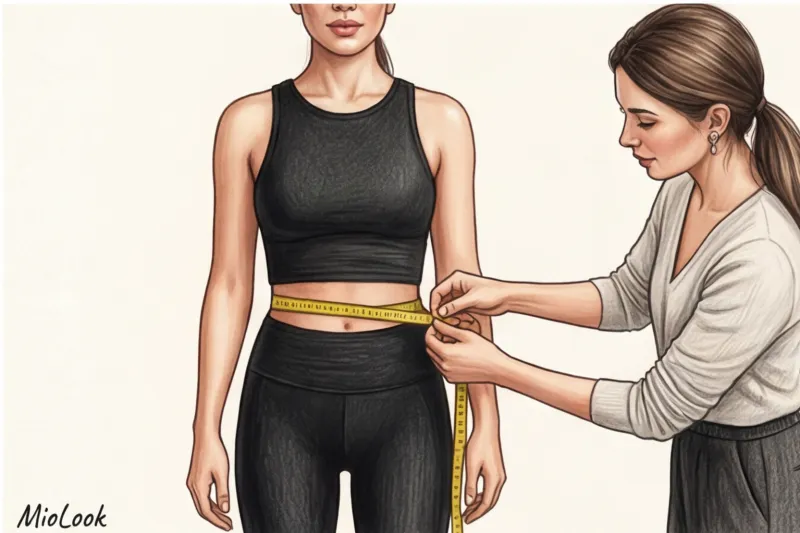
In our professional design, we rely on the international standard ISO 8559-1 (Size designation for clothing: anthropometric definitions). It strictly regulates the exact position of the measuring tape. For example, the waist is measured not at the end of your favorite high-waist jeans, but at the narrowest point of the torso—usually a couple of centimeters above the navel.
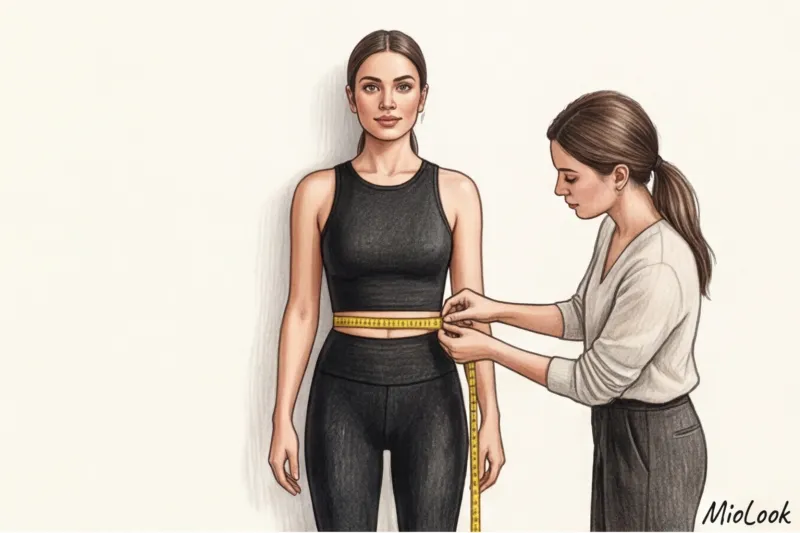
Over 12 years of working as a stylist, I've noticed one common detail: 9 out of 10 women subconsciously hold their breath and suck in their stomachs when they see a measuring tape. My main professional secret is to take measurements while you're physiologically at rest. Exhale normally and relax your core muscles. After all, you plan to breathe, sit at the computer, and eat lunch in these clothes, not stand on the catwalk with your stomach sucked in.
If the app asks you to enter additional parameters manually, don't ignore them. The back-to-waist length and shoulder width are critical for proper proportions.
The biggest mistake when creating a 3D avatar: the trap of perfect symmetry
Symmetry is your biggest enemy during a virtual fitting. When the phone camera asks us to rotate around, we instinctively stand up straight, square our shoulders, and try to look like an ancient Greek statue. Many go further and manually "smooth out" asymmetry in the hips or shoulders in the avatar settings.
I vividly remember a case from my practice with that same client, Anna. She spent an hour sculpting a perfectly symmetrical 3D avatar in an app. On the screen, expensive Italian jackets fit her like a glove. But when the order arrived, the real thing was treacherously pulling at her right shoulder, creating diagonal creases. The reason? Anna has mild right-sided scoliosis, causing one shoulder to be 1.5 centimeters lower than the other. This is completely normal and occurs in 80% of adults.
By digitizing your true asymmetry and preserving your natural lordosis (lower back arch) and kyphosis (back roundness), you allow the program's physics engine to simulate how the tissue will behave in real life. Your digital twin should be a map of your unique features, not a Photoshopped image.
Technology in Action: How Algorithms Read Your Body
Two approaches to body digitization currently dominate the market. The first is algorithmic construction based on 2D photographs (full face and profile), where neural networks estimate volume based on thousands of previously analyzed bodies. The second is scanning using LiDAR sensors built into modern premium smartphones.
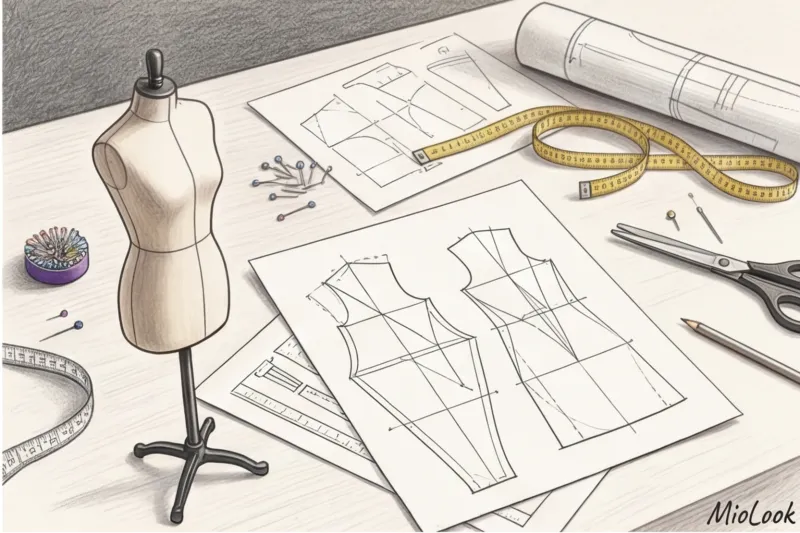
LiDAR literally fires a beam of light rays and measures their return time, creating a highly accurate point cloud of your body. But let's be honest and acknowledge the technical limitations. It doesn't work perfectly 100% of the time.
The main problem with 2D cameras is their "blind spots." Algorithms often struggle to accurately calculate sharp differences in volume, such as full breasts with a narrow ribcage, or hip dips. The camera may perceive the shadow cast by the breasts as an extension of the abdominal volume. If you notice that the virtual mannequin appears heavier than you in profile, feel free to adjust these areas manually using the sliders.
By the way, a digitized silhouette is a great help when choosing formal business looks, where the fit is everything. We discussed this in detail in the article about virtual fitting of business clothes.
Your ideal image begins Here
Join thousands of users who look flawless every day with MioLook.
Get access — €0.99 onceFabric Matters: How a Virtual Fitting Room Works with Materials
A virtual mannequin is completely useless if the app's algorithm doesn't understand fabric physics. This is the cornerstone of digital fashion.
According to research by the Fashion Institute of Technology (FIT) in New York, simulating the behavior of various fibers in a 3D environment requires complex calculations of stretch and drape coefficients. As a textile expert, I often see people frustrated with AR fittings because they don't take material properties into account.
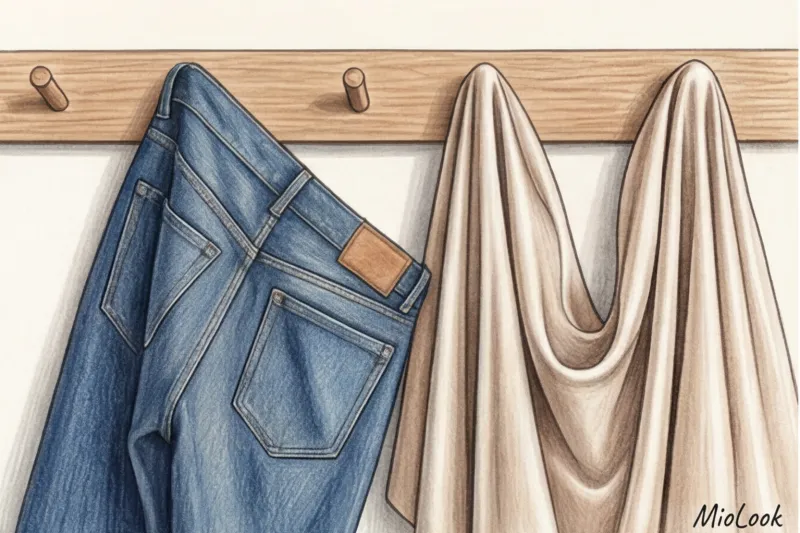
Imagine a bias-cut silk slip dress and a heavy 100% linen suit jacket. Linen has zero stretch. In real life, a tailor will allow 4 to 8 centimeters of "ease" when constructing such a jacket. If the app's algorithm stretches the linen garment onto your avatar without taking this allowance into account, you'll see a beautiful image on the screen, but in real life, you'll be completely speechless.
That's why the best fitting platforms always request the fabric composition of the garment. If you're manually assessing the fit of an item on your 3D avatar, always allow for the material. Stiff fabrics (denim, linen, heavy cotton) are unforgiving of errors in measurements, whereas viscose with 5% elastane will easily forgive a few centimeters of error.
Step-by-step instructions: creating your first 3D avatar
Based on testing over five top virtual fitting apps, I've developed the perfect algorithm for digitizing your figure. If you plan to upload your measurements to the "smart wardrobe" feature in MioLook , follow these three rules.
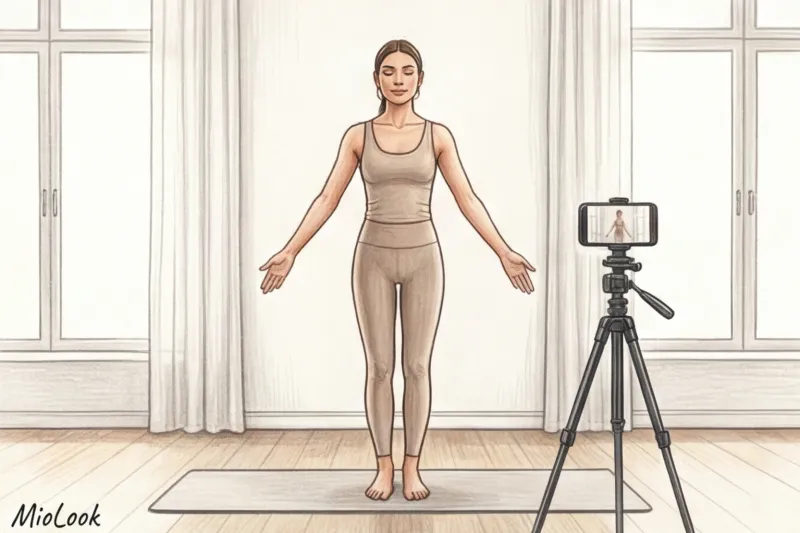
- Correct clothing: Forget loose underwear, lace bras, or lounge shorts. Lace and folds of fabric create visual noise. The ideal choice is smooth athletic leggings and a fitted top in a contrasting color (black or navy blue).
- Shadow-free lighting: Side light from a window will play tricks on you: the neural network will mistake a deep shadow on your side for a dent in your body. Use even, diffused artificial light or stand facing a window on a cloudy day.
- Camera angle: This is critical. The smartphone should be positioned strictly vertically (at a 90-degree angle to the floor) at the level of your belly button. Placing the camera at chest or eye level will distort perspective and make your legs appear short and your upper body appear disproportionately large.
Validation: How to Check That Your Virtual Mannequin Isn't Lying
Before buying an expensive coat or designer dress using your newly created avatar, try the "white T-shirt test."
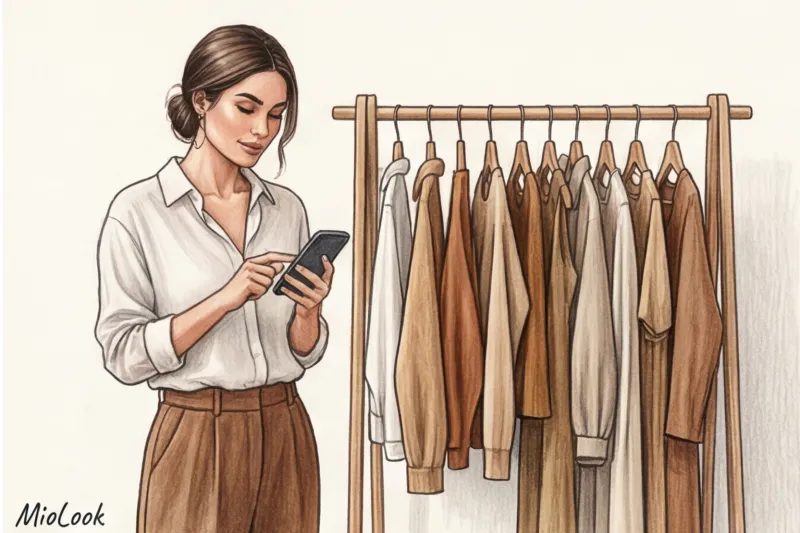
Try on your digital twin the simplest basic item (a T-shirt or straight jeans) whose fit you know by heart in real life. Check three checkpoints:
- Armhole: Is the fabric cutting into the armpit on the screen?
- Shoulder line: Is the shoulder seam exactly where your shoulder meets your arm?
- Groin area: Is there any unnatural tension in the fabric ("whiskers") on your jeans?
If the virtual T-shirt fits just like your favorite physical one, congratulations, the digitization was successful.
Investing in the Wardrobe of the Future: From Mindfulness to Impeccable Style
A precise virtual mannequin changes the very psychology of shopping. Shopping becomes less emotional and more analytical. You stop throwing things in your cart hoping they'll fit and start consciously managing your style.
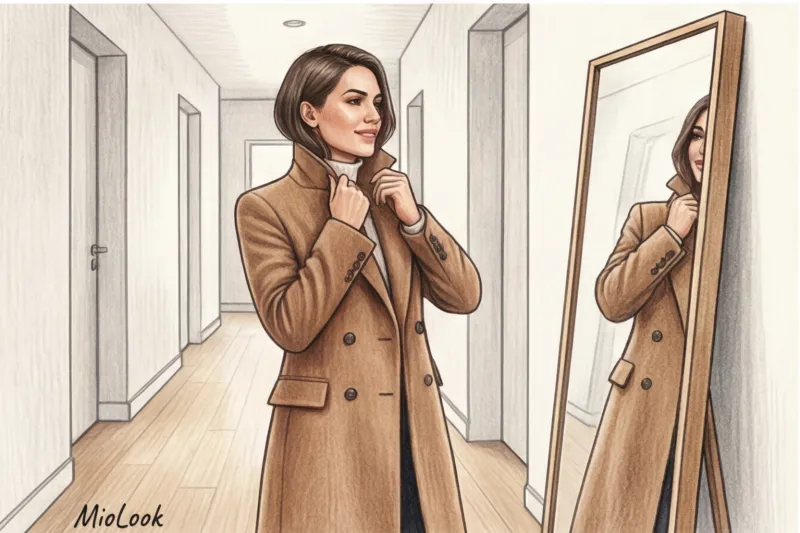
Having your digital twin at your fingertips allows you to test bold trends, architectural silhouettes, and unusual color combinations without financial risk. This is especially true for business attire, as we wrote about in our article about AI wardrobe for managers.
A high-quality 3D avatar isn't just a cool gadget on your phone. It's your personal, impartial digital tailor. It saves you money on returns, takes the stress out of important events, and, just as importantly, reduces unnecessary environmental impact on our planet. Spend 15 minutes digitizing your proportions correctly today, and your wardrobe will reciprocate for years to come.