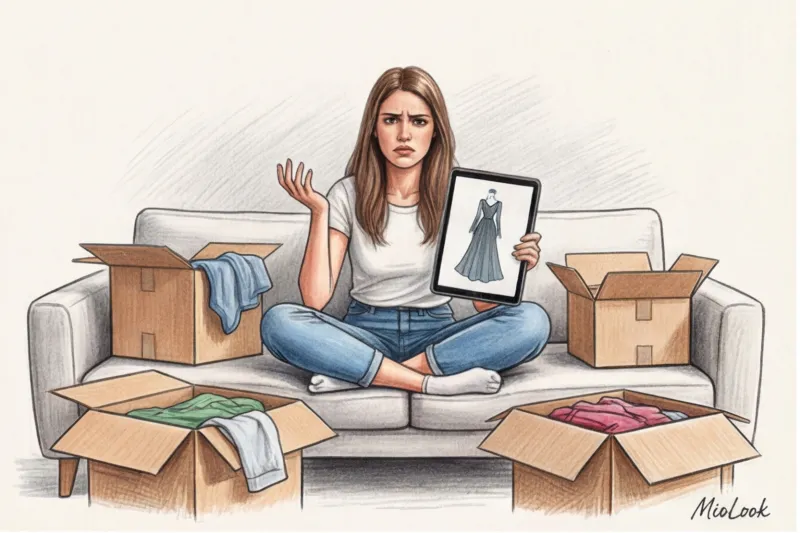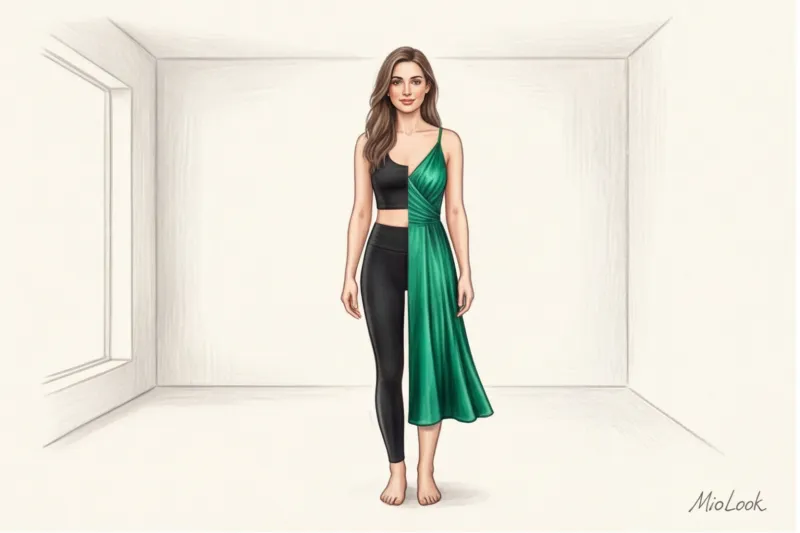
Imagine a familiar situation: a courier delivers a long-awaited box from COS or Massimo Dutti. You open it, take out a dress that looked like an architectural masterpiece on your smartphone screen, put it on... and realize it fits like a hospital gown. The color is duller, the fabric is bulging, and the waistline is three centimeters too high. The result? Disappointment, a return, and wasted time.
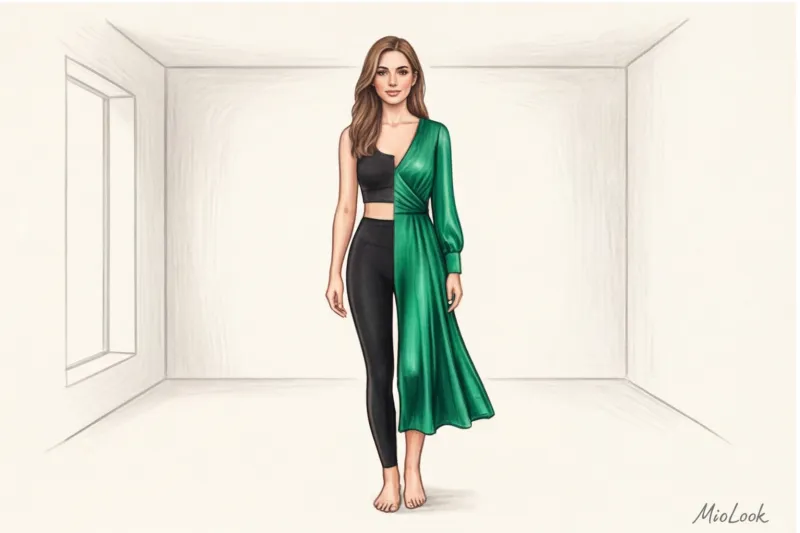
According to the National Retail Federation (NRF) in 2024, up to 30-40% of clothing purchased online ends up back in warehouses. We're not buying things; we're buying a beautiful representation of ourselves. This is where fashion comes into play. virtual clothing try-on online — a technology that promises to put an end to blind shopping. However, as a textile expert and practicing stylist, I have to admit: digital avatars can be as deceptive as studio photos with the right lighting if you don't know how to use them correctly.
In this article, we'll explore how to stop buying unsuitable items and why a high-quality digital fitting room is your ultimate filter against impulsive spending. We've covered more about how technology is fundamentally changing our approach to things in our The complete guide to MioLook, the app for mindful shopping and wardrobe.
The Evolution of Shopping: How Virtual Online Try-Ons Work
Over the past five years, e-commerce has come a long way from flat size charts where you had to guess your bust size to the creation of digital twins. A WGSN study (2024) shows that the implementation of accurate measurement algorithms reduces return rates by an average of 25-30%.
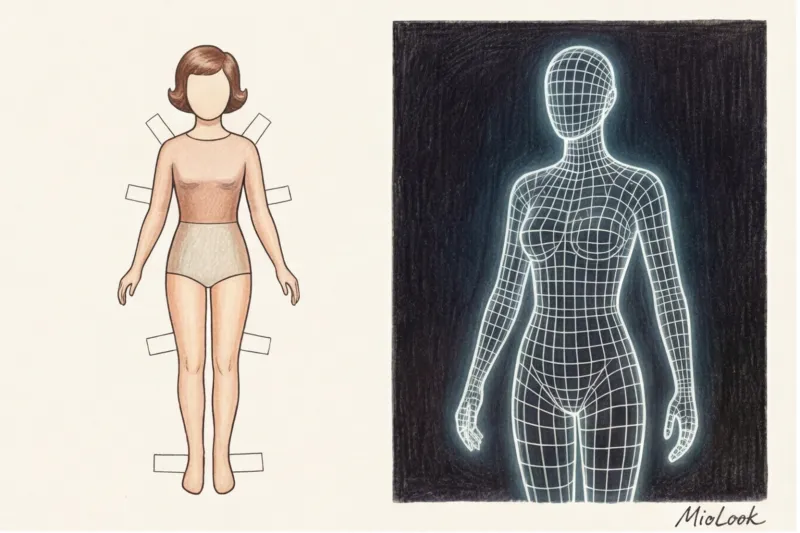
There's a huge difference between a basic 2D overlay and a full-fledged 3D avatar. The former is a digital version of a paper doll, where a photo of a T-shirt is simply "stretched" over your photo. The latter is the work of complex neural networks that construct your figure in three-dimensional space, accounting for curves, the arch of your back, and the asymmetry of your shoulders.
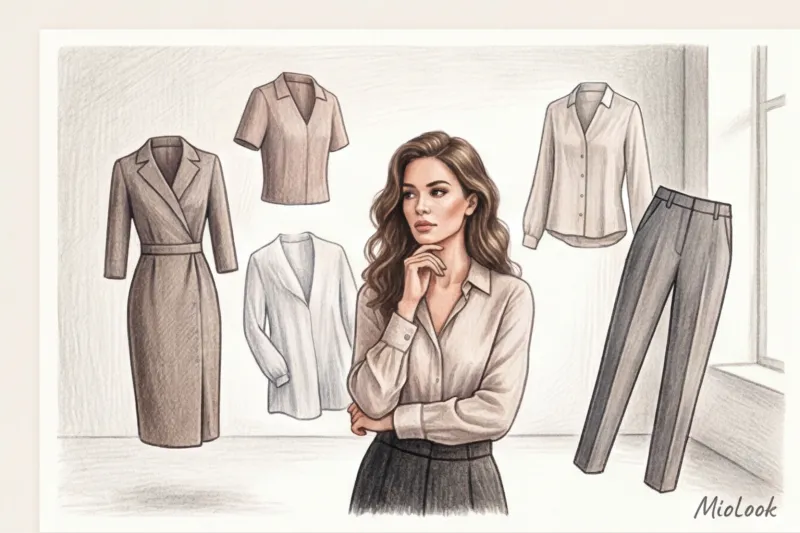
In my remote work with clients, I've long abandoned traditional mood boards in favor of digital fitting rooms. When a client lives in another country, I can't physically pin the fabric at her waist. I need precise measurements. A virtual fitting allows me to see if the armholes on a €150 jacket will be too tight for her body type before we even hit the "Pay" button.
Access to MioLook for €0.99 — one-time payment
A smart AI stylist will select the perfect look based on your proportions.
Get access — €0.99 onceLonely Item Syndrome and Returns: The Cost of Online Shopping Mistakes
Have you ever noticed that you most often order clothes online in the evening, tired after work? That's when your brain craves a hit of dopamine. We see a stunning sequin skirt and buy into the fantasy of wearing it to a fabulous party. But when the item arrives, you're in need of completely different shoes, an expensive silk top, and an occasion that's simply not on our calendar.
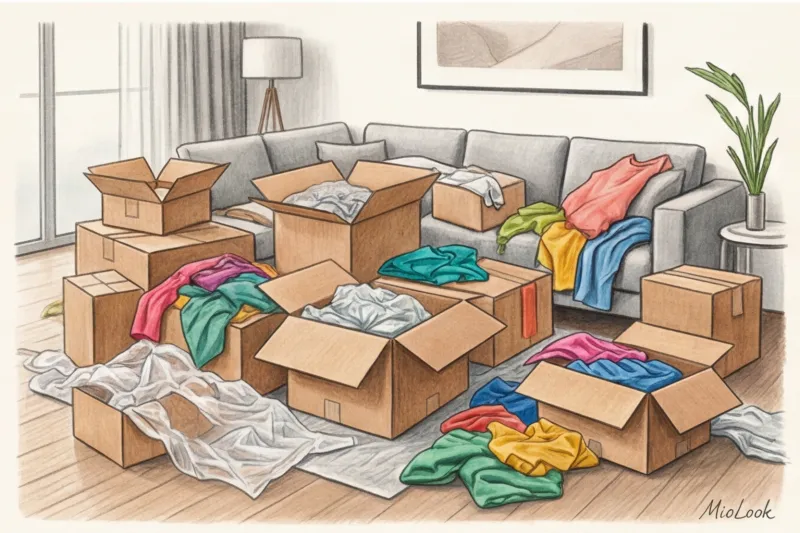
This is how it is born lonely thing syndrome.
I recently audited a new client's wardrobe. Of the 40 items she'd purchased online over the past six months, 18 still had the store tags on them. That's over €800 in frozen capital! The problem wasn't the size—the items fit perfectly. The problem was that she couldn't "fit" them into her real closet when she bought them. That's why the virtual compatibility feature (which we actively use in MioLook ) becomes a lifesaver. It allows you to overlay a new thing on your existing base and see if the puzzle fits together.
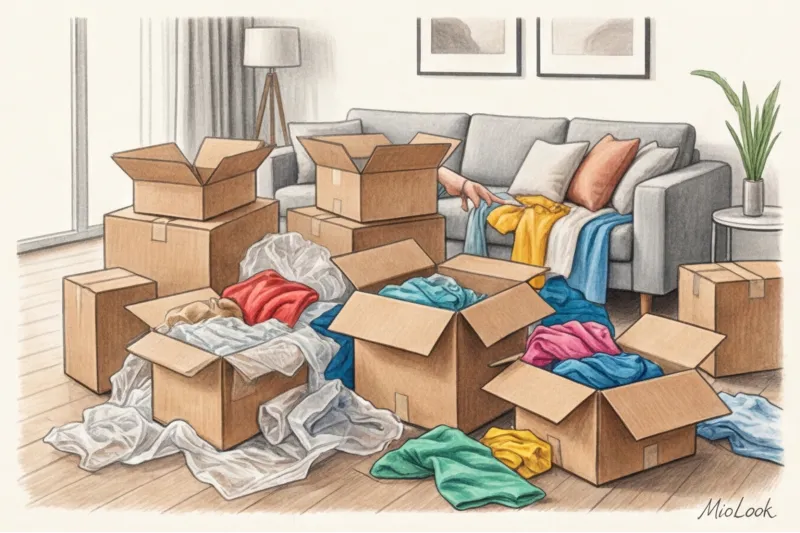
Ecology and "bracketing": Why buying three sizes is bad
To protect themselves from getting the wrong size, many shoppers use the "bracketing" strategy—ordering the same shirt in sizes S, M, and L, knowing in advance that two of them will be returned. This may seem convenient for you, but it's disastrous for the planet.
According to a McKinsey analytical report (2023), returns logistics generate millions of tons of carbon emissions annually. Furthermore, not all brands return unpacked items to the display case—in the mass market segment, returning an item to the conveyor belt is often more expensive (around €15–20 per item) than simply sending it to a landfill. Accurate virtual try-ons make your shopping experience eco-friendly without sacrificing personal comfort.
The Illusion of a Perfect Fit: What 3D Avatars Don't Tell You
And now for the fly in the ointment, something that IT startup developers don't like to talk about. Virtual fitting rooms often lie. Yes, that's my honest opinion as a textile expert.
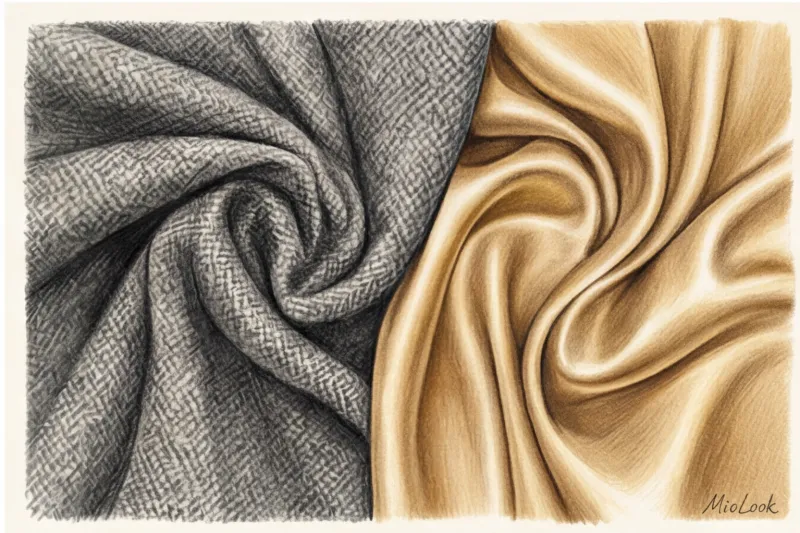
Algorithms are great at geometry: they'll accurately show you where a skirt's hem will end or how tight a belt will fit. But they have a huge blind spot: fabric weight, drape, static electricity and wrinkling.
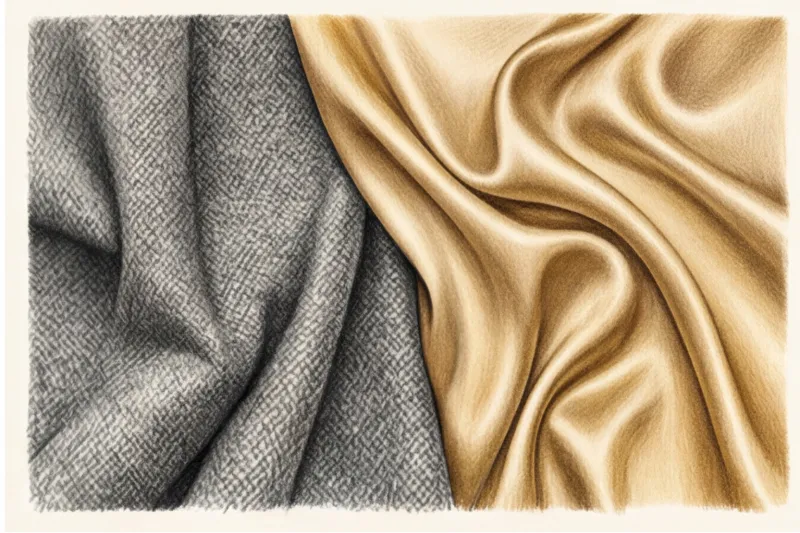
"A perfectly smooth 3D avatar creates a dangerous illusion. The algorithm can create stunning flowing folds on a dress made of 100% cheap polyester, although in real life, this fabric would stiffen and stick to your legs from static electricity."
I had a client order a pair of mid-priced palazzo pants (around €60), trusting the impeccable 3D render in the brand's app. On the avatar, the fabric looked like heavy, expensive silk or lyocell. In reality, it turned out to be the thinnest, low-quality viscose, which highlighted every unevenness of the skin and wrinkled horribly within 15 minutes of trying it on. AR technology solved the sizing issue, but not the quality problem.
Your ideal image begins Here
Join thousands of users who look flawless every day with MioLook. Check the fit and compatibility of items before purchasing.
Get access — €0.99 onceHow to "read" fabric when shopping online
Trying on clothes online virtually does NOT work independently of basic knowledge of materials science. My mandatory ritual: before believing the pretty picture on the screen, I always open the "Composition" tab.
- Form and statics: If the 3D model shows a rigid, architectural silhouette (for example, an A-line skirt), the fabric composition should be heavy cotton (at least 180 g/m²), blended linen, or heavy wool. If the model specifies thin viscose, the garment will hang loosely, contrary to the rendering.
- Fit: If a virtual turtleneck fits perfectly around the waist without wrinkles, look for one that contains at least 3–5% elastane (spandex). 100% cotton will never fit like that; it will inevitably wrinkle.
Stylist's Guide: How to Prepare for a Virtual Fitting
The quality of the result in any AI application directly depends on the input data. If you input sloppy parameters, you'll get sloppy results.
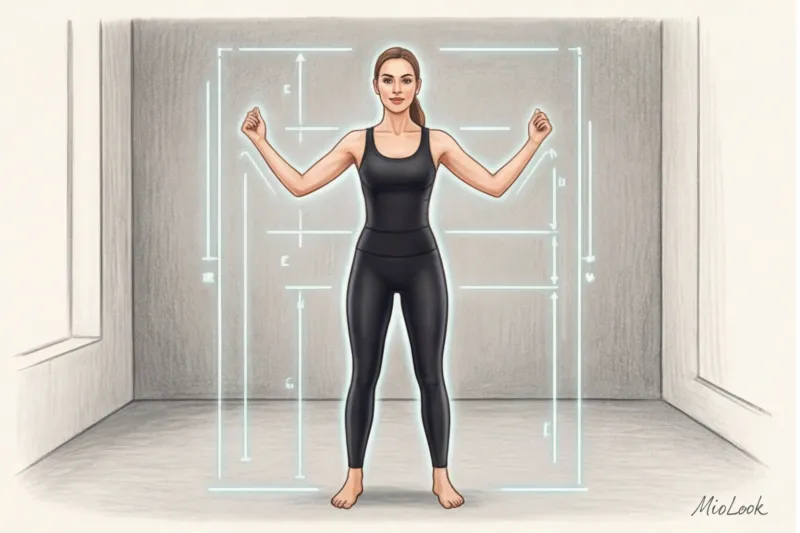
How to properly prepare yourself for scanning or creating a digital avatar:
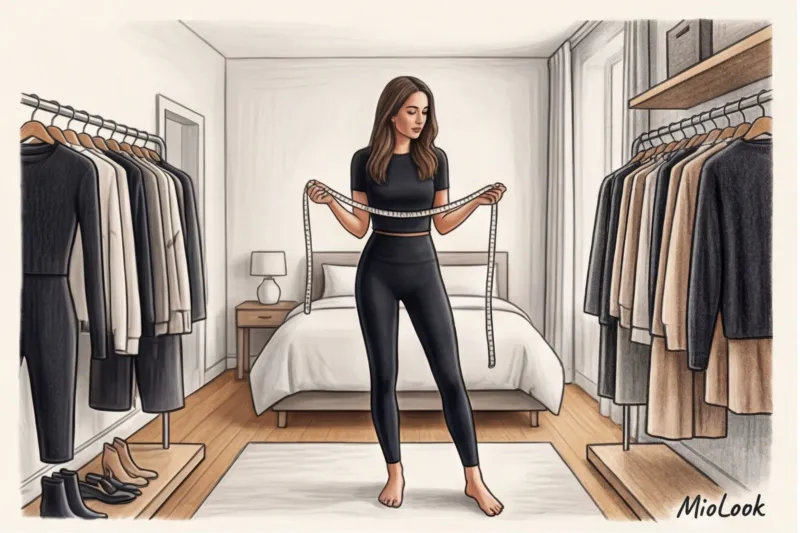
- Correct clothing: Forget about your favorite oversized hoodies. Measurements and photos should be taken in tight-fitting clothing that contrasts with the background. Ideally, black leggings and a top against a light wall.
- Underwear: Get scanned wearing the bra you plan to wear most often. A push-up bra will distort your breast measurements, and a jacket you bought online might not fit properly when you put on a sports bra.
- Lighting and angle: The camera should be positioned exactly at stomach/lower rib level. If you place the phone on a table (chest level) and tilt it downwards, the algorithm will assume you have short legs and a large torso, distorting all recommendations.
Smart Wardrobe: How MioLook Integrates AI into Your Closet
The real magic begins when we move from a one-time try-on on a specific store's website to a systematic wardrobe management system. This is precisely the problem solved by MioLook's smart wardrobe feature.
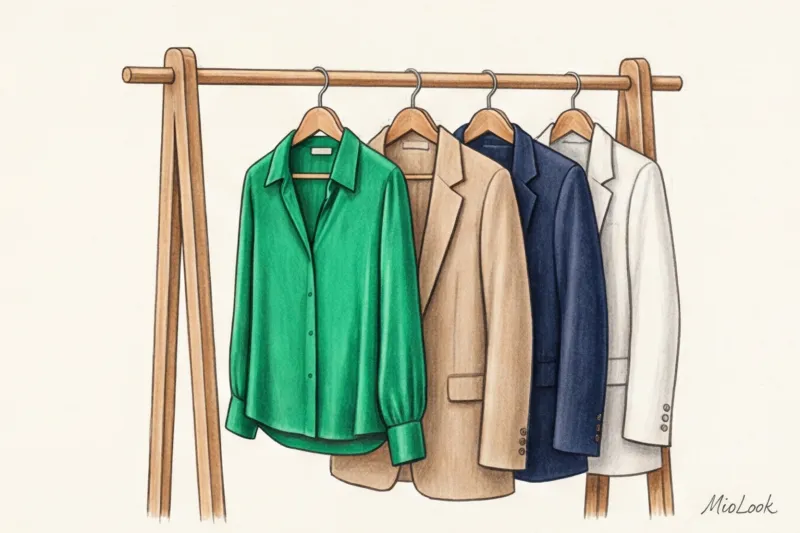
Instead of simply telling you whether a Zara skirt will look good on you, the AI assistant analyzes your digital wardrobe. It literally predicts your cost-per-wear (CPR): which sweaters, jackets, and shoes from yours This item will make a stylish pair in your real wardrobe. This is the moment when technology ceases to be just a toy and becomes your personal, calculating stylist, saving your budget from emotional drains.
A Mindful Shopper's Checklist: 5 Steps Before Checking Out
To reinforce smart shopping skills, I suggest my clients run every online purchase through this quick filter. Don't click "Pay" until you answer these five questions:
- Silhouette check: How does this item fit on my virtual avatar? Does it take into account my torso length and height?
- Fabric Physics Test: Does the stated composition (in percentages) match the form I see on the screen?
- The rule of three images: Can I create at least three outfits with this item right now, in the virtual fitting room, using clothes that are already hanging in my home?
- Contrast Rating: Does the color of the item suit my complexion in natural light, or does it ruin my appearance?
- The final test of honesty: Am I buying a real thing for my real life (like a Friday dress code at the office) or am I buying an emotion and fantasy about a life I don't have now?
Trying on clothes virtually online isn't a magic pill that will make all mass-market fashion fit your figure perfectly. It's a powerful analytical tool. Combine the mathematical precision of digital avatars with a basic understanding of fabrics, and you'll forever forget about piles of cardboard boxes in your hallway and wasted money on return logistics. Choose quality, analyze the fit, and wear only what truly makes you feel confident.
Ready to get started?
Try the free plan—no commitments required. Upload your items and let AI create flawless looks for you.
Get access — €0.99 once