
The Illusion of Gloss: Why We're Disappointed with Delivery
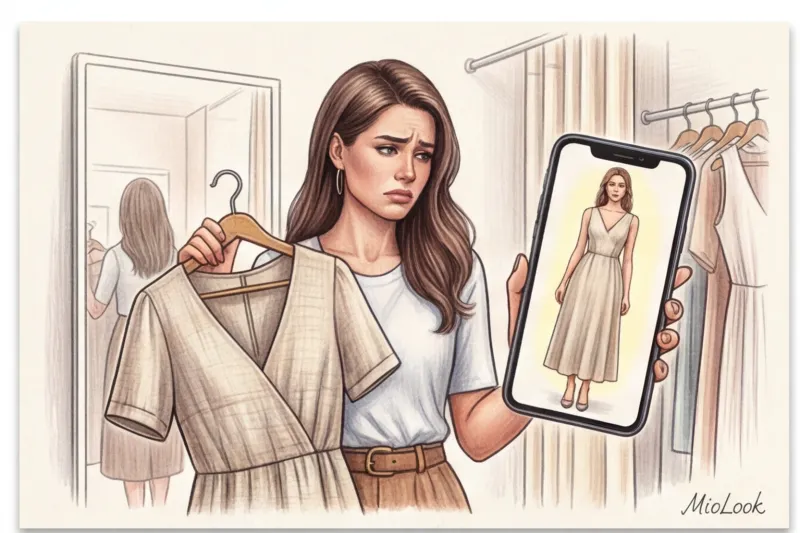
In 14 years of working as a personal stylist, I've learned one ironclad rule: if a silk dress fits the model without a single wrinkle in a catalog photo, there are at least five pins pinned to her back right now. Perfect studio lighting, precise poses, and professional retouching sell us an emotion, not a real thing. That's why trying Find clothes that fit your figure online , relying only on store photographs, most often ends in failure.
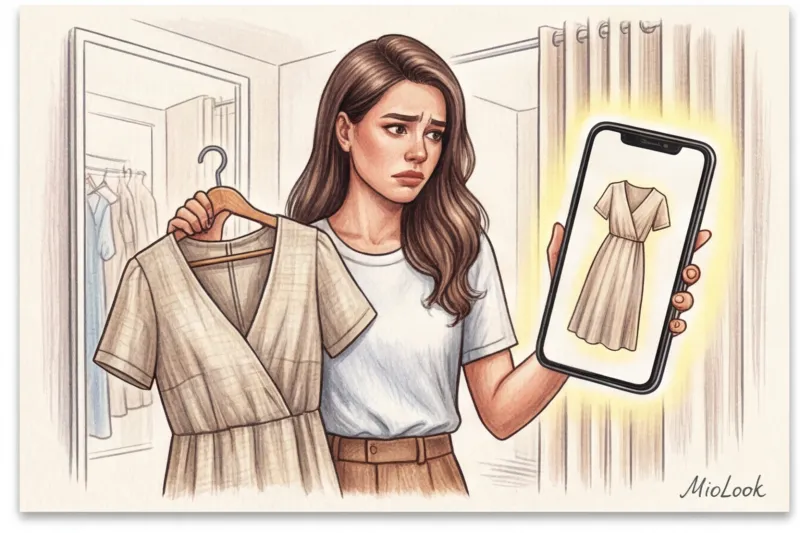
According to a 2024 McKinsey analytical report, approximately 40% of all online clothing orders are returned to warehouses. The main reason is that the item "doesn't fit right." I see the consequences of these failed experiments in my clients' wardrobes every week: closets filled with compromised items that were too lazy to return.
Fortunately, technology has changed the rules of the game. We covered how these algorithms evolved in more detail in our complete guide: Virtual Clothing Try-Ons: The Future of Online Shopping The new reality is this: AI fitting gives us the truth. But we need to know how to interpret this truth correctly.
Why finding clothes that fit your body shape online has become easier (and more difficult at the same time)
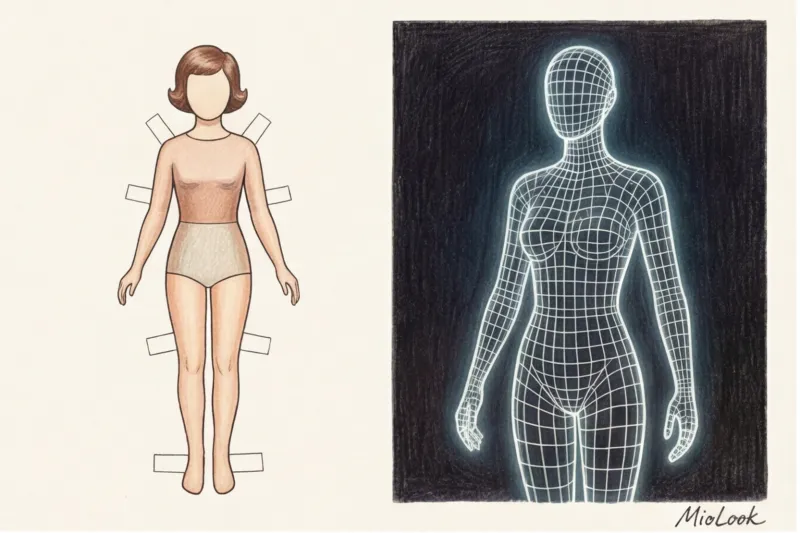
Virtual fitting rooms used to be like masks on social media—a flat image of the clothes was simply superimposed over your photo. Today's algorithms work differently. They don't apply a 2D filter, but rather perform a full-fledged physical simulation.
But this is where the problem of inflated expectations arises. When you upload your measurements to the virtual fitting room, the neural network shows you the item without embellishment. And if the avatar looks slightly worse than the studio model, that's great news! It means the algorithm isn't flattering you. It will save you from buying a poorly cut item.
Your perfect look starts here
Join thousands of users who look flawless every day with MioLook.
Get access — €0.99 onceThe Anatomy of a Digital Fitting Room: How AI "Sees" Your Body
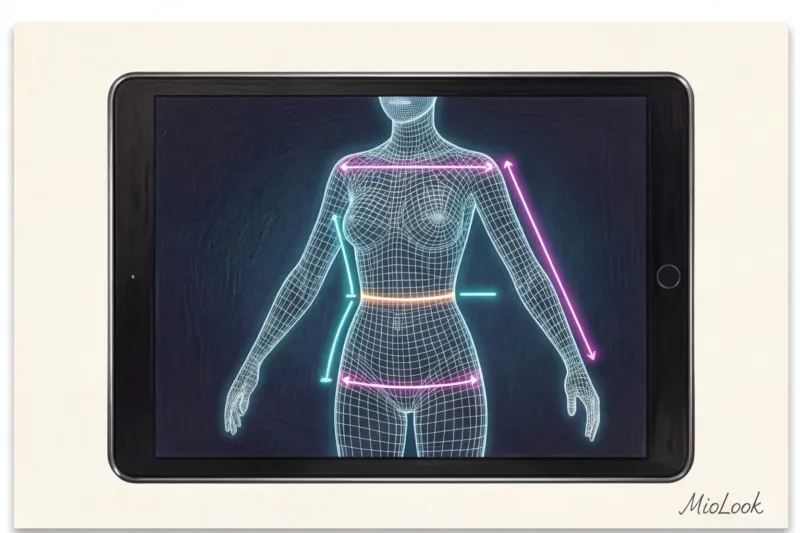
The fashion industry is gradually abandoning the outdated "apples, pears, and hourglass" theory. I long ago abandoned this "fruit basket" approach in my practice. Modern 3D fabric modeling programs, such as Clo3D and Browzwear, analyze not abstract body types, but a map of your proportions and bone structure.
For the algorithm, the length of your legs relative to your torso, your waist height, and your shoulder width are much more important than just your hip measurement. This allows Find clothes that fit your figure online with mathematical precision, taking into account the distribution of volumes, and not just the coverage.
Outdated body typologies restrict us. 3D modeling analyzes the skeletal structure: it determines how fabric will fall off the shoulders and drape over the hips.
The Main Trap: Why a Virtual Image Can Be Deceiving
For all its ingenuity, AI has a blind spot: it can't yet perfectly interpret the density, elasticity, and drape of fabric. Algorithms often "eat up" the design allowances for ease of fit—that vital air between the body and the garment.
Recently, a client and I were putting together a vacation capsule. She fell in love with a linen jacket from a premium brand, but in the 3D avatar, it looked as stiff as a cardboard box. She wanted to cancel the purchase. I had to switch to "stylist mode" and explain that high-quality, softened linen would fit softly in real life, smoothly draping over the shoulders. The avatar simply couldn't capture the flexibility of this particular yarn.
Fabric vs. Pixels: Secrets of Decoding
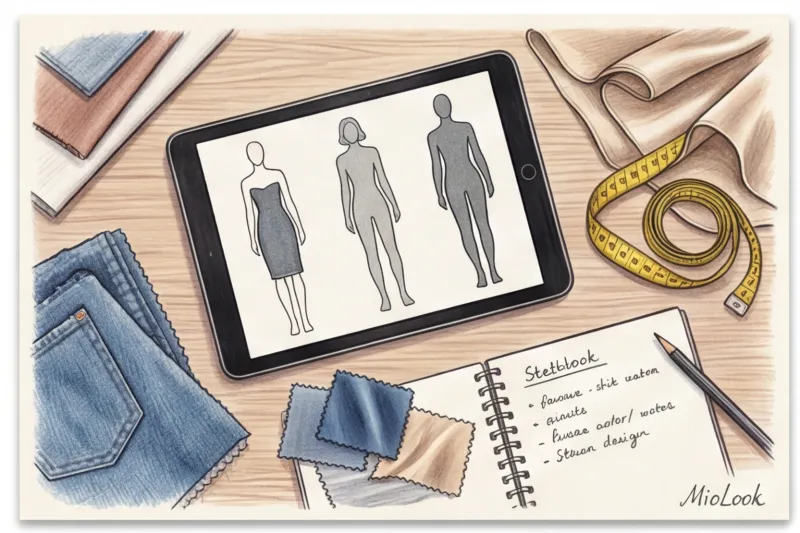
To avoid becoming a victim of machine vision, always check the fabric composition on the product card and make adjustments for its physical properties:
- Stretch and elastane: Skinny jeans or turtlenecks (with at least 3% elastane) may appear smaller in your avatar than your actual size. The fabric will stretch in real life, but the AI often renders it too tight.
- Heavyweight fabrics (wool, tweed, heavy denim over 12 oz): The AI handles them flawlessly. They hold their shape, and what you see on the screen matches reality 95% of the time.
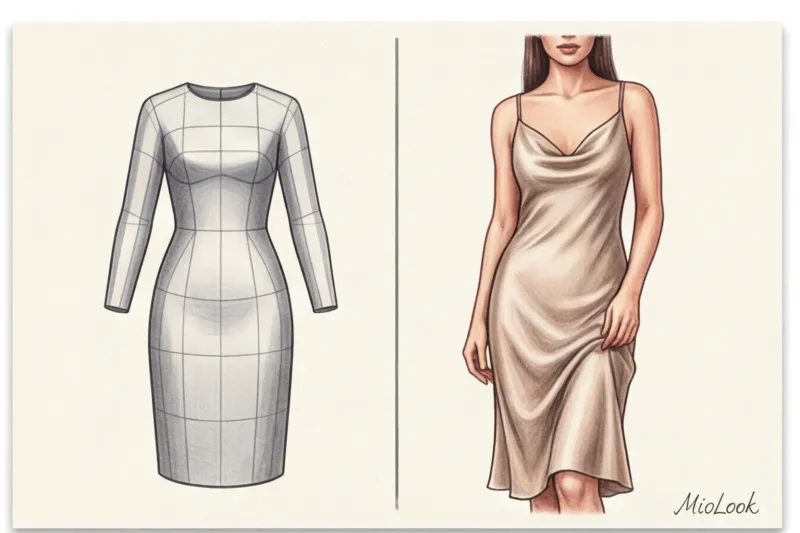
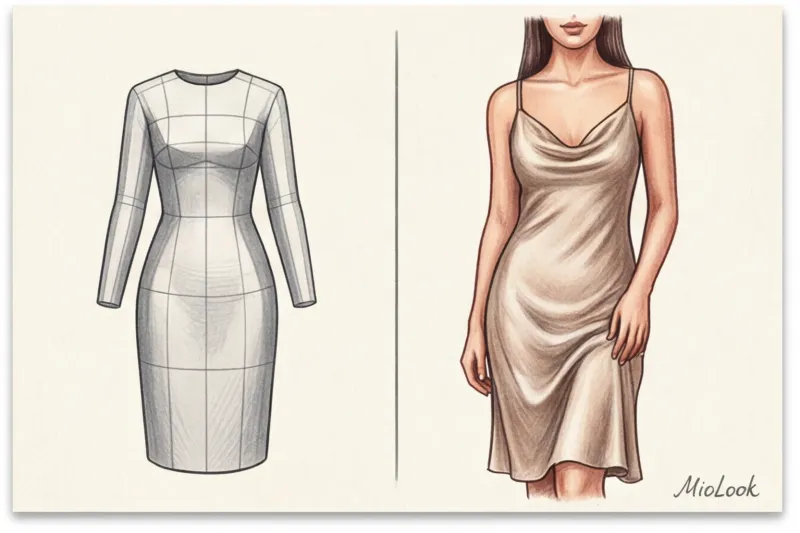
- Flowing textures (silk, viscose, cupro): This is kryptonite for virtual fitting rooms, especially items cut on the bias (like slip dresses). The algorithm often makes them look shapeless or "pregnant," not understanding how the material will flow when you walk.
How to Find Clothes for Your Body Shape Online: My Stylist's Algorithm
Mass-market brands like Zara or H&M cut their garments using standard flat patterns. The goal is to fit as many people as possible. Premium brands like COS or Massimo Dutti use complex darts for an architectural fit. How can you tell the difference on a screen?
I teach my clients to search stress zones Look at the 3D model from the back and in profile. If virtual creases form in the fabric around the chest or lower back, it means the pattern is flat, and the garment will bulge in real life. business style This type of landing is unacceptable.
Correct measurements for the perfect digital twin
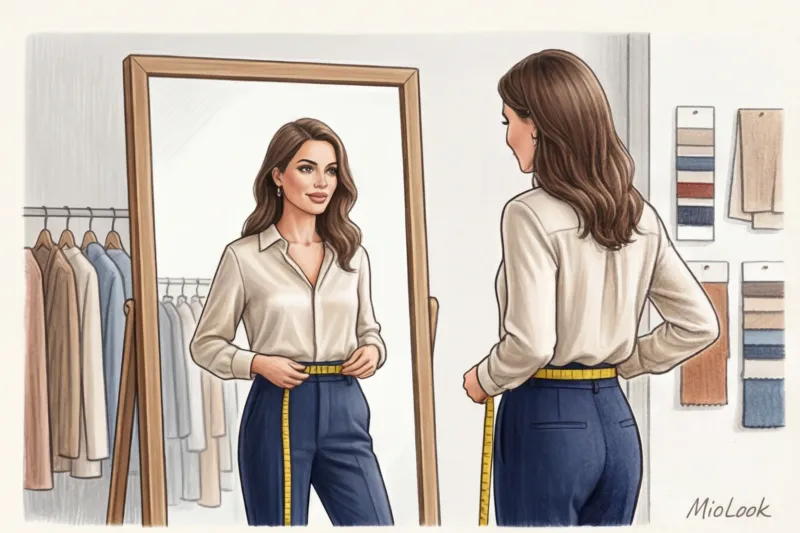
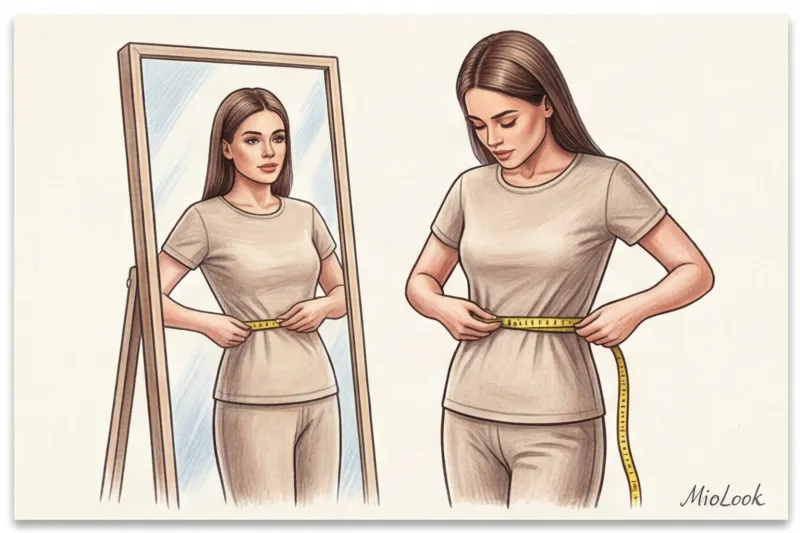
No algorithm can save you if you've entered incorrect data. It's ironic: 80% of women in my consultations measure their waist incorrectly, using the waistband of their favorite mid-rise jeans as a guide.
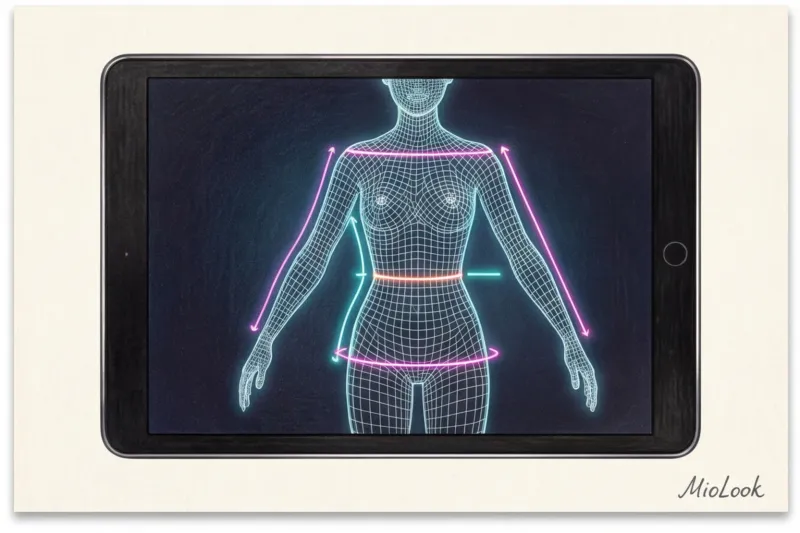
- Real waist: Find the narrowest part of your torso (usually a couple of centimeters above your belly button). Don't suck in your stomach to the point of fainting—measure while exhaling relaxed.
- Shoulder line: Measure from shoulder bone to shoulder bone. This is a critical measurement for buying coats and jackets. Getting it wrong can ruin your posture.
- Inseam Length: Vital for trousers. Measure from the crotch to the desired leg opening.
Ready to get started?
Try the free plan—no commitments and full access to the basic smart wardrobe features.
Get access — €0.99 onceThree common mistakes my clients make during virtual fittings
Technology only works when coupled with a cool head. Here are three pitfalls that almost everyone falls into:
Error 1: Expecting a glossy image. As I've already mentioned, seeing yourself in 3D without retouching and in poor lighting can be psychologically uncomfortable. But it's the only path to a mature, conscious wardrobe without illusions.
Mistake 2: Ignoring fabric composition. You see a gorgeous, oversized sweater in your avatar, but the composition states 100% acrylic. In reality, this oversized sweater will shrink after the first wash, become pilled, and lose its shape. AI doesn't predict fabric wear.
Mistake 3: Trying on a size that is not your own. Height can distort the proportions of even the ideal size. Size charts across brands can vary by as much as 4-6 cm in waist measurement for the same 'M'. If you're petite (up to 160 cm), a standard-height garment will disrupt your silhouette's center of gravity, lowering your waist and shortening your legs.
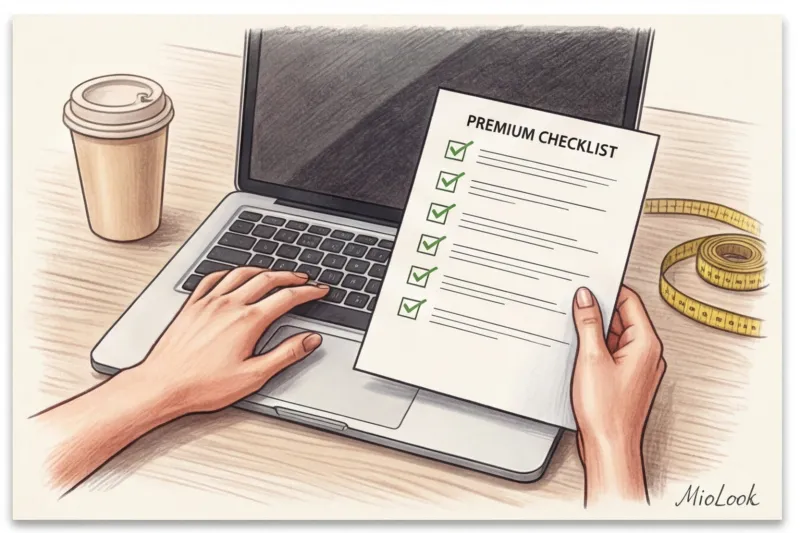
Checklist: Checking the boarding process before hitting the "Pay" button
These five minutes of analysis in the virtual fitting room will save you two weeks of waiting for a refund. Review these points before placing your order:
- Does the shoulder line on your avatar match your shoulder joint? (The exception is a deliberate oversized cut or dropped shoulder).
- Where does the length of the product end? A skirt or coat shouldn't cut horizontally across the widest part of your calf. This will visually add weight.
- Is the reserve for "air" taken into account? There should be some space between your body and the base shirt. If the buttons on the 3D model feel tight, feel free to go up a size.
- Does the silhouette fit the task? For relaxed casual, a little casualness is acceptable, but if you choose your wardrobe based on archetypes in style (for example, the Ruler archetype), the landing should be structured and clear.
A virtual try-on isn't magic that will do all the work for you. It's a powerful tool that requires knowledge of your own proportions and a basic understanding of fabrics. Stop looking for the perfect glossy image on the screen. Seek the truth about how a specific pattern interacts with your unique body structure. Only then will online shopping stop being a gamble and become a targeted investment in your style.