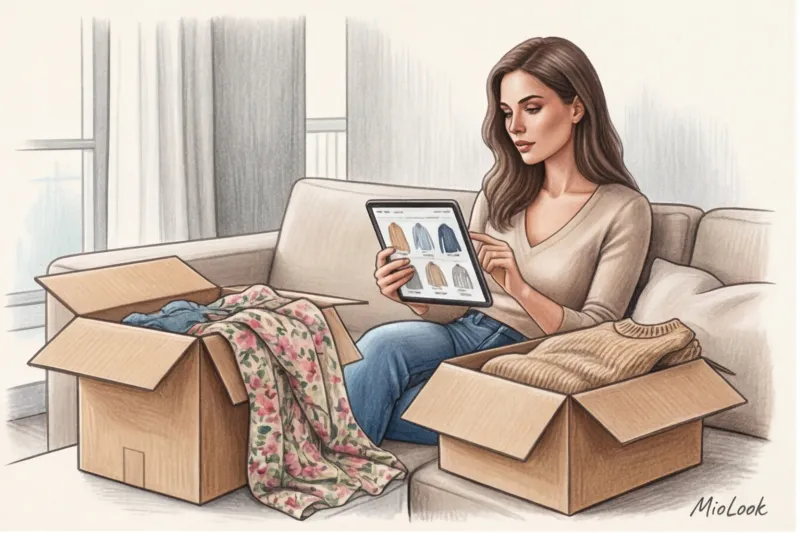

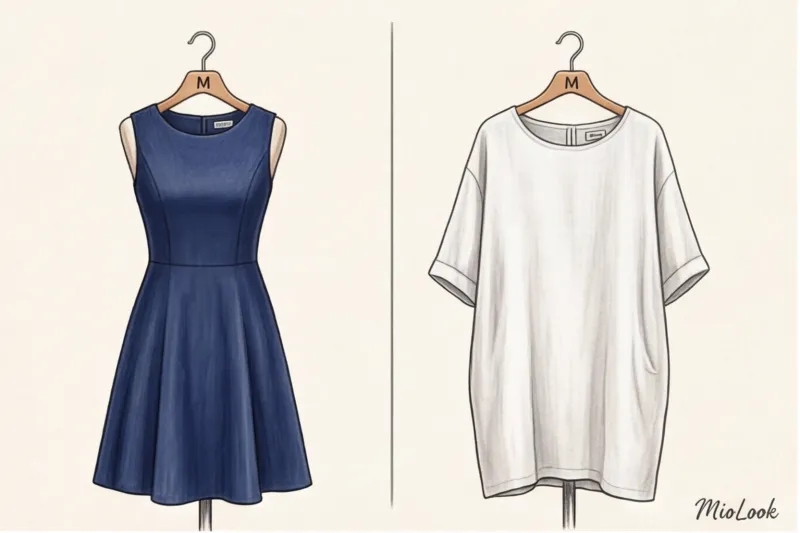
Did you know that, according to a McKinsey report (2024), up to 70% of online clothing returns are due solely to sizing or fit issues? That's millions of hours wasted, tons of wasted jet fuel on delivery, and miles of frustrated nerves. We're used to blaming ourselves: "I must have gained weight" or "I have an unusual figure." But as a practicing stylist, I can tell you straight: the problem isn't your body. The problem is the outdated labeling system.
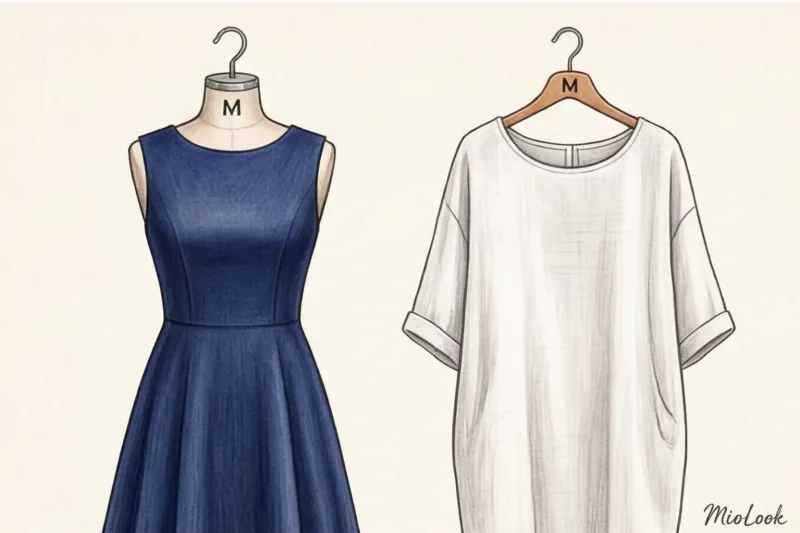
In this article I will tell you, How to choose your clothing size online without trying it on , relying not on blind luck, but on precise data. We'll uncover the professional secrets of buyers, learn to read patterns through a computer screen, and put the returns roulette behind us forever. We've covered the evolution of this process in more detail in our a complete guide to virtual clothing fitting , but today we'll focus on practical steps you can take right now.
Why Traditional Size Charts Are Wrong (And That's Okay)
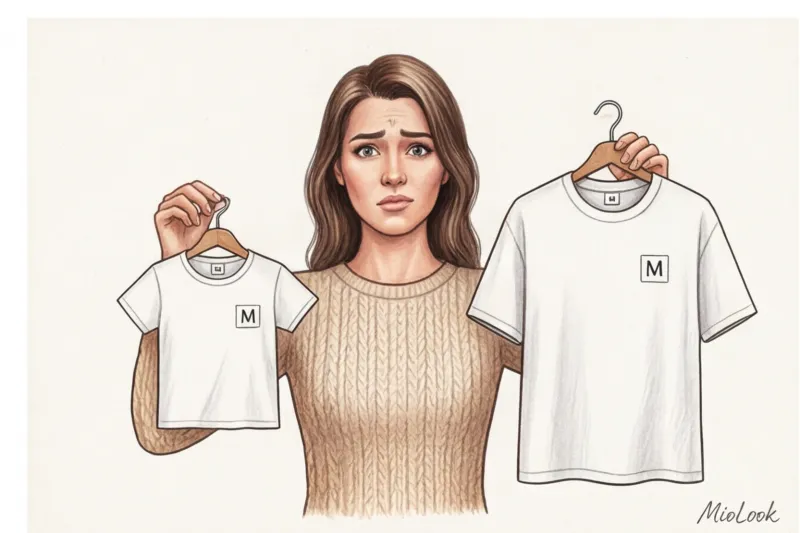
Most shoppers swear by website size charts. Forget it. A store's size chart is a marketing tool, not precise mathematics. Research by the analytics platform True Fit reveals colossal discrepancies in the size charts of mass-market brands. Global sizing standards haven't been fundamentally updated since the 1950s, and today each brand adapts them to its specific target audience.
That's why you can wear a size S at Zara, a size M at a local brand, and a size L at a vintage store. The more premium the brand, the closer its sizing is to historical cutting standards. If you want look expensive , the first thing you should start with is to stop clinging to the usual letter on the tag.
Vanity Sizing: The Illusion of Perfect Size
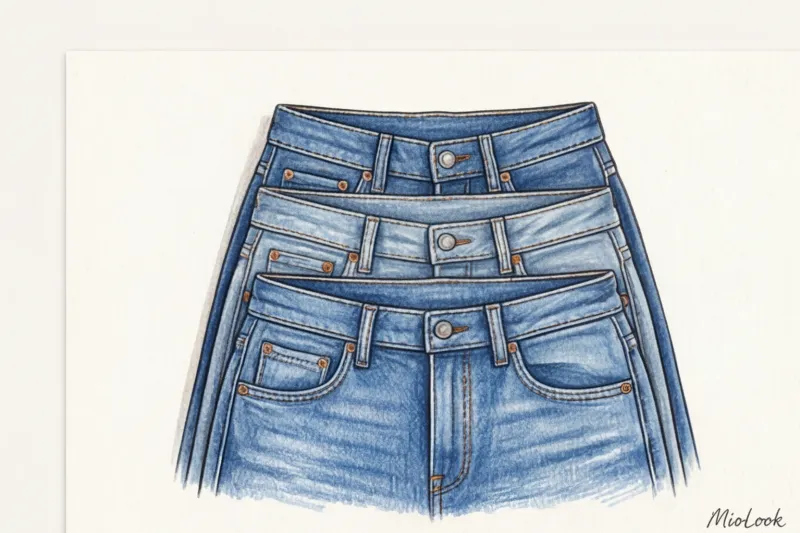
Brands have long understood that a woman is more likely to buy an item if it's labeled in a flattering size. This phenomenon is called "vanity sizing." Manufacturers intentionally inflate the physical dimensions of an item while maintaining a conventional size S on the tag. Ever notice how vintage jeans from the '90s always seem stiff and run small? In fact, it's modern jeans that have become larger. Vanity sizing is easy to spot: if reviews are overwhelmingly labeled "runs a size too big," the brand is clearly playing on consumer psychology.
Brand Geography: Italian Smalls and American Oversized
A brand's country of origin is your first filter when shopping online. Differences in mentality are directly reflected in patterns.
- Italian brands (IT): Narrow shoulders, high armholes, a defined waist, and a fitted silhouette. Italians tailor for a small frame. In 90% of cases, Italian garments should be ordered a size larger.
- Scandinavian brands (DK/SE): Oversized fit, straight lines, and long sleeves (designed for an average height of 170 cm and up). Your usual size will fit loosely here.
- American grid (US): Generous patterns, focused on comfort. The difference with Europe is colossal.
Personal test drive: I recently conducted an experiment: I took a pair of size 28 jeans from a popular American brand and a premium Italian denim brand. I measured the waistband with a tape measure. The difference was exactly 6 centimeters! That's two full sizes, but the "28" size is identical.
Access to MioLook for €0.99 — one-time payment
A smart AI stylist will select the perfect look and help you organize your wardrobe.
Get access — €0.99 onceHow to choose a clothing size online without trying it on: 4 stylist rules
It's time to move from intuitive shopping to fit-based shopping. The following rules are the foundation I teach my clients during online consultations.
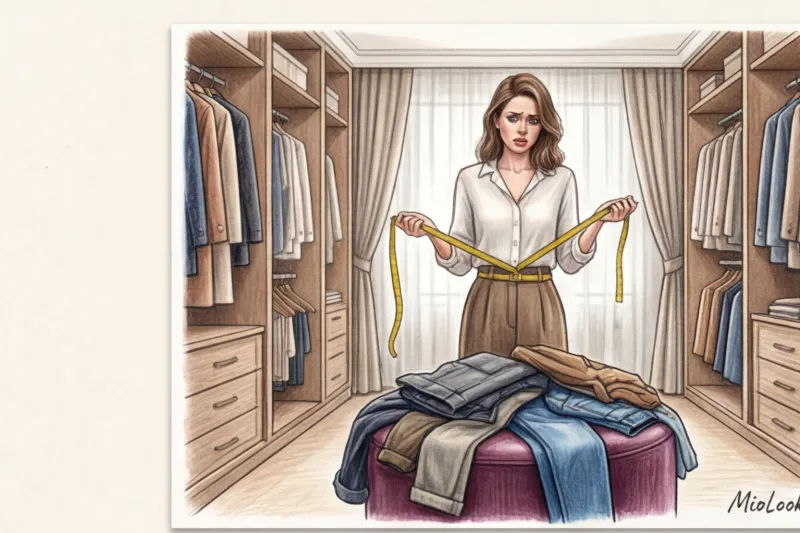
Key insight: The biggest misconception is measuring your measurements (bust, waist, hips) before buying. Your body is soft and changes throughout the day, but fabric doesn't. You shouldn't measure yourself, but a similar item from your closet that already fits you perfectly.
Rule 1: Measure your favorite thing, not yourself.
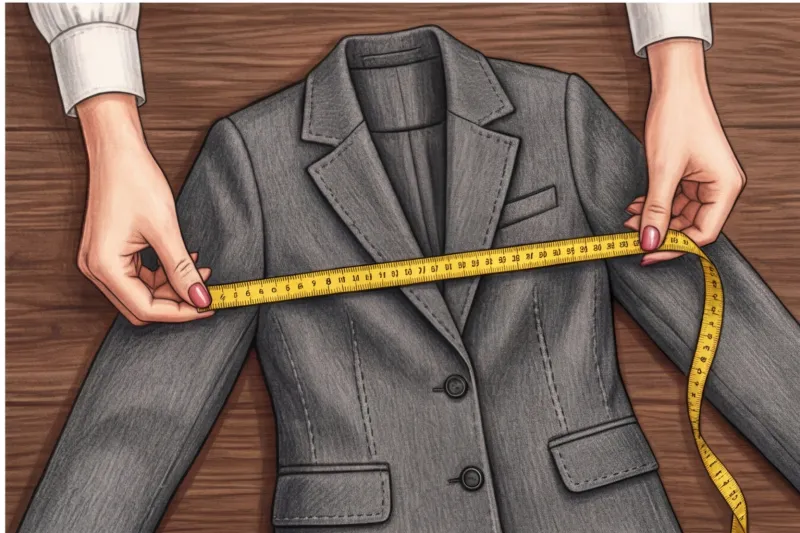
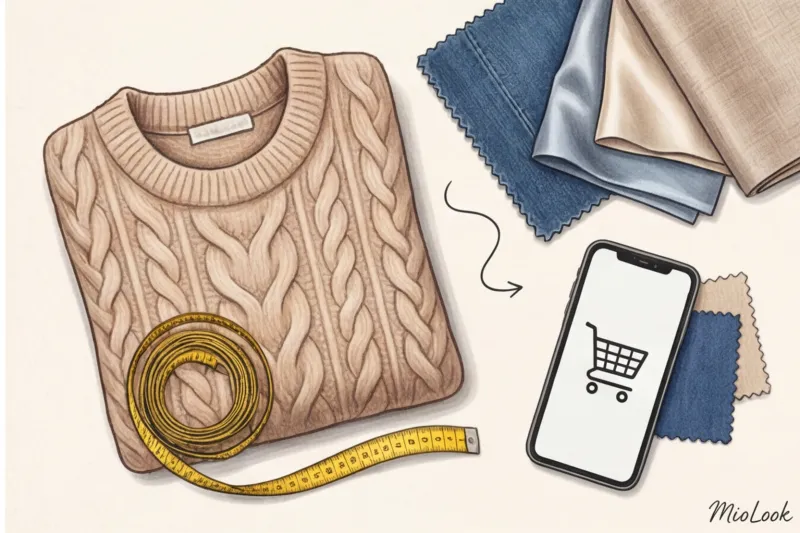
A tape measure around the waist always gives an error: we involuntarily suck in our stomachs or pull the tape too tight. Professionals use a technique Flat Measurement (flat dimension).
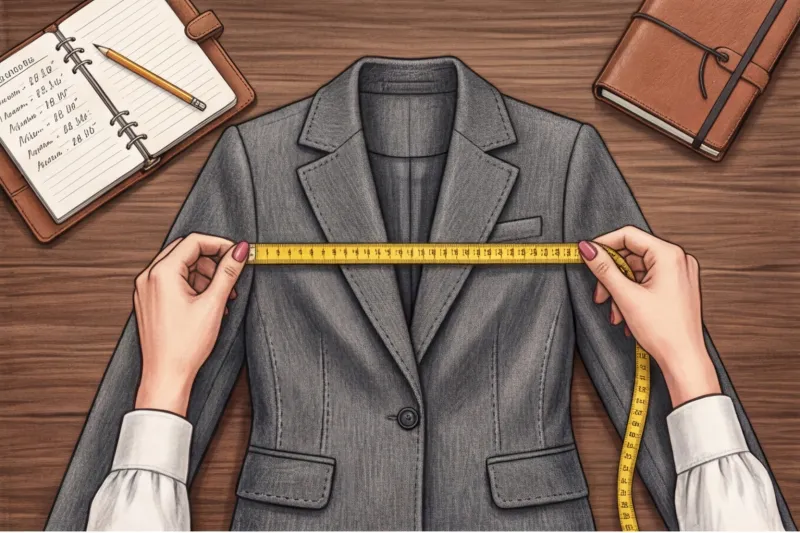
Take a shirt or pair of pants that fit perfectly. Lay them out on a flat table, button them, and smooth them out with your hands. Measure:
- Width from armpit to armpit (multiply by two to get the chest circumference of the product).
- Shoulder width (from seam to seam).
- The length of the inseam (the inside seam of the trousers from the crotch to the bottom).
Now compare these figures not with the body measurements table (Body measurements), but exclusively with the measurements of the product itself on the website (Garment measurements).
Rule 2: Read fabric composition like a pro
Your accuracy in choosing a size directly depends on the material the garment is made of. The material can be forgiving or harshly punishing for mistakes.
- Contains elastane (2-5%): Clothes made with spandex or elastane easily forgive a half-size misstep. They'll adjust to your anatomy.
- 100% natural fabrics (cotton, linen, silk): Here you need to be uncompromisingly precise. No concessions.
A case study: One of my clients ordered a stunning linen dress in her "standard" size M. She didn't take two factors into account: the fabric contained 0% elastane, and the brand's pattern didn't allow for a loose fit. The dress was bursting at the chest seams. Furthermore, natural linen can shrink up to 5% after the first wash. If you're buying 100% cotton or linen, always allow for this percentage for washing.
Rule 3: Consider the "constructive allowance"
In clothing design, there are concepts such as Pg, Pt, and Pb—design allowances for ease of fit at the bust, waist, and hips. These are those extra centimeters of fabric that allow you to breathe, sit, and raise your arms.
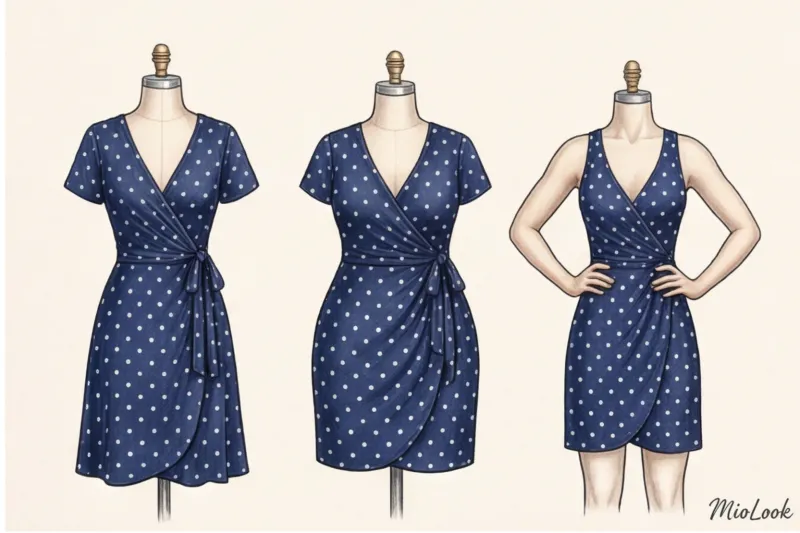
The difference is colossal. A slim fit adds just 2-4 cm to your body circumference. A regular fit adds 6-8 cm. An oversized fit adds 12 to 20 cm! How can you tell from an online store photo? Look closely at the armholes and shoulder seam. If the shoulder seam drops 3-5 cm below the natural shoulder line, you're looking at a garment with significant allowance, and there's no need to go up a size for oversize—the designer has already done that for you.
Your perfect look starts here
Join thousands of users who look flawless every day with the MioLook intelligent wardrobe.
Get access — €0.99 onceThe biggest mistake when shopping online: ignoring cut and body type
Even if you've calculated your size down to the millimeter, a garment can fit terribly if its design clashes with your body's. Choosing the right size is inextricably linked to understanding the cut.
Example: fashionable palazzo pants. For a petite figure (up to 160 cm), classic palazzos made of thick fabric will create a "boxy" effect, even if they fit perfectly at the waist. In this case, you'll need at least a smaller size and a different fabric, such as flowing viscose. Or consider sheath dresses for a pear-shaped figure (narrow shoulders, wide hips). If you size based on your hips, the dress will hang awkwardly at the chest.
Stylist life hack: Have your tailor tailor your size to your specific needs. I have a client with prominent hips and a very small waist. We always buy her pants one size larger (to ensure a perfect, loose fit through the hips), then take them to a tailor, where the tailor takes in the waistband by 4 centimeters. A perfect fit isn't achieved by magic, but by a well-thought-out strategy.
Customer Reviews: How to Filter Out the White Noise and Find the Gems
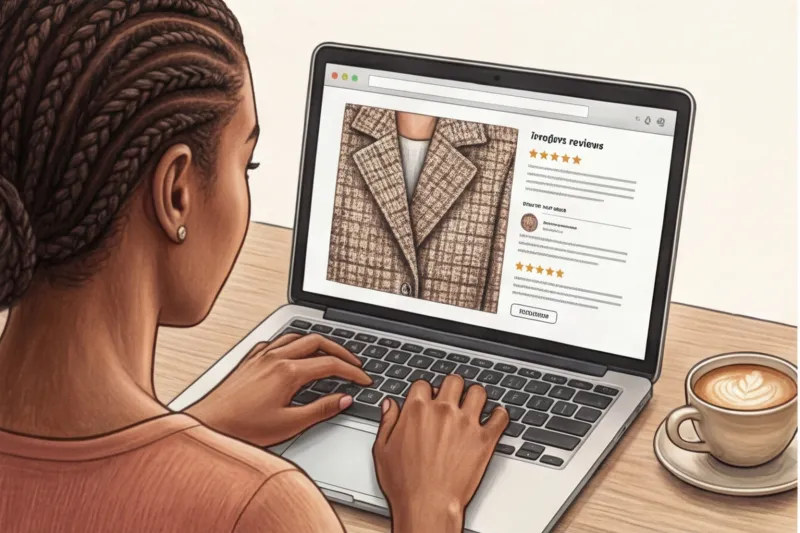
You need to know how to read reviews. Comments like "perfect fit, true to size, superb quality" are completely useless. It's white noise. What should you really be looking for?
- Reviews with parameters: Look for women who list their height, weight, and measurements in centimeters, as well as the size they purchased. This is the only way to accurately compare the actual size.
- Fabric tension: Look at amateur photos. Pay attention to horizontal creases in the crotch of the trousers (a sign that the trousers are too small in the hips or the inseam is incorrect) and to buttons coming apart at the chest.
- Sleeve and leg length: Reviews always show where the sleeve ends. If the sleeve ends just above the wrist bone on a girl who's 170 cm tall, the item will be too short for tall women.
Ready to get started?
Try the free plan—no commitments. Upload your items and create looks in one click.
Get access — €0.99 onceThe Age of AI: Virtual Try-Ons Instead of Returns
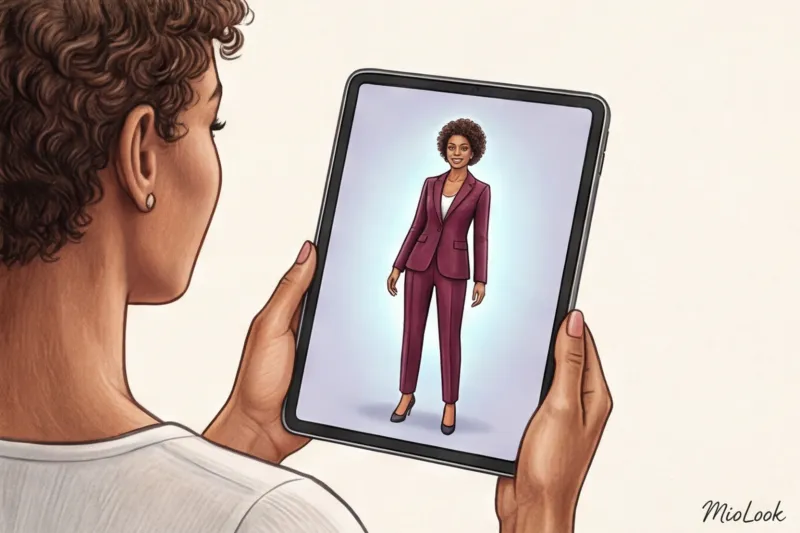
Traditional size charts are quickly becoming a thing of the past. They are being replaced by AR (augmented reality) and 3D body modeling technologies in retail. Today, advanced platforms don't just ask your height and weight—they analyze your digital twin.
How does it work? The algorithms take into account not only static parameters but also the drape of the fabric. Heavy velvet and light silk hug the figure differently, and neural networks are already able to calculate this. Using tools like the smart wardrobe in the app MioLook , you can digitize your ideal items and create outfits with mathematical precision, understanding how the volumes will interact with each other.
Stylist checklist: check your cart before checkout
Before clicking "Pay," go through this checklist. If you have any doubts about any of the steps, stop.
- Step 1: Has the fabric composition been tested for elastane (and is there a 5% shrinkage allowance for cotton/linen)?
- Step 2: Have the garment measurements been compared with a reference item from your closet using the Flat Measurement method?
- Step 3: Is the brand's country of origin taken into account (remember the Italian "small-sized" ones)?
- Step 4: Have you found any customer reviews with similar parameters and macro photos of the fabric?
- Step 5: Are you prepared to take this item to a tailor for a perfect fit, if necessary (for example, to shorten long sleeves)?
Conclusions: Smart online shopping is a system
Choosing clothes online without trying them on ceases to be a lottery once you shift your approach from emotional to analytical. Stop blindly believing the letter on the tag. Your size isn't an S or L; it's the specific centimeters from seam to seam, multiplied by an understanding of the fabric composition and cut.
Take 15 minutes to measure your reference items, record these measurements in your phone, and you'll save dozens of hours on returns. Online shopping should bring the joy of unpacking, not disappointment in front of the mirror.
Try MioLook
A smart AI stylist will select the perfect look for you based on your preferences and parameters.
Get access — €0.99 once