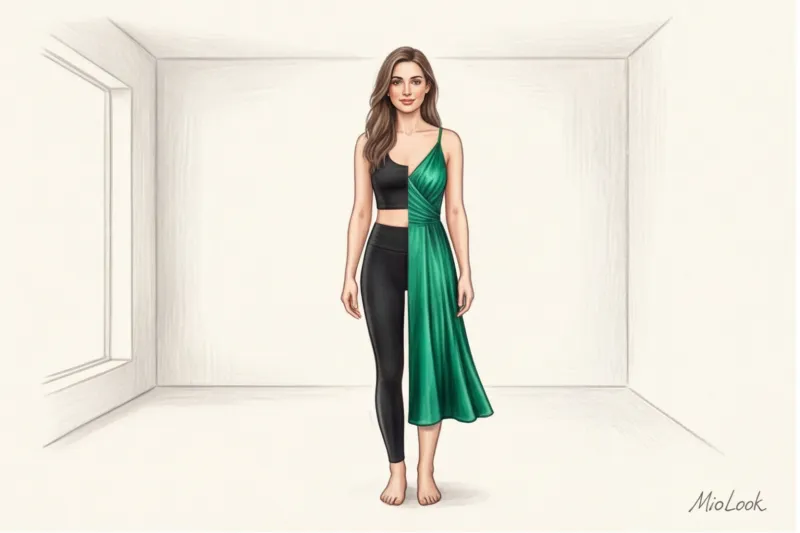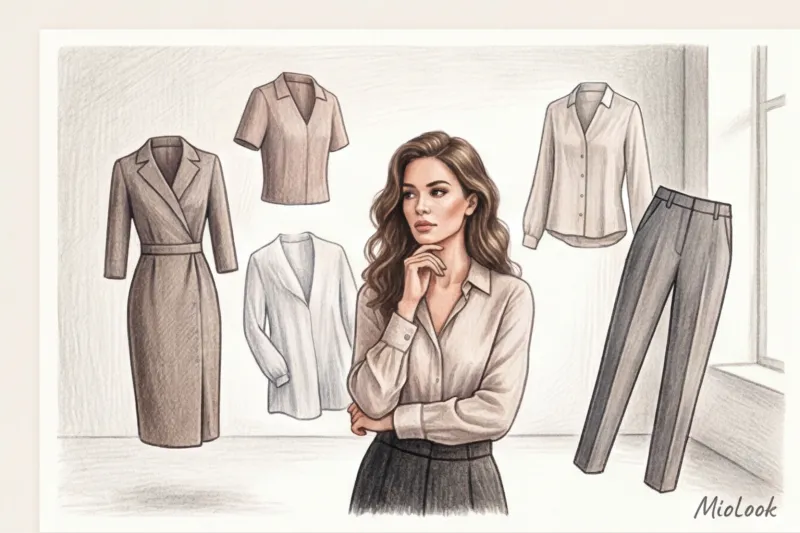
Have you ever noticed a paradox? The more flawlessly an item fits your digital avatar in the app, the higher the chance of bitter disappointment when you unpack the long-awaited package. You expect an architectural silhouette, but receive a shapeless piece of fabric. Why does the perfect image so often ruin our wardrobe?
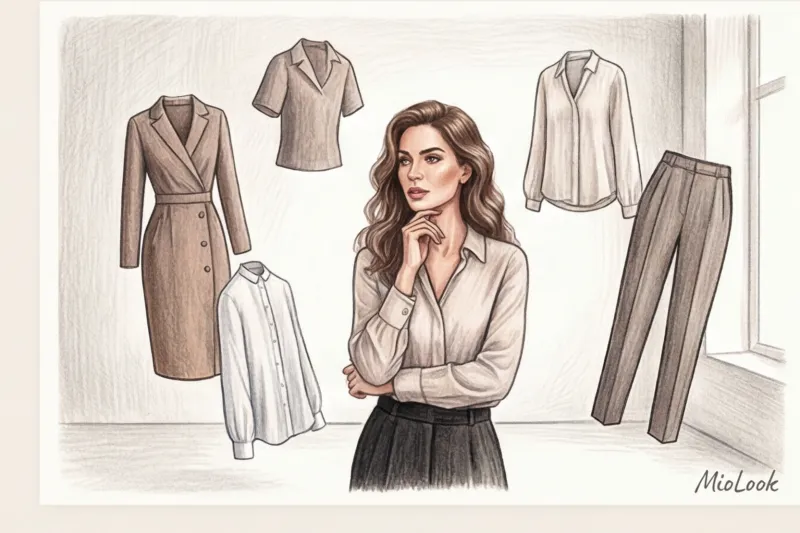
As a journalist who has been covering innovation at the intersection of fashion and technology for publications like Vogue for the past ten years, and as a practicing stylist, I can say with all due respect: virtual fitting room online — it's a brilliant tool. But only if you can translate the mathematical language of algorithms into the language of real tissue physics. We've already discussed the global evolution of this phenomenon in more detail in our a complete guide to virtual clothing fitting , but today I want to share with you some insider secrets for practical application.
We won't discuss which button to click to upload a photo. I'll teach you how to interpret 3D fitting results like professional stylists do, so your expectations finally match reality.
How a virtual online fitting room is changing the rules of the game
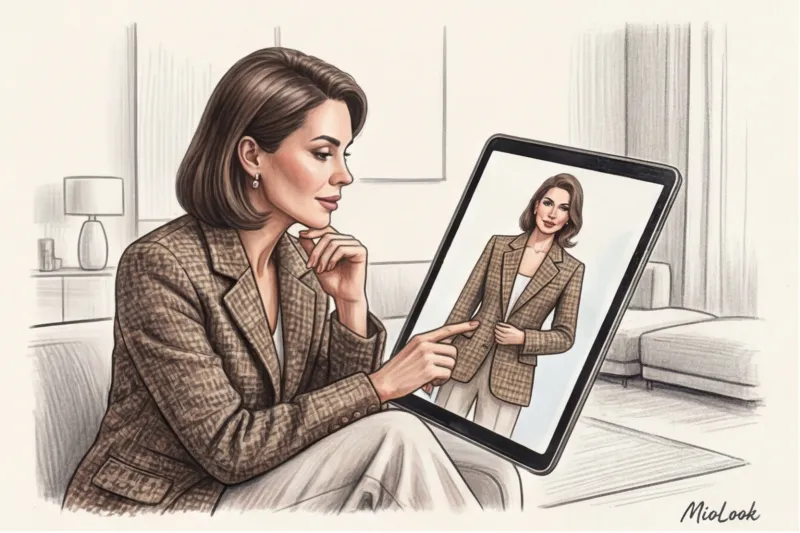
Just five years ago, virtual fittings were like playing with paper dolls: we simply pasted flat photographs of dresses onto our selfies. Today, the industry has entered the era of sophisticated neural network-based 3D avatars that analyze dozens of body parameters.
The numbers speak for themselves. Shopify's 2024 report clearly states that implementing precise 3D models reduces returns by an impressive 40%. Moreover, this technology is environmentally friendly—the carbon footprint of returns logistics is reduced by 25%. Knowing your exact physical parameters is now more important than intuitive shopping.
That's why tools like the smart wardrobe feature are MioLook become more than just a one-night stand, but your daily base. You create your profile once, and then the algorithm helps integrate new items into the existing capsule.
Step-by-step guide: how to use the AR fitting room without errors
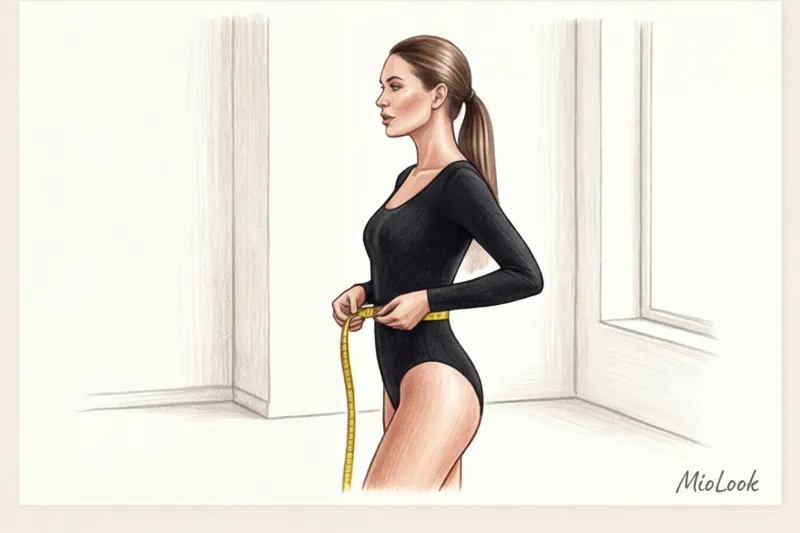
Creating a high-quality digital avatar is the foundation. The neural network is brilliant, but it only operates on the data you provide it. If you upload a photo taken from top to bottom (a classic mirror selfie), you're artificially shortening your legs and enlarging your head. The entire posture math collapses instantly.
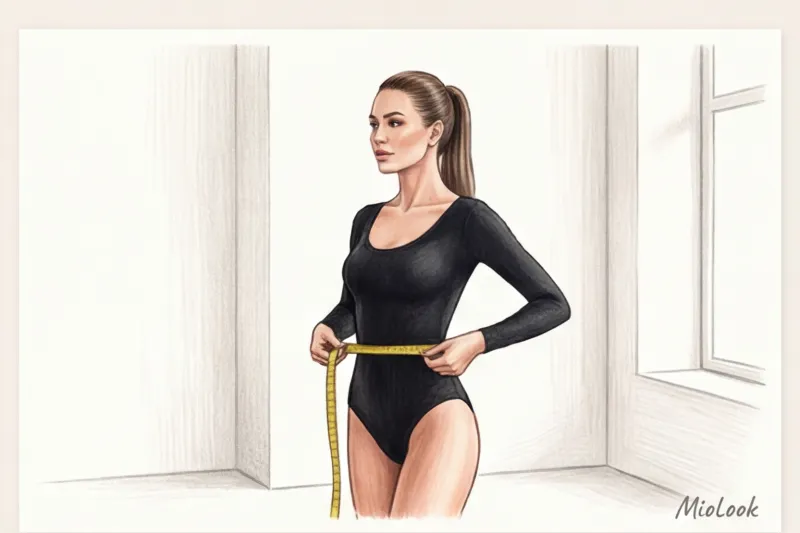
For the AR fitting system to work correctly, the camera must be positioned exactly at waist level, and the lens must be parallel to your body, without tilting.
Preparing the "source": what to wear for a neural network photo
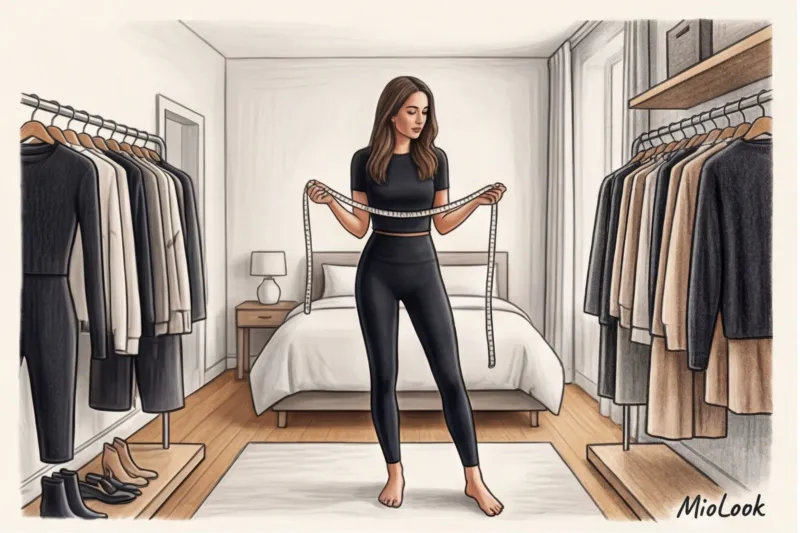
The most common mistake my clients make is scanning their bodies in baggy loungewear. The algorithm can't see through fabric (and thank goodness for that). The ideal uniform for creating a 3D avatar is thick black leggings and a form-fitting top. But there's another subtle nuance here.
Did you know that, statistically, 94% of women wear the wrong bra size or shape? This dramatically distorts the results of virtual fittings. The algorithm reads the highest point of the bust (the apex) to calculate how the fabric will fall. If the bra doesn't hold its shape, the 3D model lowers the center of gravity, resulting in the virtual fitting room giving you completely incorrect waist proportions.
Reading dimensional grids through a 3D prism
Forget about the letters on the tag. S, M, and L are marketing constructs that vary even within a single brand. In virtual reality, we only look at reference points: chest, waist, hips, and, most importantly, shoulder width.
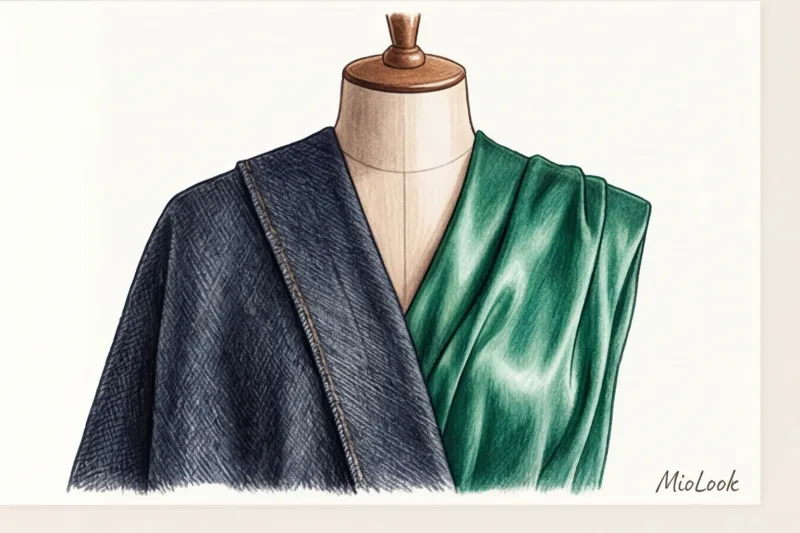
Always compare your actual measurements in centimeters with the algorithm's recommendation. If the 3D model recommends a size M, but the brand's size chart suggests it's designed for shoulders 3 cm wider than yours, the garment will look sloppy rather than stylishly oversized.
Your ideal image
it begins Here
Join thousands of users who look flawless every day with MioLook.
Get access — €0.99 onceThe main illusion created by the virtual fitting room
It's time to bust the biggest myth of fashion technology. A perfect image on a screen makes us fall in love with a blurry visualization, completely forgetting about the fabric's composition. This is what I call the blind spot of neural networks: they can't yet perfectly convey the density, weight, and texture of a material.
"A neural network sees pixels, but we wear textures. Rigid cotton will never fit like a gradient drawn on a screen"—I tirelessly repeat this rule to all my clients.
Let's recall the story of my client Marie, who was putting together her wardrobe for Paris Fashion Week. In a premium AR fitting room, she found a "perfectly fitted" slip dress. In the 3D render, it flowed across her hips, concealing her figure. Marie ordered it without hesitation. When the package arrived, it turned out to be made of stiff, heavy viscose with a thick lining. Instead of a flowing silk cascade, we received an architectural cocoon, which added two sizes to Marie's hips. The online virtual fitting room simply didn't account for the real-life drape of this particular piece of fabric.
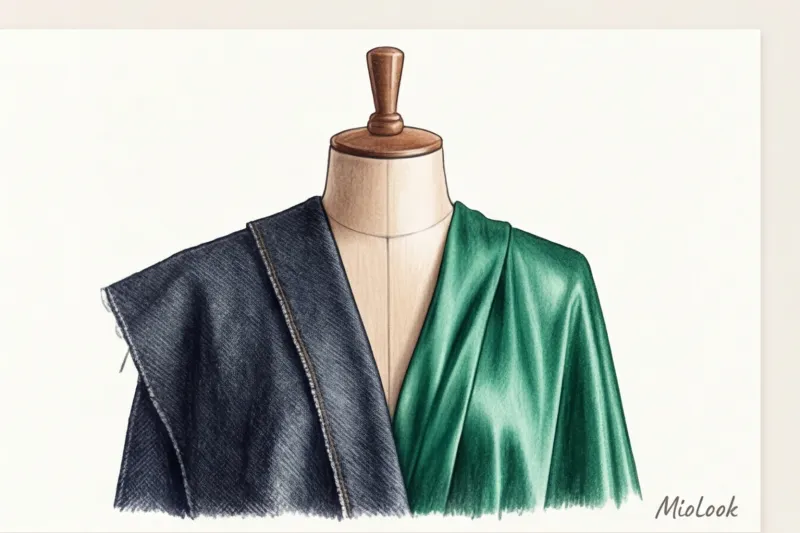
120 g/m² cotton will lay completely differently than heavy 14 oz denim, even though they may appear identical geometric shapes on screen. 100% linen always appears smooth and supple in 3D, whereas in real life it's a fickle, fragile material.
A stylist's perspective: how to evaluate the fit of a virtual garment
So, how do you look at a screen to see the truth? I use a professional tailor's checklist, adapted for digital image analysis.
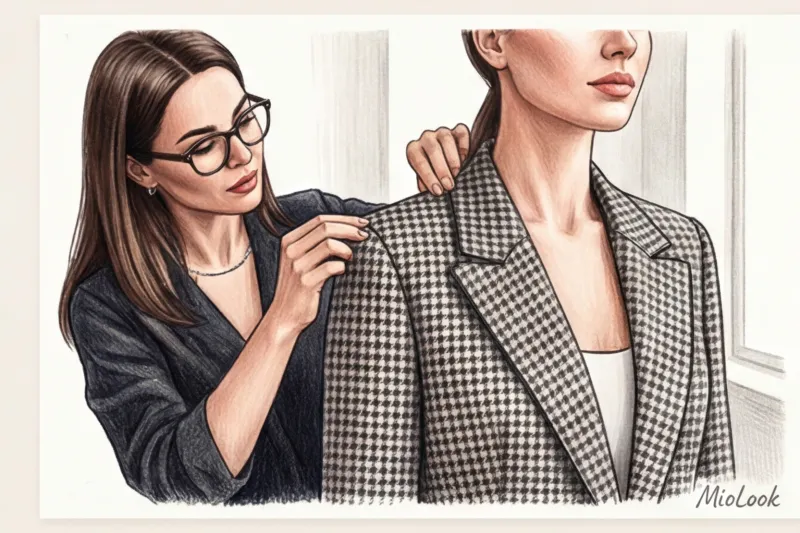
- Checkpoint #1: Shoulder seam and armhole. Over 12 years of working, I've learned one thing: if the shoulder is out of place, the garment looks cheap. The sleeve insertion point should be exactly where your collarbone ends. In the 3D fitting room, zoom in on this exact area.
- Checkpoint #2: Waist line. Look for the "golden ratio" proportions. An algorithm might "fit" pants perfectly, but if they actually sit below your natural waist, your legs will appear shorter.
- Checkpoint #3: Product length. Neural networks often scale length proportionally to size. Be sure to check the product length in centimeters in the product description and compare it to your height.
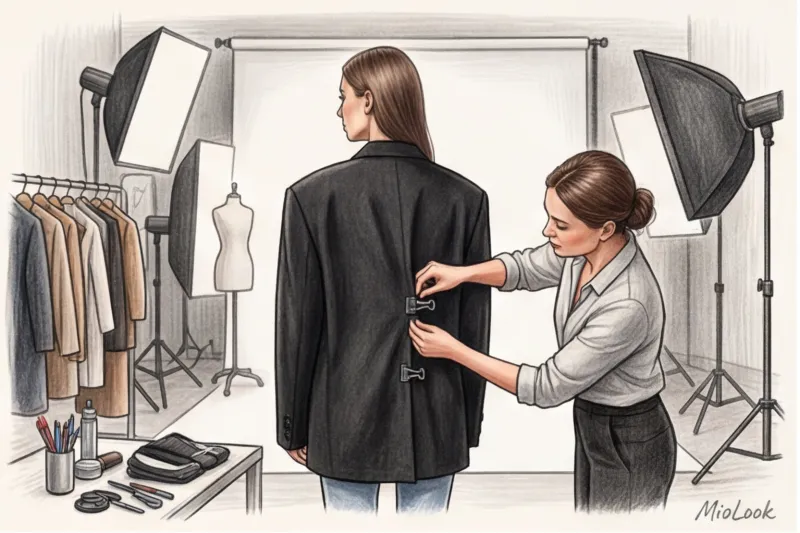
- Volume analysis. How can you tell if a garment is meant to be oversized or simply too big? If the shoulder seams are deliberately dropped and the collar is tight, it's oversized. If the collar hangs down from the neck and the armholes reach mid-rib, it's simply the wrong size.
Try MioLook
for free
Start creating perfect images with the help of artificial intelligence
Get access — €0.99 onceFor what items does online virtual fitting work flawlessly?
Let's be honest: technology isn't omnipotent. There are clothing categories where 3D fittings are 10/10, and others where they frankly fail.
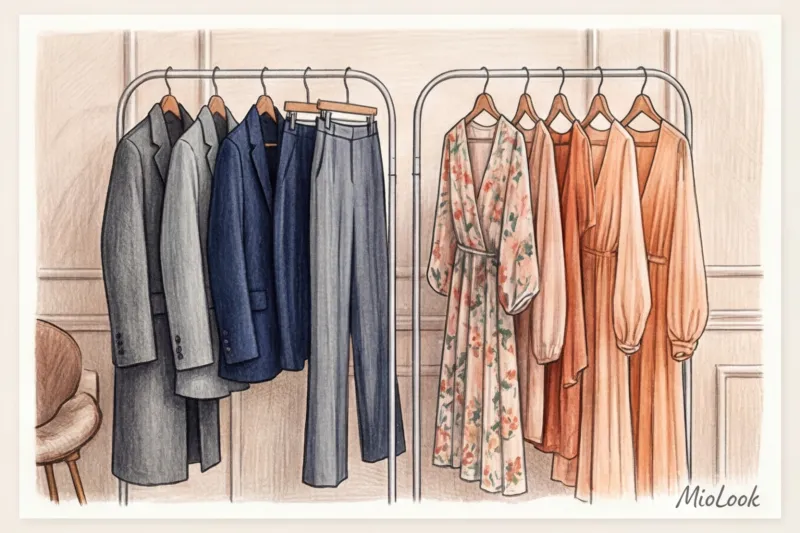
According to the authoritative Vogue Business Technology Index (2024), AR technology demonstrates the greatest accuracy with structured garments. Classic jackets, coats, and tailored wool suit trousers are ideal for garments where the pattern geometry is predictable and the fabric holds its shape. The virtual fitting room also works well for fitted knitwear and basic T-shirts.
When it does NOT work: Complex asymmetrical cuts, bias-cut dresses, and items made of ultra-lightweight materials (chiffon, fine silk). Algorithms are not yet capable of calculating the chaotic, dynamic draping of delicate fabrics. If you choose a slip dress with a complex cut, be prepared for it to behave differently in real life than on screen.
By the way, if you're just getting started with AR, start with accessories and glasses. They're the perfect starting point, where the rigidity of the materials plays into the algorithms' hands.
Checklist: 5 steps before placing an order after a 3D fitting
Before you click "Pay," go through my professional checklist. These five minutes will save you weeks of waiting for your refund.
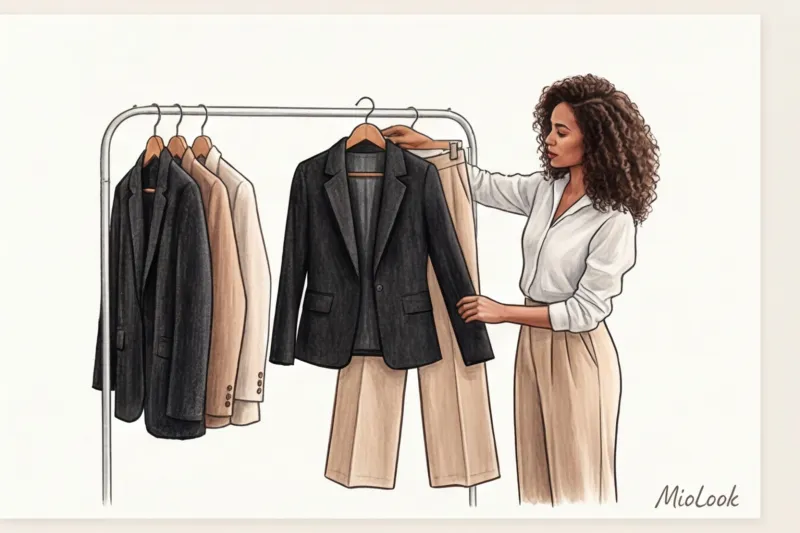
- Check the fabric composition. Does it match the visual silhouette? If you see a rigid corset bodice, but it's 95% viscose, the algorithm is misleading you.
- Analyze the thing in motion. If the platform offers an animation feature (as leading retailers do), be sure to check out how the hem behaves as you walk.
- Compare the fit with the standard. Take your favorite jacket from Zara or Massimo Dutti out of your closet, measure its shoulder width, and compare it with the dimensions of your virtual find.
- Judge the length based on your measurements. Don't trust the picture. Find the "back length" measurement in the product description and measure it against your body.
- Test the encapsulation. Upload the item to MioLook app If a smart stylist can't put together at least three complete looks from your current wardrobe, this item will become a "loner" in your closet, no matter how beautifully it looks on your 3D avatar.
An online virtual fitting room isn't a magic wand that will rid you of shopping mistakes forever. It's a highly precise tool that requires careful tuning. Treat your digital avatar not as the final truth, but as an intelligent advisor. Study the compositions, understand the physics of fabrics, and remember: the perfect style is born at the intersection of advanced algorithms and your personal, lived experience.