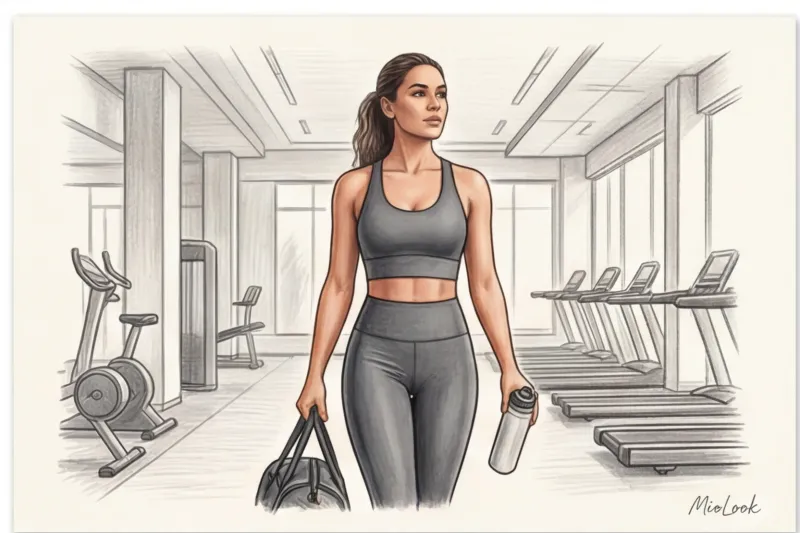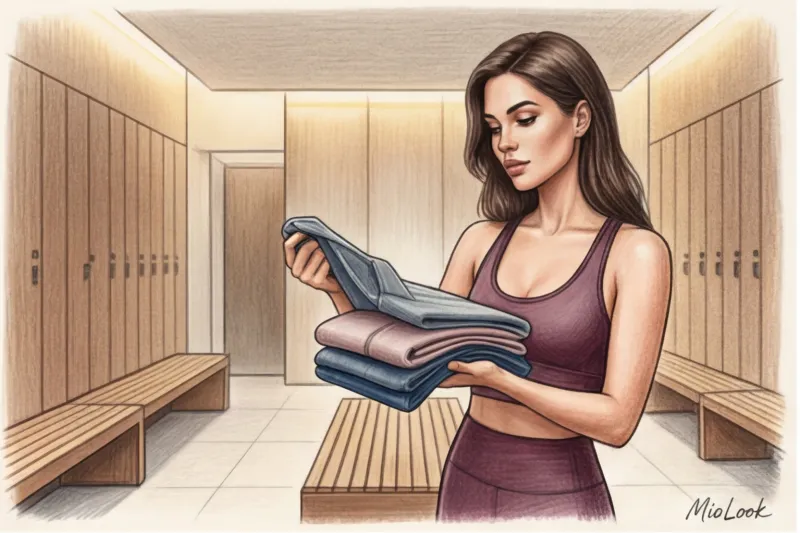
What is an investment-grade sports wardrobe?
Over the 12 years I've been working as a personal stylist, I've regularly observed the same paradox. A client comes to me—a successful, confident woman. She wears impeccably tailored Jil Sander jackets and silk blouses to the office. But when we start to analyze her sports wardrobe , stretched-out cotton T-shirts of dubious origin and leggings with stretched-out knees appear. "Julia, it's just for the gym, so you can sweat," I often hear in my defense. And every time, I respond: why do you deny your body respect precisely when it's working at its limit?
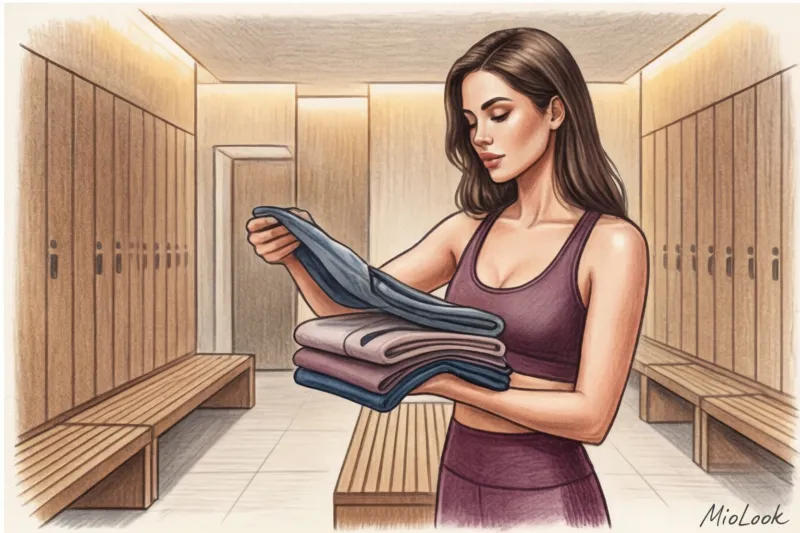
Choosing fitness gear requires the same approach as buying a business suit. Premium activewear isn't just utilitarian fabric; it's architectural. Just as a good blazer cinches your shoulders and elongates your silhouette, so too do technical leggings with the right compression shape your body, support your muscles, and instantly transform your posture. Cheap, shapeless clothing leaves you feeling tired before you even start your workout. High-quality clothing leaves you focused, strong, and ready to perform. The difference in how you feel and project your status is colossal.
Beyond aesthetics, let's consider the cost. The concept behind the fitness capsule Cost-per-wear (cost per wear) works most clearly. Buying a pair of mass-market leggings for €25 only seems like a good deal when you pay at the checkout. After five washes, they lose their elasticity, become treacherously see-through, and are thrown away—ending up a cost per pair of €5. Meanwhile, a high-tech pair for €130, designed with biomechanics in mind (for example, from patented nylon blends), can withstand over 150 intense workouts without losing shape or color. The cost per pair drops below €0.80. Cheap sportswear is a luxury that shouldn't be afforded if you're truly looking to save money. To clearly track how often items are used and their return on investment, I recommend my clients digitize their capsule collection through MioLook - This is a great sobering thing when you're spontaneously shopping.
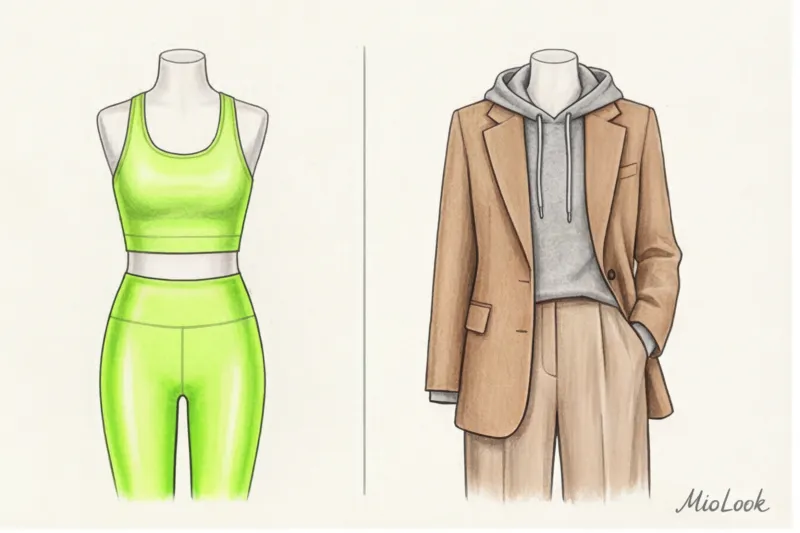
According to the McKinsey analytical report (2024), the segment Athleisure has completely blurred the boundaries between sportswear and everyday wear. We're past the "gym-only" era. Today, you leave a Pilates class, throw on a voluminous double-breasted coat over a crop top, and head to brunch or pick up the kids from school. Your look should be appropriate in any of these situations. The same style rules apply here as when you're packing basic colors in the wardrobe: deep, noble shades, absence of flashy neon inserts and impeccable fit.
Micro-rule for investment shopping: Before buying a new workout item, ask yourself, "Will I be able to wear this top with a classic trench coat and go out for coffee?" If the answer is "no," return the item to the hanger.
Basic Elements: What a Fitness Capsule Consists of
According to McKinsey's 2024 Activewear Market Analysis Report, most women only regularly use about 30% of their wardrobe for exercise. The rest are impulse buys that sit idle: bras that are too tight, tights that slip down while running, or sweatshirts that are unbearably hot. A well-assembled wardrobe sports wardrobe must operate according to the same strict laws of efficiency as a flawless business capsule.
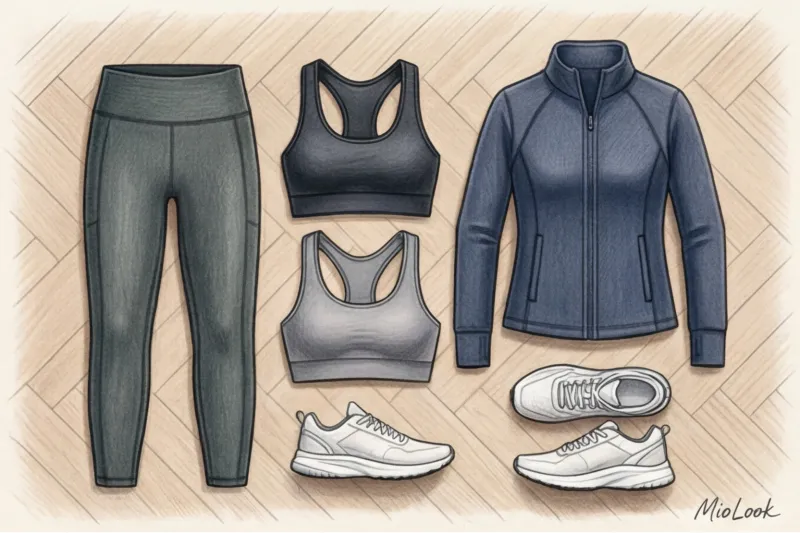
The ideal fitness capsule isn't a pile of disparate items, but a rigorous mathematical calculation. My golden formula, which I implement during shopping sessions, looks like this: ratio 3:4:2 (three bottoms, four tops, two second layers). There's pure pragmatism behind this proportion.
Let's break this down based on your workout frequency. If you work out 3-4 times a week, this capsule will allow you to always have clean clothes without having to run the washing machine every day. Three bottoms (for example, two basic leggings and one pair of cycling shorts) are combined with four tops (two strong-fit bras, one lightweight top, and one loose tank top). Two additional layers are responsible for comfort before and after exercise.
The secret to a capsule's return on investment lies in its complete interchangeability. Before adding an item to your cart, make sure the new top pairs flawlessly with all three bottoms, and that the second layer matches the style of each outfit.
Tops and bras: support and silhouette architecture
A premium sports bra is a true marvel of engineering. Many people make the mistake of choosing a top solely based on color or back design, forgetting the most important rule: the level of compression should be precisely matched to the type of activity.
For yoga, Pilates, or stretching (low-impact), we look for gentle compression and freedom of movement. Thin, elegant straps and deep necklines are acceptable. But if you're going for a run, CrossFit, or HIIT workout (high-impact), simple compression isn't enough. You need encapsulation—a sophisticated cutting technique that supports each breast independently.
Cheap tops are guilty of mercilessly flattening the breasts, pressing them against the ribs and creating an unsightly uniboob effect. In the right products, priced between €70 and €150, you're paying for an architectural cut. Look for wide straps that distribute weight evenly and don't dig into the trapezius muscles of the neck. Hidden flat seams or seamless technology ensure that after an hour of intense exercise, you won't be left with painful, red marks. A quality top works like a corset: it maintains your posture and supports your breasts, but doesn't interfere with deep breathing.
Leggings and cycling shorts: geometry and compression
One day, at a fitting, a client and I were testing out some incredibly beautiful cycling shorts from a popular fitness brand for €110. The color was stunning—a deep taupe. But as soon as she leaned over, the fabric treacherously revealed the texture of her underwear. Since then, I've instituted a strict rule: no pair of bottoms goes to the checkout without squat proof test (deep squat test).
How to properly test leggings in the fitting room? Stand in front of a mirror, squat as deeply as possible, and look at your reflection from behind in good lighting. The fabric shouldn't turn white, stretch to the point of being transparent, or lose its color. If skin is visible through the material, return the item to the hanger immediately.
The second common problem is the notorious "camel toe" effect, which instantly cheapens the look. In the premium segment, this problem is elegantly solved by using a gusset (a diamond-shaped or triangular panel between the legs) and the absence of a center front seam. This relieves tension in the groin area.
The geometric cut at the back is another marker of a status item. Why have a high waist and a V-shaped seam at the waist become the gold standard of premium brands? A straight seam makes the buttocks appear flat and square. A V-shaped (or heart-shaped) yoke acts as an optical illusion and a subtle push-up effect, visually rounding and lifting the buttocks. Paired with a snug compression waistband that doesn't bunch up on your stomach during crunches, you get a toned, toned silhouette even before you start your workout.
Access to MioLook for €0.99 — one-time payment
A smart AI stylist will create the perfect look and help you digitize your sports capsule wardrobe so nothing sits idle.
Get access — €0.99 onceSecond layers: tracksuits, zip-up hoodies, and long sleeves
The second layer is the unifying element that elevates your outfit from the "I'm going to sweat it out" category to the elegant aesthetic of athleisure. It's what allows you to casually stop by your favorite coffee shop for a game after your workout without feeling out of place.
Here we have to make a decisive decision: we're forever abandoning the old, baggy sweatshirts and stretched-out hoodies that many people habitually throw over their uniforms. Shapeless knitwear ruins the geometric structure of the look we've so carefully built with leggings and tops. Replace them with structured sports jackets and technical tracksuits.
A fitted track jacket made of dense fabric with a stand-up collar creates clean vertical lines. It visually elongates the height and creates a composed silhouette. If you prefer a more relaxed style, invest in a tight zippered crop hoodie. The cropped cut of the second layer, combined with the high rise of the leggings, creates the perfect golden ratio proportions, artificially elongating the legs. Long sleeves with thumb holes not only protect the hands from calluses when lifting weights but also add dynamism and completeness to the look.
The Anatomy of Premium Fabrics: What We're Really Paying For
Have you ever wondered why two pairs of black leggings can look exactly the same on the hanger, yet one costs €25 and the other €130? The difference isn't in the logo markup, as is commonly believed, but in the chemical composition of the thread. sports wardrobe investment grade, you're paying for sophisticated engineering, not just a pretty cut.
Cheap mass-market products use standard extruded polyester with a round thread cross-section. These fibers are tightly packed together, blocking air circulation—this is what creates the unbearable "greenhouse" effect during intense workouts. Premium brands think differently. Companies like Lululemon and Alo Yoga spend years and millions of euros patenting their own materials.
Take, for example, Lululemon's renowned Nulu fabric or Alo's Airlift. Their fibers are cross- or multi-channel woven and undergo a complex microbrushing process. The result is an incredibly soft texture that also possesses hydrophilic properties. The fabric acts like a pump: it literally draws moisture away from the skin to the surface, where it instantly evaporates, keeping your body dry even during a hot yoga class.
Why organic cotton is the enemy of an active lifestyle
Here I want to pause and debunk one of the most persistent myths I encounter when sorting through wardrobes. "I prefer to workout in natural cotton, it's breathable," one of my new clients recently told me categorically. Sounds logical? Absolutely not.
From a textile physics perspective, using 100% cotton for active sports is an aesthetic and functional disaster. According to research from the Institute of Textile Technology (Aachen), cotton fiber can absorb 27 times its own weight in moisture. But the main problem is that it retains this moisture. holds When you sweat during Pilates or a run, your favorite cotton T-shirt turns into a heavy, wet compress.
This immediately disrupts natural thermoregulation: wet fabric clings to the body and cools rapidly at the slightest draft (often leading to muscle spasms). Furthermore, natural cotton has virtually no structural memory. If you've ever done a series of squats in cotton joggers, you're well aware of this unfortunate "stretched knees" effect. Add to this the fact that cotton fibers don't hold dye well—after the third wash, the deep black color inevitably turns a dusty gray, and the garment loses its presentable appearance forever.
Ideal composition: nylon, spandex and high-tech blends
If cotton is taboo and cheap polyester is uncomfortable, what exactly should you look for on the label? The ideal formula for a premium fitness capsule is based on a blend of high-quality nylon and elastane (also known as spandex or lycra). Nylon provides that elegant matte finish that looks expensive and doesn't shimmer with a cheap sheen under bright studio lighting.
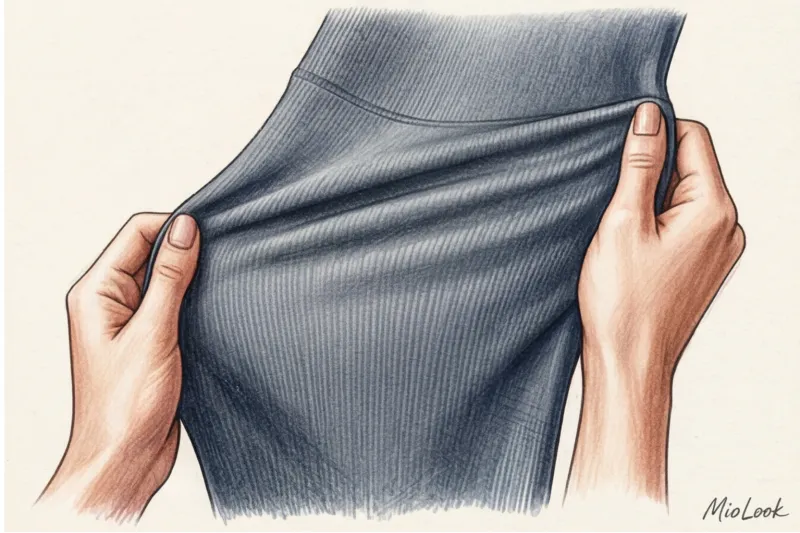
When shopping, pay special attention to proportions. To create a "second skin" effect and proper sculpting compression, the bottoms should contain exactly 15% to 25% elastane. If it's less than 15%, the garment will begin to slip around the waist during active movement and bunch up under the knees. If it's more than 25%, the fabric will become too stiff, restricting lymph flow and restricting movement.
Choose fabrics with 4-way stretch technology. Budget alternatives stretch only widthwise, while premium blends stretch both lengthwise and widthwise, instantly returning to their original shape without distortion.
Another invisible but critical quality indicator is the presence of antibacterial treatments (often based on silver ions, like Silverescent technology) and seamless circular knitting. The treatment prevents the growth of odor-causing bacteria. This means the garment doesn't need to be washed at a harsh 60 degrees Celsius, which can damage the fiber structure. And the absence of rough seams ensures that invisible comfort: the fabric doesn't dig into the sides and creates a perfectly smooth silhouette.
When you invest in such tech-savvy things, the ROI is astounding. I always advise my clients to digitize their capsule collection. MioLook. In six months, you'll see: the perfect basic leggings for €110, which you wear three times a week and which retain their original appearance after 50 washes, cost you significantly less per wear than a stack of quickly worn-out items from the mass market.
From the gym to brunch: how to incorporate a sports wardrobe into your everyday style
Imagine a familiar situation: your morning workout ended at 10:00 AM, and by 11:15 AM you've already scheduled a casual breakfast with your partners or a business meeting. There's no time to fully change. Showing up at the cafe in a fleece tracksuit and with disheveled hair would instantly ruin your professional look. This is where proper styling and a sense of appropriateness come into play.
Style Athleisure "Sweatpants" isn't just social permission to wear sweatpants outside the gym. It's a subtle art of stylistic contrasts, where technical athletic wear meets classic elegance. The main rule I always instill in my clients is: The sportier and more form-fitting your bottom is, the more formal, voluminous, and architectural your top should be. You can't wear leggings with a tight tank top, throw on a windbreaker, and just go to a restaurant—it looks sloppy.
To avoid mistakes, use a foolproof look formula that style icons have been using for decades (remember Princess Diana's famous vintage looks): leggings + oversized sweater + structured coat or heavy cotton trench coat.
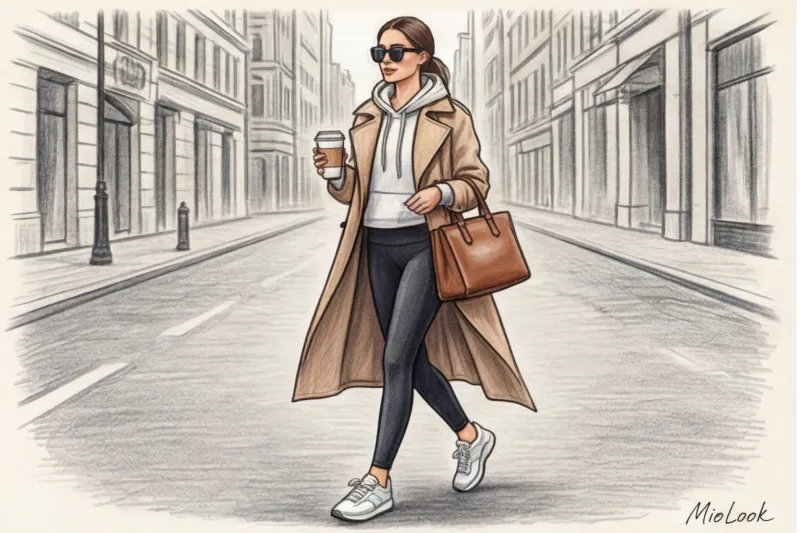
Why does this formula work so well? Opaque leggings act as thick tights, creating a neutral, form-fitting base. A chunky sweater—ideally made of thick merino wool or cashmere—offers a snug fit and adds a touch of texture. A tailored trench coat or double-breasted coat with sharp shoulders instantly brings the silhouette together, shifting the emphasis from sporty to relaxed urban chic.
"The secret to a luxurious look lies in the blending of contrasting textures: the smooth, technical nylon of sports bottoms requires a companionship with noble natural materials—wool, cashmere, or thick leather."
Just last month, I was putting together a seasonal capsule collection for an investor client. She absolutely needed to look classy when heading to matches or to short meetings after her morning Pilates class. We built her "morning uniform" around graphite seamless leggings, paired with a loose, textured knit sweater (costing around €280) and a classic, straight-cut men's coat in a sandy shade. We completed the look with high white ribbed socks. This look conveys not the image of a "tired woman after a workout," but a confident woman who values comfort and manages her time.
Access to MioLook for €0.99 — one-time payment
Start creating perfect images with the help of artificial intelligence
Get access — €0.99 onceHowever, clothing alone isn't enough. The main danger of wearing a gym outfit is slipping into the "I just came from a run and haven't even had time to wash my face" effect. How can you combat this visual marker? The answer always lies in accessories and beauty details.
First, swap out your performance sneakers with aggressive, cushioned soles and mesh for simple, retro-inspired sneakers in smooth leather. Second, ditch the sports backpack. A structured bag—a stiff leather tote or an elegant crossbody—should serve as the city's anchor. An expensive, well-designed bag sends a clear message to others: your athletic bottoms are a deliberate stylistic choice, not a result of laziness.
And finally, makeup and hair. A city gym wardrobe doesn't tolerate disheveled looks. Pull your hair into a sleek low bun or tight ponytail. Throw on chunky horn-rimmed sunglasses—they instantly hide your lack of eye makeup and add a touch of Hollywood incognito. A pair of minimalist gold hoop earrings, a cooling facial spray (to soothe post-cardio redness), a lightweight concealer, and a hydrating lip balm. With this approach, your gym wardrobe will work for you 24/7.
Color Palette: How to Look Expensive in Sportswear
If you look at archival aerobics videos from the '80s, you'll see a riot of vibrant colors. Today, walking into a premium Pilates studio in Milan, London, or New York is like stepping into an exhibition of Scandinavian minimalism. The shifting color paradigm in sportswear isn't just a shift in trends; it's an evolution in attitudes toward an active lifestyle.
According to color theory and Pantone Institute research on visual perception, the human eye subconsciously perceives complex, muted hues as a marker of higher status. This is why neon colors and flashy, rubberized logos emblazoned across the chest are a thing of the past. They create visual noise, cheapen the look, and, most critically, mercilessly highlight the cheap, synthetic sheen of fabric. A premium sportswear wardrobe always requires a completely matte finish and color restraint.
"In terms of visual status perception, the absence of contrasting color blocks and logomania shifts the focus from the clothing brand to the woman herself, her posture, the architecture of the cut, and the quality of the materials," states the basic rule of investment styling.
Recently, a client, the owner of a successful IT startup, approached me with the classic request: "I look like a boss at the office, but like a teenager in casual, colorful leggings at the gym." We completely removed neon and transformed her workout capsule collection into a muted palette. The effect was immediate. It turned out that a monochrome set (even if it costs in the mid-range €80–120 range) visually outperforms any colorful ensemble solely due to the purity of color.
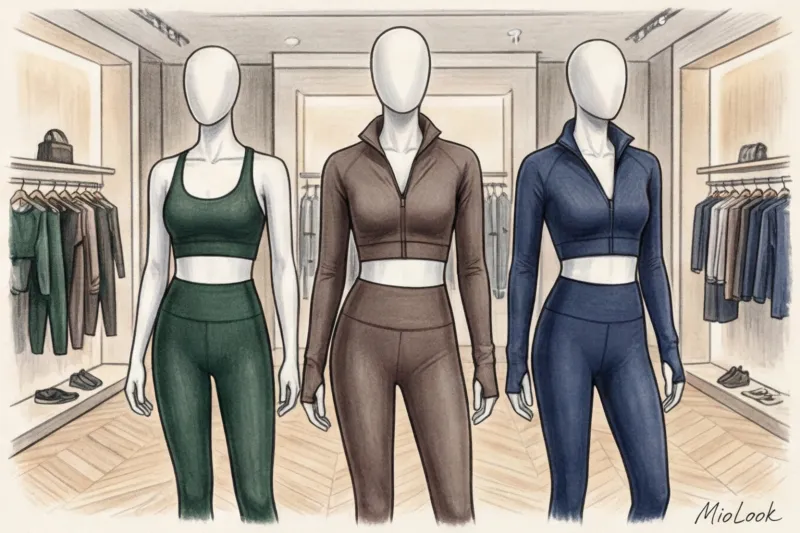
As a stylist, I always teach one foolproof trick: monochrome sets are the quickest and easiest way to achieve a luxurious look. When your top, leggings, and second layer are all tone-on-tone, your figure is elongated into a single, continuous vertical line. It looks like the outfit was carefully thought out, even if you threw it together in a minute and a half before heading to the gym. To avoid creating a proliferation of disparate pieces, I strongly recommend downloading your palette before shopping. MioLook The smart wardrobe feature will clearly show you which monochrome combinations you can create from your current items, and you'll immediately understand whether a new purchase will fit into your existing wardrobe.
If black seems too obvious and boring, and white seems impractical for the gym, consider a complex, natural palette. The ideal sports wardrobe is built on the following elegant shades:
- Taupe and chocolate: A luxurious and warm alternative to black, these shades pair beautifully with casual outerwear—throw a voluminous camel cashmere coat over a chocolate-colored set, and you're ready for breakfast at a fine restaurant.
- Graphite and dusty blue: Ideal for those who love cool colors. Unlike light gray melange, which will insidiously reveal every drop of sweat, dense graphite perfectly conceals traces of moisture during intense cardio or hot yoga.
- Khaki and deep burgundy: They add texture and depth to your look. They're understated yet break up monotony, pairing perfectly with gold or silver micro-jewelry, perfect for even the gym.
By choosing these colors, you're investing in pieces that won't go out of style next season and will seamlessly transition from a sporty context to everyday urban style.
Shoes and bags: the finishing touches that add class
Spending time in the lobbies of premium wellness clubs from Milan to Geneva, I constantly notice the same annoying styling mistake. A woman emerges from Pilates in an impeccable monochrome high-tech set, a Swiss watch on her wrist, but in her hand... a shapeless, rustling bag made of thin polyester with a garish mass-market logo. At this moment, all the magic of the carefully crafted look instantly crumbles.
In the Athleisure aesthetic, it is accessories that take on the main role in conveying status. Your sports wardrobe It may consist of simple basic leggings and a simple crop top, but the bag is the unconditional class marker that is instantly noticeable to others, even if you are completely makeup-free.
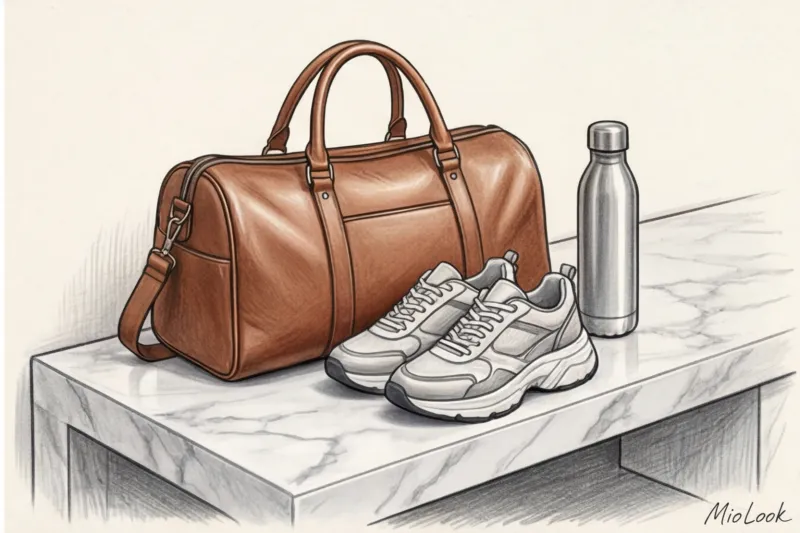
Cheap sports backpacks and thin nylon drawstring bags inevitably cheapen an outfit, visually harking back to the aesthetics of school gym classes. If you invest in your appearance, your uniform bag should match. The ideal solution for a high-status gym capsule is a leather weekender sports bag or premium nylon tote bags with a thick lining and, of course, genuine leather trim.
Pay attention to the design of the bag. The combination of dense, water-repellent nylon (recall Prada's classic use of this material) and stiff Saffiano leather handles creates the perfect geometry. Die-cast metal zippers, a reinforced bottom with puckle (metal feet), and a wide shoulder strap made of thick canvas—these are the details that define the luxury approach. Investing in a quality sports tote will cost between €250 and €600, but its functionality extends far beyond the gym—it's the perfect carry-on on a plane.
Now let's talk about sneakers, where the second most common mistake lies: trying to find one pair that fits all. The well-thought-out capsule collection strictly divides functional models into lifestyle shoes for the street.
Functional sneakers are strictly athletic equipment. Running shoes with aggressive cushioning (like chunky Hoka or Asics) or flat, rigid weightlifting shoes are designed solely for proper biomechanics. Their place is on the treadmill or training platform. Furthermore, hygiene and durability are a matter of concern: street dust destroys mesh materials, and soft, technical soles wear down quickly on the pavement. Wearing them to a casual brunch after a workout is considered a style faux pas.
For your life outside the gym, you need lifestyle sneakers. These clean, minimalist silhouettes pair beautifully with coats, cashmere sweaters, and trench coats. Retro styles like the New Balance 327, classic leather sneakers without unnecessary details, or luxury interpretations of sports shoes from Loewe and Maison Margiela are excellent choices.
To avoid making mistakes with texture and color combinations, I recommend visualizing the entire look in advance. Upload a photo of your new leather weekender bag and lifestyle sneakers to MioLook app The smart wardrobe feature instantly shows how the smooth leather of your bag complements the suede accents on your shoes, saving you time before you leave the house.
Your perfect look starts here
Join thousands of users who look flawless every day with MioLook.
Get access — €0.99 onceChecklist: Audit and Assembly of Your Sports Capsule
When I'm invited to do a wardrobe audit, it's the gym rack that most often represents a chaos of impulse buys and random gifted t-shirts. The investment theory won't work until we conduct a rigorous inventory. Below is my signature four-step process I use with clients to create a functional and aesthetically pleasing wardrobe. sports wardrobe.
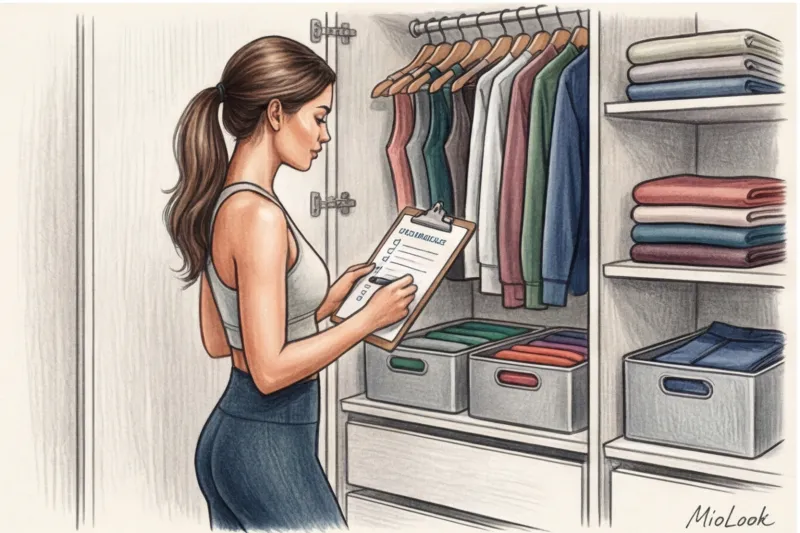
Step 1: Ruthless filtering. The first step is to completely discard faded, stretched-out, and mismatched items. Spandex and technical fibers have a physical limit. If your leggings have pilling in the friction area, the fabric at the knees has lost its original density, or the elastic band of your sports bra has developed an unsightly "wave," the item is dead. Saving such items for "home workouts" or camping trips is a major mistake that ruins your visual aesthetic. Get rid of them without regret.
Step 2: Forming a color base. The next step is defining a basic palette. The ideal formula for a premium capsule collection includes one or two dark shades for bottoms (for example, deep graphite, inky, or chocolate) and one or two light shades for tops and base layers (pearl, taupe, dusty blue). This color discipline ensures that items look refined and don't create visual noise when combined.
Step 3: Shopping Math. Now let's move on to budgeting and creating a shopping list based on your workout frequency. This is pure pragmatism. If you attend a Pilates studio twice a week and go for a run once, you don't need ten sets. You'll need exactly three perfect bottoms, four tops, and a pair of long-sleeved T-shirts, taking into account a regular washing cycle. With this calculation, it becomes clear: it's more cost-effective to buy a pair of sculpting leggings for €110-€130, which will retain their original properties for over a year, than to replace budget-friendly alternatives for €35 every month.
Step 4: Test for absolute compatibility. The final rule: every top should go with every legging in your collection. If a new item only pairs with one specific bottom, it doesn't make the cut for the capsule collection. To avoid having to remember dozens of combinations and the "morning confusion" effect of looking at your closet, I strongly recommend that clients digitize their entire sportswear collection using MioLook. You'll immediately see a matrix of your looks and understand whether your planned purchase will fill a gap in your wardrobe or just become another pretty but useless item.
A well-organized capsule wardrobe, using this checklist, saves up to 40% of your morning time. You'll no longer have to try on three different outfits trying to find one that fits well and doesn't clash in color.
Caring for premium sportswear: how to protect your investment
According to reports from the Institute of Textile Technologies (2023), approximately 78% of high-tech gear loses its functionality within the first year of use. This isn't due to grueling workouts or mechanical friction in the gym, but to basic mistakes in home care. We're willing to invest €120-150 in the perfect pair of sculpting, "second-skin" tights, but then we destroy their intricate design by throwing them in the washing machine with regular cotton T-shirts. As a luxury wardrobe expert, I must emphasize: purchasing high-status items is just the start. Their return on investment directly depends on your washing schedule.
Let's move on to the most important and absolutely uncompromising rule: permanently wean your gear off fabric softener. In my practice, sorting through damaged items almost always begins with a client confessing their love for scented fabric softeners. This is the most common cause of the irreparable ruin of expensive leggings. Let's examine the chemistry behind the process. Fabric softeners work by coating the threads with a dense layer of silicone derivatives and wax. For terry towels, this creates the illusion of softness, but for sports nylon, it's fatal.
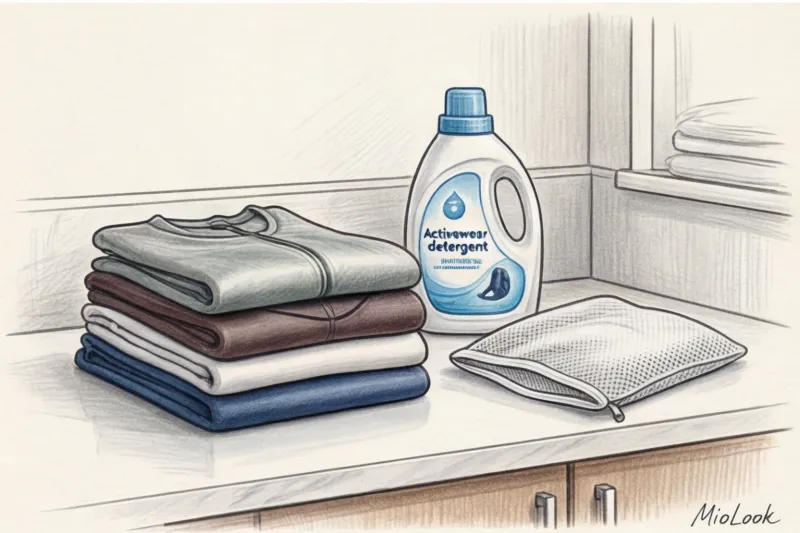
Fabric softener literally cements the microscopic pores of technical fabrics, completely depriving them of their patented moisture-wicking properties. The garment stops "breathing," blocks body heat exchange, begins to harbor bacteria, and over time develops a persistent, sour odor that's virtually impossible to remove. If you accidentally wash your uniform with fabric softener, immediately rewash it in clean water with half a cup of white vinegar added to dissolve the waxy residue.
The second fundamental rule of care is a gentle temperature setting. Use only cold water (up to 30°C, delicate cycle) and absolutely avoid tumble drying. High temperatures are the main physical enemy of elastane and spandex. When you put compression cycling shorts in the dryer, the fine microfibers overheat, lose their elasticity, melt, and burst. This degradation is visually evident as fine white fluff appearing on the surface of the smooth fabric and permanently stretched knees. Dry only naturally, flat on a surface, away from direct sunlight and hot radiators.
The third key aspect of durability is switching to specialized chemicals. Replace all-purpose capsules with specialized liquid detergents for sports fabrics (sports washes). Regular laundry detergent has too large a molecular structure—it gets stuck in the dense weave of fibers. 4-way stretch and can cause skin irritation during intense sweating. Professional enzyme gels work differently: their enzymes specifically recognize and break down protein, sebum, and deodorant molecules without damaging the smooth texture of the hydrophobic fibers.
When you're building an expensive and sophisticated capsule, managing it should be smart. By digitizing your updated Sports wardrobe at MioLook , you can not only create ready-to-wear workout outfits but also add service notes to each item. For example, you can record specific washing instructions for a complex architectural bra or mark the purchase date of a pair of basic leggings. This is the perfect way to track your cost-per-wear and clearly see how proper care extends the life of your investment from a couple of months to several years.
Sportswear has long outgrown its status as a utilitarian gym accessory. Today, it's a fully-fledged style element that deserves a proper budget and careful handling. Your practical task for today: clean out your bathroom shelves. Remove harsh bleaches and silicone rinses from your fitness clothing hamper. Invest in a high-quality enzyme gel and a couple of thick mesh laundry bags for delicate tops—this targeted investment of €15–€20 is guaranteed to save your gear hundreds of euros.
Guide Chapters
Women's Snowboarding and Skiing Apparel: A Stylish Capsule Collection
Sportswear can be elegant and easily transition from slope-ready to restaurant attire. We'll explore how to assemble a stylish ski capsule that fits in your carry-on.
Sportswear Colors: How to Combine Shades
Choosing a color for your workout gear isn't just about aesthetics, it's also a biohacking tool. We'll explain how to create a stylish workout capsule.
Sportswear for Plus Size Women: A Guide to Choosing
A properly fitted plus-size body shape isn't about hiding your curves, it's about your comfort and health. Learn how to choose the perfect fitness gear for a pain-free workout.
How Much Sportswear Do You Need? A Smart Inventory
Tired of hoarding old gym t-shirts? Learn the math behind your perfect fitness wardrobe from a stylist and textile expert.
Women's Tennis Clothing: How to Create a Tenniscore Look
The Tenniscore aesthetic has taken over social media, but mass-market tennis court gear isn't suitable for real play. We're exploring how to choose beautiful and functional tennis court gear.
How to wash sportswear: membrane care
Fabric softener and regular capsules can ruin expensive fitness gear in just one wash. We'll explain how to properly care for technical fabrics and membranes.
How to Choose Fitness Leggings: Stylist Tips
Sports leggings aren't just stretchy fabric; they're also complex biomechanically engineered. Let's explore what to look for when buying the perfect pair.
Outdoor Running Outfits: A Stylist's 3-Layer Rule
Forget those old, stretched-out sweatshirts! We'll show you how to put together a functional and stylish running capsule using the three-layer rule.
How to Choose a Sports Bra: A Guide to Support Levels
A sports bra is a complex architectural structure that affects your health. Let's figure out how to choose the perfect model for any workout.
Digitizing your sports wardrobe for quick get-ready sessions
Tired of searching for the right leggings before your workout? Learn how to transfer your workout capsule to your smartphone and get ready for the gym in just 90 seconds.
Athleisure Style: How to Wear Sportswear Every Day
Athleisure is the art of looking classy in comfortable clothes. We explore the mechanics of creating a premium everyday look.
Women's Yoga Clothing: How to Choose the Perfect Fit
Lost your zen because your leggings are slipping down? We're breaking down the anatomy of the perfect premium yoga and Pilates gear that will become your "second skin."
Capsule: women's gym clothing
Forget about wearing old t-shirts when you workout. Find out how the right fitness capsule can improve your results and motivation in the gym.