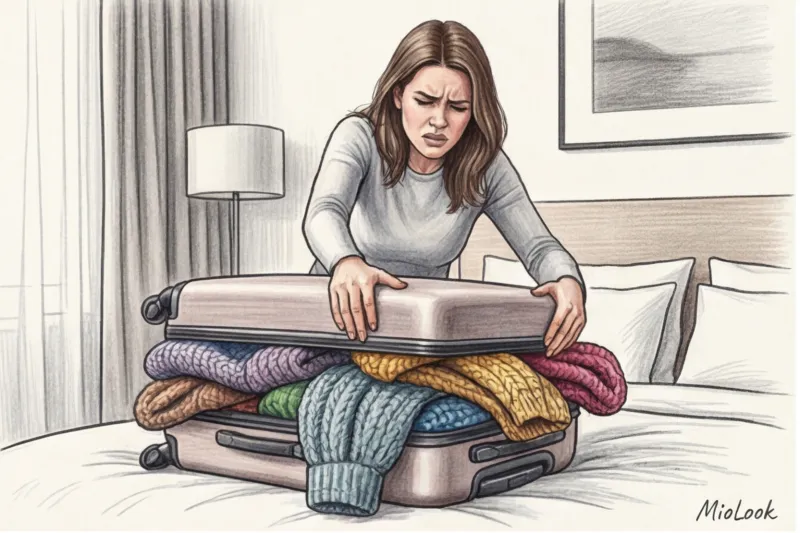
Last year, my client Anna, the CFO of a large company, showed me two enormous suitcases weighing 25 kilograms each. "One for skiing, one for evenings at the chalet," she sighed before flying to Chamonix. It's a classic situation. Many women sincerely believe that active sports and evening elegance require completely different wardrobes. But over 14 years of working as a personal stylist, I've come to understand another rule: the right outfit should flow seamlessly from the slopes to the restaurant.
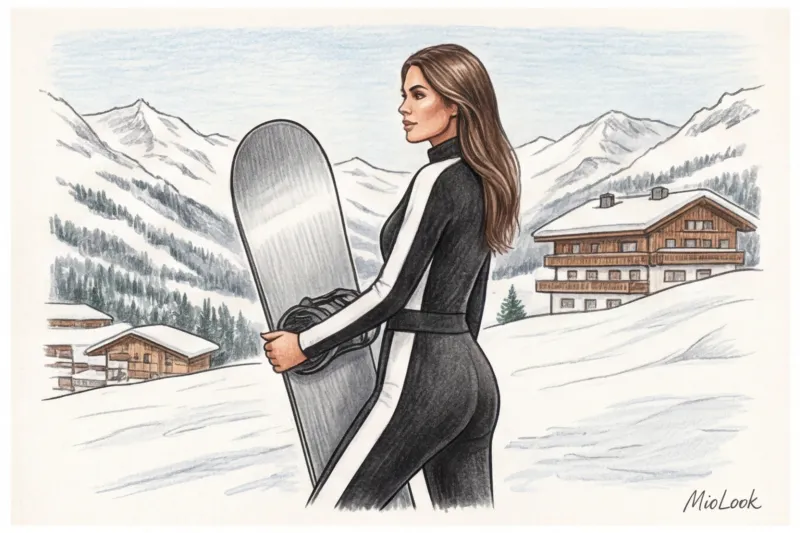
Unlike typical sports gear reviews, which focus solely on surviving a snowstorm, we'll take a different approach to winter outdoor sports. High-quality women's snowboarding and skiing clothing — it's more than just utilitarian protection from the cold. It's a status capsule. We discussed the basic principles of an investment approach to active lifestyles in more detail in The complete guide to creating a sports capsule.
Let's figure out how to pack stylish ski resort luggage that will fit in your carry-on, keep you warm at 3,000 meters, and make you an Après-ski star.
Snowboarding and Skiing Apparel: An Investment in Status and Comfort
I often see a dissonance: in everyday life, a girl wears impeccable Max Mara coats and Loro Piana cashmere, but hits the slopes in a shapeless, neon-colored jacket from a mass-market store. The argument is always the same: "I only ski for a week a year, why pay extra?"
The answer lies in the cost-per-wear concept and cut architecture. According to McKinsey's 2024 outdoor apparel market research, premium technical gear lasts an average of 7-10 seasons without losing its performance. A budget jacket for €150 loses its water resistance and shape by the end of its second trip. By purchasing the perfect membrane set for €800, you'll ensure a flawless silhouette for a decade. Translated into years, that's cheaper than a cup of coffee at a resort.
The second issue is the psychology of color. I had a client who bought a one-piece, bright pink jumpsuit with a tropical print. It looked cheerful against the white snow, but when she went to lunch in a wooden Alpine chalet with dim lighting, the suit looked out of place and garish. We reassembled her capsule wardrobe, focusing on monochrome: deep wine, camel, ivory, and classic black. These shades look expensive, are easy to combine, and never go out of style.
Access to MioLook for €0.99 — one-time payment
A smart AI stylist will select the perfect look for your winter vacation and help you put together a capsule wardrobe.
Get access — €0.99 onceThe Three Layer Rule: How to Avoid Looking Like a Cabbage and Maintain Elegance
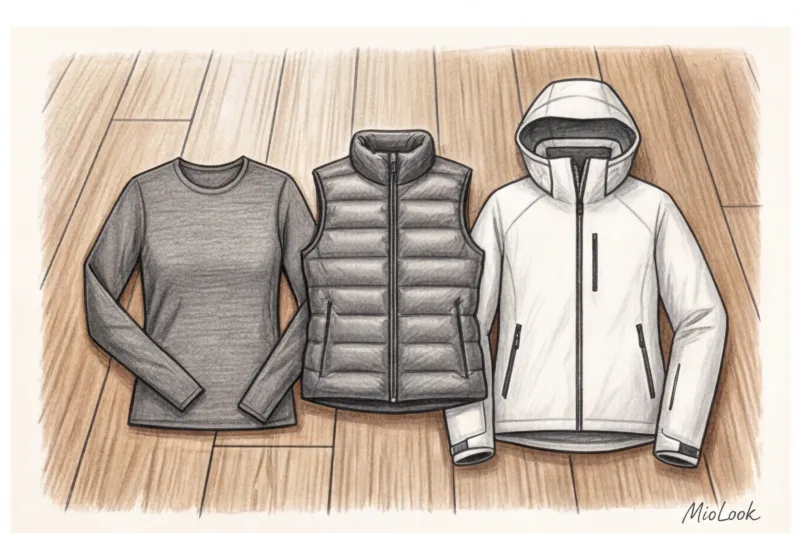
A myth I tirelessly debunk every winter: skiing requires a thick, insulated jacket. The truth is, experienced riders and stylists choose a layering system. Proper layering can retain up to 30% more warmth while using half the fabric. This creates a luxurious silhouette without the snowman effect.
Base layer: second skin made of merino and silk
Remember the most important rule of outdoor clothing: cotton is your enemy on the slopes. It absorbs sweat, stays cool, and instantly cools you down. The ideal base layer acts as a temperature regulator.
I recommend blends of merino wool (look for 16-19 microns—it's not itchy) and silk. If you see a Woolmark certificate on the label, it's a guarantee of quality. This type of thermal underwear looks like an expensive turtleneck. You can easily remove the jacket at a mountain restaurant, and your look will remain aesthetically pleasing, not reminiscent of stretched-out pajamas.
Midlayer: Forget the baggy fleece
"Bulky, fluffy fleece is the biggest killer of a sleek silhouette. It visually adds at least one size and forgives any posture, making the figure appear shapeless."
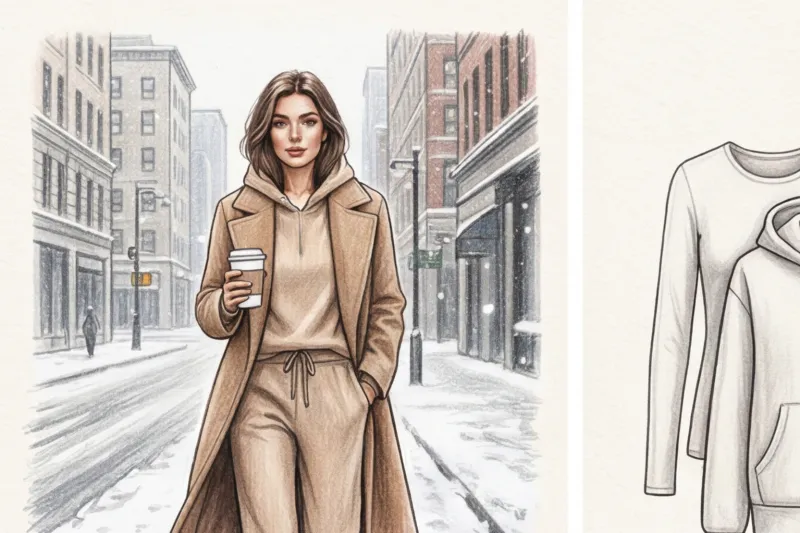
Instead of classic travel fleece, integrate your urban wardrobe with a sporty one. Great alternatives:
- Ultra-thin down vests (easily folded into a pocket).
- Technological micro-sweaters with a water-resistant zipper.
- Thick cashmere turtleneck sweaters.
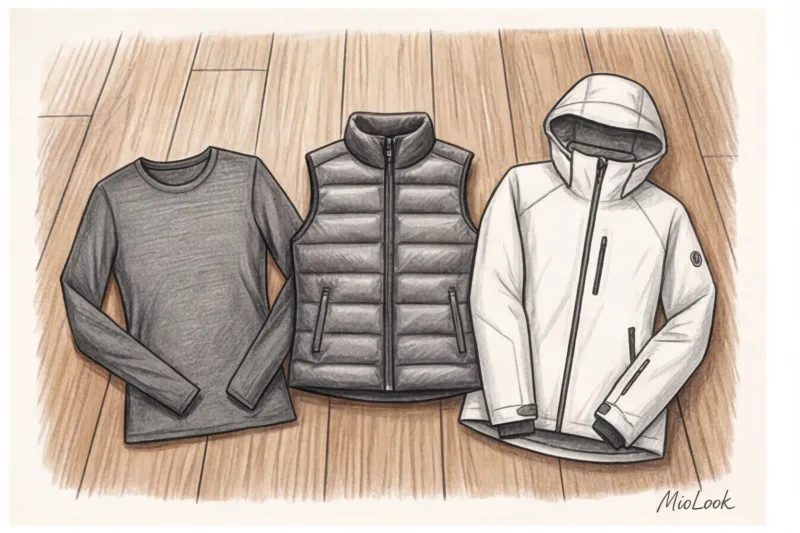
Shell: Protection from the elements
This is where the magic of technology begins. Hardshell is an outer membrane jacket without any insulation. It protects only from wind and wet snow. The two previous layers provide your warmth.
When choosing a membrane, look at the numbers. A rating of 15,000 mm / 15,000 g/m² (waterproofness and breathability) is the gold standard for comfortable skiing. As the ISPO report (2023) notes, these parameters prevent you from getting wet on the outside and sweating on the inside. Premium products are always identified by details: fully taped seams, a matte (not shiny and rustling) fabric texture, and hidden laminated zippers.
Pants, leggings, or overalls: what to choose for the perfect fit?
The choice of bottoms depends not only on your preferences, but also on the equipment.
For alpine skiing Bootcut trousers (slightly flared from the knee) or trousers made of stretchy softshell fabric are ideal. I'll share a stylistic secret: the fitted top of the trousers, flared at the bottom, brilliantly balances the voluminous shoulders (due to the jacket) and visually elongates the legs. The tight compression of the fabric brings the silhouette together, creating the effect of "endless legs."
For snowboard The fit should be looser. Snowboarders often have to sit on the snow and bend their knees. Choose cargo pants or pants with articulated (anatomically shaped) knees. However, loose doesn't mean baggy and three sizes too big.
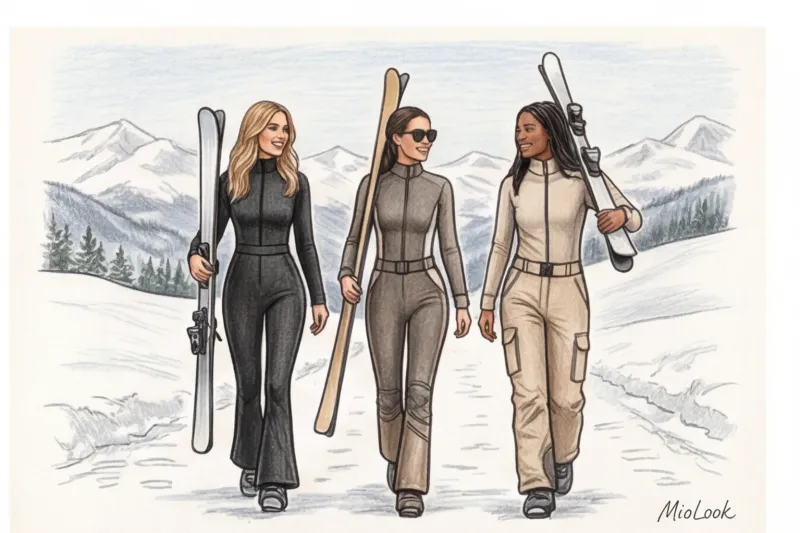
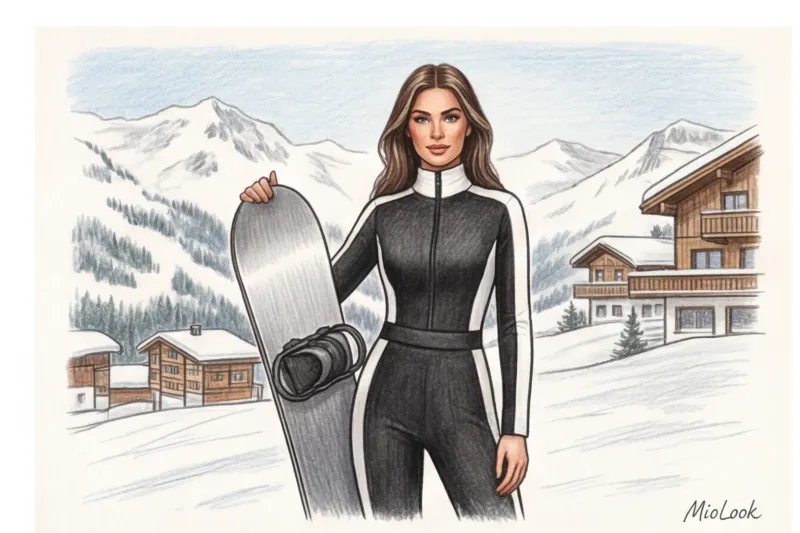
One-piece overalls — a category all its own. I love how they look in photos: the solid color blocking is phenomenally slimming. But they have a serious limitation. If you're planning long lunches indoors, you'll be unbearably hot, and removing the top half of the jumpsuit and tying the sleeves at the waist is a dubious pleasure. Plus, going to the bathroom in such an outfit turns into a real quest. If you value mobility, choose separates.
Your perfect look starts here
Join thousands of users who look flawless every day with MioLook, collecting capsules in a couple of clicks.
Get access — €0.99 onceAprès-ski Aesthetics: How to Create a Chalet Capsule from the Same Items
Après-ski (literally "after skiing") is a distinct fashion category that originated in the Alps in the 1950s. It's a time when the ski lifts close and riders retreat to restaurant terraces with a glass of mulled wine.
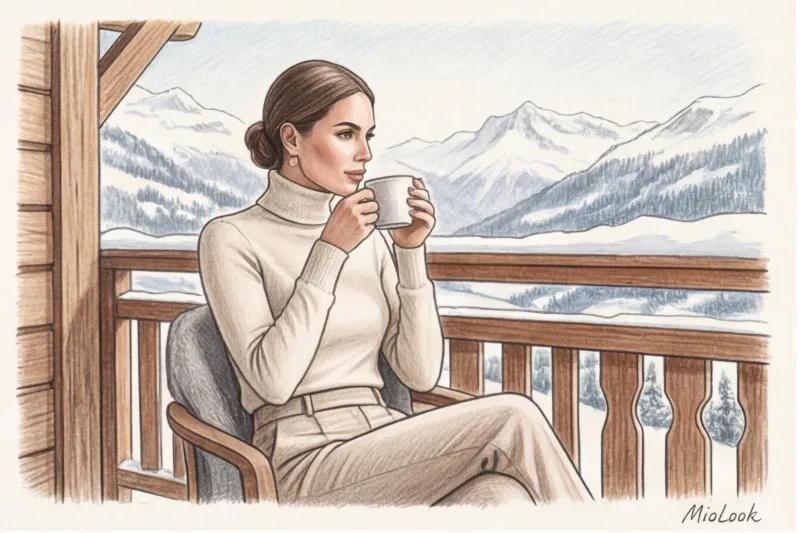
My signature "seamless transition" method saves 50% of suitcase space. You don't need to pack separate outfits for the evening. The transformation is simple: remove the hardshell jacket, leaving behind a premium base layer (cashmere or merino) and sweatpants.
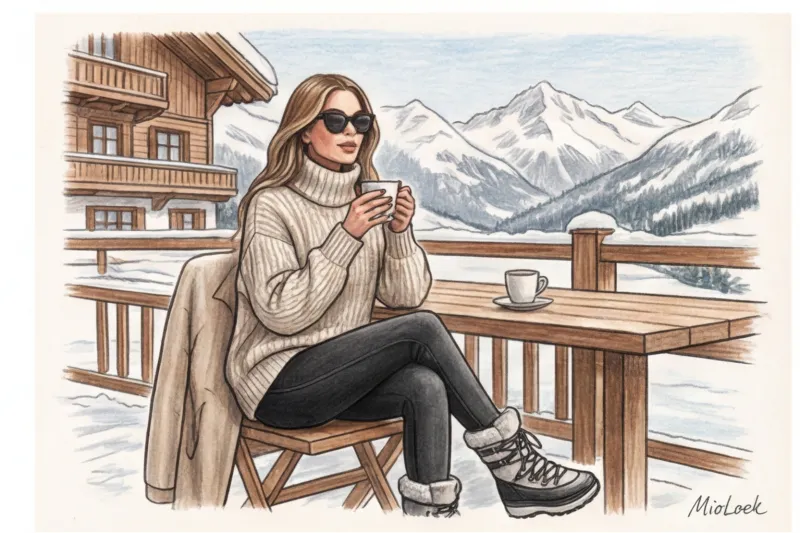
Next, three essential accessories come into play, transforming the look from “sporty” to “bohemian-vacation” in a minute:
- Status sunglasses Replace your sports mask with chunky horn-rimmed glasses or classic aviators. (We wrote more about choosing a shape in the article about status accessories ).
- Moon boots or dutik boots Hard plastic boots remain in the storage locker. Wear bulky but lightweight winter boots (such as Moon Boot or minimalist styles from INUIKII).
- A chunky scarf or sweater with a chunky knit , thrown over the shoulders.
Common Winter Style Mistakes (and How to Fix Them)
When I go through my clients' vacation wardrobes, I see the same patterns year after year, which ruin the look and the photos.
Mistake 1: The jacket cuts the silhouette at its widest point.
If a jacket ends exactly at the mid-thigh, it visually doubles the width of your thighs. Choose styles that either end just above the hipbone (shorter) or completely cover the buttocks (longer parkas).
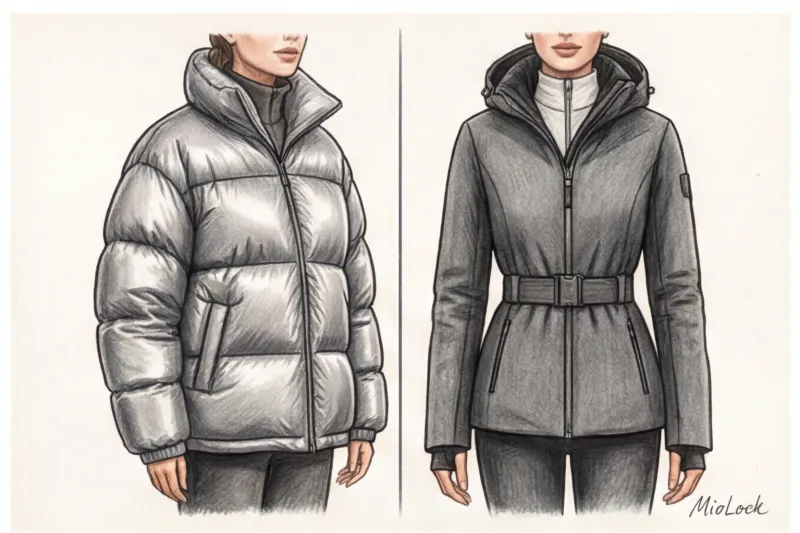
Error 2: Chupa Chups silhouette.
This happens when a woman wears a gigantic, oversized puffer jacket and extremely tight, thin leggings. The imbalance in volume makes the legs appear thin and the upper body bulky. If you have a voluminous top, the bottoms should be straight or slightly flared.
Mistake 3: Fur trim on hoods.
In 90% of cases, faux fur on sports jackets cheapens the look. Most importantly, when it snows, it gets wet, clumps into icicles, and looks extremely untidy. Modern premium outdoor clothing gravitates toward clean, sleek cuts without unnecessary embellishment.
Ski Capsule Checklist: 12 Things to Pack for a Dream Vacation
This formula has been tested on dozens of my clients. The contents of this list easily fit into one medium-sized suitcase and cover the needs of a week-long mountain vacation:
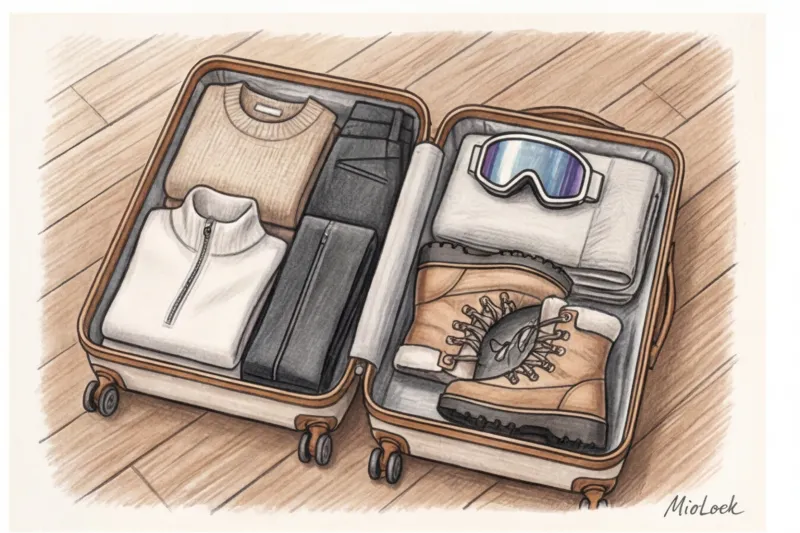
- 1 membrane jacket (Hardshell) - neutral shade.
- 2 pairs of trousers - some fitted (softshell) for warm days, some loose or slightly insulated for frosty weather.
- 2 sets of thermal underwear — made of merino and silk. One black, one light.
- 1 thin down jacket or technical vest — for the middle layer.
- 1 chunky cashmere sweater — for integration into Après-ski.
- 2 pairs of gloves - light (pipe-gloves) and warm mittens for the lift.
- 1 beanie hat - smooth knit, without pompons and rhinestones.
- 1 helmet and 1 mask — a helmet is required for safety, the mask must have replaceable lenses (for sun and fog).
- 1 status sunglasses — for terraces.
Ready to get started?
Upload photos of your winter clothes to MioLook, and the algorithm will suggest dozens of stylish combinations for the slopes and the chalet.
Get access — €0.99 onceIntelligent care: how to extend the life of technological fabrics
Investing in premium gear only makes sense if it's properly cared for. High-tech fabrics require an understanding of the chemistry involved.
Membranes (such as Gore-Tex) should never be washed with regular laundry detergent. Its granules clog the fabric's micropores, rendering the jacket unable to breathe, turning it into a greenhouse. Use only liquid detergents specifically labeled "for membrane fabrics" and wash at a temperature no higher than 30 degrees Celsius (86 degrees Fahrenheit) without spinning.
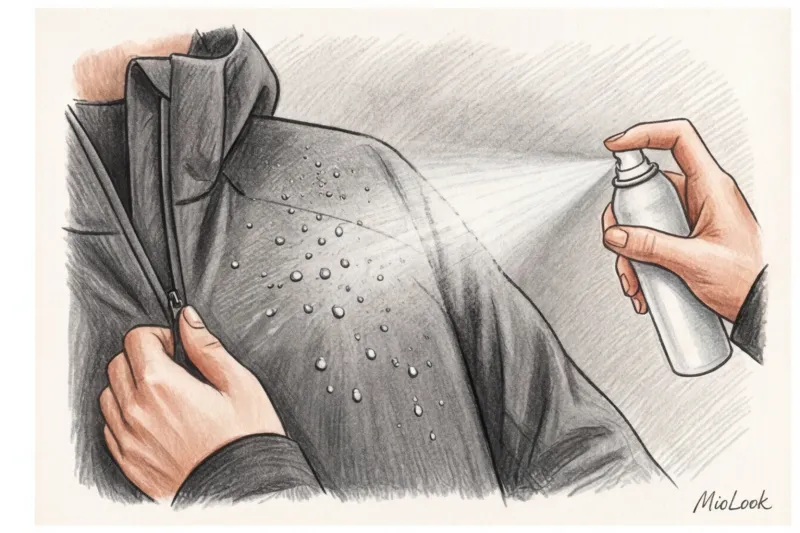
Before the start of each new season, I strongly recommend renewing the water-repellent layer. The fabric is coated with a DWR (Durable Water Repellent) at the factory. This wears off over time. Buy a spray-on treatment, apply it to a clean, dry jacket, and leave it on for 24 hours. Water will once again roll off in beautiful, round beads.
A ski wardrobe isn't a compromise between beauty and warmth. It's a high-tech construct. Focus on smart layers, elegant shades, and clean cuts, and your winter vacation will be not only comfortable but also aesthetically pleasing.