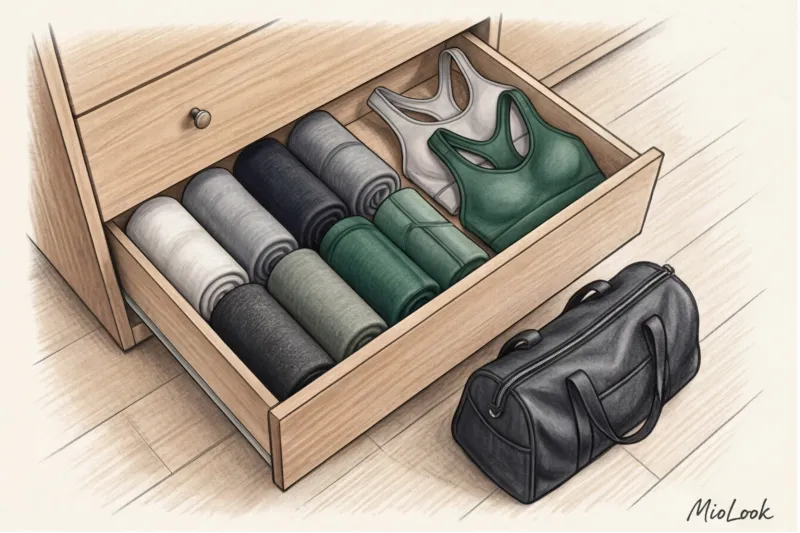
Have you ever noticed how your morning resistance to hitting the gym often starts not with thoughts of heavy squats, but with a simple irritation at your open dresser? You stand in front of a chaotic tangle of spandex and cotton, trying to find those black leggings that stay put and a top that doesn't squeeze. While you're searching, your motivation fades away.
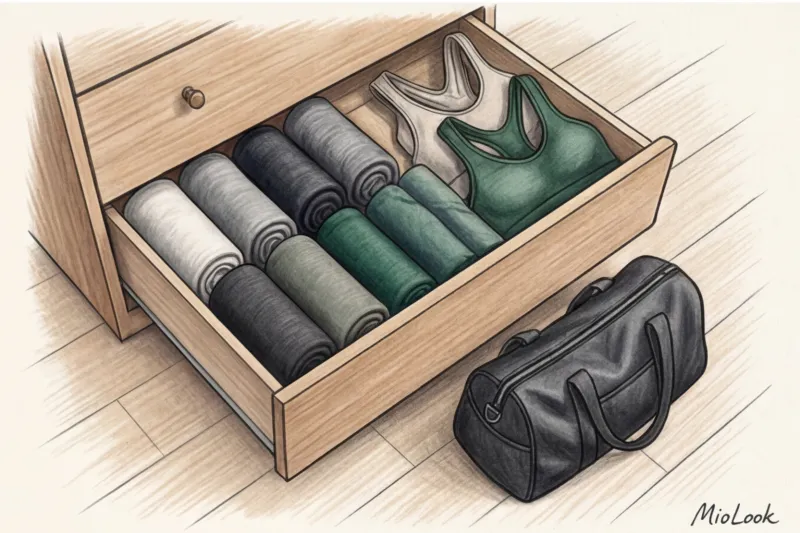
Over 12 years of working as an image consultant, I've heard the same phrase hundreds of times: "What difference does it make what you wear to sweat on the treadmill?" It makes a huge difference. Digitizing your workout wardrobe isn't just about transferring photos of your clothes to your phone. It's about creating a fail-safe discipline system where your clothing acts as your body's architecture and triggers action. We've covered in more detail what specific pieces a foundation should consist of in our article. the complete guide to the sports capsule.
Today, we'll explore how to transform the chaos of your sports locker into a flawless digital catalog that will cut your packing time from an annoying 12 minutes to 90 seconds.
Why you need to digitize your sports wardrobe: more than just a catalog
One of my clients, a top manager at an IT company, chronically skipped her morning workouts. The problem wasn't laziness, but a phenomenon. decision fatigue (Decision fatigue). When your brain is already overloaded with plans for the day, choosing between three similar bra tops becomes an overwhelming task. About 40% of our resistance to exercise stems from a reluctance to spend time getting ready.
A sports wardrobe requires the same rigorous investment approach as a business capsule wardrobe. Quality gear isn't a fashion statement. It's biomechanical. It maintains posture, supports the chest during impact, and ensures proper compression of the veins.
When we moved all the client's things to MioLook , the magic happened at the psychological level. Ready-made outfits on your smartphone screen act as a powerful visual trigger. You no longer worry about "what to wear"; you simply choose the look pre-approved by the neural network.
Your perfect look starts here
Join thousands of users who look flawless every day with MioLook.
Get access — €0.99 onceStep 1: A rigorous audit: what will never make it into your virtual closet
Before we even grab our smartphone camera, we need to do a ruthless cleanup. The "clean slate" rule dictates that we only digitize what benefits your status and training safety.
"I'll just wear an old, stretched-out T-shirt, I'll just sweat"—that's the most damaging belief I dispel during my very first consultation. Old cotton absorbs moisture, becomes heavy, disrupts thermoregulation, and, most importantly, kills your confidence in the gym.
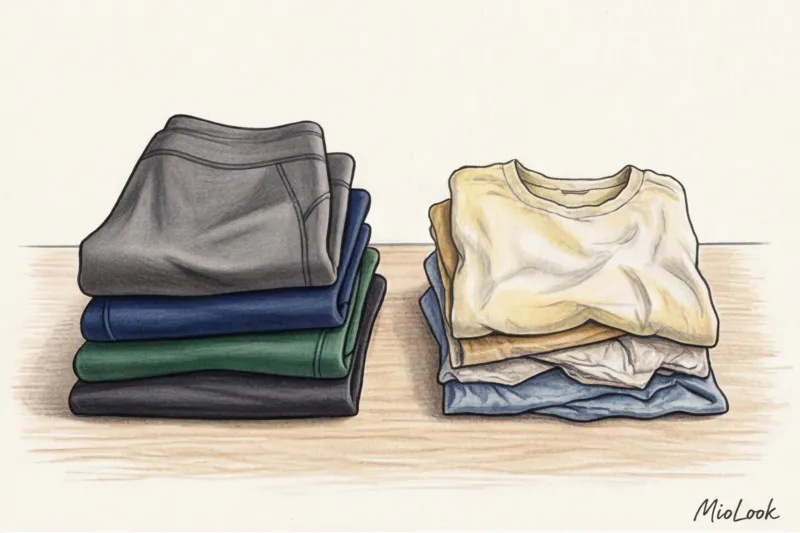
How to conduct an audit right now:
- Compression test: Pull the waistband of your leggings. If it doesn't return to its original, slightly taut shape, it's time to throw it in the trash. Spandex deteriorates over time with repeated washing.
- Squat test: Put on your leggings, turn your back to the mirror in bright light, and do a deep squat. If you can see the color of your underwear, the fabric has become thinner.
- Support test: If you can bounce freely in a sports bra and your breasts move noticeably, elastane is dead.
Keep only those things that make you feel collected and strong.
Step 2: How to Photograph Your Gear Properly (So It Doesn't Look Like a Wasteful Thing)
Sportswear is the most difficult to digitize. While a suit jacket holds its shape perfectly on a hanger, a pair of technical nylon yoga pants, thrown on the bed, looks like a shapeless puddle. It will be difficult for a neural network to recognize the silhouette and suggest appropriate combinations.
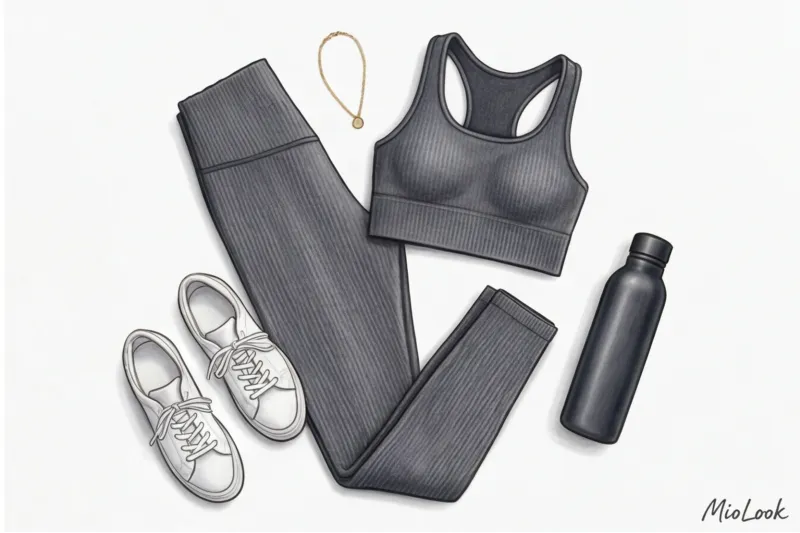
My personal life hack as a stylist: for the app's algorithms to consider a garment ideal, it needs artificial volume.
- Use invisible hangers made of transparent acrylic for tops and rashguards.
- The secret of flat lay: For leggings, insert rolled-up towels or cardboard inserts into the legs. This will stretch the fabric just enough to show off the style, high waist, and mesh panels.
- Light decides everything: Sportswear fabrics often have a subtle satin sheen or complex textures (such as ribbed patterns). Shoot in soft daylight from a window, avoiding harsh shadows from a chandelier.
If you want to upload not only items but also your parameters for AI fitting into the app, I recommend studying Guide: How to take a photo for a virtual fitting.
Step 3. Secrets of tagging in MioLook: breaking the usual classification
This is where most women make a fatal mistake. They tag their clothes based on everyday wardrobe principles: "blue t-shirt," "black shorts," "bottoms," "top." This doesn't work for a fitness capsule. If you wear a Pilates top to a HIIT (high-intensity interval training) workout, you risk microtrauma to the Cooper's ligaments in your chest.
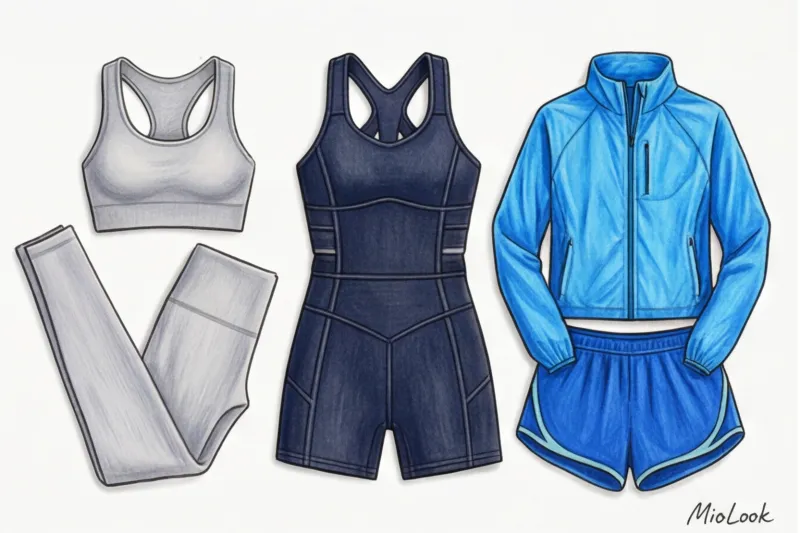
The sports capsule must be tagged strictly according to biomechanics and functionality.
Compression and support levels
Instead of the "top" tag, use the support system:
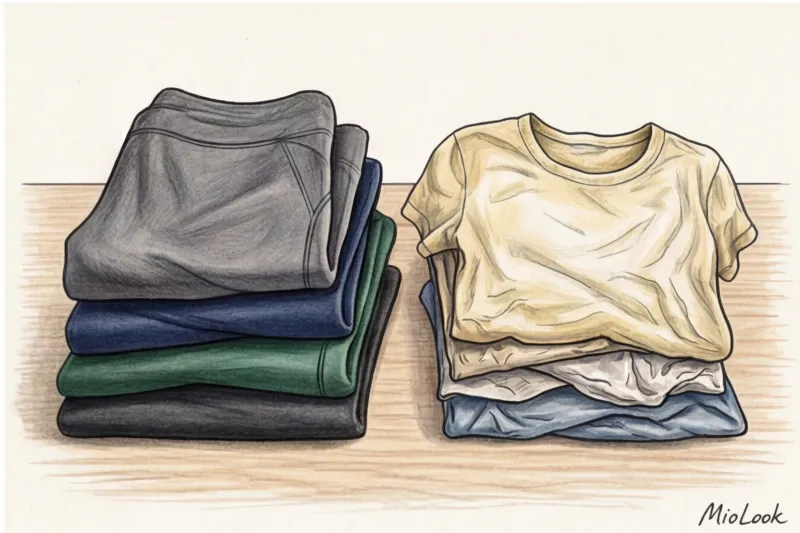
- High Impact: Thick bras with wide straps and a firm fit. Recommended for CrossFit, running, and boxing.
- Medium Impact: Classic crop tops for strength training in the gym, cycling.
- Low Impact: Thin straps, soft microfiber, open back. For yoga, stretching, and MFR only.
The same goes for bottoms. Tightly cinched leggings with compression panels fall into the "Strength" category, while soft, seamless, ribbed leggings fall into the "Pilates" category.
Inner and outer circuit (Outdoor training)
If you run outside, add layer tags. This is crucial for temperature regulation. Base layer (moisture-wicking long sleeve), midlayer (fleece for warmth), and outer layer (windproof membrane). By linking these items in the app with a single tag, "Outdoor 0...+5°C," you'll never again wonder by the window whether you'll be cold today.
Cost-per-wear tracking: How MioLook justifies expensive purchases
Clients often resist buying premium sportswear, arguing, "Why do I need €130 leggings when they're €25 at H&M or Zara?" I answer in the language of numbers and the textile industry.
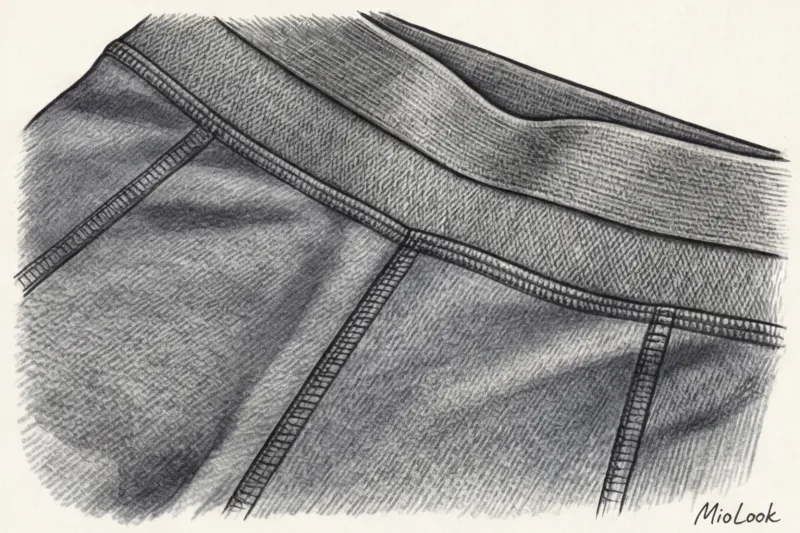
According to research into the quality of synthetic fibers, cheap mass-market spandex begins to lose elasticity (degrade) after just 5–8 washing cycles. Premium patented nylon and lycra blends withstand up to 150 aggressive washes without losing their structure.
Let's count Cost-per-wear (cost per wear) This is my favorite metric in the MioLook app.
- Budget leggings: €25. Wear them 5 times until they lose their shape. Cost per wear = €5.
- Premium leggings: €130. Wear 150 times. Cost per wear = €0.86.
When you start tracking the number of times you wear your digital wardrobe, the statistics ruthlessly reveal the truth: those "expensive" items you wear for years, and when converted to a single trip to the gym, they cost you pennies. The app will also highlight your "favorites"—the outfits you instinctively choose more often than others. These are the very same cuts you should look for the next time you're shopping.
Ready to get started?
Try a free plan—no commitment—and start building your smart wardrobe.
Get access — €0.99 onceQuick Assembly Formula: Assemble Ready-Made Bows in 60 Seconds
Digitizing your items is only half the battle. The real magic begins when you organize them into ready-made capsules using the Lookbook feature.
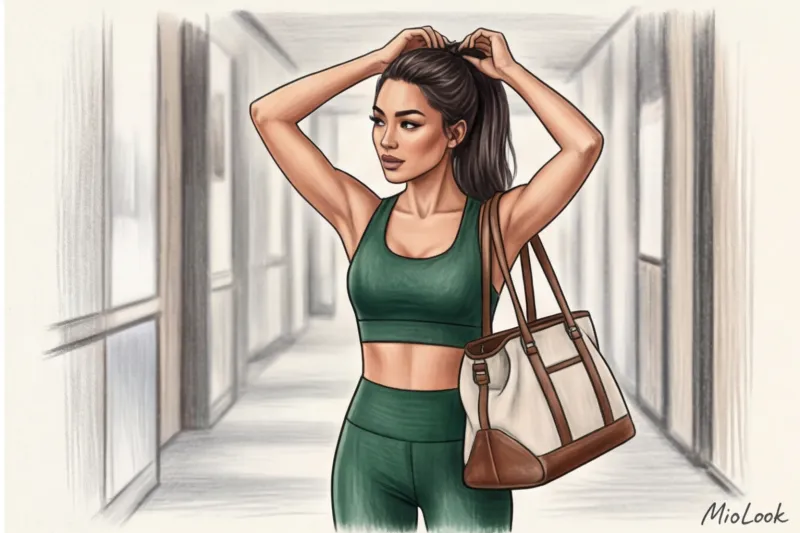
What does the ideal user algorithm look like for someone who values their time?
- You create a look for a specific task: “Wednesday, leg day, gym.”
- In this look you add not only a top and leggings, but also accessories Yes, digitize your white sneakers, ribbed high socks, gym bag, and even your water bottle. The more detailed your visualization, the fewer decisions you'll need to make in the morning.
- Scenario "In the Evening": You open MioLook before bed, choose the look you want with one click, and simply take these four items out of the closet. That's it.
This process takes exactly 1.5 minutes instead of 12 minutes of morning tossing and turning. You wake up, see your finished form, and go to the gym on autopilot.
Checklist: The Structure of the Ideal Digital Fitness Capsule
How many items do you really need to stock your virtual closet? Don't aim to digitize 20 random t-shirts. Start with a minimum viable capsule (MVP) that will cover 90% of your training needs.
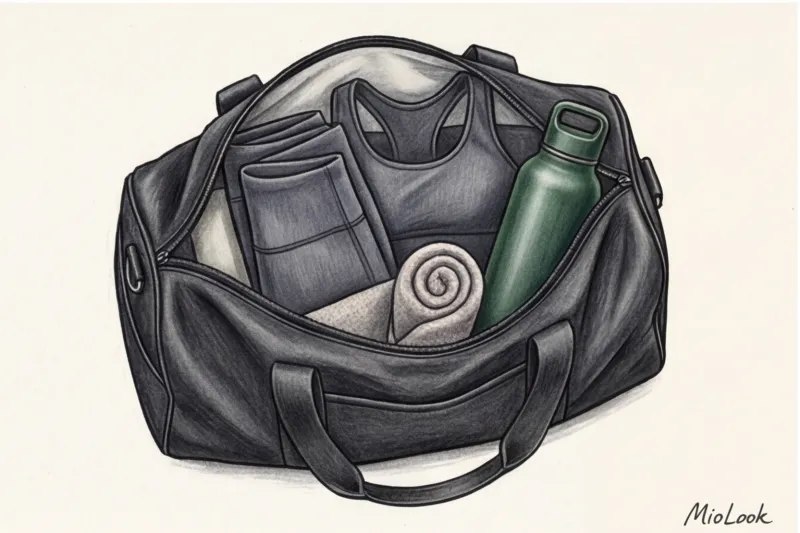
Basic gym checklist (for 3 workouts per week):
- 2-3 bottoms of different compression (one thick for the base, one soft, plus shorts/cycling shorts);
- 3-4 tops/bras (there should be more stock here, since the tops are washed after each lesson);
- 1-2 light long sleeves or rashguards for warming up;
- 1 oversized hoodie (to throw on after a workout to keep warm);
- 2 pairs of shoes (hard flat soles for strength training, shock-absorbing for cardio).
Color tip: Check your capsule for shade overlap. I recommend the strategy Color-blocking vs. Monochrome Choose bottoms in basic, deep tones (black, graphite, deep burgundy, emerald), and use tops as accents. Your digital wardrobe will instantly show you whether a new neon top pairs with your basic leggings.
And the last, most important limitation of this method: The system won't work if you wash your uniform once every two weeks. A perfectly digitalized wardrobe requires physical maintenance. Are you in the habit of marking the outfit you're wearing in an app? Develop the habit of throwing it in the washing machine immediately. Only then will your virtual closet always be in sync with reality.