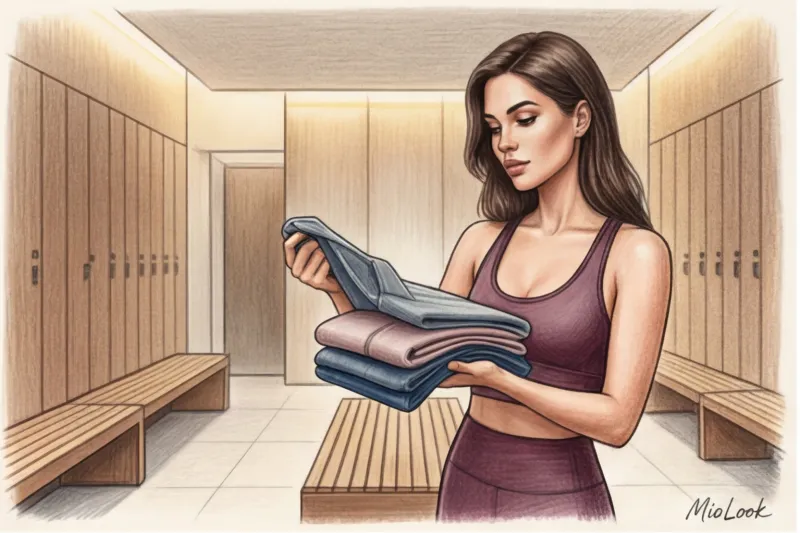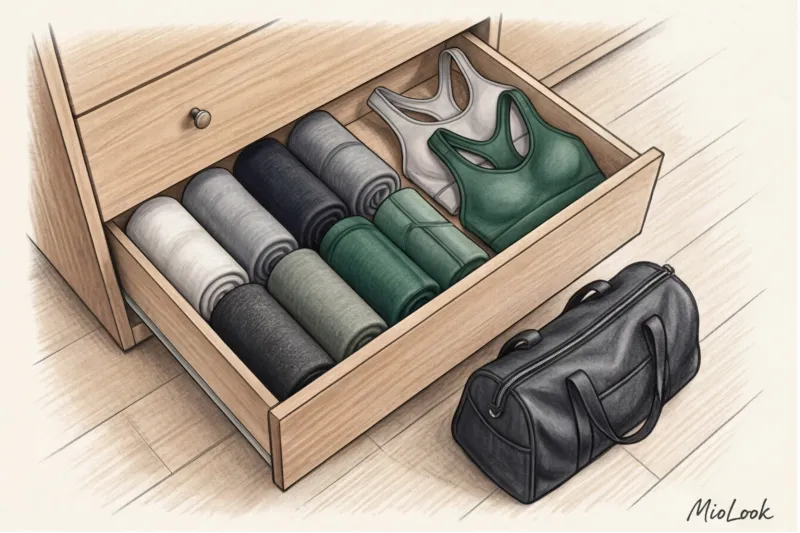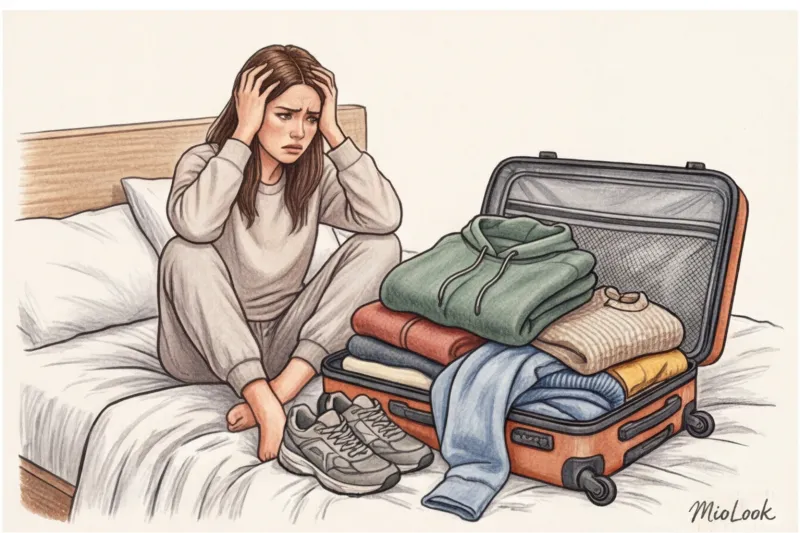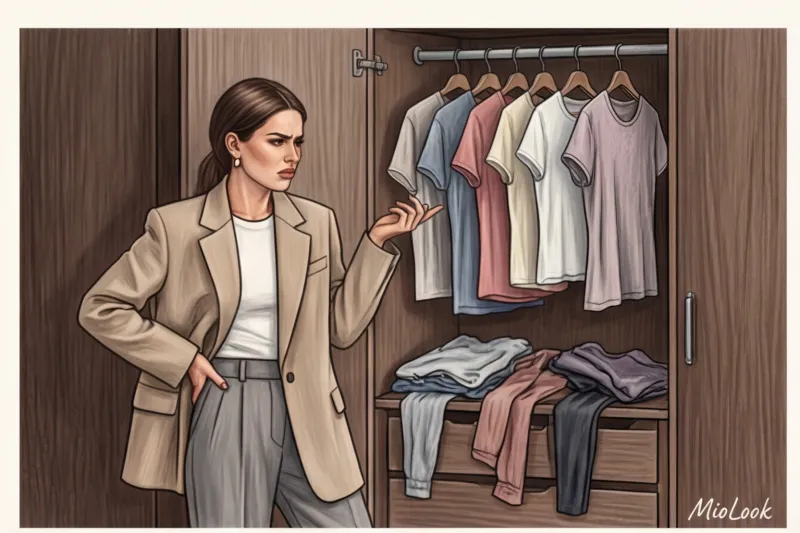
Open the bottom drawer of your dresser or the back shelf of your closet. I bet that's where you'll find that faded cotton T-shirt and that pair of stretched-out leggings you "feel bad about throwing away, but they'll do for the gym." We often treat fitness clothing as an afterthought. And that's a shame.

When clients ask me, How much sportswear do you need? For comfortable workouts, many expect to hear the standard mass-market list: buy three T-shirts, two shorts, and forget about it. But as a textile expert and stylist, I offer a completely different approach—a mathematical one based on the wash cycle, fabric biomechanics, and the wear limits of elastane.
Instead of hoarding mountains of cheap synthetics, it's time to assemble a smart, functional base. We've already covered the architecture of such looks in more detail in our the complete guide to the sports capsule , and today we'll break down the dry math and chemistry of your fitness wardrobe.
The Paradox of the Successful Woman: Why We Keep "Sweatshirts"
I had a striking experience in my practice. I was sorting through the wardrobe of a top manager at a large IT company. Jil Sander blazers, silk blouses, and cashmere coats hung on hangers in perfect color blocks. But when we reached the sports section, I saw a shapeless pile of washed-out cotton and cheap, shiny synthetics. To my silent question, the client replied: "Sofia, these are just sweatshirts, what difference does it make what you squat in?".
The difference is colossal. Premium sportswear with the right compression isn't just fabric. It's an exoskeleton. It shapes your silhouette, supports your muscles, dampens vibrations during jumps, and physically changes your posture even before you start your warm-up.
If you show up to the gym wearing an old, stretched-out t-shirt, your brain receives the signal: "We're only here for a short while, so you can relax." Quality gear, on the other hand, acts as a trigger for composure. You convey status and respect for your body. Wardrobe digitization and his analysis proves that we train more effectively in clothes that make us feel confident.
Calculation formula: how much sportswear do you really need?
There is a dangerous and very common myth: "The more sports kits I have, the less often I need to wash them, and the longer they last." From a textile engineering perspective, this is a catastrophic misconception.
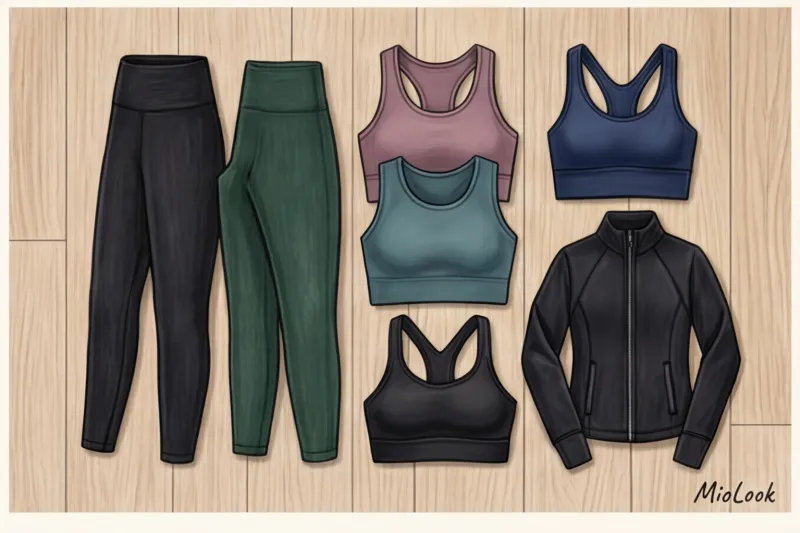
Research on the degradation of polyurethane fibers (Textile Research Journal, 2023) confirms that urea, salts, and sebum left on high-tech fabrics for more than 24 hours irreversibly destroy the chemical bonds in elastane. If you toss damp leggings in the laundry basket and wait until the weekend to run the washing machine, you're literally ruining your clothes.
"It's better to have two expensive sets and wash them immediately after the gym than 10 cheap ones that have to wait weeks to be washed. Elastane isn't afraid of water, it's afraid of your sweat."
Therefore, the volume of your capsule depends not on your desire to buy something new, but on your “washing matrix” – how often you exercise and how quickly you run the washing machine.
Capsule for moderate exercise (2-3 times a week)
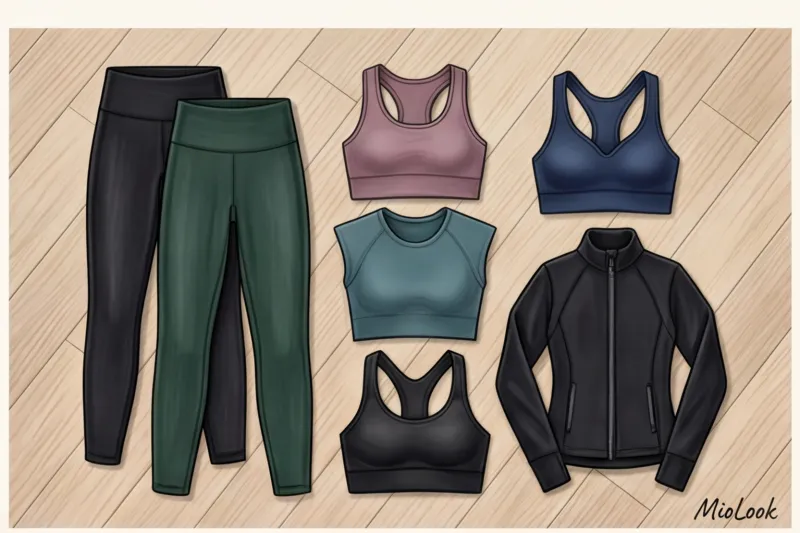
If your schedule consists of a couple of workouts at the gym and one run in the park, you don't need a separate closet for your uniform. How much sportswear do you need? In this case? The minimum investment set looks like this:
- 2 pairs of technical leggings (dark and neutral);
- 3 seamless tops with varying degrees of openness;
- 2 sports bras of high or medium support;
- 1 lightweight sweatshirt or long sleeve zip-up shirt.
This is where the "24-hour rule" comes into play. High-quality elastane needs about a day's rest after washing for the polymer threads to shrink and regain their original shape. By alternating the two sets, you give the fabric this much-needed break.
Your smart wardrobe is always at hand
Store your looks for fitness, work, and home in one place. A smart AI stylist will help you create perfect combinations from what you already own.
Get access — €0.99 onceA capsule for daily training and crossfit
For those who train 5-6 times a week, the capsule expands mathematically. You'll need 4 lowers and 5-6 uppers. But zone separation and biomechanics are crucial here.
Yoga and Pilates clothing (usually soft-touch fabrics with brushed nylon) is completely unsuitable for HIIT workouts or CrossFit. Soft microfiber will quickly pill from friction against the barbell, and weak compression won't support your chest during burpees. For intense workouts, look for fabrics marked "Slim." high compression and a smooth, sliding surface (sleek feel).
Tactile Crash Test: How to Know When to Throw Out an Item
During my one-on-one sessions, I always conduct a tactile audit with my clients. You can do this yourself right now.
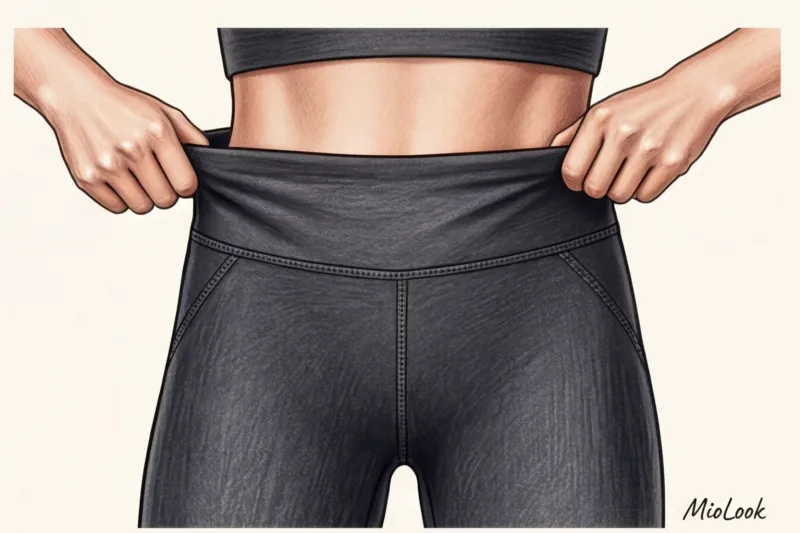
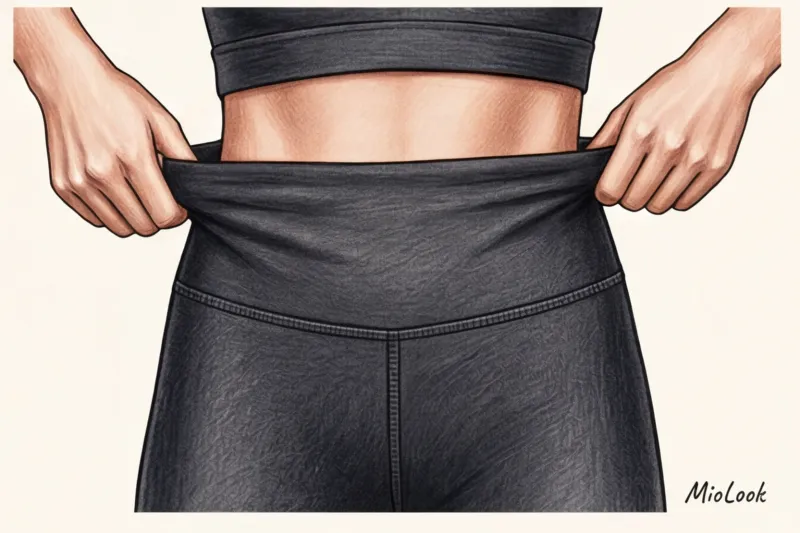
1. Snap-back test. Take the waistband of your leggings or the bottom elastic of your sports bra. Pull it tightly with both hands and release quickly. The fabric should instantly snap back to its original shape, leaving no "ripples." If the elastic shrinks slowly or the edges ripple, the elastane is dead. It's no longer supporting your joints and muscles.
2. Check for hidden biofilms. Have you ever noticed that an old synthetic T-shirt smells like fresh laundry detergent, but as soon as you sweat a little during a warm-up, a sharp, unpleasant odor appears? These are bacterial biofilms. Cheap polyester has a porous structure that bacteria can easily penetrate. They "sleep" at room temperature and are activated by your body heat. Such a garment cannot be saved.
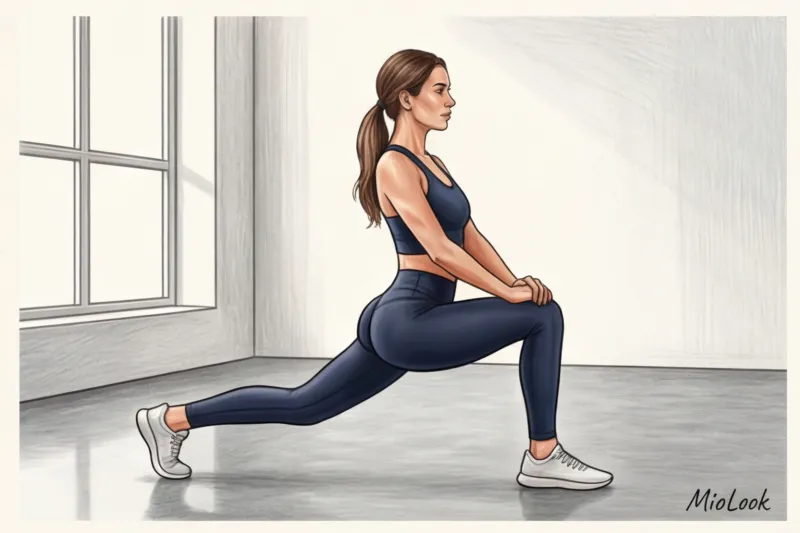
3. Transparency test (Squat-proof test). Put on a pair of leggings, stand with your back to a mirror in good daylight, and do a deep squat. If you can see the underwear or skin through the stretched fabric over your buttocks, the weave has deteriorated (or you bought a low-quality product to begin with). Don't wear them to the gym.
Investment Mathematics: Mass Market vs. Tech Brands
Let's do the math. I always teach my clients the concept of cost-per-wear. It's sobering.
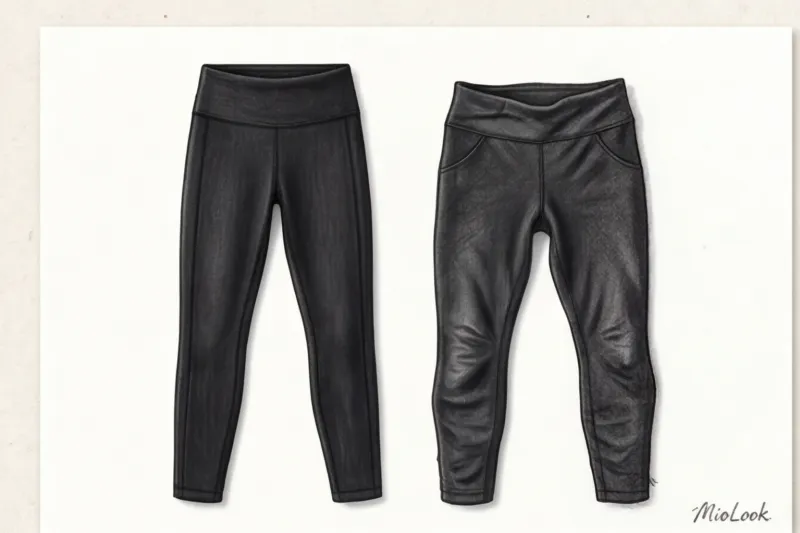
Let's say you bought a pair of leggings at a mass market for €25. They're made of cheap, stiff polyester and only 5-8% elastane. After five intense workouts and washes, they lose their shape, slip down when you run, and become see-through. You throw them away. The cost of one workout was... 5 €.
Now let's take a look at these high-tech leggings from a specialized brand for €130. They're made with a patented blend of nylon and 25% high-quality spandex. With proper care, they'll last at least 150 workouts without losing their compression or color. The cost per workout is 0.86 €.
Buying cheap can actually make you pay five times more. Look for the correct ingredients on the labels: for full support and a sculpting effect, the percentage of elastane (or spandex/Lycra) should be at least 15–25% Anything below 10% is clothes for lounging at home on the couch , not for the gym.
Build your capsule wardrobe
Not sure which items to keep? Upload photos of them to MioLook, and our algorithms will tell you how well they go together.
Try MioLookEcology and care: how to extend the life of a sports capsule
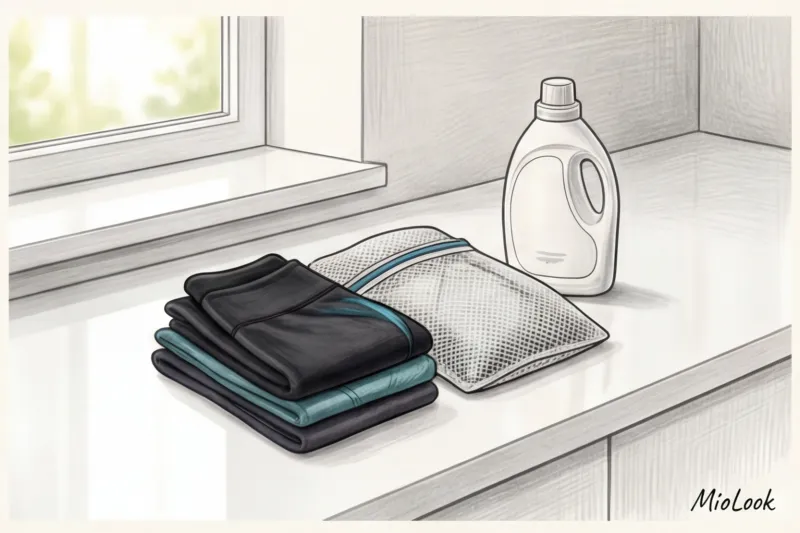
Investing in premium items is pointless if you're washing them incorrectly. Fabric softener is the number one enemy of sports gear. Fabric softeners coat the fibers with a silicone film, which clogs the pores. As a result, expensive moisture-wicking fabric turns into a plastic bag.
The second problem is microplastics. According to environmental reports (UNEP), washing synthetics is one of the main sources of microplastics in the ocean. Cheap fabrics literally crumble in the drum.
My professional care rules:
- Never exceed temperatures of 30–40°C. Hot water literally "cooks" and destroys spandex.
- Use special liquid gels for sportswear (they contain enzymes that break down sweat without damaging the fibers).
- Wash items in special bags (such as Guppyfriend) that filter microplastics and protect fabrics from friction in the drum.
- Never dry your sportswear on a radiator or in a tumble dryer. Dry it naturally, laying it flat.
Important limitation: This mathematical approach with a minimal capsule and frequent washings does NOT work if you engage in outdoor sports (trail running, skiing, outdoor cycling). There, the unpredictable climate requires rigorous layering (base layer, fleece, membrane), and the number of items will objectively be greater.
Checklist: A Step-by-Step Review of Your Sports Wardrobe
Let's get practical. Set aside 30 minutes today to conduct a complete audit.
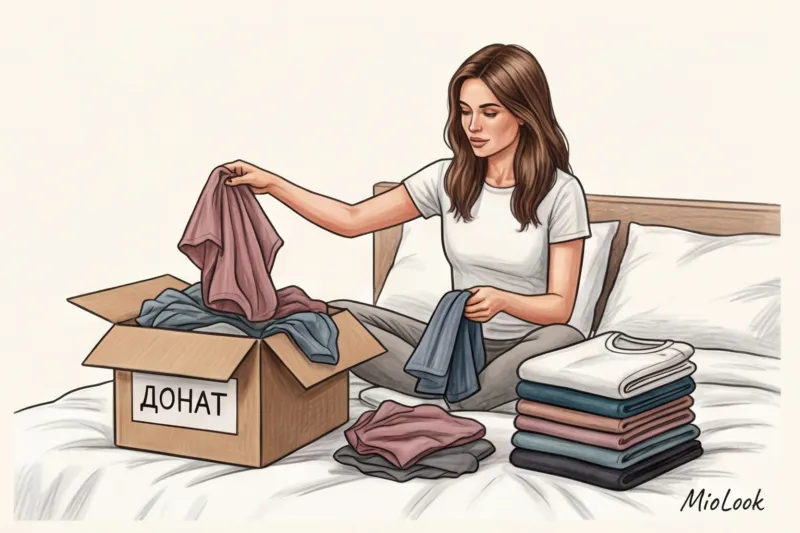
- Step 1: Evacuation. Take out all your sports clothes, home workout clothes, and jogging clothes. Stack them in a pile on your bed.
- Step 2: Crash test. Perform a reverse pull test (elastic bands) and a transparency test on each pair of leggings. Smell the underarm area of your tops (if they smell like clean but stale underwear, throw them in the trash).
- Step 3: Forming the core. Keep only those items that have passed the tests and make you feel put-together and beautiful. Digitize this database in the app. MioLook.
- Step 4: Shopping list. Count how many workouts you do per week and make a list of the missing basics based on the “24-hour rule.”
- Step 5: Eco-friendly disposal. Don't throw old synthetics in the trash. Find clothing recycling centers in your city (H&M, local eco-boxes). Polyester is easily recycled.
Your workout gear isn't just "things to sweat in." It's your work tool, your armor, and an investment in your health. When you put on quality leggings that hug your waist perfectly and a top that keeps your back straight, your workout becomes twice as effective even on the way to the gym. Treat this wardrobe with the same respect you give to your career.