The Psychology of Color in Training: How Sportswear Color Affects Performance
Do you know how the transformation of one of my most successful clients began? It wasn't with buying a cult bag or the perfect cashmere coat. It began with us ruthlessly throwing out the stretched-out gray t-shirts she'd worn to Pilates for years. As a top manager, she'd become invisible in the gym, slouching and conserving energy. Once we swapped the faded cotton for a structured set in a deep sapphire shade, everything changed: her posture, her focus, and even the weights she lifted. colors of sportswear — this isn't a matter of basic aesthetics. It's a biohacking tool.
We talked about how to build a premium fitness base in more detail in our the complete guide to a sports wardrobe , and today I propose approaching the sports palette with the same architectural precision with which we assemble a business capsule.
There is a term in psychology enclothed cognition (clothed cognition). A 2012 study in the Journal of Experimental Social Psychology demonstrated that what we wear directly influences our cognitive and physical processes. According to sports analysts, wearing a visually coordinated, complementary outfit at the gym increases the likelihood of completing a tough workout by almost 30%. You literally train the way you perceive yourself in the mirror.
My main rule: never wear the same clothes you clean the house or sleep in when exercising. The brain needs a clear visual anchor. By wearing the right color, you signal to your nervous system, "We're going into work mode."
Energy or Zen: Choosing a Palette to Match Your Workload
Textile engineering and sports psychology go hand in hand. The effect of light wavelength on heart rate is a proven fact. If you're doing HIIT (high-intensity interval training) or CrossFit, you need visual stimulation. Red, electric blue, and neon accents (especially orange) subtly stimulate the nervous system, aiding in explosive exercise.
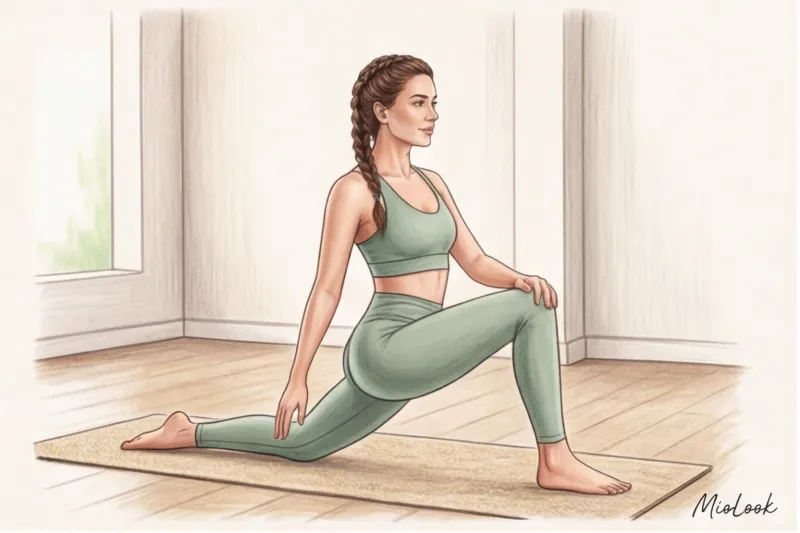
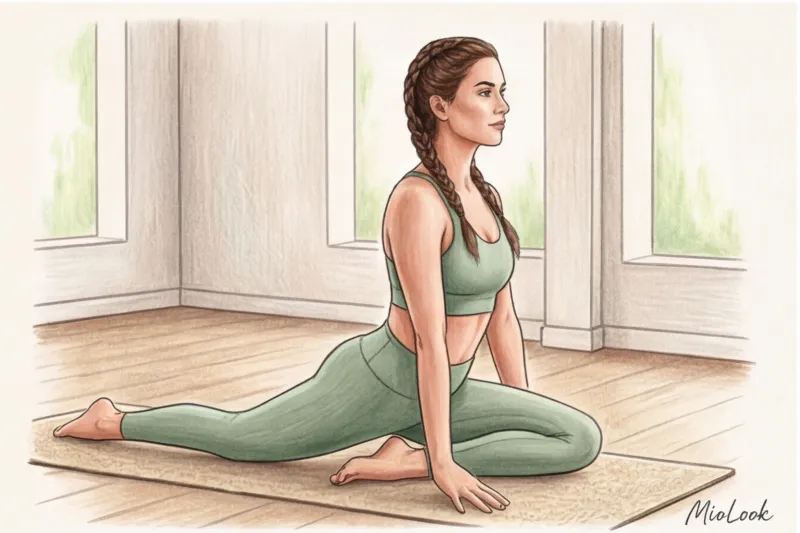
For Mind & Body practices (yoga, Pilates, stretching), where the pulse needs to remain steady, bright colors act as visual noise. Muted, complex natural hues are ideal: sage, dusty rose, terracotta, and graphite.
Isabella's Formula: The color of your clothes should follow the rhythm of your breathing during training. Deep, slow breathing requires complex, calm tones. Short, rapid breathing requires vibrant, pulsating contrasts.
The Biggest Gym Myth: Why Total Black Isn't the Best Investment
"I'll buy black leggings, they go with everything and make me look slimmer"—I hear this phrase from 9 out of 10 new clients. And it's the biggest misconception when it comes to building a gym capsule.
The illusion of "slimming black" is instantly shattered by the harsh reality of budget knitwear. Cheap black polyester with stretched knees accentuates any figure imperfections far more mercilessly than a dense emerald-colored fabric. But the main problem with black is the physics of the dye on synthetics.
As part of preparing capsule collections for clients, I personally tested the fabrics' performance under harsh washing conditions (we wash sportswear after each use). After over 100 washing cycles, I discovered that the deep black pigment in budget elastane and nylon washes out the fastest. After just 5-7 washes, it takes on a gray, whitish, or greenish tint.
- Dust magnet: Black is the worst color for studio workouts. Every speck of dust on your yoga mat, every hair, will be visible.
- Energy failure: Psychologically, total black in the artificial lighting of a hall often looks dull and does not motivate one to work.
- Economy: Cheap black leggings for €30 that lose their color after 10 workouts (cost-per-wear = €3) are a bad investment. A premium set of smooth dyed nylon for €120 that holds its deep color for 150+ workouts (cost-per-wear = €0.80) is a smart approach.
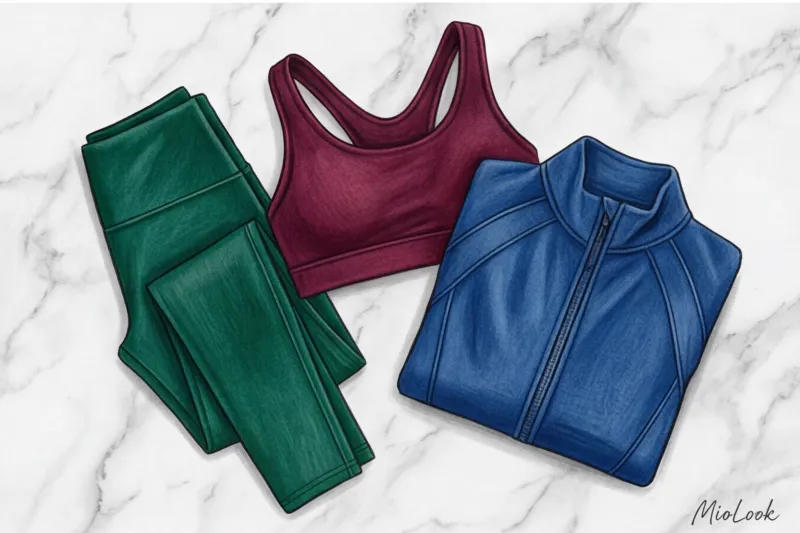
What to replace it with? Add "the new blacks" to your sportswear collection. These include deep emerald, dark chocolate, eggplant, or inky blue (navy). They offer the same visual slimming effect, but look ten times more expensive.
Colour architecture: formulas for combinations for a sports capsule
A sports capsule wardrobe follows the same rules as the ideal everyday wardrobe. Use color blocking to visually correct proportions.
If your goal is to elongate your silhouette, create a visual vertical line. Dark bottoms (for example, dark chocolate-colored leggings) paired with a top of the same color and a contrasting light bomber jacket or open shirt will add 3-5 centimeters of height. A contrasting horizontal line (a white top and black leggings), cutting the figure exactly in half, visually shortens the legs and widens the waist.
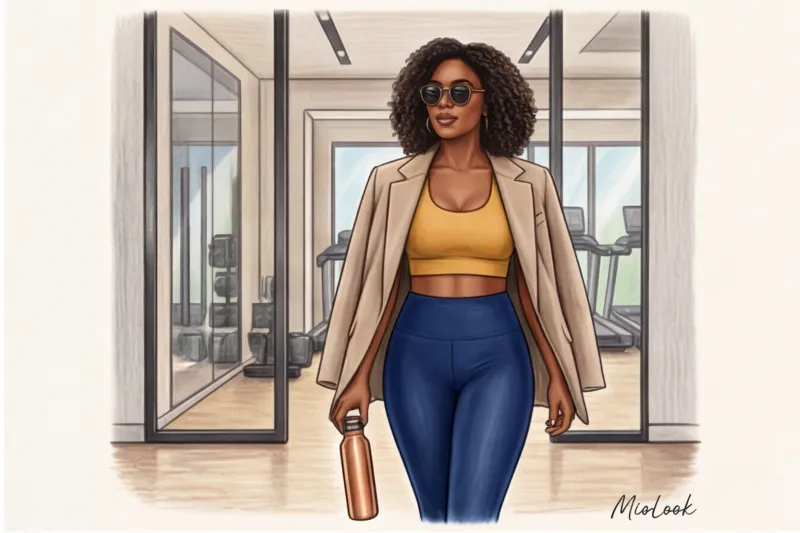
Monochrome 2.0: a play of textures and complex shades
A sporty monochrome is the quintessential gym staple. But to avoid it looking like pajamas, a play of textures is essential. Pair perfectly matte basic leggings with a top with a subtle sheen, then layer a chunky cotton sweatshirt (at least 300 g/m²) in the same shade. Olive, cappuccino, and graphite—in a textured monochrome, these colors look incredibly luxurious.
Color-blocking: sporty chic for the boldest
If you prefer a pop of color, use the rule of two clean contrasts. Fuchsia and cobalt, tangerine and electric blue. The key is to keep both colors at the same saturation. This approach makes it easy to transition a sporty look into athleisure: simply wear a bright sports top, basic wide-leg jeans, and throw on a neutral men's blazer.
Access to MioLook for €0.99 — one-time payment
A smart AI stylist will select the perfect workout look and help you integrate sportswear into your everyday capsule wardrobe.
Get access — €0.99 oncePracticality: which shades don't show signs of intensive work?
Let's be honest: we sweat during a good workout. The anatomy of sweat stains is related to light refraction—wet synthetic fabric absorbs more light and appears darker. We've covered the physics of this process for different materials in more detail in our guide. Fabrics that don't show sweat stains: A guide for speakers , but sports have their own strict rules.
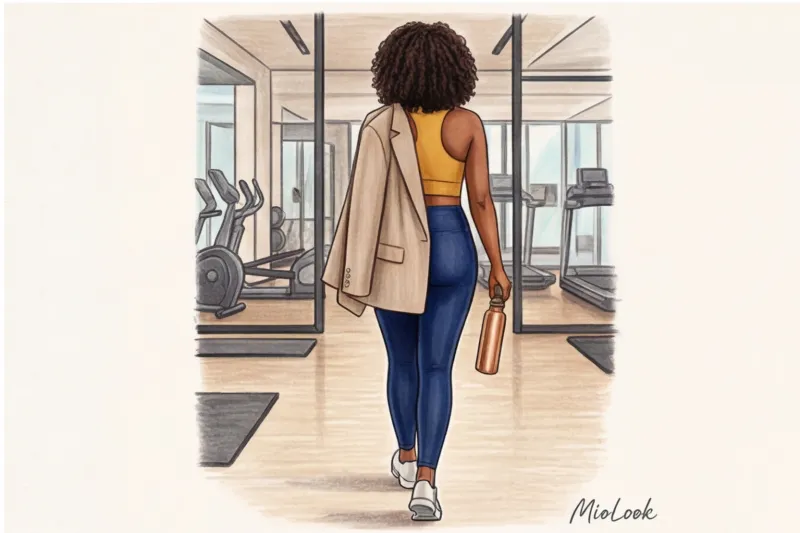
Danger zone: Clean, basic colors of medium lightness. Light gray, classic khaki, light blue, dusty pink. These are absolute traitors that will reveal every drop of sweat within ten minutes of cardio.
Perfect camouflage:
- Melange textures. The ripple effect of interweaving two or three threads of different shades (for example, gray and black) optically conceals any damp spots.
- Prints. Geometric, abstract or soft tie-dye distract the eye from localized darkening of the fabric.
- Total extremes. Pure white or extremely dark, saturated tones (deep blue, burgundy), where the contrast between dry and wet fabric is minimal.
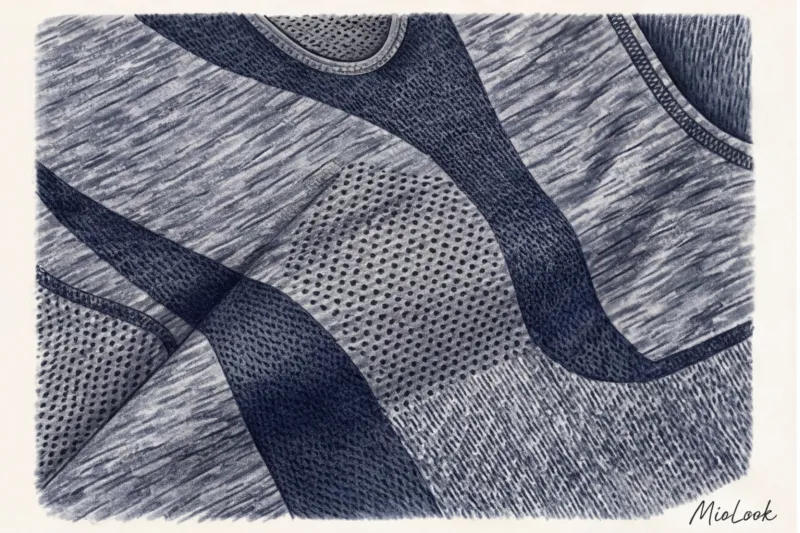
Color Type and Sportswear Colors: How to Avoid Getting Lost in the Gear
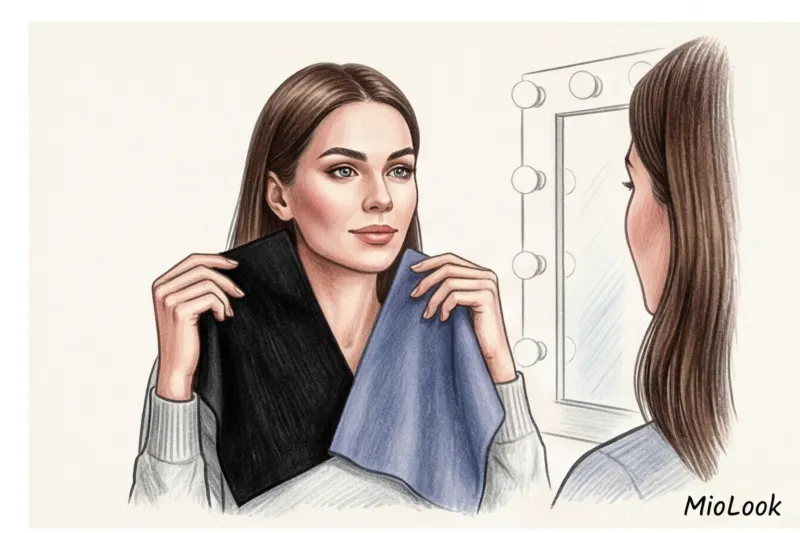
We often arrive at the gym without makeup. Skin may be slightly flushed from exercise or, conversely, pale at the start of the day. That's why the color of our workout clothes near the face (tops, tank tops, rashguards) plays a critical role. We discussed the concept of color palette selection in detail in the article 12 Color Types of Appearance: A Guide to Choosing a Palette.
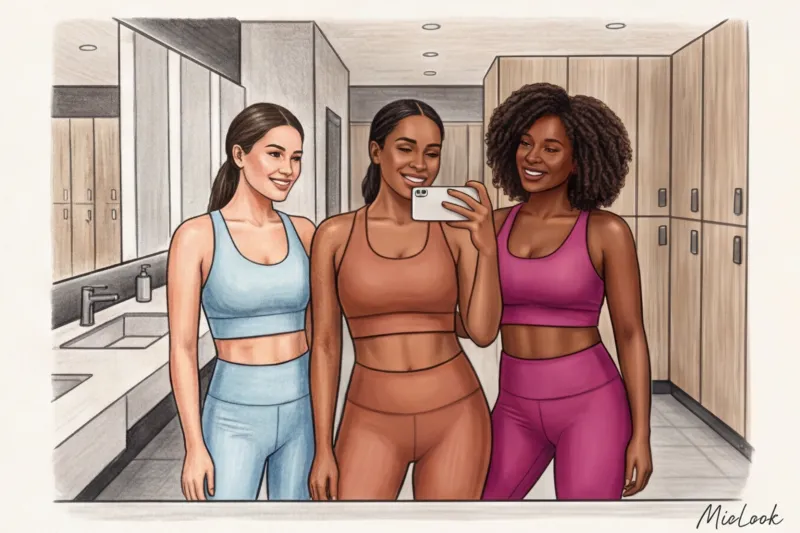
- Cold colors (Winter, Summer): Your skin will glow with pure icy shades, graphite, cool pinks (raspberry, fuchsia), and deep emerald. Avoid warm mustard and orange, as they will give your complexion an unhealthy yellowish undertone.
- Warm colors (Autumn, Spring): Your best friends are peach, warm beige, pistachio, terracotta and warm red.
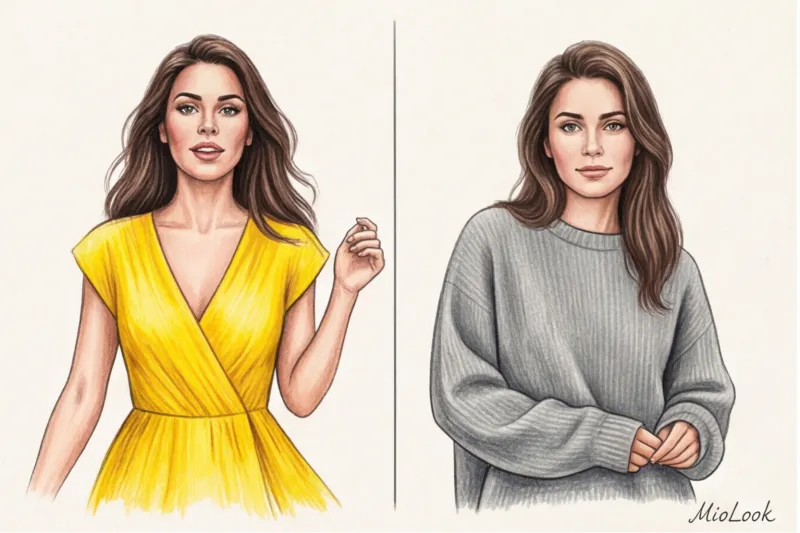
Life hack from a stylist: What if you're a "Summer" type but have fallen madly in love with a neon orange outfit? Never deny yourself your favorite color! Just take it down to your lower body. Buy orange leggings or sneakers, and keep a complementary cool white or graphite top around your face.
Of course, this rule doesn't apply if you're doing outdoor training (running outdoors) at night. Reflective safety and bright neon colors are paramount there, not your personal style.
Your ideal image begins Here
Join thousands of users who look flawless every day with MioLook. Our AI stylist will take your color type into account and select the perfect palette.
Get access — €0.99 onceChecklist: Assembling an Investment Color Capsule for Fitness
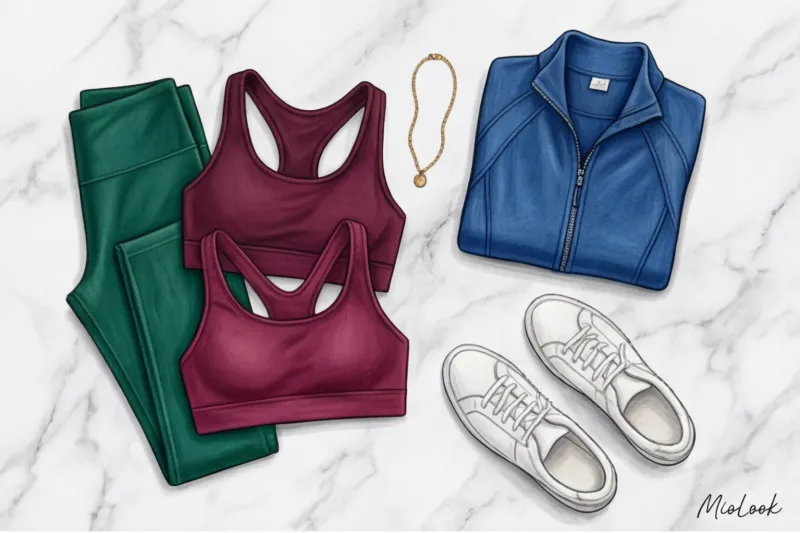
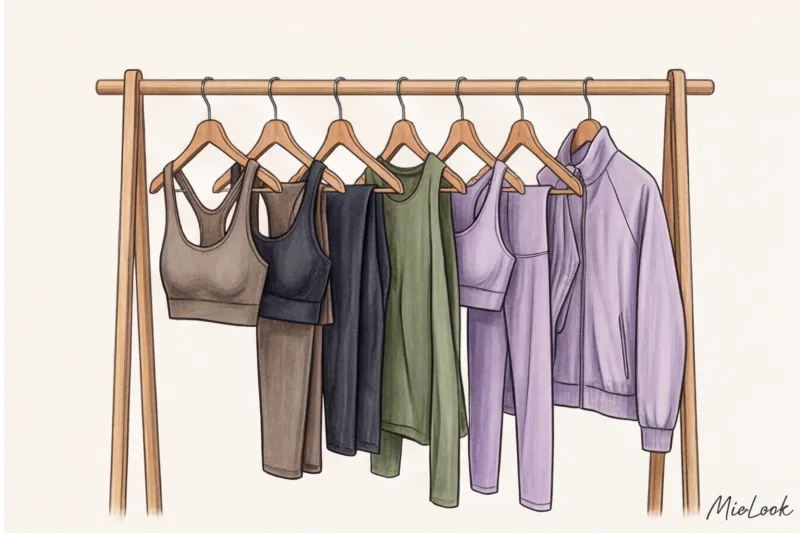
To avoid standing in front of your open closet trying to pair purple leggings with a red top, use my favorite formula 3-2-1 to create a sports capsule.
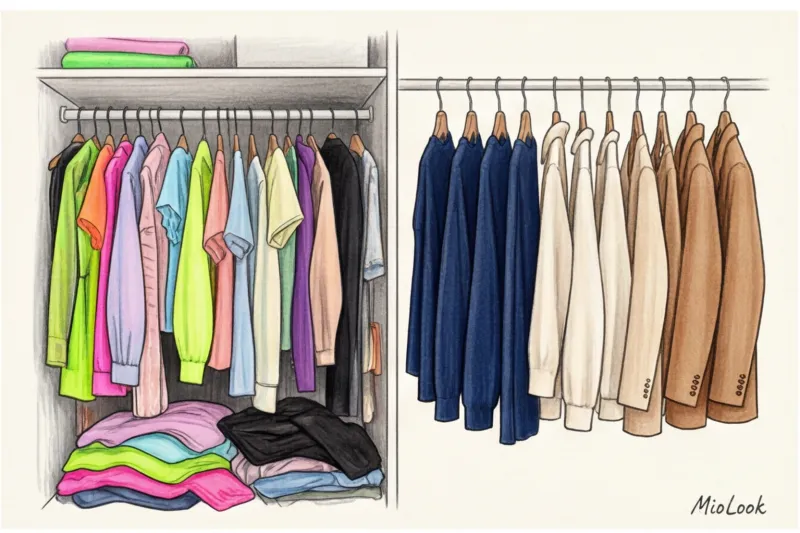
- 3 basic shades. These are the foundation (mostly bottoms—leggings, shorts, joggers). For example: dark chocolate, graphite, and inky blue.
- 2 accent shades. These are your supportive tops and rashguards. They should complement each of the three basics. For our selection, dusty rose and pistachio are suitable.
- 1 unifying print or texture. This is the top layer (hoodie, bomber jacket or sneakers), which contains both the base and the accent, tying the look together.
The integration of footwear also requires attention. White sneakers are a versatile, refreshing touch that almost always works. If you choose colored shoes, they should either complement the accent color of the top or be the only bright spot in an otherwise monochrome look.
Activewear is no longer just "things you don't mind ruining." It's your armor. By investing in the right shades, dense, high-tech fabrics (with at least 15-20% elastane content), and a complementary palette, you're buying more than just leggings. You're buying confident posture in the gym, a desire to never miss a workout, and that energy that keeps you going for that extra set when you're feeling low.
", "tags": [ "sportswear", "color palette", "capsule wardrobe", "color combinations", "appearance color type", "color psychology", "style" ] }