What is perfume etiquette and why does it work like an invisible dress code?
A few years ago, during a closed interview with the head of a historic perfume house in Grasse, I heard a phrase that forever changed my attitude towards perfume: "Fragrance isn't something you wear for yourself. It's your way of communicating with the world before you even open your mouth." In my 12 years as a fashion journalist, I've seen dozens of impeccably dressed women whose looks literally crumble the second they enter a meeting room, leaving behind a thick, suffocating cloud of heavy amber at 9 a.m. That's when I realized perfume etiquette — this is not just a set of old-fashioned rules for social events, but a vital tool for impression management.
At its core, perfume etiquette is based on two pillars: absolute respect for others' personal space and conscious management of one's own image through the sense of smell. In professional circles, there is a crucial concept: sillage (sillage). The main rule of modern etiquette is that your scent trail should not violate the "arm's length rule." Only those you voluntarily allow into your intimate zone can smell your fragrance—through a welcoming hug or a quiet, one-on-one conversation. Have you ever noticed how uncomfortable it is to be in an elevator with someone who has generously applied a thick oud extract? If your perfume "walks" three meters ahead of you and remains in the room after you leave, you are literally invading someone else's personal space.
Historical context is crucial here. We've long since moved on from the aggressive aesthetic of the 1980s, when overdoses of loud, space-filling perfumes like Dior's classic Poison were considered the norm. Today, according to WGSN (2024), olfactory "quiet luxury" reigns supreme.
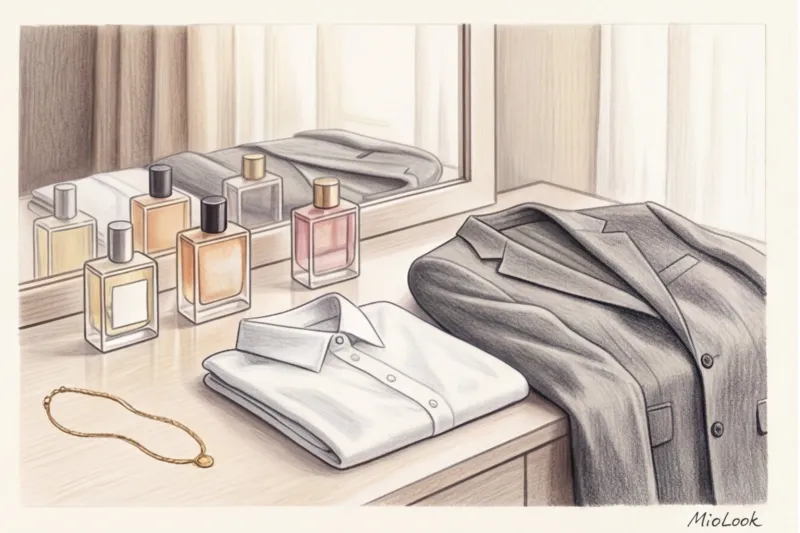
To better understand this concept, consider a direct analogy with clothing. A powerful, lingering oriental perfume with notes of tuberose or burnt sugar is like a dress with a loud leopard print or a neon jacket. You wouldn't wear it to a board meeting when choosing Business dress code from formal to casual? And here is a delicate one. skin scent (a clean, close-to-the-skin scent with notes of white musk, neroli, or ambroxan) works like a perfectly tailored, basic white shirt. It's absolutely timeless, highlighting your well-groomed appearance and conveying status without unnecessary visual or olfactory noise.
That's why the concept of "one signature scent for life," so beloved by our mothers, is hopelessly outdated today. Modern realities require flexibility, and a single bottle has been replaced by a full-fledged olfactory wardrobe We need different tools for different tasks: a strict, dry chypre for complex negotiations, a clear green tea for morning Pilates, and an enveloping gourmand for an evening date. The average price of a quality niche perfume today ranges from 150 to 300 euros, and this is a serious investment in your personal brand, one that should work for you, not against you.
By the way, when my clients make up capsules for a week, I always recommend using smart wardrobe feature in MioLook to link specific bottles to collected images. The app is great for visualizing how your status image for public speaking will match the chosen perfume, creating a single, complete picture, where no detail contradicts another.
Office Perfume Etiquette: Fragrance as a Tool of Influence
According to a large-scale study conducted by European HR agencies in 2023, approximately 18% of candidates for top positions received a hidden rejection after the final in-person interview for a completely unexpected reason. Their pungent, space-filling perfume subconsciously caused interviewers to shorten the meeting and ask fewer clarifying questions. This isn't a coincidence, but pure olfactory psychology. Neuroscientists have long proven that olfactory receptors are directly connected to the brain's limbic system, which is responsible for emotions and basic instincts. When someone else's strong scent aggressively invades our personal space, the brain instantly interprets this as a violation of boundaries and a potential threat, triggering an inexplicable aversion to the interviewee.
This leads to the most important, ironclad rule of the business environment, which I never tire of repeating: your perfume should never, under any circumstances, remain in the elevator or conference room after you've left it. If your colleagues can unmistakably tell that you walked down the hallway five minutes ago, you're breaking etiquette. In the office, scent is a subtle tool of influence, not a way to announce yourself to the entire floor.
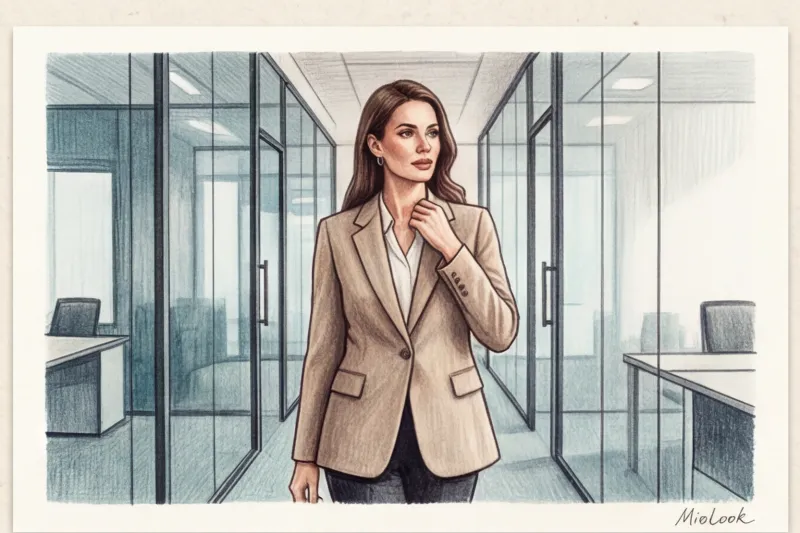
Interestingly, certain fragrance profiles can literally increase your level of trust. Research in sensory perception shows that notes of dry wood, green tea, and iris are subconsciously perceived by others as markers of reliability, composure, and high intelligence. That's why, when we create a capsule with our clients to work through MioLook smart wardrobe I always ask them to analyze not only the jackets and blouses, but also the perfume bottles on the dressing table. A perfectly tailored wool jacket for 1,000 euros will lose half its persuasiveness if it's accompanied by a frivolous trail of cotton candy.
Fragrances for executives, negotiations and business formals
The strict Business Formal dress code applies not only to clothing but also to perfume. If you're wearing an impeccable suit or a rigid sheath dress, fragrance should act as an invisible framework. It literally "pulls" the look together, making it more defined and graphic. The best choices for executives and complex negotiations are classic fougère compositions, dry woods (especially Virginia cedar and Haitian vetiver), cool powdery iris, and savory, sharp citruses like Calabrian bergamot or bitter orange. These notes are devoid of pretense; they sound detached, elegant, and create that essential distance of professional respect.
That said, there are absolute no-nos for high-status roles, which I strongly recommend eliminating from your morning routine. The first is overt gourmand fragrances. Vanilla, praline, caramel, and chocolate smell cozy and delicious, but in the context of a boardroom, they drastically diminish your authority. Psychologically sweet scents make the image appear too "soft," childish, and pliable. The second no-no is heavy oriental scents. Oud, thick church incense, dense amber, and animalic musk are wonderful for evening outings, but in the confines of a conference room, they sound dominant and even aggressive. They physically "eat" the oxygen in the room, causing migraines and a desire to end the meeting as quickly as possible. Third, overtly fruity, "compote" notes (peach, strawberry, passion fruit) will simplify the image and strip it of its status heaviness.
The right business perfume conveys your status without a single word. It's like an expensive Swiss watch, the edge of which barely peeks out from under the cuff of a white shirt—visible only to those you've allowed into your personal space, but it speaks volumes about your impeccable taste than flashy logos.
Access to MioLook for €0.99 — one-time payment
A smart AI stylist will select the perfect look for the office, taking into account your dress code, and help you organize your wardrobe.
Get access — €0.99 onceSmart Casual and Creative Industries: Where the Boundaries Are
If you work in IT, media, architecture, or any other field with a smart casual dress code, the boundaries of fragrance are broader, but they still exist. A more relaxed approach is appropriate here, emphasizing individuality over strict subordination. Molecular perfumes (scents based on synthetic molecules like Iso E Super or Ambroxan) are ideal, as they fade in and out without overwhelming the receptors of colleagues in an open-plan office. Green notes (freshly cut grass, crushed tomato leaf), tart fig, and calm tea accords—from Japanese matcha to classic Earl Grey—also work beautifully.
The phenomenon of "cleanliness scents" deserves special mention. Over the past five years, they've become a veritable uniform in modern offices around the world. The scents of freshly washed cotton, expensive bar soap, frosty air, or ozone are the perfect compromise. They create a feeling of well-groomed elegance, as if you've just stepped out of the shower, yet are completely neutral. In dense urban environments and constant deadlines, such a perfume works as a mild antidepressant for both you and your colleagues.
However, it's precisely in their quest for "cleanliness" and grooming that many make a fatal mistake: uncontrollably layering fragrances. I once had a case where a brilliant professional was asked to move to another part of the office because of an unbearable odor, even though she swore she used "just one spray" of a light eau de toilette. The problem lay elsewhere. Imagine: in the morning, you use a tropical-scented shower gel, then apply a thick moisturizing lotion with the scent of almond and shea butter, set your hair with a powerful floral spray, and finally, spray on your favorite woodsy perfume.
As a result, a chemical conflict occurs on your skin. In a confined space, this multi-layered "pie" of synthetic fragrances begins to sound stuffy, cheap, and cacophonous, completely ruining the perfumer's elegant design. My professional advice: if you plan to wear perfume before work, choose basic skincare, deodorants, and styling products that are fragrance-free or from the same bath line as your perfume. This is the only guarantee that your scent will sound crystal clear, sophisticated, and uniquely yours.
Perfume for public appearances and status events
Backstage at major conferences—from Geneva business forums to tech summits in Lisbon—I often see the same scene. A speaker, impeccably dressed and ready to go, nervously sprays themselves generously with their favorite perfume. This is a fatal mistake that can cost them their connection with the audience.
It's a matter of simple physics and chemistry. The temperature on stage under professional lighting often exceeds comfortable limits. Under the aggressive heat of the spotlights, the top notes evaporate in seconds. As a result, even the most delicate, watercolor-like floral scent instantly thickens, turning into a heavy, suffocating cloud. Over the years of preparing top managers for public speaking, I've developed a strict rule: the audience in the front row and your discussion partners absolutely do not need your scent trail. In the confined space of a hall, loud perfume poses a direct risk of triggering allergies in the audience, which is guaranteed to shift the focus from the essence of your presentation to the search for antihistamines.

Does this mean you should completely ditch your perfume before going on stage? Not at all. On stage, perfume changes its basic function: from a tool of social communication, it transforms into your personal psychological anchor Neuroscience research shows that olfaction is the only sensory pathway directly connected to the brain's limbic system, which is responsible for our emotions and memory.
To use this mechanism to your advantage, try the following pro trick:
- Choose an essential oil or a single-note fragrance lavender, neroli, petitgrain or bitter orange These components, as tests show, effectively reduce cortisol levels.
- Apply this scent during speech rehearsals when you are most focused and in a safe environment.
- Just before going on stage, apply a micro drop strictly to the inside of your wrist.
You'll feel this calming "anchor" only when you bring your hand to your face to adjust the microphone or flip a slide. Your olfactory minimalism should be perfectly in sync with your visual composure—we've covered the details of how to effectively construct an image in detail in our article about performance attire.
By the way, when forming capsules for speakers in MioLook I always add a neutral anchor fragrance to the "Conference" tag. This helps my clients avoid reaching for their favorite evening scent on the big day, which would ruin the magic of their professional look.
Tastings and gourmet dinners: an absolute no-no
Another category of high-status events that require a radical overhaul of habits are wine tastings and private dinners. Here, uncompromising international etiquette applies: strict "No Perfume" rule.
If you're invited to a tasting of rare vintages or a chef's set menu, any scent of cleanliness, even the most subtle, becomes completely unflattering. Physiology is adamant: our perception of taste is almost 80% dependent on our sense of smell. You simply won't be able to appreciate the complex, earthy, truffle-like bouquet of an aged Barolo worth several hundred euros if your receptors are clogged with molecular ambroxan, and those of your tablemates with your tuberose. Respect for the sommelier's delicate work is expressed precisely in your olfactory "invisibility." Save complex compositions for a sophisticated cocktail, and arrive at dinner smelling exclusively of freshly washed body.
Dating and Evening Out: From Flirting to Black Tie
Have you ever wondered why we spend hours choosing the perfect dress before a first date, only to apply a completely random perfume at the last second? In my personal styling practice, I regularly encounter situations where a perfectly crafted look literally falls apart due to an inappropriate, overly aggressive train that screams louder than its wearer.
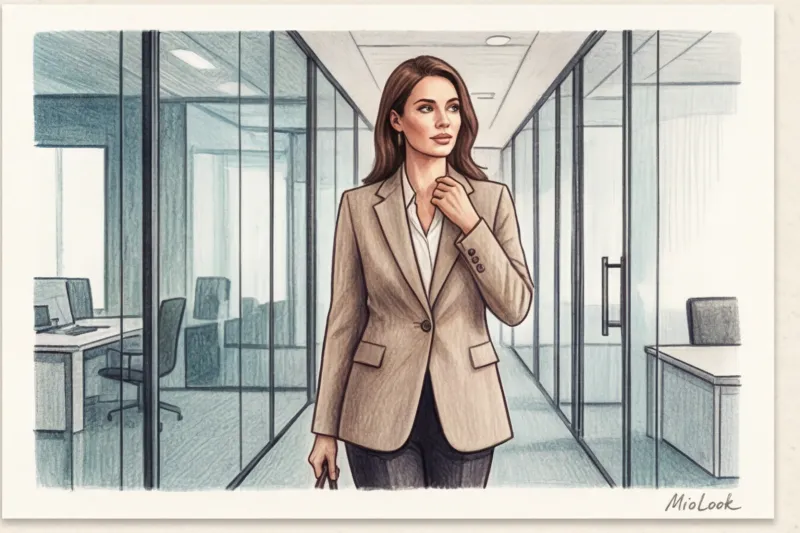
Olfactory etiquette for romantic encounters requires fine-tuning. The difference between a first-date scent and a perfume for established relationship (of an already established, long-term relationship) is colossal. At the first meeting, your task is to intrigue, to leave physical and emotional space for rapprochement. The so-called skin scents (second-skin scents), delicate musks, or translucent watercolor flowers. The scent should only be noticeable when someone leans across the table toward you. But once the relationship is established and the emotional foundation is strong, the rules of the game change. You can confidently wear complex, polarizing compositions or heavy artillery—your partner will already perceive the scent through the prism of deep personal attachment.
Let's put the marketing gimmicks to rest once and for all. I want to officially debunk the myth of aphrodisiacs and the notorious pheromones in perfumery. Chemically speaking, there's simply no universal ingredient that works as a love potion for everyone—this is confirmed by years of data from the International Fragrance Association (IFRA). A true, effective magnet is your personal confidence and the absolute complementarity of your scent to your style. If you're wearing a simple silk slip dress but smell like a rugged, masculine oud simply because the consultant at the boutique called it "sexy," your partner will experience subconscious cognitive dissonance.
A completely different olfactory logic is activated when the invitation includes a strict evening dress code. Black Tie is the official time for the heavy artillery of perfumery. Light citrus and tea compositions, so beautiful during the day, simply disappear under artificial light and surrounded by luxurious gowns. For grand evening outings, choose profiles featuring predatory tuberose, lingering amber, earthy patchouli, and complex resins.
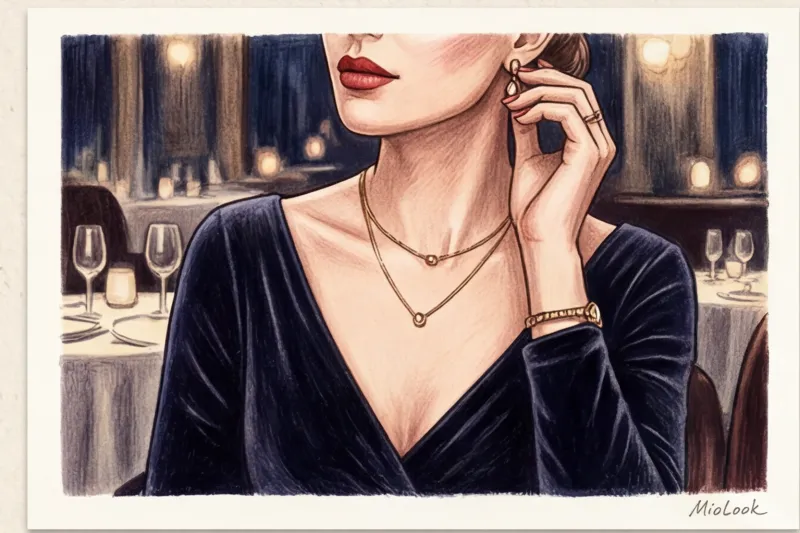
To understand the mechanics of evening fragrances, it's helpful to look back in history. Consider the legendary Shalimar, created by Jacques Guerlain in 1925. This masterpiece of perfumery, with its powerful, then-unprecedented dose of vanilla, tonka bean, and incense, was originally conceived to pair with the textured, heavy fabrics of the Art Deco era. It was designed to be worn with thick silk, heavy velvet, and natural fur. The density and heat capacity of these materials literally "held" the complex resinous composition, allowing it to slowly and luxuriously unfold over hours.
I've transformed this historical principle into my favorite styling tip, which I always teach my clients: match your evening perfume to the texture of your outfit. If you're wearing heavy, light-absorbing velvet, complement it with gourmand, warm resins or a spicy oriental—the shaggy fabric will add even more depth and envelopment to the scent. Smooth, flowing silk calls for cool white florals (jasmine, gardenia), but remember this important rule: apply perfume only to your skin before putting on your dress to avoid permanent oil stains on the delicate fabric. And if you've chosen the cool shimmer of sequins or harsh metallic textures, try playing with contrasts by choosing crisp, sparkling aldehydes in the spirit of classic French design.
To avoid getting lost in all these subtleties when you have just minutes left before going out, I highly recommend digitizing your evening looks. In the app MioLook Not only can you pre-pack your Black Tie capsule, but you can also add a note to a specific dress about which scent would best complement its texture. This takes the stress out of your day and allows you to enjoy the evening feeling flawless from the tips of your shoes to the tips of your hair.
Try MioLook
for free
Start creating perfect images with the help of artificial intelligence
Get access — €0.99 onceFabrics and Perfumes: How Materials Change the Perfume Experience
A common mistake I see even among the most discerning fashionistas: impeccably styled, an expensive fragrance in the bottle, and a complete dissonance when they meet. We're used to thinking that perfume etiquette only regulates dosage and the appropriateness of the composition. But in practice, for what how you apply perfume plays no less a role than what Where You travel through them. Different textures act as filters, capable of distorting or, conversely, ennobling the olfactory pyramid beyond recognition.
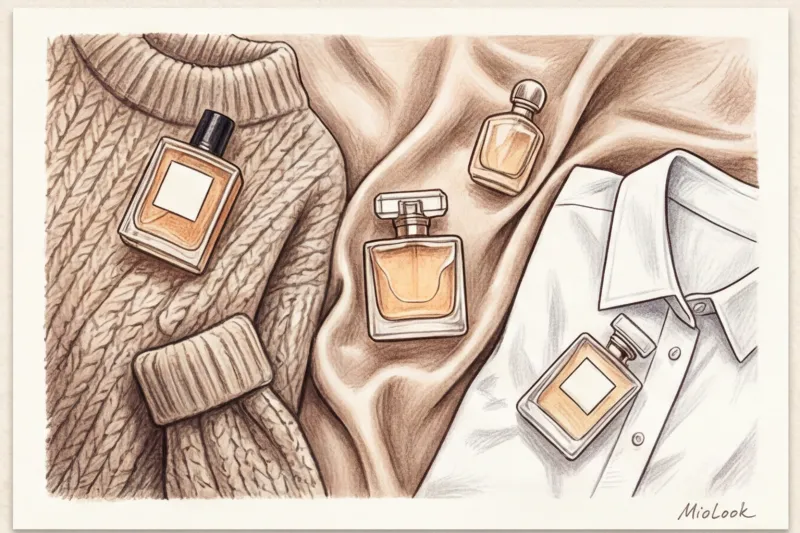
If you want to extend the life of your favorite perfume and make it sound as cozy as possible, entrust it to natural wool or cashmere The porous, scaly structure of these fibers acts as the perfect olfactory "safe." They perfectly capture and retain heavy base notes—sandalwood, tonka bean, musk, and amber. Have you ever noticed how your favorite COS cashmere sweater or scarf smells like a warm base even a week after application? Wool slowly, literally molecule by molecule, releases its scent into the space, making it more rounded and intimate.
With smooth fabrics like silk and viscose The story is entirely different. This is where the main physical danger lies: the high concentration of essential oils and alcohol instantly leaves telltale oily marks on delicate materials. Spraying perfume directly on a silk slip or satin blouse before going out is a surefire way to ruin your look.
Expert advice from a stylist: How can you save an expensive blouse if you do get a perfume stain? Never rub it with water—this will only set the oils in the fibers. Lightly blot with a paper towel and take it to the dry cleaner, making sure to indicate the nature of the stain. To avoid such situations, apply fragrance exclusively using the "cloud" technique (spray a mist into the air and step into it) or to the inside of the hem. If you frequently encounter stains on clothing, I recommend reading our article about fabrics that don't show stains.
And here it is synthetic fabrics (especially 100% polyester or acrylic) are the worst enemies of complex niche perfumes. Due to their zero hygroscopicity and lack of breathability, synthetics literally "flatten" the composition. The natural evaporation rate is disrupted: top notes vanish within minutes, and the base notes sound flat, harsh, and distorted. Even a €300 masterpiece on a polyester base will lose all its complexity and sound cheap.
A very special, almost alchemical romance is developing in perfumery genuine leather Leather jackets, trench coats, and blazers don't just hold scent—they chemically react with it. The leather's tannins blend with your perfume, creating that unique signature scent that's impossible to copy. My favorite styling trick is to apply a crisp floral chypre or austere iris to the lining of a vintage leather jacket. The contrast between the rough texture and the delicate, fragile scent works flawlessly.
By the way, when my clients and I collect capsules in MioLook I always ask that this material factor be taken into account: dense textures “eat up” fresh citrus fruits, but adore dry wood, and flowing fabrics require the same weightless aquatics or molecular compositions.
Perfume Etiquette Checklist: How to Apply Fragrance Properly
Forget the clichés from old advertising campaigns that urge you to apply perfume "where you want to be kissed." Today, I want to thoroughly deconstruct the myth of "pulse points." Historically, women applied drops of concentrated perfume behind their ears, on their wrists, and in the cleavage of their breasts. But for a modern business dress code, this is a downright bad idea. The blood vessels in these areas are located extremely close to the skin. Body heat acts as a radiator, dramatically enhancing the fragrance's projection (that aforementioned sillage) and causing the top notes to evaporate too aggressively. In the confined space of a conference room, such a trail would instantly violate perfume etiquette, turning from an elegant addition into a suffocating irritant.
How can you achieve a delicate, sophisticated scent that evokes well-groomed appearance rather than a perfume-laden overload? The answer lies in the "cloud" technique—that is, stepping into a sprayed perfume. Spray one or two sprays into the air in front of you at chest level and simply step into the settling fragrant mist. This method ensures even, weightless coverage. The molecules settle on clothing and hair in a subtle veil, creating an aura rather than a concentrated scent that "screams" your presence.
For a truly sophisticated scent, consider a classic French tip: spraying perfume on your hairbrush.
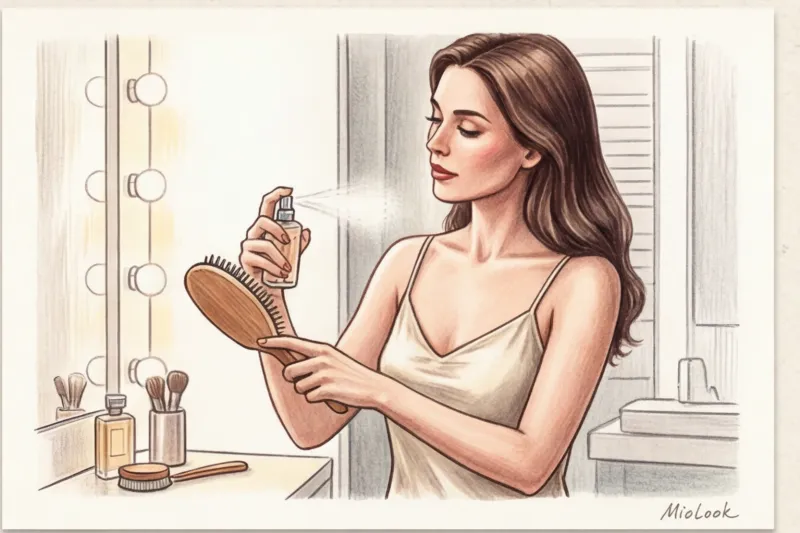
Instead of spraying alcohol directly onto your hair (which inevitably dries out the cuticle), spray a natural bristle brush and run it through your hair a couple of times. Hair is incredibly scent-retentive thanks to its porous structure, and this approach will leave behind a subtle, hypnotic scent only when you move your head.
My personal life hack from Fashion Week, where maintaining personal boundaries is crucial in the dense crowd of buyers and street style photographers, is to apply perfume to the inside lining of a jacket or the hem of a skirt. This placement prevents the scent from warming up directly from the skin, but rather rises in soft, delicate waves solely as you walk, completely avoiding the scent hitting your interlocutor's nose during the traditional greeting kiss.
When it comes to dosage, strict perfume mathematics apply. Remember the ironclad rule of "one spray" for daytime and a maximum of "three" for evenings. One micro-spray is your absolute limit for the office, a business lunch, or a morning flight. Three sprays (for example, on the back of the neck, the hem of a dress, and the inside of a jacket) are only acceptable for evening wear with a strict dress code, where the air is cooler and there's more distance between people.
But what if you accidentally overdo it on perfume before going out? The biggest mistake is trying to wash it off with soap and water. Perfume oils are hydrophobic, and water will only "seal" them onto your skin. To quickly neutralize the odor, generously wipe the affected area with a cotton pad soaked in rubbing alcohol, micellar water, or regular fragrance-free sanitizer. The alcohol will dissolve the oils, leaving you just need to apply an unscented base lotion to soothe your skin and completely erase your olfactory mistake.
Your ideal image begins Here
Join thousands of users who look flawless every day with MioLook.
Get access — €0.99 onceConclusion: Your Olfactory Footprint as Part of Your Personal Brand
Christian Dior liked to say that perfume tells more about a woman than her handwriting. Concluding our conversation about perfume etiquette I want to encourage you to view your bottles not just as cosmetics, but as a powerful tool for impression management. Your olfactory signature is the invisible, yet most enduring, part of your personal brand.
Let's be clear: perfume etiquette isn't about prohibitions, rigid rules, or the denial of individuality. It's about appropriateness, high emotional intelligence, and basic respect for others. In an age when we so carefully guard our personal boundaries, invading someone else's space with a thick, suffocating trail is as bad manners as talking loudly on the phone in a quiet restaurant or showing up to a morning meeting in a sequined top.
Consider how a well-chosen fragrance wardrobe enhances your visual image. I often see perfect styling ruined by olfactory dissonance. One of my clients, a top manager at a European bank, couldn't understand for a long time why she was perceived as too "soft" at boardroom meetings, despite her impeccable three-piece tailored suits. The answer lay in the bottle: every morning, she applied an overtly fruity, frivolous spray that belied her status. We replaced it with a rigorous molecular accord with notes of dry wood (by the way, excellent basic options with this profile can be found in the niche segment for 150-200 euros), and the perception of her image changed dramatically. Fragrance is the finishing touch that literally brings your style together.
Over the years in the industry, I've developed a golden rule: true elegance always whispers, not shouts. Your scent should intrigue, making people want to come a little closer to unravel the note, not make them reflexively take a step back.
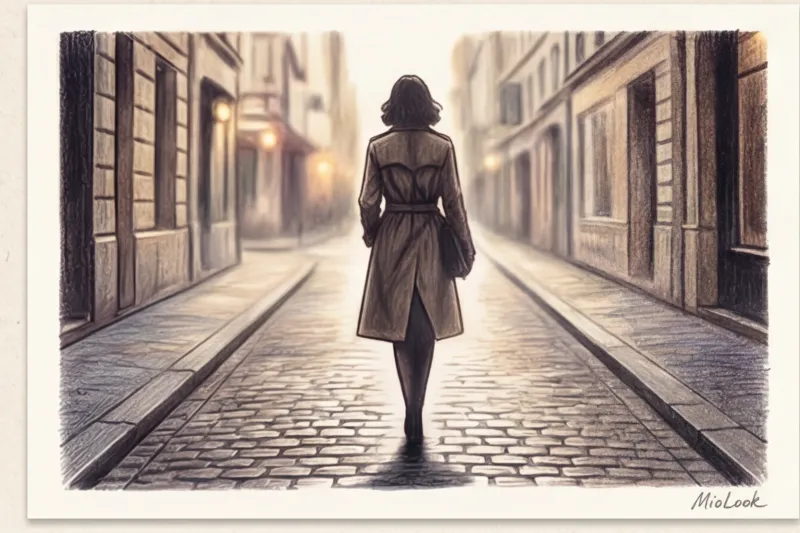
So my main call to action for you today is to audit your perfume collection. This weekend, take 20 minutes to go to your perfume shelf and analyze it. Organize your fragrances into strict "dress codes," just as you do with your clothes when the seasons change.
Divide the bottles into three or four clear semantic categories:
- White Shirt (Business Formal & Casual): Neutral, fresh, and body-toned scents for the office and business meetings. Look for light citrus, green tea, vetiver, or clean musk.
- Cashmere Sweater (Weekend): Cozy, warming compositions for weekends, walks, and gatherings with friends. Notes of sandalwood, fig, or delicate suede would be perfect here.
- Evening Silk (Black Tie & Dates): Complex, deep perfumes for dates and prestigious events. Time for the heavy artillery: tuberose, patchouli, and lingering amber.
If, after such an audit, you find that 80% of your shelf is taken up by heavy evening perfumes, even though you work in the office five days a week, this is a clear signal to reconsider your perfume investments and invest in some basic everyday options.
To avoid having to remember these combinations, I highly recommend digitizing the process. In the appendix MioLook When you create and save your looks in your smart wardrobe, you can leave text notes or tags with the name of the perfect perfume for a specific capsule. This is a phenomenal time saver in the morning: when choosing a tailored pantsuit, you know for sure that your favorite cool iris is paired with it.
Manage your scent as consciously as you manage your wardrobe. After all, when you leave a meeting room or get out of a taxi after a date, it's this subtle, barely perceptible trace that will remain in the air, continuing to speak for you.
Guide Chapters
Office Perfume: How to Choose the Perfect Scent
The wrong scent can ruin a business image faster than a wrinkled shirt. We'll break down the olfactory dress code for work.
How to Apply Perfume: Etiquette and Sillage
Fragrance is an invisible accessory to your wardrobe. Discover the secrets of perfume etiquette and learn how to apply perfume without infringing on others' privacy.
The Best Date Perfume: How to Charm with a Scent
Fragrance is an invisible dress code that can either charm or repel. We'll tell you how to choose the perfect perfume for your first romantic encounter.
Perfume for a Job Interview: How to Choose and Not Ruin Your Image
Should you wear perfume before an important interview? We explore common mistakes and share perfume etiquette rules that will help you land the job.
Evening Perfumes for Women: Fragrances for the Theater and Restaurant
Choosing a perfume for a night out is not only a matter of taste but also respect for others. We explore the rules of perfume etiquette for the theater and restaurant.
How to Wear Perfume in Summer: Perfume Etiquette
In extreme heat, your favorite perfume can become a suffocating cloud. We'll tell you how to adapt your fragrance wardrobe to extreme heat.
Sports Perfume: Is It Safe to Wear Perfume at the Gym?
Perfume during the workout: taboo or hidden advantage? We'll explain how to choose the right scent for the gym based on personal experimentation.
Perfume Etiquette: Where You Shouldn't Wear Perfume
Your perfume isn't just a signature look; it's a powerful tool of influence. Find out when a bold scent can ruin your reputation.
Perfume on the plane: rules of etiquette in transport
How to choose the right fragrance for traveling in a confined space? Find out why your favorite perfume can be a problem for those around you at altitude.
Bridal Perfume: How to Choose a Wedding Fragrance
Everyday perfume is the worst choice for a wedding. Learn how to choose a unique scent that will forever preserve the magic of your big day.