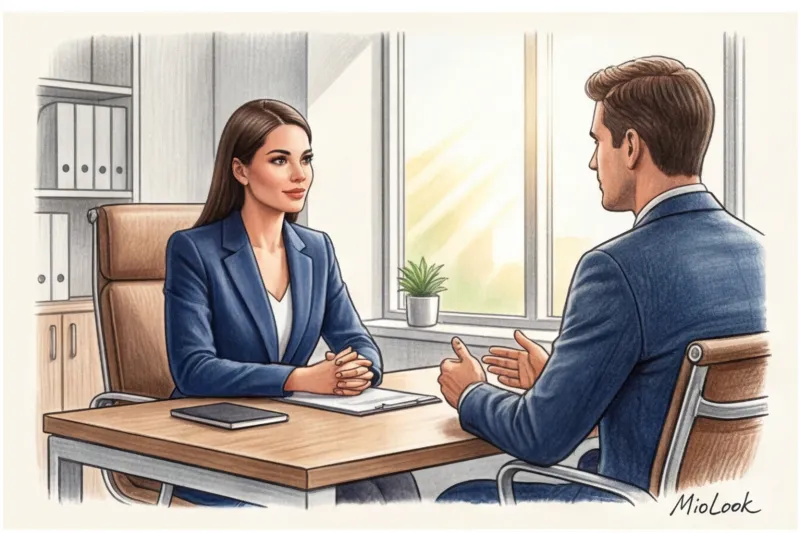
In my 12 years as a personal stylist, I've seen hundreds of polished resumes and perfectly tailored suits. But one incident has stuck in my memory forever. My client, a phenomenal CFO, blazed through three rounds of interviews at an international corporation. At the final meeting with the CEO, she was rejected. The reason? Her favorite Baccarat Rouge 540. The thick, luxurious, room-filling trail triggered a severe migraine attack in the interviewer right in the middle of the conversation.
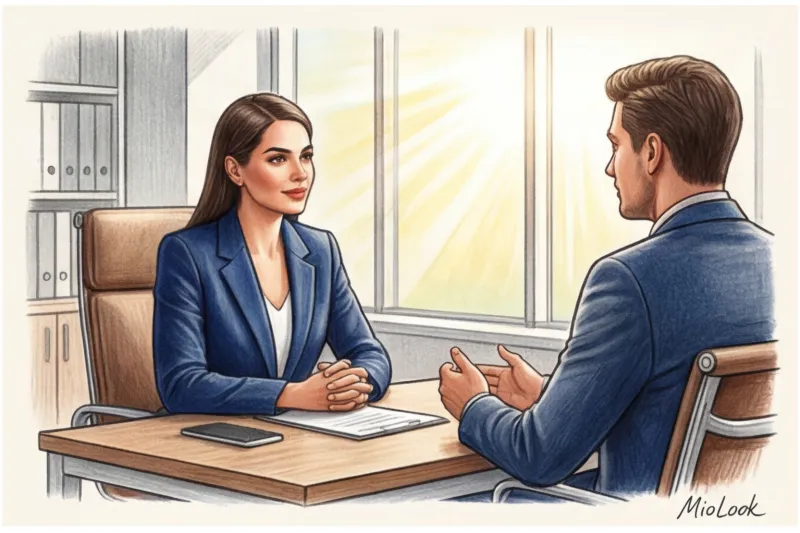
This case perfectly illustrates the main dilemma: is it worth applying at all? perfume for an interview Classic career coaches categorically insist: "No perfume!" As a stylist, I categorically disagree. Depriving yourself of scent means depriving yourself of a powerful tool for mental attunement. We discussed in more detail how scents shape our image in our the complete guide to perfume etiquette Today, we'll explore how to use fragrance to your advantage while remaining olfactory "invisible" to the HR manager.
Perfume for a Job Interview: A Definitive No or a Hidden Weapon?
The advice to arrive at an interview smelling exclusively of shower gel is hopelessly outdated. In modern style and psychology, there is a concept dopamine dressing (dopamine wardrobe) – when clothes and accessories are used to alter one's internal state. Scent works in the same way, only faster.
Neuroscience data proves that olfactory receptors are directly connected to the brain's limbic system, bypassing the logical processing centers. This means that the right scent can physiologically reduce stress levels in a split second. Remember that feeling of panic in the waiting room before entering a job. At that moment, a subtle hint of bergamot, cedar, or pure cotton on your wrist acts like a "cortisol-reducing" button. Wearing perfume at a job interview isn't about charming the interviewer. It's about... to you , as an internal anchor of confidence.
However, this is where the concept comes into play sillage (sillage). This is that cloud of perfume that trails behind you. The golden rule of the invisible dress code: in a meeting room, your sillage should be absolutely zero. Scent is the invisible foundation of a first impression, and according to the three-second rule, it is formed even before you say "Hello."
Why HR professionals are afraid of your legacy
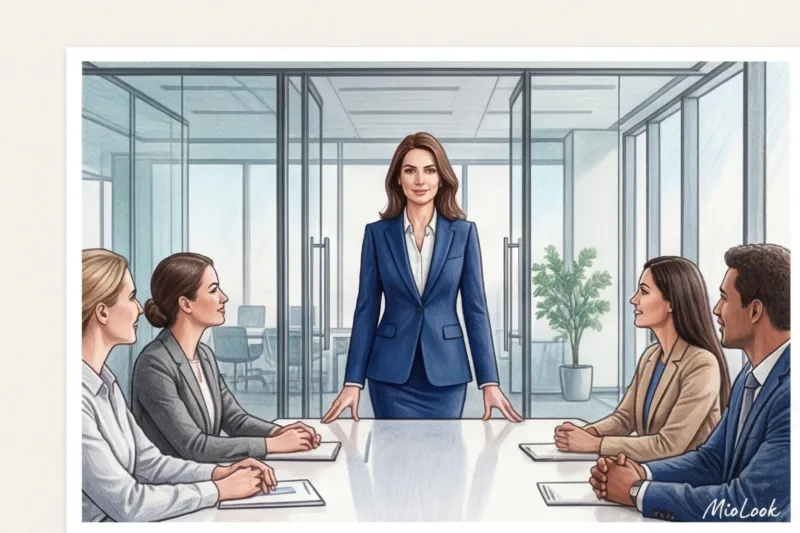
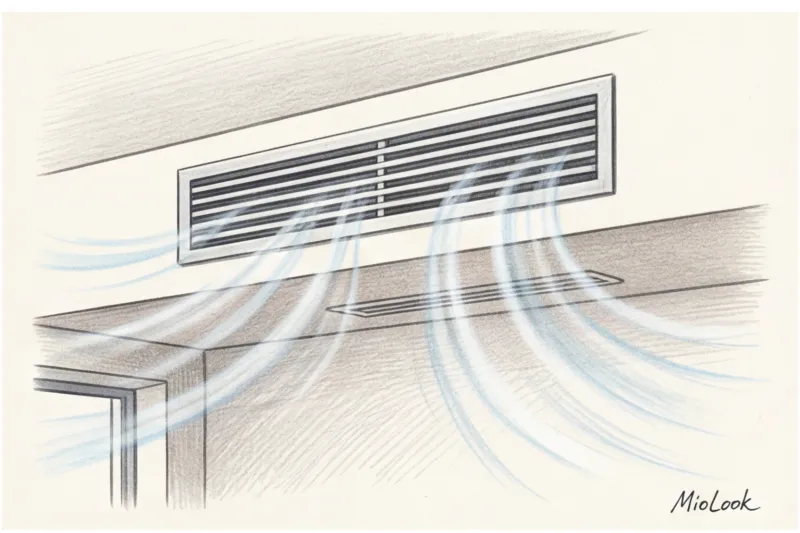
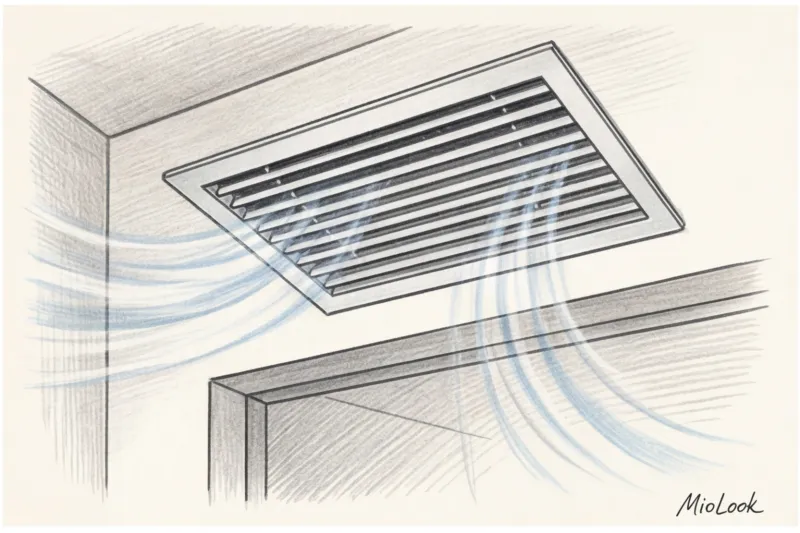
Imagine a typical conference room: glass, plastic, minimal space, and closed doors. The closed-room effect, combined with the ventilation in modern offices (HVAC systems), turns even a moderately intense plume into a suffocating, circulating cloud.
It's not just a matter of the interviewer's personal taste. The statistics are stark: around 30% of people experience physical discomfort, allergic reactions, or headaches from strong odors. Sensory overload in the workplace is a real problem. If your perfume makes the HR director discreetly open a window or shift in their chair, your resume, no matter how stellar, will be thrown in the trash.
Access to MioLook for €0.99 — one-time payment
A smart AI stylist will choose the perfect look for the most important interview.
Get access — €0.99 onceThe Anatomy of a Failure: Which Fragrances Are Guaranteed to Ruin the Experience
There's a strict "black list" of fragrances for business meetings. Many candidates make the mistake of choosing their "best," most expensive evening perfume, trying to emphasize their status. But in a daytime business setting, this sounds as inappropriate as a diamond necklace at 10 a.m.
- Aggressive sexuality: Gourmand notes (praline, rich vanilla, chocolate) and heavy oriental bases (amber, animalic musk, oud) disrupt the businesslike distance. They convey intimacy and relaxation, undermining the composed professional image.
- Loud white flowers: Tuberose, lily, and indolic jasmine are known migraine triggers. In a confined space, they literally suck out oxygen.
- Complex niche: Save scents with notes of bandages, iodine, burnt rubber, or damp earth for conceptual weekend exhibitions. Art house fragrances at interviews only evoke confusion.
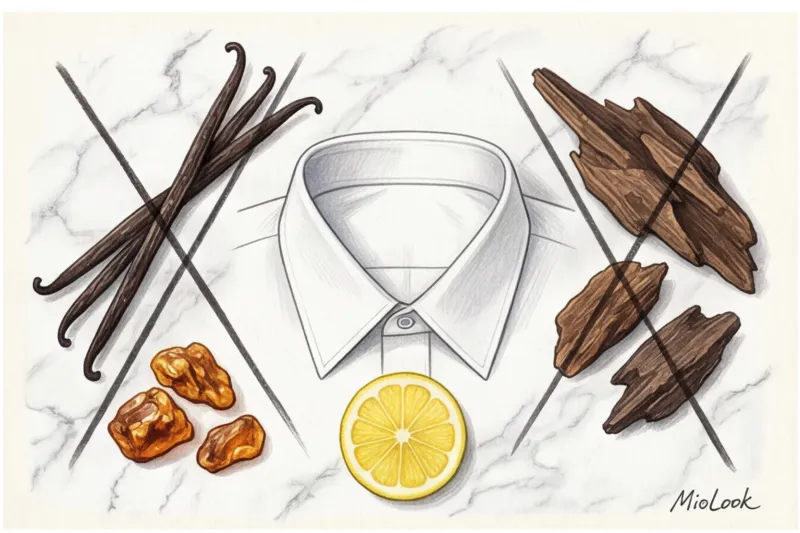
Remember this simple rule: if your perfume regularly garners compliments at parties or on dates ("Oh my god, what's that incredible scent you smell like?"), it's absolutely not appropriate for an interview. A business fragrance shouldn't evoke emotions in others.
Olfactory "quiet luxury": what a successful candidate smells like
If heavy luxury is off-limits, what should you wear? The answer lies in the global trend for skin scents (clean body scents). According to a major 2024 report by the analytical agency WGSN, olfactory "quiet luxury" has become a key trend in perfumery. These are fragrances that smell not like perfume, but like well-groomed skin.
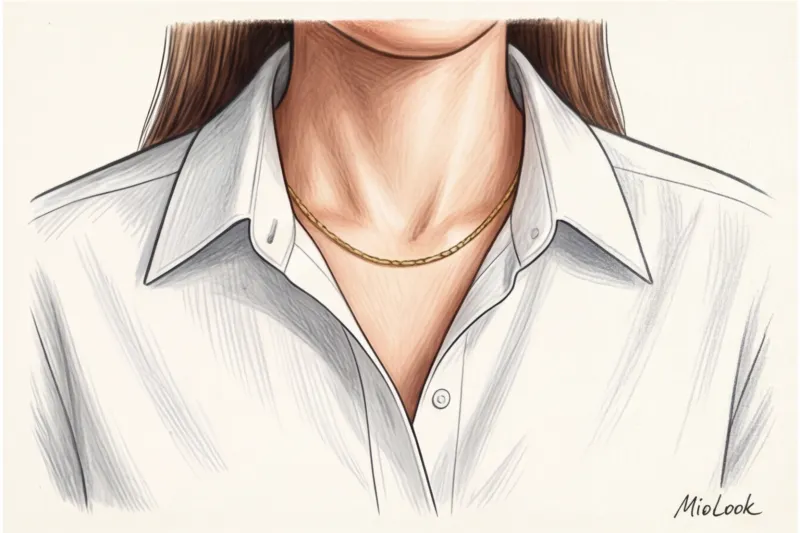
The formula for the perfect interview perfume looks like this: molecular base (eg Iso E Super or ambroxan) + sparkling citrus + light wood Such compositions create instant associations with status, a freshly ironed cotton shirt, expensive soap, or a morning shower.
As a fan of the Mediterranean aesthetic, I always choose light colognes with a note of neroli (bitter orange blossom) before important pitches. They create an aura of elegant poise. Their main advantage is that they evaporate from the skin within an hour and a half, leaving only a phantom feeling of neatness by the time you sit down at the negotiating table. By the way, to ensure your image and scent work together seamlessly, I recommend using MioLook The app will help you visualize your interview capsule, to which you just need to add the right perfume note.
Your perfect look starts here
Join thousands of users who look flawless every day with MioLook.
Get access — €0.99 onceThe arm's length rule: how to apply perfume without being detected by others
Even the most delicate fragrance can be ruined by improper application. The biggest mistake 90% of women make is spraying perfume generously on their neck, behind their ears, and on their wrists right before going out. These are pulse points with high temperatures. When you're stressed, your pulse quickens, your skin heats up, and the scent starts screaming like a loudspeaker turned up to full volume.
Instead, use the "microdosing" technique: spray one spray into the air in front of you and step into the settling cloud. But I have an even more effective, counterintuitive secret that I share with my clients.
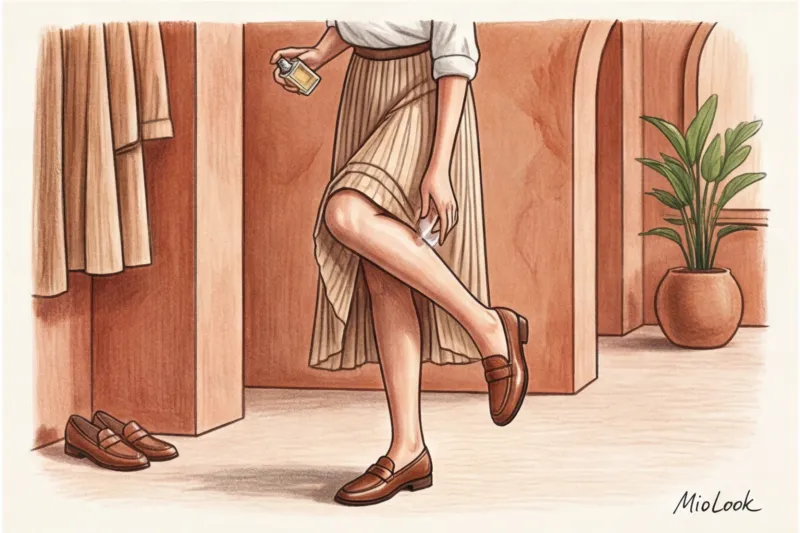
Move the pulse points down. Spray one spray onto the back of your knees or the inside hem of a midi skirt. The physics of fragrance are such that molecules always rise from the bottom to the top. The scent will gently drift toward your nose, creating that protective cocoon of confidence. However, it physically cannot cross the table and hit your interviewer's nose. You smell the scent, but they don't. It's a perfect balance.
Dress Code Adaptation: From a Creative Agency to a Bank
The intensity and character of a scent should be calibrated as carefully as the formality of your suit. What's appropriate in a design studio will raise questions in a boardroom.
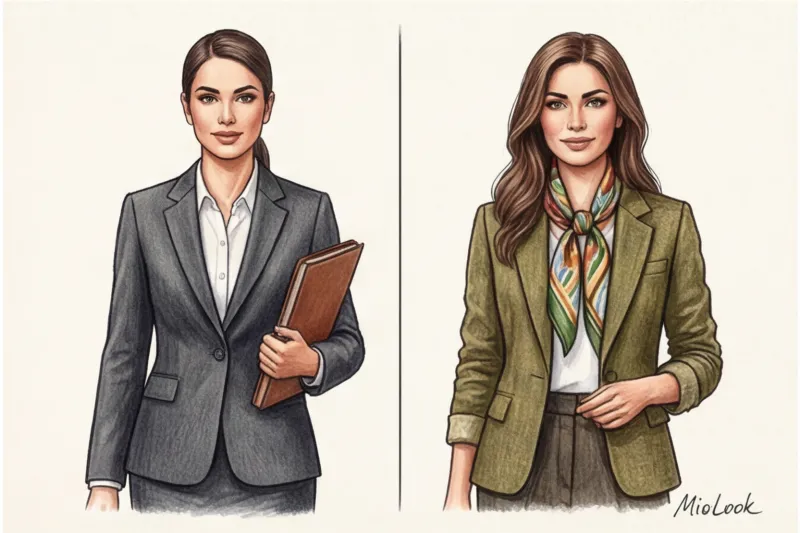
- Corporate sector (banking, consulting, law): If you choose strict business dress code Business Formal Your perfume should be ethereal. Choose pure molecular scents (Escentric Molecules, Juliette Has A Gun Not A Perfume). Important limitation: This advice doesn't work if you've been warned in advance about the office's strict fragrance-free policy—in such companies, even molecules are prohibited.
- Creative industries (IT, media, marketing): Smart Casual style allows for a touch of individuality. Green, herbaceous notes like fig, green tea, vetiver, and basil are appropriate here. They convey dynamism and a fresh mind.
- Beauty and fashion industry: The only industry where perfume can serve as a marker of your expertise. Here, you can wear a trendy yet subtle scent (like a light mineral scent or suede) to show that you're "on trend." But the zero-sillage rule remains unwavering.
Ready to get started?
Try the MioLook plan for free—no commitments required—and start planning your wardrobe smart.
Get access — €0.99 oncePre-Go Checklist: Perfume Etiquette for Day X
Job interviews are always stressful. To avoid ruining your carefully crafted look at the last minute, keep this short, step-by-step guide to perfume etiquette in mind.
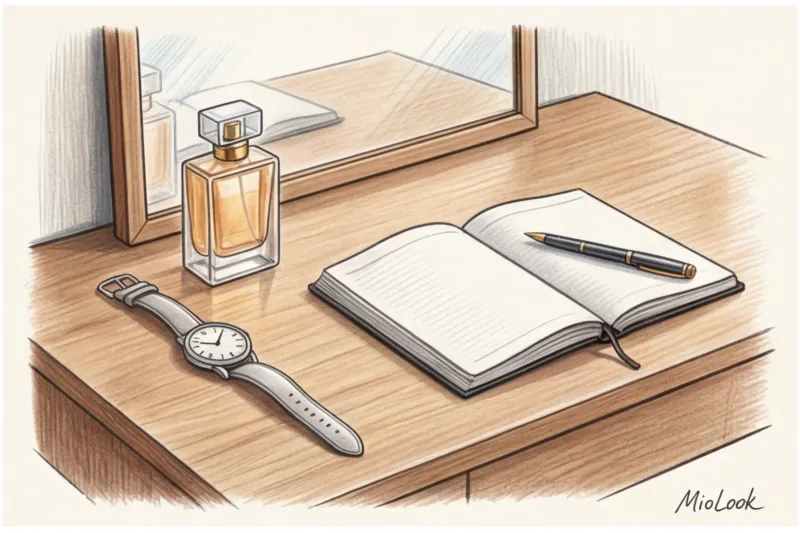
- Observe the timing: Apply the fragrance 40-60 minutes before entering the office. During this time, the sharp, alcoholic top notes will completely dissipate, leaving behind a refined base.
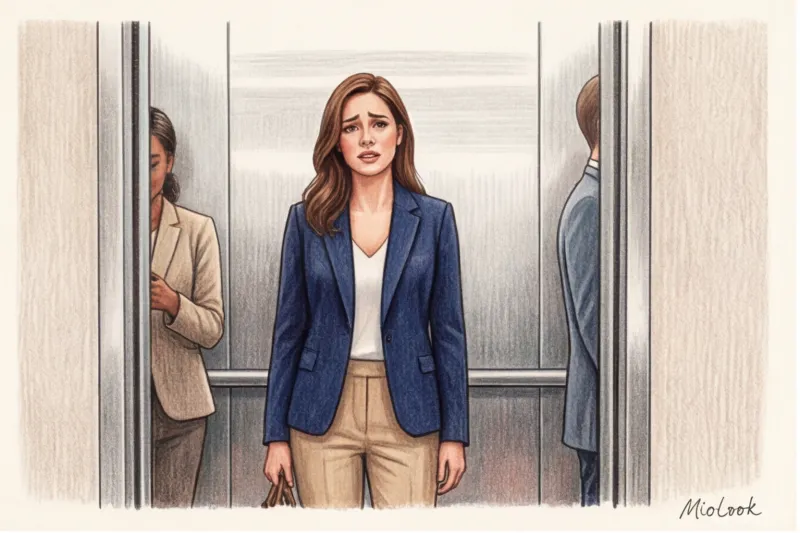
- No updates on the way: The worst thing you can do is take out a bottle from a car in a parking lot or, even worse, from a business center elevator just before an interview.
- Control layering: Your perfume shouldn't clash with your skincare products. On the day of your interview, use unscented deodorant and avoid perfumed body lotions and strongly scented hairsprays.
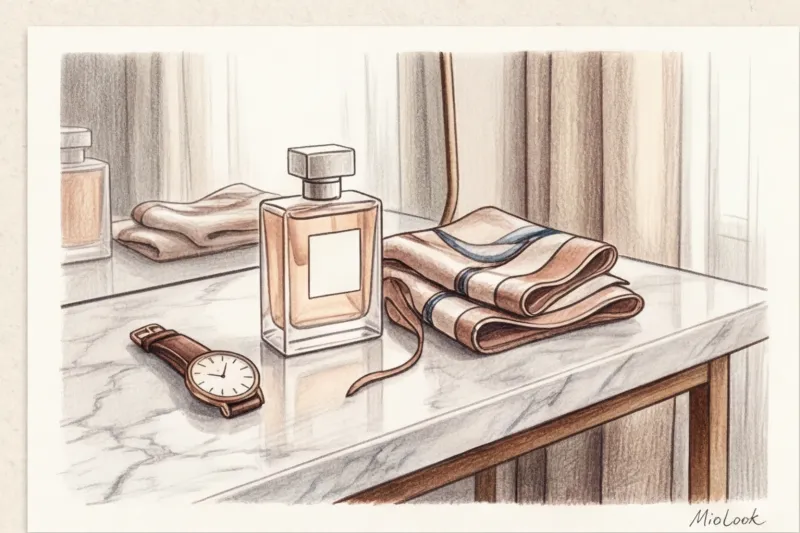
My main piece of advice, learned over years of working with top managers: when in doubt, don't apply it. If you're standing in front of the mirror with a bottle in your hand and wondering, "Isn't this too bright for this company?" the answer is always "too much." Put it down. Opt for cleanliness, put on a perfectly tailored jacket, stand up straight, and remember: your main goal in an interview is to leave the room with an impression of your professionalism, not the scent of your perfume.