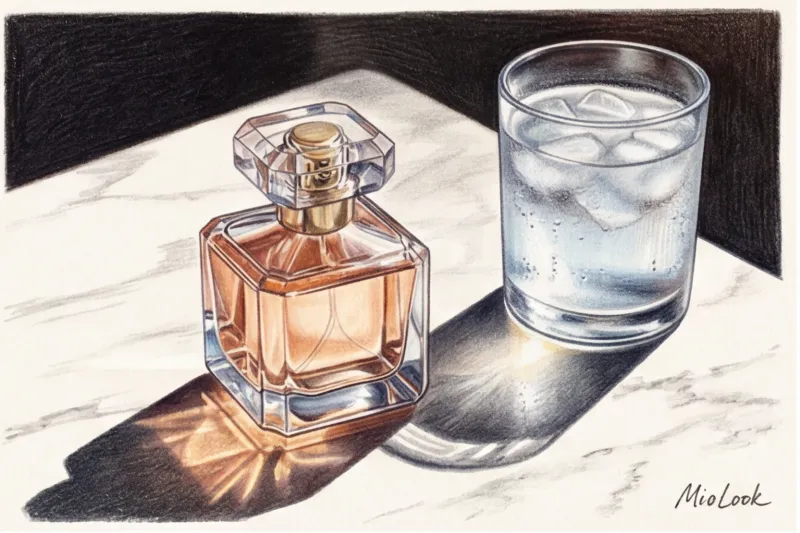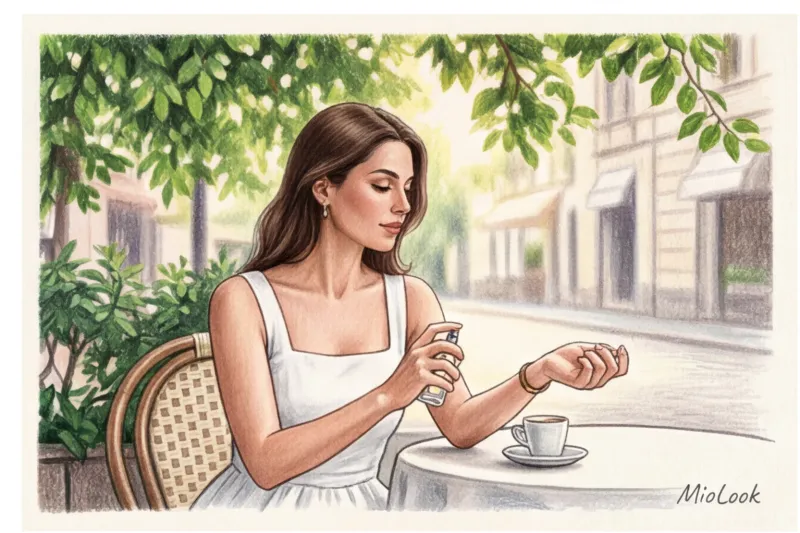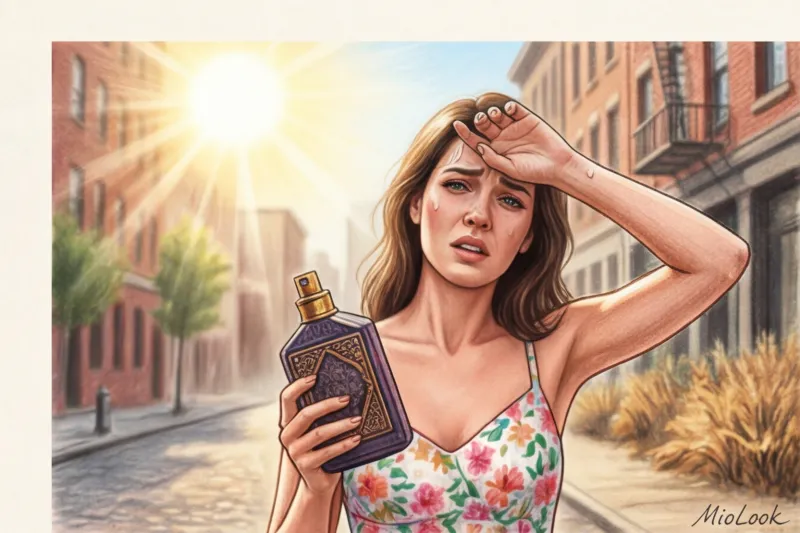
A few years ago, at a private dinner in Grasse, the head nose of a historic perfume house said something to me that forever changed my approach to my summer wardrobe: "The heat doesn't just warm the aroma. It cooks it alive." It's the perfect metaphor for what happens to our favorite winter spirits in July.
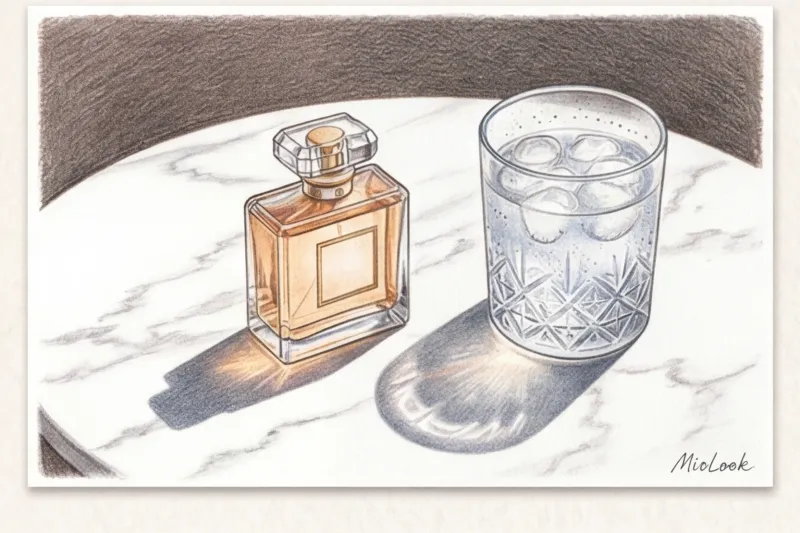
When the thermometer hits 30°C, the rules of the game change. What sounded like an elegant cashmere shawl in winter turns into a suffocating wool blanket in summer. Understanding that How to use perfume in summer — it's a matter not only of personal comfort, but also of basic respect for others. We discussed the fundamental rules in more detail in our The Complete Guide to Perfume Etiquette: How to Choose the Right Fragrance for Any Occasion , but extreme heat requires a completely different approach.
The Anatomy of a Fragrance at 30°C: Why Your Favorite Perfume Becomes Your Enemy in Summer
To understand why your favorite perfume has suddenly started irritating you, you need to delve a little into physics and chemistry. Perfume compositions are created based on average skin temperature (around 32-36°C) and air temperature (20-22°C). Under these conditions, the notes unfold linearly: first the light top notes, then the heart, and only after a couple of hours does the dense base develop.
What happens at 30°C in the shade? The rate of molecule evaporation increases two to three times. The top notes vanish instantly, without even having a chance to say hello. The heart of the fragrance collapses, and the heavy base notes—amber, bourbon vanilla, patchouli, and oud—begin to literally "scream." Your delicate sillage transforms into a dense, aggressive aura.
"Heat destroys the perfumer's intended architecture. What you get is not a symphony, but a cacophony of base notes that react with the heated skin," is how chemists and technologists in Grasse explain this phenomenon.
Your ideal image
Starts here: Join thousands of users who look flawless every day with MioLook.
Get access — €0.99 onceThe Citrus Myth and Real Perfume Investments for Hot Weather
If you ask a typical store assistant what to buy for summer, they'll suggest lemon or grapefruit cologne. This is the most common and most expensive perfume myth.
Yes, citrus smells fresh. But its molecular structure means it evaporates in 15-20 minutes in extreme heat. You're paying hundreds of euros for a scent that will vanish by the time you get from the taxi to the restaurant. Once the lemon evaporates, all that's left on your skin is a vague, often synthetic, musky base.
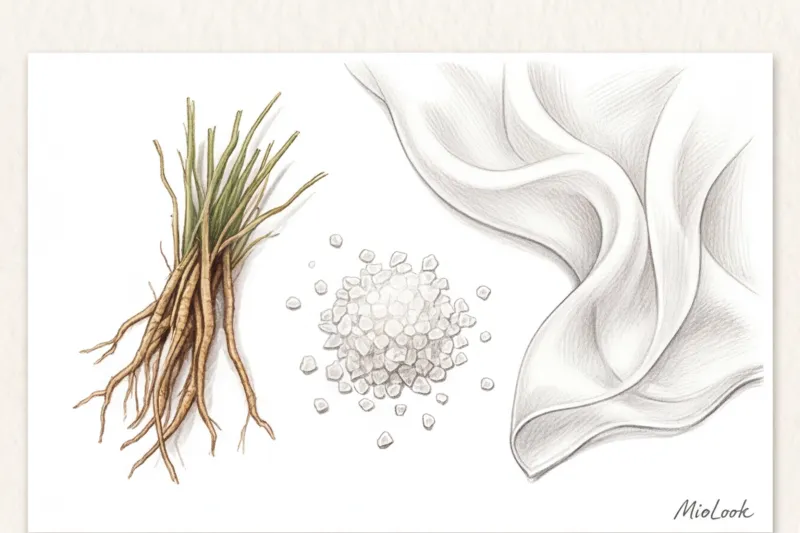
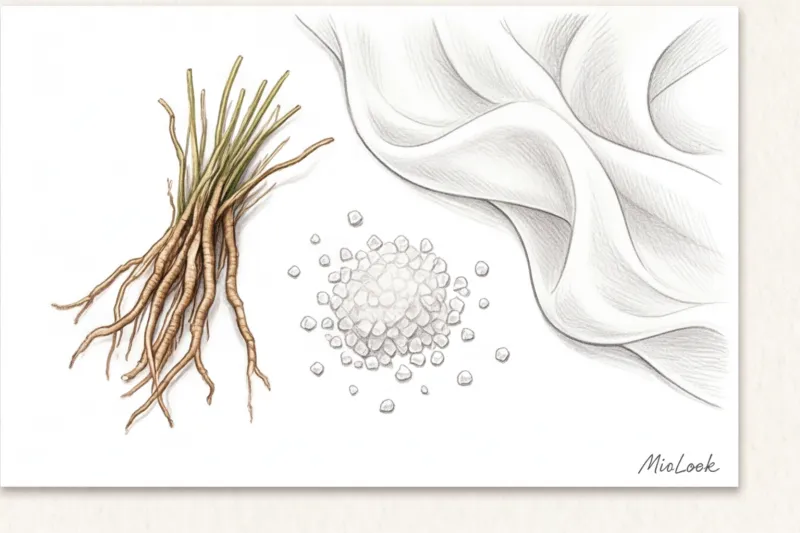
True investments for extreme heat lie elsewhere. According to a major WGSN report (2024), the global trend has shifted toward olfactory "quiet luxury." The true champions of summer heat are:
- Mineral accords: Notes of sun-warmed pebbles, sea salt, and ozone. They are not destroyed by temperature and create a feeling of cleanliness.
- Vetiver: a dry, woody, herbaceous root that tastes like a sip of ice water in the heat.
- Molecular musks: Ingredients like Iso E Super or Ambroxan. They blend with your skin's chemistry without suffocating the surrounding skin.
Application points: the main mistake everyone makes
We've all been taught to apply perfume to our pulse points: wrists, elbows, the jugular notch of the neck. For winter, this is ideal. In summer, it's a disaster.
In hot weather, sweat and sebum are actively secreted at your pulse points. When they mix with the alcohol base of your perfume, they distort the scent beyond recognition. Have you ever noticed how by midday your perfume starts to smell sour or metallic? This is the result of the scent reacting with your sweat.
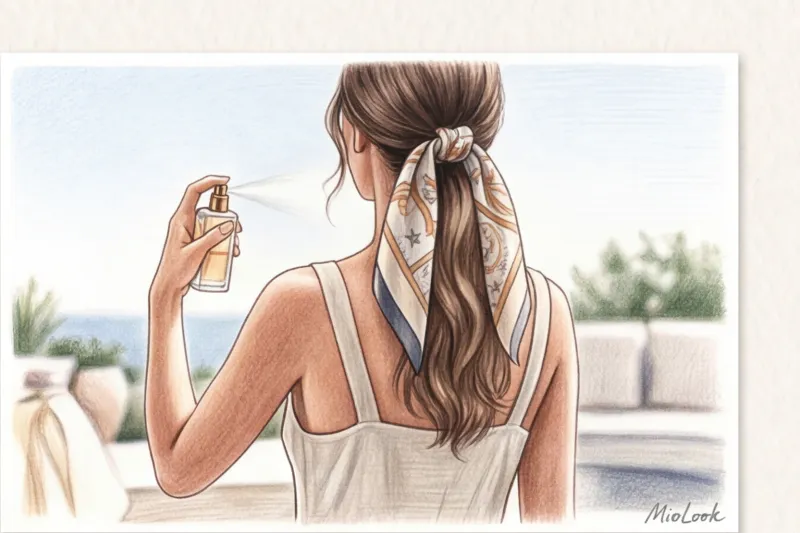
Alternative zones for summer are places where the skin remains relatively cool and dry: the back of the neck under the hair, the collarbones, or the outer side of the forearms.
But the most elegant way to wear fragrance in summer is with hair mists. Unlike classic eau de parfum (EDP), which contains up to 80% alcohol and 15-20% oils, hair mists contain minimal (or no) alcohol, and the formula is enriched with nourishing panthenol. Hair retains the scent beautifully, releasing it in soft waves with every turn of the head.
Perfumes and fabrics: how to scent your summer wardrobe
My favorite Italian trick is to apply perfume to your clothes, not your body. But there's a strict rule: Never spray perfume directly on light-colored silk. Essential oils will leave permanent yellow stains that no dry cleaner can remove.
How to do it right? Spray a cloud of fragrance into the air and walk through it. Or apply the perfume to the inseams of clothing, the lining of linen jackets, or the hem of a summer dress. Another luxurious gesture is to scent a silk scarf and tie it to the handle of your bag.
By the way, when I help clients put together summer capsules, I always recommend using MioLook The app lets you plan in advance which linen suit your new mineral perfume will go with, saving all your looks in your digital wardrobe.
Access to MioLook for €0.99 — one-time payment
A smart AI stylist will select the perfect look based on your style and the season.
Get access — €0.99 onceDangerous Sun: Phototoxicity and Perfume Etiquette on the Beach
Applying regular perfume before going to the beach isn't just bad manners; it's a direct threat to your skin. Many essential oils are phototoxic.
The main enemy here is bergamot and other citrus oils. According to strict IFRA (International Fragrance Association) standards, they contain furanocoumarins. When exposed to UV rays, these substances cause severe burns and persistent pigmentation (known as "berlock dermatitis"). Dark spots on the neck and décolleté, which women spend years trying to remove with lasers, are often the result of a single trip to the beach with their favorite perfume.
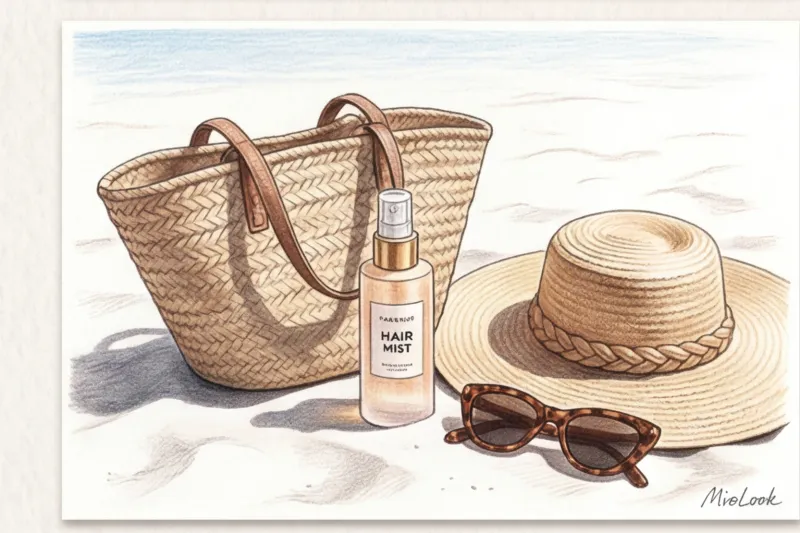
Beach perfume etiquette dictates its own rules. If you can't live without a scent by the sea, choose alcohol-free waters (eau sans alcohol) specifically labeled "safe for the sun," or use wax-based dry perfumes.
Office Dress Code in the Heat: Invisible 'Quiet Luxury'
In a summer office, where air conditioners churn out the same dry air, an ironclad rule of perfume etiquette applies: the "arm's length rule." Your scent should only be detectable by someone who stands at least half a meter away from you.
I had a particularly egregious case. My client, the CEO of a large IT company, adored a thick oud extract. In July, she applied it before important negotiations with investors. The air conditioning in the glass conference room couldn't cope with the heat. Within 20 minutes, a thick, animalic scent of oud literally filled the room, causing physical migraines in the partners. The negotiations were terminated prematurely. Heavy perfume ruins your professional image as quickly as inappropriate business makeup.

A summer office scent should be as light, structured, and breathable as your summer linen or cotton suit. If you're unsure about what to wear during hot weekdays, check out our article about Summer business style clothing for women in the heat — the principles of lightness are absolutely the same there.
Checklist: How to Adapt Your Fragrance Wardrobe for Summer
To avoid making mistakes, do a quick inventory of your bottles. Here are 4 specific steps to take right now:
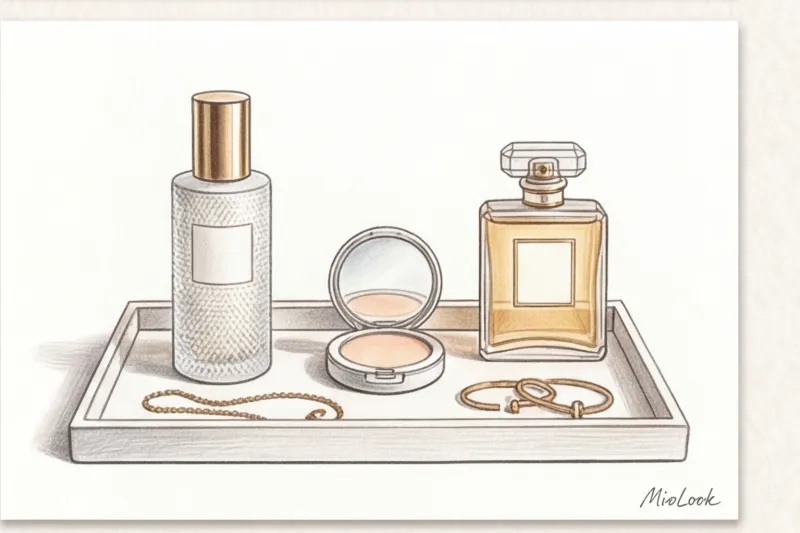
- Reduce concentration. Put away your perfumes (Extrait de Parfum) and eau de parfum (EDP) until fall. Your choice for summer is eau de toilette (EDT) or cologne (EDC). They contain fewer heavy oils and more volatile components that provide a feeling of freshness.
- Go to the bath lines. A shower gel and scented body lotion from your favorite fragrance line will create a stunning "second skin" effect. The scent will be intimate and delicate.
- Keep the bottles out of the sun. Many people make the mistake of storing their perfume in the refrigerator for the summer. The sudden temperature changes with each use destroy the formula faster than heat. The ideal location is a dark closet in the bedroom (not the bathroom!) with a temperature of 18-22°C.
- Follow the one spray rule. In summer, dry air dulls our senses, making our perfumes feel washed out. Don't reapply every two hours. One spray in the morning is enough.
Ready to get started?
Try the MioLook free plan—no commitments required. Smart wardrobe management on your smartphone.
Get access — €0.99 onceConclusion: A trail that speaks volumes about your status
Summer perfume etiquette is built on restraint. When the city is melting in the heat, a thick cloud of perfume feels like an invasion of privacy. Knowing when to forego heavy compositions in favor of mineral purity, vetiver, or a subtle hair mist is a sign of high taste.
Remember the cardinal rule of an investment wardrobe, which applies equally to perfume: true luxury is when your scent makes people want to come closer to you, rather than instinctively take a step back.