
A couple of years ago, a client of mine, a brilliant financial director, failed a crucial negotiation. Her arguments were impeccable, her suit fit perfectly, but the cramped, windowless conference room was so thick with the overpowering scent of Montale oud that the partners were desperate to end the meeting and get some fresh air. This incident perfectly illustrates the cardinal rule: the wrong office perfume can ruin your professional image faster than a wrinkled shirt or an inappropriate cleavage.

We've already discussed the basic rules of appropriateness in more detail in our complete guide to perfume etiquette and choosing a scent for any occasion Today, we'll explore the anatomy of a business sillage. As a colorist and image consultant, I often encounter women who carefully select jacket shades but completely forget about the olfactory dress code. Let's debunk a few common myths and put together the perfect work fragrance capsule.
Olfactory Dress Code: Why Perfume is More Important than a Tie for the Office
During a closed interview in Grasse, a hereditary perfumer told me a phrase that I now quote at every consultation: "Scent is your nonverbal manifesto. It communicates with the world milliseconds before you open your mouth." In a business environment, this communication must be impeccable.
In the professional world there is a concept sillage (sillage). According to modern business etiquette, the radius of your scent trail should not exceed 40-50 centimeters—this is the so-called "arm's length rule." If your scent can be detected beyond this range, you are violating your colleagues' personal boundaries. It's the equivalent of showing up to a board meeting in a neon pink suit: loud, aggressive, and inappropriate.
According to a major report by the WGSN trend bureau (2024), the olfactory trend toward "quiet luxury" is currently dominating the corporate environment. Loud, space-filling compositions are perceived as a sign of bad taste and an attempt to compensate for a lack of professional authority. An intrusive scent literally weighs on the psyche of those around you, causing unconscious irritation.
Access to MioLook for €0.99 — one-time payment
A smart AI stylist will select the perfect look.
Get access — €0.99 onceThe Anatomy of Irritation: Which Notes Are Absolutely Banned in Open Spaces
The way a perfume smells on a blotter in a spacious, airy boutique and the way it performs in a closed office space are two completely different things. It's all about the molecular weight of the notes and the physics of their evaporation. Heavy molecules (resins, woods, thick balms) don't dissolve quickly in the air. They settle on furniture, soak into carpeting, and create a thick, suffocating veil.
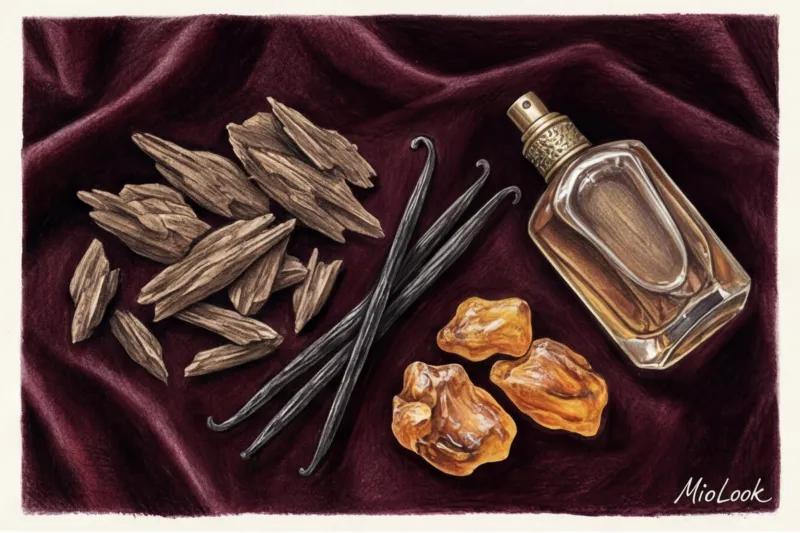
One of my clients had trouble getting interviews for top positions. HR specialists noted her "heavy energy" and "pressure in communication." It turned out that before each interview, she generously applied a thick oriental fragrance with prominent incense and spices. The scent literally screamed, "I'm in charge here, fear me." As soon as we switched to a neutral woody-iris scent, the problem disappeared.
The "Safe Fresh" Myth
The most counterintuitive discovery that shocks my clients is that the popular belief that "citrus and aquatic scents are ideal for the office" is an outdated myth. Modern aquatic and sharp "fresh" fragrances often contain heavy synthetic fixatives like ambroxan and calone.
These ingredients are designed to prolong the life of the quickly evaporating citrus notes. As a result, the natural freshness disappears after 20 minutes, while the chemical, brain-drilling harshness of ambroxan lingers with you (and your colleagues) for 12 hours, creating a mile-long, indelible trail. A safe office perfume isn't one that smells like a sea breeze, but one that sits close to the skin.
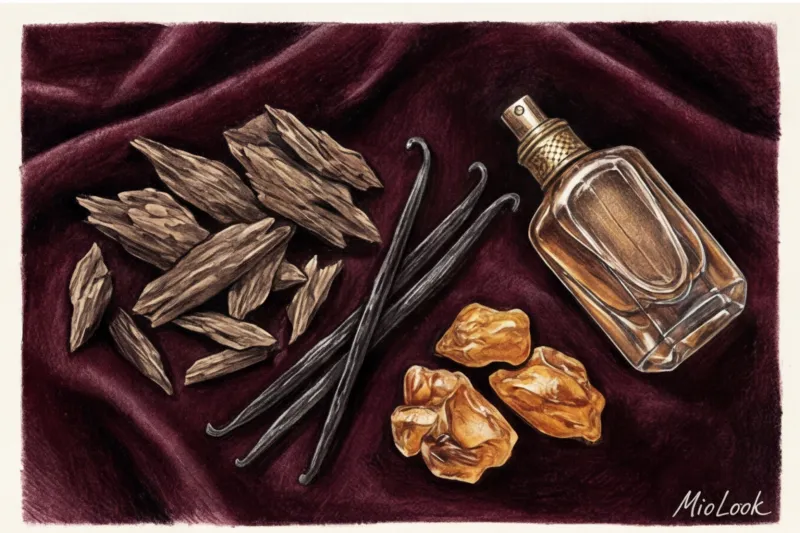
Heavy artillery: oud, gourmand and indole flowers
There are categories of fragrances that, according to unspoken etiquette, should be postponed until 6:00 PM:
- Oud and patchouli: Earthy, basement and animalistic notes sound too intimate and heavy in a confined space.
- Gourmet (praline, vanilla, burnt sugar): Sweet scents are subconsciously associated with immaturity. They diminish your expertise and cheapen your image, even if you're wearing a premium jacket.
- White flowers (jasmine, tuberose, lily): Contain indole compounds. In microdoses, they produce a beautiful floral aroma, but in high concentrations, they're guaranteed to trigger a migraine in half your head.
Your perfect look starts here
Join thousands of users who look flawless every day with MioLook.
Get access — €0.99 onceAn Expert's Perfume Wardrobe: 3 Categories of Ideal Fragrances
When putting together a business capsule collection, I always follow this principle: the base perfume should be as impeccable, high-quality, and neutral as a perfect white shirt made of thick cotton. It brings the look together without stealing the show.
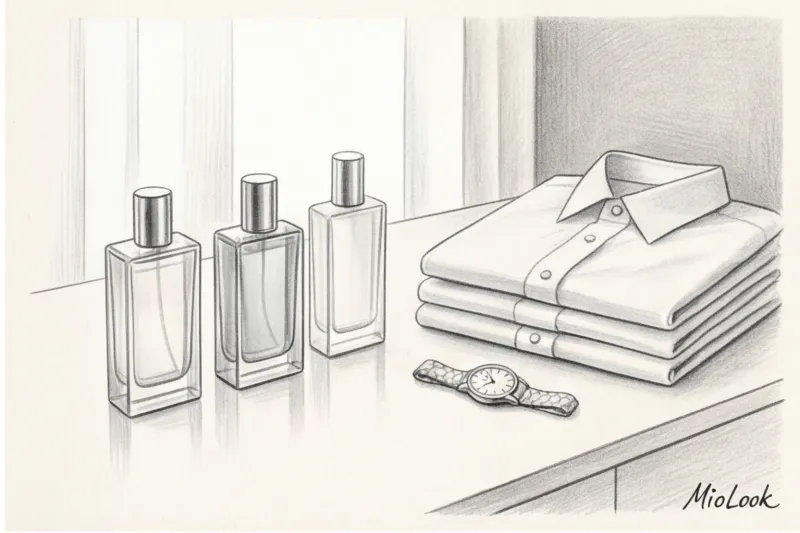
By the way, it is for structuring such capsules that I recommend using smart wardrobe feature in the MioLook app You can digitize your basics and choose matching "skin scents" to go with them. This is the olfactory equivalent of nude. business makeup - You smell like you've been groomed, not like a perfume factory.
Molecular perfumery (Iso E Super and ambroxan in microdoses)
I personally conducted an experiment: I wore exclusively molecular fragrances (based on Iso E Super) in an open-plan office for a week, then interviewed a focus group of colleagues. The results were astonishing: no one could pinpoint what I smelled like, but everyone noted a feeling of "cleanliness, freshly ironed clothes, and expensive soap." Molecular fragrances don't have a long sillage; they pulse close to the body, creating an aura rather than a wall of scent.
Powdery and cosmetic notes (iris and white musk)
Orris root is an absolute symbol of elegance in perfumery. It imparts a dry, slightly papery, cool scent reminiscent of expensive skincare products. White musk (not to be confused with heavy animalic musk!) smells like clean skin after a shower. It's the perfect choice for a job interview or a complex presentation.
Green and tea compositions (focus and energy)
If you need energy, choose notes of green tea, matcha, crushed basil, or cool vetiver. According to IFRA (International Fragrance Association) guidelines, green olfactory profiles are the least allergenic and least likely to cause rejection. They also help you focus on tasks.
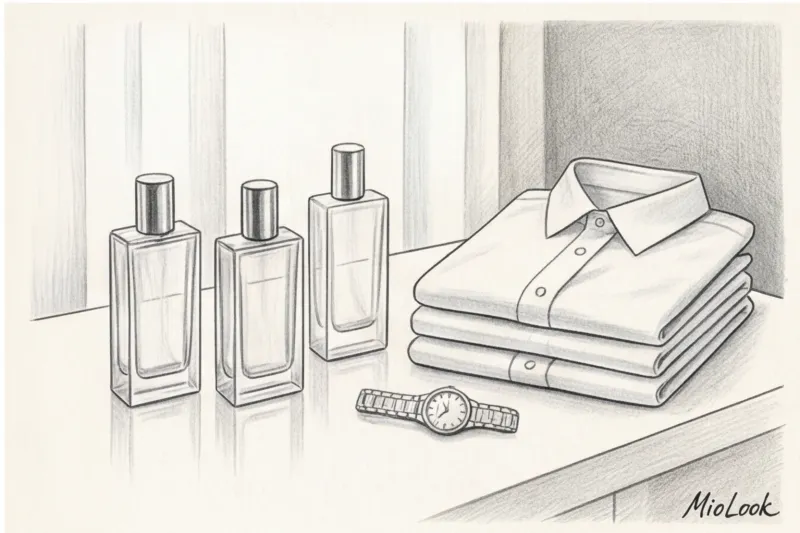
How the Office Climate Changes the Sound of Your Scent
Understanding the physics of perfumery is what separates a professional stylist from the average person. The rate of evaporation of essential oils directly depends on the temperature and humidity of the room.
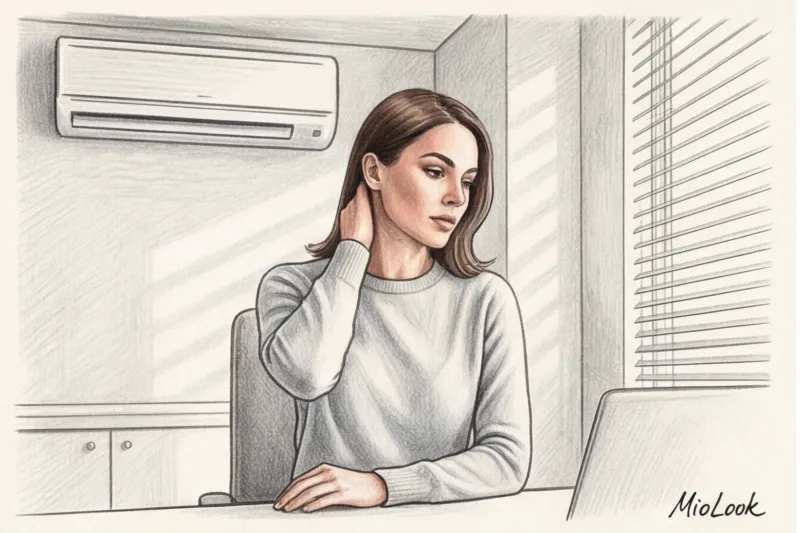
If you work under air conditioning in the summer (the standard temperature is 20-22°C), the cold air literally freezes the light top notes. The citrus and floral notes vanish instantly, leaving only the prickly base. The fragrance may sound more harsh and masculine than you expected.
In winter, the situation is reversed: central heating creates a "greenhouse" effect. In the dry, overheated air of an office, any sweetness in a perfume, even the slightest, is tripled. That light vanilla accord that seemed cozy in the cold turns into sticky syrup near the radiator.
It is because of the dry, conditioned air that the receptors quickly adapt, and it seems to you that the perfume has faded. Never renew your scent every three hours! You don't feel it because of olfactory blindness, but your colleagues, believe me, feel it perfectly well.
Application Guidelines: How to Tame the Sillage of Your Favorite Perfume
Even a perfectly appropriate office perfume can be ruined by improper application. The classic morning ritual—three generous sprays on the neck and wrists before heading out—should be a thing of the past. The scent heats up and overpowers exposed pulse points.
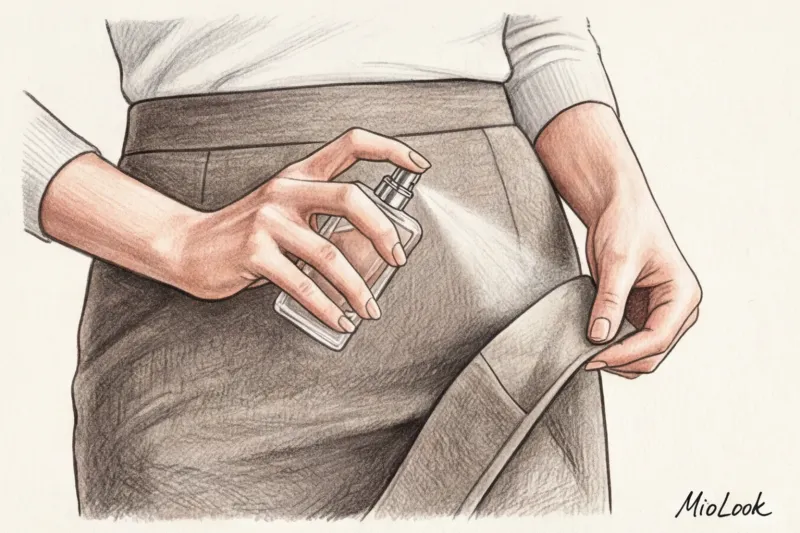
Here's my favorite life hack from perfume stylists: use the "under-clothes" technique. Apply one micro-spray to your stomach or the back of your neck, just under your hairline. Hair and fabric (especially natural wool or thick cotton) act as a filter. They contain the scent trail, allowing the fragrance to be released only when you move.
Another great way to wear it at the office is to spray it on the inside lining of a jacket or the hem of a skirt. You'll create an intimate cocoon around yourself that only you can smell. And for heaven's sake, never rub perfume on your wrists! Friction heats the skin and breaks the fragile structure of the top notes, ruining the perfumer's intentions.
Checklist: Office Scent Suitability Test
To ensure you're confident in your choice in the mirror each morning, I've put together a tough but honest checklist. Check out these steps:
- Do you smell your perfume all the time? If so, you've overdosed. The ideal office scent should only be noticeable occasionally, when you turn your head.
- Does the elevator smell after you leave it? This is a classic test for boundary violation. If your coworkers can tell by your scent that you were in an elevator five minutes ago, your perfume is too strong.
- What concentration is this? For the office, always choose between Eau de Toilette (EDT) and Parfum. Eau de Toilette has a more volatile, airy texture, while Parfum (Extrait) lasts longer and is more concentrated.
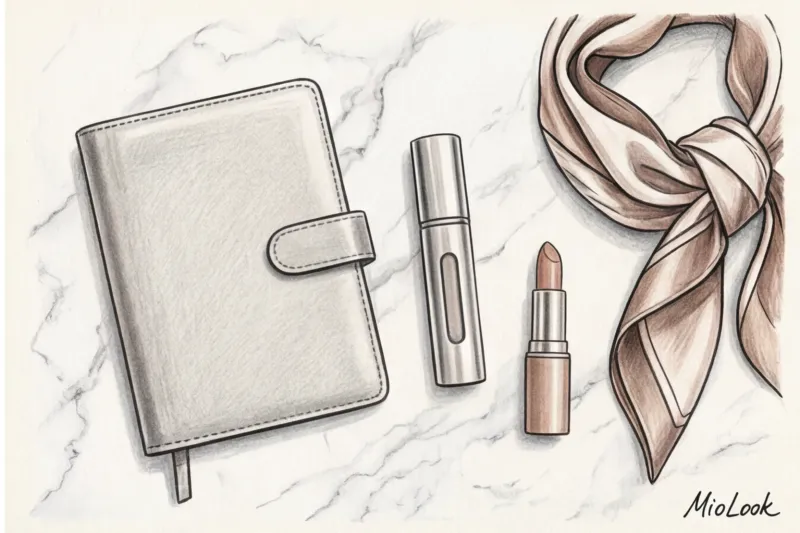
- Where is your bottle? The one-refresh rule states that keeping a full-size bottle on your desk and spraying it directly in your open space is absolute bad form. If you need to refresh your scent before an evening meeting, use the miniature one in the restroom, applying a drop with a spritz.
Remember: in a business environment, your professionalism should always speak louder than your perfume. Choose fragrances that serve as an elegant backdrop to your intellect, rather than trying to drown it out.